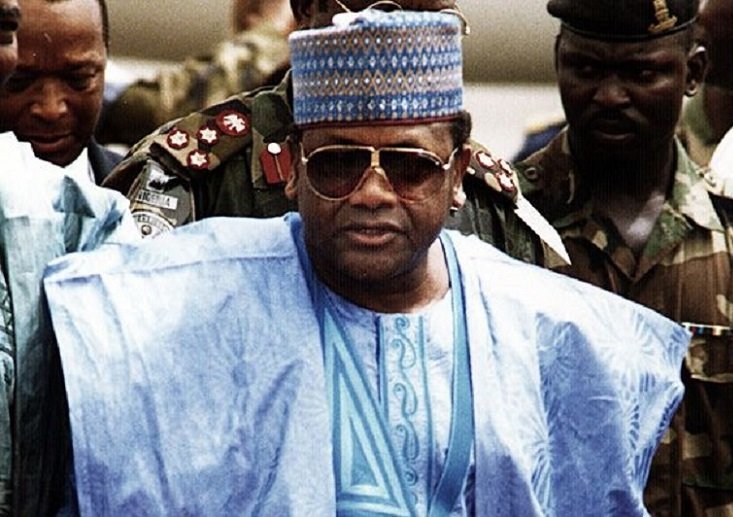
Former Nigerian president Sani Abacha who stole over $5 billion in only five years of reign
The government of Jersey, a self-governing dependency of the United Kingdom in the Channel Islands between England and France has seized an amount of £211 million ($267m) that belonged to former Nigerian military dictator General Sani Abacha who died in 1998.
He laundered the recovered money through the United States into a bank account held in Jersey by Doraville Properties Corporation, a British Virgin Islands company, reports British media Metro.
The money is being held by the government awaiting a decision by the governments of the United States, Nigeria and Jersey on how it should be distributed.
“In restraining the funds at the request of the United States of America, through whose banking system the funds were laundered prior to arriving here, and in achieving the payment of the bulk of the funds into the Civil Asset Recovery Fund, Jersey has once again demonstrated its commitment to tackling international financial crime and money laundering,” said the Attorney General Robert MacRae. channel islands
The United States first discovered the laundered money and directed the Island’s Attorney General to apply for a restraining order over the Jersey bank account of Doraville in 2014. The request was granted by the Royal Court to preserve the money, reports Metro.
Doraville also applied for the restraining order to be lifted in 2016 but their application was dismissed. They challenged the decision at Jersey’s Court of Appeal in 2017 and it was again rejected. They took the matter higher to Jersey’s ultimate appellate court which also rejected the appeal in 2018.
General Sani Abacha, who is believed to have stolen over $5 billion in his five-year reign, kept the money in banks abroad. His criminal ways were uncovered after his death in 1998 and the country is still fighting to recover the few stolen funds they are aware of.
Last year, Switzerland repatriated $322 million looted money kept by Abacha in their banks. The money follows the $700 million Switzerland returned to Nigeria after Abacha’s demise.
Switzerland, a safe haven for stolen money and other ill-gotten gains, has kept a huge sum of stolen money stashed in their banks by corrupt African leaders and their families. They have started making conscious efforts to return some of the monies to redeem their image.
In 2004, Abacha was ranked as the fourth most corrupt leader in history. Together with his National Security Adviser Alhaji Ismaila Gwarzo, they made false funding requests which they approved. The funds would then be transferred to the Central Bank of Nigeria before laundering them to offshore accounts.
After assuming power in 2015, Nigeria’s president, Muhammadu Buhari has been seeking assistance from other countries to recover stolen assets taken abroad.
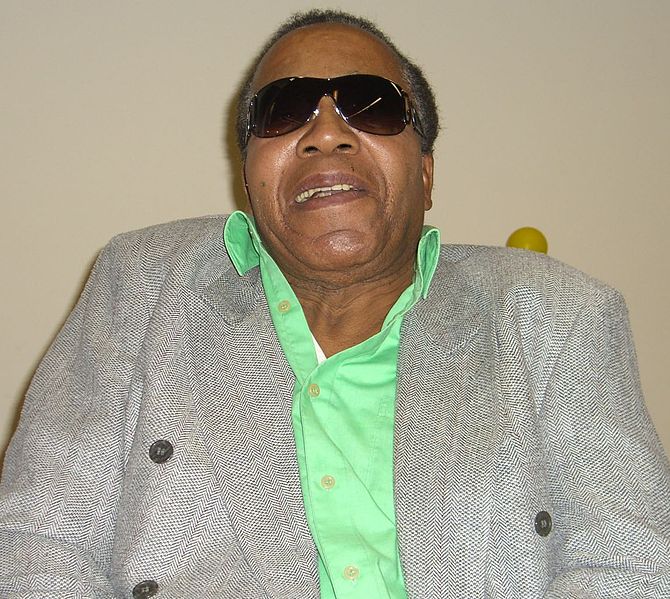
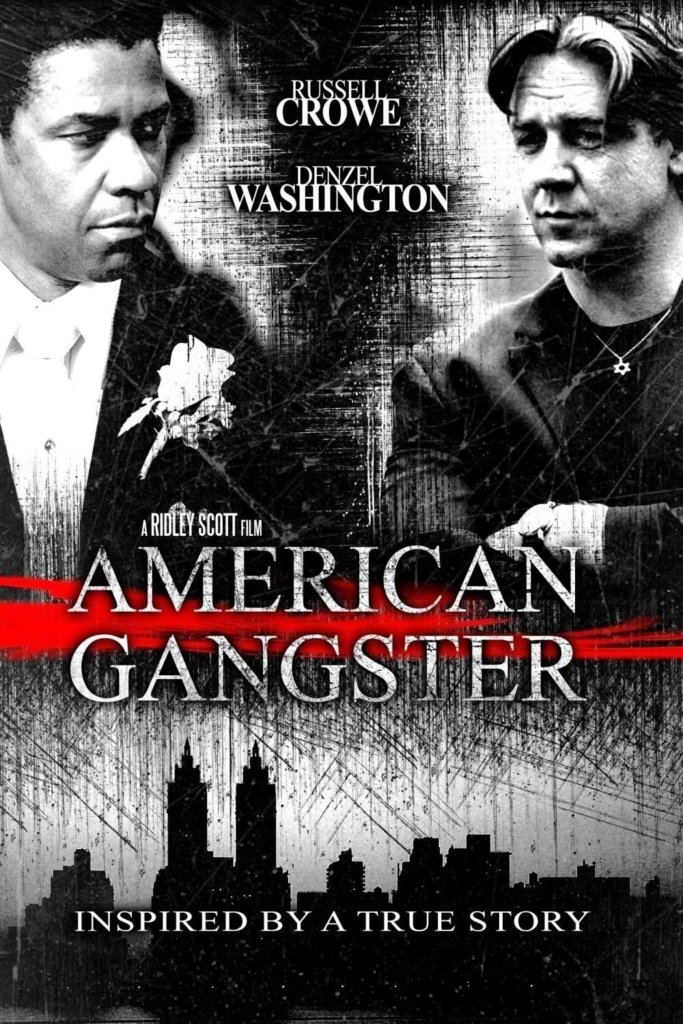
Frank Lucas, whose story was adapted into the 2007 film American Gangster played by Denzel Washington, has died at the age of 88.
The former drug kingpin who is reported to have died on Thursday night in New Jersey has inspired many Hip Hop songs and lyrics by artists including Bankroll Fresh, Quavo, 21 Savage, Rick Ross, Gunna, Future, Kendrick Lamar, Lil Durk, Fabolous and Jay-Z who recorded the record-hitting soundtrack for the crime film American Gangster.
Born in North Carolina in 1930, Frank Lucas moved to Harlem in New York City after a life of petty crime and later grew to break the monopoly of the Italian mafia in the drug trade.
He flew to Bangkok, Thailand where he fraternized with U.S. Army sergeant Leslie “Ike” Atkinson from North Carolina who helped him smuggle heroine to the United States via caskets of dead Vietnam War soldiers.
This claim was disputed by Atkinson who told the Drug Enforcement Agency (DEA) that the drugs were shipped in furniture and not caskets.
Lucas is reported to have said that he made US$1 million per day selling drugs on 116th Street. A claim that was later discovered to be an exaggeration.
However, Lucas was worth tens of millions of dollars kept in banks in the Cayman Islands and had dozens of properties scattered across the U.S. and huge lands in North Carolina. All of these assets and finances were confiscated in the mid 1970s when he was arrested.
He was noted to have worked with only relatives and close friends from North Carolina in the heroin trade who he trusted would not steal from him.
Lucas also mingled with the elite and famous people but kept a simple lifestyle to avoid drawing attention to himself.
Mug Shot of Frank Lucas taken January 1975 at the time of his arrest
This did not suffice in 1975 when his house was raided by DEA and police who found $584,683 in cash and was convicted of multiple state and federal drug violations. He was sentenced to 70 years in prison in 1976 but later had his sentence reduced after he provided evidence that led to more than 100 further drug-related convictions.
He was released in 1981 after five years in prison but was rearrested in 1984 for trying to exchange one ounce of heroin and $13,000 for one kilogram of cocaine. He was sentenced to seven years in prison and was released in 1991.
Lucas helped in producing his life story adaptation directed by Ridley Scott and played by Denzel Washington. The Universal Pictures film has been criticized for fabrication which Lucas admitted the film was largely untrue.
Confined in a wheelchair after an accident that broke his legs, Lucas had another brush with the law in 2012 for lying over federal disability payments. He was given probation.
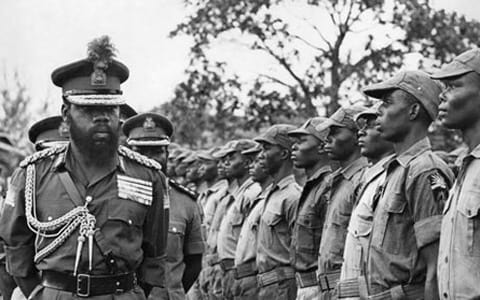
Biafran leader Ojukwu as he declared Independence on May 30th,1967.
It was all celebration and joy on May 30, 1967, when the leader of the Republic of Biafra secessionist state, Chukwuemeka Odumegwu Ojukwu, declared independence of the states in the Eastern Region of Nigeria.
The South Eastern Region’s military governor made the announcement following a vote to secede from Nigeria after failed reconciliation over killings of approximately 30,000 Igbo people in the post-coup violence which started on September 1966.
There were two coups in 1966 with the first one perpetrated by predominantly Igbo junior army officers in January resulting in the assassination of about 30 prominent politicians of northern origin including the first prime minister of Nigeria Sir Abubakar Tafawa Balewa, and the Northern premier, Sir Ahmadu Bello.
The president, Nnamdi Azikiwe, who was Igbo, was not killed in the coup as well as other premiers of Igbo extraction who were spared. This sparked a counter-coup in July by northern army officers who named General Yakubu Gowon as the head of the Federal Military Government (FMG).
This led to the killings of Igbo people in September and reprisal attacks on northerners in eastern cities creating economic, ethnic, cultural and religious tensions.
In January 1967, a meeting held in Aburi, Ghana where Ojukwu proposed a confederate state of Nigeria, was unsuccessful as the northerners were in disagreement with the Aburi Accord.
The Republic of Biafra created many institutions including its own Bank of Biafra that produced the Biafran Pound legal tender, and a military made up of about 30,000 soldiers by the end of the war.
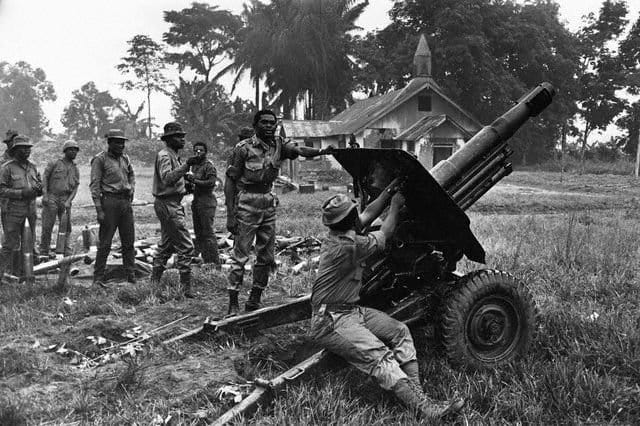
It was an all-out two-and-a-half-year civil war popularly referred to as the Nigerian Civil War or the Biafran War after the declaration of the independent Republic of Biafra.
The Federal Military Government (FMG) led by Gowon used different measures to annex the ill-equipped, out-manned and out-gunned Biafra with a population of about 14 million from July 1967 to January 1970.
The FGM ordered a total blockade of Biafra and was consistent with attacks while destroying food supply and all sources of livelihood for the Biafran state.
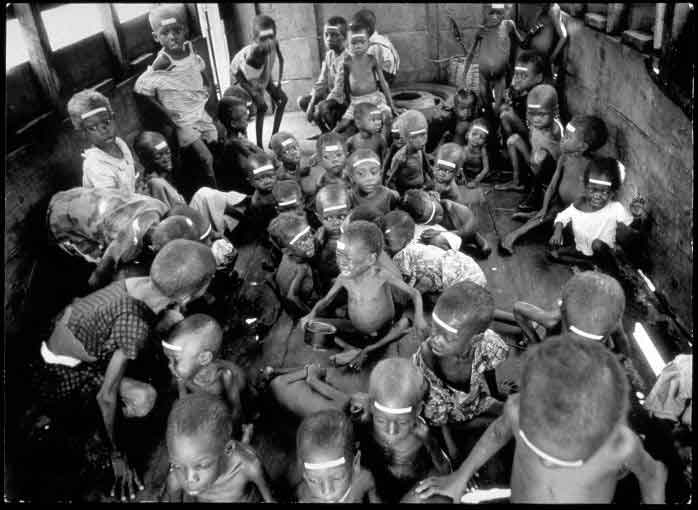
The incessant attacks left Biafra in massive poverty and hunger as almost two million civilians died from starvation. Many suffered from diseases and stunted growth.
The Biafran forces surrendered to the Nigerian FMG after the Colonel Chukwuemeka Odumegwu Ojukwu fled to Ivory Coast. The state, whose capital was Enugu, rejoined Federal Nigeria on January 15, 1970.
The Biafra region has a large amount of oil which is a major component of the Nigerian economy. The region still faces pockets of violence as secessionist groups fight government forces over inequality in the distribution of the oil wealth and the sorry level of poverty in the Eastern region.
This article by Ismail Akwei was first published on face2faceafrica.com
Toppled statue of Ghana’s first president during the 1966 coup
Several African independence leaders who were anti-neocolonialists and anti-imperialists have been described as dictators due to their leaning towards leftist ideologies and rejection of Western ideals including capitalism. The United States of America and its rightist allies orchestrated the overthrow of some of these leaders creating anarchy in many African states.
Dictatorship has been given different meanings over time but is originally referred to as the system in which a ruler wields absolute power over a country. These autocratic leaders abhor democratic structures and use the military and other security agencies to quell dissent.
In the 21st century, the definition of dictatorship has been skewed to mean a system in which leaders remain in office for a long time even if they adhere to democratic principles like elections and decentralization.
With that being said, some Africans have rejected the “dictator” tag placed on their leaders and have regretted their exit from office either in the form of a coup d’etat or an uprising mostly fueled by Western agents.
Here are some of the leaders whose exit was openly regretted.
Muammar Gaddafi – Libya
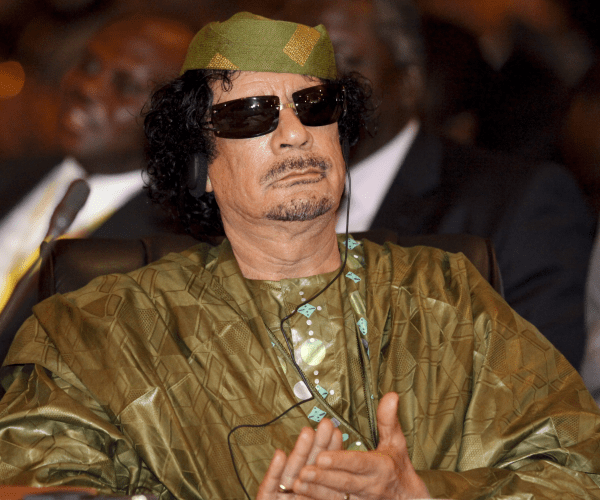
Assassinated in 2011 after four decades of being tagged a dictator, former Libyan revolutionary leader, politician and pan-Africanist, Muammar Gaddafi has been missed by many Libyans and Africans who regret his ouster that has ushered in hardship under the new regime deeply influenced by the West.
Gaddafi’s regime, although a no-nonsense one, focused on getting the desert country and the continent developed out of the so-called third world category with policies and investments streamlined to accelerate growth in unity.
Libya’s social and economic positions were appreciable to Africans and the country was transformed into a rich socialist state that was a seeming threat to Western powers who believed Gaddafi’s influence and power could shake the superpower table.
A proponent of African unity, Gaddafi was feared by many who believed if the continent unites, he would forcefully lead and control its affairs. He became Chairperson of the African Union from 2009 to 2010 and led a group of African chiefs and kings to revive the powerful traditional foundation of the continent.
Gaddafi’s strong character was met with strong opposition from his neighbours Sudan, Egypt and Chad, as well as sworn enemies, the United States, the United Kingdom, and Israel. These superpowers grouped under the North Atlantic Treaty Organization (NATO) invaded Libya after anti-Gaddafist rebels started an uprising that lasted from February to October 2011.
In 2019, the country is in disarray as it fails to solve its myriad of crisis from social, economic and security among others. Libya has become a lawless state with several militant groups taking over regions while human rights abuses are heightened.
The Western allies have failed to solve the political problem facing the country which now has two rival governments, one formed by the United Nations based in Tripoli.
In 2016, U.S. President Barack Obama said his biggest mistake during his presidency was the lack of planning for the aftermath of Muammar Gaddafi’s ouster which left the country in chaos and under threat from violent extremists.
In 2017, Equatorial Guinea President Teodoro Obiang Nguema Mbasogo paid tribute to Gaddafi when he visited Uganda.
“I remember our hero Gaddafi who used to promote this African solidarity but sadly most countries would not still agree with him … The instability Africa is suffering is due to the egoism of each country.
“We forget that we are Africans. Things are not moving in the right direction for our countries and it is not that Africa is not self-sufficient but Africans look at ourselves as people who cannot develop ourselves yet we have many resources. Africans think all civilisation lies in the Western world,” he added.
Kwame Nkrumah – Ghana
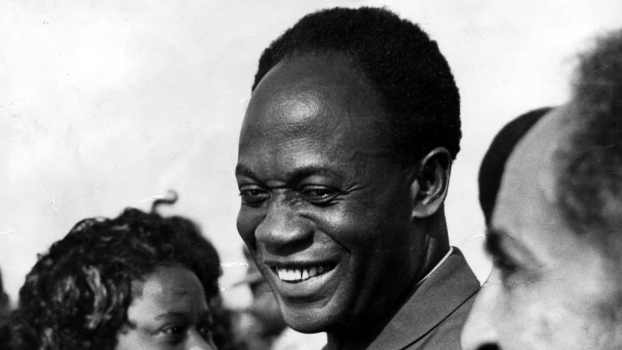
Ghana’s first president and the first black president of a sub-Saharan African country, Kwame Nkrumah, was overthrown in February 1966 but was missed a few months after he was ousted.
A founding member of the Organisation of African Unity, Nkrumah studied in the United States but became leftist and won the Lenin Peace Prize in 1962. His political philosophy and pan-African ideologies became a threat to the West as he gained a growing support base from all over the world.
From humble beginnings as the secretary of the United Gold Coast Convention (UGCC), a political group seeking “independence within the shortest possible time”, to the leader of his own party Convention People’s Party (CPP) seeking “independence now” and “the total liberation of the African continent”, Dictators like Nkrumah was both loved and hated by many who could not envision the future he had planned for Africa.
Ending diplomatic ties with Western powers, taking bold decisions to help liberate other colonised African states, strategically building infrastructure to support his development plans, building formidable structures for a pan-African revolution, enacting laws to stop opponents from interfering with his development dreams were regarded as threats.
Orchestrated by the Central Intelligence Agency (CIA) of the United States of America, Nkrumah was overthrown in a coup d’etat on February 24, 1966, while he was out of Ghana on a peace mission to Hanoi aimed at bringing an end to the United States’ intervention in Vietnam.
In 24 hours, lower-ranking military officers and police officials led by Colonel E. K. Kotoka, Major A. A. Afrifa and the Inspector-General of Police, Mr J. W. K. Harley had carried out the coup and formed the National Liberation Council to run the country. They privatised many of the country’s state corporations under the supervision of international financial institutions.
They announced their plan to the jubilating public which was to end Nkrumah’s alleged alliance with the Soviet Union and China; end alleged corruption, dictatorial practices, oppression; and the introduction of the unpopular preventive detention laws. These were the exact sentiments of the United States and its allies.
There was immediate economic hardship after the coup as the system and structures built by Nkrumah were destabilized and there were no plans of reviving the economy. There was a failed coup attempt on April 17, 1967, followed by demonstrations against hard economic times.
CIA documents later revealed that U.S. President Lyndon B. Johnson at the time was advised to consolidate his relations with the coup makers by supplying “a few thousand tons of surplus wheat or rice” to create “a psychological significance out of all proportion to the cost of the gesture.”
“I am not arguing for lavish gifts to these regimes—indeed, giving them a little only whets their appetites, and enables us to use the prospect of more as leverage,” said a memorandum from the Acting Special Assistant for National Security Affairs, Robert W. Komer, to the 36th U.S. President Lyndon B. Johnson, handwritten on March 12, 1966.
The country barely recovered after Nkrumah’s overthrow despite the general election held in 1969 which saw Kofi Abrefa Busia elected Prime Minister from 1969 to 1972 when his government was overthrown in a military coup by Ignatius Kutu Acheampong.
Nkrumah lived the rest of his life in Guinea where he was named honorary co-president and later died on April 27, 1972.
His plans for his country and Africa – which he had written in dozens of books – have always been a point of reference during debates about African unity.
This article by Ismail Akwei was first published at face2faceafrica.com
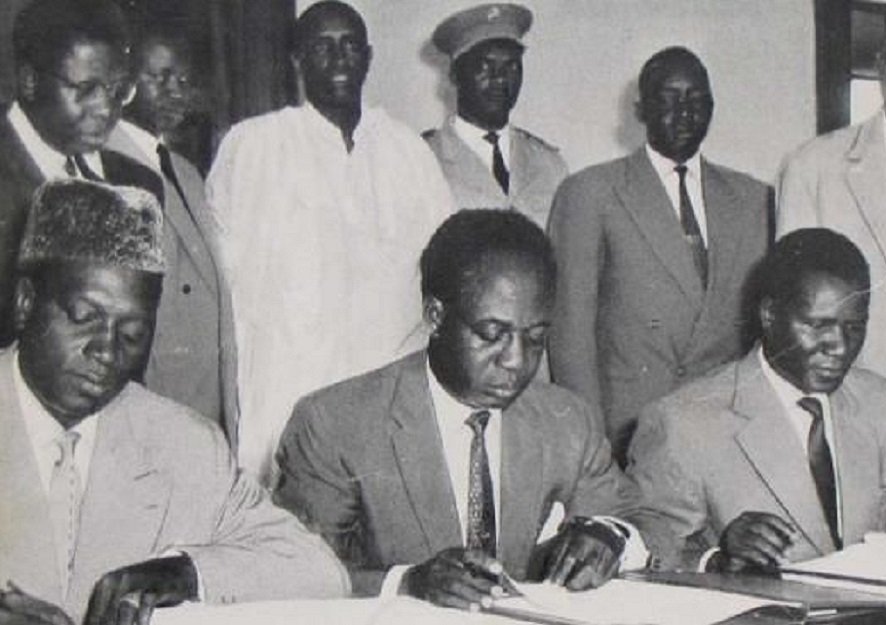
Presidents Modibo Keita of Mali, Kwame Nkrumah of Ghana and Sekou Toure of Guinea.
The dream of a united Africa started way before the formulation of the Organisation of African Unity (OAU) in 1963 following an intervention by the King of Ethiopia, Haile Selassie I in Addis Ababa.
In the early 1960s, when independence was sweeping throughout the colonized continent, liberation fighters and independence heroes were loosely speaking about a united Africa that will end colonization in the whole continent.
Ghana’s first president, Dr Kwame Nkrumah, had verbalized the idea in 1957 when the Gold Coast gained independence from Great Britain. He proposed for an immediate unity of the continent.
Nkrumah further wrote about African unity and showed the way by financially supporting Guinea after the French abandoned the newly independent country in 1958. He also organised the first Pan-African meeting called the All-African People’s Conference in the same year.
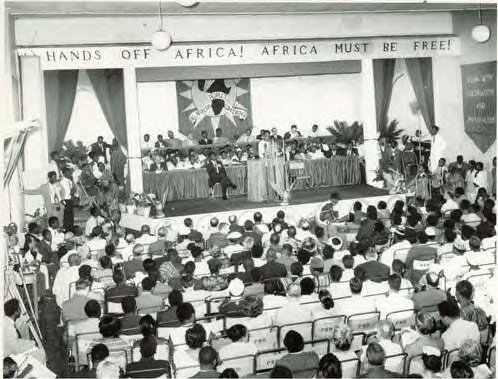
One of the All-African People Conference in Accra. Photo: Facebook
The second president of Egypt, Gamal Abdel Nasser, also penned down the concept of African unity while Tanzania’s first president, Julius Nyerere, expressed confidence in a united Africa.
Together, with the leaders of Algeria, Guinea, Morocco, Mali and Libya, they became known as the Casablanca Bloc, formed after the second All-African People’s Conference in Addis Ababa in 1961 and led by Nkrumah to push for a federation of all African states to be called the United States of Africa. The name takes its origin from Marcus Garvey’s 1924 poem, Hail, United States of Africa.
Presidents Modibo Keita of Mali, Kwame Nkrumah of Ghana and Sekou Toure of Guinea.
The United States of Africa concept was opposed by some leaders of other independent African states including Senegal’s Léopold Sédar Senghor and the leaders of Nigeria, Liberia and Ethiopia. They were referred to as the Monrovia Bloc and wanted unity to be achieved gradually while Africa remains a continent of independent states.
Subsequent debates over a United Government – before the OAU was formed – was held during meetings in the towns of Sanniquellie, Liberia and Addis Ababa, Ethiopia in 1959 and 1960 respectively. This was followed by an invitation from Emperor Haile Selassie to Addis Ababa for a summit.
Haile Selassie opening the 1963 meeting that birthed the OAU
The monarch is reported to have financed the building of an Africa Hall worth $2 million to provide a place for African leaders to meet. He also footed the bill for a luxurious guest house and banquet among others.
Leaders of the 32 independent African states honoured the invitation of Haile Selassie and were offered a luxurious treatment ahead of the meeting that was a deciding factor for Africa’s unity.
The Casablanca Bloc stood by Nkrumah’s philosophy that “Africa must unite now”, as Egypt’s Nasser, Ahmed Ben Bella of Algeria and Sekou Toure of Guinea denounced “imperialists” and “colonial exploiters” at every opportunity.
The Monrovia Bloc thwarted the possibility of an immediate union with the argument that no matter how good it sounds, unity won’t work unless economic cooperation is achieved.
The host, Haile Selassie, added his voice saying the leaders must move step‐by‐step toward unity as “tradition cannot be abandoned at once” and the disagreement to a union by the people could frustrate progress toward cooperation and development.
A 1964 New York Times report stated that: “Africans would disagree on immediate union because they fear Nkrumah’s driving egocentricity might lead to his becoming the first, and perhaps permanent, ‘president’ of a United States of Africa.”
The Emperor’s astute voice successfully gained the signatures of all the 32 independent African states on the charter that established the Organisation of African Unity on May 25, 1963.
OAU Founders, Photo: Medium
44 years after the attempt to create a Union Government during the founding of the OAU, the opportunity came up once again at the 9th Ordinary Session of the newly formed African Union (AU) in Accra, Ghana.
The agenda was to debate the creation of the Union Government that will lead to the formation of the United States of Africa as adopted by a 2006 study. The study proposed a single African military force, a single currency and a single passport for Africans.
Those in support of the Union Government included Robert Mugabe of Zimbabwe and Muammar Gaddafi of Libya.
The heated debate in Accra failed to institute the Union Government but the heads of state agreed to accelerate political and economic integration, strengthen the organs and institutions of the AU and then set a timeframe to establish a Union Government with the involvement of Africans and the diaspora.
Since then, teams have been set up in 2007, 2008 and 2009 to review the recommendations and give the green light for the transformation of the African Union Commission into the African Union Authority to pave way for the Union Government which will be led by a president, vice president and secretaries.
All the teams have since deferred their assignments and the dream of a United States of Africa still lingers as its key proponents including Gaddafi and Mugabe have been kicked out of power.
This article by Ismail Akwei was first published on face2faceafrica.com






 Ismail Akwei