Archie Harrison Mountbatten-Windsor held by his mother Meghan Markle who is next to her African American mother and Queen of England.
The newly born British royal baby, Master Archie Harrison Mountbatten-Windsor, son of Prince Harry, the Duke of Sussex and his biracial American wife, Duchess Meghan Markle, has faced his first dose of racism only two days after he was born on Monday, May 6, 2019.
The 7th heir to the throne and eighth great-grandchild of the Queen of England was depicted as a monkey in a tweet posted by British broadcaster and comedy writer, Danny Baker who hosts a weekend radio show on the BBC’s 5 Live channel.
British royal baby Baker’s tweet on Wednesday which has been deleted showed a couple holding hands with a chimpanzee wearing clothes with the caption “Royal Baby leaves hospital”. This created a swift social media uproar with screenshots of his deleted tweet being shared widely.
“Sorry my gag pic of the little fella in the posh outfit has whipped some up. Never occurred to me because, well, mind not diseased. Soon as those good enough to point out its possible connotations got in touch, down it came. And that’s it,” he immediately tweeted his apologies after the uproar.
After his apology, the BBC announced his sack in a statement saying: “This was a serious error of judgment and goes against the values we as a station aim to embody. Danny’s a brilliant broadcaster but will no longer be presenting a weekly show with us.”
The 61-year-old presenter took offence and tweeted: “The call to fire me from @bbc5live was a masterclass of pompous faux-gravity. Took a tone that said I actually meant that ridiculous tweet and the BBC must uphold blah blah blah. Literally threw me under the bus. Could hear the suits knees knocking.”
He also tweeted explaining his racist post saying it was “supposed to be joke about Royals vs circus animals in posh clothes but interpreted as about monkeys & race, so rightly deleted. Royal watching not my forte. Also, guessing it was my turn in the barrel.”
Once again. Sincere apologies for the stupid unthinking gag pic earlier. Was supposed to be joke about Royals vs circus animals in posh clothes but interpreted as about monkeys & race, so rightly deleted. Royal watching not my forte. Also, guessing it was my turn in the barrel. pic.twitter.com/86cQGbAhDc
This is not the first time he has been fired by the BBC and he has always returned. In 1997, he was fired for encouraging football fans to “make a referee’s life hell” after awarding a controversial penalty in an FA Cup tie. He later denied inciting fans.
Master Archie Harrison Mountbatten-Windsor’s name was revealed to the public on Wednesday. He is the first child of royal heritage with black descent. His maternal grandmother, Doria Ragland, is African American.
This article by Ismail Akwei was first published on face2faceafrica.com
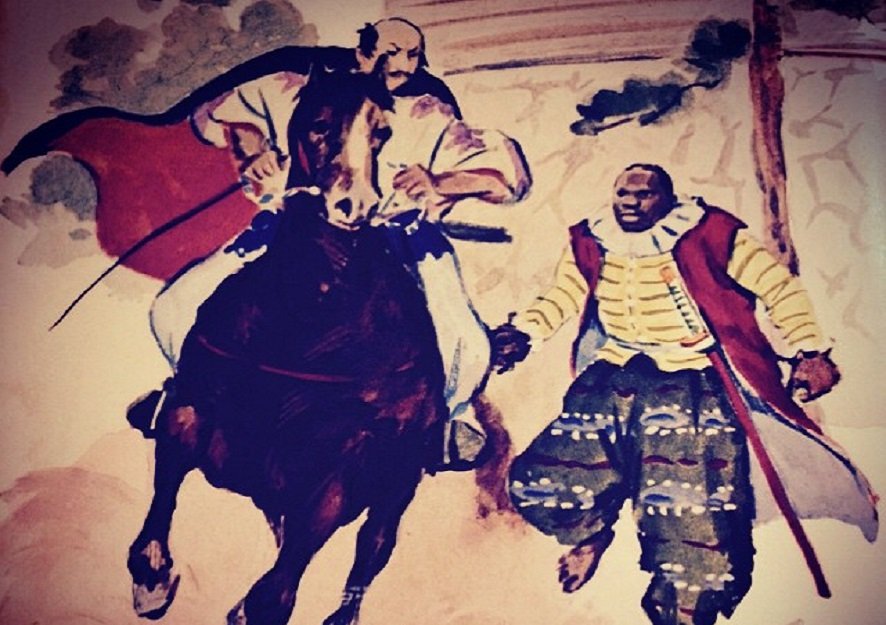
A depiction of Yasuke serving his Japanese hegemon and warlord master Oda Nobunaga
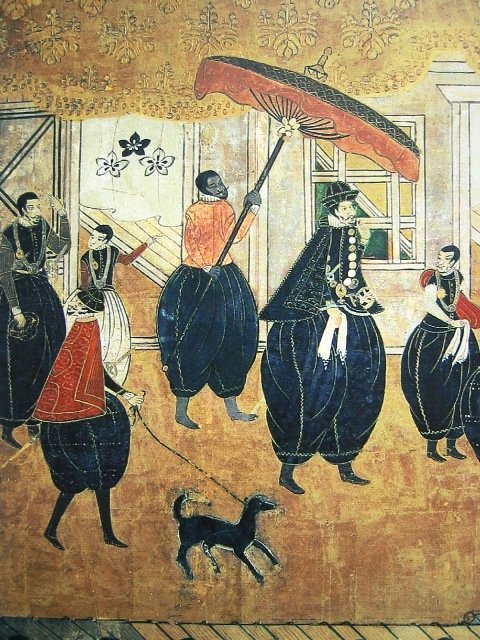
The transatlantic slave trade perpetrated by Europeans from the 16th century blessed Japan reportedly with its first black man who rose through the elite ranks to make history as the country’s first black Samurai.
Yasuke, as he was called, is believed to have been born in Mozambique around 1555. He served as a slave under the Italian Jesuit Alessandro Valignano.
Valignano, who was in charge of the Jesuit missions (a scholarly religious congregation of the Catholic Church which originated in sixteenth-century Spain) in East Africa, South and East Asia, travelled to Japan with Yasuke in 1579.
The presence of the black man who was taller than the regular Japanese and believed to have the strength of ten men caused a stir and gave Yasuke an audience with the Japanese hegemon and warlord Oda Nobunaga.
According to a 1581 letter written by Jesuit Luís Fróis to Lourenço Mexia, Yasuke was presented to Nobunaga who suspected his skin was coloured with black ink. He had him strip and scrub his skin to prove his claim. This was also recorded in the 1582 Annual Report of the Jesuit Mission in Japan.
Nobunaga took a keen interest in Yasuke when he was convinced his skin was in fact black. He added him to his servants and enjoyed talking to him, according to many Japanese books.
The archives of the Japanese Maeda Samurai clan noted that “the black man was given his own residence and a short, ceremonial katana [Samurai sword] by Nobunaga. Nobunaga also assigned him the duty of weapon bearer.”
In 1582, Yasuke fought alongside the Nobunaga-led forces in the tribal battle called Battle of Tenmokuzan. Nobunaga was attacked and he was forced to commit seppuku [Japanese ritual suicide].
After Nobunaga’s death, Yasuke was eventually captured by the rival clan which described him as an animal and not Japanese. His life was spared and he was returned to the Jesuits.
There is no account of the rest of Yasuke’s life and how he died. However, he has been depicted in many artworks by 16th-century Japanese artists who painted him in service and also in sumo wrestling matches.
Yasuke also appeared in a 1968 Japanese children’s historical fiction book by Yoshio Kurusu, movies, books and many publications.
It was announced in March 2017 that Lionsgate Films and Michael De Luca will produce a film about Yasuke written by Gregory Widen.
This article by Ismail Akwei was first published on face2faceafrica.com
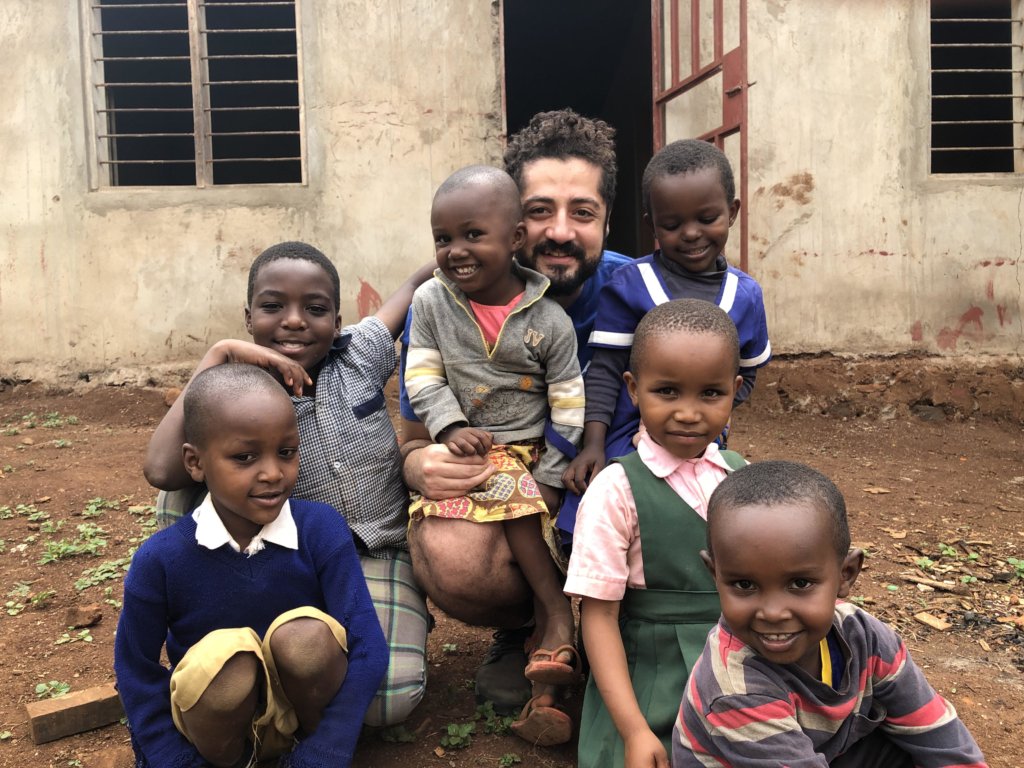
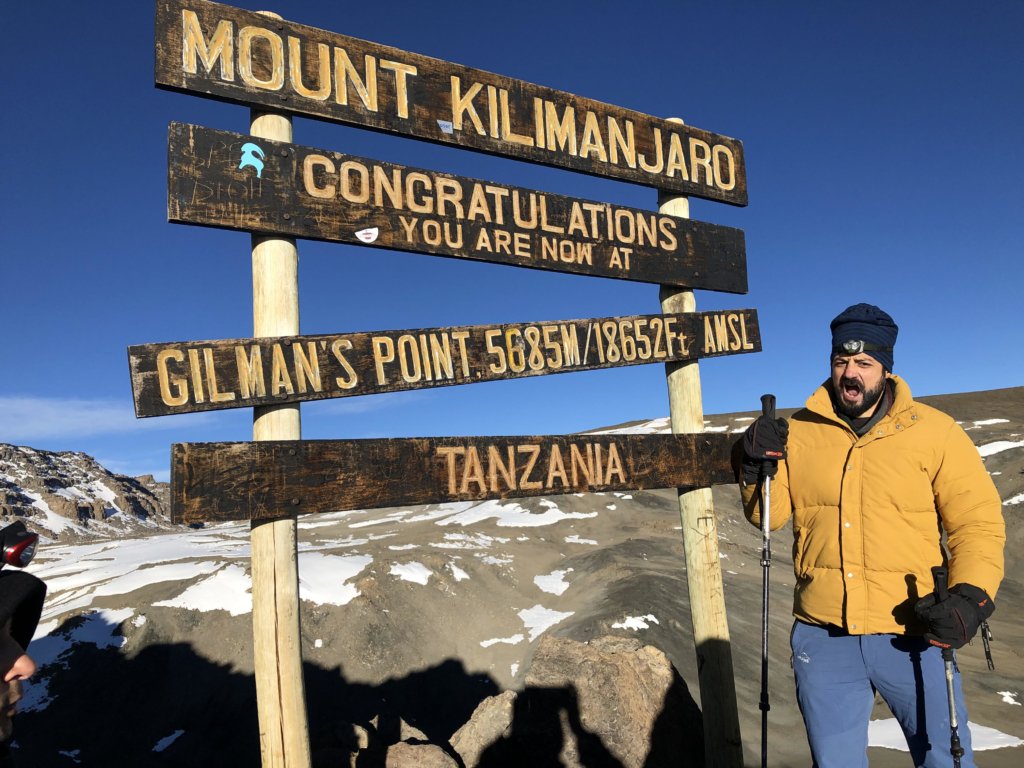
Egyptian doctor Ahmed Abdelkader who backpacked around the continent for 120 days in 9 countries
One lucky traveller is Egyptian doctor Ahmed Abdelkader who backpacked around the continent for 120 days in 9 countries and contributed to the establishment of an NGO to promote healthcare and education for kids. Africa is a beautiful continent of 54 countries with diverse cultures but similar values. Travelling around the continent is the best experience one can ever have in a lifetime.
He shared his experience with Face2Face Africa below:
Growing up in a small town in Egypt, I was eager to find out what life is like outside of the boundaries I knew. I spent hours looking through National Geographic magazines and maps trying to figure out how people live in deserts, on mountain slopes, in lush forests. Chasing my dream, I started working as a travel organizer and also had many trips on my own. Today, I‘d like to share with you the experience that has changed my life. Hi, my name is Ahmed, and this is a story about my journey around Africa.
The goal of my trip was to discover similarities and differences in the lives of people scattered in remote parts of the continent. I was especially keen on learning cultural, religious, and traditional aspects of various nationalities. There are thousands of kilometers between the countries I’ve visited but I was delighted to find things that unite all of us.
For me, Africa was a huge unexplored continent promising never-to-be-forgotten impressions. From endless golden sands of deserts, acacia-covered plains, islets of pristine nature to vibrant national marketplaces, Africa has a lot to wow travelers with. Since the very first day of my trip, I realized that Africa was stashing hidden gems at every turn. That’s why my experience became even more unexpected, colorful, and enjoyable when I abandoned a clear plan. The only thing I knew for sure was that I wanted to travel from Kenya to Uganda, stopping by at 7 more countries in between – Kenya, Tanzania, Zambia, Zimbabwe, Botswana, Namibia, Angola, Congo, and Uganda.
With a little patience, an adventurous attitude, and perseverance, I managed to reach every milestone of my journey. Countless times I found myself in the middle of nowhere, hundreds of kilometers away from the nearest village but there was always a pick-up, bus, van, or even tractor to pick me up and deliver me closer to my ultimate goal.
The media have portrayed a rather negative image of Africa imbued with poverty, conflicts, inequality, and a multitude of social and political issues coming to the fore. Indeed, Africa has a long way to go towards stability and peace, but the continent is much more than that. Strong, sympathetic, and hardy people living there is its main asset. I was struck by their cordiality, hospitality, and desire to help me, a stranger, as if they had known me all their lives.
Once, I thought that sub-Saharan countries would look alike. Well, I couldn’t be more wrong. Now I know that Africa is inhabited by thousands of ethnic groups and tribes who speak more than 2000 languages and boast of drastically divergent cultures. Nowhere else in the world can you find such diversity? Crossing thousands of kilometers and borders, you will come in contact with numerous dialects from English to Swahili, fasten on Orthodox churches and Muslim mosques, check out modern hipster areas with all blessings of modernity or vice versa.
I must admit that traveling around Africa is not always fun. A lot of time it is frustrating, disappointing, and bewildering. You never know what a new day will bring – your bus may break down, you might catch one of the local diseases, your backpack along with all it possesses might suddenly disappear into thin air – this is only a brief list of ‘surprises’ lying in wait for you in the continent. On the other hand, this mix of pleasure and pain is what makes your experience truly valuable.
Remember the most important rule of traveling along Africa – you have to bargain. No matter what country you get to, the first thing in the morning is to learn the name of the currency and numbers in the local language. Believe me, this knowledge will come in handy because as soon as the natives figure out you are a foreigner, prices will instantly skyrocket. You must fully master the art of bargaining; otherwise, the journey will cost you an arm and a leg in the end.
Despite all the challenges, this trip had a huge impact on me and changed my outlook completely. Scrolling through the photos taken in Africa, I can hardly realize that all this happened to me. Every bus ride on bumpy roads I took, every café or hostel I explored, and every people I met on my way made me understand how rich I am with what I own. Life is frantic, chaotic, fleeting, we are constantly worried about what is going to be tomorrow while forgetting to enjoy moments we have now. The African way of life taught me to meet every new day with gratitude, joy, and excitement.
Be spontaneous, be ready for any adventures, and try to comprehend people around you, both Africans and travelers like you. No matter how much time you spend on this beautiful continent, be it days, weeks, or months, learn to appreciate every moment, because you will start craving for more as soon as your trip is over.
Traveling around Africa all by myself, I found it to be the best experience, and here’s why:
1. The world is not as bad as it seems.
The media is persistently trying to convince us that the world is not ok. It’s time to bust this myth. There is a lot of good stuff around us and you, as a tourist, have a chance to get to know it.
2. There is nothing worse than our “comfort zone”.
If you are always in your own cocoon, you will never learn anything other than this. It can be nice and cozy there but it won’t let you think outside the box, won’t allow meeting new people, and won’t give a chance to broaden your mind. Only when traveling solo, you immerse yourself in a completely uncharted environment, comprehend a new experience, and develop yourself as a multi-faceted person.
3. The best possessions are, in fact, non-material.
We live in the material world where a good car or a house is a sign of status, where manufacturers force us to buy a new phone every year, and fashion brands make us throw out barely worn jeans because they are ‘out of style’. But keep in mind that we can’t take our gadgets, belongings, and money to the grave. When your day comes, what will you remember – your past possessions or your experience? Just by embarking on a trip you’ll enrich your life with indelible impressions.
4. Traveling is an opportunity to make your contribution to society.
When visiting a new place, we always take a piece of it in our heart. Along with that, you can leave your mark wherever you go, either in the memory of people or through the good deeds you do. Having met volunteers during one of my trips, I realized that each of us can do many good things for people who need our help.
5. Our lives are in our own hands – that’s the most precious lesson you learn when traveling.
Africa is a striking continent with vast open spaces, diverse landscapes, and beautiful people whose positive attitude is contagious. Africa is where you can find:
– The most diverse nature ranging from deserts, Savannah, beaches, to impassable thickets;
– More than 600 species of animals and countless species of plants;
– Food harvested in the jungle;
– Authentic art, dance, and music;
– Opportunities for volunteering;
– Good-natured, friendly, unspoiled people who are always happy to see you
Come to Africa and you’ll love it as much as I do!
This article by Ismail Akwei was first published on face2faceafrica.com
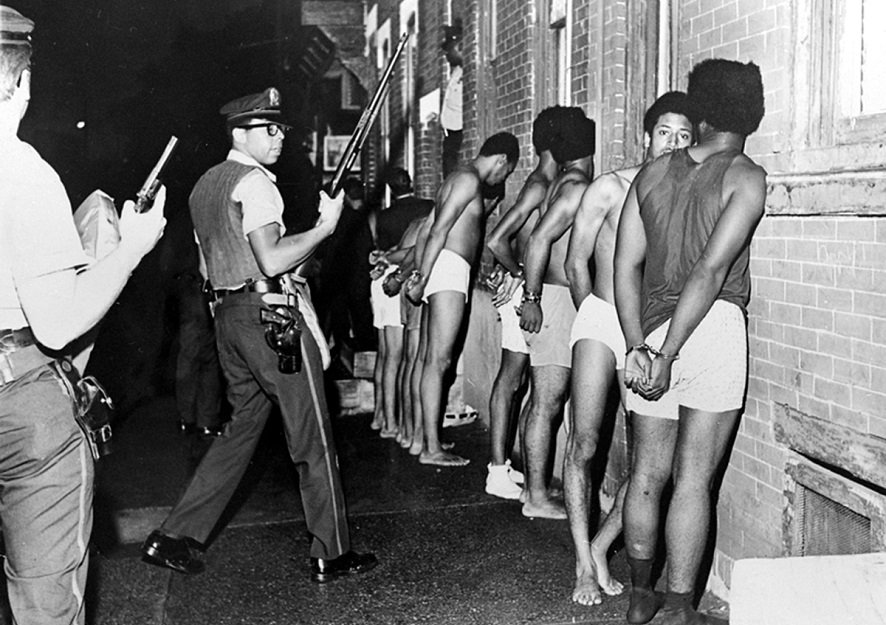
Members of the Black Panther Party, stripped, handcuffed, and arrested after Philadelphia police raided the Panther headquarters, August, 1970. Credit: Courtesy of Urban Archives, Temple University
It was all radical and bloody in the 1970s when the black liberation fighters struggle was at its peak in the United States. The violence was spurred by the incessant racism and disregard of the rights of black people despite laws that protected the race after over 200 years in slavery.
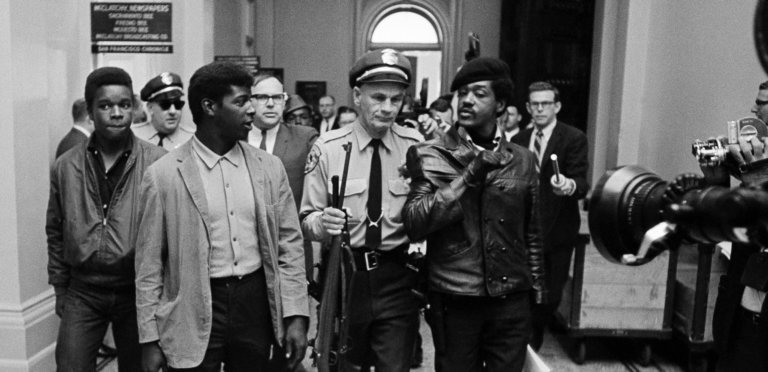
The liberation struggle gave birth to militant groups like Philadelphia-based MOVE founded by John Africa in 1972 and the Black Panther Party founded in late October 1966 by Huey P. Newton and Bobby Seale drawing on experiences working with a variety of Black Power organizations. Its militant wing called the Black Liberation Army.
As members of the police force were killed in black communities for using excessive force and killing black people, members of the militant groups later classified as terrorist organisations were killed for their aggression towards racism and police brutality while others were jailed for crimes they never committed.
A typical example is the case of Elmer “Geronimo Ji Jaga” Pratt who was a member of the Black Panther Party. He was arrested after the 1968 murder of a 27-year-old elementary school teacher, Caroline Olsen, perpetrated by two men on a tennis court during an $18 robbery in Santa Monica, California.
In 1972, the FBI used a secret informant to help convict Pratt of a murder he did not commit. Pratt had maintained throughout his trial that he was in Oakland during the night of the murder.
He was released in 1997 by a California Superior Court judge on the grounds that the informant had lied about working for the government and the information was not shared with the defense. He also won a $4.5 million civil rights settlement against the FBI and the Los Angeles Police Department.
This is just one of a few cases that resulted in the release of members of black liberation groups who have been jailed for crimes they deny knowledge of after 40 years in prison.
Over two years, Ed Pilkington, the chief reporter for Guardian US, has interviewed a number of black people labelled radicals who are still in prison since the 1970s.
Some of them are members of MOVE who were convicted 25 years to life for killing cops in 1971. Some of the jailed fighters have died in prison while the remaining maintain their innocence and complain of unfair trials, cover-ups and a deliberate attempt by the government keep them in jail till their death as they are denied parole.
Here are some of the black radicals spotlighted by Ed Pilkington who are still in prison after four decades.
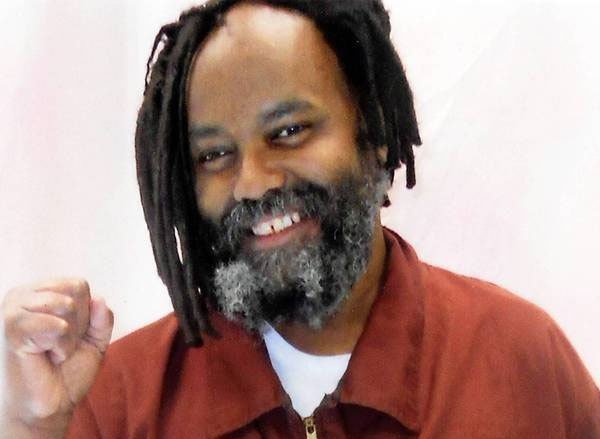
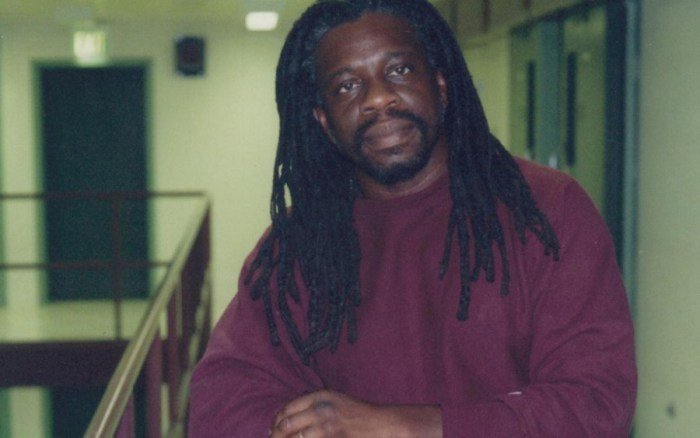
1.Mumia Abu-Jamal (Wesley Cook) – former Black Panther
Age: 64
Incarcerated since: 1981
Convicted of: Murder of Philadelphia police officer Daniel Faulkner
Sentence: Life without parole
Current prison: SCI Mahanoy, Pennsylvania
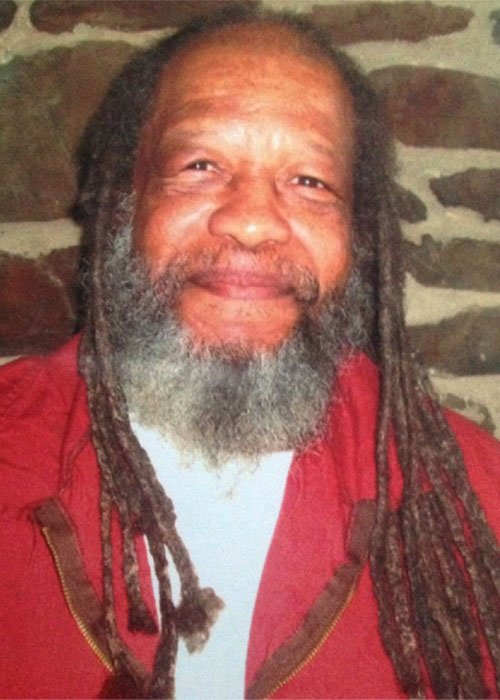
2. Delbert Orr Africa – MOVE
Age: 72
Incarcerated since: 1978
Convicted of: Third-degree murder of police officer James Ramp during Philadelphia siege
Sentence: 30 years to life
Current prison: SCI Dallas, Pennsylvania
3. Eddie Goodman Africa – MOVE
Age: 68
Incarcerated since: 1978
Convicted of: Third-degree murder of police officer James Ramp during Philadelphia siege
Sentence: 30 years to life
Current prison: SCI Mahanoy, Pennsylvania
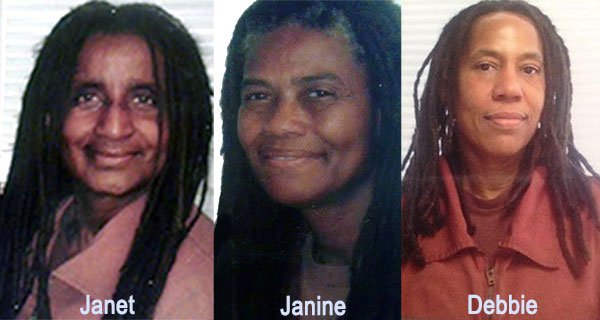
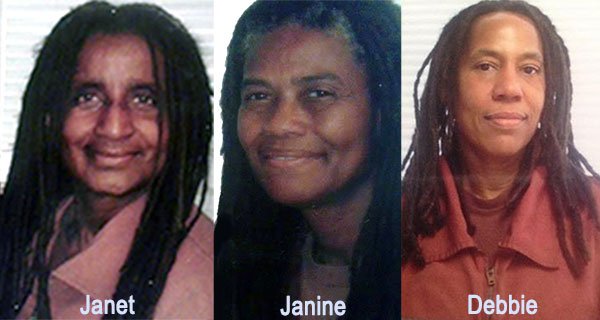
4. Janet Holloway Africa – MOVE
Age: 67
Incarcerated since: 1978
Convicted of: Third-degree murder of police officer James Ramp during Philadelphia siege
Sentence: 30 years to life
Current prison: SCI Cambridge Springs, Pennsylvania
5. Janine Phillips Africa – MOVE
Age: 62
Incarcerated since: 1978
Convicted of: Third-degree murder of police officer James Ramp during Philadelphia siege
Sentence: 30 years to life
Current prison: SCI Cambridge Springs, Pennsylvania
6.Jalil Muntaqim (Anthony Bottom) – former Black Panther, Black Liberation Army member
Age: 66
Incarcerated since: 1971
Convicted of: Murders of police officers Waverly Jones and Joseph Piagentini
Sentence: 25 years to life
Current prison: Sullivan Correctional Facility, New York
7. Mutulu Shakur – associated with Black Panther party and other groups
Age: 67
Incarcerated since: 1986
Convicted of: Helping Black Panther Party member Assata Shakur escape from prison in 1979
Sentence: 60 years
Current prison: Federal Correctional Complex, Victorville, California
8. Russell ‘Maroon’ Shoatz – former Black Panther
Age: 74
Incarcerated since: 1970
Convicted of: Murder of Philadelphia police sergeant Frank Von Colln
Sentence: Life without parole
Current prison: SCI Dallas, Pennsylvania
9. Sundiata Acoli (Clark Squire) – former Black Panther, Black Liberation Army member
Age: 81
Incarcerated since: 1973
Convicted of: Murder of New Jersey state trooper Werner Foerster
Sentence: Life plus 30 years consecutively
Current prison: FCI Cumberland, Maryland
10. Chuck Sims Africa – MOVE
Age: 59
Incarcerated since: 1978
Convicted of: Third-degree murder of police officer James Ramp during Philadelphia siege
Sentence: 30 years to life
Current prison: SCI Dallas, Pennsylvania
11. Michael Davis Africa – MOVE
Age: 62
Incarcerated since: 1978
Convicted of: Third-degree murder of police officer James Ramp during Philadelphia siege
Sentence: 30 years to life
Current prison: SCI Graterford, Pennsylvania
12. Joseph Bowen – former Black Liberation Army member
Age: 70
Incarcerated since: 1971
Convicted of: Murder of police officer, and later murder of two prison officers
Sentence: Life without parole
Current prison: SCI Coal Township, Pennsylvania
13. Veronza Bowers Jr – former Black Panther
Age: 72
Incarcerated since: 1973
Convicted of: Murder of US park ranger Kenneth Patrick
Sentence: Life
Current prison: Federal Correctional Complex, Butner, North Carolina
14. Fred ‘Muhammad’ Burton – former Black Liberation Army member
Age: 71
Incarcerated since: 1970
Convicted of: Murder of police officer, and later murder of two prison officers
Current prison: SCI-Somerset, Pennsylvania
Sentence: Life
15. Romaine ‘Chip’ Fitzgerald – former Black Panther
Age: 69
Incarcerated since: 1969
Convicted of: Murder of security guard and attempted murder of a highway patrol officer
Sentence: Two life sentences
Current prison: California state prison, Los Angeles County
16. Ruchell ‘Cinque’ Magee
Age: 65
Incarcerated since: 1963
Convicted of: Aggravated kidnapping in 1970 courthouse break-out attempt in which Judge Harold Haley was killed
Sentence: Life without parole
Current prison: California Men’s Colony, San Luis Obispo, California
17. Ed Poindexter – former Black Panther
Age: 73
Incarcerated since: 1970
Convicted of: Murder of Omaha police officer Larry Minard
Sentence: Life
Current prison: Nebraska State Penitentiary, Lincoln, Nebraska
18. Kojo Bomani Sababu (Grailing Brown) – former Black Liberation Army member
Age: 65
Incarcerated since: 1975
Convicted of: Murder of drug dealer, attempted prison escape
Sentence: Life
Current prison: USP Canaan, Pennsylvania
19. Kamau Sadiki (Freddie Hilton) – former Black Panther
Age: 65
Incarcerated since: 2002
Convicted of: Murder in 1971 of Atlanta police officer James Green
Sentence: Life
Current prison: Augusta State Medical Prison, Georgia
Below is a video of one of Ed Pilkington’s interviews with black liberation fighters still in prison.
This article by Ismail Akwei was first published on face2faceafrica.com
It was a successful hackathon for Senegalese cyber security consultant and researcher, Amat Cama, who won a total of $375,000 in cash for exposing bugs in the Tesla Model 3 car and other products in Vancouver, Canada.
Together with his teammate, Richard Zhu, Team Fluoroacetate – as they called themselves – was the only one to sign up for the first-ever automotive hacking at the Pwn2Own hacking competition held in March during the CanSecWest 2019 security conference.
Tesla Model 3 on show.
They targeted Tesla’s infotainment system which had the smallest reward and managed to display a message on the car’s web browser by exploiting a just-in-time (JIT) bug in the renderer component.
This fete earned them $35,000 and a Tesla. They won the extra $340,000 by exploiting vulnerabilities in Safari, Oracle VirtualBox, VMware Workstation, Firefox, and Microsoft Edge.
That's a wrap! Congrats to @fluoroacetate on winning Master of Pwn. There total was $375,000 (plus a vehicle) for the week. Superb work from this great duo. pic.twitter.com/Q7Fd7vuEoJ
Amat Cama and his teammate were crowned Master of the Pwn for 2019 and they won the largest share of the $900,000 on offer by the organizers, Zero Day Initiative (ZDI), who paid $545,000 during the entire event for 19 bugs.
All the vulnerabilities exploited have been reported to vendors who have been given 90 days to release patches before Zero Day Initiative (ZDI) can disclose details of the most interesting vulnerabilities.
Amat Cama, popularly known as Acez, is an alumnus of Northeastern University in Boston where he graduated with a Bachelor of Science in Mathematics and Computer Science in 2014. He has worked with several cybersecurity firms in the United States including VSR and Qualcomm as a Security Engineer.
It all started in Dakar, Senegal for Cama who attended the Enko Waca International School (formerly West African College of the Atlantic) – a bilingual, secular and mixed institution that opened in 1996 in Ouakam. He studied Physics, Mathematics, Economics, French, English and Spanish and then graduated in 2010 with an International Baccalaureate.
In Dakar, he taught children at the S.O.S Kids’ Village and Talibou Dabo Center before getting admission to the Northeastern University where he was a member of the Cyber Defense Team and the Capture the Flag (CTF) Team. CTF is a computer security competition designed to attack and defend computer systems.
The avid CTF player was part of the Shellphish CTF team that took part in the DARPA Cyber Grand Challenge as well as a number of other competitions.
Amat Cama moved to Beijing City in 2017 after leaving Qualcomm to take up the job of Senior Security Researcher at the Beijing Chaitin Technology Co., Ltd. He left after eight months to work as an independent security researcher and consultant with an immense interest in hacking contests which are very lucrative.
The certified offensive security wireless professional with sharp reverse engineering, penetration testing and programming skills has won several awards in contests including the 2016 Hall of Fame prize at Geekpwn Shanghai for his demo of a remote exploit against the Valve Source engine.
In 2017, he successfully demonstrated a baseband exploit against the Samsung Galaxy S8 at Mobile Pwn2Own in Tokyo as an individual contestant. In the 2018 Pwn2Own contest in Tokyo, Amat Cama and his teammate were crowned Master of Pwn after winning over $200,000.
In total, he has won 19 awards and honours in competitions since 2011 with total cash rewards of over a million dollars. Cama is also a licensed private pilot.
This article by Ismail Akwei was first published on face2faceafrica.com



















 Ismail Akwei