In case you don’t know who Stephen Keshi is …

Stephen Okechukwu Keshi was born on January 23, 1962 in Bauchi State, Nigeria.

His footballing career began as a football player between 1979 and 1998. It also continued as a coach from 2001 till he died on Wednesday, June 8, 2016.

Stephen Keshi the footballer

Stephen Keshi started playing professional football in 1979 in Lagos joggling from one club to the other before he got his first break outside Africa’s largest economy.

He moved to Abidjan in 1985 to play in their premier league before getting his big break in 1986. He was spotted and signed by Belgian football club Sporting Lokeren in 1986, to ply his trade in Europe.

A year after his stint with Lokeren, Keshi was signed by Belgian premier league side Anderlecht in 1987. He appeared 99 times for the club scoring 18 goals till he left to Strasbourg in 1991.

With Anderlecht, he won the Belgian Cup in 1988 and 1989 and then the Jupiler league in 1991.

Keshi continued his play with other teams in Belgium till 1995 when he moved to California in the United States of America and played for smaller teams. He used that opportunity to train as a coach in 1996.

Stephen Keshi finally moved to Malaysia in 1997 to play for second division side Perlis, before ending his active footballing career as a player in 1998.

Super Eagles player

Stephen Keshi appeared 64 times for the Nigerian national team, Super Eagles scoring 9 goals as a central defender. He won the Africa Cup of Nations as captain of the team in 1994.

During this time, Nigeria reached number 5 on the FIFA world ranking, highest for an African team.

Stephen “Big Boss” Keshi the coach

After his coaching training in 1996 in the USA, Stephen Keshi got the opportunity to lead Nigeria’s Junior Eagles at the 2001 African Youth Championship.

He started his major coaching career with Togo in 2004 helping them qualify for the first time to the World Cup in Germany in 2006.

He was however replaced with Otto Pfister at the World Cup and then brought back after poor performance and controversies surrounding the Togolese team in 2007.

Keshi then coached Mali in 2008 and was sacked in 2010 after poor performance resulting in the team’s failure to progress from the group stage at the Africa Cup of Nations in Angola.

Super Eagles coach

Keshi finally got the opportunity to coach his home country Nigeria in 2011 helping them qualify for the AFCON in 2013 which they won. He resigned the following day and later changed his mind.

Nigeria also qualified for the 2014 World Cup under his management. The team progressed to the Round of 16 when they were kicked out only for Keshi to resign again. He returned after he got his contract renewed by the Nigeria Football Federation (NFF).

Tough moments

After helping Togo qualify for the 2006 World Cup in Germany, Keshi was replaced with Otto Pfister who couldn’t carry the team on to the finish.

Stephen Keshi was also sacked as Mali coach in 2010 after recording poor results which caused the team to exit the group stage of the Africa Cup of Nations in Angola.

Keshi had a terrible footballing moment in 2014 when Nigeria, defending champions, failed to win a game in the qualification matches for the Africa Cup of Nations in Equatorial Guinea.

He was under immense pressure from the federation and fans but he chose not to resign for the love of his country.

In 2015, Keshi was sacked as Super Eagles coach for poor results which led to the team’s failure as defending champions to qualify for the Africa Cup of Nations in Equatorial Guinea.

Memorable quotes

Stephen Keshi is remembered for some inspirational quotes he made in his career. Some memorable ones are:

“People don’t have to believe in you for you to succeed. Just work hard. When you succeed, they will believe.”

“Be kind for everyone you meet is fighting a battle.”

Laurels

Stephen Keshi is one of two Africans to win the Africa Cup of Nations as a player and as coach of a national team. He was the captain of the Super Eagles winning team in 1994 and the coach of the 2013 winning team in South Africa.

One of Nigeria’s all-time great footballers Stephen Keshi has died at the age of 54. Rest in peace, Keshi. pic.twitter.com/P9FUXrI8Cx— Arsenal (tomgunner14) June 8, 2016

He was also the first African coach to successfully qualify two African countries, Nigeria and Togo, to the World Cup finals. He also helped Nigeria in 2013 to become the first country to get an AFCON trophy and qualify for the World Cup.

He was awarded Africa Coach of the Year 2013 by CAF after Nigeria’s sterling performance and victory at the AFCON 2013.

Family

Stephen Keshi was a family man with four children. He was married to his wife Kate Keshi for 33 years until she passed away on December 10, 2015 after a three-year battle with cancer.

SO SAD: Stephen Keshi Buries Wife Amidst Tears (Photos) https://t.co/RHgaPlt7uc pic.twitter.com/iYwmdQwQiU— •Kênt♥̨ (Kvng_Kent) January 16, 2016

Death

Stephen Keshi died in the early hours of Wednesday, June 8, 2016 in Nigeria.

His family said he died of cardiac arrest.

This article was first published by Ismail Akwei on africanews.com.

Togo takes pride in its first locally produced fair-trade chocolate

Togo’s agriculture export, until recently, was the leading foreign exchange earner for the West African country.

60% of its 7.5 million population is employed under the agriculture sector which has cocoa as its second-largest export after coffee.

Despite its flourishing cocoa production, Togo did not process cocoa nor produce its own chocolate until 2013 when a team of six young Togolese entrepreneurs started a small cocoa processing company in Kpalime, a town 120km north of the capital, Lome.

ChocoTogo, as they call the cooperative, was born after they were selected, through a European Union young entrepreneurship programme, to receive traditional chocolate production training in Sicily and Mondica in Italy in 2013.

After several international trade fairs and insight into fair-trade chocolate production, processing and marketing, they started the first and only cocoa processing company in the country producing 100% organic chocolate made in Togo with no chemicals added.

From their first presentation of the chocolate products to the Togolese parliament in March 2014, ChocoTogo has grown to the international market by its participation in several trade fairs in Africa and Europe winning several awards.

“Our Chocolate has attracted a lot of interest on the local and international market. In 2015 we won an innovation award at Terra Madre, Italy, where we competed with Italian local chocolate brands. Later that year in November, we also won the startup of the year award in Togo,” Emmanuel Agbenonwossi, co-founder of ChocoTogo, told Africanews’ Ismail Akwei in an interview.

104 farmers benefit from the company that operates on a fair-trade basis. It has also employed 12 full-time workers and about 35 part-time workers mostly women and Togolese youth.

“We started the project with our own resources. As a social enterprise, we take the cocoa beans from the farmers on fair-trade basis, we process it into chocolate and then share the benefits equally,” Agbenonwossi explained.

ChocoTogo now produces organic cocoa paste and black chocolate with different flavours derived from other organic products like peanut, ginger, coconut, groundnut and lemon.

The Togolese government acknowledged ChocoTogo during their 56th independence celebration on April 27 by presenting guests with the locally made chocolate products.

“Though we don’t have any official support or funding since we started in 2013, we believe the action of the government will boost our activities and encourage other young people to take up entrepreneurship,” Eric Komi Agbokou, co-founder and coordinator of the cooperative said.

Emmanuel Agbenonwossi believes that with adequate investment and a larger production unit, ChocoTogo can compete with big cocoa-producing companies in the world.

This article was first published by Ismail Akwei on africanews.com.

Starry Night

Stars shine to brighten the night;
From Walewale to Kokomlemle, the sky binding ties,
Perfectly! despite the lies in sight;
Little children enjoy games of the hour;
Even the taste of lemon that is sour;
Yet their parents end their insatiable desire;
To avoid the shadows of the men of fire;
Same night that brought forth little babies;
Turns to day for the dark-hearted cronies;
Destroying the nights of follies and lollies for the kiddies;
We miss the cool nights of the past;
Where the elderly held steadfast;
The culture of fables around the red warm fire;
Under the starry night from Walewale to Kokomlemle.

Poets’ Poet

Pan-Africanism, the root of his poetic journey;
Sorting through life’s abundant milieu;
To collect reasoning behind damning calamities;
And present in a folkloric, balladic pieces;
John was his name till he was fully conscious;
Politically, radically and socially he conjures;
Through the minds and bodies of the sojourned;
To continue in the spirit of the big gems;
The Singing Net; The Oath of the Fontonfrom; Logorligi Logarithms;
Freedom Symphony; Mandela the Spear; Flowerfall;
And for children;
The Anthill In the Sea; A Slim Queen In A Palanquin; A Pawpaw On A Mango Tree;
And many others make Atukwei Okai a legendary poet.

Ghana’s president threatens to ‘commit murder’ against child marriage

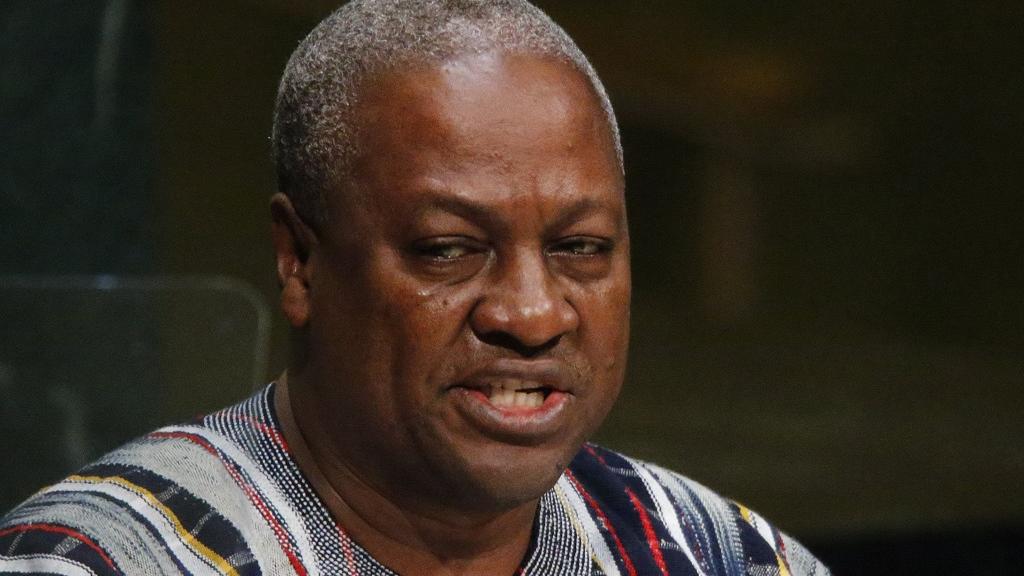
Ghana’s president, John Dramani Mahama, in a bid to support a campaign against child marriage, threatened to commit murder if anyone attempts to marry off his daughter if she was underage.

He made this public statement in Accra at the opening ceremony of the 7th Africa Conference on Sexual Health and Rights on February 10, 2016. The three-day conference hosted by his wife, Dr Lordina Mahama, is part of an initiative of First Ladies of Africa.

President Mahama cautioned families and educational institutions to do away with the culture of silence when children are withdrawn from school to be married off.

“That is the kind of firm action we must take…school authorities must watch out. If a girl stops coming to school, ring the alarm bells, try and find out where the child is and alert the authorities as early as possible so that we can prevent them from being married off,” he said.

Ghana’s president added that: “Why should you be forced to marry somebody you have no affection for, and especially a child. If my daughter is below 18 and somebody attempted to marry her off, I probably will be in prison; I will commit murder”.

He expressed content and support to Africa’s First Ladies for the challenge they are embarking on so as to achieve their objective. Fifteen African First Ladies are in Accra for the conference.

Also, under the same umbrella, Ghana launched a campaign to end child marriage spearheaded by the country’s Ministry of Gender, Children and Social Protection.

One out of five girls between 20 and 24 years old married before their 18th birthday. The Ghana Ends Child Marriage campaign seeks to change that phenomenon and many Ghanaians are expressing their support through social media.

This article written by Ismail Akwei was first published on africanews.com