Malawi is now the first country in Africa and one of the first in the world to have an air corridor, to test drones for humanitarian and developmental use.
Also, More than one billion Yahoo accounts were hacked in August 2013. Yahoo said last week that the breach is different from the earlier theft of over 500 million accounts reported in September.
Watch this edition of Hi-Tech on The Morning Call with Ismail Akwei.
This article was first published by Ismail Akwei on africanews.com
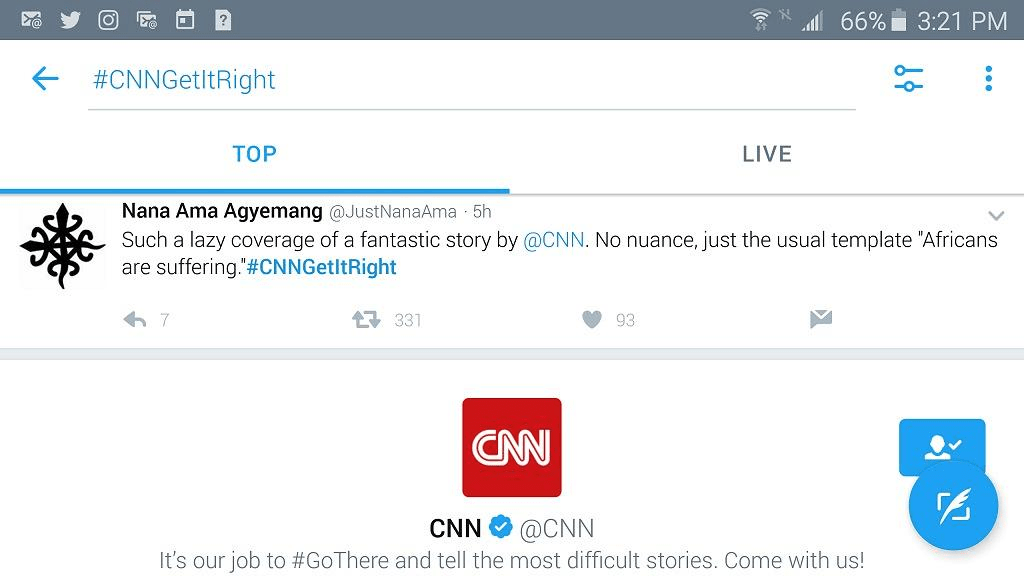
Ghanaians on Twitter have condemned a report by American television network Cable News Network (CNN) on the recently held elections, claiming Ghanaians were struggling to obtain food and services.
The main area of contention in the article, among others, was a paragraph that said Ghanaians (which was misspelled) were struggling to obtain food and services.
“Oil reserves were discovered off the coast of Ghana in 2007, but Ghanians (sic) struggle to obtain food and day-to-day services. Rolling blackouts are common and citizens often stand in long line to obtain products,” it said.
A cross section of Ghanaians including media personalities on Sunday morning began tweeting their displeasure with a screenshot of the paragraph in question and hashtag #CNNGetItRight.
A Ghanaian sports journalist, Gary Al-Smith, started the hashtag which is now the top trend in the West African country as hundreds of Ghanaians condemn the misrepresentation.
“Also, @CNN, Ghana and Venezuela are not twins. In fact, Ghana are North Korea are not even close. Lazy armchair reporting. #CNNGetItRight,” Al-Smith tweeted after he advised: “At least, spellchecker on the PC of whoever wrote this should have pointed out the word ‘Ghanaians’ and NOT ‘Ghanians’. #CNNGetItRight.”
The original article was later updated at 1255 GMT with the correct spelling of Ghanaians.
The entire paragraph was deleted at 1501 GMT with an Editor’s Note acknowledging the mistakes.
“An earlier version of this article incorrectly described the status of the retail economy in Ghana. Stores are generally well stocked, and food shortages are rare. The earlier version also erroneously said Nana Akufo-Addo ran for president in 1998. Ghana did not have presidential elections in 1998,” the note stated.
Er… Good Morning CNN. Your journalist is either incompetent or racist. I see no third option. Either way, fire them! #CNNGetItRighthttps://t.co/jZuZyQTm3N
CNN: we shd write abt Gh's successful elections Also CNN: ppl won't read it. Add "struggle to obtain food" ppl like that sh!t#CNNGetItRightpic.twitter.com/0L8t9XNoI0
Six African countries in the South African Development Community (SADC) have been granted duty-free access to the European Union on Wednesday after EU Parliament’s approval of their Economic Partnership Agreement (EPA).
Namibia, Mozambique, Botswana, Swaziland and Lesotho can now export their products under this agreement while South Africa gets improved market access, the European Parliament said in a statement.
The deal was approved by 417 votes to 216, with 66 abstentions, the statement added.
The agreement will enter into force after the Council of the European Union and the parliaments of the six countries ratify the text.
The EPA will ensure immediate duty- and quota-free access for exports to the EU market and also to create new and flexible opportunities for the region.
The six countries will also liberalise 86% of their trade with the EU over ten years with the exception of agricultural and fishery products.
Mozambique will liberalise 74% of its trade under the agreement which is in compliance with World Trade Organisation (WTO) rules.
This article was first published by Ismail Akwei on africanews.com.
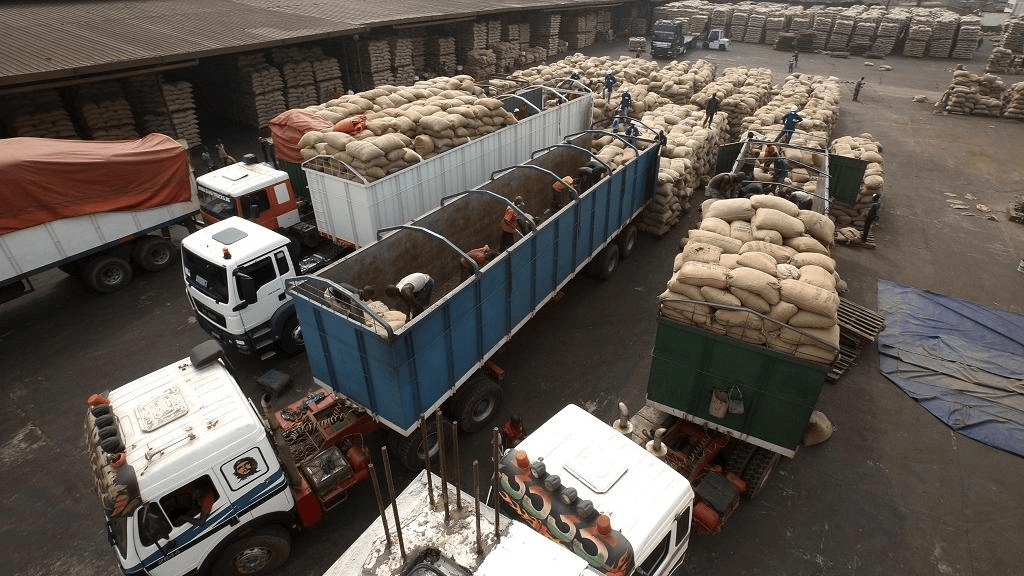
Two of the world’s leaders in cocoa production, Ghana and the Ivory Coast have signed an agreement to fight against child labour in cocoa production.
The agreement committing the two countries was signed by the first ladies of the two countries, Lordina Mahama of Ghana and Dominique Ouattara of the Ivory Coast in Abidjan on Tuesday.
In Cote D'voire to sign a joint declaration against cross border human trafficking & worst forms of child labour. pic.twitter.com/JvY8iBFSxJ
“We are deeply concerned by the magnitude of the phenomenon and as signatories we firmly condemn the fact that those who engage in child trafficking are taking advantage of the social and economic vulnerability of families and children in order to exploit them by using force, abduction, fraud or deception,” they agreed.
The agreement provides for enhanced police and gendarmerie cooperation between Ghana and the Ivory Coast.
The West African neighbours account for more than over 60% of the world’s cocoa production yet many farming families face persistent poverty with an income of less than one dollar a day.
According to Ivorian statistics, 1.2 million children were engaged in cocoa production in the country in 2013/2014 and poverty played a major role in the phenomenon.
“Our countries are particularly exposed to the issue of the worst forms of child labor in cocoa production. That’s why we decided to unite our efforts to protect our children,” Mrs. Ouattara explained.
Ivory Coast is already running a programme to save 5,000 children in cocoa farms. The programme is backed by the US Department of Labour with a $ 4.5 million funding over five years.
This article was first published by Ismail Akwei on africanews.com
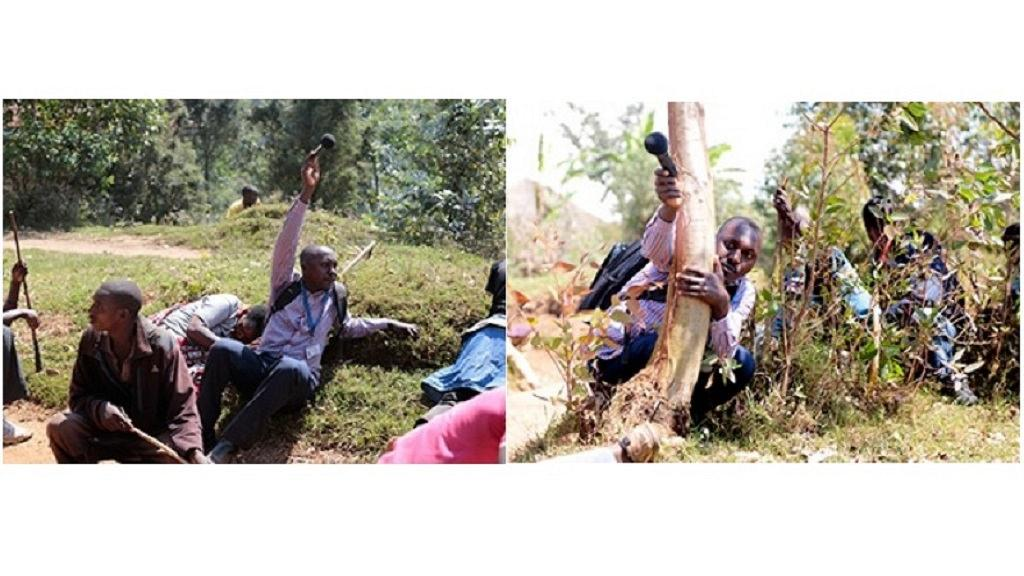
Despite the conflict and threat to media freedom, Burundian radio journalist Eloge Willy Kaneza has risked his life to report the news from the troubled country ranked 156 out of 180 countries in the 2016 World Press Freedom Index.
34-year-old Eloge Willy Kaneza has been named the 2016 Peter Mackler Award recipient for his commitment to asserting the right to air his stories where independent media is under threat.
“Not only does Eloge Kaneza embody the journalistic values the Peter Mackler Award (PMA) seeks to honor, he and his colleagues have also found creative ways to push back on repression using online technologies,” the Project Director of PMA, Camille Mackler said.
His work with the collective is notable for its creativity in circumventing the restrictions that otherwise curtail accurate reporting in the country.
After the 2015 attempted coup in Burundi, the media suffered from the President Nkurunziza’s closure of all independent radio stations in the country for “enabling the coup plotters”.
While reporters were fleeing the country for fear of being arrested, Eloge Willy Kaneza joined others to stay in Bujumbura to continue reporting on social media.
Eloge Kaneza, who stayed home in Bujumbura, became the only public face and the essential local link for the online news network eloquently baptized SOS Media Burundi, PMA said on its website.
SOS Media Burundi published local information on Facebook, Twitter and SoundCloud anonymously and in isolation moving from one Wi-Fi hotspot to another as they discussed on WhatsApp.
“Equipped with smartphones, its journalists report what they see in their neighborhoods, covering violence against civilians, arbitrary arrests and shelling,” PMA explained.
Kaneza, who is not anonymous among the collective, has furnished international media with objective information from trusted sources from both the government and opposition as well as the security services.
“His work with the collective is notable for its creativity in circumventing the restrictions that otherwise curtail accurate reporting in the country … As one of the named reporters of this otherwise anonymous collective, he is a role model whose courage deserves recognition,” Louise Roug, a member of the PMA advisory board said.
The Peter Mackler Award was founded in 2008 by family and friends of Peter Mackler who wanted to continue his work upon his passing. Mackler was a chief editor of AFP who has covered conflicts extensively.
Photo Credit: SOS Media Burundi
This article written by Ismail Akwei was first published on africanews.com

 Ismail Akwei