The powerful story behind this historic photo of black women set to graduate from West Point

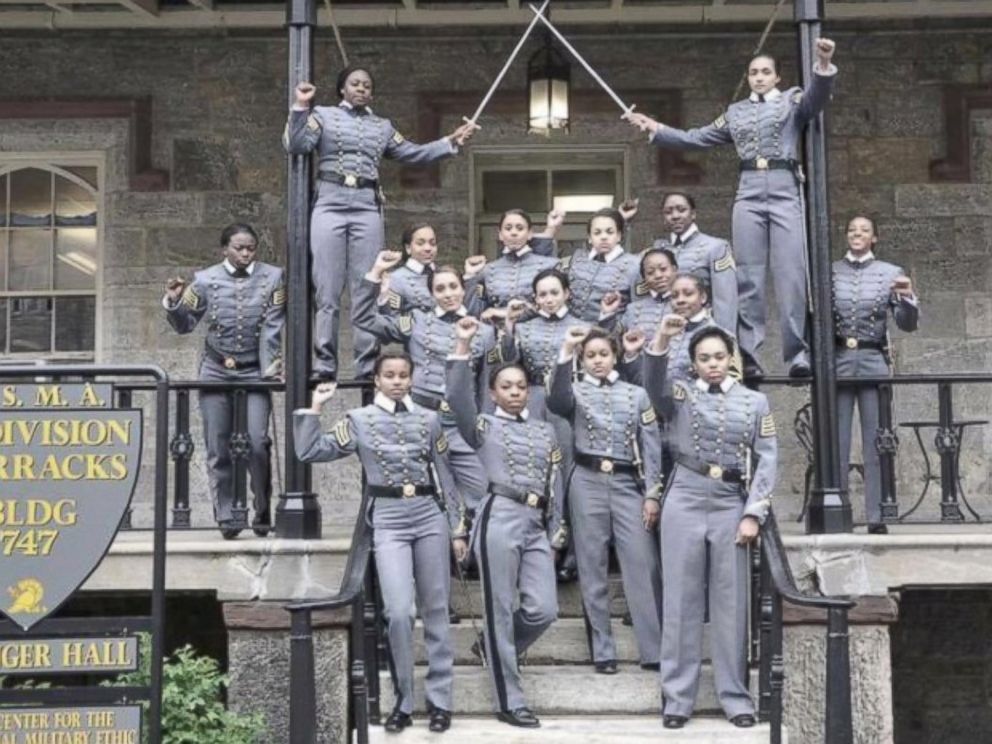
History in the making: 32 African American females will be with the Class of 2019, the most in the United States Military Academy’s history. (US Army photo by Cadet Hallie H. Pound)

The United States Military Academy in New York, also known as West Point, will make history on Saturday when it graduates its largest number of African American women in the history of the school.

They are just 34 out of the over 950 cadets graduating, but this is a historic moment because the prestigious military academy has never had more than twenty black women graduating since it was established in 1802.

Ahead of the graduation, the African American women cadets posed for a powerful picture which grasped the attention of the world to the historic story of West Point’s Class of 2019.

“My hope when young Black girls see these photos is that they understand that regardless of what life presents you, you have the ability and fortitude to be a force to be reckoned with,” cadet Tiffany Welch-Baker told the website Because of Them We Can.

This is the second time an iconic photo of graduating black women from West Point has gone viral. In 2016, 16 cadets took a photo with their fists raised creating a lot of controversies which died down after the military academy decided not to take action because they did not violate the army’s rules on political expression.
The academy is noted to have graduated its first class of women in 1980. This will be the 5000th class of women graduating since its establishment. Until now, there hasn’t been any major improvement in the number of undergraduate women as well as black women in the academy.

In this decade of equality and diversity, West Point also joined the bandwagon and in 2014, created an office of diversity to offer equal opportunities to Americans of different races and gender.

The academy, which graduated its first African American cadets in 1877, selected Simone Askew in 2017 to be the first-ever black woman to serve as cadet commander. In 2018, Lt. Gen. Darryl A. Williams was appointed as the academy’s first black superintendent, CNN reported.

With the diversity in place, only 10% of undergraduate students are black and 20% of the cadets are women, the school estimates.

Besides this year having the highest number of black women graduating, it will also have the highest number of female Hispanic graduates.

“Last year’s graduating class had 27… And the expectation is next year’s class will be even larger than this year’s,” said West Point spokesman Frank Demaro.

Vice President Mike Pence is expected to attend the graduation ceremony on Saturday to witness the commissioning of the cadets as second lieutenants in the U.S. Army.

This article by Ismail Akwei was first published on face2faceafrica.com
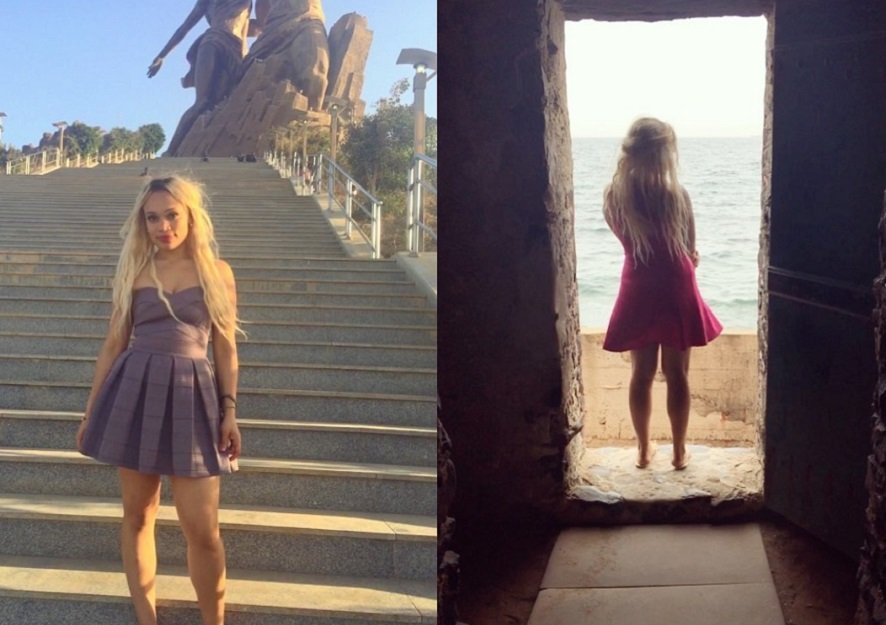
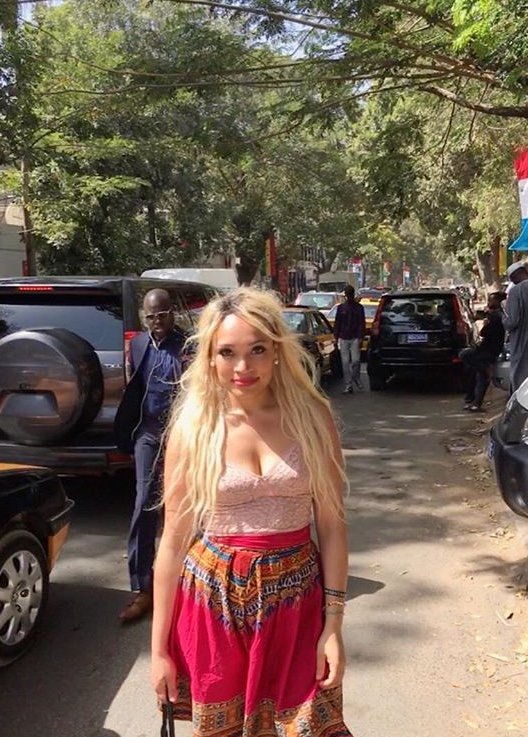
Meet Isabelle Noack, the Africa traveller who is exploring the overlooked realities of the continent

Isabelle Noack in Africa – Photo Courtesy Isabelle Noack

Face2Face Africa (F2FA) caught up with YouTuber, traveller and broadcast journalist Isabelle Noack (IN) who is attempting to visit all the countries in Africa with her smartphone on the record button capturing the beauty, people, food and everything in sight to make Africans and black people proud of their heritage.

Africa’s 54 countries are each unique and diverse in their own way surpassing what is seen and heard in the media, said Isabelle Noack. The intricacies of each region and boundary cut across cultures, languages, politics and customs.

The quest of unearthing and highlighting these cultural diversities is unending as several literature, documentaries and the media in general have spotlighted just a fraction of the known and unknown varieties of the African story. Isabelle Noack

F2FA: Why did you decide to tour the continent?

IN: Unfortunately, there are so many misconceptions and prejudices about Africa. People will travel to Florida where it’s much more dangerous than in many African places but are “scared” to visit Senegal for example, which is one of the safest and most stable nations in Africa. There are so many beautiful, exciting reasons to visit this amazing continent and I want to inspire us all to do so while getting to know the real side of Africa – one that is often overlooked by mainstream media. I also want to help make Africans and black people feel proud of their heritage and realize there are no good reasons they should ever feel bad or ashamed of where they’re from – Mama Africa. The richest continent in the world.

F2FA: Which countries have you visited so far?

IN: I have been to Senegal, Guinea, Congo, South Africa, Algeria, Morocco and Tunisia and can’t wait to see even more.

F2FA: What are some of your shocking and exciting experiences in each country you visited.

IN: I truly loved the kindness, openness and hospitality in all African places I have been to – they’re all different but amazing in their own way. Senegal is a great example of it, the nation truly honors its nickname “land of the teranga” which means “land of hospitality”. I was shocked and truly hurt by the continuous racism and apartheid in South Africa and also the way white people are still viewed as superior not just in SA but many African countries. That’s so sad and frustrating and I really want to help change that. The damage that the West has done to this continent and continues to do is unimaginable and unacceptable. It needs to change, so Africa can finally reach its very highest potential (again) and get the credit it deserves.

F2FA: Which is your best/favourite country so far.

IN: Such a hard question. I loved them all for different reasons. I think first and foremost, it’s the people that make a place beautiful and since Africans are super beautiful inside and out, every country is amazing  it really also depends on what you like though. Like if you want to see the desert, I’d suggest Algeria, Morocco, Namibia etc., if you want to experience city life in a safe setting I’d say Dakar, Accra, Cape Town, Nairobi etc… whatever you do, visiting Mama Africa will always leave you feeling beautiful, empowered and changed for the better for she loves and cares for all her children 

F2FA: Any tips for our readers outside the continent on how to get around Africa easier?

IN: Sure, passport is a given  English will get you far but if you speak another language like French, Arabic or Portuguese or some of the local African languages (there are many, Cameroon alone has 240) then you may do even better :). I’d definitely also suggest getting familiar with the region before, so you know what to watch out for and what to make sure to include in your list of things to see/experience. You may have to get some vaccinations before leaving – yellow fever is the most common one. And if you have any questions, you can also always reach out to me – the Africa expert 

Below are videos of her travels.

Algeria:

Algeria Part 2:

Guinea:

Senegal:

Congo:

South Africa:

This article by Ismail Akwei was first published by face2faceafrica.com

African country where malaria parasite was first discovered in 1880 declared malaria-free

Mosquito

Africa is the continent with the highest prevalence of malaria which is a life-threatening disease caused by plasmodium parasites transmitted by the bite of infected female Anopheles mosquitoes. In 2017, Africa was home to 92% of malaria cases and 93% of malaria deaths, says the World Health Organisation (WHO) whose estimates amount to 219 million cases of malaria in 87 countries and 435,000 malaria deaths in 2017.

Only 38 countries and territories have been declared free of malaria including just one African country until Wednesday when the WHO declared another African country malaria-free.

Mauritius was recognized as malaria-free since 1973 and they were the only African country until certification was granted to Algeria making it the second African country to be malaria-free.

Algeria earned the certification with Argentina in 2019 after they proved that they had interrupted indigenous transmission of the disease for at least 3 consecutive years, says WHO in a statement.

“Algeria and Argentina have eliminated malaria thanks to the unwavering commitment and perseverance of the people and leaders of both countries… Their success serves as a model for other countries working to end this disease once and for all,” said Dr Tedros Adhanom Ghebreyesus, WHO Director-General.

The North African country is the first place in the world where the malaria parasite was discovered by French physician Dr Charles Louis Alphonse Laveran in 1880. It reported its last case of indigenous malaria in 2013 after a hard battle against the disease for hundreds of years.

“Algeria is where the malaria parasite was first discovered in humans almost a century and a half ago… Now Algeria has shown the rest of Africa that malaria can be beaten through country leadership, bold action, sound investment and science. The rest of the continent can learn from this experience,” said Dr Matshidiso Moeti, WHO Regional Director for Africa.

A well-trained health workforce, the provision of malaria diagnosis and treatment through universal health care, and a rapid response to disease outbreaks over the last decade enabled the country to reach this milestone, WHO noted.

The trial of the world’s first malaria vaccines has been launched in Malawi as part of a large-scale pilot project run by the World Health Organization (WHO) to give partial protection against the disease.

360,000 children are expected to take the injectable vaccines within a year after the pilot is also rolled out in Ghana and Kenya where children aged between 5 and 17 months would be injected.

The RTS,S vaccine which prevented approximately four in 10 malaria cases during clinical trials trains the immune system to attack the parasite which is spread by mosquito bites, says the WHO.

The vaccine would be administered four times: once a month for three months and then a fourth dose 18 months later.

Also known as Mosquirix, the vaccine was created by scientists at the British pharmaceutical giant GSK in 1987. It has undergone years of testing and was supported by numerous organizations including PATH, a non-profit organization.

The WHO said the vaccine would be used in addition to insecticides and mosquito nets which are currently the two major methods of prevention with limited impact.

This article by Ismail Akwei was first published on face2faceafrica.com

After Africa’s Silicon Valley, Rwanda to start building $5 billion Green City in 2020

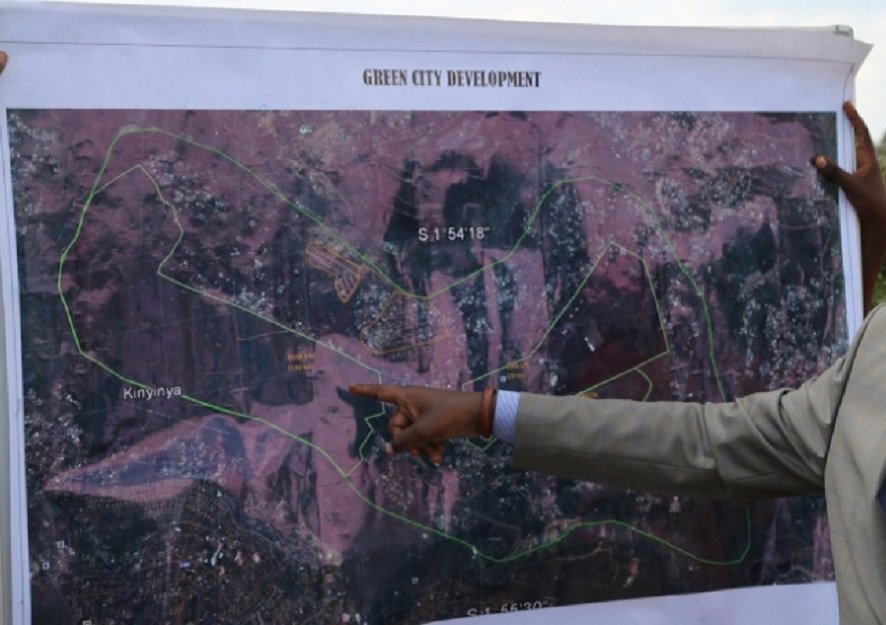
Green Fund Rwanda chief executive Hubert Ruzibiza explains how the green city pilot site in Kinyinya will incorporate affordable housing with innovative financial and loan tools, including rent-to-own options, in Kigali, last year. / Courtesy: The New Times

Rwanda is committed to becoming the gateway to a technologically developed Africa and it is realizing this with a consistent development strategy that is a sight to behold. Last year, the landlocked East African country started the construction of the Kigali Innovation City (KIC) which is a $2 billion project aimed at creating the continent’s Silicon Valley on 70 hectares of land that will host among others, world-class universities, technology companies, biotech firms, and commercial and retail real estate.

The country is yet again preparing to build a $5 billion model green city in Kigali from January 2020 which will sit on 620 hectares of land in Kinyinya Sector, Gasabo District complete with a system that prevents environmental degradation and air pollution.

Engineer Eudes Kayumba, Deputy Team Leader of the Green City pilot project which was launched last year, told local media that the city – which would be the first in Africa – would be equipped with green technologies and innovations for green and climate resilient urbanisation.

It will include clean technologies, electric vehicles, electric bicycle and motorcycle lanes, renewable energy, sustainable waste treatment, biogas plants, urban forests, mini-factories with clean technologies, affordable housing and integrated craft production centres, he disclosed.

“We are conducting a study to estimate the jobs that will be created based on how the residents of the area generate income,” he said while assuring that it will be in partnership with the private sector and local building materials will be used in the construction to make the houses more affordable and environmentally sustainable.

Kayumba noted that the exact cost of the project is unknown but it is estimated to be between $4 billion and $5 billion, reports The New Times.

With the financial support of the German Development Cooperation through the KfW Development Bank, the Rwanda Green Fund (Fonerwa) is undertaking a feasibility study and Sweco, a European engineering and architecture firm is supporting in the implementation, he added.

“When studies get completed later this year, we will start implementation of the project, beginning with key infrastructure such as water, electricity and roads which will also benefit neighbouring communities,” Kayumba said, adding that communities around the green city will be part of the broader green ecosystem while a section will be earmarked for low-income earners.

Chief Executive Officer of Fonerwa, Hubert Ruzibiza, said they have mobilized over $170 million for the project implementation and were looking at different sources of funding for the project.

However, the construction of the $2 billion Kigali Innovation City (KIC) which is a Private Public Partnership between the Government of Rwanda and Africa50, an infrastructure investment platform that was founded by the African Development Bank (AfDB) and African states, is ongoing.

Africa50 will invest $400 million into the project to “help boost the innovation ecosystem in one of Africa’s top knowledge cities,” the
AfDB pledged during the recent Africa Investment Forum held in Johannesburg, South Africa.

The Rwandan government said Africa50 will focus on the real estate portion of the project which includes building retail and commercial complexes estimated to cost $315 million. They will also work on the Digital Innovation Precinct which will house all the technology companies in KIC and residential facilities for the employees working for companies within the ecosystem.

These projects are part of the Government of Rwanda’s Vision 2020 development program and National Strategy for Transformation 2017-2024 aimed at establishing Rwanda as a globally competitive knowledge-based economy.

This article by Ismail Akwei was first published on face2faceafrica.com

How Gambia’s exiled leader Yahya Jammeh lied about having cure for AIDS

Former Gambian leader Yahya Jammeh “curing” AIDS patients

In 2007, the world was stunned by a proclamation from the then Gambian leader Yahya Jammeh that he had a cure for AIDS. He paraded international media to his presidential compound in Banjul where there were dozens of AIDS patients awaiting treatment from the military leader who said his concoction made from seven undisclosed plants will end the epidemic.

With television cameras rolling, Jammeh pulled out a green herbal ointment which he rubbed onto the rib cage of a patient; and then applied a grey-coloured solution on the patient’s skin; followed by a yellowish, tea-like brew which patients were asked to drink.

He said in an interview that in 30 days if the treatment continues, the patients will be completely cured, but only if they stop taking anti-retroviral drugs to avoid complications.

The proof he gave of the cure were inconclusive test results of nine blood samples of patients he sent to a lab in Senegal where it was disclosed that four had undetectable viral loads, one had a moderate viral load and three had high loads.

Jammeh’s assertion was disproved by the World Health Organisation which expressed concern about the requirement of patients to cease taking anti-retroviral drugs. This could weaken their immune systems and make them even more prone to infections.

Eleven years after this episode, three AIDS patients under Jammeh’s treatment have filed a lawsuit at the High Court in Banjul on Thursday with the help of U.S.-based charity AIDS-Free World seeking damages for harm suffered and violation of their human rights.

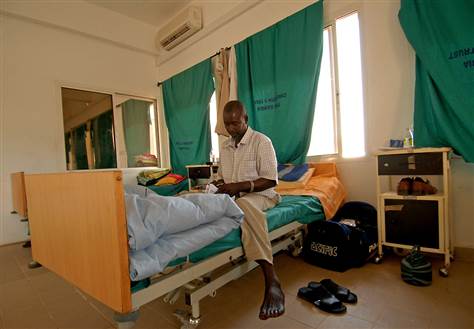
Ousman Sowe, Lamin Ceesay and Fatou Jatta who were among the first to join the AIDS treatment said their health worsened, while others died in the programme after they were forced to stop taking anti-retroviral drugs and drink the home-made concoctions that made them vomit.

They said the doctors and patients publicly declared that his medicines were working due to the fear of the consequences of criticising the dictator who came to power in a coup in 1994 when he was only 29 years old.

“I believe it is my responsibility to hold Jammeh to account. I knew that one day the real story would be told,” said Ousman Sowe, a former university lecturer in his 60s, who had told AP in 2007 after the treatment that: “It feels as if the president took the pain out of my body.”

Lamin Ceesay awaits his herbal HIV treatment by Gambia’s President Yahya Jammeh, at Serrekunda Hospital in Banjul, Gambia. Cabdace Feit / AP

“Jammeh must pay for what he has done to us,” said Lamin Ceesay, who also said in 2007 after the treatment that, “My appetite has come back and I have gained weight.”

They told the Thomson Reuters Foundation that they lost their jobs and struggled to rent houses since their faces were showed during live broadcasts of the treatment.

This will be the first case against Jammeh in the Gambian courts since he fled into exile in Equatorial Guinea in January 2017 after negotiations following his refusal to accept the results of the December 2016 election which he lost to Adama Barrow.

This article by Ismail Akwei was first published on face2faceafrica.com