A quick read of the story wasn’t telling enough unless I tried a careful read to understand the foolishness of injecting saline or air into your balls to lighten up a party or for the purposes of being the heart of a party.
The writer – Grant Stoddard – had a lot of patience at the medical-themed play party he attended in a Brooklyn townhouse last fall where he saw a man lying on a table with a big scrotum the size of melons being filled up with saline using a thin tube connected to an IV bag.
“My date … and I watched for some time as the scrotum slowly and steadily increased in size. Terrified that the thing would at some point pop, I told her that I needed to be around the comparative safety and normalcy of the fuckpile beginning to form in the basement,” he wrote.
They call it the scrotal infusion or scrotal inflation which is temporal and lasts for about a day as the saline gets sucked into the body slowly.
“…for some, it’s about the sensations of pain, stretching, and increased weight. For others, it’s about the idea of supersizing oneself or someone else,” Stoddard spoke with sexuality and relationship therapist Dulcinea Pitagora about the fetish.
There are, however, some painful and deadly consequences including scrotal cellulitis and Fournier’s gangrene which are all infections that can destroy the testicles and kill the skin around it. Worse, the scrotum can explode.
The sexual fetish is widespread but little is known about it except that there are kits sold in some shops for its sake.
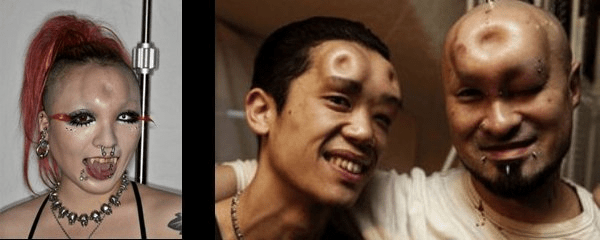
In Japan, there is a similar practice called the bagelhead which is made using infusion kits to inject saline into the forehead to get the shape of a bagel. Thank God it’s not actually out of Japan.
Stoddard reported that the appeal for the guy with the enlarged scrotum was for it to be “looked at, inspected, or even felt by other people.”
“Indeed, when I caught up with my date later that evening, she proudly reported that she was not only allowed to feel his expanded scrotum, she even managed to satisfy her overwhelming urge to lick his newly taut bag,” he adds.
But why go through all the trouble and danger to make others happy?
Let us know what you think about this madness in the comment section below.
This article written by Ismail Akwei was first published on face2faceafrica.com
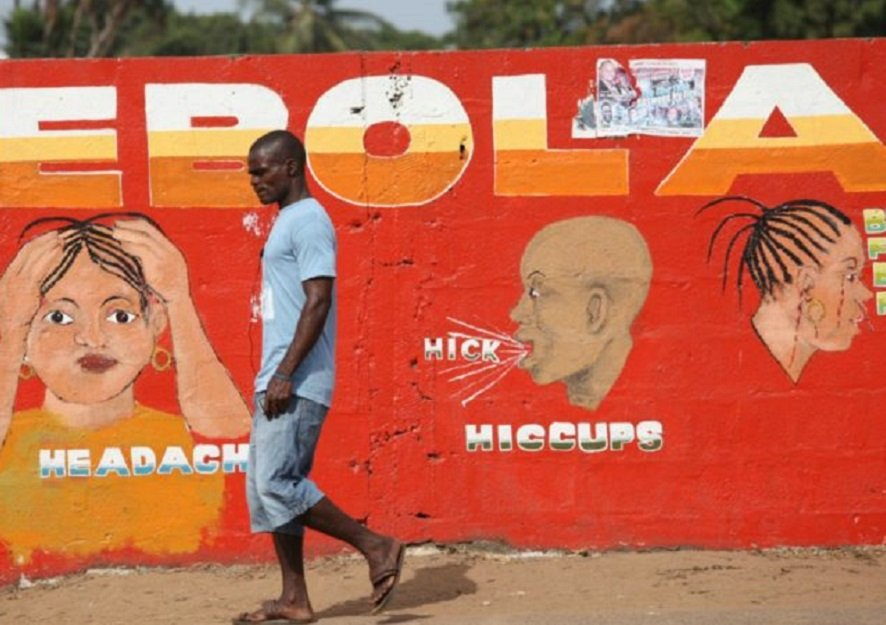
A Liberian man walk pass an ebola awareness painting on a wall in downtown Monrovia, Liberia, 22 March 2015 EPA/AHMED JALLANZO
As the world celebrates the end of the ninth Ebola outbreak in the Democratic Republic of Congo (DRC) which was declared on May 8, 2018, it is sad to note that Guinea is the only African country that contributed to the end of the crisis.
Per the World Health Organisation (WHO) records, Guinea deployed more than 30 Ministry of Health staff to the DRC to assist with the ring vaccination campaign and transfer their expertise for an effective response in the country.
The 360 technical expertise on the ground was made up of Congolese locals, Guineans and volunteers from the UK, USA and Germany through the Global Outbreak Alert and Response Network (GOARN). They formed part of the in-kind contributions made to the WHO effort.
The WHO also immediately released US$2 million from its Contingency Fund for Emergencies for a rapid response and scale-up of operations when the Ebola declaration was made. In total, they disbursed US$4 million from the fund which Germany has promised to replenish, according to the global health organisation.
Meanwhile, out of the US$63 million received by WHO and partners to stop the spread of Ebola, no African country contributed. The amount was tracked by OCHA.
Funding was provided by Italy (€ 300 000), UN CERF (US$ 800 000), Gavi (US$ 1 million), USAID (US$ 5.3 million), Wellcome Trust and UK-DFID (US$ 4.1 million), UK-DFID (£5 million), Germany (€5 million), Norway (NOK 8 million), Canada (CAD$1 million), World Bank PEF (US$ 6.8 million), Japan (US$1.3 million), EU ECHO (€ 1.5 million) and from the Ebola MPTF (US$ 428,000) bringing the total to approximately US$ 36 million.
Merck provided the vaccines that were used to protect the over 3300 people. The only African institutions on the ground beside the dozens from the DRC were the Africa Centers for Disease Control and Prevention (Africa-CDC), the African Field Epidemiology Network (AFENET), Infection Control Africa Network (ICAN) and South Africa’s National Institute for Communicable Diseases (NICD).
It is enough that most African countries receive aid from the same countries that step in when there is a crisis within, but it is shameful to not contribute at all, even in expertise to a disease outbreak that affects thousands of people.
Guinea has shown the way to achieving the African unity dream of being self-sufficient as a continent by helping each other in times of need and for development. The West African country suffered from the epidemic in 2014 and more than 2,500 people died from the virus. They know how it feels to be in crisis.
You don’t need millions of dollars to deploy volunteers when the WHO is backing efforts with funding raised from donors.
Every African crisis should be taken seriously by fellow Africans even if it’s the 50th of such incident. So far as people are involved, all hands should be on deck just as the Western countries and international institutions emulate.
It seems African countries will only be worried when Ebola crosses their borders. This is shameful. We need to unite in perspective and not ideologically.
This article written by Ismail Akwei was first published on face2faceafrica.com
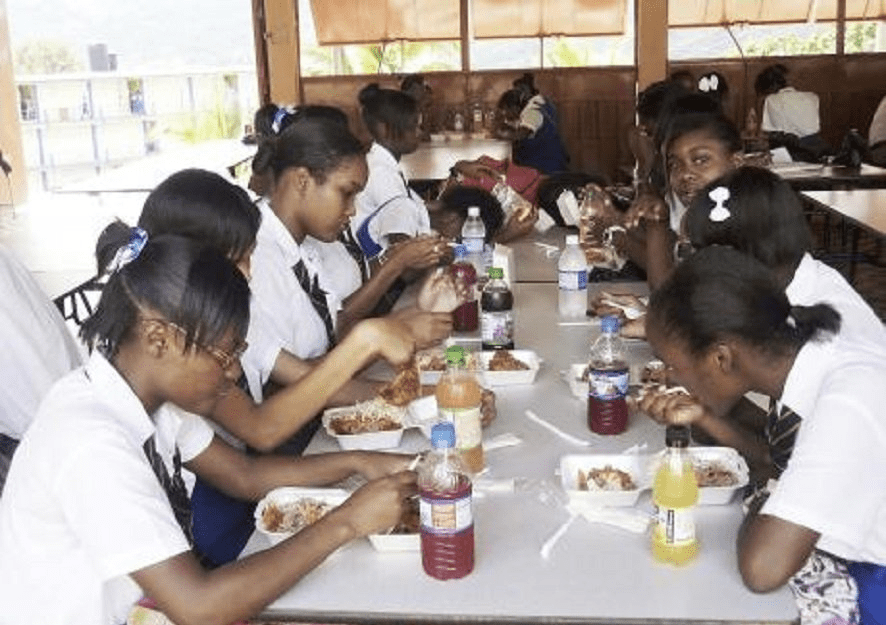
Schools in Jamaica will soon cease to serve and sell sugary drinks to pupils as part of Ministry of Health’s new protocol to control the rising obesity crisis in the country.
The new law is part of the Jamaica Moves campaign launched by the government to promote regular physical activity and healthy eating in order to reduce Obesity-related non-communicable diseases.
“One of our problems is our excessive consumption of sugar. We have tended to promote that culture and predisposition in our schools (with the high consumption of) bag juice,” said the Minister of Industry, Commerce, Agriculture and Fisheries Audley Shaw at a seminar on Monday.
“The truth is, the bag juice is basically sugar and water, and the Minister (of Health) has announced a plan… a new protocol that is going to be applied to what is allowed to be sold and consumed in our schools,” Shaw was quoted by Jamaica Gleaner.
The restriction applies to beverages that contain sugar or syrup and does not include 100 percent juice or unsweetened milk, the report added.
The minister further revealed that the government is taking legislation to parliament to regulate the sugar content in food products nationally.
Jamaica is reported to have a high obesity rate as studies show that obesity in adolescents from 13 to 15 years old has increased by 68 percent and doubled in boys over the past seven years.
This article written by Ismail Akwei was first published on face2faceafrica.com
While 28-year-olds are struggling to find a career path that best suits their desires, Jade Colin has made history as the youngest black woman to own a McDonald’s franchise in the United States.
Jade Colin and her employees in her restaurant — Photo: Black Professional
The New Orleans native and business management graduate of the University of Louisiana went straight for her dream after graduating in 2012 by working in her parents’ restaurant and studying McDonald’s procedures and policies.
She told The Black Professional that she underwent extensive training after applying for the Next Generation programme reserved for children of McDonald’s owners.
At 26, she completed Hamburger University – the training facility for McDonald’s – and passed her interviews in 2016 with McDonald’s corporate executives thereby making history as the youngest franchise owner.
“Take the risk and know that it will be a lot of hard work. Pray about it. God sends everyone on a different journey in life. As you build your relationship with Him he will help lead and guide you in the right direction,” Colin advises.
She said her biggest inspiration is her parents who created a generational wealth by purchasing their first McDonald’s franchise in 2010. They now own six.
“Network and have a core team of genuine mentors. You need people who are in your corner that will positively motivate you. I say genuine because not everyone will have your best interest at heart,” adds Jade Colin.
Black people are slowly climbing up the steep ladder to the competitive world of entrepreneurship which has been long dominated by non-black people.
This article written by Ismail Akwei was first published on face2faceafrica.com
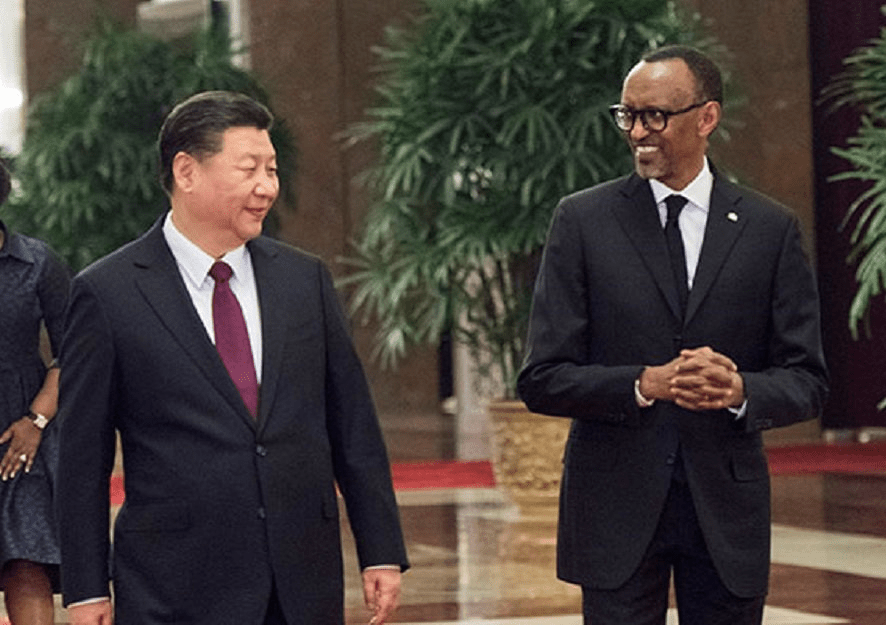
China is deepening its stronghold of Africa with the visit of President Xi Jinping who is in Rwanda for a two-day visit to cement the “lasting friendship” which has made China the East African country’s largest trading partner.
The United States will be peeved by the level of depth of the China-Africa partnership as Donald Trump has proven to be self-centered while hungry to maintain its waning African partnership. The most striking being the threat of sanctions against Rwanda for banning the importation of used clothes which will affect the U.S.
Jinping has played his cards right with the visit to Rwanda and he told it best in a letter which was published by local media. He set the tone with praises for Africa’s fastest developing country and then hit the soft spot with a poem.
“As a Chinese poem reads, ‘Good friends feel close to each other even when they are thousands of miles away.’ Despite the vast geographic distance and differences in size, system and culture between China and Rwanda, our peoples enjoy a deep traditional friendship.”
He then listed dozens of Chinese projects completed and ongoing in Rwanda while hitting the note of friendship, cooperation, international collaboration, mutual understanding, cementing political foundation and all the cliches that basically mean “be on our side and do what we want you to do”.
The Chinese projects in Rwanda he mentioned included the Amahoro National Stadium; Musanze Integrated Polytechnic Regional College; the soon-to-be-completed project of drilling 200 wells in rural Rwanda, a garment factory set up by a Chinese entrepreneur and a Chinese company undertaking 70 percent of Rwanda’s national highway construction.
He mentioned more: Masaka Hospital and the Kibungo Hospital built by China and having Chinese medical teams serving the people, digital TV services to be brought to 300 villages under an ongoing project of providing access to satellite TV to a total of 10,000 Rwandan villages.
There was no mention of Rwandan projects in China but the several hundred talented young Rwandan students studying in China on Chinese government scholarships as well as the “Rwanda Kung Fu/Wushu Federation has over 2,000 participants.”
This doesn’t look like a cooperative partnership but a domineering one when one party is playing King and calling the shots for obvious reasons. Meanwhile, there is trust in Rwanda’s Paul Kagame who looks like he knows what he is doing as he had said in the past that opening the doors of international support is only for the benefit of the people and anything that doesn’t benefit the masses, should be shut out.
This is the first-ever visit of a Chinese president to Rwanda.
Read the full letter below:
China and Rwanda: A friendship higher than mountains
At the invitation of President Paul Kagame, I will pay a state visit to Rwanda from July 22-23. It will be not only my first visit to Rwanda but also the very first visit to Rwanda by any Chinese President. I am full of expectation for this visit.
Known as the “land of a thousand hills”, Rwanda is blessed with picturesque sceneries, a spring-like weather all year round, and rich endowment of natural resources. Thanks to the unremitting efforts of the brave and hard-working Rwandan people, this country has remained a vibrant land on the African continent.
In recent years, under the leadership of President Kagame, the government and people of Rwanda have made pioneering efforts to blaze a development path that suits its national conditions. Enjoying good governance and social harmony, Rwanda is making progress on every front of development. With sustained stability and robust economic growth, Rwanda has seen a continued rise in its regional and global influence, and has set an example for countries who face the similar tasks of national development and rejuvenation in Africa and beyond. I am heartened to see these accomplishments and sincerely wish Rwanda still greater success on its way forward.
As a Chinese poem reads, “Good friends feel close to each other even when they are thousands of miles away.” Despite the vast geographic distance and differences in size, system and culture between China and Rwanda, our peoples enjoy a deep traditional friendship. Both our two countries endured great sufferings in history. That is why we cherish the national stability, ethnic unity and economic development we now enjoy, and take pride in what we have accomplished along the way.
China and Rwanda established diplomatic relations in 1971. Over the past 47 years, our two countries have treated each other as equals with sincerity and friendship.
Based on mutual trust and assistance, our friendship has stood the test of the changing international landscape and taken root in our people’s hearts. In recent years, thanks to the concerted efforts of both sides, our bilateral ties have achieved fast expansion and demonstrated fresh vitality with fruitful cooperation in all areas. China has become Rwanda’s biggest trading partner and project contractor. We are glad to see that the Amahoro National Stadium built by China has hosted many spectacular sports games and become a popular recreation and entertainment venue for the Rwandan people.
The Musanze Integrated Polytechnic Regional College has grown into the biggest professional training centre in Northern Province. The project of drilling 200 wells, soon to be delivered, will help ease water shortages for over 110,000 people. The garment factory that a Chinese entrepreneur has set up in response to President Kagame’s “Made in Rwanda” development initiative is playing a positive role in growing Rwanda’s manufacturing sector. Another Chinese company has made itself a household name in Rwanda as it undertakes 70 per cent of Rwanda’s national highway construction.
People-to-people friendship holds the key to good state-to-state relations. The rich and diverse people-to-people exchanges between our two sides have led to a growing interest in China and Chinese culture among the Rwandan people. Each year, several hundred talented young Rwandan students go to study in China on Chinese government scholarships. The number of registered students in the Confucius Institute at the University of Rwanda is approaching 5,000. The Rwanda Kung Fu/Wushu Federation has over 2,000 participants.
At the Masaka Hospital and the Kibungo Hospital – two hospitals built by China – caring and highly-skilled members of the Chinese medical teams are providing much needed services to more than 600,000 local people. Digital TV services will soon be brought to 300 villages in Rwanda under an ongoing project of providing access to satellite TV to a total of 10,000 Rwandan villages, enriching the cultural life of over 150,000 rural residents.With Rwanda actively implementing its Vision 2020 Umurenge Program and China working toward its centenary goals, historic opportunities beckon for our cooperation. During his visit to China in March 2017, President Kagame and I reached important consensus on deepening cooperation in various fields under the new circumstances and made overall plans for the future growth of relations between our two countries. I hope my upcoming visit will inject new impetus to our traditional friendship and all-round cooperation, take bilateral relations to a new level, and produce fruitful results to the benefit of our peoples.
• We need to uphold mutual respect and deepen political mutual trust. We should view and grow our relations with a strategic and long-term perspective. By way of enhancing exchanges and cooperation at all levels and sharing development experience, we will be able to cement the political foundation for the sound, steady and sustained growth of our relations. China firmly supports Rwanda in following the development path it has independently chosen.
• We need to connect our development strategies and expand cooperation in all areas. By leveraging our complementarities and broadening the scope and channels of cooperation, we will be able to advance practical cooperation in infrastructure, mining, trade and investment, translating our friendship into concrete outcomes and delivering more benefits to our peoples.
• We need to promote mutual learning between civilisations and further enhance people-to-people exchanges. Deeper exchanges and cooperation in education, culture, health, tourism, aviation and human resources training will help cement the social foundation for bilateral relations and gain increasing public support for our friendship.
• We need to strengthen collaboration in international affairs through closer communication and coordination. China commends and supports the efforts of Rwanda, the current chair of the African Union (AU), to play a bigger role in preserving Africa’s unity and promoting its development. Our two countries will continue to firmly uphold the common interests of developing countries through close communication and coordination in regional and international affairs.
The friendship between our two countries is an epitome of the friendship between China and Africa. For decades, China and Africa have treated each other with sincerity and friendship. We are a community with a shared future and common interests, featuring solidarity and win-win cooperation. Going forward, China will continue to deepen communication, mutual trust and cooperation with Rwanda and with other friendly African countries, based on the principles of sincerity, real results, affinity and good faith and the approach of upholding justice and pursuing shared interests. In just over a month’s time, China will host a summit of the Forum on China-Africa Cooperation (FOCAC) in Beijing. I will welcome President Kagame to the summit in his capacity as President of Rwanda and as the current AU chair. I look forward to meeting with him and other leaders of FOCAC members to draw up a blueprint for furthering China-Africa friendship and cooperation and promoting our future development.
The decades-old Umuganda culture in Rwanda encourages joint efforts and mutual help for common goals. A Chinese saying contains a similar message, “People with one mind and heart have the power to move a mountain.” In a world of increasing inter-connection and inter-dependence, countries are faced with many common challenges. It is important for China and Rwanda to join hands for mutual benefit and common development and for a community with a shared future between our two countries and between China and Africa as a whole. I am convinced that with the joint efforts of our two governments and peoples, China-Rwanda relations will embrace an even brighter future.
This article written by Ismail Akwei was first published on face2faceafrica.com





 Ismail Akwei