Desmond Tutu’s daughter gives up Anglican priesthood for gay marriage

The daughter of Nobel Peace Prize winner Desmond Tutu has been forced to abandon her priesthood in the South African Anglican Church after she married a woman.

Reverend Mpho Tutu-van Furth, who is in her fifties, told AFP that according to the canon law of the Anglican Church in South Africa, marriage is a union between a man and a woman so she decided to quit.

“After my marriage, we told the Bishop of Saldanha Bay (in eastern South Africa) to revoke my license. I gave it up rather than impose it on myself,” she said.

Reverend Mpho Tutu-van Furth can no longer preside over communion, wedding celebrations, baptisms and funerals.

South Africa has legalized gay marriage since 2006 and her father, former archbishop of the church, Desmond Tutu, is well known for his support of gay marriage.

Mpho Tutu-van Furth told AFP that her father, who was active during the apartheid days, was “sad but not surprised by the news”.

“It is ironic that our similarity, the fact that we are both women, is the cause of our pain today, whereas in the past the differences were an instrument of division,” she said in reference to the South African apartheid regime, which officially ended in 1994.

An official of the Anglican Church in the Saldanha Diocese, Bruce Jenneker, told AFP that they received the licence of Mpho Tutu-van Furth with sadness. “It’s a shame that it happened,” he added.

Mpho Tutu and her wife Marceline van Furth, a professor in pediatric infections based in Amsterdam, both divorced from previous marriages with a child each, were officially married in December in the Netherlands. They organized a second ceremony in May near Cape Town which 84-year-old Desmond Tutu attended despite poor health.

They are currently on their honeymoon on the Indonesian island of Bali.

This article was first published by Ismail Akwei on africanews.com
Ghanaian-born speed skater is first black woman to qualify for US Olympic team

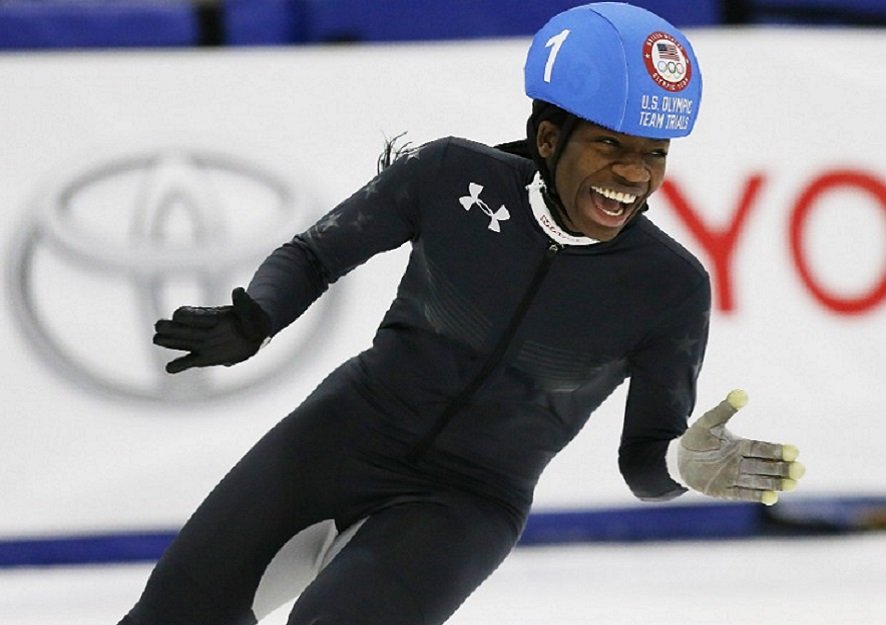
Maame Biney as she crossed the finish line — Photo Credit: US Speed Skating

17-year-old speed skater Maame Biney is the first African-American woman to qualify for the United States Olympic speedskating team and the second speed skater to ever qualify for the Winter Olympics.

Biney made history on Saturday after cruising to victory twice in the 500-meter short-track speedskating trials inside the Utah Olympic Oval.

She beat Olympians Lana GehringJessica Kooreman, and Katherine Reutter-Adamek to seal a place at the February 2018 Winter Games in Pyeongchang, South Korea.

“I can’t believe it! Ah, jeez. It’s a really good feeling, but it has to set in. It takes me a while before it’s like, ‘Holy cow,’” the high schooler was quoted by teamusa.org as saying.

She crossed the finish line and fell in astonishment over the fete never achieved in the United States.

“When I crossed the finish line, I don’t know what I was thinking – I was just like, ‘I got first, that’s so cool.’ And when I realized I made the Olympic team I started cheering like crazy. And then I made my epic fall, so, yeah, you’re welcome,” she added.

Maame Biney was born in Ghana and when she was 5 years old, she visited her father Kweku in the United States where she stayed.

Her father, who witnessed the history being made, enrolled her in figure skating lessons a year after she visited the U.S. She then switched to speedskating and excelled in the sport.

“He’s been through everything and I’m amazed by him. I just want to thank him a lot for everything …  he’s been through all the practices with me and watches me every day and gives me tips, and I love him for that,” she was quoted by teamusa.org.

thanks dad for helping me get to nationals in St. Louis. i love you!

— Maame Biney (@BineyMaame) March 23, 2014

Biney won bronze at the world junior championships last year where she became the second U.S. woman to win a medal at the event since 1996. A few months ago, she qualified for the senior world cup team becoming the overall women’s winner.

Maame Biney follows the footsteps of Shani Davis who was two years older than her when he qualified for the 2002 Winter Olympics as the first black man to qualify for the United States Olympic speedskating team.

He has since partaken in three Olympics and won four laurels including two gold medals.

This article by Ismail Akwei was first published on face2faceafrica.com

Wedding photos of African lesbians in traditional Ghanaian cloth cause uproar

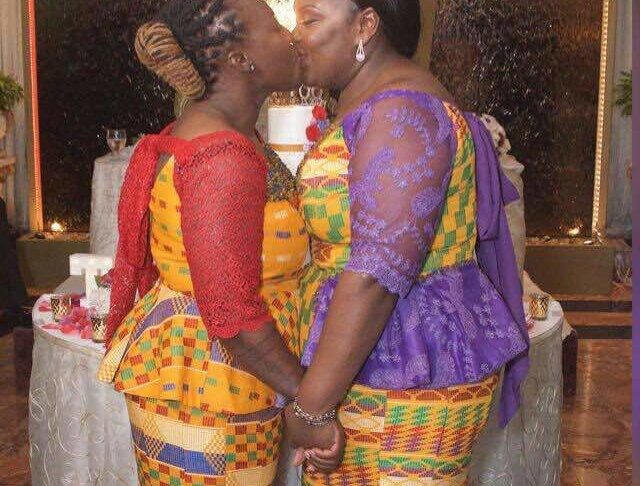
Lesbian couple believed to be Ghanaians at their wedding outside the country

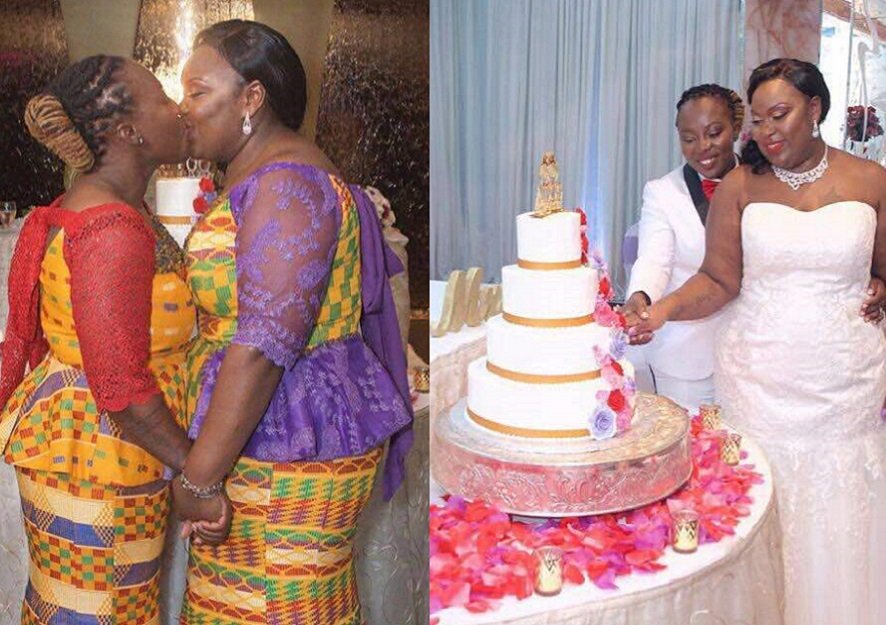
Wedding photos of lesbians of African descent have caused an uproar on social media, especially from conservative Ghanaians who believe the two women are from their country.

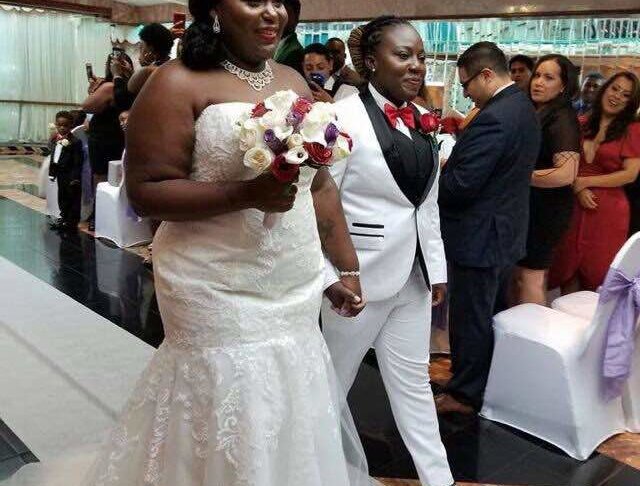
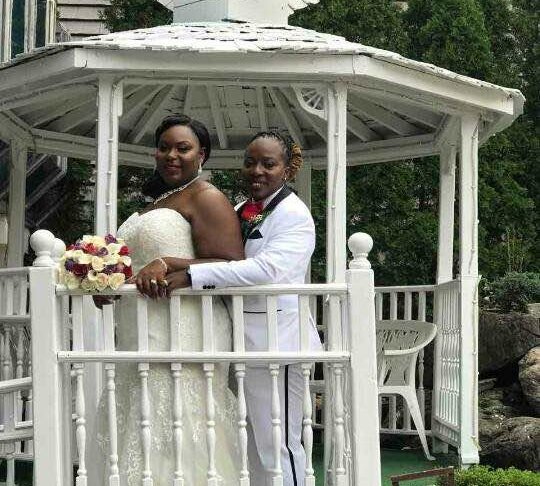
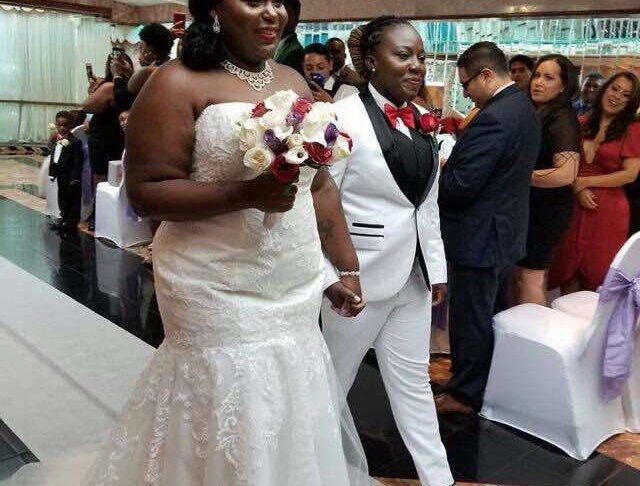
One of the photos shows the women wearing traditional Ghanaian cloth called Kente as they share a kiss. Other pictures show one of them in a white suit and the other in a white gown at a beautiful ceremony filled with guests.

The origin of the pictures is unknown but reports say the wedding was held in the Netherlands where same-sex marriage is legal.

The backlash is not due to the four-tier wedding cake or the Mrs and Mrs sign next to the cake, but the belief that they were breaking the cultural norms of Ghana that abhors homosexualism.

It is taboo to be lesbian, gay, bisexual, and transgender in Ghana and in many other parts of Africa where they face abuse and attacks. Only South Africa has legalized same-sex marriage.

In September, photos and videos of a Ghanaian man’s wedding to his American boyfriend at an undisclosed location in the United States went viral. Angry reactions were posted on social media against the solemn ceremony and the happy couple.

Below are the trending photos and reactions of the lesbian women believed to be Ghanaians in the Netherlands.

4 photos

African lesbian wedding

Warning: Some of the comments may be disturbing

they shouldn’t come to Ghana again cos if they do we wil beat and kill dem,if coming from my family cos it is again our LAWS .

— frank antwi safee (@AntwiSafee) December 13, 2017

Same reason why they got married there, no family member would follow them though
— Kwame (@Domani_Stilinsk) December 14, 2017

This article by Ismail Akwei was first published on face2faceafrica.com

Nigerians angered by musician 2Face’s cancellation of scheduled protest

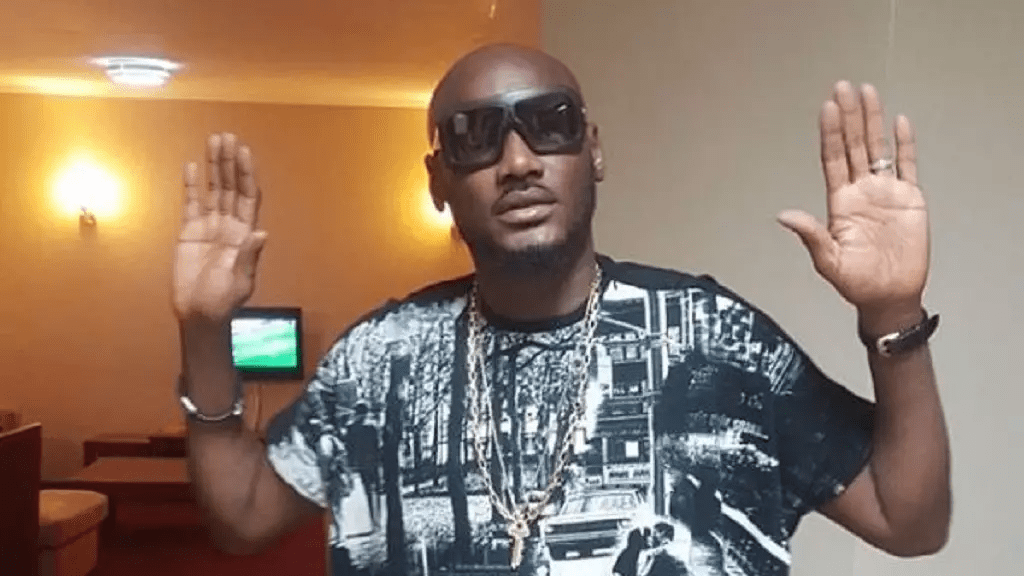
Nigerian musician Innocent Idibia also known as 2Face has cancelled a planned protest against economic hardship citing security concerns.

He posted a video on online mobile photo-sharing site Instagram late Saturday night explaining the reason for canceling the One Voice Nigeria protest scheduled for Monday, January 6, 2017.

“After due consultations, it has become clear that the One Voice Nigeria protest scheduled to hold in Lagos and Abuja on Monday, 6th February is under serious threat of hijack by interests not aligned with our ideals.

“The point I intend on making is not worth the life of any Nigerian. It is motivated by the need to demand a better deal for the ordinary Nigerian.

After due consultations, it has become clear that the One Voice Nigeria protest scheduled to hold in Lagos and Abuja on Monday, 6th February is under serious threat of hijack by interests not aligned with our ideals.

“I therefore announce the cancellation of the planned protest … I appreciate the massive support and I am convinced our voices have been heard,” he said.

2Face who had called for the protests last month to demand solutions to Nigeria’s crises received backlash from government officials and later a warning by police who called for a halt of the protest in Lagos for security reasons.

“Information reaching us revealed that some hoodlums are planning to hijack the peaceful protest and as such, we won’t allow it to hold in Lagos,” Lagos State police commissioner, Fatai Owoseni warned on Thursday.

2Face’s cancellation of the protest came as a surprise to supporters especially after earlier insisting on holding the protest despite the warning from police.

“U [sic] shouldn’t have started this in the first place. U [sic] will never be forgotten for being a coward,” a comment on the video read.

“Illiterate greedy 2face. You wanted to be an activist. Did you read up on the civil right movement? Or on people like Martin Luther King, Malcolm X, Nelson Mandela? Did you even study the constitution of Nigeria? It’s your legal right to hold a protest,” said another comment.

Meanwhile, 2Face had support for calling off the protest including from one follower who commented: “Tuface that helped raise awareness is a ‘coward’ but you that did nothing are not? Do you now see why Nigeria has so few helpers? Who would want to die for a people who specialize in stoning their defenders and hailing their oppressors?”

Innocent 2Face Idibia said in the video post that further information will be shared in due cause.

Nigeria continues to suffer from recession and economic crises as a result of falling oil prices among others.

This article by Ismail Akwei was first published on africanews.com

The rise and exile of Gambia’s ex-President Yahya Jammeh [Photo Story]

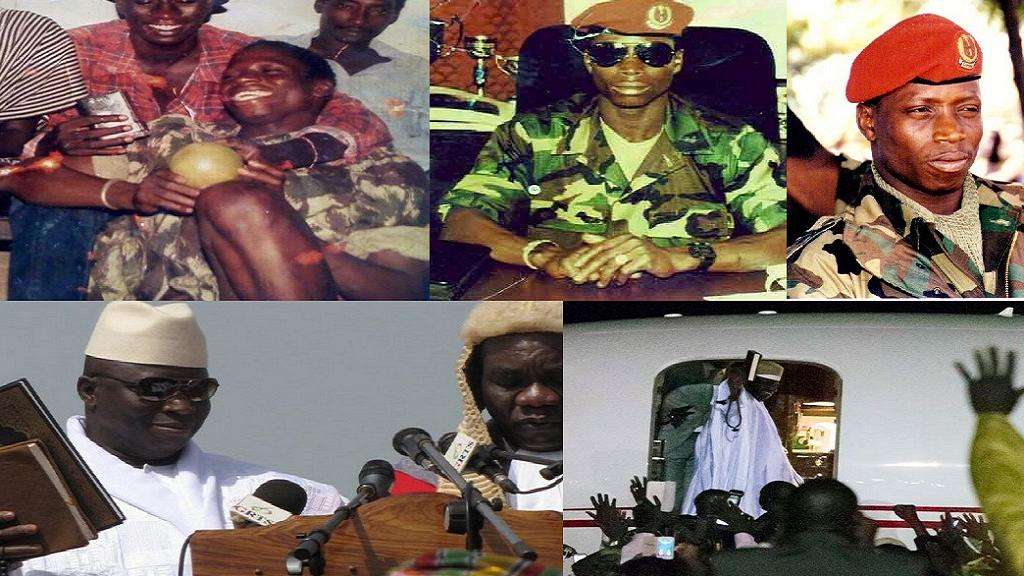
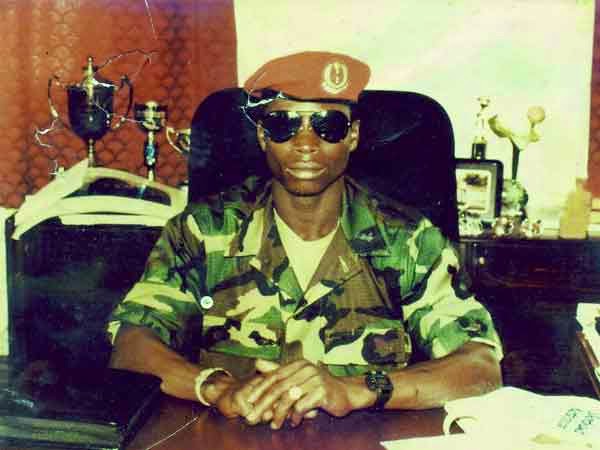
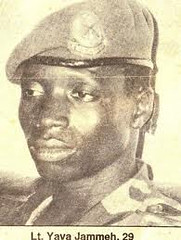
Former Gambian President Yahya Abdul-Aziz Jemus Junkung Jammeh seized power from the country’s first President Dawda Jawara as a young army officer in a bloodless military coup in 1994.
1

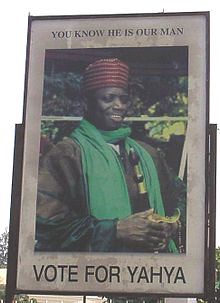
29-year-old Lieutenant Jammeh rose to the self-selected official title “His Excellency Sheikh Professor Alhaji Dr. Yahya Abdul-Aziz Awal Jemus Junkung Jammeh Naasiru Deen Babili Mansa” before his exile 22 years after his first election in 1996.

His defeat by opposition coalition leader and real estate developer Adama Barrow in the December 1 election came as a shock to many who witnessed his disputed election victories in 2001, 2006, and 2011.

The surprise stemmed from the fact that Jammeh had lost despite his very stern and controversial character feared by many in the country due to his influence and use of the military and state to execute his wishes.

The surprise waned when he backtracked on his acceptance of defeat to annul the election results and called for a rerun as a result of suspicions of electoral malpractice “realised after his investigation”.

The Gambian army quickly supported him while fearful citizens and officials fled the country to avoid any possible danger. Jammeh further proclaimed a state of emergency after the courts failed to hear his election petition and inauguration injunction cases due to unavailability of judges.

It took series of unsuccessful mediation by leaders of the ECOWAS bloc and threats of military intervention to come to an agreement brokered by Guinean President Alpha Conde and Mauritanian President Mohamed Ould Abdel Aziz.

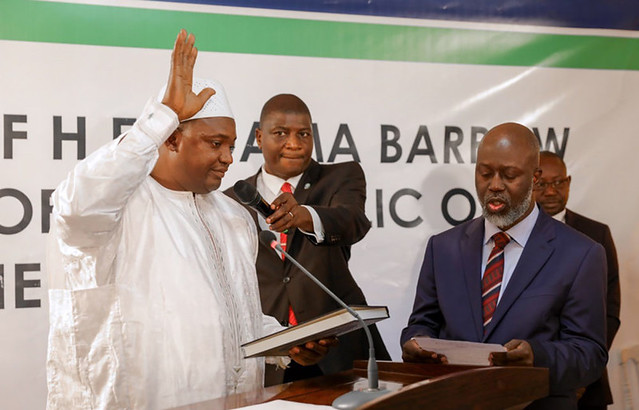
Adama Barrow was strategically taken out of the country by ECOWAS leaders and later sworn-in as president at the Gambian embassy in Senegal when the agreement was at its peak.

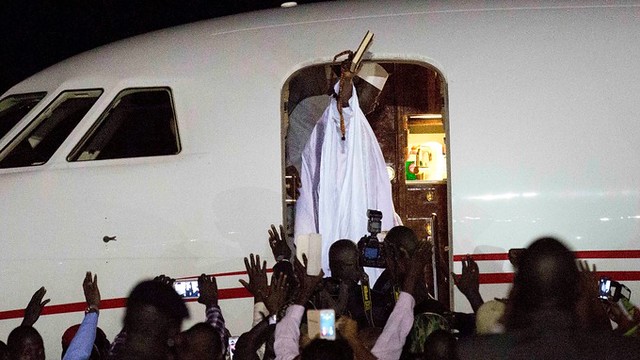
The father of two children and husband of two wives, who came to power as a hero to many in the fight against corruption and lack of democracy, left the country as an exiled former head of state and a hero to a few who thronged the airport to see him leave alongside dozens of luxury vehicles and property.


He will be revered for the banning and criminalizing female genital mutilation (FGM) in 2015 and subsequently child marriage in 2016.

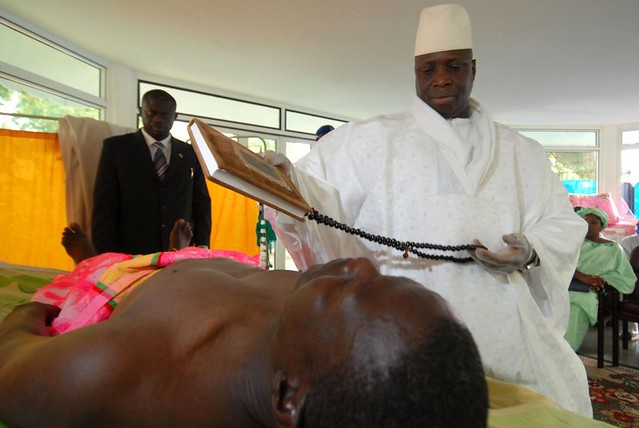
Jammeh will be remembered for his claims that he could cure HIV/AIDS and asthma, and treat high blood pressure and infertility in women using natural herbs.

Gambian victims, families of victims and the world will however, never forget Jammeh’s strict laws and abuses against the media and press freedom, opposition figures, demonstrators, workers, officials and all those who go against him.

The new Gambian President Adama Barrow has pledged to launch a truth and reconciliation commission to investigate possible crimes committed by his predecessor Yahya Jammeh.

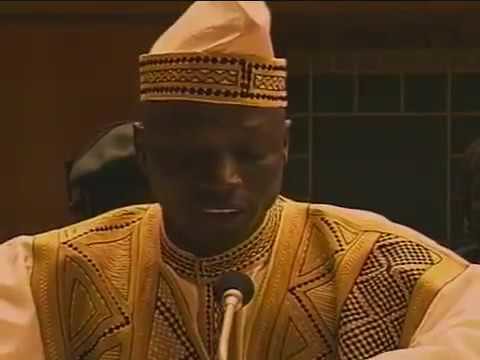
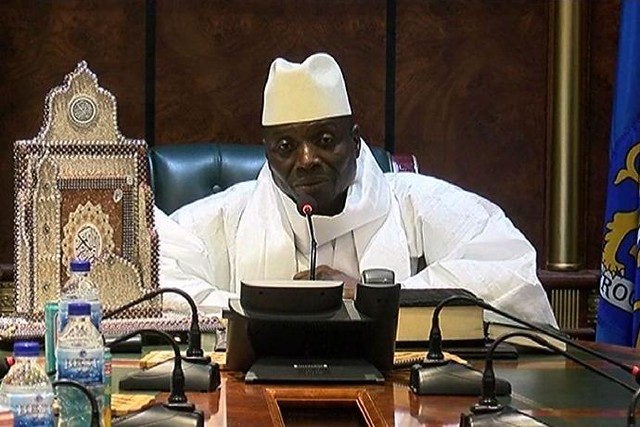
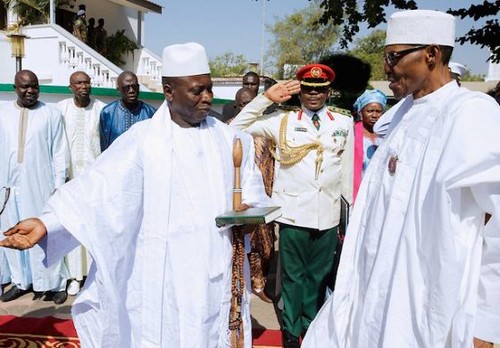
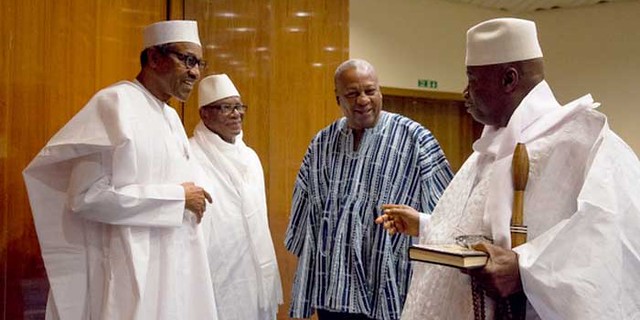
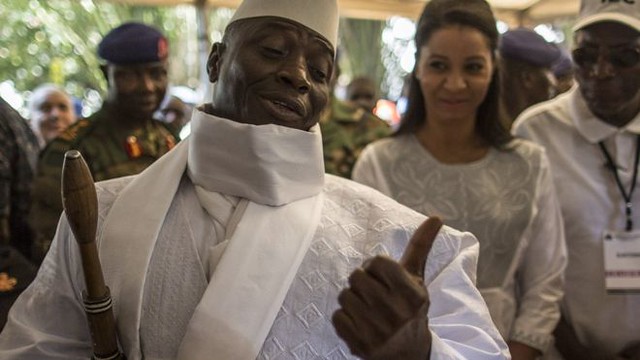
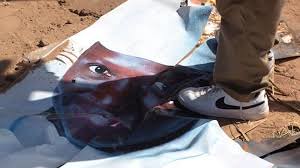
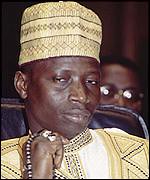
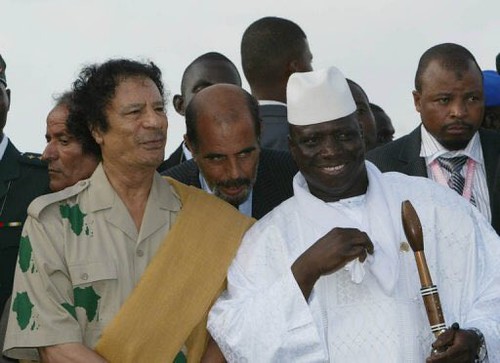
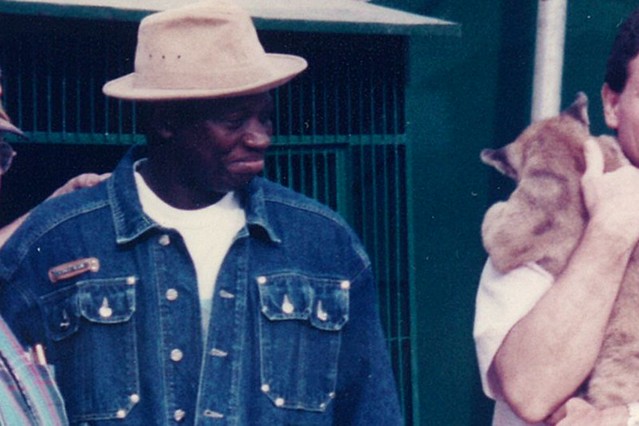
Below are some pictures showing the rise of Yahya Jammeh in power.

This article was first published by Ismail Akwei on africanews.com.