Mugabe speaks peace, freedom and return of ‘giant gold Goliath’

Zimbabwean President Robert Mugabe has called on the United States President to use his power to promote unity and peace instead of threatening other nations.

The 93-year-old president made the remark during his address to the 72nd United Nations General Assembly in New York where he questioned if the world is experiencing the “return of a Goliath”.

“Some of us were embarrassed if not frightened by what appeared to be the return of the biblical giant gold Goliath. Are we having the return of Goliath to our midst who is threatening the extinction of other countries?” he said.

“May I say today, the President of the United States Mr Trump; please blow your trumpet. Blow your trumpet in a musical way towards the values of unity, peace, cooperation, togetherness, dialogue which we have always stood for and which is in the charter of the United Nations,” he added.

He also warned Trump: “We have resisted it when it was in the form of imperialism as we fought for our own independence, our own culture, our own sovereignty to be masters of our own destiny. That’s why we call ourselves free today because the monster of imperialism was defeated by us”.

“Bring us another monster by whatever name, he will suffer the same consequences,” he added.

Mugabe also called on the United Nations Security Council to enforce the holding of the independence referendum of the Western Sahara and to renew efforts to bring about the two-state solution to bring peace to Palestine.

He pledged his country’s support of the climate change convention and expressed sympathy to those affected by the effects of hurricanes and other climate tragedies.

This article was first published by Ismail Akwei on africanews.com.
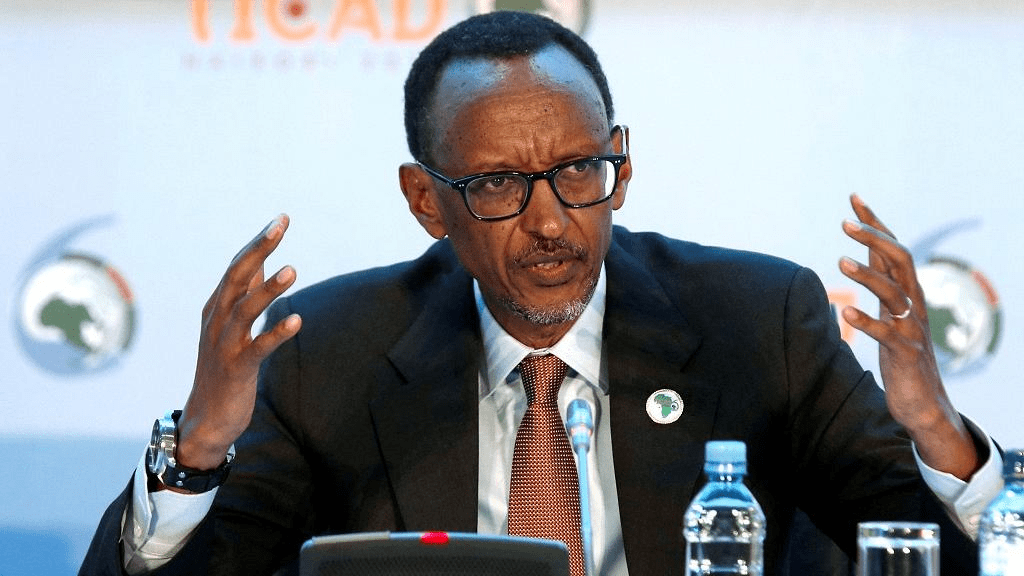
‘Corruption is not African’ – Rwanda’s Paul Kagame tells the world

Rwandan President Paul Kagame has rejected the notion that Africa is characterized by corruption, and pointed fingers at non-Africans for involving in corrupt acts in the continent.

Kagame was speaking on Tuesday on the sidelines of the United Nations General Assembly in New York where he called on the rest of the world to see Africa as a partner.

“Corruption is not African, it’s just corruption. People have developed a misconception that corruption is the way of life in Africa. This is far from the truth,” he said at the Corporate Council on Africa session on U.S.-Africa relations.

“In fact, in Africa when corruption occurs, it involves non-Africans … A lot of what happens in Africa, happens around the world,” he added.

Kagame explained that the wrong notion has affected investments in the continent from companies and businesses who in some cases allocate funds for bribes.

After this forum, Kagame attended another session by the Council of Foreign Affairs where he denounced Western interference in Africa.

He recalled that he was approached and asked not to contest in the elections ahead of the referendum that allowed him to stand for a third term.

He added that the interference was in contradiction with the democracy preached by the West as they wanted to deny the people the freedom to choose their leaders.

“How am I going to be free when you want to dictate to me how I should live my life? Democracy is democracy, this whole thing of adding ‘Western’ is okay but what does it mean? All countries can hardly fit into that sort of definition,” he was quoted by local media portal New Times.

Kagame was recently sworn into office for his third term after winning the August 4 election with over 98% of the total votes cast.

This article was first published by Ismail Akwei on africanews.com.

Somalis enjoy first football match at night in 30 years

Hundreds of Somalis in the capital Mogadishu trooped to the Banadir Stadium on Friday evening to witness the country’s first football match under floodlight in three decades.

Since the start of the civil war, no football match has ever been played at night and the oldest stadium in the country – the Banadir Stadium – built in 1956 had been severely damaged.

FIFA came to the rescue of the sport when it funded the redevelopment of the stadium in 2009 through its Win in Africa with Africa programme.

The Banadir Stadium which has not seen renovation since the 1980s hosted for the first time the finals of a district-level youth football competition on Friday night which saw about 400 young footballers compete.

The 3rd edition of the championship was won by Waaberi District football team which beat Hodan District by 3 – 1.

The stadium was full to capacity and present were members of the Somali Football Federation sports minister Khadjia Mohamed Diriye.

Somali Football Federation president, Abdiqani Said Arab, said the renovation has turned the country around and will go a long way to develop the sport, local media report.

The minister said football is the main priority of the government and they will use it “as a tool of peace building and stability”.

This article written by Ismail Akwei was first published on africanews.com

Stateless Rastafarians in Ethiopia promised identity cards

The Rastafarian community in Ethiopia have been promised an official identity by the government after years of petitioning to be granted citizenship status.

The foreign ministry said Rastafarians in the country will be given identity cards to be able to reside and enjoy some benefits like citizens.

The government stated clearly that the identity cards will also be offered to foreigners who have contributed to the development of the country including Ethiopian Jews.

Foreign ministry spokesperson Meles Alem told AFP on Friday that with the identity cards, the nearly one thousand Rastafarians in the country can live there without residence permits and can enter the country without visas.

However, they cannot vote in elections and enlist in the security agencies, he added.

Many of the Caribbean-born dread-locked community started emigrating to Ethiopia in the 1960s and settled on the 200 hectares of land at Shashamene offered by Emperor Haile Selassie in 1948 for those who supported him in the war against Italy.

Their numbers grew after Selassie’s visit to Jamaica. Emperor Haile Selassie is seen as a god by many Rastafarians.

Since his overthrow in 1974 and death a year later, Rastafarians still feel they are not recognised in the “promised land” and cannot integrate.

Many have given up their Caribbean identity and could not get Ethiopian identity, thereby leaving them stateless.

This article was first published by Ismail Akwei on africanews.com.

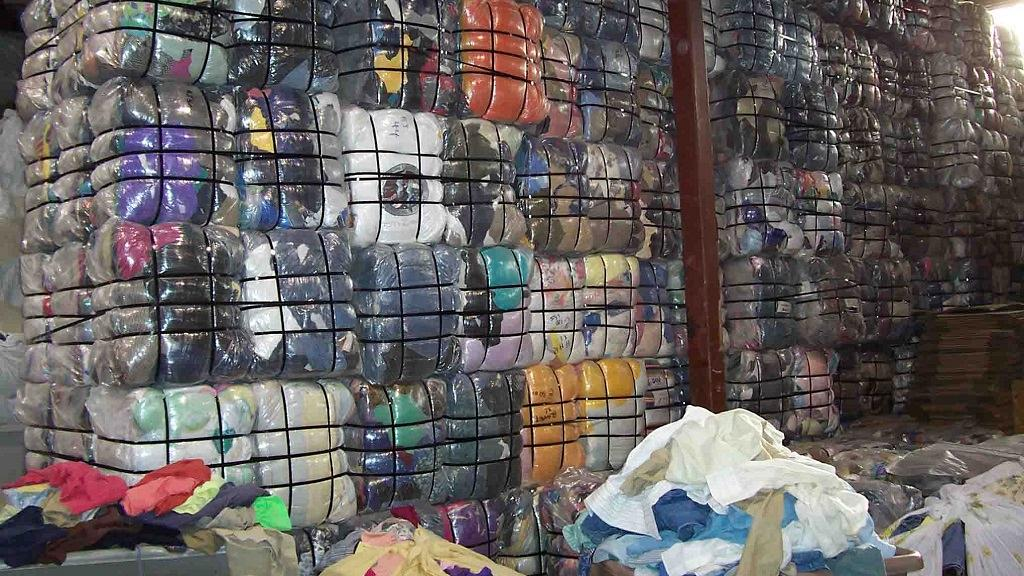
Kenya gives in to U.S. threats after proposed used clothes ban

Kenya has withdrawn a proposed ban on used clothes by the East African regional bloc after threats by the United States to review trade benefits to specifically Rwanda, Tanzania, and Uganda.

Kenya’s Trade and Industrialization Principal Secretary Dr Chris Kiptoo said the country had decided to comply with the African Growth and Opportunity Act (AGOA) conditions, reports web portal The East African.

“When we saw the petition filed in March, we knew that the lobby group had strong arguments,” he said.

Kenya, Uganda, Rwanda, Burundi, Tanzania and South Sudan decided to fully ban imported second-hand clothes and shoes by 2019, arguing it would help member countries boost domestic clothes manufacturing.

As signatories to the AGOA trade programme which offers them duty-free access to the United States, their decision violates the conditions including eliminating barriers to U.S. trade and investment, among others.

The U.S. Trade Representative said last Tuesday that it was reviewing trade benefits to the three countries in response to a petition filed by a United States body that complained that the ban “imposed significant hardship” on the U.S. used-clothing industry.

Rwandan President Paul Kagame has stated that his country will proceed with the ban on used clothes and will choose to grow its local textile industry at the expense of being a member of the AGOA.

This is the choice we find that we have to make. As far as I am concerned, making the choice is simple, we might suffer consequences. Even when confronted with difficult choices, there is always a way,” he said after officially applying to run for a third term in office.

“Rwanda and other countries in the region that are part of AGOA, have to do other things, we have to grow and establish our industries,” Kagame added.

Uganda and Rwanda have already raised taxes for used clothes and offered incentives to manufacturers to invest in their local textile industry.

Permanent Secretary in Uganda’s Ministry of Trade and Industry Julius Onen told The EastAfrican that they are still studying the matter and will issue a formal position next week.

U.S. imports from Rwanda, Tanzania, and Uganda totalled $43 million in 2016, up from $33 million in 2015 while exports were $281 million in 2016, up from $257 million in 2015.

This article was first published by Ismail Akwei on africanews.com.