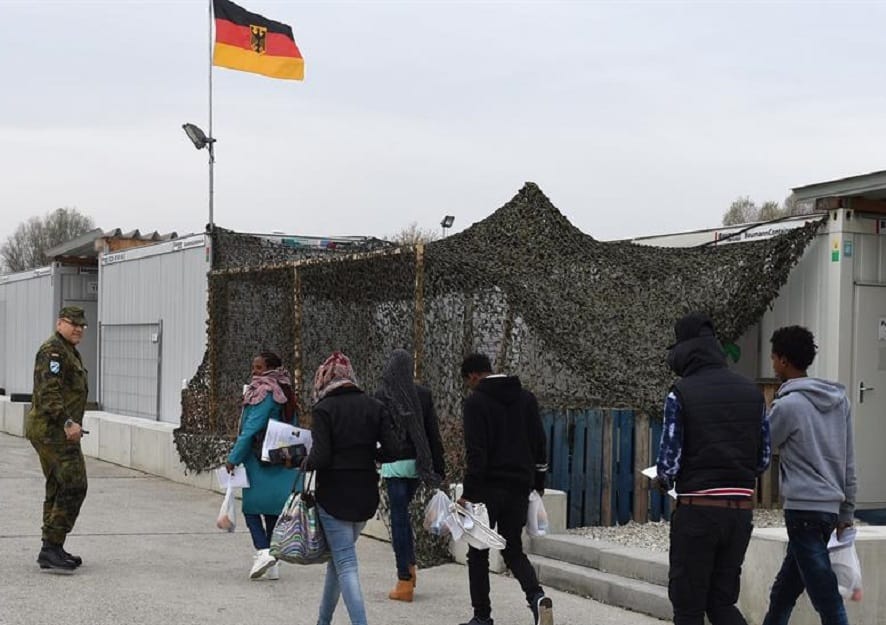
German pilots have interrupted the deportation of over 200 rejected asylum seekers from Africa and the Middle East following their refusal to fly planes carrying deportees.
The German public broadcaster Deutsche Welle (DW) reported that the pilots refused to be part of the controversial deportations while raising safety concerns in the country of origin.
Germany’s largest airline Lufthansa refused to carry out 85 deportations between January and September 2017 at the Dusseldorf and Frankfurt airports where protests were regularly held to stop the return of refugees.
“The decision not to carry a passenger is ultimately made by the pilot on a case by case basis. If he or she had the impression that flight safety could be affected, he must refuse to transport the passenger,” Lufthansa spokesman Michael Lamberty told local media Westdeutsche Allegeimeine Zeitung.
Germany has been overwhelmed by asylum seekers from Nigeria and Afghanistan who are deported if they fail to win their case.
388,201 asylum cases were decided in the first six months of 2017, European statistics agency Eurostat disclosed.
In February, the German Federal Ministry of Economic Co-operation and Development disclosed that more than 12,000 Nigerian asylum seekers may face deportation since the country is not at war and does not persecute citizens over their political views.
Days after the disclosure, the German authorities announced a program aimed at financially rewarding asylum seekers who are willing to return to their countries of origin. By February 2018, rejected asylum seekers will be given 3,000 euros ($3,545) incentive to return home.
This article by Ismail Akwei was first published on face2faceafrica.com
Ghanaian President Nana Addo Dankwa Akufo-Addo has stirred up the lingering debate about Africa’s growing dependency on the West for aid and handouts after over 60 years of independence in sub-Saharan Africa.
The president rejected the idea that Africa needed support from the Western world to develop and challenged the continent to shun the act of regularly begging for aid.
“We can no longer continue to make policy for ourselves, in our country, in our region, in our continent on the basis of whatever support that the Western world or France, or the European Union can give us. It will not work. It has not worked and it will not work.
“We have to get away from this mindset of dependency. This mindset about ‘what can France do for us?’ France will do whatever it wants to do for its own sake, and when those coincide with ours, ‘tant mieux’ [so much better] as the French people say…
“Our concern should be what do we need to do in this 21st century to move Africa away from being cap in hand and begging for aid, for charity, for handouts. The African continent when you look at its resources, should be giving monies to other places…We need to have a mindset that says we can do it…and once we have that mindset we’ll see there’s a liberating factor for ourselves,” Akufo-Addo said during a joint press conference in Accra with visiting French President Emmanuel Macron.
The video of the speech went viral, not only for the confused demeanor of the French president but for its timeliness in addressing the issue which has been the regular mantra of the continent’s freedom fighters and “total independence” advocates.
Young Africans who probably had not met the era of the founding fathers like Kwame Nkrumah, Patrice Lumumba, Léopold Sédar Senghor among others, questioned the current crop of leaders who regularly visit Europe and America to seek aid.
Twitter user Yaw Bediako tweeted: “Now our scientific leaders need to be just as bold… stop letting donors set our research priorities and agenda.”
Now our scientific leaders need to be just as bold… stop letting donors set our research priorities and agenda @AASciences@WACCBIP_UG
Ifedayo Adetifa disagreed and called for action instead of rhetoric: “Nope! First in line is for leaders to transform rhetoric into action. In this case, let’s have more domestic funding for researching sort out our training before we start addressing the speck in the eyes of donors!”
Nope! First in line is for leaders to transform rhetoric to action. In this case, let's have more domestic funding for researching sort out our training before we start addressing the speck in the eyes of donors!
For Kofi Amed, Ghana’s president should rather be cautious in making such speeches to avoid falling out with the west and its organizations.
“Such a laudable Idea but then again let’s remember what happened to Nkrumah Sankara and likes that took a stance against foreign aid and imf impositions on their countries . First of all West should stop meddling and take their hands of Africa . We can make it on our own.”
Such a laudable Idea but then again let’s remember what happened to Nkrumah Sankara and likes that took a stance against foreign aid and imf impositions on their countries . First of all West should stop meddling and take their hands of Africa . We can make it on our own.
The debate has been ongoing since Akufo-Addo made the speech and thousands have shared the video on various social media platforms in support of what the 73-year-old leader said.
This is not a new statement from an African leader who is in the position to change the status quo. Rwandan President Paul Kagame, ousted Zimbabwean President Robert Mugabe and former Ghanaian President John Mahama among others have on several occasions called for Africa to look within to solve its problems the African way.
Kagame said in 2014: “For me when I am watching television and I find our leaders, who should have been working together all along to address these problems that commonly affect their countries, wait until they are invited to Europe to sit there. It’s like they are made to sit there and address their problems.
“What image does it give of Africa? In fact, the image it gives is that we are not there to even address these problems. We are there for photo opportunity. We are happy to sit with the President of France and just talk about addressing the problems. It doesn’t make sense…”
#Kagame blasts Africa leaders who run to the West to resolve the continent's problems
“We’re there for a photo opportunity. We are happy to sit there in Paris with the President of France and talk about addressing our problems. It doesn’t make sense“ – @PaulKagame#Kigali2014pic.twitter.com/5FnEsiBDmd
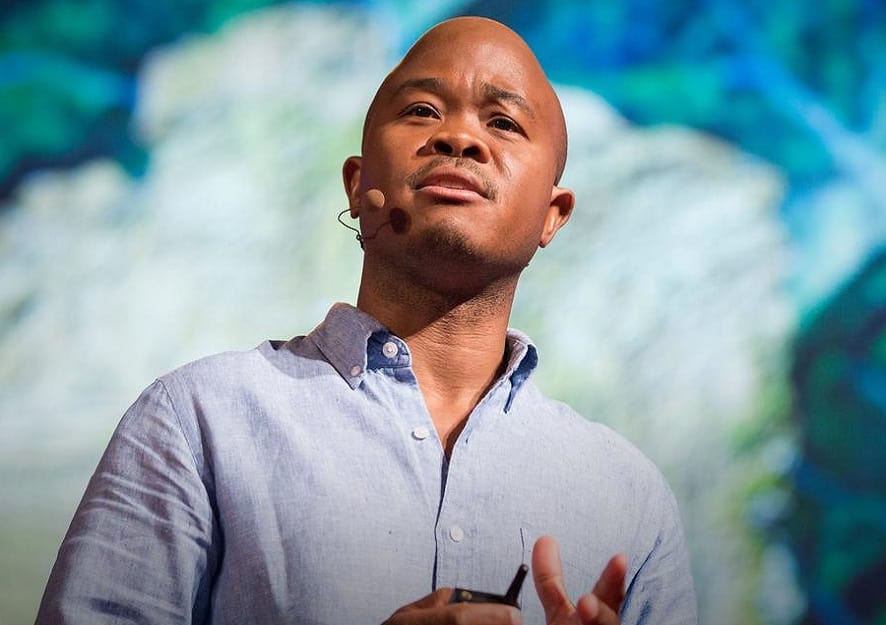
Entrepreneur Fred Swaniker giving a talk at a TED Conference — Source: TEDtalk
Many young Africans desire to chart their career paths outside the continent, but for Ghanaian entrepreneur and leadership development expert Fred Swaniker, Africa is the best place for an African to succeed. The Silicon Valley graduate and founder of the African Leadership Academy in South Africa outlined three reasons why Africans studying abroad should return home to work.
Last week I found myself back in Silicon Valley at Stanford University where I did my MBA. I was privileged to attend a talk given by my friend Strive Masiyiwa (one of the entrepreneurs I admire). I encourage you to view the full talk on Strive’s facebook page. After Strive had given his talk, a couple of the students in the audience asked a question many Africans studying abroad almost always ask at such events: should they stay abroad or should they go back home?
I have studied in America twice. Each time, I had to come back to work on the continent within 3 months of graduating (the first time was for my undergraduate degree at Macalester College in Minnesota and the second time was after my MBA at Stanford University in California). My decision to come home as opposed to staying in the USA ultimately came down to 3 considerations:
Reason #1: Africa is an entrepreneur’s paradise
I believe that Africa today is where China was 30 years ago. We’re just beginning to take off. So those on the ground today will capture all these exciting opportunities. This is especially so if you think like an entrepreneur. You see, entrepreneurs succeed by solving problems for society, and guess what–we have so many problems just waiting to be solved in Africa! For this reason, I call Africa ‘an entrepreneur’s paradise’.
For example, we still need to create great infrastructure. So why not be the one to build Elon Musk’s ‘hyperloop’ and enable fast transportation across Africa, without us having to build expensive and obsolete highways? Or why not be the one to build low-cost housing for the 800 million people who will be moving into African cities over the next 40 years? Why not be the one to leverage technology to create low-cost healthcare or education for the hundreds of millions of Africans who don’t have it today? Why not take advantage of Africa’s abundant land, sunshine, and rain to become an ‘agro-billionaire’ by growing and exporting huge amounts of food to the world’s ballooning population? If you have an artistic flair, why not be the one to create the African Disney? Why not be the one to figure out how to bring consumer credit to hundreds of millions of people–perhaps using blockchain technology? Or become rich by creating tourism businesses that also promote the conservation of Africa’s wildlife? The list goes on. There is SO MUCH entrepreneurial opportunity in Africa!
In the US and many western countries, almost all these ideas have already been done. So it’s very difficult to break through unless you have an extremely creative idea. In Africa, the ideas are simple. They’re just waiting for smart and courageous people to make them happen. With the exception of Elon Musk, I’ve never heard of an African billionaire in the USA. Have you? No–almost all the African billionaires we know–Strive Masiyiwa, Aliko Dangote, Patrice Motsepe, Jim Ovia, Folorunso Alakija, Mo Ibrahim, Manu Chandaria, etc– made their fortunes right here in Africa. Case closed.
Reason #2: You can climb the corporate ladder faster in Africa than elsewhere
All businesses in Africa need 3 things: a viable product, some capital, and talented teams. Of those three, most people think capital is in the shortest supply. That’s not true—it’s actually fairly easy to get capital as an entrepreneur if you have the right idea. The real shortage most businesses in Africa struggle with is finding well-trained talent with the skills to execute. We have tremendous skills gaps in crucial areas that will be important for Africa to stay competitive. So if you’ve studied abroad and acquired those skills, you’ll be a hot commodity on the continent. I experienced this firsthand when I moved to Johannesburg after my first degree and started working with McKinsey. I was given far greater responsibilities than my colleagues who were working for the same company in New York. As a result, my career took off much faster than my peers who stayed in the USA.
Reason #3: The priceless value of respect and dignity
There is one thing I value far more than money or a successful career–and that is dignity and respect. In the USA, no matter how successful you get, you may be seen as a ‘foreigner’, an outsider, and (especially as the world becomes increasingly racist), even worst things. For example, before Uber came along, I had so many experiences of taxi drivers in New York driving right past me–a successful black man wearing a suit–to pick up the white passenger standing just 10 feet away. The ability to live in your own continent and not have to suffer such disrespect is something that I can’t begin to put a value on. I love living in Africa, listening to our own music, eating our own food, being close to family, friends, and others who respect me for who I am not and because of my skin color. Nothing beats that.
We all have a role to play
Of course, while returning home was the right choice for me and many others, it may not be right for everyone. If I haven’t convinced you about the phenomenal opportunities that exist on the continent, all is not lost. You can still play a role: last year, Africans abroad sent $33billion to Africa, which typically compares to or even exceeds foreign aid sent to Africa. This is all investment that can support businesses on the continent and that is contributing to our development in some shape or form.
On a final note, in Strive’s talk, he mentioned a program that we run together called the Africa Business Fellowship, where we bring young American professionals (mostly graduates from top MBA programs) to Africa to work in African companies for about 6 months.
I recently met with a group of ABF fellows who had just finished their 6-month stint. The number one question on their minds was–how can I stay on the continent? Almost all of them didn’t want to go back to America! –which goes to show you that something special is happening on this continent. I hope many young Africans around the world will come home and be a part of it.
This article by Ismail Akwei was first published on face2faceafrica.com
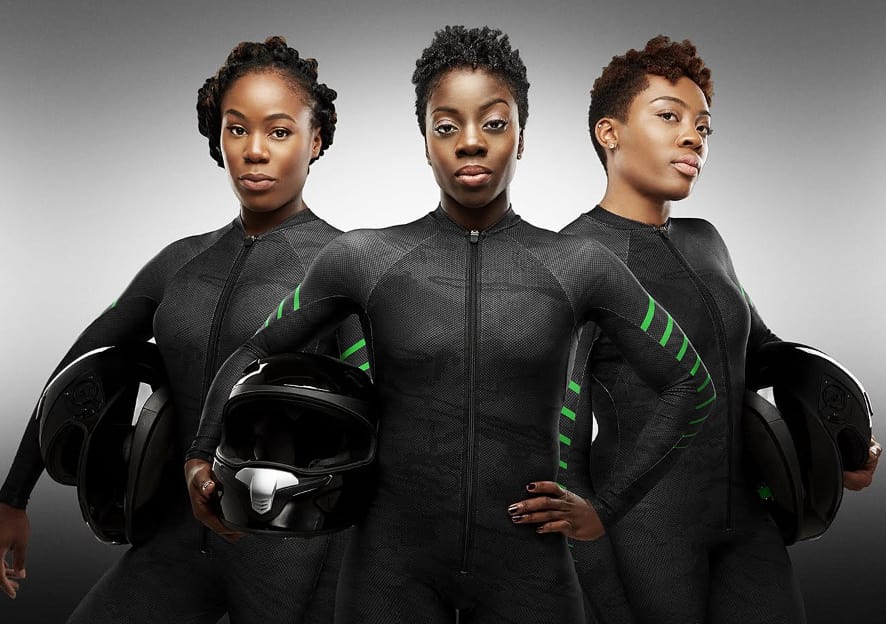
s difficult as it may seem, a bobsled team made up of three Nigerian women has qualified for the 2018 Winter Olympics in Pyeongchang, South Korea.
Besides the fact that there is no winter in Nigeria, Seun Adigun, Ngozi Onwumere and Akuoma Omega made history as the first in Africa to qualify after completing all five North American competitions held in Utah, Whistler, and Calgary late last month.
Other Africans hoping to join them include 24-year-old snowboarder Brolin Mawejje from Uganda and 31-year-old skeleton athlete Akwasi Frimpong from Ghana.
Mawejje is hoping to make history as the first snowboarder from Africa in the Olympics if he qualifies, likewise Frimpong who will also be the first skeleton athlete from Africa if he qualifies.
Here's Akwasi Frimpong is a Dutch-Ghanaian sprinter, bobsledder, and skeleton athlete who has won 4 bronze, 4 silver, and 8 gold medals in various national and international sport events. He's representing Ghana at the Winter Olympics. pic.twitter.com/wDL1o2Ty2N
How did the dream start for the successful Nigerian team?
Seun Adigun, Ngozi Onwumere and Akuoma Omega are US-based track and field athletes who decided to compete in the winter sport for more laurels.
The bobsled driver Seun Adigun who represented Nigeria in the 100m hurdles at the London 2012 Olympic Games, started a Go Fund Me campaign in 2016 to fund their Olympic bid after recruiting the other two.
They raised their target of $75,000 in 11 months after gaining media attention and a strong Nigerian backing. This allowed them to train on ice with a real bobsled and set up the required federation for the sport.
They used to train with a wooden sled they nicknamed “The Maeflower” in Houston, Texas where there is no snow.
“This is a huge milestone for sports in Nigeria. Nothing makes me prouder than to know that I can play a small role in creating opportunities for winter sports to take place in Nigeria,” Adigun told KweseESPN.
“Our objective now is to be the best representation of Africa that the Winter Olympics have ever witnessed,” she added.
The Nigerian Women’s Bobsled Team gained sponsorship from Visa and Under Armour to prepare them for the Winter Olympics history.
African history at the Winter Olympics
Africa has been represented at the Winter Olympics largely by skiers since 1984. Morocco, Algeria, South Africa, Cameroon, Eritrea, Ethiopia, Ghana, Kenya, Madagascar, Senegal, Togo and Zimbabwe have entered athletes in several Winter Olympics events.
This is the first time bobsled athletes from Africa have entered the event.
Nigeria's Women's Bobsled Team which sponsored themselves to become the first Nigerian team and African Bobsled team to qualify for the Winter Olympics made it to THE ELLEN SHOW. ❤❤❤❤ pic.twitter.com/s0LGLFJ8V7
John Matthew Shippen Jr. The first African American professional golfer. Source: pga.com
Golf is perhaps one of the oldest white male privilege sports in history considered a preserve for the rich and elites. U.S. President Donald Trump remarked in 2015 that only the rich should be allowed to play golf.
Before Tiger Woods – one of the most successful golfers of all time – was born, a black caddy, instructor, and repairman at a golf course entered the US Open in 1896 at the age of 17.
He was born on December 5, 1879, in Long Island, New York, and was introduced to golf in 1894 by Willie Dunn, a Scottish golfer, and owner of a new golf course built near the Indian reservation in Shinnecock Hills.
Dunn taught local youth the sport including Shippen who worked with the maintenance crew on the golf course.
His entry into the US Open together with the first Native American golfer Oscar Bunn stirred controversy among many Scottish and English golfers who threatened to withdraw from the event.
Some withdrew, but the historic event was held and Shippen finished 5th place winning a $10 prize. He competed in five other US Opens as a professional golfer while he continued to work at the golf course until he retired from the competition in 1924.
John Matthew Shippen Jr. moved to New Jersey where he worked for the Shady Rest golf course until 1960. He designed and sold custom-made golf clubs marked “J.M. Shippen”.
The pioneer golfer was never granted membership in the Professional Golfers’ Association (PGA) until 2009 when he was named a posthumous member. He died in Newark, New Jersey in 1968 at the age of 89.
The next black golfer to compete in the US Open after Shippen was Ted Rhodes in 1948. Despite Shippen’s role in opening up the sport for minorities, the demographic divide is still huge.
The John Shippen Memorial Golf Foundation is embarking on an aggressive initiative for a U.S. Postal Stamp to honor John Matthew Shippen,…



 Ismail Akwei