A disappointing silence on Israel’s forced deportation of 40,000 African migrants

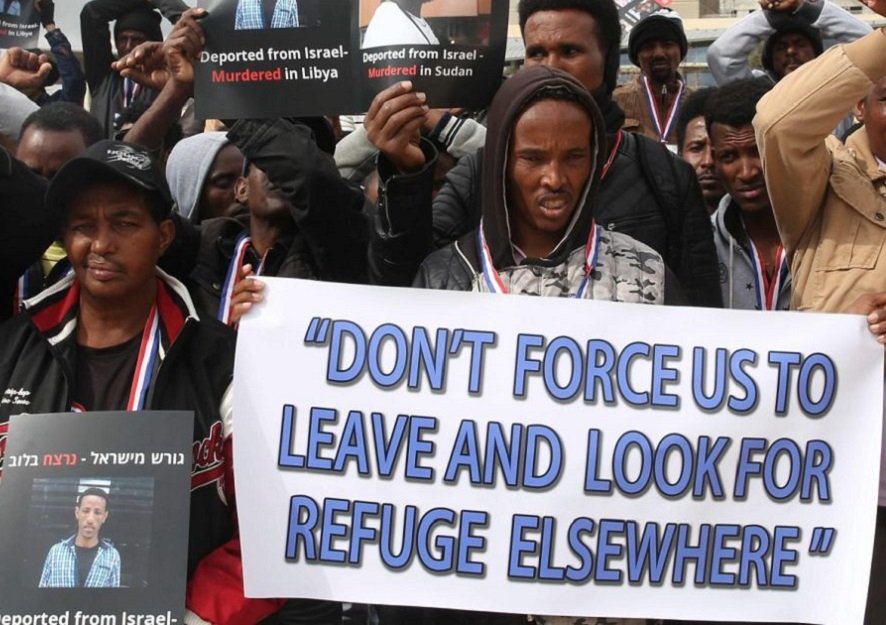
African migrants in Israel protesting against their forced deportation — Photo Credit: Haaretz.com

There is a disappointing silence by Africans on Israel’s decision to deport nearly 40,000 African migrants who have been left with no choice but prison or deportation to Uganda or Rwanda.

Israeli Prime Minister Benjamin Netanyahu has visited African leaders this year and among the reasons are to find a hub for the rejected asylum seekers mainly from Sudan and Eritrea where they are suffering from political and social instability.

Uganda and Rwanda are reported to be the only countries that have agreed to take in the 27,500 Eritreans and 7,800 Sudanese who are seeking to start a living in Israel, a region that accommodated thousands of Jews who faced persecution during the horrible Nazi era.

The United Nations migration agency UNHCR said 4,000 Eritrean and Sudanese asylum seekers were voluntarily relocated to Rwanda and Uganda between 2013 and 2017.

The rest have refused to leave and the Israeli Prime Minister who described the 38,043 African migrants as “infiltrators” said the country has signed international agreements to move the migrants “without their consent” to the recipient countries.

The Public Security Ministry said in a statement that “the infiltrators will have the option to be imprisoned or leave the country.”

These sentiments stoked outrage and unsuccessful legal battles against the plan by Israeli human rights advocates.

The Israeli government approved a bill on Monday backing the expulsion of the asylum seekers or “imprisonment if they violate the geographical limitations imposed on them,” reports Israeli news portal Haaretz.

The decision raised serious human rights concerns especially when details of the plan have not been disclosed including the mention of the recipient countries.

Netanyahu visited Kenya last month and met with East African leaders reportedly to seal the deal of returning the refugees without their consent to Rwanda and Uganda in the coming weeks.

Haaretz reported that the recipient countries will be paid $5,000 for each deportee while each asylum seeker will receive $3,500 and a free flight out of the country.

The murky details prompted the United Nations refugee agency to express concern that the asylum seekers have not found a durable solution to their plight and they may subsequently attempt moving within Africa or to Europe.

“As party to the 1951 Refugee Convention, Israel has legal obligations to protect refugees and other persons in need of international protection,” said UNHCR’s Assistant High Commissioner for Protection, Volker Türk.

Rwanda and Uganda have not made any statement on the hosting of refugees and what measures they have put in place to protect their rights.

It is disappointing to note that since 2009, only eight Eritreans and two Sudanese have been recognized as refugees in Israel. Another 200 Sudanese from Darfur were recently granted humanitarian status.

Israel’s refusal to host these refugees who have been in detention centres is a disservice to humanity. Rwanda and Uganda’s reported agreement to receive them offered the Israelis a reason to deport them.

Why are other African countries not receiving them despite the huge sums of money attached? What is in it for Uganda and Rwanda? Why is the African Union not fighting for the asylum seekers who are forcefully being evacuated from Israel? These are the questions we need answers to.

Uganda is hosting the largest number of refugees in the world while Rwanda has offered to host 30,000 African migrants trapped in Libya. Their humanitarian services for the displaced are worth celebrating, but not the hosting of asylum seekers in developed countries like Israel.

What if other countries in the Western world decided to do same, is that the kind of world we want? Africans should not be silent about this, it can be you someday. We need to demand the best treatment in whatever situation we find ourselves.

This article by Ismail Akwei was first published on face2faceafrica.com
Female law school graduate denied call to Nigerian bar after refusing to remove hijab

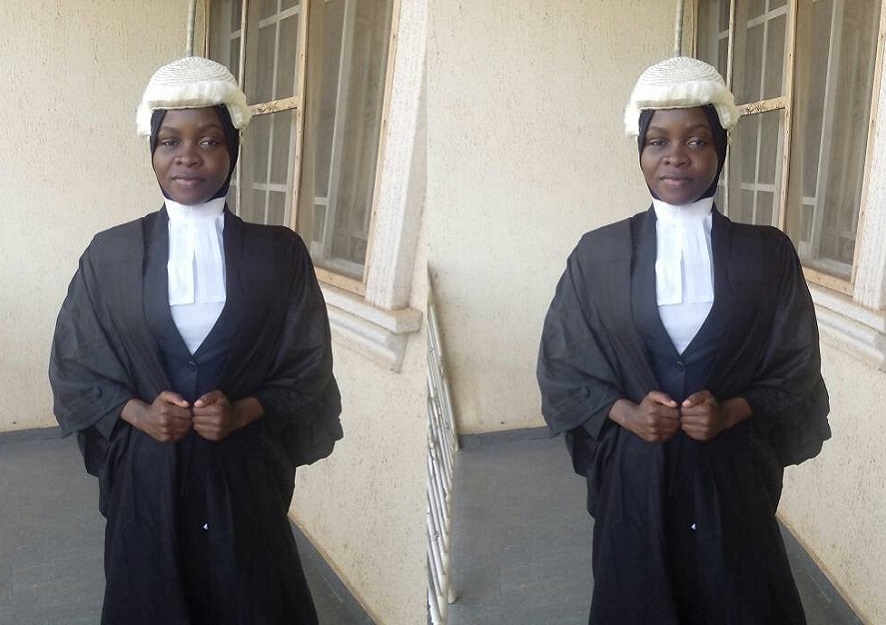
Nigerian law school graduate Amasa Firdaus who was denied a call to the bar for allegedly refusing to remove her hijab — Photo Credit: lawyard.ng

Nigerian law school graduate was denied a call to the Nigerian Bar for allegedly refusing to remove her hijab at the call ceremony on Tuesday.

The graduate of the University of IlorinAmasa Firdaus, is reported to have insisted on wearing the wig on her hijab despite instructions and plea from the Nigerian Body of Benchers and colleagues respectively, reports local legal news portal lawyard.ng.

She was denied entry into the hall and denied a call to the bar, the report added.

The incident was first made known by a colleague of Amasa Firdaus who used her Instagram page to fight for justice for the Muslim woman and others who want to wear hijab while they practice law.

“What has Hijab done to them? Where is our freedom of Religion as stated in the constitution? We need justice … For those that don’t know, Hijab is a MANDATORY part of my religion not just a piece of clothing, so if my freedom of religion is said to have been guaranteed in section 38 of the constitution of my country that is said to be supreme and have binding force overall as seen in section 1 of this same constitution and Section 42 of this same constitution guarantees my right to freedom from discrimination,” Instagram user savvy_ruqqy protested on Thursday.

“Please we want justice. We want our hijab. We want #JusticeForFirdaus. We want to wear our hijabs for the call to bar. We want to wear it in the courtroom. Stop the discrimination. We are Muslims, not terrorists. Hijab is Mandatory. We want Justice for Firdaus,” she added citing provisions in the Nigerian constitution that stipulate freedom of religion.

The Instagram post generated nearly 500 comments with many in support of the campaign to get Amasa Firdaus a call to the bar.

The legal profession in Nigeria and other parts of Africa is strict when it comes to its respect for centuries-old traditions adopted from the colonial invaders.

Africa has refused to let go of some adopted traditions including the mandatory wearing of the legal wig which many Western countries have stopped wearing.

Ghana’s Chief Justice Sophia Akuffo recently cautioned lawyers in the country to wear the wigs to “preserve the tradition”. Many African lawyers are against the wearing of wigs and gowns due to its discomfort in the especially humid part of the world.

It will take a legal provision to allow Muslim lawyers in Nigeria to wear the hijab in court.

This article by Ismail Akwei was first published on face2faceafrica.com
Africa’s richest woman isn’t ready to give up on wealth yet

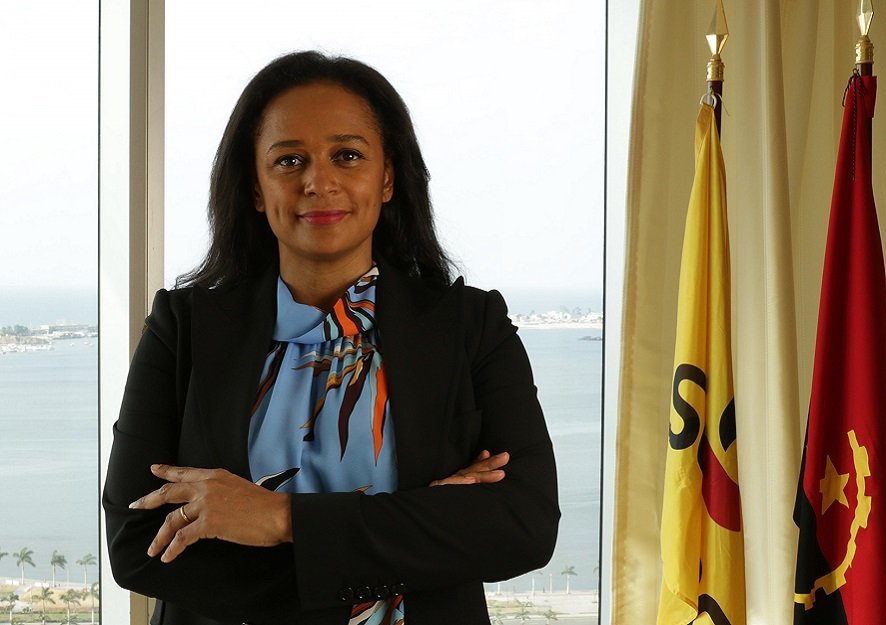
Isabel dos Santos — Photo Credit: ANGOP

With an estimated wealth of $2.5 billion, 44-year-old Isabel dos Santos is treading new grounds to increase her wealth after she was fired from her position as the head of Angola’s state oil company Sonangol.

The daughter of the oil-rich country’s former president Jose Eduardo dos Santos said the new president João Lourenço’s decision to fire her is “normal” and she is planning on selling shares of two major banks in the country to strengthen their resolve, reports Bloomberg.

“I’m not a politician and my focus is on business, on building businesses … These banks have gone from strength to strength and I think it’s time now to open their capital and receive new shareholders,” she said at a conference in the Egyptian resort of Sharm El-Sheikh.

Isabel is the vice president of Angola’s second-largest bank Banco de Fomento Angola controlled by state-owned telecommunication company Unitel of which she owns 25 percent shares.

She also owns 43 percent shares in Angola’s fourth largest bank Banco BIC of which she is a board member. The bank operates in Angola, Namibia, Cape Verde and Portugal and is looking forward to other merger opportunities.

She has investments in Portuguese oil company Galp Energia since 2008 and holds an indirect stake, along with Sonangol and the heirs of Portuguese investor Americo Amorim. She invested in Portuguese cable operator NOS which she controls jointly with Sonaecom SGPS SA.

Isabel dos Santos was named 74th in Forbes 100 most powerful women in the world in 2017, the only African on the list.

She ranks 630 on the world billionaires list and ranks 8th in Africa.

She started gaining wealth in 2012 with $500 million. It rose to $3.7 billion in November 2014. Her earnings have been falling since.

This article by Ismail Akwei was first published on face2faceafrica.com

4-year-old African American boy reads 100 books in a day; this should be trending

Caleb Green posing next to his books — Photo Credit: Sylus Green

4-year-old boy in Chicago read 100 books in one day, a goal he personally wanted to achieve with the support of his parents who streamed it live on Facebook.

Caleb Green’s parents told ABC 7 Eyewitness News that they were shocked by their son’s decision to embark on the marathon reading and were equally inspired.

“I was like, 100, son? That’s a lot of books. So at first, I had the gut reaction to talk him down a little bit but he was like, ‘No, I want to read 100,’” his father Sylus Green was quoted by ABC 7 Eyewitness News.

“I learned to just dream bigger and I am going to set unrealistic goals for myself this coming year and I’m going to be inspired by Caleb to not quit on him and just push through it,” he added.

Caleb’s parents were supported by friends to provide the 100 books needed by the smart kid to reach his goal. He read 10 books at a time and danced to his progress.

The live videos gained a few thousand views, a disappointment especially when the likes of 11-year-old Keaton Jones whose video showed him crying and pleading against bullying in schools was viewed millions of times.

Despite his teary plea against bullying, he gained more bullies online after controversies surrounding his incarcerated father accused of being a white supremacist, and his mother who was accused of fraudulently creating a GoFundMe account to extort money from people touched by his story.

Caleb’s story is about excellence but has not gained traction like that of Keaton. Is it that people have no interest in children’s achievement? Are we more interested in the negative stories?

Meanwhile, Caleb’s father says they are not interested in GoFundMe campaigns but rather a book drive to raise 10,000 books to donate to schools for Christmas.

“Thank you all for the love and support you have been showing my babies. I have gotten TONS of request for Go Fund Me Campaigns, but we are MUCH more interested in a book drive! Please feel free to purchase books … and Caleb and his sister Jael will read the books to schools and give each child a copy for Christmas,” he posted on Facebook.

Caleb Green said he wanted to be a basketball player, an astronaut at 22 and a Ninja turtle at 23 years old.

Watch the videos below of 4-year-old Caleb’s achievement streamed by his proud parents.

This article by Ismail Akwei was first published on face2faceafrica.com
How Africans are fascinated by courtesy titles

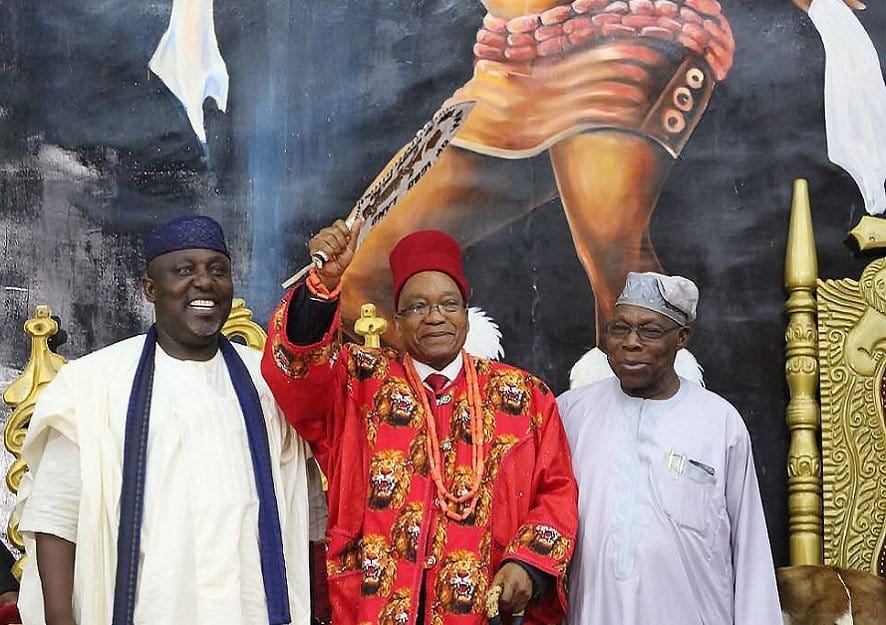
Nigeria’s Imo State Governor Okorocha Rochas, South African President Jacob Zuma, former Nigerian President Olusegun Obasanjo — Photo Credit: thecable.ng

His Excellency Sheikh Professor Alhaji Dr. Yahya Abdul-Aziz Awal Jemus Junkung Jammeh Naasiru Deen Babili Mansa. These were the official titles and names of deposed Gambian president Yahya Jammeh who is in exile in Equatorial Guinea after his ouster by a West African regional force.

Dictators love titles; His Excellency Sheikh Professor Alhaji Dr. Yahya Abdul-Azziz Jemus Junkung Jammeh Babili Mansa, Commander-In-Chief of the Armed Forces & Chief Custodian of the Sacred Constitution of The Gambia, Conqueror of Rivers pic.twitter.com/A2cVbYawZB

— Dictator Watch (@Citizen_Alert1) October 5, 2017

His titles and names are a few honorific titles religiously prefixed to names in Africa and regarded as a norm to write and mention before actual names.

Others are Chief, Chairman, Honourable and Right Honourable. They are either conferred, acquired or earned for a reason or no reason at all.

In Nigeria, Ghana and other former British colonies, political and parliamentary office holders are addressed as Honourable. Others choose to maintain them even after they are out of office.

Muslims in these countries also adopt the title Alhaji for men and Hajia for women after embarking on the pilgrimage to Mecca in Saudi Arabia. Some officially prefix them to their names.

Some pastors have also adopted titles like Reverend, Pastor, Archbishop among others to explain their status within and outside the church.

African chiefs also confer traditional titles on people to honor them, likewise the universities who award honorary doctorate degrees. These titles are used cheerfully by their bearers to signify a high class in society.

But why are these so important?

Nigeria’s Imo State Governor Rochas Okorocha who came under attack for honoring South Africa’s president Jacob Zuma with a chieftaincy title and a statue explained that it was necessary to honor people and immortalize them so that “children yet unborn can know about them. History is dying in Africa, we must keep it alive.”

Liberian President Ellen Johnson Sirleaf was also conferred with a chieftaincy title by the traditional leaders of the same state in November and then honored with a statue.

Nigerian President Muhammadu Buhari was also conferred with two titles in November when he visited Igboland.

He was conferred Ochi Oha Ndigbo (leader of all) by the South East Traditional Rulers and Enyi Oma 1 (number one good friend) by the Ebonyi State Traditional Council.

A Nigerian church conferred the title Otun Baba Ijo to the Chief of Ile Ife and former Ecobank Nigeria Chairman Chief Dr John Agboola Odeyemi (MFR).

It might not be the same again in Ghana where the Chief Justice, Sophia Akuffo has ordered two Members of Parliament to remove the titles Honourable from their names in a court writ.

The two MPs were in court to challenge the appointment of a minister when the Chief Justice’s attention was drawn to the use of the title in their documents.

“If we want to learn from the people who originated these titles, don’t do this. They mention their names before they mention any other titles,” she was quoted by the Ghana News Agency.

Ghana’s parliament agreed with the Chief Justice but said the title could be used on the floor of the House.

In the United States, the title “Honourable” is normally used to refer to sitting members of Congress, Cabinet officials, and federal judges.

The United Kingdom has several courtesy titles which are conferred on different classes of people. Except for the royal family, professional and judicial courtesy titles are normally social and not legal thereby do not need prefixing before names. However, those knighted by Queen Elizabeth earn the title Sir which can be prefixed before their names.

The use and love of titles in Africa have become a part of the culture which will not come to an end anytime soon. 

This article by Ismail Akwei was first published on face2faceafrica.com