Bermuda joins few Caribbean islands to decriminalize marijuana

Cannabis — Photo Credit: drugabuse.com

Bermuda has passed a bill decriminalizing the possession of cannabis after years of lobbying by advocates of the psychoactive drug which is used for both medicinal and recreational purposes.

The island nation’s Misuse of Drugs [Decriminalization of Cannabis] Amendment Act 2017 removes criminal prosecution for the possession of not more than 7 grams of cannabis.

The decriminalization of marijuana does not mean it is legal and can be used without any queries.

According to the Act, prosecutors are permitted to lay charges for any amount of the drug if there is evidence of potential trafficking. The police have also been authorized to seize any cannabis regardless of the amount.

There are criminal laws against the use of marijuana across the Caribbean except in Jamaica, the Cayman Islands, Puerto Rico, and Malta.

Jamaica moved to decriminalize the possession of up to two grams of marijuana in late 2014. Before then, culprits were jailed for up to ten years for possession of the drug.

This article by Ismail Akwei was first published on face2faceafrica.com
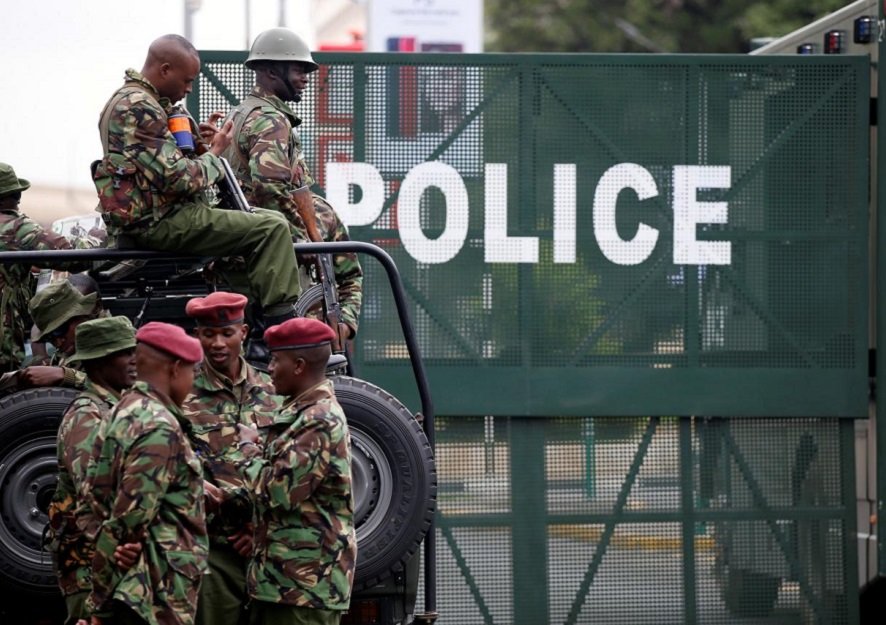
Teenager strip-searched by Kenyan police in 2015 awarded $40,000 compensation

Kenyan police — Photo Credit: Reuters

An 8-year-old Kenyan high schooler who was stripped naked and filmed while the police searched her for marijuana in 2015 has been awarded Sh4 million (nearly $40,000) as compensation.

A Kenyan high court ruled on Monday that the rights and dignity of the student of Kanyama Secondary School in Karatina were violated during the strip-search which resulted in her semi-nude photos going viral on social media, reports local news portal Standard Media.

The girl had served 18 months in jail for the possession of marijuana after pleading guilty. She later filed a lawsuit, jointly with child rights NGO CRADLE Children’s Foundation, claiming compensation for the “embarrassment”. They demanded Sh7 million (nearly $70,000) in damages.

The student was among 44 others arrested on a school bus heading to Nairobi on vacation. They were stopped on suspicion of smoking marijuana and engaging in indecent acts.

Kenyan police have recently come under scrutiny for manhandling protesters and suspects who have not been proven guilty. The country’s worst cases of police brutality were experienced in the past months during and after the August and October presidential elections.

This article by Ismail Akwei was first published on face2faceafrica.com
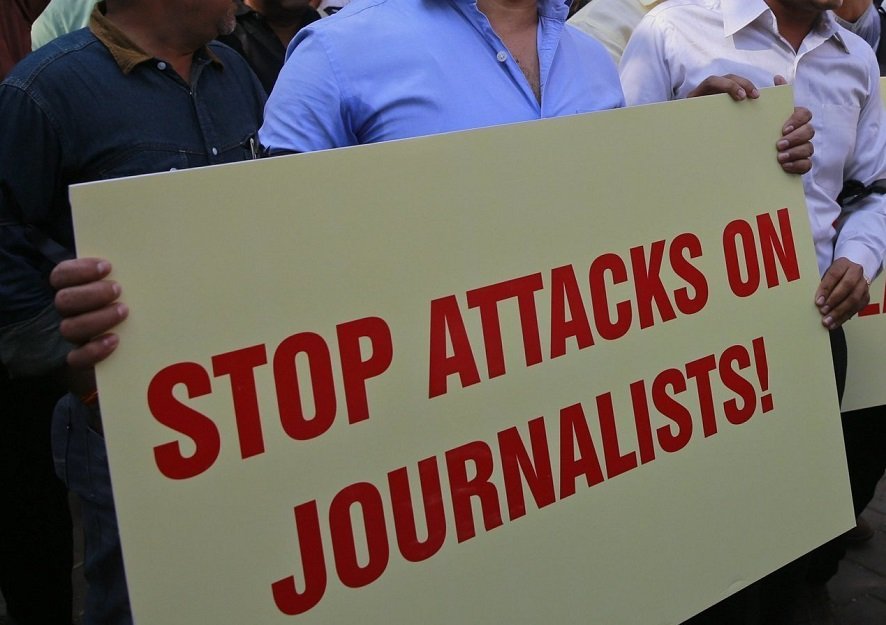
African journalists jailed in 2017 for doing their jobs

Campaign against attacks on journalists

017 cannot be described as the best year for journalists as 262 were arrested for doing their jobs. 66 of the arrested journalists are from 14 African countries, according to journalist rights group Committee to Protect Journalists (CPJ).

20 journalists were arrested in Egypt alone, the highest on the African continent followed by Eritrea where 15 journalists are behind bars.

Uganda jailed 8, followed by Ethiopia (5), Democratic Republic of Congo (5), Morocco (4), Algeria (2), Somalia (1), Republic of Congo (1), Equatorial Guinea (1), Cameroon (1), Nigeria (1), Niger (1) and Mauritania (1).

Most of the Egyptian and Moroccan journalists arrested this year have been accused of being anti-State agents due to their reportage.

The Ugandan journalists were imprisoned for defamation while the Mauritanian journalist was charged with blasphemy. Some of the Egyptian journalists behind bars and the Somali journalists were charged with the spread of fake news while those in the rest of the countries were not charged at all.

The reason for their arrest is clearly linked to their work as journalists in these countries are noted for having strong opposition to dissent. These journalists are still alive and fighting for their freedom.

42 journalists lost the fight after they were murdered in the line of duty. Two of them are from Africa including Somalia’s Abdullahi Osman Moalim and Ali Nur Said who were killed in a crossfire while working.

CPJ says Egypt is part of the worst three jailers of journalists in 2017 including Turkey and China reflecting “a dismal failure by the international community to address a global crisis in freedom of the press”.

Click here for the full list of journalists imprisoned in 2017.

This article by Ismail Akwei was first published on face2faceafrica.com

Producers of hit UK-African sitcom ‘Meet the Adebanjos’ share their secret to success

Cast of ‘Meet the Adebanjos’

The hit UK-African sitcom “Meet the Adebanjos” has reached 50 episodes after three seasons of airing in Britain and all over Africa without support from mainstream media outlets.

The family-based sitcom produced by MTA Productions is about a British-Nigerian family living in Peckham, South London where they are struggling to balance old-fashioned African values against modern British values.

Producers Debra Odutuyo and Andrew Osayemi left their careers in 2010 to launch the production company to produce the sitcom which is UK’s most successful British-African series which is showing in South Africa, Nigeria, Ghana, Uganda and on Africa Magic/M-Net all over Africa.

Producers Debra Odutuyo and Andrew Osayemi

They self-financed the TV show which started as a web series in 2011 after unsuccessful attempts to get major TV deals.

“After months of feeling sorry for myself, a successful business friend pulled me aside and asked: ‘Why do you actually want to get a deal with a mainstream UK broadcaster?’ ‘Because I want to prove it’s possible to get a black show on TV’ I confidently stated. He replied ‘It’s your ego talking. You’re too focused on the bright lights, the glitz, glamour, and adoration from your friends. You should find a market who want to buy your content’. And he was absolutely right,” said Andrew Osayemi.

They took the advice and after a few years, they generated enough revenue to finance three seasons, 50 episodes; and win several awards including Zaffa, NEL, Screen Nation, Beffta, and UK Black Comedy Awards without a major mainstream broadcaster.

Debra and Andrew have devised a 5 step plan on how to succeed in the creative industry without mainstream support for creatives who have been struggling to achieve results in the industry.  They believe that all creatives can and should follow their dreams and make a success of their work without traditional mainstream validation.

Here are their 5 steps to success in the TV business without mainstream support:

  • Understand your audience: Make very good niche content where you can easily find a community online to help you promote it: We made our show ‘Meet the Adebanjos’ about Africans living aboard because we knew there was a large audience of people living in the diaspora who could connect. You could do the same by doing a show for gamers, single dads, women trying to lose weight etc.
  • Find funding: Beg, borrow (but don’t steal!) money from friends and family to raise cash to make a pilot episode/pilot season. Undertake a crowdfunding campaign to source funds. Take your time developing the show concept so that the script is amazing and then make the show for as cheap as possible without compromising on quality. Debra sold her car and moved back with her parents in order to make the 1st pilot of ‘Meet the Adebanjos’. Andrew quit his city trading job and convinced many of his friends to invest in the 1st season so they could make it independently. They worked with script editors and writers who had worked on the popular British sitcom ‘Desmond’s’ to help get the scripts right before producing them.
  • Invest in marketing: Focus on promoting and marketing the 1st episode/season rather than making money from it. You want as many people to see it as possible. Have a budget for marketing and promoting.  Andrew took the gamble of not focusing on generating revenue straight away but instead wanted the 1st season to be watched by as many people as possible. Andrew and Debra printed posters all over the UK telling people to watch the 1st episodes online, they did deals with African TV stations to air the 1st season for free and emailed every journalist they knew to cover the story.
  • Get selling: Work on your sells pitch. You can fund your future seasons by preselling your future shows to broadcasters/publications/advertisers focused on your niche audience. Andrew says once your show has been able to generate a lot of buzz you will start getting a lot of interested from niche broadcasters, online platforms, media platforms, advertisers who think their audience will love your content. This is where you need to be on top of your game selling your concepts for future seasons. Andrew did presell deals with multiple TV stations in Africa and UK which provided the funds to completely fund all future seasons since.
  • Learn from failure: Even if all fails and you do not get a TV deal you will have generated so much buzz about your work and what you do that many opportunities will come your way so it will still be a win. You can’t lose. From the back of launching ‘Meet the Adebanjos’ Andrew and Debra have had opportunities beyond their wildest dreams. From consultancy all over the world to being invited to speak at the UN their message is simple. If you do great work and it makes a big buzz it will lead to things bigger and better than you think is possible even if your initial goal is not achieved.

This article by Ismail Akwei was first published on face2faceafrica.com

Rwanda joins Tanzania, Kenya to ban use and importation of shisha tobacco

Woman smoking at a shisha bar — Photo Credit: theeastafrican.co.ke

Rwanda has banned the use, advertisement and importation of shisha tobacco also referred to as shisha, hookah or waterpipe which is very popular among the youth in the country.

The ban which took effect on Friday was announced by the Minister for Health, Dr Diane Gashumba who said the decision follows the World Health Organisation’s concern about its health effects, reports local media portal The New Times.

The minister added that failure to comply with the ban will attract legal sanctions.

Kenya and Tanzania have already banned the smoking of shisha tobacco in public places.

The WHO stated in a 2015 advisory note that the effect of shisha tobacco on the body is more harmful than cigarettes.

“All the studies to date indicate that, during a typical waterpipe use session, the user will draw large doses of toxicants (ranging from less than one to tens of cigarette equivalents). These toxicants have been linked to addiction, heart and lung diseases, and cancer in cigarette smokers and can result in similar outcomes in waterpipe users if these toxicants are absorbed in the body in appreciable amounts,” the reported stated.

It also noted other effects such as the intake of toxicants, acute psychological and health effects which can affect second-hand smokers as well.

“In summary, all the evidence, from studies of molecules to studies of human populations, converges towards the conclusion that waterpipe tobacco smoking causes diseases that are commonly associated with cigarette smoking, including addiction … In light of the widespread, growing use of waterpipes worldwide, firm action is necessary and justified to protect public health,” the report concluded.

The smoking of shisha tobacco is widespread in Africa as shisha bars are springing up in major cities. There is little regulation and according to the WHO research, high school students in South Africa have been caught up in the smoking of the Middle Eastern product.

This article by Ismail Akwei was first published on face2faceafrica.com