Angolan satellite launched by the Russian space corporation Energiya
Angola has launched its first national satellite into space after suffering a brief loss of contact two days after take-off on Tuesday from the Baikonur launch facility in Kazakhstan.
Soon after the take-off of the AngoSat-1 communications satellite which cost $300 million, the Russian ground control staff said they had lost contact with it. On Friday, the Russian space corporation Energiya announced in a statement that contact had been re-established and “all the parameters of onboard systems are working normally,” reports Reuters.
The Angolan satellite built in partnership with Russia will aid in improving telecommunication services, telemedicine, and other projects. The development of the satellite started in 2009 and it’s expected to have a working life of about 15 years.
Ghana successfully launched its first satellite GhanaSat-1 into space in July 2017 to capture high-definition images of the country from space and broadcast songs including the National Anthem.
Nigeria earlier in 2011 launched two Earth observation satellites into space for the monitoring of its weather. The NigeriaSat-2 and NigeriaSat-X satellites were launched into orbit aboard a Russian Dnepr rocket from Yasny, southern Russia.
South Africa has also launched a number of satellites into space including its first biggest private satellite this year. Other African countries including Ethiopia and Kenya are preparing to launch their own satellites next year.
This article by Ismail Akwei was first published on face2faceafrica.com
The 32 African leaders who were signatories to the formation of the Organisation of African Unity in 1963 should be turning in their graves right now as the level of divisiveness in the continent further delays the realization of the African Union dream.
We cannot turn a blind eye to the fact that there were two proponents of unity i.e. the Casablanca bloc led by Ghana’s Kwame Nkrumah and the Monrovia bloc led by Senegal’s Leopold Senghor.
The former, including Algeria, Guinea, Morocco, Egypt, Mali, and Libya wanted a federation of all African countries while the latter which included Nigeria, Liberia, Ethiopia, and most of the former French colonies wanted unity through economic cooperation.
Kwame Nkrumah’s vision as stated in his 1963 book Africa Must Unite was to fade out the physical and imaginary boundaries created by the European colonialists after the “Scramble for Africa” between 1881 and 1914 that partitioned the continent.
Fast-forward to 2017, millennials and other political figures in Africa are advocating for the same boundaries the freedom fighters fought against. Young Africans are campaigning under the “Africa is not a country” banner by calling out anyone who makes a generalization by mentioning Africa instead of a country in the continent.
The most recent incident was between South Africans on Twitter and an American singer, songwriter, rapper, drummer, and record producer Anderson Paak who was trolled on Thursday for tweeting: “MAma [sic] I made it to Africa” while in South Africa for the AFROPUNK FEST in Johannesburg.
Others, however, tried to defend him out of the thousands of tweet replies that attacked the musician.
Y'all are reaching. I'm in Pretoria right now. Am I in Mamelodi and Atteridgeville all at once? GTFOH and leave the man alone, he's in Africa generally, South Africa specifically and prolly Cape Town more specifically. The next thing tlabe le batla di GPS coordinates. #sigh
Many argue that some African countries are responsible for their woes which indirectly affect others who are otherwise developing at a faster pace. There are insurgencies in Nigeria and Somalia, communal conflicts in the Democratic Republic of Congo, Burundi, Libya and the Central African Republic among other eventualities that affect the continent’s image.
Some of these countries with internal problems were key during the decision-making process to create a united Africa. They all contributed to the creation of what is currently termed the African Union. Isn’t it a shame that other problem-free and resource-rich countries are silent on the plight of their neighbors who are also called Africans outside the continent?
It should be noted that Ghana was the only country that went to the aid of Guinea after the former French colony voted against French dominance prior to attaining independence in October 1958. The French left the West African country with nothing even though they milked it dry over the years.
Other countries received immense support decades ago, yet, that can’t be said of today. Individual countries rather lean towards “neo-colonialism” [as preached by Nkrumah] for aid from Western countries. Those in the position to help are playing ostriches to their African roots and brotherly duties.
The African Union has failed to chart the path of economic unity as proposed by the 1963 Monrovia bloc consisting of most of the former French colonies.
Granted that Africa is a continent, isn’t it time to restart the campaign for the United States of Africa?
This article by Ismail Akwei was first published on face2faceafrica.com
Hurghada International Airport in the Red Sea town of Hurghada
A British woman has been sentenced to three years in prison for carrying 290 tablets of the painkiller tramadol in her suitcase which was found after she landed at the Hurghada airport in October.
Tramadol is an opioid pain medication used to treat moderate to severe pain. It is addictive and popular among drug addicts who mix it with other drugs to get high. It is treated as a narcotic in a few countries including Egypt where an individual can be sentenced to a minimum of 10 years.
33-year-old Laura Plummer was sentenced by an Egyptian court on Tuesday on charges of drug smuggling and fined the equivalent of $5,611 for carrying the drug she claimed was for her sick Egyptian husband, Omar Abdel-Azim whom she visits regularly in the Red Sea town.
Her lawyers argued that her “confession” of intending to sell the drugs was mistaken because she did not understand the question in court. Mohamed Othman, told Reuters that Plummer did not know tramadol is a narcotic and the sentencing was not justified because 50mg of the drug in her country is a painkiller.
The British Foreign Office could not intervene in the case of Plummer despite series of statements calling for her release. “We will continue to provide assistance to Laura and her family following the court ruling in Egypt, and our embassy is in regular contact with the Egyptian authorities,” they said after the ruling.
About 14 million tourists visit Egypt annually and many people are not aware of laws in the country including the ban on tramadol which attracts serious penalties.
In November, a month after the arrest of Laura Plummer, the UK added tramadol to their list of things prohibited while travelling to Egypt.
This article by Ismail Akwei was first published on face2faceafrica.com
Christmas in Madagascar — Photo Credit: Jamia Mosby, Kiara Berron
Christmas has become an integral part of the African culture and different African communities have different ways of celebrating the birth of Jesus Christ. In Ethiopia, Eritrea, and Egypt, Christmas is celebrated on January 7, therefore, nothing significant is done during the holiday season.
However, in all other parts of the continent, there are activities that have become traditions during Christmas in Africa. Below are some Christmas traditions in Africa you cannot miss when you visit.
Traveling
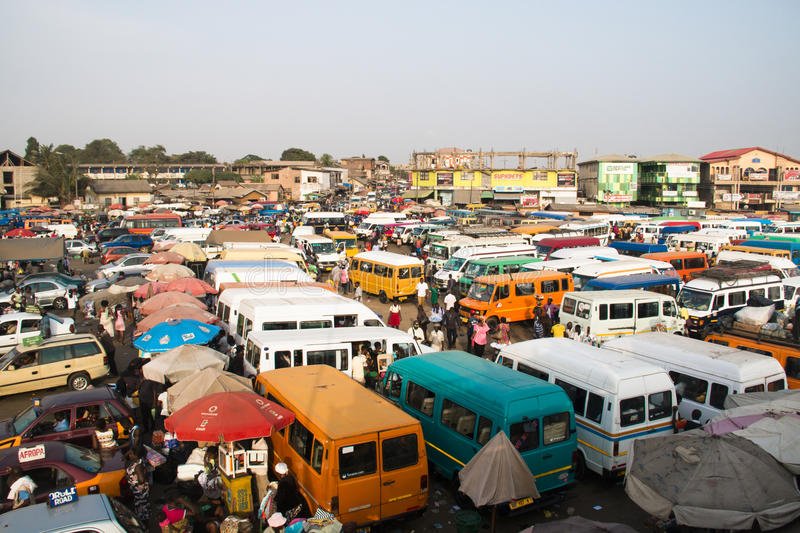
A lot of Africans travel to their villages on Christmas Eve so as to celebrate the day with family. The airports get filled up with Africans from the diaspora who usually opt for an African Christmas over the white variety. Who likes the cold anyway? Bus stations are also crowded with people who are in a haste to catch the festivities in villages and towns where their extended families live.
Roasting Meat
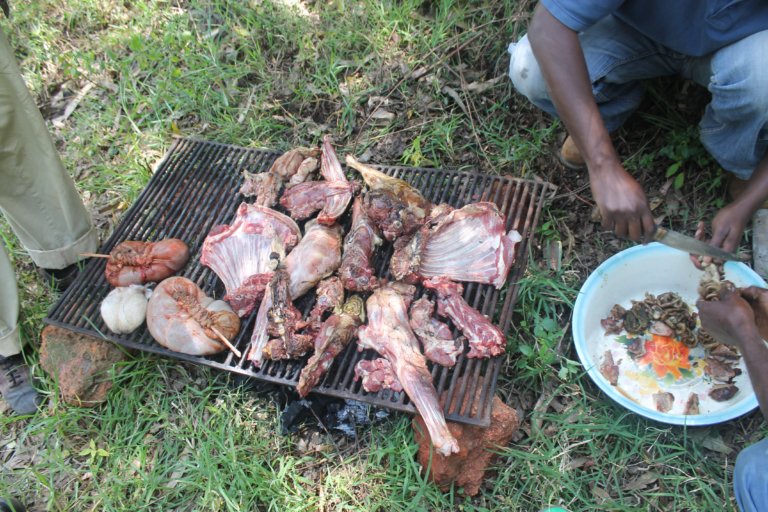
Goats are very much desired in many African communities for the Christmas festivities. In Ghana, Liberia, Nigeria, and many parts of East Africa, goats are roasted on Christmas day to be eaten with either soup or rice with the family. Children are also offered biscuits and drinks as the elderly drink beer to the tune of music.
Masquerade Parties
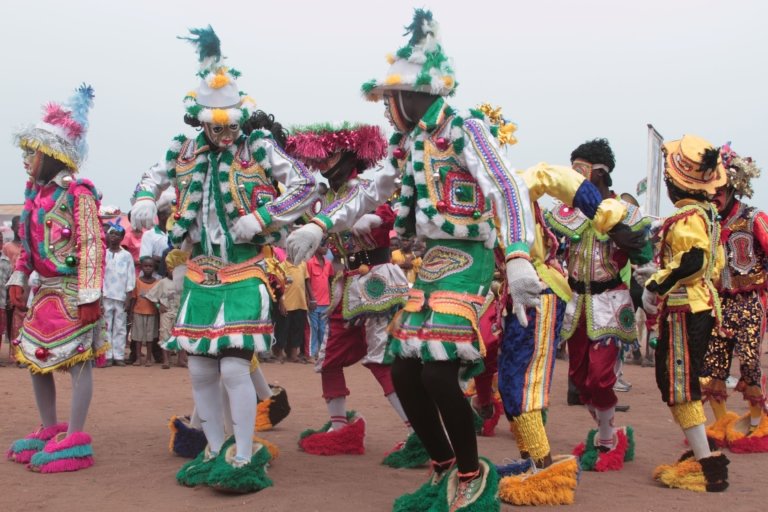
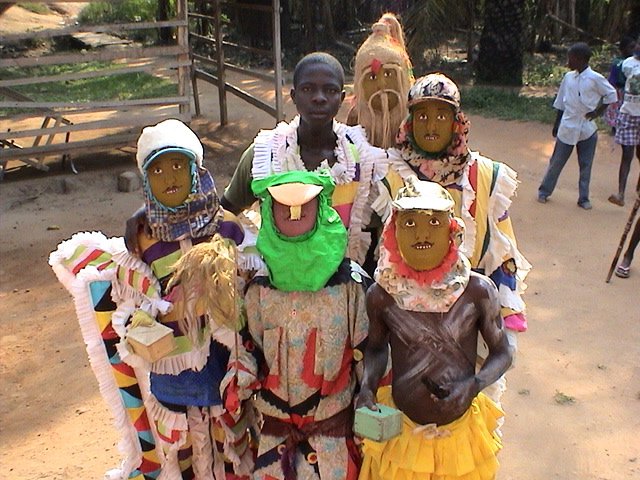
Many countries in West Africa including Sierra Leone, The Gambia, and Liberia have masqueraders parading in streets, dancing, and begging for money. They scare children and never leave until the parents hand out some money. In Takoradi, in the Western Region of Ghana, there is a masquerade carnival called the West Side Carnival which brings together hundreds of masked men and women displaying gymnastic skills.
Street Music
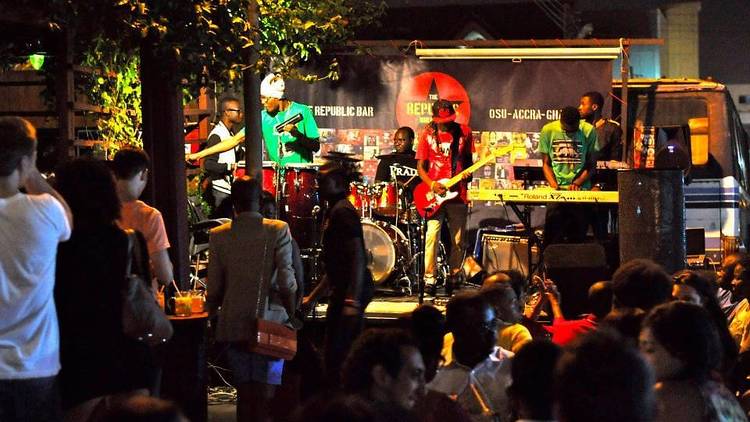
Music is blared on street corners in West Africa on Christmas Day as part of the festivities. Sometimes, no one could be found near the large speakers that could be heard many meters away in Ghana. The music is played in Ghana until the New Year. There are times when passersby stop to display their dance skills if they get moved by the local songs.
Trick or Treating
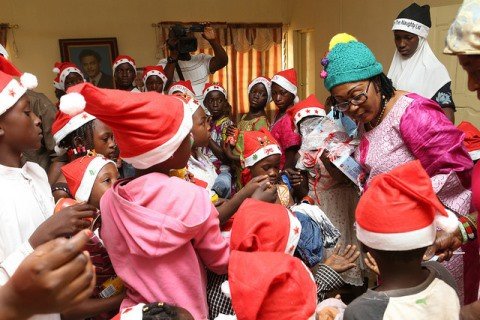
Unlike the Halloween tradition, children in Malawi go around knocking on doors in anticipation of gifts on Christmas Day. Many families stock up biscuits and candies which are handed down to these children when they knock. Children in Liberia and Uganda sing Christmas songs for money when you open your door.
Trees and Stockings for Santa
Trees are put up in South Africa and children leave stockings for Santa outside their doors. This western-style Christmas is not observed in major parts of Africa. Palm trees are usually decorated in West Africa and there are no stockings or the expectation of Santa Claus. You will find fake trees at public places mounted by city authorities with decorations in Nigeria and Ghana.
Exchange of Gifts
Many African countries exchange gifts such as biscuits, soft drinks, and food. You may receive some jollof rice and Fanta if you are in Ghana. You must reciprocate the kindness by also giving a gift. Anything will be appreciated as part of the holiday spirit.
New Clothes
Christmas Day is the day to wear new clothes and hairdos in Africa. On December 25, many people come out looking dapper and the women wear makeup. Children are also dressed in new clothes and they are not afraid to flaunt what their parents bought for them during the season. It is not Christmas without new clothes.
Christmas Morning Church Service
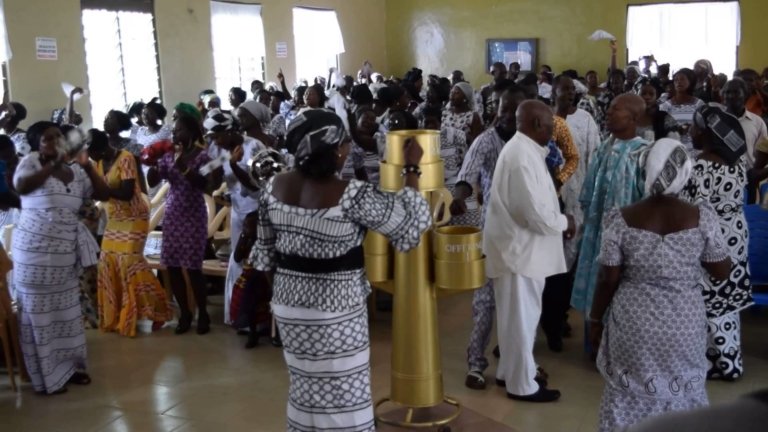
Many Christians in West Africa attend Christmas morning church services in addition to that of Christmas Eve. The church service is where new clothes are exhibited while the preacher talks about the story of the birth of Christ all over again. Carols are also sung in the decorated churches.
This article by Ismail Akwei was first published on face2faceafrica.com
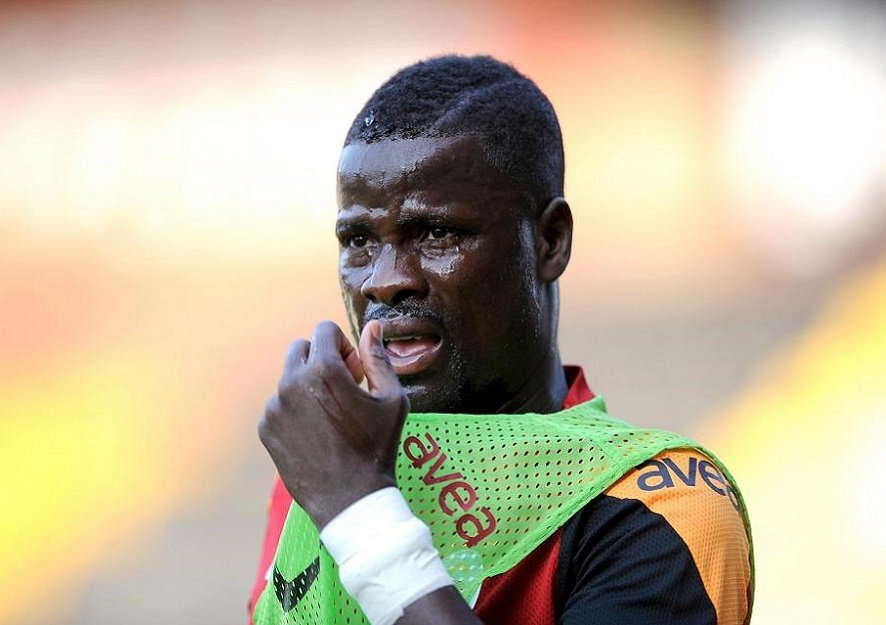
Emmanuel Eboue, former Ivorian international and Arsenal defender has revealed that he is broke and sometimes sleeps on the floor in a friend’s living room after several years of playing in the English premier league which earned him millions of dollars.
The 34-year-old disclosed in an interview with British tabloid newspaper Sunday Mirror that he faced a bitter divorce that drove him to the brink of suicide after his wife Aurelie took everything he had including their three children, mansion, cars, and their first house in North London where he has been ordered by a court to surrender ownership.
“I can’t afford the money to continue to have any lawyer or barrister. I am in the house but I am scared. Because I don’t know what time the police will come. Sometimes I shut off the lights because I don’t want people to know that I am inside. I put everything behind the door.
“My own house. I suffered to buy my house but I am now scared. I am not going to sell my clothes or sell what I have. I will fight until the end because it is not fair,” Eboue was quoted by the Sunday Mirror.
He narrated his plight as part of the Sunday Mirror’s Time To Change campaign that seeks to fight the stigma associated with mental illness.
He said he was on the brink of suicide as he hasn’t heard from his children since June, disguises himself to use public transport and uses his hands to wash since he doesn’t even have a washing machine.
He blamed “naivety” for his plight saying he entrusted his finances to his wife and she managed all the contracts he signed which left him vulnerable in her hands.
“I look back and say ‘Emmanuel, you have been naive… why didn’t you think about that before?’ It is hard. Very, very hard. The money I earned, I sent it to my wife for our children. In Turkey, I earned eight million euros. I sent seven million back home. Whatever she tells me to sign, I sign.
“She is my wife. The problems with FIFA were because of people advising me. People who are supposed to care. But it was because of them FIFA banned me,” Eboue said, referring to his recently served 12-month ban by FIFA for failing to pay a reported €1million owed to his former agent Sebastien Boisseau.
After the ban, the Ivorian player was signed by Cypriot side Turk Ocagi Limassol where he didn’t go beyond the medicals due to undisclosed “medical problems”.
The once glorious footballer who is known for his impeccable performance with the Ivory Coast national team, Sunderland, Galatasaray and Arsenal cannot do what he knows best – play football – and cannot do another job due to limited education and “shame” of his situation which is driving him to death.
“I want God to help me. Only he can help take these thoughts from my mind. I continue to thank God. I have my life. I didn’t want what has happened. I don’t wish it on anybody,” he said.
“I would accept help from anywhere but if my previous club wants to help me then I would be very, very happy. Maybe I could help the young players? … Maybe I’d see some of the people I played with or against and I’d feel embarrassed. But I would cope,” he hinted.
I'm not surprised by the Emmanuel Eboue story I met him a couple of times. Not the brightest man (he was adorable each time/very religious) but his wife she was pure Fellini Queen. I hope someone on the footballing community helps him. Mental illness is not a crime. #helpeboue
Emmanuel Eboue lost his divorce battle to his wife who was in charge of ALL FINANCES, thereby losing kids & ALL properties… Dunno if this is a question of trust & illiteracy but this is a lesson – Your choice of a life partner is key to your happiness as you grow older! 💔
These are really hard times for Emmanuel Eboue. He sent 7m out of the 8m euros he earned yearly to his wife, signed everything he was asked to sign without reading through & now he has lost his kids and assets to this same woman.
O Emmanuel Eboue, these white women will go to court and get the court to take all your assets for them after a divorce. Reason so many people are living in Europe being single fathers.
Emmanuel Eboue is not the first of his kind. Many Nigerian footballers post 1994 World Cup suffer his fate. Many from financial naivety (like buying a private jet). Lack of an education(formal/informal) is always a potent conduit to financial ruination.






 (@Tunnyking)
  Ismail Akwei