Success Story: Female maths genius teaches subject in Nigerian pidgin and Igbo language

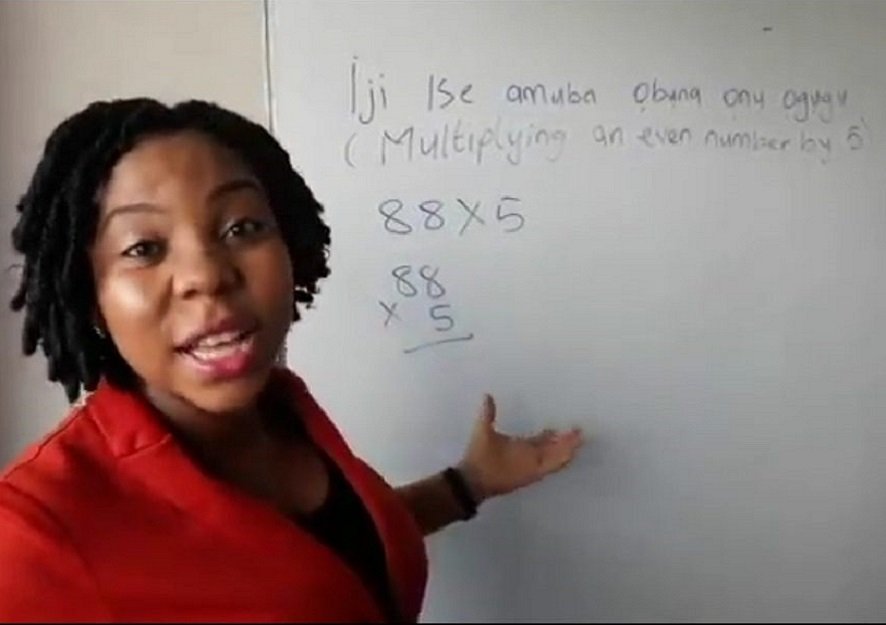
Nigerian maths teacher Cynthia Onwuchuruba Bryte-Chinule

Nigeria has been debating the introduction of indigenous languages as a medium of instruction for Science, Technology, Engineering, and Mathematics (STEM) subjects in schools to enable a better understanding of the so-called difficult fields.

Stakeholders have lamented at various conferences that it is not possible due to lack of adequate science teachers who can speak their indigenous languages and the diverse ethnic backgrounds of the students.

However, this has been achieved by a mathematics teacher, Cynthia Onwuchuruba Bryte-Chinule, who has succeeded in using her local language, Igbo, and the Nigerian pidgin to teach the subject in her community in Rivers State.

She said in an interview with Victor Ekwealor of Techpoint that she was inspired by her students in the Port Harcourt prison and some other 40 children she teaches for free every Thursday and Saturday respectively.

“Most of them are school dropouts who do not understand the English language … I felt English language shouldn’t be a hindrance to learning mathematics. So I tried a different method. I gave them the maths questions in Nigerian pidgin and concepts they could relate with. For example, trying to find the sum of 5+7 became;  ‘If you carry 5 yam join am with another seven yam, how many yam you go get?’ in Pidgin,” she explained.

Cynthia Onwuchuruba Bryte-Chinule, who is a mathematics graduate of the Nnamdi Azikiwe University took her mathematics lessons in the indigenous language to a global audience via video tutorials which have been viewed by many Nigerians around the world.

“Even though I could not teach all my students in Igbo because of their diverse ethnic backgrounds, I still made short video tutorials on Facebook and YouTube in Igbo and Nigerian pidgin … I see a lot of interest is being stimulated and that is the sole essence of the exercise; to show people maths is not that difficult. I made Igbo and Pidgin versions of videos and tutorials on mathematics but I discovered the Igbo ones got wider acceptance,” she said.

Cynthia strongly supported the use of indigenous languages to teach STEM subjects to increase the level of understanding of students and to improve the low-interest level.

I discovered teaching in English was a waste of time. Most do not know what “addition” means so you have to tell them “join am together”. To make STEM subjects widely accepted and understood in Nigeria, language mediums that are easily understood by the students have to be employed.

Using herself as an example, she called for a systemic change of the notion that girls cannot study mathematics. “We need to continually encourage the Nigerian girl child. Being a long-term mentor to these girls is also very important as a one-day seminar cannot change this mindset. They have to be continually guided and disabused of these toxic notions.”

She aims to improve mathematics education on the continental level through her non-profit organization, PEEL Initiative, which she founded in 2016 to provide quality education, develop leadership potential and support underprivileged children through education.

Cynthia is also running the Maths Afrique program which links tutors to students at a fee that helps in financing her initiative. She acknowledged her difficulty in getting funds from donors to sustain the programs but expressed her determination to push through no matter the circumstances.

“We have currently reached out to organizations to help and are waiting for them to respond. But I believe I don’t have to wait for funds to do what has to be done. I’ll keep on at the level I can,” Cynthia Onwuchuruba Bryte-Chinule assured.

UNESCO has earmarked February 11 as the International Day of Women and Girls in Science to promote female inclusion and participation in science, technology, engineering, and mathematics education.

Statistics show that the male-dominated fields lack women due to the inadequate encouragement of girls to pursue mathematics and science at an early school-going age. Women worldwide pursuing careers in science are only 28%, and in Sub-Saharan Africa, only 30% of professionals in the sciences are women.

This article by Ismail Akwei was first published on face2faceafrica.com
The good, the bad and the ugly statues of famous people in Africa

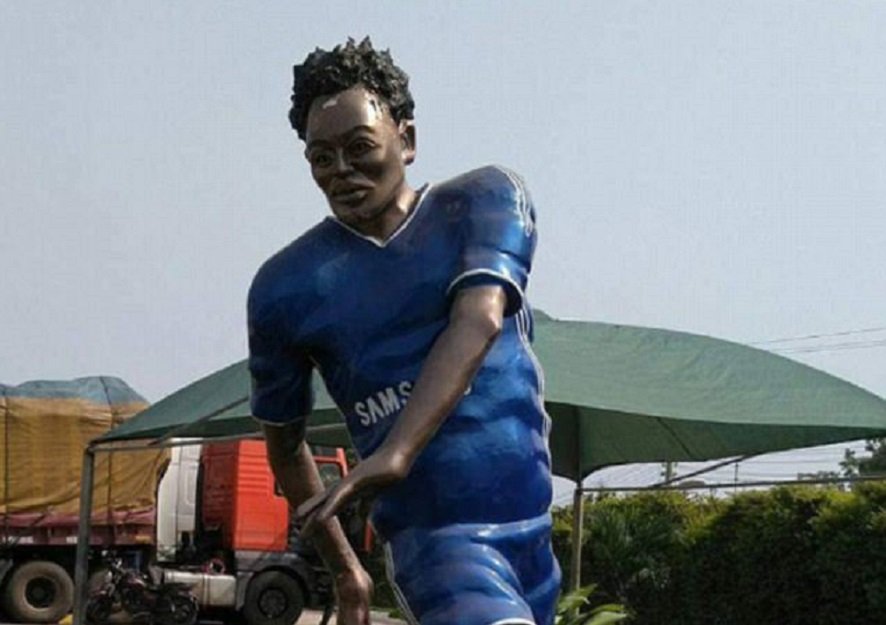
Statue of Ghanaian football star Michael Essien

Statues and sculptures have been erected all over the world to either honor individuals or make an artistic statement to the public.

In every country, you can find statues and sculptures in public spaces and in private spots. Some are nationalized and protected by the laws of the state.

Almost every state in the U.S. has a statue and one of the country’s most iconic statues is the Statue of Liberty on Liberty Island in New York Harbor in New York City. The 93 meters copper statue is a gift from the people of France and is estimated to be worth over $35 million.

In Africa, there are iconic monuments including the biggest, the African Renaissance Monument outside Dakar, Senegal. It is a 49-meter tall bronze statue located on top of one of the twin hills known as Collines des Mamelles.

This is a beautiful monument like many others across the continent. The same cannot be said for others who have faced criticism for having a bizarre artwork, losing relevance in the present-day dispensation, and the unpopularity of those represented.

Here are the good, the bad, and the ugly statues in Africa that generated interest in the last decade.

Gaddafi Statue in Tripoli, Libya

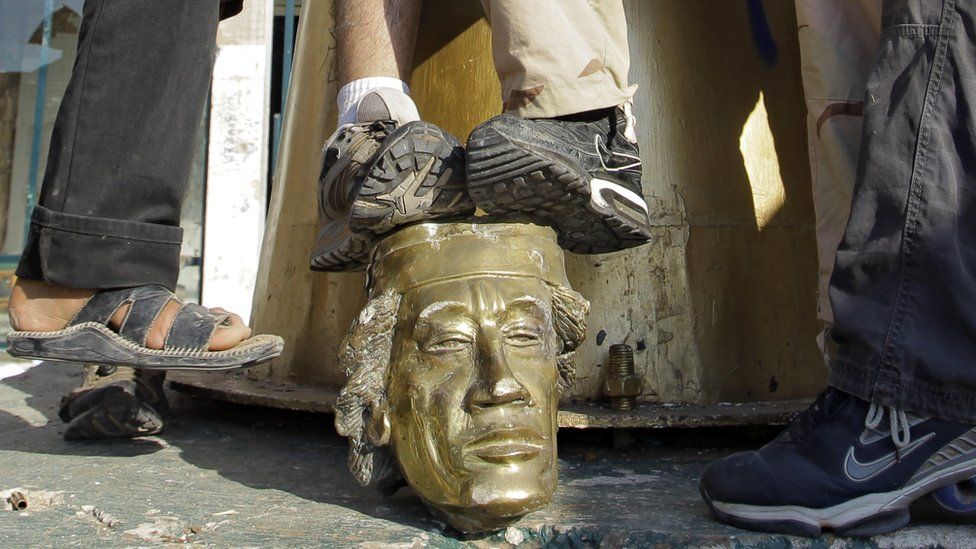
In 2011, Libyan rebels took control of Col Muammar Gaddafi’s Bab al-Aziziya compound in Tripoli after an uprising that ended his reign. Their target in the compound was his statue which was broken off and its head kicked along the ground by fighters.

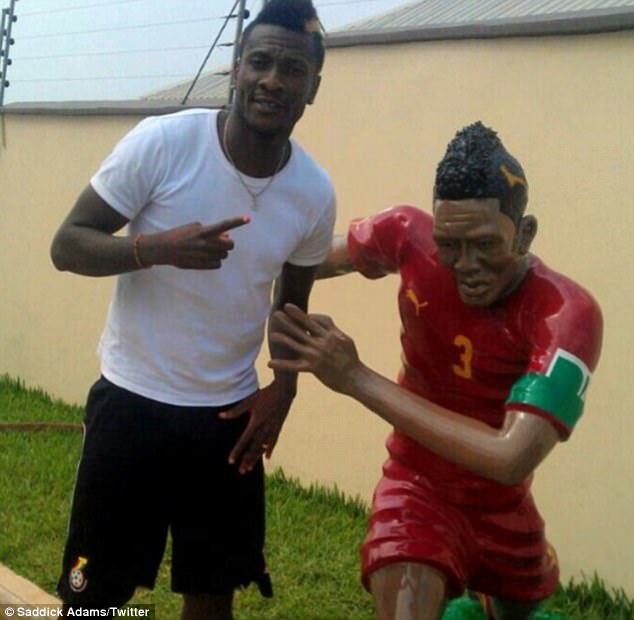
Statues of Ghanaian footballers Michael Essien and Asamoah Gyan

Former Chelsea footballer, Michael Essien’s latest statue erected in his home country may pass out as the worst if reactions on social media are anything to go by.

Critics say the statue has zero resemblance to the midfielder as his head is not in proportion to his body and the upper part of his body seems quite heavier than his lower part.

It was the same reaction for a statue in honor of footballer Asamoah Gyan in tribute to his services for his country.

Surprisingly, the sculptor who designed Essien’s statue is the one behind the statue of Gyan. Gyan’s statue also has its head and shoulders appearing to be too big compared to the rest of his body.

The Ghanaian sculptor behind both statues, Dominic Ebo Bismarck, remains unfazed amidst the uproar.

“Artwork must be criticized and I’m ever ready to accept criticisms. I am ok with it as most are coming from a layman’s point of view,” Bismarck said in an interview with Face2Faceafrica.com.

“Sculpture and portraiture are about the likeness of the person, especially the face but it doesn’t have to look exactly the same. Once people are able to notice the person in the art, then you have done a good job,” he explained.

Statue of Fela Anikulapo Kuti in Lagos

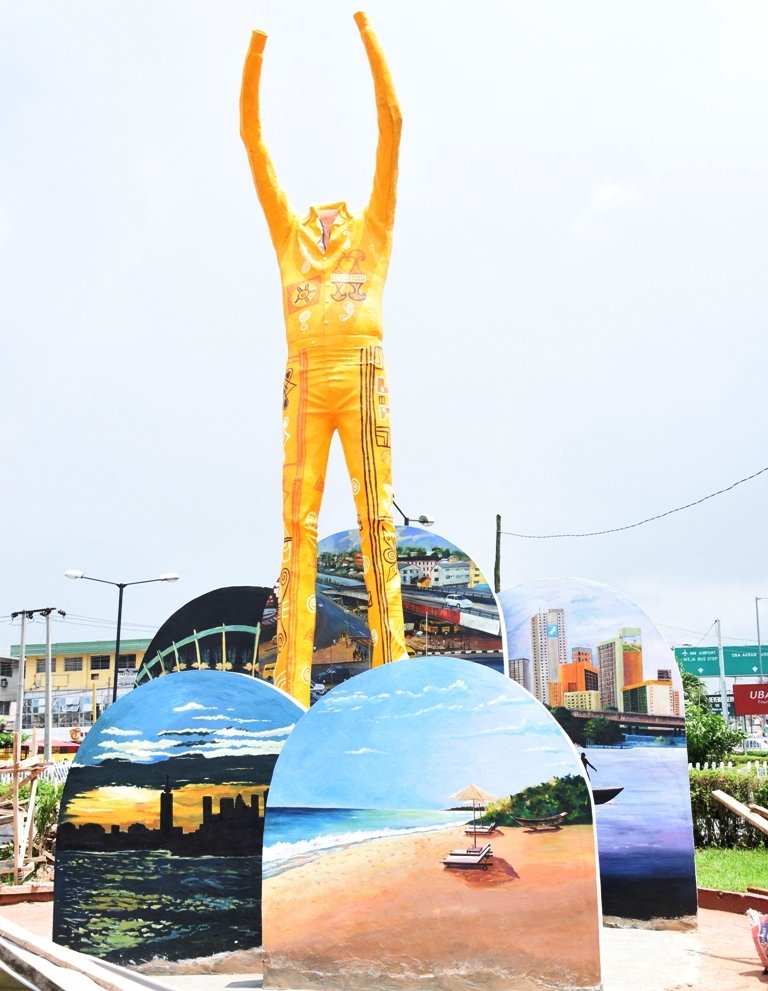
A statue was erected last year in honor of music legend and Afrobeat pioneer Fela Anikulapo Kuti who died on August 2, 1997, at the age of 58.

The Liberation Statue was unveiled at the popular Allen Roundabout in Ikeja, Lagos on Fela’s 79th birthday as part of activities marking the 20th anniversary of his demise.

It was sculpted by Nigerian artist Abolore Sobayo who used fiberglass to design the golden headless effigy of the legend with its handless arms raised into the sky.

People criticized the statue for not having a head. The artist said it was headless to respect the wishes of the musician.

Statue of Mahatma Gandhi at the University of Ghana campus in Accra

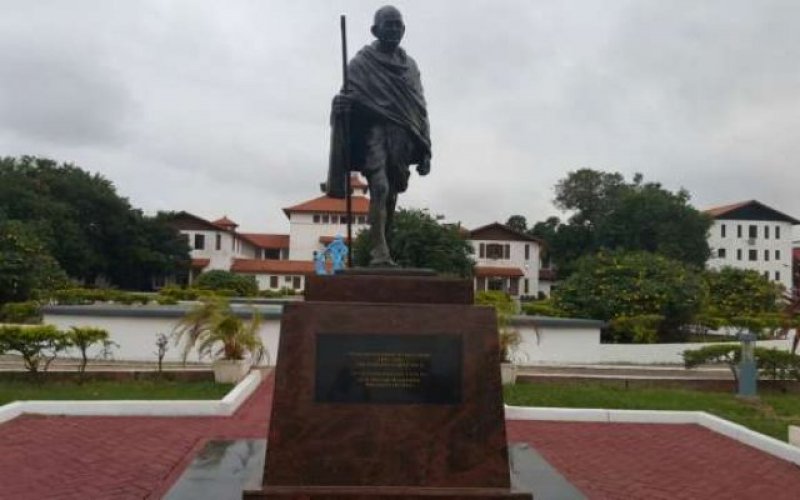
A controversial statue of Indian independence leader Mahatma Gandhi was unveiled last year at the University of Ghana campus in Accra by Pranab Mukherjee, the president of India, as a symbol of close ties between the two countries.

Months later, a group of professors petitioned for the removal of the statue of Gandhi, whom they claim was racist. They wanted the university to instead, erect statues of African heroes and heroines.

Ghana’s foreign ministry assured that the statue will be removed and relocated.

Statue of late musician Mohamed Abdel Wahab in Egypt

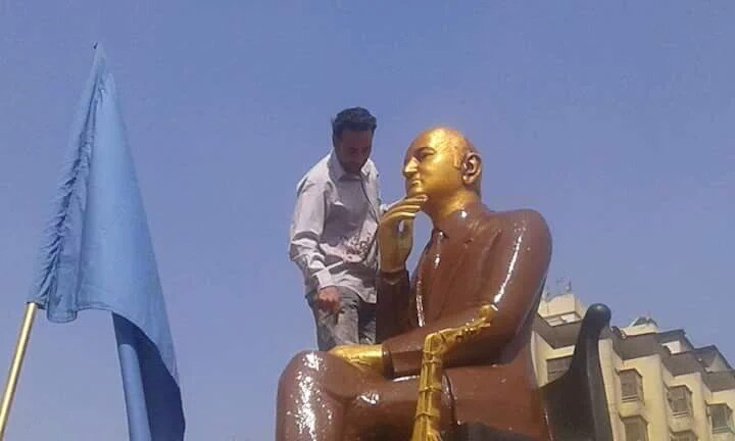
The statue of late musician Mohamed Abdel Wahab in Egypt was described as deformed for its gold and brown painting by the students of the Giza Technical Secondary School for Girls who built it.

Residents of the district expressed anger at the statue which critics said looked like a Nutella Hosni Mubarak.

British colonialist statue of Cecil Rhodes in South Africa

South Africa’s University of Cape Town protested for months against a statue of 19th Century British colonialist Cecil Rhodes. The protesters said it had “great symbolic power” which glorified someone “who exploited black labour and stole land from indigenous people”.

It was removed after several months of protests last year. Other monuments of colonial-era leaders have also been the target of protests in South Africa.

Statue of French colonial hero General Philippe Leclerc de Hauteclocque in Cameroon

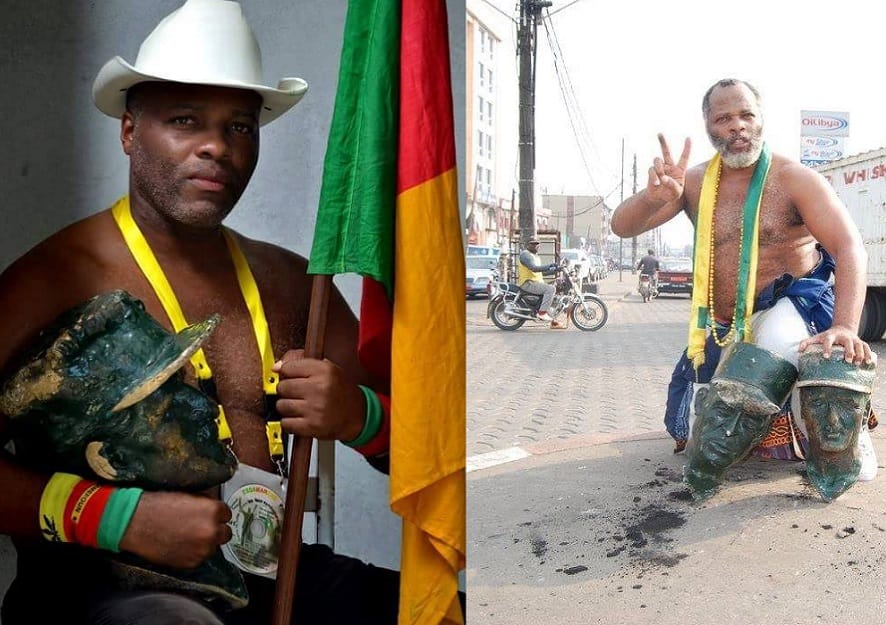
The statue of French colonial hero General Philippe Leclerc de Hauteclocque erected in Douala since the colonial era was BEHEADED on two occasions by activist Andre Blaise Essama.

He launched his campaign in 2015 to behead all the colonial statues in Douala and he started with that of General Philippe Leclerc de Hauteclocque.

He flaunted his conquest by sharing on his blog and on social media professional photographs of himself posing with the statue’s head.

Essama was arrested and sentenced by a Douala-Bonanjo court to three months in prison and fined for “destruction of public property” after he pulled down the French colonial “statue of the unknown soldier” in the city center days after the first “conquest”.

A few months after his release from prison in December 2016, the activist erected a statue of John Ngu Foncha – a pivotal figure in the unification of the British and French Cameroons – at a busy intersection in the city.

He was hailed by his growing supporters for erecting the statue which did not see the light of day. Unidentified angry-looking policemen pulled the statue down in a few hours and dragged it away.

This article by Ismail Akwei was first published on face2faceafrica.com
Fear grips South African village after dead pregnant woman ‘gives birth’ in coffin

Stock Photo

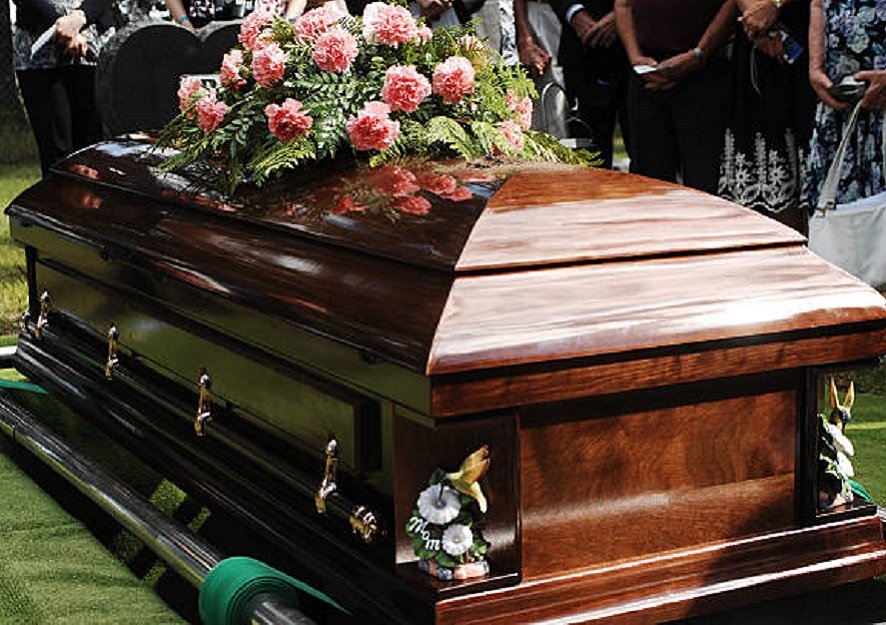
A South African village in the Eastern Cape was gripped by fear after a deceased pregnant woman gave birth to her lifeless baby in a coffin, ten days after her death.

The 33-year-old deceased mother of five went through a rare occurrence termed “Coffin Birth” or postmortem fetal extrusion which is the expulsion of a fetus through the vagina of the decomposing body of a dead pregnant woman. This is caused by the increasing pressure of intra-abdominal gases.

The Mthayisi village was unaware of the phenomenon and was traumatized at the discovery on the eve of the burial, reports local news portal Sowetan Live.

Fundile Makalana, the owner of the funeral home where the discovery was made said: “I have been in the business for more than 20 years and I have never heard of a dead woman giving birth.”

The mother, who had died after shortness of breath, was buried with her baby over the weekend.

This article by Ismail Akwei was first published on face2faceafrica.com

WATCH: Intriguing “doll test” experiment showing effects of racism on black Italian children

A screenshot of the “doll test” experiment video — Photo: Fanpage.it

Racism has lived on from generation to generation and it doesn’t look like it’s getting any better despite the level of awareness created through education and the level of achievements by black people who are the most prejudiced.

In the 1940s, psychologists Kenneth and Mamie Clark created an experiment known as “the doll test” to study the psychological effects of segregation on African-American children.

The test is done using identical dolls with two colors and children are asked to identify the race of the dolls and which doll they preferred.

Drs. Clark’s test concluded that “prejudice, discrimination, and segregation” created a feeling of inferiority among African-American children and damaged their self-esteem.

This test led to the Supreme Court’s monumental decision in Brown v. Board of Education, demanding the racial integration of American public schools.

The perception of children and the feeling of inferiority among black children in the 1940s  is not any different from black children in Italy in 2016 when Italian media company Fanpage.it conducted the “doll test” experiment.

Watch the experiment in this video and tell us what you think in the comment section below :

This article by Ismail Akwei was first published on face2faceafrica.com
Here’s what proud African-born NBA executive Masai Ujiri said about his ‘shithole’

Toronto Raptors GM Masai Ujiri

Nigerian-born president of Toronto Raptors Masai Ujiri has condemned President Donald Trump for his “shithole countries” comment that denigrates African countries and other countries of color.

While expressing his displeasure, 47-year-old Ujiri – who grew up in Nigeria before moving to the United States – displayed pride in his country of birth.

Below is what the first African-born general manager in NBA history said about Trump’s disparaging remarks about Africa.

“This summer, I went to Kigali and Nairobi and Lagos, and I went to Kampala and Abidjan and Dakar and Johannesburg, and I saw great cities and great people,” Ujiri told ESPN on Friday. “And I went to visit the refugee camp in Dadaab, and I met good people and good families with plenty of hope. If those places are being referred to as shitholes, go visit those places, and go meet those people.

“I don’t think it’s fair, and I don’t think it’s what inspiring leadership can be. What sense of hope are we giving people if you are calling where they live — and where they’re from — a shithole?

“I’ve spent a lot of time in the United States and Canada and I am grateful for the opportunities that I’ve been given by people, and the game of basketball, and the NBA. As leaders, I think we have to give people in many places a chance to have success, not continue to put those people down.

“We have to inspire people and give them a sense of hope. We need to bring people along, not ridicule and tear them down. This cannot be the message that we accept from the leader of the free world.

“… Just because someone lives in a hut, that doesn’t mean that isn’t a good person, that that person can’t do better, that person isn’t capable of being great. And just because it’s a hut — whatever that means — doesn’t mean it’s not a home. God doesn’t put anyone someplace permanently. I am a living testimony to that. If I grew up in a shithole, I am proud of my shithole.”

This article by Ismail Akwei was first published on face2faceafrica.com