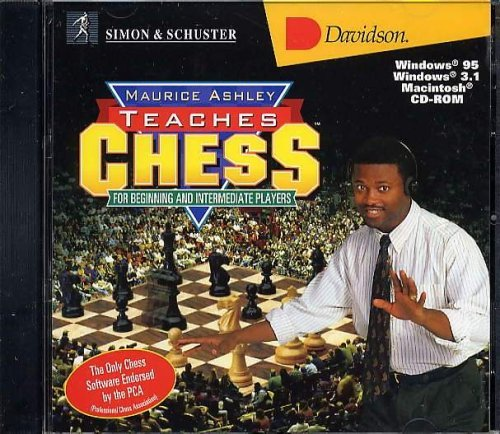
In commemoration of Black History Month, we shine a light on the first black chess grandmaster Maurice Ashley.
Maurice Ashley is a Jamaican American author, chess commentator, app designer, puzzle inventor, and motivational speaker who earned the Chess Grandmaster title in 1999. This made him the world’s first black Grandmaster.
He was born in St. Andrew, Jamaica on March 6, 1966. At age 12, his family moved to Brooklyn, New York, where he began to develop an interest in chess. He played in parks and clubs throughout New York City and went on to play in the intercollegiate competition for the City College of New York (CCNY) where he graduated with a B.A. in Creative Writing.
Ashley started his journey to be grandmaster in 1992 when he shared the United States Game/10 chess championship with Maxim Dlugy. In March 1999, he beat Adrian Negulescu to complete the requirements for the Grandmaster title. He then founded the Harlem Chess Center in September.
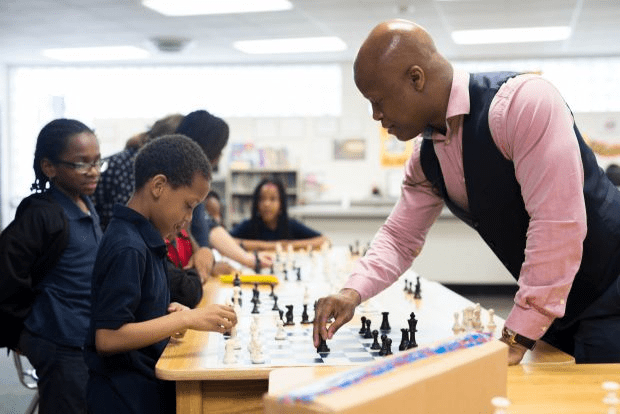
Photo by Austin Fuller
Ashley coached the Raging Rooks of Harlem and the Dark Knights from Harlem to win national championships. He also returned to his birth country of Jamaica in 2007 and became the first GM to ever participate in a tournament in that country.
He has spent many years teaching chess and he’s well known as a commentator for high-profile chess events. He was inducted into the US Chess Hall of Fame in 2016.
We salute this trailblazer of African descent.
This article by Ismail Akwei was first published on face2faceafrica.com
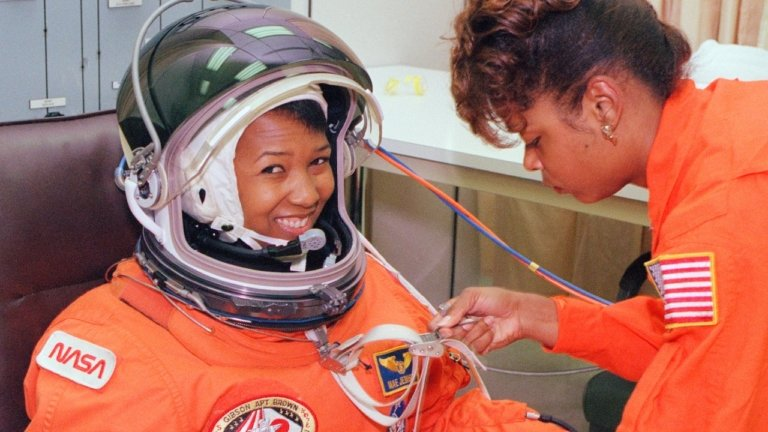
In commemoration of Black History Month, we shine a light on the first African American woman to travel in space, Mae Jemison.
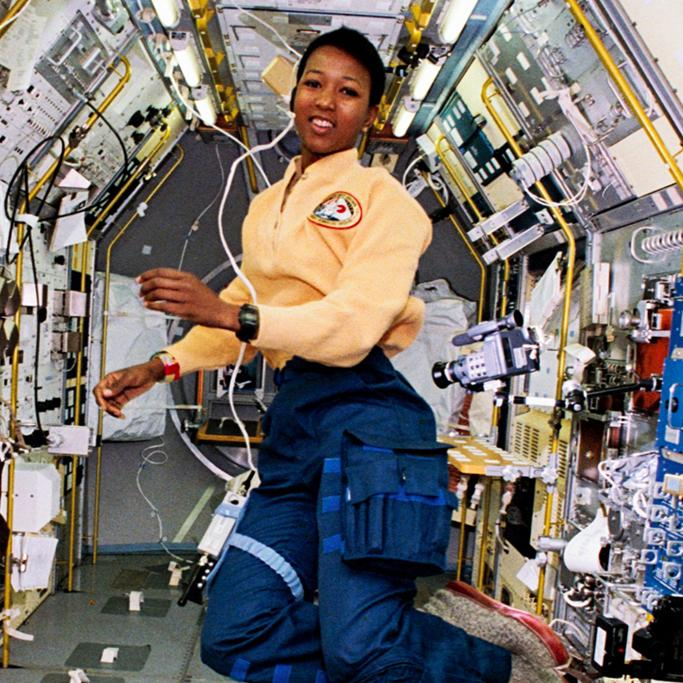
She is an American engineer, physician and a former NASA astronaut who went into orbit aboard the space shuttle Endeavour on September 12, 1992.
Mae Carol Jemison was born in Decatur, Alabama, on October 17, 1956, and she loved to dance and science. She grew up in Chicago and began dancing at the age of 11. She did all kinds of dance including African dancing, ballet, jazz and Japanese dancing.
Jemison wanted to be a professional dancer and she had to choose between dance and medical school. Her mother inspired her by saying: “You can always dance if you’re a doctor, but you can’t doctor if you’re a dancer.”
She entered Stanford University at the age of 16 and graduated in 1977 with a B.S. in chemical engineering. She obtained her Doctor of Medicine degree in 1981 at Cornell Medical College and interned at Los Angeles County-USC Medical Center. Jemison traveled to Cuba, Kenya and Thailand, to provide primary medical care to people living there. She worked as a general practitioner in 1982.
Jemison joined the staff of the Peace Corps and served as a Peace Corps Medical Officer from 1983 to 1985 after completing her medical training. She was responsible for the health of Peace Corps Volunteers serving in Liberia and Sierra Leone. She also worked with the Center for Disease Control (CDC) helping with research for various vaccines.
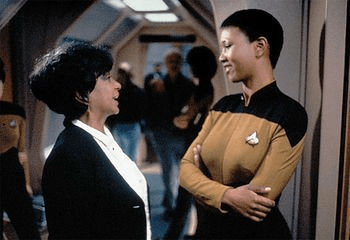
She was inspired to join NASA by African-American actress Nichelle Nichols, who portrayed Lieutenant Uhura on Star Trek. She applied unsuccessfully in 1983 and made it to the programme in 1987 as one of fifteen candidates chosen out of roughly 2,000 applicants.
Jemison flew her only space mission from September 12 to 20, 1992, as a Mission Specialist on STS-47. This was the 50th shuttle mission and a cooperative mission between the United States and Japan. She served as a co-investigator of two bone cell research experiments, one of 43 investigations that were done on STS-47. Jemison also conducted experiments on weightlessness and motion sickness on herself and six other crew members. Jemison logged 190 hours, 30 minutes, 23 seconds in space.
She resigned from NASA in March 1993 to pursue her love for science and technology. She founded her own company, the Jemison Group, to research, market, and develop science and technology for daily life. She also founded the Dorothy Jemison Foundation for Excellence and named the foundation in honor of her mother.
One of the projects of Jemison’s foundation is The Earth We Share (TEWS), an international science camp where students, ages 12 to 16, work to solve current global problems. The four-week residential program was introduced internationally to high school students in day programs in South Africa and Tunisia.
Jemison is the current principal of the 100 Year Starship, a joint U.S. Defense Advanced Research Projects Agency (DARPA) and NASA grant project to a private entity to create a business plan that can last 100 years in order to help foster the research needed for interstellar travel. She made the winning bid for the $500,000 project in 2012 through the Dorothy Jemison Foundation for Excellence.
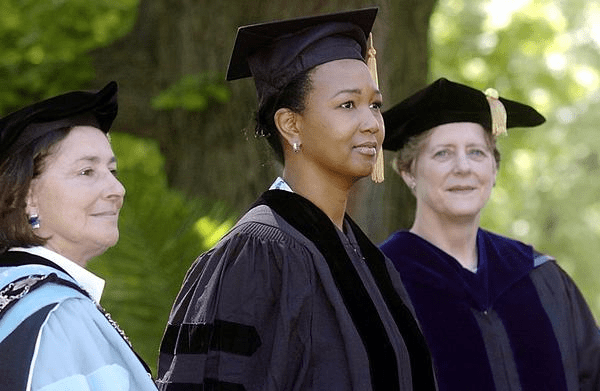
Jemison is a Professor-at-Large at Cornell University and was a professor of Environmental Studies at Dartmouth College from 1995 to 2002. She has written books and has appeared on television shows including an episode of the science fiction television series Star Trek: The Next Generation.
She has dozens of honors and awards including nine honorary doctorates in science, engineering, letters, and the humanities.
Jemison built a dance studio in her home and has choreographed and produced several shows of modern jazz and African dance.
This article by Ismail Akwei was first published on face2faceafrica.com
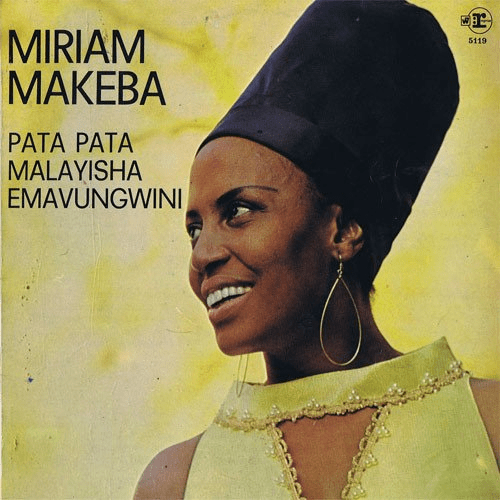
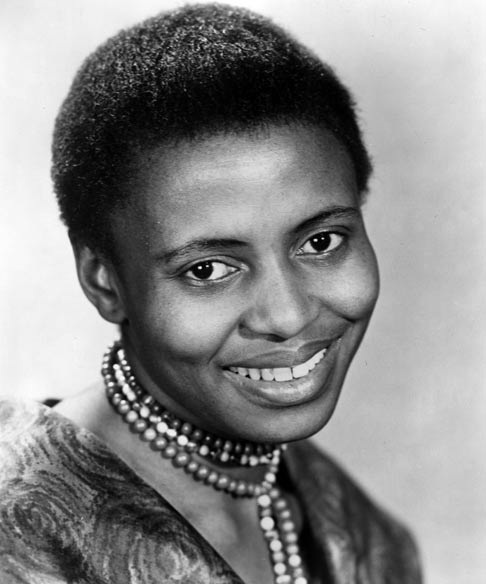
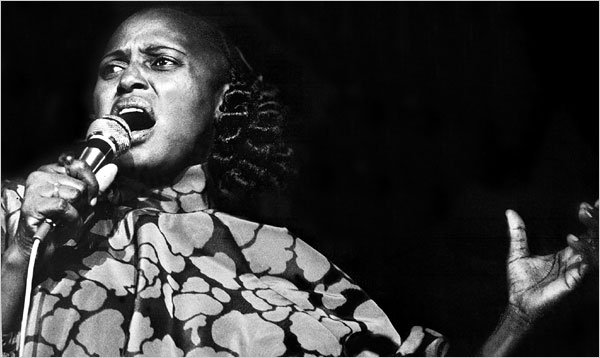
In commemoration of Black History Month, we shine a light on the first African to ever win a Grammy Award, the late Miriam Makeba.
Zenzile Miriam Makeba, popularly known as Mama Africa, was a South African music icon who is one of the first African musicians to gain worldwide recognition. She started her singing career in her primary school choir in Pretoria.
With a difficult upbringing during the apartheid days in South Africa, Makeba worked as a nanny and domestic worker like her mother who worked for white families in Johannesburg. Her father died when she was six years old and she had to live with her grandmother.
Makeba derived her musical inspiration from her family. After suffering from cervical cancer and an abusive marriage when she was 17, she started her professional musical career with the Cuban Brothers, a South African all-male close harmony group. They sang covers of popular American songs.
At 21, she joined the jazz group, the Manhattan Brothers as the only woman and they sang South African songs and a mix of popular African-American songs. She recorded her first hit, “Laku Tshoni Ilanga” with the group in 1953 which shot her into the limelight.
Makeba later joined a new all-woman group in 1956 called the Skylarks formed by Gallotone Records. They sang a blend of jazz and traditional South African melodies. She received no royalties for her work until in 1956 when Gallotone Records released Makeba’s first solo success, “Lovely Eyes”. This record became the first from South Africa to chart on the United States Billboard Top 100.
In 1957, Makeba was featured on the cover of Drum magazine. She later sang as the lead female role in the Broadway-inspired South African jazz opera King Kong with late musician Hugh Masekela whom she married briefly later in life.
She started acting in 1959 as a guest actor in Come Back, Africa, an anti-apartheid film produced and directed by the American independent filmmaker Lionel Rogosin. Makeba’s role in Come Back, Africa brought her international recognition and she travelled to London and New York to perform. She later featured in the Cosby Show and starred in Sarafina.
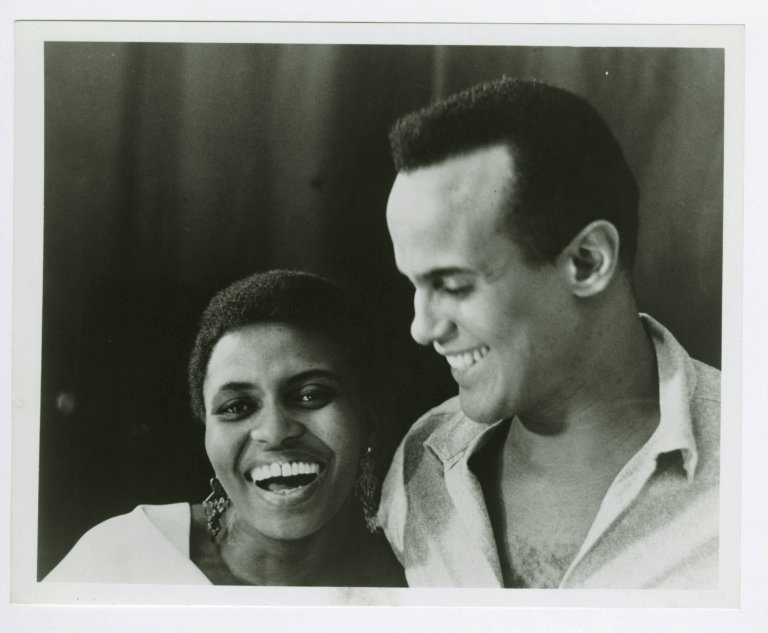
In London she met the American singer Harry Belafonte, who became her mentor, helping her with her first solo recordings including the hit song “Pata Pata” which was released many years later, and a version of the traditional Xhosa song “Qongqothwane”, which she had first performed with the Skylarks.
She then moved to New York, making her US music debut in November 1959 on The Steve Allen Show in Los Angeles. She also debuted in New York at the Village Vanguard with her songs in Xhosa and Zulu.
Makeba’s career flourished in the United States with the support of Belafonte. She recorded dozens of records and signed to record label RCA Victor. Back home in South Africa, her passport was cancelled and her mother and other family members had been killed in the Sharpeville massacre.
She was joined by her daughter in the United States where she began campaigning against the South African apartheid regime at the peak of America’s civil rights movement. Makeba was issued passports by Algeria, Guinea, Belgium and Ghana and held nine passports in her life and was granted honorary citizenship in ten countries.
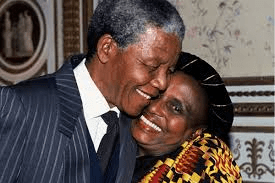
After the apartheid regime was toppled, Miriam Makeba returned to South Africa after persuasion by Nelson Mandela in 1990 after he was released. She returned to the country with her French passport.
Miriam Makeba worked with several international organisations as a goodwill ambassador including the United Nations while she released hit records.
On 9 November 2008, Makeba suffered a heart attack after singing her hit song “Pata Pata” at a concert in Castel Volturno, near Caserta, Italy. She was taken to the Pineta Grande clinic, where doctors were unable to revive her. She died at age 76.
Miriam Makeba had a lot of awards and recognition including the Grammy Award in 1966, Polar Music Prize, Dag Hammarskjöld Peace Prize, Otto Hahn Peace Medal in Gold among others.
She may be gone, but her memories will forever remain in Africa’s heart.
This article by Ismail Akwei was first published on face2faceafrica.com
In commemoration of Black History Month, we shine a light on Dr. Juliette Tuakli, Harvard Medical School’s first African female pediatrician.
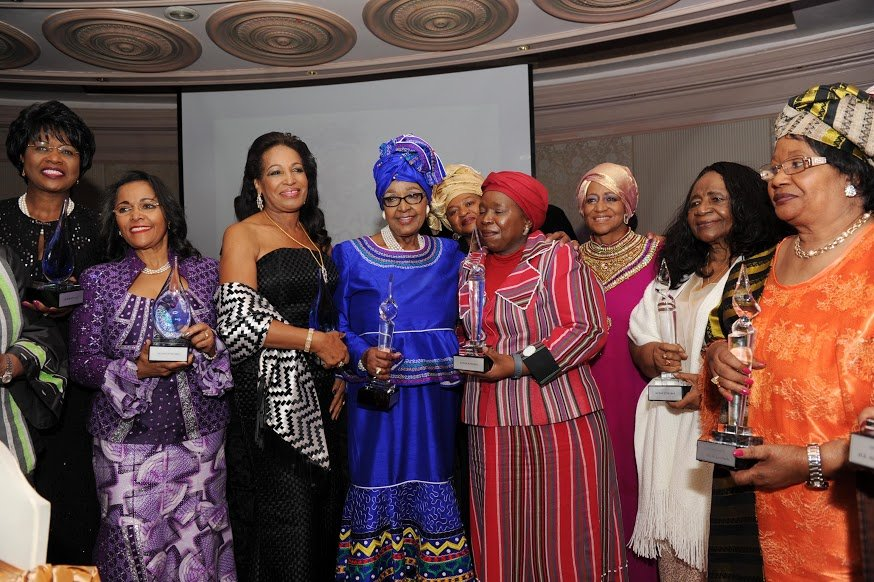
President George W. Bush, Mrs. Laura Bush, Dr. Juliette Tuakli at an event for Mercy Ships on April 6, 2013, in Dallas, TX. Photo by Grant MillerDr Tuakli has led a long and fruitful career in pediatrics spanning three decades. The Pan-Africanist with a Nigerian father and Scottish mother started her medical studies at the University of Zambia through to the University of London and then the University of California in Los Angeles.
She spent the first 20 years of her career as a clinical professor at Harvard Medical School and as a clinical instructor at Boston Medical School between 1982 and 2001.
After establishing the Community Pediatric Department at the Children’s Hospital of Boston, Dr. Tuakli, who is passionate about the health and rights of women and children in Africa, relocated to Ghana as the Deputy Director and Community Care Advisor of the NGO Family Health International.
She helped develop and implement national HIV/AIDS programs in Africa using her expertise in healthcare, education, program development, and community outreach. At the end of her two-year program, she decided to stay and help children and women realize their health needs.
Dr. Juliette Tuakli founded CHILDAccra in 2006 to provide pediatric and public health services to the West African region. Based in Ghana, the family clinic is affiliated with health organizations and clinics in the United States, Europe, and Asia.
Dr. Tuakli has worked with many organizations including the United Nations, African Union, U.S. Department of Health and Human Services, World Health Organisation, and Mercy Ships among others.
She has won several awards including the African Union Award for Medical Excellence, Lifetime Achievement Award by the South Africa-based CEO Global, and Best Pediatric Practitioner of the Year award by the West African Clinical Alliance Awards (WACA).
With a wide range of research on child health and HIV/AIDS in her name, Dr. Juliette Tuakli is looking forward to retiring in a few years to focus on her favorite hobby: horticulture. She owns Juliette’s Garden, the first company in Ghana to export flowers.
This article by Ismail Akwei was first published on face2faceafrica.com
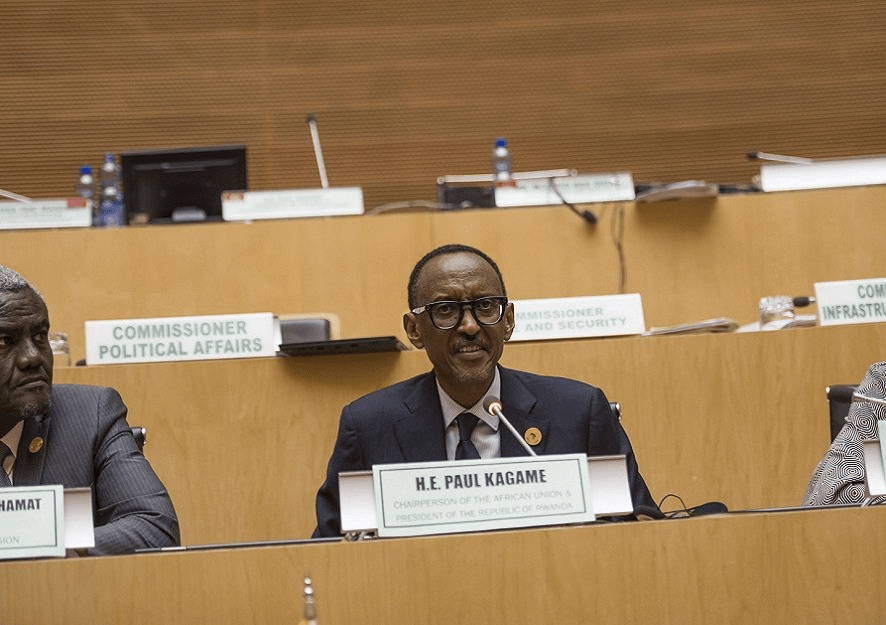
Rwandan President Paul Kagame addressing the media at the AU Headquarters in Addis Ababa
The new Chairperson of the African Union, Paul Kagame has downplayed allegations that China had hacked into the systems of the African Union headquarters in Addis Ababa and has been spying on its activities since 2012.
Kagame said Africa should have built the facility if it did not want to be spied on. He added that the AU is not worried about being spied on because people have to know about every activity in the $200 million facilities built by the Chinese government as a gift to Africa.
“I don’t worry about being spied on in AU headquarters. Nothing is done here that we don’t want people to know. Spies are all over the world, not just Chinese. The only thing is that Africa should have been able to build the headquarters themselves,” he said at a joint press conference on Monday with AU Commission Chairperson Moussa Faki Mahamat and the AU Information and Communication Secretary.
“I would be happy if we had money to build this house, but even then, if you bring people to build for you, they may still spy on you,” Kagame added while expressing concern that people may want “to put the Chinese who built the house in bad light.”
AU Commission Chairperson Moussa Faki Mahamat said he has never seen any issue in the building where he works on a daily basis.
China denied claims that it spied on the African Union headquarters which it described as “absurd” and “preposterous”.
Chinese ambassador to the African Union, Kuang Weilin told the media in Addis Ababa on Monday that “it is very difficult to understand the claims” and it was entirely untrue.
French media Le Monde Afrique published a report last Saturday revealing that in the past five years, data from the AU servers in Ethiopia were transferred to servers in Shanghai at odd hours.
Anonymous sources told the newspaper that the discovery in January 2017 resulted in the change of servers while security experts from Algeria who checked the entire building found microphones installed in desks.
This article by Ismail Akwei was first published on face2faceafrica.com




 Ismail Akwei