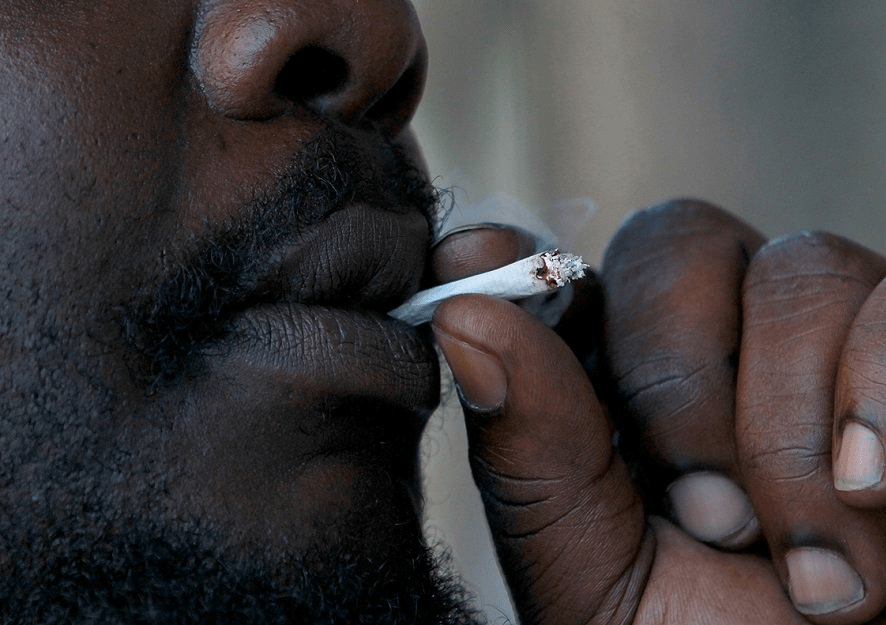
Antigua and Barbuda passes bill to decriminalize possession of cannabis

Stock Photo

The island nation of Antigua and Barbuda is about to join the likes of Jamaica, the Cayman Islands, Puerto Rico, Malta and recently Bermuda to decriminalize the possession of some amount of cannabis.

The nation’s lower house of parliament passed the Misuse of Drugs (Amendment) Bill on Tuesday that decriminalizes the possession of up to 10 grams of cannabis, reports local news portal Antigua News Room.

The Senate has to pass the bill before it becomes law after it is gazetted.

The law allows a household to have up to four plants. The prime minister, Gaston Browne, told the media that the move was as a result of the wide usage of the plant and to catch up to changing times.

“The use of marijuana is now socially acceptable. It is, in essence, a part of the culture of the country. I want to make it abundantly clear that my government is not advocating the use of cannabis; we are against anything that is smoked.

“We do accept, though, on the other hand, that marijuana utilized in different forms has significant medicinal benefits and certainly we’ll move pretty quickly to ensure that we legalize the use of marijuana for medicinal purposes,” he said.

A poll conducted in the country before the bill was passed indicated that 70% of the population was in support of decriminalizing the possession of cannabis.

The prime minister has cautioned the police to stop incriminating marijuana users ahead of the passing of the law. He entreated them to change their attitudes towards the use of marijuana.

“I want to signal to the members of the police force, in the interim that they desist from incriminating individuals. The government has made its policy very clear. Even though the law has not been changed, at least they must respect the intent and give those who use marijuana a break,” he said on his privately-owned radio station Pointe FM.

The law is expected to also wipe the records of those who have been convicted for the use of marijuana. People below the age of 18 will not be allowed to smoke while smoking in public places will not be permitted according to the law.

The government says it will embark on a public education campaign against the abuse of marijuana.

This article by Ismail Akwei was first published on face2faceafrica.com
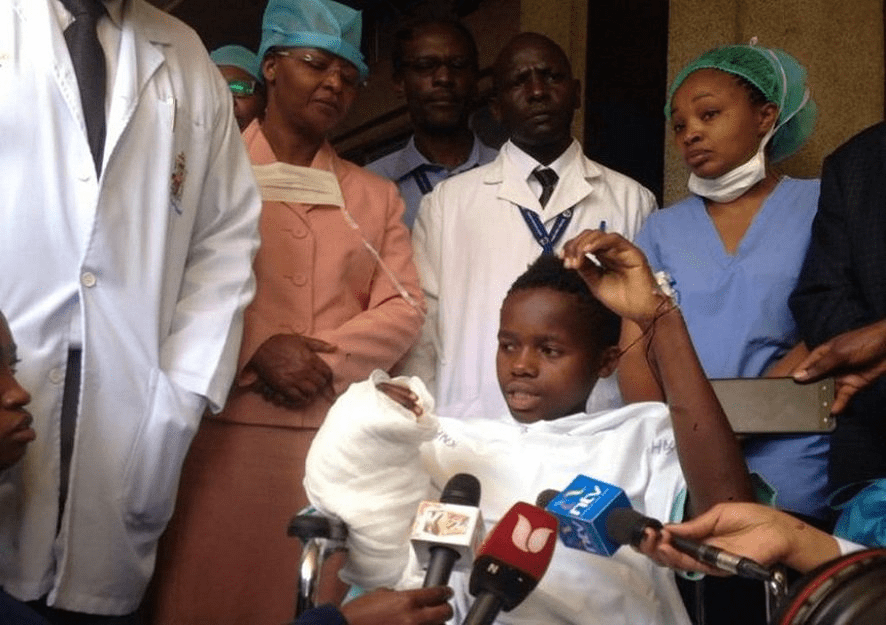
Kenyan boy gets severed hand reattached after ‘miracle’ surgery

Joseph Theuri speaks to journalists at KNH on Wednesday, February 8, 2018. Photo: JOHN MUCHANGI/ The Star, Kenya

A17-year-old Kenyan boy whose hand was severed by a lawn mower has been given a second chance after doctors at the Kenyatta National Hospital in Nairobi reattached the hand.

Joseph Theuri’s right hand was cut off from the wrist on January 26 when he accidentally turned on the machine while cleaning at home in Kiambaa, Kiambu County, reports local news portal The Star.

“I did not immediately realise my palm was not there. On checking, I saw my hand bleeding. The palm had been thrown away. I collected it and started shouting for help,” Theuri told The Star.

The surgery is arguably the first to have been done in Sub-Saharan Africa after the boy was admitted at the hospital with the severed hand in a polythene bag.

“This was the first ever such surgery in Kenya and sub-Saharan Africa. We are pleased to inform the country that Theuri is recuperating well in the ward and has regained mobility of his fingers,” said the hospital’s CEO Lily Koros.

The seven-hour surgery was done on the same day of the accident by two medical teams led by Dr Wanjala Nang’ole and Prof Stanley Khainga who are also professors at the University of Nairobi School of Medicine.

“We immediately began assembling a team which included Kenya’s top plastic surgeons and theatre nurses among others,” Koros said.

“Two teams were constituted with one team preparing the hand and the other team working on the stump. This was very important to save on time,” explained Dr Wanjala Nang’ole.

The procedure included the identification of blood vessels, nerves and tendons, aligning and fixing the bones, repairing and joining the arteries and the tendons. The operation was successful and blood flow was restored after three hours, the doctor told the media.

The boy was discharged after 10 days and is expected to attend physiotherapy sessions until the hand is healed. The tendons are expected to take about two months to heal completely while nerves will be fully restored within four to five months.

This article by Ismail Akwei was first published on face2faceafrica.com

Gambia rejoins the Commonwealth after withdrawing 5 years ago under Jammeh

Gambian President Adama Barrow

Small West African nation The Gambia has been accepted into the Commonwealth as the 53rd nation-member after the country withdrew in 2013 under ousted leader Yahya Jammeh after 48 years.

The Commonwealth Secretariat welcomed The Gambia to the voluntary group on Thursday after a year’s re-application process launched in February 2017 by the new president Adama Barrow who vowed to rejoin all the organisations his predecessor had withdrawn from including the International Criminal Court (ICC).

The Gambia is the fourth country to return to the Commonwealth after South Africa, Pakistan and Fiji.

Former President Jammeh who is currently in exile in the Equatorial Guinea described the group as a neo-colonial institution after he was called to order following several human rights violations in the country.

The Commonwealth is an international organisation made up of the United Kingdom, former British colonies, dependencies of those colonies and other countries with no relation to the British.

This article by Ismail Akwei was first published on face2faceafrica.com

West Africa’s only female flight instructor helping girls build planes around the world

Patricia Mawuli-Porter, West Africa’s only female flight instructor

In 2007, Patricia Mawuli Nyekodzi went to seek for a job at the Kpong Airfield in Eastern Region of Ghana and little did she know that she will be the country’s first female civilian pilot in 2009 and West Africa’s first woman certified to build and maintain Rotax aircraft engines.

The 31-year-old aircraft mechanic and only female flight instructor in West Africa has broken gender barriers by rising from clearing tree trunks for free to becoming the director of an academy called AV-Tech that provided young Ghanaian girls with the skills, training and inspiration to become pilots.

Patricia Mawuli-Porter achieved this feat through persistence and determination when she knocked on the doors of the technical director of the Kpong Airfield, Jonathan Porter – who later became her husband – who taught her all that she knows about aviation.

“I said: ‘I will do whatever it takes, I’ll work hard, you don’t have to pay me.’ They told me: ‘Don’t worry. You are so different. You’ve got energy, you have potential. We will do whatever it takes.’ This is when my whole flying career just started to boom,” Mawuli told CNN in an interview.

She taught girls and young people in Ghana and in the United States how to build aircrafts. She was invited to the Experimental Aircraft Association AirVenture fly-in in Oshkosh, Wisconsin twice and on one occasion, she helped the young team of young Americans with no prior aircraft building experience to assemble a Zenith CH750 aircraft in a record one week.

“There are a lot of young people (who), when they see me, (are given) hope. It motivates them to learn harder because they believe women actually have something ahead of them,” she said.

Mawuli-Porter is the co-founder of now-defunct Medicine On The Move, (MoM), a local NGO that worked together with the Aviation Academy to transport doctors, deliver medical supplies and services, as well as health education to rural communities across the length and breadth of Ghana.

This article by Ismail Akwei was first published on face2faceafrica.com

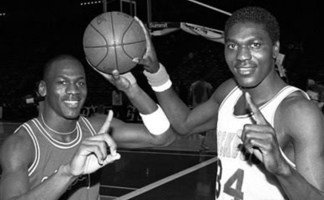
Meet Hakeem Olajuwon, first African player in the NBA

In commemoration of Black History Month, we shine a light on the first African player in the NBA, Hakeem “The Dream” Olajuwon.

This 7ft Nigerian-born professional basketball player started his career in 1984, a few years after he started playing basketball in Lagos at 17 years old.

He was a soccer goalkeeper before he entered a local basketball tournament that took him to the All-Africa Games in 1980 which he represented Nigeria’s junior team.

Olajuwon then emigrated from Nigeria to play basketball at the University of Houston under Cougars coach Guy Lewis who had heard about him through a friend. Hakeem spent about two years as a redshirt before he got the NCAA clearance to play for the university.

He made a name for himself in college due to his slam dunks and won the 1983 NCAA Tournament Player of the Year award. He was later drafted by the Houston Rockets in 1984 as the top amateur prospect over fellow collegians and future NBA stars Michael Jordan, Charles Barkley, and John Stockton.

Olajuwon averaged 20.6 points, 11.9 rebounds and 2.68 blocks in his rookie season and finished as runner-up to Michael Jordan in the 1985 Rookie of the Year voting. He also averaged 23.5 points, 11.5 rebounds, and 3.4 blocks per game during his second pro season (1985–86).

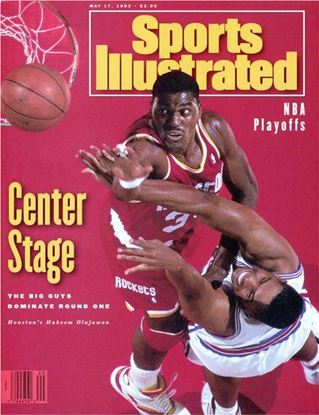
He landed on the cover of Sports Illustrated after the Rockets won the Western Conference Finals against defending champions Los Angeles Lakers. They advanced to the 1986 NBA Finals where they lost in six games to the Boston Celtics. He popularized his signature move “The Dream Shake”.

He was later traded to the Golden State Warriors and returned to the rockets with a bang as he finished the 88-8 season as the league leader in rebounds (13.5 per game) by a full rebound per game over Charles Barkley.

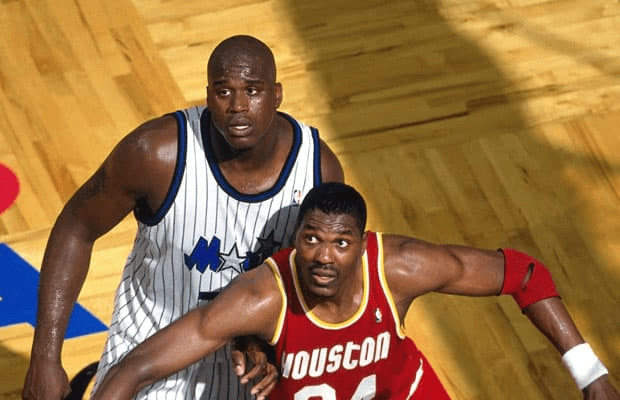
Overall, Olajuwon played 1,238 games in the NBA, clocking up a staggering 44,222 minutes. He won two Championships with the Houston Rockets in 1994 and 1995 and was named MVP both times; after he was named MVP of the NBA regular season in 1994.

His 12 All-Star Game appearances remain comfortably the most by an African player; he was named into an All-NBA Team 12 times, making the first team in six of those.

He retired in 2002 after he was traded with the Toronto Raptors. He retired as the all-time league leader in total blocked shots with 3,830 and his #34 jersey was retired by the Rockets.

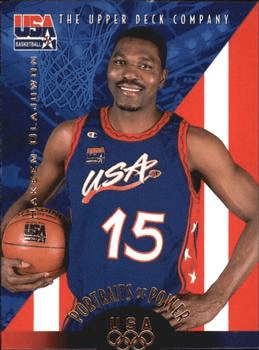
Olajuwon went through a three-year waiting period after he naturalized as an American citizen in 1993 to play for the Dream Team III at the 1996 Olympic Games in Atlanta. They won the gold medal.

He has many awards and honours in his name including an induction into the Naismith Memorial Basketball Hall of Fame in 2008, FIBA Hall of Fame in 2016 and was selected as one of the 50 Greatest Players in NBA History. The Rockets unveiled a sculpture in honor of him outside the Toyota Center in 2008.

55-year-old Hakeem Olajuwon is a devout Muslim. In 1991, he altered his name from Akeem to the more conventional spelling of Hakeem. He has three children and continues to help young basketball players develop their skill in the game.

He is the NBA ambassador in Africa. Olajuwon made a special appearance for Team Africa at the 2015 NBA Africa exhibition game in South Africa.

This article by Ismail Akwei was first published on face2faceafrica.com