Scientists are tweaking DNA of cacao plants to prevent chocolate extinction

Stock Photo: chocolate

As Valentine’s Day approaches, the demand for chocolates increases drastically since lovers prefer to gift their partners with the sweet brown treat believed to be a symbol of affection.

Americans are estimated to spend $1.8 billion on chocolate and candy this holiday, according to the National Retail Federation.

This might not be the case anymore in 40 years as research has proved that cacao plants – whose seeds are used to produce chocolates – could disappear by as early as 2050 due to climate change.

According to the National Oceanic and Atmospheric Administration, rising temperatures will push today’s chocolate-growing regions more than 1,000 feet uphill into mountainous terrain.

This harrowing information gave way to a research by the University of California to make tiny, precise tweaks to the cacao plant’s DNA to be able to grow unhindered.

The university is collaborating with food and candy company Mars to explore the possibility of using the gene-editing technology CRISPR to make the crops survive the new challenges, reports Business Insider.

Myeong-Je Cho, the director of plant genomics at the university said the cacao seedlings under research will soon be capable of surviving in the dryer, warmer climate that is sending chills through the spines of farmers across the globe.

The CRISPR is also being used to modify other products such as cassava to produce less of a dangerous toxin that it makes in hotter temperatures.

Jennifer Doudna, the UC Berkeley geneticist who invented CRISPR, said her application won’t be on humans but on food. She received a lot of attention over the potential of her tool to genetically eradicate human diseases and make so-called “designer babies”.

She has also licensed the technology to agricultural company DuPont Pioneer for use in crops like corn and mushrooms.

Cote d’Ivoire and Ghana in West Africa are the world’s largest producers of cacao and their economies are largely dependent on its exports. With this genetically modified cacao seedlings, they may lose their place and livelihood in cacao production if the 2050 extinction deadline doesn’t materialize.

This article by Ismail Akwei was first published on face2faceafrica.com

Bermuda officially bans same-sex marriage after brief assent

Same-sex couples — (Image via Aazah)

Bermuda’s governor John Rankin has signed the Domestic Partnership Act 2017 that officially banned same-sex marriage after a Supreme Court ruling legalized it in May 2017.

The bill, introduced in November last year, was passed by parliament and approved by the Senate on December 13 to replace gay marriages with domestic partnerships.

“After careful consideration in line with my responsibilities under the Constitution, I have today given assent to the Domestic Partnership Act 2017,” the governor announced last week after months of pressure from LGBT rights groups.

Groups in Britain’s oldest remaining colony had petitioned British Foreign Secretary Boris Johnson to veto the ban.

“This bill effectively states that you are a second-class citizen because of who you love, and creates increased division within an already very divided country and within a minority all at once,” Winston Godwin, a gay Bermudian said in a statement cited by UK’s Daily Mail.

Godwin and his then Canadian fiancé, Greg DeRoche, won the May 5 case that legalised gay marriage. The judge Charles-Etta Simmons had ruled that they were discriminated against on the basis of their sexual orientation upon refusal to process their notice of intended marriage.

The UK supports same-sex marriages and Godwin argued that the ban violates the UK Human Rights Act, as Bermuda is a British Overseas Territory.

Minister of State for Foreign and Commonwealth Affairs, Harriett Baldwin said in the House of Commons last week that, “We are obviously disappointed about the removal of same-sex marriage in Bermuda.”

Bermuda’s Minister of Home Affairs Walton Brown who had tabled the bill in parliament said the new bill rather provided legal recognition to same-sex couples.

“The rights now guaranteed under the Domestic Partnership Act include: the right to inherit in the case of no will, the right to a partner’s pension, access to property rights, the right to make medical decisions on behalf of one’s partner and the right to live and work in Bermuda as the domestic partner of a Bermudian,” he was quoted by Caribbean360.

Gay couples who married on the island before the law was passed will keep their status.

Meanwhile, some LGBT rights groups have vowed to challenge the new law.

This article by Ismail Akwei was first published on face2faceafrica.com

Meet Masai Ujiri, first African NBA executive

In commemoration of Black History Month, we shine a light on Masai Ujiri, the president of the Toronto Raptors and the first African National Basketball Association (NBA) executive.

47-year-old Masai Ujiri was born in northern Nigeria and grew up playing soccer until he grew an interest in basketball at the age of 13. After some years of playing basketball in Nigeria inspired by the first African player in the NBA Hakeem Olajuwon, Ujiri emigrated to the U.S. to play two years of basketball at Bismarck State College.

He transferred to Montana State University Billings where he stayed for only a semester before playing professionally in Europe for six years. He moved to Nigeria in 2002 where he served as a youth coach.

In the same year, Ujiri impressed Magic scouting director Gary Brokaw when he accompanied a young Nigerian player to a draft tryout in Orlando. Brokaw introduced Ujiri to coach Doc Rivers and GM John Gabriel who made him unpaid scout for the NBA’s Orlando Magic.

Denver Nuggets executive Jeff Weltman introduced Ujiri to Nuggets general manager Kiki Vandeweghe, who then hired Ujiri on salary as an international scout. He was hired by Bryan Colangelo of the Toronto Raptors as their Director of Global Scouting after four seasons with the Nuggets.

Ujiri became the Raptors’ assistant general manager in 2008 and returned to the Nuggets in 2010 when he accepted his position as executive vice president in charge of basketball operations.

In 2013, he was named the NBA Executive of the Year, the only non-American ever to win the award. Later that year, he signed a 5-year, $15 million deal to become the General Manager of the Toronto Raptors. His contract was extended in 2016 making him the president of basketball operations.

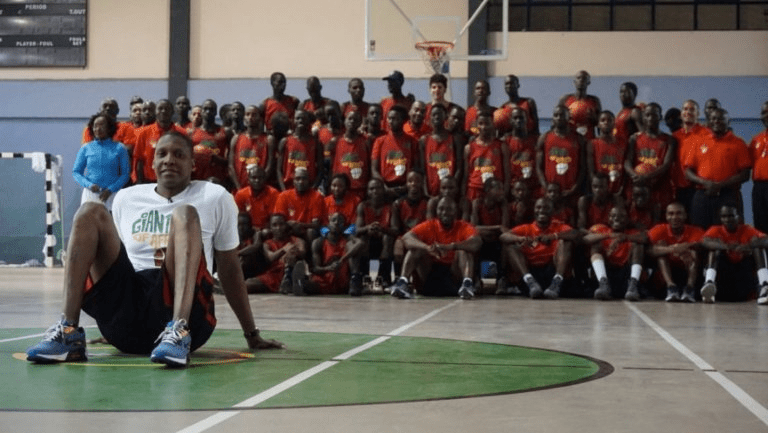
Masai Ujiri has maintained his ties with Africa as the director of the NBA’s Basketball Without Borders Africa program, which promotes the game in the continent. He also sponsors two basketball camps in Nigeria to nurture top players.

Masai Ujiri at his Giants of Africa camp in Kenya. Please credit the “Toronto Raptors Basketball Club”

He made headlines this year for his condemnation of Donald Trump when he was reported to have called African nations and Haiti “shithole countries”.

This article by Ismail Akwei was first published on face2faceafrica.com
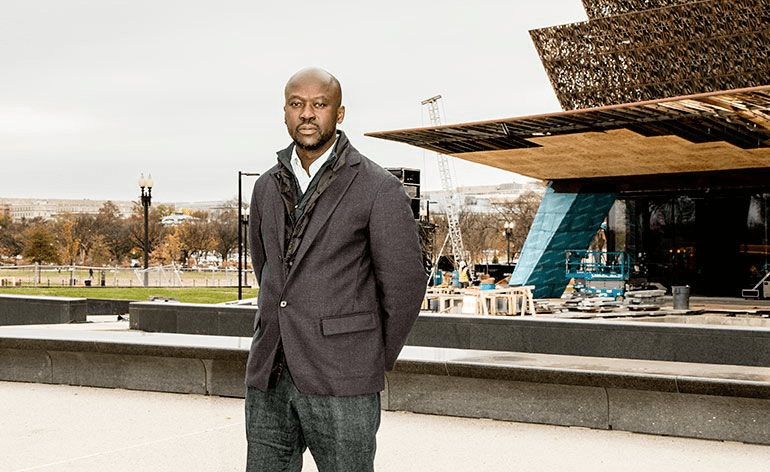
Meet David Adjaye, a black trailblazer in architecture

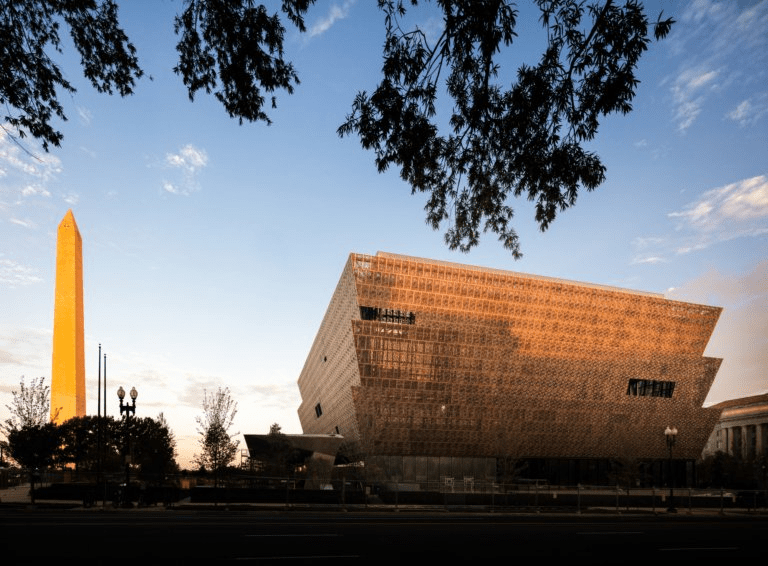
In commemoration of Black History Month, we shine a light on David Adjaye, the architect behind many iconic buildings around the world including the new National Museum of African American History and Culture.

51-year-old David Adjaye is a celebrated British-Ghanaian architect who was born in Tanzania to a Ghanaian diplomat. They lived in Tanzania, Egypt, Yemen and Lebanon before moving to Britain at the age of nine.

After graduating with an MA in 1993 from the Royal College of Art in London, Adjaye worked short-term with some architectural studios before establishing a practice with William Russell in 1994. He tutored at the Architectural Association and was also a lecturer at the Royal College of Art.

Adjaye established his own studio in 2000 and first solo exhibition, David Adjaye: Making Public Buildings at the Whitechapel Gallery in London in 2006. Thames and Hudson published Adjaye’s first book, David Adjaye Houses in 2005 and a catalogue for his first exhibition.

In February 2009, his studio almost went bankrupt after the postponement of four projects in Europe and Asia. This was followed by a selection in April as one of the team of architects to design the $500 million National Museum of African American History and Culture in Washington, D.C.

The Smithsonian Institution museum which featured Adjaye’s design of a crown motif from Yoruba sculpture was opened by Barack Obama in 2016.

He helped design several installations, exhibitions and had several international commissions to design public and private homes and other iconic buildings including the Studio Museum in Harlem, Museum of Contemporary Art in Denver, the Nobel Peace Centre in Oslo and the Skolkovo Moscow School of Management, completed in 2010.

David Adjaye continues to teach at several universities where he is visiting professor. They include Princeton University School of Architecture, the University of Pennsylvania and Harvard Graduate School of Design.

He is a member of several international architectural organisations and programmes. He maintains a presence in the media as a host of a BBC radio programme. Adjaye coauthored two seasons of BBC’s Dreamspaces television series and presented the documentary Building Africa: Architecture of a Continent in 2005.

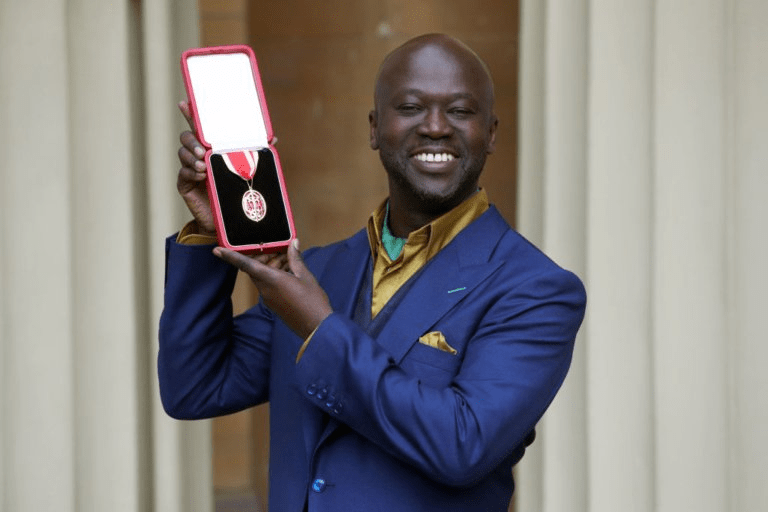
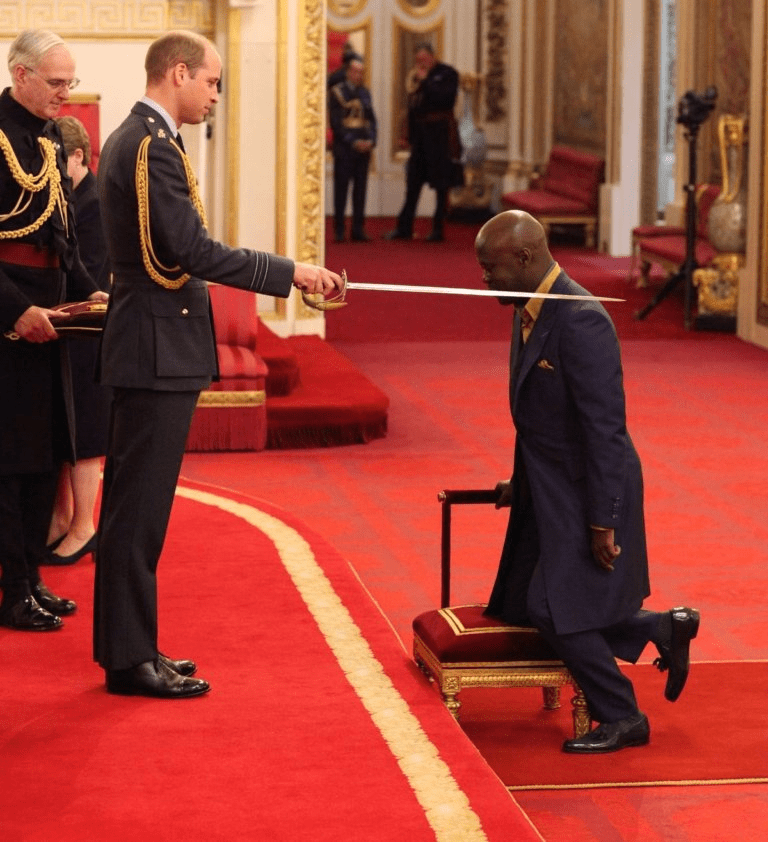
David Adjaye was appointed Officer of the Order of the British Empire (OBE) in 2007 for services to British architecture, he is a recipient of the $100,000 Massachusetts Institute of Technology’s McDermott award for excellence in the arts. He was knighted by Prince William on behalf of the Queen in the 2017 New Year Honours for services to architecture.

LONDON, ENGLAND – MAY 12: Sir David Adjaye poses after he was Knighted by the Duke of Cambridge during an Investiture ceremony at Buckingham Palace on May 12, 2017 in London, England. (Photo by Jonathan Brady – WPA Pool / Getty Images)

We salute you Sir David Adjaye OBE (Officer of the British Empire)

Sir David Adjaye from London is made a Knight Bachelor of the British Empire by the Duke of Cambridge at Buckingham Palace, during an Investiture ceremony at Buckingham Palace, London.

This article by Ismail Akwei was first published on face2faceafrica.com

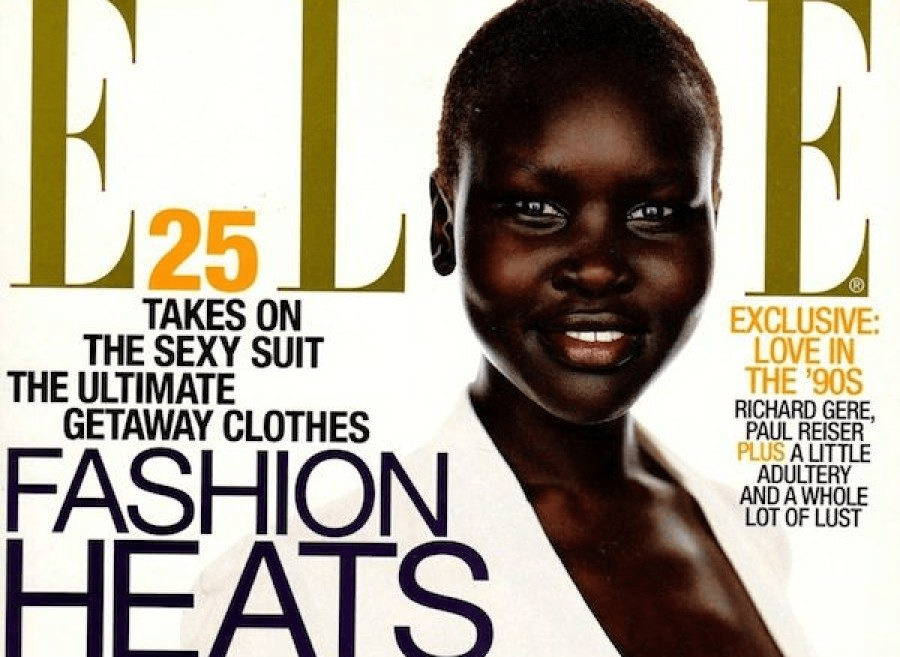
Meet Alek Wek, first model to influence the fashion industry with her black beauty

In commemoration of Black History Month, we shine a light on Alek Wek, the first model to influence the fashion industry with her black beauty.

Born in Wau, South Sudan, 40-year-old Alek Wek fled the civil war in her country to London in 1991 at the age of 14. She was discovered in 1995 at an outdoor market in Crystal Palace, London by a Models 1 scout. Her career peaked soon after with an appearance in the music video for “GoldenEye” by Tina Turner that year.

Alek began fashion modelling and was signed to Ford Models in 1996. She also appeared in the “Got ‘Til It’s Gone” music video by Janet Jackson that year and was named “Model of the Year” in 1997 by MTV. She also became the first African model to appear on the cover of Elle that year.

She appeared in dozens of advertising campaigns, on the cover of several magazines and has walked for numerous major fashion brands in the UK and the United States making her the first dark-skinned model in the high fashion industry.

Alek was hailed by Oprah Winfrey who said: “if [Alek] had been on the cover of a magazine when I was growing up, I would have had a different concept of who I was.”

Being the first black model who didn’t conform to a Caucasian aesthetic, Alek influenced many dark-skinned girls including Kenyan actress, Lupita Nyong’o, who mentioned her as her inspiration to step up and feel more appreciated.

She released an autobiography in 2007, entitled Alek: From Sudanese Refugee to International Supermodel, which documents her journey from Sudan to the fashion industry. She has appeared in many television shows and movies as well as campaigns for products.

Alek who moved to the United States has designed a range of designer handbags called “Wek 1933” named after her father’s year of birth and inspired by his brass-clasp briefcase.

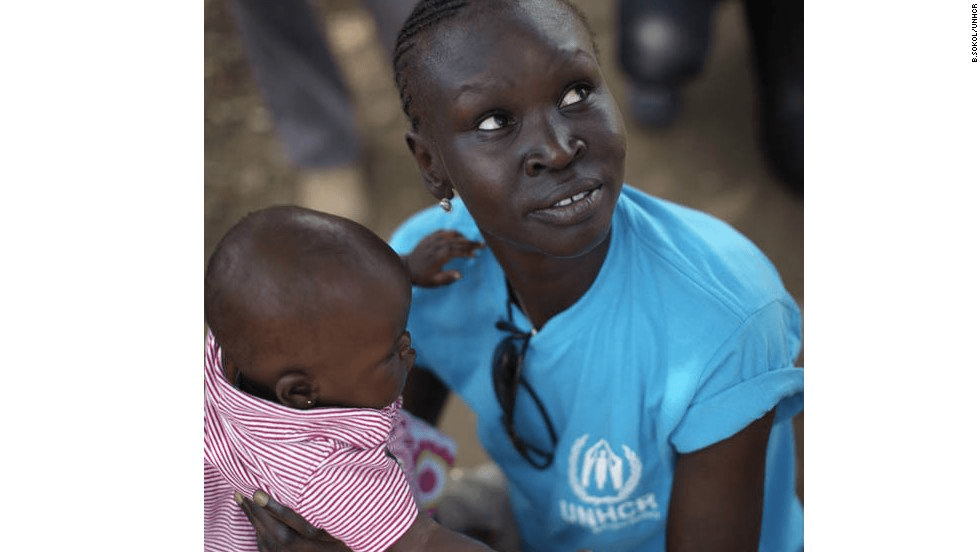
Alek Wek has been raising awareness about the refugee situation in South Sudan as an ambassador for World Vision, Doctors Without Borders, UNICEF, UNHCR and other bodies including the U.S. Committee for Refugees Advisory Council.

This article by Ismail Akwei was first published on face2faceafrica.com