Why Mauritius is the most democratic country in Africa

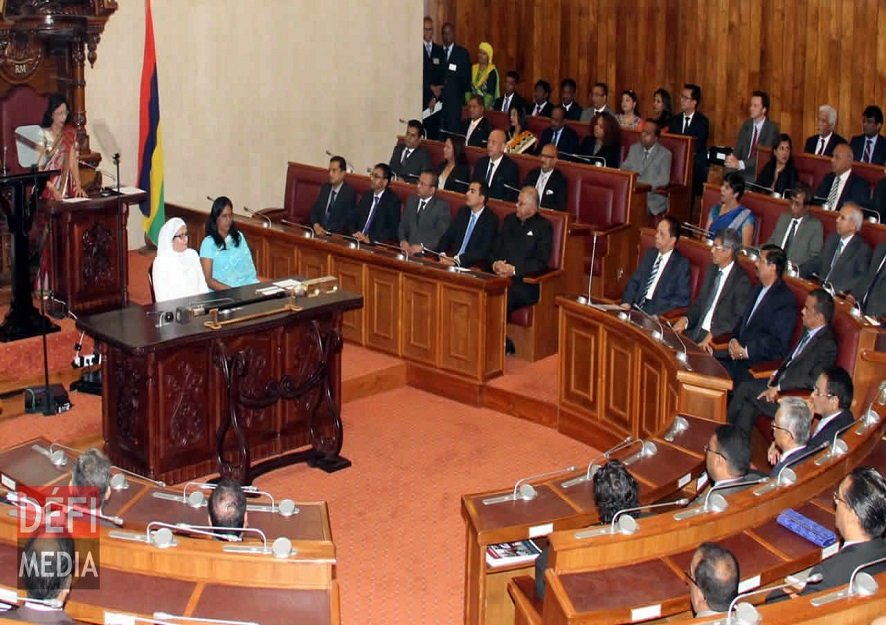
Mauritian parliament — Photo: Defi Media

Africa is home to a lot of modern-day dictators who are arguably practising democracy yet rig elections, manipulate the constitution to stay in power, stifle the media and use the security services to suppress dissent through violent reprisals.

Some of these countries include the Republic of Congo, the Democratic Republic of Congo, Equatorial Guinea, Gabon, Cameroon, Sudan, Chad and Uganda etc.

A new wave of democracy swept through Zimbabwe, Gambia, Tunisia and Angola after the ousting of their leaders to make way for a new dispensation.

According to the latest edition of The Economist Intelligence Unit’s annual Democracy Index which provides a view of the state of democracy worldwide, there are only 19 fully democratic countries in the world and only one is from Africa.

Mauritius is the only African country that is practicing a full democracy as at 2017 and the other 18 are mainly from Europe excluding the United States which is in a democratic crisis spearheaded by Donald Trump.

The research conducted in 2017 covered 167 countries and took into account electoral procedures, civil liberties, political participation and threat to free speech. 7 African countries were classified under flawed democracies, 13 under hybrid and 23 under authoritarian regimes.

The report noted that improvements in political participation and frequency of elections were affected by crackdowns on civil liberties, media suppression and corruption perception.

Mauritius has had regular elections since it achieved its Republic status in 1992, 24 years after its independence in 1968. They observe a parliamentary democracy and the president and vice president are elected by the National Assembly for five-year terms. The Prime Minister is appointed by the president and is responsible to the National Assembly. He enjoys significant power whereas the President has a mostly ceremonial role.

The president of Mauritius is Ameenah Gurib, one of the few female presidents in Africa. The prime minister is Pravind Jugnauth.

Below are the African countries cited in the report and their regime type.

  1. Mauritius – Full democracy
  2. Cape Verde – Flawed democracy
  3. Botswana – Flawed democracy
  4. South Africa – Flawed democracy
  5. Ghana – Flawed democracy
  6. Lesotho – Flawed democracy
  7. Namibia – Flawed democracy
  8. Senegal – Flawed democracy
  9. Zambia – Hybrid regime
  10. Tanzania – Hybrid regime
  11. Mali – Hybrid regime
  12. Benin – Hybrid regime
  13. Malawi – Hybrid regime
  14. Kenya – Hybrid regime
  15. Liberia – Hybrid regime

This article by Ismail Akwei was first published on face2faceafrica.com
U.S. issues ultimatum to three African countries to reverse ban on used clothes imports

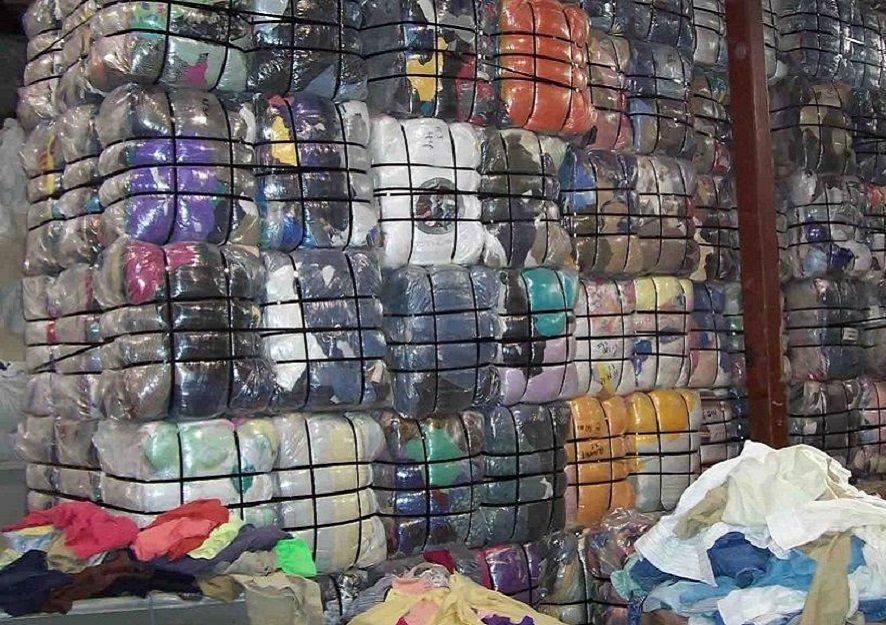
Imported used clothing

After two years of mounting pressure on defiant Rwanda, Tanzania and Uganda, the United States has given these East African countries a one-week ultimatum to reverse their ban on used clothes imports or face trade sanctions.

The acting head of economic and regional affairs at the Africa Bureau of the US State Department, Harry Sullivan issued the ultimatum on Thursday ahead of the East African Community (EAC) Heads of State Summit in Kampala, Uganda next week.

“I believe the results of the meeting next week will determine how we proceed. While we understand the East African Community’s desire to build a domestic textile sector, we firmly believe the EAC ban on imports of used clothing will not achieve that,” he was quoted by regional news portal The EastAfrican.

The six-nation EAC comprising of Kenya, Uganda, Rwanda, Burundi, Tanzania and South Sudan decided to fully ban imported second-hand clothes and shoes by 2019, arguing that it would help member countries boost domestic clothes manufacturing.

As signatories to the AGOA trade programme which offers them duty-free access to the United States, their decision violates the conditions including eliminating barriers to U.S. trade and investment, among others.

The United States was petitioned by the Secondary Materials and Recycled Textiles Association (SMART) which complained that the ban “imposed significant hardship” on the U.S. used-clothing industry and violated AGOA rules.

Kenya withdrew its decision to ban used clothes after threats by the United States to review trade benefits which Kenya was a major beneficiary. The other countries did not budge.

Rwandan President Paul Kagame had stated that his country will proceed with the ban on used clothes and will choose to grow its local textile industry at the expense of being a member of the AGOA.

Uganda and Rwanda have already raised taxes for used clothes and offered incentives to manufacturers to invest in their local textile industry.

Sullivan told reporters that “the EAC are saying to consumers of used clothing we are going to take this choice away from you and you will not have access to this market anymore. We question whether consumers of used clothing will be able to afford the new apparel being made in the East African Community market.”

U.S. imports from Rwanda, Tanzania, and Uganda totalled $43 million in 2016, up from $33 million in 2015 while exports were $281 million in 2016, up from $257 million in 2015.

This article by Ismail Akwei was first published on face2faceafrica.com
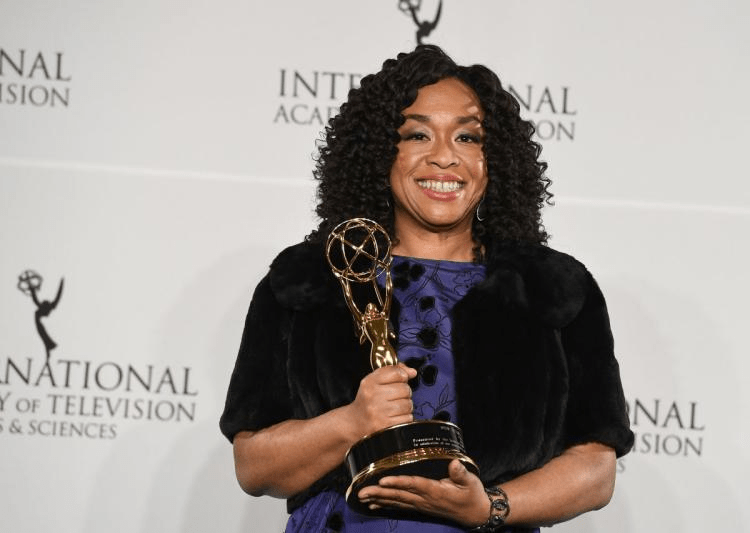
Meet Shonda Rhimes, a black trailblazer in television

In commemoration of Black History Month, we shine a light on Shonda Rhimes, one of America’s biggest television producers.

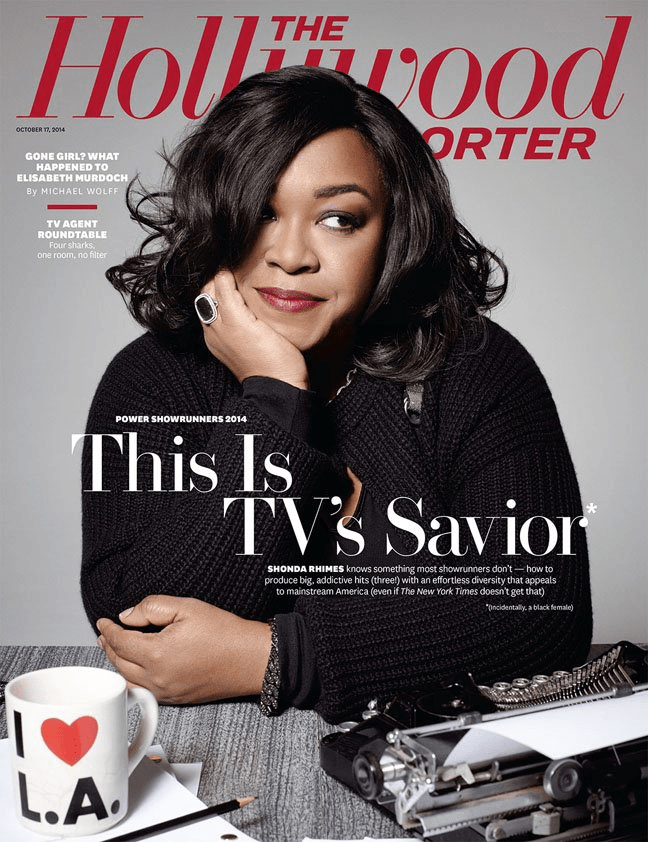
48-year-old Shonda Rhimes is a television producer, screenwriter, and author who created the long-running television medical drama Grey’s Anatomy on ABC and became its head writer and executive producer.

Shonda Rhimes is also the executive producer of Grey’s Anatomy spin-off Private PracticeScandal, Off the MapHow to Get Away with Murder, and The Catch. Born in Chicago, Illinois, Rhimes attended Dartmouth College where she majored in English and film studies and earned her bachelor’s degree in 1991.

She spent more time directing and performing in student productions while she wrote fiction and articles for the college newspaper. She moved to San Francisco and worked in advertising before moving to Los Angeles where she studied screenwriting at the University of Southern California and obtained a Master of Fine Arts degree from the School of Cinematic Arts.

Rhimes worked with Debra Martin Chase as an intern while in school and she also worked at Denzel Washington’s company, Mundy Lane Entertainment. She took some odd jobs after graduating while working as research director on the documentary, Hank Aaron: Chasing the Dream (1995), which won the 1995 Peabody Award.

She made a short film Blossoms and Veils in 1998, starring Jada Pinkett-Smith and Jeffrey Wright before receiving an assignment to co-write the HBO movie Introducing Dorothy Dandridge (1999) starring Halle Berry. It earned numerous awards.

Rhimes wrote pop singer Britney Spears’ debut film Crossroads in 2001 and worked on writing Disney’s sequel to its popular movie, The Princess Diaries (2001). She wrote her first TV pilot about young female war correspondents for ABC but the network turned it down.

In 2005, she debuted Grey’s Anatomy as a mid-season replacement on ABC and it has been running since. She produced its spin-off series Private Practice in 2007 whose finale was aired in 2013.

She has since developed many pilots and produced many series for ABC. In 2017, she entered into an exclusive multi-year development deal with Netflix under which all of her future productions will be Netflix Original series. Netflix had already purchased U.S. streaming rights to past episodes of Grey’s Anatomy and Scandal.

Rhimes received an honorary doctorate from her alma mater Dartmouth College in 2014 and published her first book, a memoir in 2015 titled, Year of Yes: How to Dance It Out, Stand in the Sun, and Be Your Own Person. She also launched a series of online screenwriting lessons through MasterClass in 2016.

Shonda Rhimes has won many awards including a Golden Globe award and three Emmy Award nominations. She is an inspiration to many black people who want to go into television production.

This article by Ismail Akwei was first published on face2faceafrica.com
Top 10 African countries with highest number of citizens deported from the U.S.

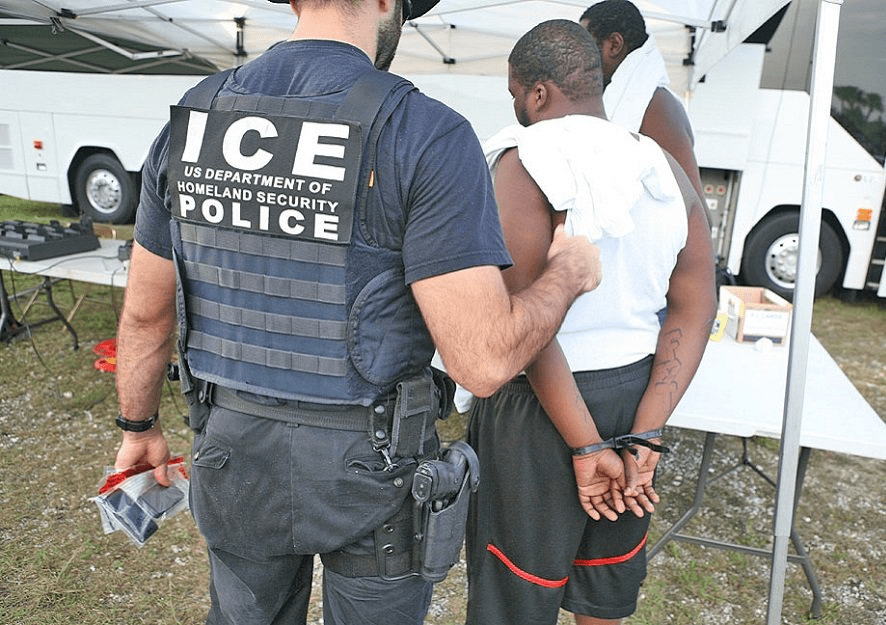
ICE officials processing a migrant for deportation

President Donald Trump has made clear his stance to deport all undocumented immigrants from the United States and Africans have suffered the most since he assumed office.  

A year after Trump took office, the US Immigration and Customs Enforcement (ICE) reported a drop in the total number of deportations from 240,255 in 2016 to 226,119 in 2017. However, it is a different story for African immigrants.

President Donald Trump has made clear his stance to deport all undocumented immigrants from the United States and Africans have suffered the most since he assumed office.  

The number of Africans sent back home has more than doubled from the previous year. Among the top 10 African countries on ICE’s list, deportations were as high as 140%. 756 people from these countries were deported in 2016 and the number jumped to 1815 people in 2017.

The top African country is the 13th on the ICE global list of removals by country or citizenship. The top country globally is Mexico followed by Guatemala and Honduras.

These are the top 10 African countries with the highest number of citizens deported from the United States.

Somalia

\

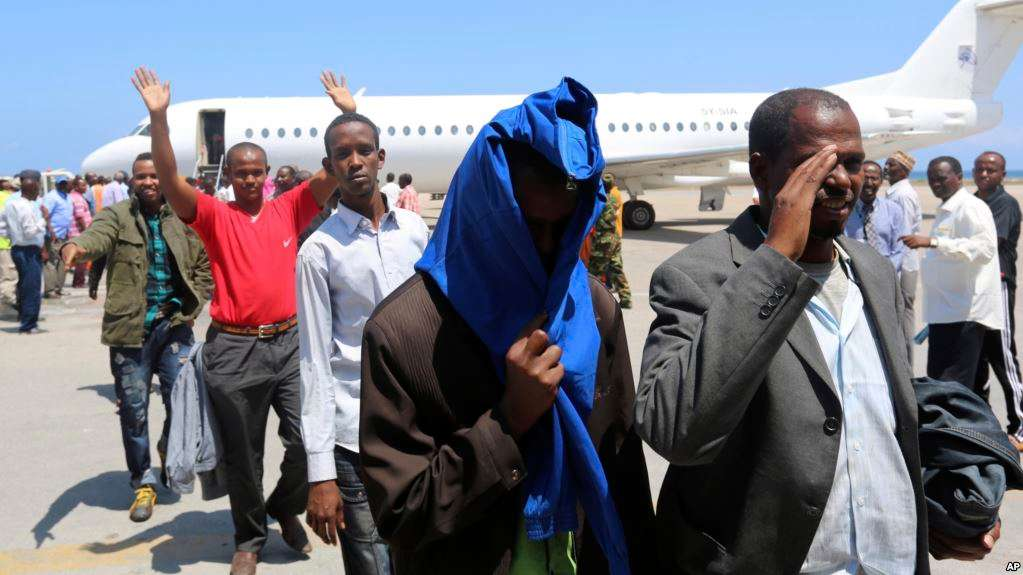
Somalia had most of its citizens – among other African countries – kicked out of the United States. It is also the 13th on the ICE list of removals by country.

198 Somalis were deported in 2016 and the number more than doubled in 2017 with 521 people.

Nigeria

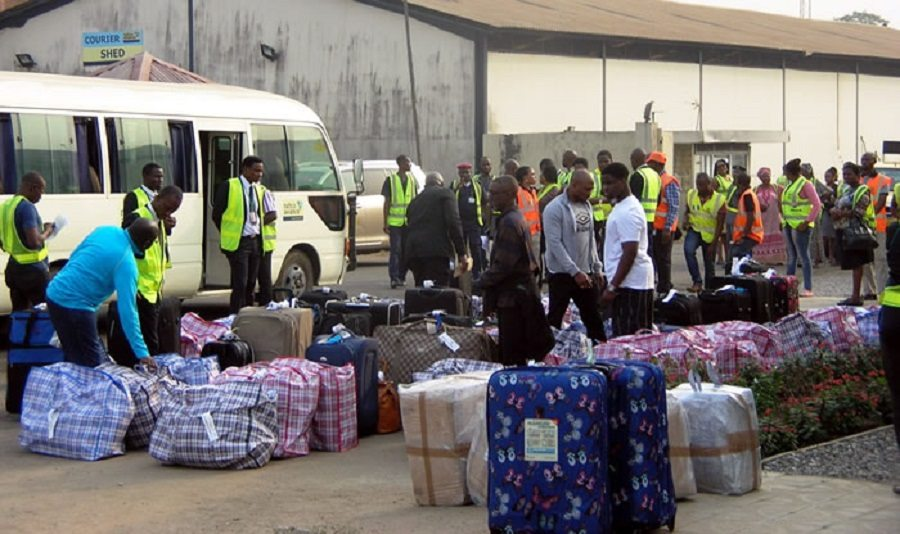
242 Nigerians were deported in 2016 and the number increased to 312 in 2017.

Ghana

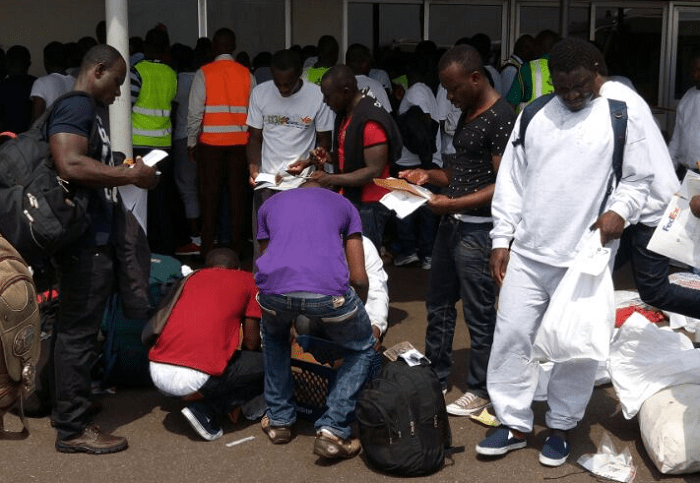
94 Ghanaians were deported in 2016 and the number increased to 305 in 2017.

Senegal

21 Senegalese were deported in 2016 and the number increased to 197 in 2017.

Liberia

27 Liberians were deported in 2016 and the number increased to 107 in 2017.

Kenya

63 Kenyans were deported in 2016 and the number increased to 103 in 2017.

Guinea

16 Guineans were deported in 2016 and the number increased to 88 in 2017.

Morocco

22 Moroccans were deported in 2016 and the number increased to 67 in 2017.

Cameroon

29 Cameroonians were deported in 2016 and the number increased to 58 in 2017.

Egypt

44 Egyptians were deported in 2016 and the number increased to 57 in 2017.

This article by Ismail Akwei was first published on face2faceafrica.com

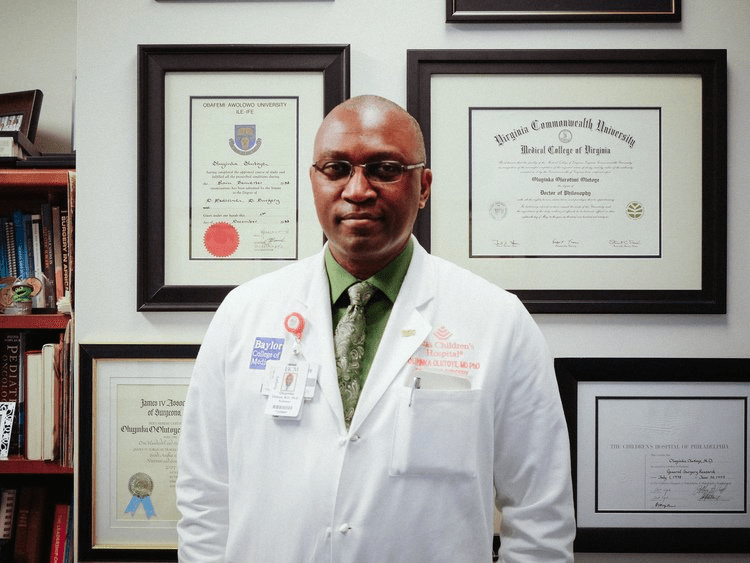
Meet Dr Oluyinka Olutoye, a black trailblazer in medicine

In commemoration of Black History Month, we shine a light on Dr Oluyinka Olutoye, the surgeon who operated on an unborn baby and restored it into the mother’s womb.

Dr Oluyinka Olutoye is a Nigerian surgeon in Houston, Texas and is affiliated with multiple hospitals in the area, including Baylor St. Luke’s Medical Center and St. Joseph Medical Center. He is a pediatric surgeon at the Texas Children’s Hospital and the Co-Director of the Texas Children’s Fetal Center.

He received his medical degree from Obafemi Awolowo College of Health Sciences, Ogun State University in 1988 before his post-graduate medical education in paediatrics at Howard University and District of Columbia General Hospital.

He later enrolled at the Virginia Commonwealth University in Richmond, VA, in 1996 for his doctoral degree in anatomy and then sought additional training in pediatric, fetal and thoracic surgery at the Children’s Hospital of Philadelphia.

Dr Olutoye then took up a faculty position at Baylor College of Medicine and, with his colleague, Dr. Darrell Cass, they established the Texas Children’s Fetal Center at Texas Children’s Hospital in Houston Texas. He has been in practice for more than 20 years.

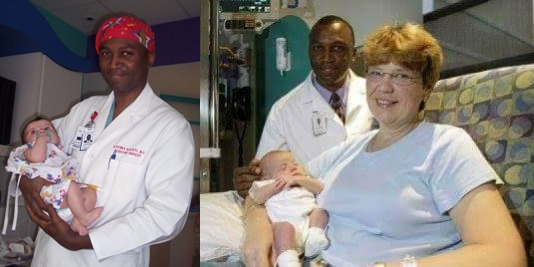
Dr Olutoye gained global acclaim after he led a team of doctors to operate on an unborn baby at 23 weeks old who had a rare tumour at the base of her tailbone. They removed the baby from Margaret Boemer’s womb and performed the surgery before restoring the baby into the womb.

The procedure was successful and the baby healed while in the mother’s womb. Lynlee Hope was born at 36 weeks old and gained global recognition as the baby who was born twice – thanks to Dr Olutoye.

Dr Olutoye is a member of the International Fetal Medicine and Surgery Society and is a Fellow of the Surgical Section of the American Academy of Pediatrics and American College of Surgeons; he is also a Fellow of the West African College of Surgeons.

He has won several awards including the 2012 Denton A. Cooley Surgical Innovator Award at the Texas Children’s Hospital, Academy of Distinguished Educators Award at the Baylor College of Medicine, Molecular Surgeon Research Achievement Award at the Michael E. DeBakey Department of Surgery and Mark A. Wallace 2014 Catalyst Leader of the Year at the Texas Children’s Hospital.

This article by Ismail Akwei was first published on face2faceafrica.com