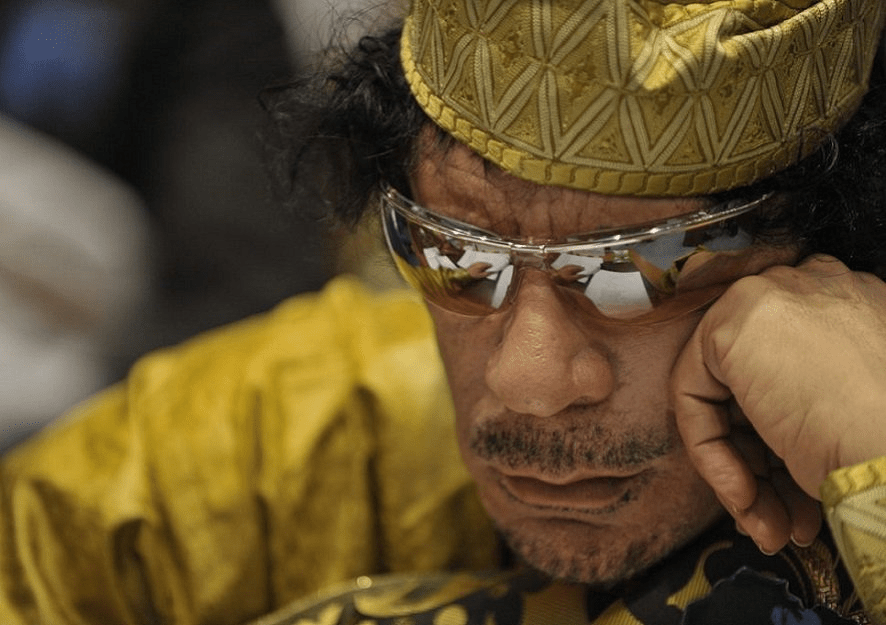
Muammar Qaddafi, the Libyan chief of state, attends the 12th African Union Summit in Addis Ababa, Ethiopia, Feb. 2, 2009. Qaddafi was elected chairman of the organization. (U.S. Navy photo by Mass Communication Specialist 2nd Class Jesse B. Awalt/Released)
Local Belgian media has revealed that about 10 billion euros ($12.3 billion) have disappeared from four frozen Euroclear Bank accounts belonging to two Libyan state agencies.
The accounts containing 16.1 billion euros of state funds were frozen since March 2011 in accordance with a United Nations resolution as part of sanctions against the late Muammar Gaddafi’s inner circle, reports weekly newspaper Le Vif.
“There remains a little less than 5 billion euros on the four accounts opened at Euroclear Bank SA,” they quoted Denis Goeman, a spokesman from Brussels prosecutor’s office.
The disappearance was noticed when Belgian authorities tried to seize the funds in 2017 during a probe into alleged money laundering by Gaddafi’s inner circle.
Euroclear Bank had refused to hand over the accounts belonging to Libyan Investment Authority (LIA) and its subsidiary Libyan Foreign Investment Company (LFICO) in Bahrain and Luxembourg, prompting the probe.
European weekly newspaper Politico reported that interest from the accounts was released every month without authorization by the Belgian authority to an “HSBC account in Luxembourg belonging to LIA and to several other LIA accounts at the Arab Banking Corporation whose main shareholder is the Libyan Central Bank.”
The UN placed sanctions on the Libyan government’s assets after NATO’s intervention in 2011. It has since seized about $67 billion from the accounts of the LIA across Europe and North America.
This article by Ismail Akwei was first published on face2faceafrica.com
For decades, Nigeria and many other African countries have failed to sustain electricity generation in the face of a high population growth rate.
Many experts and professionals in the energy sector have offered many solutions including the expansion of dams and exploration of other sources of power such as nuclear energy.
The talk shop brought no significant change to the problem which mostly affects businesses and poor people who cannot afford generators and power plants.
This prompted three young Nigerian friends in the United States to return home and share their expertise in addressing the issue. They walked the talk and created ICE Commercial Power, a solar technology company aimed to deliver lower cost clean energy solutions.
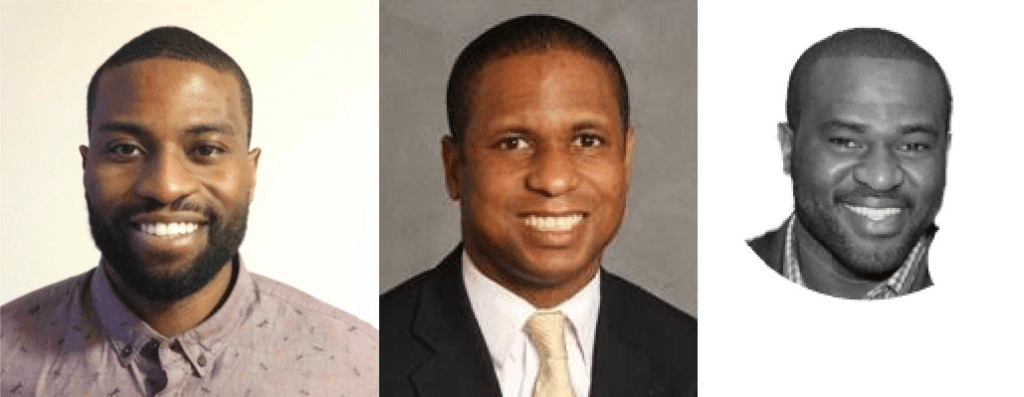
(L-R) Ifeanyi Umejei, Ceydrick Reynolds and Emmanuel Ekwueme
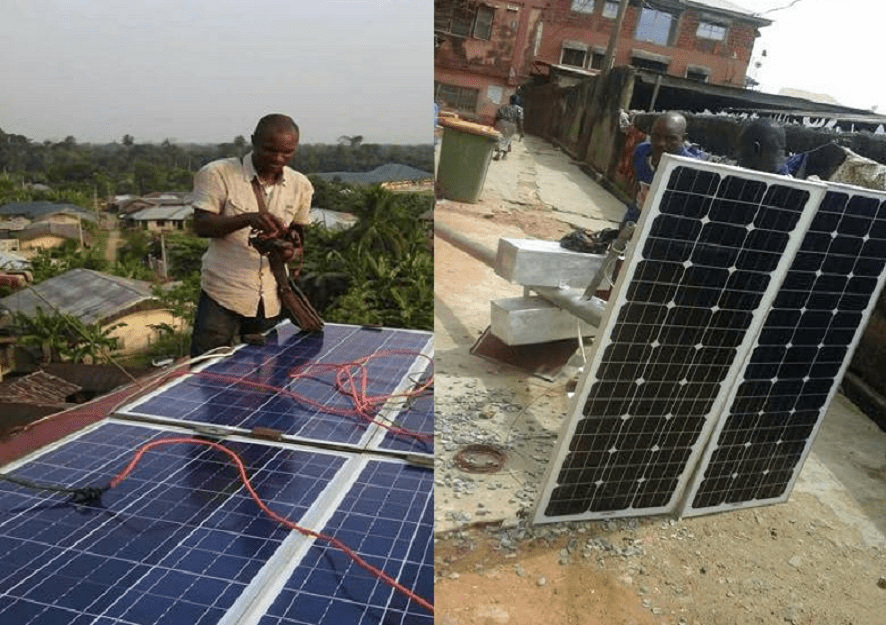
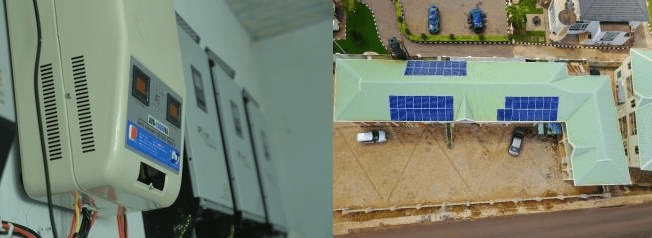
Named after its founders – Ifeanyi Umejei, Ceydrick Reynolds and Emmanuel Ekwueme – ICE designs and installs modular solar microgrids powered by photovoltaic (PV) panels complete with a smart metering system with the capability to monitor energy generation and consumption.
But, what prompted the choice of solar technology and how did ICE Commercial Power come about? Face2Face Africa asked the founders of the company.
“After a trip I took to Nigeria in early 2016, during Nigeria’s most recent recession, it occurred to me that high electricity costs were the driving factor preventing economic productivity. The group then gathered to attack this problem, then quickly realized that declining costs in solar technology could provide the perfect solution,” co-founder Ifeanyi Umejei said.
He relocated to Nigeria and grew the business which currently has three offices across the country. It wasn’t an easy and smooth move though.
Follow the interview with ICE Commercial Power co-founder Ifeanyi Umejei below.
How did you prepare for your move to Nigeria?
Ifeanyi Umejei: I was able to prepare well enough to make the transition relatively smooth. Unfortunately, there are aspects of Nigeria that are highly complex and will hardly reveal themselves to visitors (both good and bad). This presents a significant challenge to adjusting living here no matter how prepared you feel before you make the transition.
How did Nigerians receive you and what were the results after a year of operating the business?
Ifeanyi Umejei: I felt warmly received for the most part, actually to an extent of my surprise. I am grateful that I was able to quickly adjust the messaging to be regionally specific. What I mean by this is that we originally established the business with the intent to drive social impact. However, once you are on the ground, that message doesn’t work as well. People in Nigeria (generally speaking), don’t tend to make decisions based on social impact. So our business and the messaging around it had to demonstrate a capacity to generate strong financial returns in order to get people’s attention.
The results of operating the business for one year has been great. I think the fact that we have a program already in operation, makes this thing real for all stakeholders involved. Around here, people tend to only trust what they can see. You can design the most attractive model in the world, but to many people, it’s purely an academic exercise until they can see it’s real-life application, the interest will be minimal to non-existent.
What do you intend to achieve in the short and long-term?
Ifeanyi Umejei: In the short term, we hope to secure funding to drive our heavy capex model. Once we can get that off the ground it becomes an operational management exercise. How do you grow the business in a smart and efficient way? I think this brings me to the long-term vision.
In the long term, we hope to achieve sufficient scale and pricing decline in the raw materials where we can provide solar to end users at zero upfront cost. My thinking is that our product makes sense and will definitely save lives, and also provide increased opportunities for people to grow their livelihood. However, we will see scalability challenges in the event the people who need our product the most are unable to afford it.
Do you have any recommendations for the Nigerian government and any advice for Africans like you in the diaspora who want to relocate to the continent?
Ifeanyi Umejei: As far as the Nigerian government is concerned, I may stand in the minority for saying this, but I have been quite impressed. I’ve seen in a short time the easing of regulations to the point where I think it was mentioned somewhere that Nigeria has become one of the best places to launch solar microgrids. I’ve met with several government officials, and they seem warmly receptive to the efforts being made to create captive generation grids through solar. I think there’s a joint realization that Nigeria needs to catch up with the rest of the world; and if I may dare to say, I think people not just in Nigeria but all over Africa are increasingly exploring the thoughts of an African nation launching itself as a global influencer. There’s a lot of pride in this part of the world, but progress had been hampered by extreme self-preservation. With the old thinking moving away and collective/collaborative survival trickling into the subconscious, I believe the future is extremely bright here in Nigeria.
If you’re an African and would like to relocate back to Africa, make sure you move back with something you’re truly passionate about. I think this is the only way it will work. If you’re moving back to take from Africa, it doesn’t have enough to give right now, so you will quickly be frustrated. But when you’re dedicated to the giving of yourself and your passions to this society, you will get so much more out of the experience. Another misconception is the idea of coming in to save Africa. African’s don’t want to be saved, you will not succeed. Africans, have an idea of how they want to live and go about their lives. You must first try to understand what that entails, then find ways to partner with the people to help create this reality in a more efficient and productive way. Africa works, it’s just so complicated to understand, and that doesn’t scale well. Figuring out how to simplify the African vision to something that scales well will see Africa create an incredible presence in global discussions.
This article by Ismail Akwei was first published on face2faceafrica.com
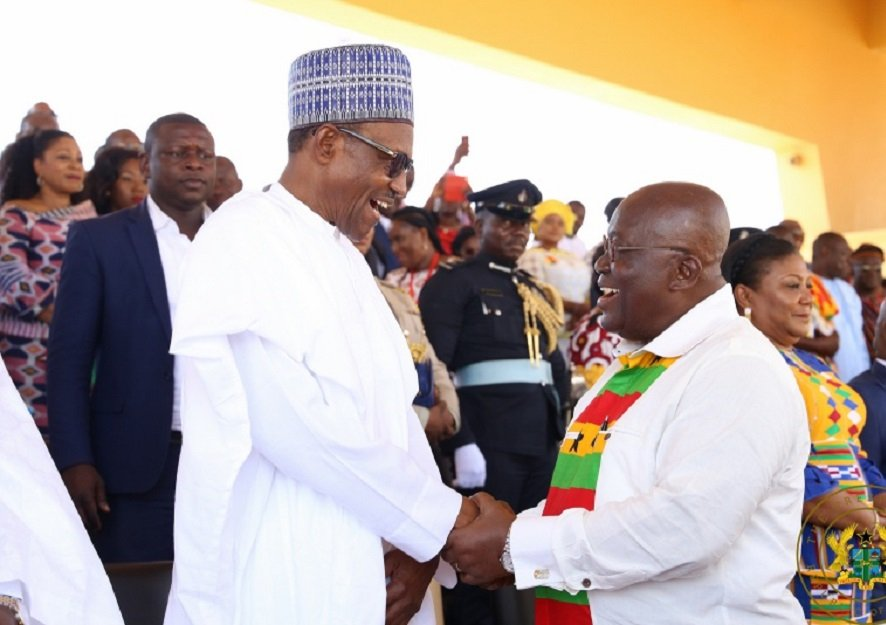
Ghana’s President Akufo-Addo exchanging pleasantries with Muhammadu Buhari, President of Nigeria in Accra on March 6, 2018
Africa is largely dependent on aid from the United States, Europe, Asia and international donor agencies to develop its nations and its people.
This unapologetic dependency takes its roots from the colonial period when the continent was managed by European nations. Independence failed to liberate Africa economically as its leaders continued to fall in debt due to mismanagement and corruption.
Efforts made by some African leaders like Ghana’s Kwame Nkrumah, Burkina Faso’s Thomas Sankara, DR Congo’s Patrice Lumumba among others to gain economic independence and development without aid were thwarted by coup d’etat fueled by the West.
In recent times, Ghana’s president Nana Addo Dankwa Akufo-Addo has called on African countries to move beyond aid and to look within to solve their problems the African way.
He reiterated his stance during Ghana’s 61st independence anniversary parade at the Black Star Square on Tuesday when he said: “Nobody needs to spell it out to us that the economic transformation we desire will not come through aid. We have been on that trajectory for most of the past sixty-one years, and it has not happened. We are told there is “aid fatigue”.
“The taxpayers of the aid-givers have a right to decide how their tax money is spent. The truth is that, even if there were no aid fatigue, and with the best will in the world and the most charitable governments in place in the so-called donor countries, there will never be enough aid to develop Ghana to the level we want. Aid was never meant to be what would bring us to the status of a developed nation,” he said.
He started the “Ghana Beyond Aid” campaign last year after he met French president Emmanuel Macron in Accra. He said at a joint press conference: “We can no longer continue to make policy for ourselves, in our country, in our region, in our continent on the basis of whatever support that the Western world or France, or the European Union can give us. It will not work. It has not worked and it will not work.
“Our concern should be what do we need to do in this 21st century to move Africa away from being cap in hand and begging for aid, for charity, for handouts. The African continent when you look at its resources, should be giving moneys to other places…We need to have a mindset that says we can do it…and once we have that mindset we’ll see there’s a liberating factor for ourselves,” he said.
This is not a new statement from an African leader who is in the position to change the status quo. Rwandan President Paul Kagame, ousted Zimbabwean President Robert Mugabe and former Ghanaian President John Mahama among others have on several occasions called for Africa to be self-reliant.
Besides Eritrea, Seychelles and Mauritius, all African countries received aid from the United States last year. Ethiopia is the highest recipient of U.S. aid followed by South Sudan and then Nigeria. Here are the countries and the amount of aid they received in 2017 in no particular order.
1. South Africa – $348 million 2. Lesotho – $33 million 3. Swaziland – $33 million 4. Botswana – $15 million 5. Namibia – $33 million 6. Zimbabwe – $151 million 7. Madagascar – $109 million 8. Mozambique – $266 million
9. Malawi – $250 million 10. Zambia – $276 million 11. Angola – $47 million 12. Tanzania – $414 million 13. Burundi – $62 million 14. DR Congo – $385 million 15. Rwanda – $108 million 16. Kenya – $642 million
17. Uganda – $385 million 18. South Sudan – $798 million 19. Somalia – $408 million 20. Ethiopia – $921 million 21. Djibouti – $20 million 22. Sudan – $148 million 23. Republic of Congo – $1.6 million 24. Gabon – $61,000
25. CAR – $74 million 26. Cameroon – $47 million 27. Nigeria – $669 million 28. Niger – $123 million 29. Chad – $68 million 30. Benin – $36 million 31. Togo – $2.3 million 32. Ghana – $161 million
33. Cote d’Ivoire – $47 million 34. Burkina Faso – $41 million 35. Mali – $171 million 36. Liberia – $134 million 37. Sierra Leone – $34 million 38. Guinea – $47 million 39. Guinea-Bissau – $467,000 40. Senegal – $122 million
41. Gambia – $16 million 42. Mauritania – $9 million 43. Egypt – $139 million 44. Libya – $63 million 45. Tunisia – $47 million 46. Algeria – $982,000 47. Morocco – $33 million 48. Eritrea – $0
49. Equatorial Guinea – $12,000 50. Mauritius – $0 51. Comoros – $1 million 52. Sao Tome and Principe – $-18,000 53. Seychelles – $0 54. Cabo Verde – $183,000
This article by Ismail Akwei was first published on face2faceafrica.com
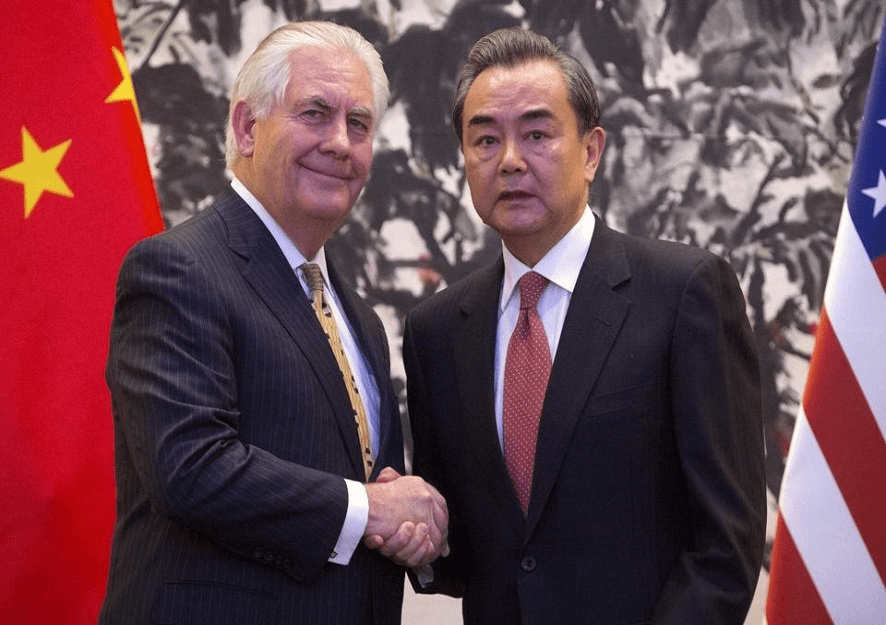
US secretary of state Rex Tillerson (left) and Chinese foreign minister Wang Yi at a joint press conference in Beijing, China, on Saturday. (Reuters)
Africa has become an area of interest for world power United States and its rival China as the latter has gained access to the continent’s markets after massive investments in infrastructure projects and provision of aid.
The U.S. provides billions of dollars in aid to Africa annually yet it is losing its grip on the continent especially after President Donald Trump’s reported statement calling Africa a “shithole” country.
Trump denied the reports after an uproar from African countries, and in turn, he outlined a strategy to reignite the United State’s relationship with the developing continent that is largely dependent on aid.
U.S. Secretary of State Rex Tillerson started his week-long African tour in Ethiopia on Wednesday which is the Trump administration’s first top diplomatic trip to Africa. The trip seeks to strengthen security alliances in the face of terrorism threats in the continent.
Tillerson will visit Kenya and Djibouti after he meets the government of Ethiopia and the African Union in Addis Ababa. Djibouti has recently opened its doors to China which has opened a military base in the strategically placed Horn of Africa country.
It is reported that Djibouti is planning to hand over the operation of its Doraleh Container Terminal to China after it terminated its contract with Dubai’s DP World over the failure of the United Arab Emirates to resolve a 2012 territorial dispute with Eritrea.
A top U.S. military commander overseeing troops in Africa, Marine General Thomas Waldhauser, said during a congressional hearing on Tuesday that if China placed restrictions on the port’s use, it could affect resupplying the U.S. base in Djibouti and the ability of Navy ships to refuel there, reports Reuters.
“There are some indications of (China) looking for additional facilities, specifically on the eastern coast. … So Djibouti happens to be the first, there will be more,” he added.
Tillerson downplayed China’s role in Africa by saying the U.S. was promoting “sustainable growth” while China “encouraged dependency.”
China recently pledged $124 billion for its Silk Road plan to expand links between Asia, Africa, Europe and the rest of the world covering more than 68 countries.
Tillerson also announced the provision of more than $533 million in humanitarian aid for victims of conflicts and drought in Africa. He will visit Chad and Nigeria in West Africa where the threats of Islamist group Boko Haram has left millions displaced and thousands killed.
In neighbouring Ghana, the president Nana Addo Dankwa Akufo-Addo stressed on the need for his country and Africa at large to wean off aid to be able to develop.
“…there will never be enough aid to develop Ghana to the level we want. Aid was never meant to be what would bring us to the status of a developed nation,” he said in an address during Ghana’s independence day parade on Tuesday.
“Ghana Beyond Aid is meant to be more than a slogan. It is meant to propel us into the frame of mind that would quicken our pace of development. It is meant to change our mindset from one of dependency to one of achieving our destiny. It is meant to put us in charge of our own affairs, and make us truly independent. Above all, Ghana Beyond Aid will give us the respect and dignity we deserve,” he added.
Meanwhile, Ghana and more than 40 African countries continue to receive aid from the United States.
This article by Ismail Akwei was first published on face2faceafrica.com
The FIFA World Cup, the biggest gathering of international football teams every four years to compete for the coveted World Cup, could be played on African soil for the second time.
South Africa became the first African country to host the World Cup in 2010 and it was a beautiful spectacle with the Vuvuzela and Ghana’s near-qualification to the finals which got Africans around the world at the edge of their seat.
Morocco wants to give Africa those cherished moments by hosting the World Cup in 2026. The North African country officially launched its bid to host the world event in January. This is their fifth attempt and they hope to make Africa proud.
“It is not a Moroccan project only, but also an African project. From 1930 to 2030, it’s been 100 years and the African continent has organized the World Cup only once. It should not remain at that margin,” Moulay Hafid el-Alami, chairman of the bid committee said.
Morocco’s bid is being rivalled by Canada/Mexico/United States who have placed a joint bid to host the competition. They will need to win 104 votes when the decision on who will host the 2026 finals is made in Russia on 13 June.
Morocco’s advantages over the American countries include internal flying time which will be shorter for teams and the Greenwich Mean Time (GMT) time zone which will allow fans in Europe to watch the games at favourable times.
The 2026 World Cup will for the first time be played with 48 teams after a decision to increase the number from 32.
This article by Ismail Akwei was first published on face2faceafrica.com


 Ismail Akwei