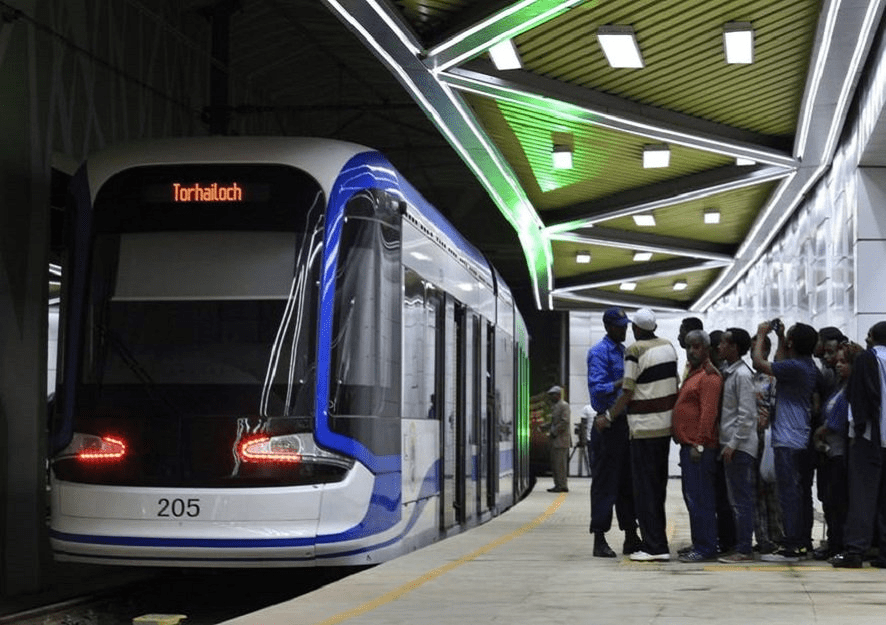
Rwanda and Tanzania opt for electric high-speed railway to link region

Passengers wait to board an electric train at the St George underground station in Ethiopian capital Addis Ababa

Rwanda and Tanzania have decided to use electric trains for their 1,320km standard gauge railway (SGR) line which will link to the East African regional line which passes through Kenya and Uganda.

Transport ministers of the two countries met in Kigali over the weekend to review designs and feasibility studies of the electric rail lines which will surpass those of Kenya and Uganda where diesel-powered trains are used, reports The EastAfrican.

Rwanda’s Minister of State in charge of transport Jean de Dieu Uwihanganye said they want to have reduced travel time on the Isaka-Kigali railway line for both cargo and passengers between Dar es Salaam and Kigali.

Launched in January, the Isaka-Kigali railway line will give the two countries a competitive advantage over Kenya where their SGR was launched last year and is currently operating between Nairobi and Mombasa on diesel.

Kenya and Uganda’s SGR were built by the Chinese government, however, Rwanda and Tanzania have agreed to open tenders for the most suitable financing option, reports The EastAfrican.

The previous SGR project without the electric element cost the two countries $2.5 billion. They are expected to pay more for the electric option.

Ethiopia is the only country in the region with an electric rail line built by the Chinese government. The 756 km rail line between Addis Ababa and Djibouti costs $4 billion and travels a maximum of 13 hours for its cargo line.

Rwanda and Tanzania also want a lower time frame of a maximum 13 hours between Dar-es-Salaam and Kigali, and 10 hours for the passenger line.

This article by Ismail Akwei was first published on face2faceafrica.com

South African Siphe November is Canada’s youngest national ballet dancer

Siphesihle November (CBC Arts)

Siphesihle November used to street dance for fun in the small South African town of Zolani; little did he know that in a few years he will be the youngest member of the National Ballet of Canada.

The 19-year-old got his shot at ballet when a Canadian family saw him during a school recital in South Africa and encouraged him to join Canada’s National Ballet School, reports the Canadian Broadcasting Corporation (CBC).

November moved to Canada when he was 12 years old after he was accepted to the prestigious school based in Toronto. He never looked back since then.

“Dancing was something I did for fun. It was something that everyone in the community did. There was never really a hope or a dream to make it as a professional ballet dancer,” he was quoted by CBC.

He is the first dancer in a new Canadian arts series called The Move and has featured in several performances including Canadian choreographers Robert Binet’s The Dreamers Ever Leave You, James Kudelka’s The Four Seasons and Chrystal Pite’s Emergence held early this year.

November is noted to have a natural charm, strength and effortless rhythm, combined with the technical discipline, flexibility and legacy of the ballet, which make him stand out instantly.

He danced in this weekend’s The Sleeping Beauty which is his first major role held at the Four Seasons Centre for the Performing Arts in Toronto.

This article by Ismail Akwei was first published on face2faceafrica.com

ATM dispensing medicines in South Africa to ease hospital burden

ATM Pharmacy — Photo: Right ePharmacy

South Africa has kickstarted its tele-pharmacy project with the installation of a machine that looks like an ATM and can read prescriptions and dispense medication to patients with chronic illnesses anytime of the day.

The Right ePharmacy project was launched to ease the burden on healthcare facilities. Its flagship product is the Pharmacy Dispensing Unit (PDU) which is also called ATM pharmacy. It reads prescriptions and dispenses medications.

The electronic and robotic technology uses cloud-based technology which enables live patient counselling via Skype. The technology manages patient data and links the patient to a remote pharmacist whenever they need help.

The cloud’s SMS system also keeps users informed about their next medicine collection dates and sends out reminders.

Still in its pilot stage, each PDU costs around $700,000 to set up, reports Turkish media TRT.  Four machines are expected to be placed in shopping centres in Johannesburg this year, and then subsequently around the country. About 5,000 patients have benefitted from the pilot stage, the report adds.

The project is funded by the German and US governments, local health authorities and NGOs.

This article by Ismail Akwei was first published on face2faceafrica.com
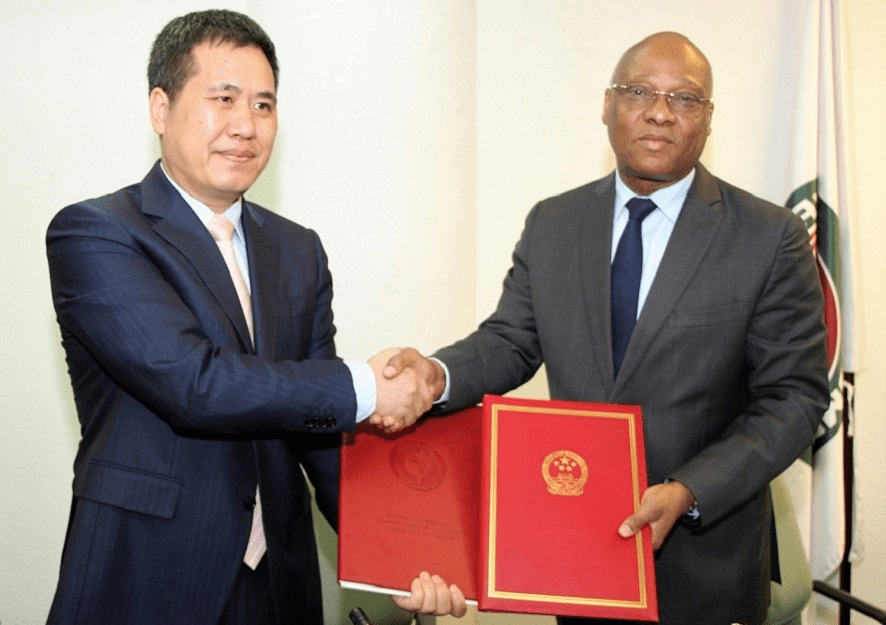
China to build West African regional body’s $31.6m headquarters

Mr. Jean-Claude Brou (ECOWAS Commission President) and Mr. Zhou Pingjian (Chinese Ambassador to Nigeria and ECOWAS)

The West African regional bloc ECOWAS has approved China’s request to build its headquarters building in Nigeria’s capital Abuja with a grant of $31.6 million from the Chinese government.

The building will house offices and conference complex building, as well as road facilities, electrical equipment, parking lots and security posts within the proposed site of the project.

The ECOWAS Commission, led by its president Jean-Claude Brou signed the Memorandum of Understanding (MoU) on Wednesday with the Chinese government represented by the Ambassador of China to Nigeria and ECOWAS, Mr Zhou Pingjian.

Mr Brou said the building was necessary due to the increasing number of staff which has forced the Commission to operate from three buildings away from each other, the Commission said in a statement.

He also expressed gratitude to the Chinese government and called on them to ensure that the building’s architecture “reflects the culture and Africaness of ECOWAS Member States.”

The Chinese Ambassador assured ECOWAS that the building will be of high quality and will take into considerations the cultural biases of the region.

Work will begin immediately on the building which will be maintained by China three years after completion.

This development comes months after China was accused of spying on the African Union headquarters building in Addis Ababa, Ethiopia which it built in 2012.

An investigation conducted by French media Le Monde Afrique and published on Saturday revealed that in the past five years, data from the AU servers in Ethiopia were transferred to servers in Shanghai at odd hours.

The report added that the discovery resulted in the change of servers as security experts from Algeria who checked the entire building found hidden microphones installed in desks.

Chinese ambassador to the African Union, Kuang Weilin, described the claims reported by French media Le Monde Afrique as “absurd” and “preposterous”.

The United States has staged an open battle with China against its growing dominance in Africa. The recently fired U.S. Secretary of State Rex Tillerson who was on tour in the continent last week downplayed China’s role in Africa by saying the U.S. was promoting “sustainable growth” while China “encouraged dependency.”

This article by Ismail Akwei was first published on face2faceafrica.com
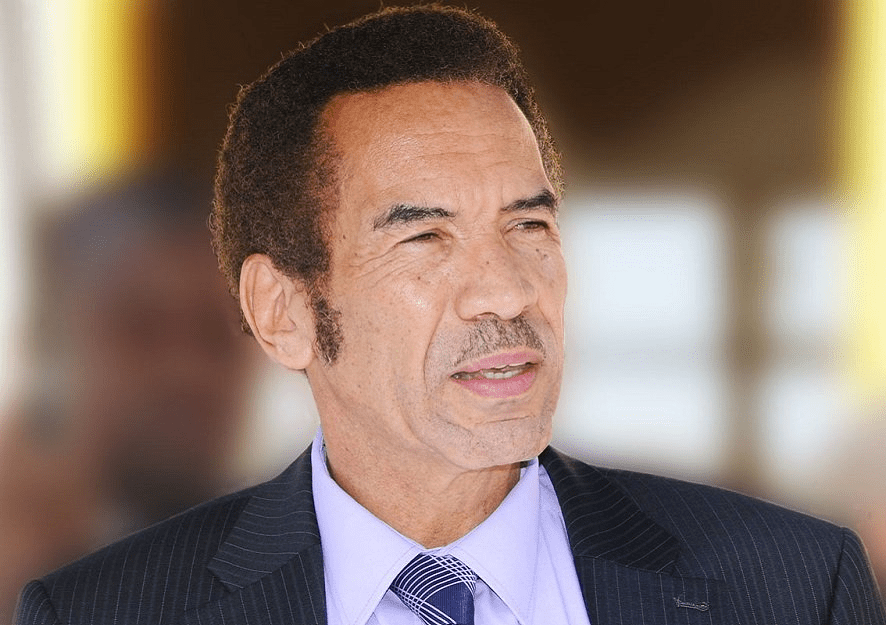
Botswana justifies death penalty after hanging suspected murderer

Botswana president Ian Khama

Botswana’s president Ian Khama has justified death penalty a month after hanging a 28-year-old suspected murderer who is accused of killing his girlfriend and her three-year-old son in 2010.

Khama told heads of diplomatic missions accredited to Gaborone that it is Botswana’s sovereign right to maintain the position that the death penalty is a criminal justice issue.

“It is important to note that death penalty is not imposed arbitrarily in Botswana. In short, the application of the death penalty follows a thorough and exhaustive legal process that meets the basic standards of a fair trial, and the penalty is imposed for the most serious crimes as understood under international law,” President Khama said.

He added that the Botswana government does not intend to either abolish the death penalty or impose a moratorium on its application.

This follows requests by the international community and human rights bodies demanding that Botswana abolishes the practice.

The hanging of Joseph Poni Tselayarona is the first execution in three years in Botswana, the only southern African nation holding on to the death penalty.

Only about 20 countries in Africa have abolished the death penalty with Egypt, Libya, Nigeria, Somalia and Sudan still practising executions.

Some East African countries have not banned executions including Tanzania whose president John Magufuli stated last year that he cannot assent to an execution despite the death penalty being legal.

Uganda’s President Yoweri Museveni said last month that he plans to enforce the death penalty which has not been sanctioned in the country in the past 13 years. His reason was that people are taking his “leniency as a Christian” to get away with crimes.

Gambian President Adama Barrow on Sunday announced the suspension of the death penalty in his country.

Capital punishment is on the decline across Africa and according to Amnesty International, African governments have executed 22 people in 2016, lower than the 43 executions in 2016.

This article by Ismail Akwei was first published on face2faceafrica.com