10 key parts of the controversial Ghana-US military deal you need to know

U.S. and Ghanaian soldiers taking notes

Ghanaians are protesting their government’s decision to approve a military deal with the United States government that gives U.S. forces and their contractors unimpeded access to facilities in the country among other controversial clauses.

This agreement was ratified by parliament last Friday after a minority walkout and protest in and outside the House against the deal which is expected to get Ghana an annual fee of $20 million.

But, what is in this deal that is making Ghanaians angry and paranoid about the military cooperation with the United States?

Here are ten key parts of the agreement that are fuelling the anger of Ghanaians.

Article 2/3
United States forces may undertake the following types of activities in Ghana: training, transit, support and related activities; refueling of aircraft; landing and recovery aircraft; accomodation of personnel; communications; staging and deploying of forces and material; exercises; humanitarian and disaster relief; and other activities as mutually agreed.

Article 3/2
Military personnel may possess and carry arms in Ghana, while on duty if authorized to do so, by their orders, such authorization being made in consultation with the appropriate authorities of Ghana. Military personnel may wear their uniforms while performing official duties.

Article 5/1
Ghana hereby provides unimpeded access to and use of agreed facilities and areas to United States forces. United States contractors, and others as mutually agreed. Such agreed facilities and areas or portions thereof, provided by Ghana shall be designated as either for exclusive use by United States forces or to be jointly used by United States forces and Ghana. Ghana shall also provide access to and use of runway that meets the requirements of United States forces.

Article 5/3
United States forces and United States contractors may undertake construction activities on, and make alterations and improvements to, agreed facilities and areas. United States forces may carry out construction works and other services with military personnel and civilian personnel.

Article 5/4
United States forces are hereby authorized to control entry to agreed facilities and areas that have been provided for exclusive use by United States forces…

Article 10/2

United States contractors shall not be liable to pay any tax or similar charge assessed within Ghana in connection with this agreement.

Article 11/1
United States forces may import into, and export out of, and use in Ghana any personal property, equipment, supplies, material, technology, training or services in connection with this Agreement. Such importation, exportation, and use shall be exempt from any inspection, license, other restrictions, customs duties, taxes, or any other charges assessed within Ghana.

Article 12/1
Aircraft, vehicles and vessels operated by or, at the time, exclusively for United States forces may enter, exit and move freely within the territory and territorial waters of Ghana.

Article 14
…United States forces shall be allowed to operate its own telecommunication systems… This shall include the right to utilize such means and services as required to ensure full ability to operate telecommunication systems, and the right to use all necessary radio spectrum for this purpose. Use of radio spectrum shall be free of cost to United States forces.

Article 19/1
This Agreement … shall remain in force unless terminated by either Party on one year’s written notice to the other Party through diplomatic channels.

Security analysts maintain that this agreement backs the building of a U.S. military base in Ghana which has been denied by both governments.

Former U.S. President George Bush had assured during a visit to Ghana in 2008 that they had no intention of building a military base in Africa but an office in an undisclosed African country to host the Africa-focused U.S. military command, Africom, which is currently headquartered in Stuttgart, Germany.

Read the agreement below:

Parliament to approve setting up of ‘US Military base’ in Ghana by GhanaWeb Editorial on Scribd

This article by Ismail Akwei was first published on face2faceafrica.com
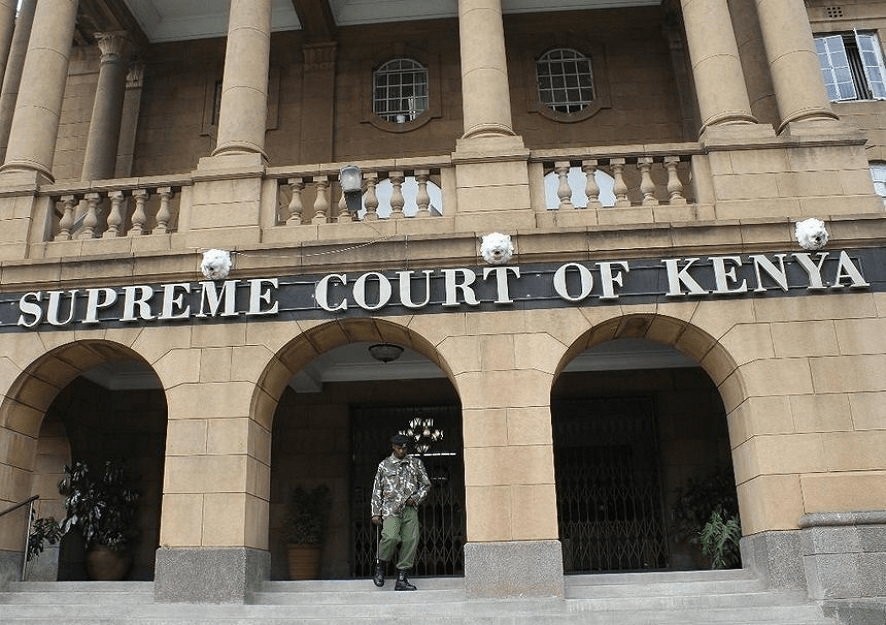
Kenyan court says NO to anal test for homosexual suspects

A Kenyan court has ruled against the forced anal examination of men suspected of being gay following a case filed by rights groups who describe the test as torture.

Thursday’s ruling ends the examination that was backed by law in a 2016 ruling which says it did not violate the privacy of individuals.

Human Rights Watch hailed the Court of Appeal’s ruling in a statement that described the “cruel, inhuman and humiliating” process.

It says medical personnel inserts “their fingers, and sometimes other objects, into the anus of the accused. In other cases, men are ordered to strip naked and bend over or lie down with their feet in stirrups while doctors ‘visually’ examine their anal regions”.

According to Human Rights Watch (HRW), Cameroon, Egypt, Lebanon, Tunisia, Turkmenistan, Uganda, and Zambia subject men suspected of being gay to forced anal testing.

This article by Ismail Akwei was first published on face2faceafrica.com
Africa is splitting into two after tear in Kenya’s Rift Valley [Video]

Kenya’s Rift Valley Split

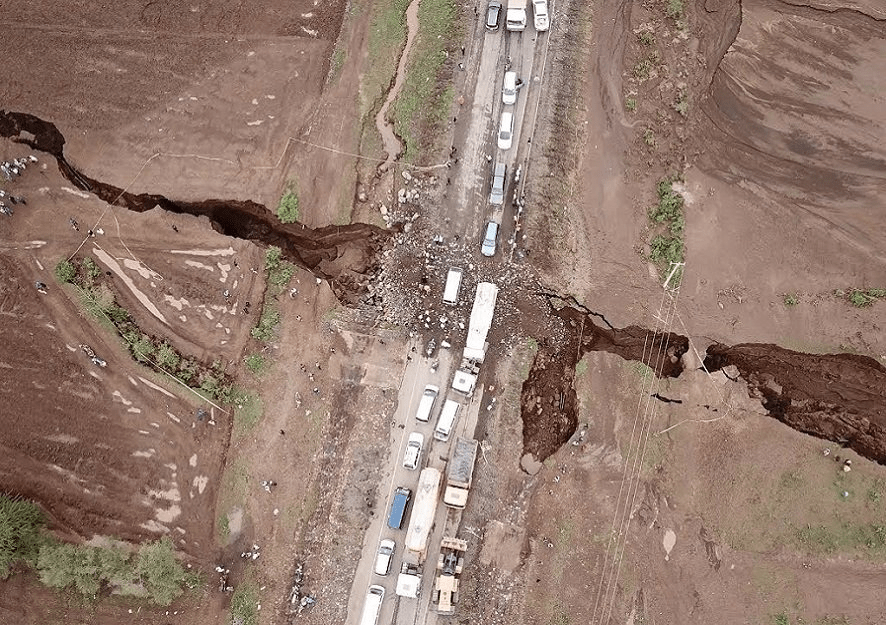
After heavy rains and seismic activities on Monday, the earth has split open at Kenya’s Rift Valley leaving a huge tear that is more than 50 feet deep and more than 50 feet wide weaving through the arable land in Narok County.

Geologists say in about 50 million years, the African continent will split into two with the Somali tectonic plate which covers the Great Rift Valley – running from the Horn of Africa to Mozambique – separating itself from the Nubian Plate (African Plate).

“The Great Rift splits Africa into two plates. With what is happening we have established one plate which is the Somali plate is moving away from the other plate at a rate of 2.5cm. In the near future if this happens we shall have the Somali plate separating from the other Nubian plate,” Kenyan geologist David Ahede tells local media Daily Nation.

He said that earth movements have resulted in weaknesses and the weak zones form fault lines and fissures which are normally filled by volcanic ash, most likely from the nearby Mt Longonot.

He believes the origin of the movements is a shield volcano called Suswa that lies at the base of the Great Rift Valley with a history of tectonic and volcanic activity.

“You cannot stop a geological process because it occurs from deep within the crust of the Earth,” he said, adding that more studies need to be conducted to understand the geology of the area and map the fault lines.

The fissures have torn the busy Mai Mahiu-Narok road apart and the Kenyan government has filled that section with rocks and cement to allow vehicles to ply the route.

Houses have also been split into two including the house of a 72-year-old woman who was eating dinner with her family when their home was cut into two.

Below is a drone shot of the deep tear as captured by Kenya’s Daily Nation.

This article by Ismail Akwei was first published on face2faceafrica.com
RIP Sudan: The world’s last male northern white rhino dies in Kenya at 45

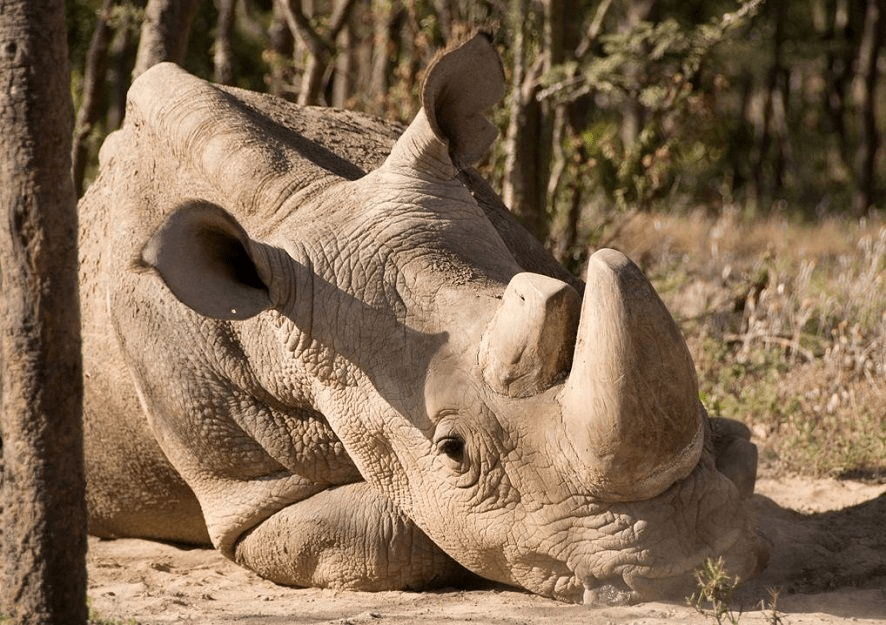
The last male northern white rhino, Sudan, dies in Kenya

The feared extinction of the northern white rhino has been heightened after the death of the world’s last remaining male northern white rhino named Sudan.

He died on Monday at the age of 45 after months of age-related illness at the Ol Pejeta Conservancy in Kenya where he leaves behind the only two females of his species in the world – his daughter Najin and granddaughter Fatu.

“Sudan was being treated for age-related complications that led to degenerative changes in muscles and bones combined with extensive skin wounds. His condition worsened significantly in the last 24 hours; he was unable to stand up and was suffering a great deal,” the conservation camp tweeted.

Sudan, who was 90 in human years, was rescued in the 1970s after escaping extinction and was kept at the Dvůr Králové Zoo in the Czech Republic where he fathered the two remaining females.
He was moved to Kenya in 2009 with the other male northern white rhino at the time and the two females to encourage breeding. It was unsuccessful.

Ol Pejeta said Sudan’s genetic material was collected before his death and it “provides a hope for future attempts at reproduction of northern white rhinos through advanced cellular technologies.”

Scientists are working on developing in vitro fertilization (IVF) techniques using eggs from the two remaining females or surrogate southern white rhino females and Sudan’s semen to preserve the subspecies.

There are two subspecies of the white rhinoceros including the rare northern white rhinos and the southern white rhino with an estimated 20,000 living in the wild.

Sudan gained worldwide popularity last year when an account was created for him on the dating app Tinder to help fund the development of IVF for rhinos.

Hundreds of fans paid tribute to Sudan.

This article by Ismail Akwei was first published on face2faceafrica.com

It’s about time ‘Wakanda Forever’ is institutionalized like the Black Power Salute

Tennis player Sachia Vickery crosses arms on the chest in celebration of victory (L) US athlete Tommie Smith raising a fist at the 1968 Summer Olympics (R)

The Black Panther fever will not die down as the movie keeps breaking boundaries worldwide. It took in $27 million in weekend ticket sales, pushing its domestic gross to $605.4 million, and its international haul to about $1.2 billion.

The now 14th-highest-grossing movie of all time has become more than a work of art, but a movement aligned with black empowerment, black excellence, and unity. This feeling has rolled over from the set to many international stages where important personalities have gestured the Wakanda Forever salute.

The crossed-arm salute was used in the film by the Wakandans as a greeting in the fictional third-world nation that is secretly rich in natural resources and technologically advanced than the rest of the world.

Wakanda Forever now signifies strength, solidarity, defiance, and resistance like the Black Power fist that was popular during the civil rights movement in the early 1960s. United States gold medalist Tommie Smith and bronze medalist John Carlos demonstrated for Black Power at the 1968 Summer Olympics in Mexico City where they raised their clenched fist as the anthem played.

The fist has since become a symbol of protest and a political statement, but the Wakanda Forever has become a symbol of victory and racial pride.

American tennis player Sachia Vickery who is ranked 100th in the world crossed her arms on her chest for the Wakanda Forever salute after defeating the third in the world, Garbiñe Muguruza of Spain in California.

She told WTA Insider that the movie is“taking over my life. I have seen it four times already. Literally, I’m obsessed. I have watched it twice here. I may just keep watching it because it’s been working out so well for me.”

Her gesture in March follows that of French tennis player Gaël Monfils who also gave the crossed-arm salute after winning his match against Matthew Ebden. He told Sport360.com: “It’s not just a sign. It’s everything. It’s everything going on and definitely, it’s a shout-out saying that I’m supporting the Black Panther’s community.”

The salute transcended into soccer in England where Steve Mounie and Collin Quaner celebrated a goal against West Bromwich Albion by making the gesture last month. This was repeated by teammates Jesse Lingard and Paul Pogba the following day during a game against Chelsea.

In Canada, Kenyan rugby player Collins Injera did the same after scoring his 250th try during the World Rugby Sevens.

Clearly, the salute is here to stay for the right reasons and it needs to be institutionalized. Wakanda Forever!

This article by Ismail Akwei was first published on face2faceafrica.com