After many years of harm, African girls still face cruel ‘breast ironing’ custom

Breast ironing with hot stone and sticks in Cameroon

Prevalent in Cameroon and other African immigrant communities in the United Kingdom, breast ironing or flattening – also known as breast sweeping in South Africa – is taken lightly when it is clearly a harmful practice.

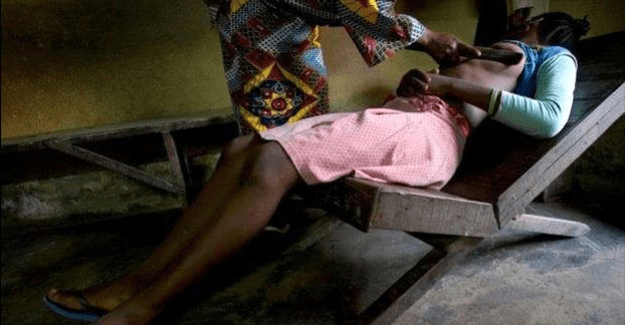
This is the pounding and massaging of a girl’s breasts to stop them from developing. Practised mainly in West and Central Africa – Benin, Chad, Ivory Coast, Guinea-Bissau, Guinea-Conakry, Kenya, Togo and Zimbabwe – mothers or female relatives usually use hard or heated objects including stones, spatulas and pestles to flatten the breasts.
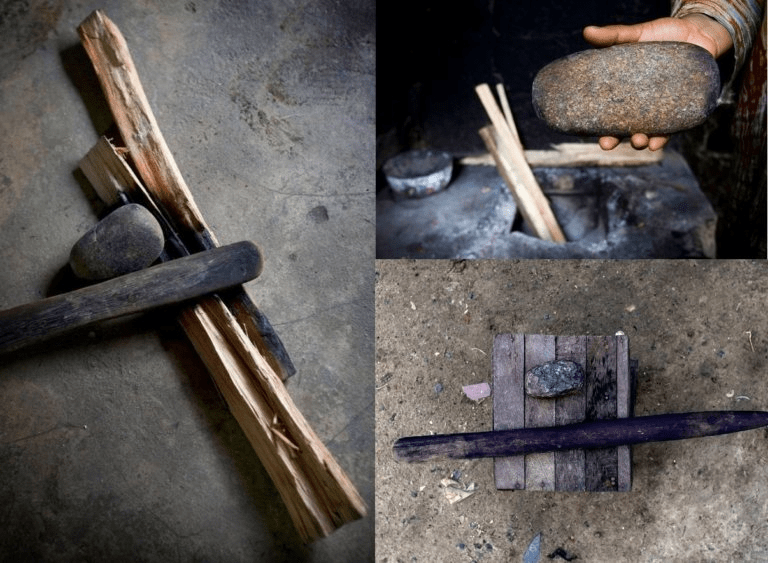
The heat melts the fat in the breasts and flattens them with time. The “good” motive behind this cruel practice was to protect girls from unwanted sexual advances, early pregnancies and early marriages.

However, breast ironing has rather caused more harm than good, like Female Genital Mutilation (FGM) which has been outlawed in almost every country in Africa.

FGM is the ritual cutting or removal of some or all of the external female genitalia in order to control women’s sexuality to ensure purity, modesty and beauty. This misconception and age-long belief has now been rooted out and that should be the fate of breast ironing.

“I started growing breasts when I was 10. My mother explained to my sister that I was growing breasts too early and that I would attract boys,” says victim Cathy AbahFouda who told UK’s Mirror that she underwent breast ironing and a year later her breasts grew again. She said she was so ashamed that she began to carry out the procedure on herself.

“Breast ironing, however, did not prevent me from getting pregnant at the age of 16 and leaving school,” says Cathy who had to undergo surgery since her breasts were damaged and she was unable to breastfeed her baby.

There is no known law against breast ironing despite efforts by survivors and rights agencies to get the governments to ban the practice. No one has been arrested or convicted in Cameroon for breast ironing despite the over four million victims.
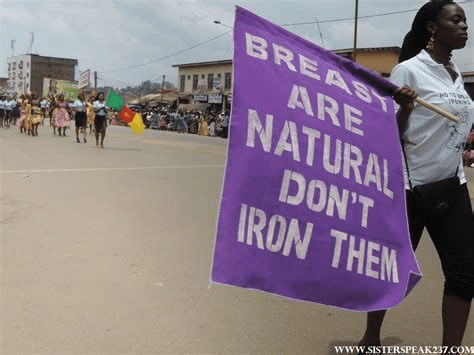
The German development agency GIZ and the National Network of Aunties (RENATA), a Cameroon-based nongovernmental organization, where Cathy AbahFouda works, found out that 25 percent of the 5,000 girls and women interviewed in a 2005 survey had been subjected to some form of breast ironing.

The painful process often subjects girls to emotional trauma and tissue damage which can have long-term effects on them. Some women end up having one breast bigger than the other.
About a thousand women in the United Kingdom were reported in 2016 to have been subjected to breast ironing. The victims who lived in West African communities in London, Birmingham, Manchester, Luton, Nottingham, Leicester, Sheffield and Leeds mostly had their breasts ironed by their mothers, reports UK’s Mirror.

Two arrests were made in London and Birmingham, but no one was charged. The British parliament described breast ironing as child abuse and called for the practice to be made a criminal offence.

No effort has been made in Cameroon to curb the practice whose motive is ineffective as flattened breasts have not reduced the rate of teenage pregnancies and rape incidents. 38% of children in Cameroon are married by their 18th birthdays, more than a quarter of adolescent girls are mothers, and 20% of them drop out of school after getting pregnant, UNICEF reports.

This article by Ismail Akwei was first published on face2faceafrica.com
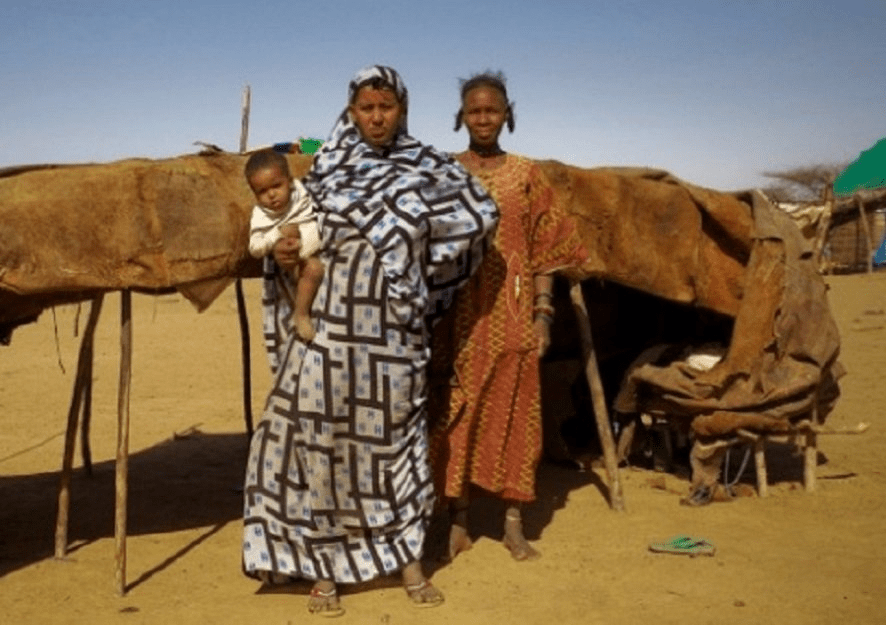
Could harsh prison sentences annihilate slave-owning societies in Mauritania?

Photo: cfr.org

Slavery is widespread in the northwestern African country of Mauritania where black individuals and families are bought by light-skinned Mauritanians who subject them to slavery.

Despite years of caution and legislation by the government, United Nations and other international bodies and agencies, the practice is ongoing.

For the first time in the history of the country, a court sentenced two slave-owners to 20 years in prison, the toughest conviction ever in the country where a conviction for owning slaves is rare.

The slave owner Hamoudi Ould Saleck will serve the same sentence as his father who will serve posthumously after his death before the end of the trial. They held a family with their two children as slaves for many years.

The case was filed in court by former slaves who also ensured the sentencing of a woman, Revea Mint Mohamed, who was jailed for 10 years for keeping three slaves including a 29-year-old who had been kept since she was a small girl, reports the BBC.

Mauritania outlawed slavery in 1981 but a small fraction of the population is still living in slavery, Amnesty International said. It estimates that 43,000 people were still living in slavery despite the country’s decision to criminalize the act in 2015.

More anti-slavery activists have been sentenced in Mauritania than slave-owners after continuous denial of the existence of slavery by the government in the past.

Majority of slaves in the country are descendants of black Africans who were captured during the ancient slave raids. The slaves are commonly referred to as “black moors” or “haratin”.

Their masters are light skinned Arabs of the Berber ethnic group, who are the descendants of traditional slave owners locally known as “al-beydan”.

In Mauritania, slavery mainly takes the form of “chattel slavery”, in which the slaves and their descendants are considered the full property of their masters. This means a slave owner can sell, rent out or give away their slaves without a question.

Slavery is also ongoing in Sudan, Libya, Egypt and South Africa. Experts believe that tougher sanctions like the 20-year prison term will end slavery in Mauritania.

This article by Ismail Akwei was first published on face2faceafrica.com
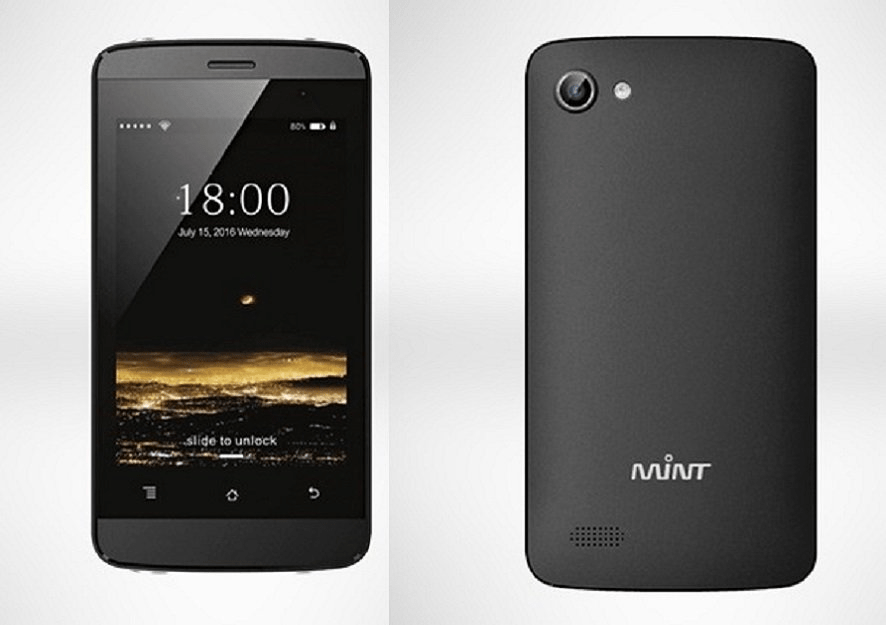
These smartphones were ‘produced’ in Africa by Africans

Mint Fox phones produced by South African-based company

The mobile telephony industry has evolved over the years with a transition from feature phones to smartphones. Smartphones have gained huge popularity worldwide and have become a viable business venture.

The biggest producers of smartphones are Apple, Samsung, Nokia, Huawei and many others with little or none from the African continent which is considered to be the fastest growing mobile market with an estimated half a billion unique mobile subscribers by 2020, according to the 2017 Mobile Economy report by the GSM Association (GSMA) trade organisation.

These big phone producers outside the continent have also capitalized on the market to produce lower-priced smartphones. However, some few African companies have made attempts to mass produce cheaper smartphones for Africans.

Many of these African companies either import the smartphones built for them in China or import the parts from China and assemble them locally. Some have claimed to be producing “Made In Africa” phones, but the tag has become more of a cliche to represent assembly.

Here are four African companies that are making attempts to produce phones in Africa.

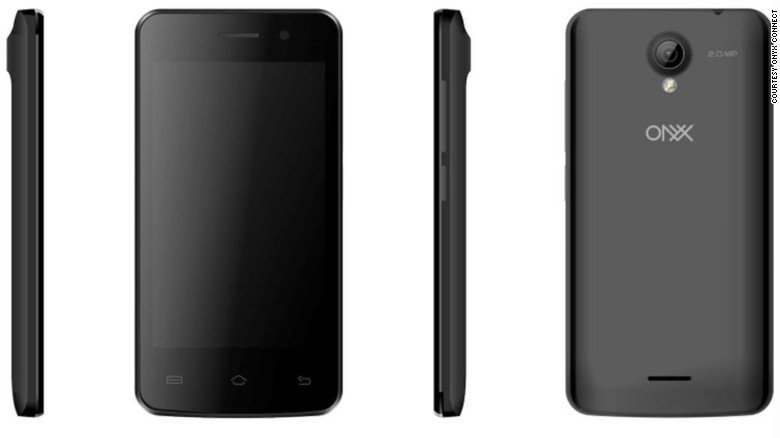
Onyx Connect – South Africa

This is a South African startup company with a plan to become the “first company to ever manufacture smartphones in Africa,” it said in 2016.

The company launched its factory last year and with an $11 million investment from undisclosed investors, it began mass-producing a $30 smartphone.

Its low-cost smartphone will run on a “clean” version of Android after signing a licensing deal with Google in December 2016 to use the clean Android software.

Onyx imports its components from overseas and builds its smartphones from the circuit board up in South Africa, says Onyx sales director Andre Van der Merwe who told CNN that their manufacturing process distinguishes them from other phones assembled in the country.

VMK – Republic of Congo

In 2015, the Congolese startup VMK opened a plant in Brazzaville in the Republic of Congo to “produce” smartphones including its Elikia brands.

Its “Made In Africa” mantra was later debunked in a report that claimed the company was buying phones made in China and adding extra money for the Chinese company to slap their VMK brand on them.

However, they sold the phones in Congo and the Ivory Coast which were their major market.

Mint Electronics – South Africa

Mint Electronics is a subsidiary of the South African company Sekoko Holdings. The company acquired 75% share in CZ Electronics and launched the first-ever line of South African-made smartphones and tablets.

The smartphones are retailing at between $57 to $142 with both seven- and 10-inch screen tablet versions.

Mara Corporation Limited (MCL) – Uganda

This company was founded by Ugandan entrepreneur Ashish J. Thakkar and it’s set to launch a smartphone in 2018 which will be low cost, quality, and tailor-made for Africa.

In the second quarter of 2018, the company is expected to release two smartphones: The Mara X and the Mara Z. The Mara X will use Google’s Android One program and will run the latest Android operating system, 8.0 Oreo. It has also been optimized for Google Assistant.

The Mara Z will run the Android Oreo (Go edition), a configuration of Android specifically optimized for devices with 1GB of RAM or less.

This article by Ismail Akwei was first published on face2faceafrica.com
Botswana to raise age of consent to address child defilement

Botswana Parliament

Botswana’s government has tabled a bill before parliament to amend the country’s penal code to raise the legal age of consent from 16 to 18 years.

This means having sex with a person below the age of 18 with or without their consent is a criminal offense and will be termed as defilement.

The Minister of Defence Justice and Security Shaw Kgathi tabled the Penal Code Amendment Bill, 2018, to align with the Children’s Act, the government said in a statement. It is awaiting debate and ratification.

“The objective is to address incidences of defilement and abuse of children abduction, indecent assault, and kidnapping of children,” the statement added.

The bill also prescribes stiffer fines and penalties for some offences including use of insulting language to “make them deterrent enough”, says the government.

Child defilement and rape cases are on the rise in Botswana like in many other African countries which are attributed to the low age of consent that does not protect children.

Angola has the lowest age of consent pegged at 12 years. This means it is legal to have sex with a child from the age of 12 upwards with their consent. For Burkina Faso, Comoros, Niger, and the Sahrawi Arab Democratic Republic, the age of consent is 13.

This article by Ismail Akwei was first published on face2faceafrica.com

This country in Africa is also building a border wall like the U.S.

Mandera border post

United States President Donald Trump has been criticized for plans to build a wall on the border with Mexico to keep out illegal immigrants.

As Americans and Mexicans negotiate the possibility of Trump’s border wall, East African nation Kenya has already begun building a wall at the border with Somalia to control the activities of Islamist group Al Shabaab.

Kenya made the decision to build the wall dividing its Mandera border town and Somalia’s Beled Hawa border town in 2015 after multiple attacks by Al Shabaab on civilians and security officials.

In 2016, 12 people were killed by Al Shabaab at a guest house in Mandera hosting members of a theatre group who were performing plays in schools in the border town. The attacks have since continued and the Kenyan government says a wall will help control the entry of militants from Somalia into Kenya.

However, the decision to wall the over 700 km border has been condemned by the Somali authorities and residents of the Somali border town Beled Hawa who have been protesting in the past weeks to halt the construction.

So far, Kenya has built more than 4 km of the wall and the residents say Kenya is constructing the wall on their land. This is beside earlier protests against the idea of building the wall which the Somalis believe will restrict easy movement of students and traders into the neighboring country.

Governor of Beled Hawa’s Gedo Region, Mahamud Ahmed, called on residents to stop the violence as Somalia and Kenya have started talks over the issue, reports local media Radio Dalsan.

“Somalia President has contacted his counterpart on the issue and agreed to start talks on March 27. Kenya has agreed to stop the construction awaiting the talks,” Ahmed said.

As the talks continue, hundreds of Somalis continue to protest at the border against the alleged encroachment of their land by Kenya to build the border wall.

This article by Ismail Akwei was first published on face2faceafrica.com