Sexism in Medicine: It’s about time we stop calling female doctors Auntie nurse

Stock photo

As the world awakens to the sexist and racist behaviors and actions against women, many victims have come forward with their experiences with the hope that people get to know that it doesn’t feel good to be discriminated against.

One field often overlooked in the medical field where women make up the majority of nurses and a few become doctors largely due to gender discrimination at various levels of the science field. [A good topic for another day].

paper published last year in the Journal of Women’s Health on how women doctors are introduced at professional functions says male introducers use the formal title “doctor” 49.2 percent of the time when introducing female doctors while they use it 72.4 percent of the time for men.

A co-author of the paper, Dr. Julia Files, who is a physician and associate professor of medicine at the Mayo Clinic Arizona in Scottsdale, U.S.A, was inspired to write the paper after having several gender bias experiences among fellow doctors.

“I was really quite taken aback. I thought, Did that just happen? Am I being sensitive? Is it me? Did he do that? Did he mean to do that? This wasn’t the first time I’d been inappropriately addressed by my first name in a professional setting, but it was certainly the most public and glaring example,” Files told Newsweek in an interview.

The conclusion of her paper, which she wrote with 12 others after reviewing 321 introductions made at rounds at the Arizona and Minnesota Mayo Clinic locations, was:

“Subtle, yet pervasive practices, reinforcing the perception that women are of lower status than men, can negatively impact a woman’s career trajectory and her satisfaction with her career even if they are unintentional,” they write. “Unequal naming practices may amplify the issues of isolation, marginalization, and professional discomfiture expressed by women faculty in academic medicine.”

For General Practitioner and Obstetrician Doctor Penny Wilson who is in Australia, introducing yourself as a doctor, wearing an ID badge, draping a stethoscope around your neck and wearing a uniform that has “DOCTOR” embroidered on it have not prevented the assumptions from occurring.

She wrote her experiences in a blog post:

You enter a patient’s room and they are on the phone. They end their call by saying “I gotta go, the nurse is here to see me.”

You spend 45 minutes with a patient taking a history, performing an examination, taking bloods, explaining their diagnosis and management plan. Then they say “Ok, when do I get to see the doctor?”

Having to repeatedly deflect groping hands, flirty comments and admiring looks up and down from overly friendly male patients who care more about what you look like than what your job title is.

The situation is no different in Africa as some Nigerian female doctors expressed their frustration after a tweet by Twitter user Dr Chioma who posted: “Being a Female Doctor in Nigeria can be hard mehn. You will dress up in all your Full Doctors regalia with your male colleagues and Your patients will still call you Nurse. And when they realise they are wrong, they ask for the ‘Main Doctor’. I just ask for the main patient.”

This tweet received thousands of likes and hundreds of replies from other female doctors who started a conversation as they shared their experiences.

The conversation goes on and on with young male doctors joining in to share their experiences of being called “too young”.

This clearly shows that education and enlightenment on sexist behaviours are needed and it should start from within the hospitals and medical facilities as it is evident that male doctors discriminate against female colleagues.

For the public, we need to solve the sexism from the root, which is through the children by taking the education to the classrooms which will go a long way to encourage more girls to have interest in medicine.

This article by Ismail Akwei was first published on face2faceafrica.com

Russia to pitch first camp in Africa with military base in Somaliland

-PHOTO TAKEN 16AUG05- Russian President Vladimir Putin looks at a model of the Tupolev TU-160 bomber, or Blackjack, that was presented to him on his arrival in Olenegorsk, Russia, August 16, 2005. Putin flew in the Tupolev TU-160 bomber on Tuesday and took part in the launch of cruise missiles in the Arctic north, dusting off the military image he cultivated when he first came to power. Picture taken August 16, 2005. (CREDIT : REUTERS/ITAR-TASS/PRESIDENTIAL PRESS SERVICE) – RTXNPML

Russia is in talks with breakaway Somali region, Somaliland, to set up a naval base of at least 1500 men outside Zeila, a city near the border with Djibouti to offer support to warships and submarines patrolling the strategic stretch of coastline.

Reported by Somaliland and other international news outlets, the base is expected to be home to two destroyer-sized ships, four frigate class ships, two large submarine pens, two airstrips that can host up to six heavy aircraft and fifteen fighter jets, and other facilities.

However, local media Qaran News said on April 2 that in return, Russia will assist Somaliland in gaining international recognition as a sovereign state through a resolution. It also reported that Russia will ensure security in the breakaway country by training the Somaliland military.

If this happens, then Russia will join the list of powerful countries with bases in the Horn of Africa region which is strategic for so many reasons including proximity to the Middle East and influence over the Gulf of Aden.

The United States, France, Japan and China have military facilities in neighbouring Djibouti while Turkey recently established a facility in Somalia which has strained relations with Somaliland.

Russia has bases in only nine countries including Armenia, Belarus, Georgia, Kazakhstan, Kyrgyzstan, Moldova, Syria, Tajikistan and Vietnam.

Somaliland’s president Muse Bihi Abdi said in March that the United Arab Emirates (UAE) will train Somaliland security forces as part of a deal to establish a military base in the Somaliland port city of Berbera.

Somaliland declared its independence from Somalia on May 18, 1991. The territory had been under pressure to hold talks with Somalia which have so far been futile.

27 years of diplomatic isolation has made it difficult for Somaliland to have access to loans from the World Bank and the International Monetary Fund.

This article by Ismail Akwei was first published on face2faceafrica.com

More cracks recorded in Kenya as Africa’s geographical divide deepens

Crack on the outskirts of Naivasha town in Nakuru County, Kenya. Photo: Daily Nation

Amonth after a huge crack was reported in Kenya’s Rift Valley, another two-kilometre fault line has cracked open on Monday on the outskirts of Naivasha town in Nakuru County where farms have been swallowed.

Local media reports say at least 16 families have moved to safe grounds as several acres of crops were destroyed by the crack that was filled with water believed to be from rains in other parts of the country, reports Daily Nation.

“The heavy rains pounding this region have contributed in a way to the fault line … It’s a 20-foot deep fault line that runs across several agricultural farms. The families were asked to leave primarily for their safety,” said Naivasha assistant county commissioner Joseph Opondo on Tuesday.

He added that a team of engineers and experts are assessing the situation as roads and a major river have also been affected.

The cracks started last month after a huge tear that is more than 50 feet deep and more than 50 feet wide in Narok County believed to have been caused by heavy rains and seismic activities.

Geologists say in about 50 million years, the African continent will split into two with the Somali tectonic plate which covers the Great Rift Valley – running from the Horn of Africa to Mozambique – separating itself from the Nubian Plate (African Plate).

Kenyan geologist David Ahede told local media that he believes the origin of the movements is a shield volcano called Suswa that lies at the base of the Great Rift Valley with a history of tectonic and volcanic activity.

He added that the earth movements have resulted in weaknesses and the weak zones form fault lines and fissures which are normally filled by volcanic ash, most likely from the nearby Mt Longonot.

Below is a drone shot of last month’s deep tear as captured by Kenya’s Daily Nation.

This article by Ismail Akwei was first published on face2faceafrica.com
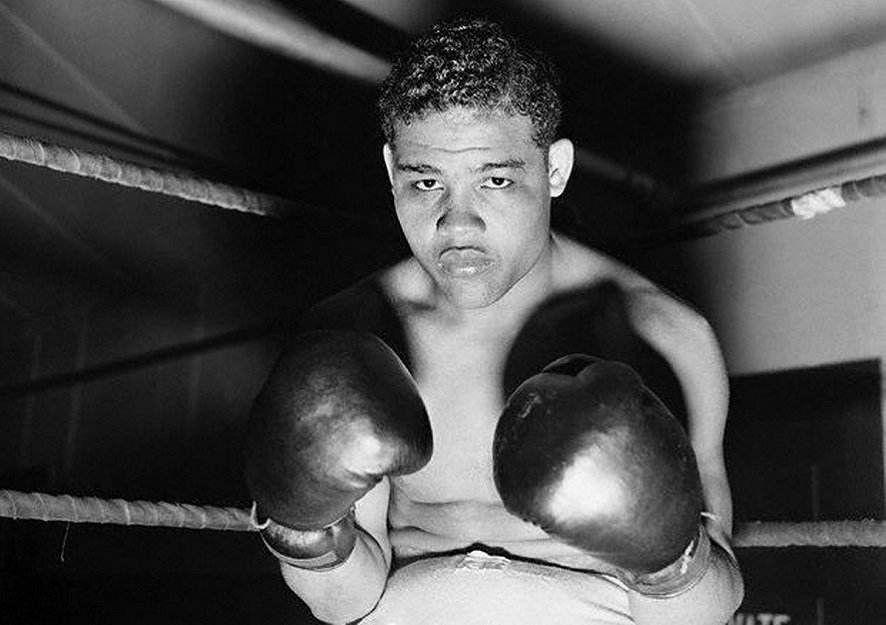
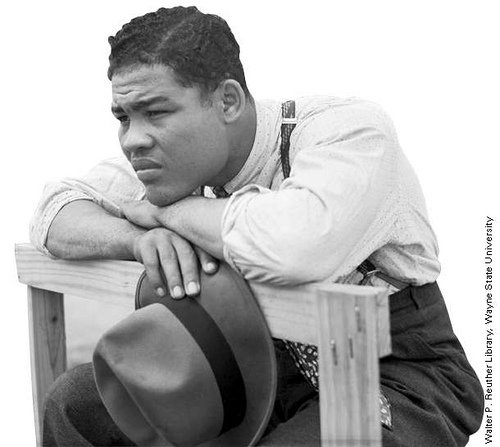
Joe Louis: The best heavyweight boxer of all time who was loved by all races

Original caption: 6/5/38- Pompton Lakes, NJ – Just take a look at these two mighty “pile drivers” which Heavyweight Champion Joe Louis exhibits in this unusual closeup at his training camp, here. Louis is getting in trim to defend his title against Max Schmeling of Germany at the Yankee Stadium, June 22nd. Former Champion James J. Braddock, whom Louis defeated for the title, visited the “Bomber” at his camp, today, and placed his stamp of appoval on the title-holder. June 5, 1938 Pompton Lakes, New Jersey, USA

Before Cassius Marcellus Clay Jr. became Muhammad Ali, the United States held in high esteem the heavyweight boxer Joe Louis who was a household name and a hero to all races despite being black.

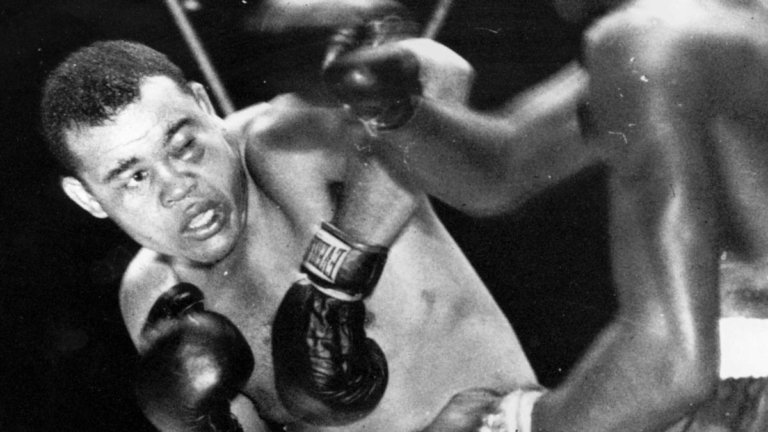
Born Joseph Louis Barrow in 1914, Joe Louis reigned as the world heavyweight champion from 1937 to 1949 and was victorious in 26 title defenses, a feat that has gained him the best heavyweight of all time rank by the International Boxing Research Organization in 2005.

Nicknamed the “Brown Bomber”, Joe Louis has won 52 fights by knockout and suffered three losses in his entire boxing career which spanned from 1934 to 1951. He did not have an easy start in life.

Seventh of eight children, the grandson of slaves was born in a shack outside of Lafayette, Alabama to sharecropper father, Munroe Barrow, and laundress mother Lillie (Reese) Barrow. Both of his parents were children of former slaves.

Louis was a stutterer after suffering from a speech impediment during his childhood. His father was committed to a mental institution in 1916 and in 1920, his mother married Patrick Brooks, a local construction contractor.

The family migrated north to Detroit where Louis attended the Bronson Trade School and trained as a cabinet maker. He and his family had to also work odd jobs after his stepfather and brother lost their jobs at the Ford Motor Company where Louis had also worked later in life.

After an association with a local gang, Louis’s mother got him to take violin lessons to stay out of trouble. He was also introduced to boxing by a friend and he started training at the Brewster Recreation Center in Detroit.

It is believed that Joe Louis truncated his name when he made his debut at 17 to hide his new career from his mother. Others say because he was barely literate, Louis wrote his name so large that there was no room for his last name.

He lost his debut fight to future Olympian Johnny Miller and then won subsequent fights as an amateur boxer. In 1934, he won the United States Amateur Champion National AAU tournament in St. Louis, Missouri.

His professional debut started in 1934 against Jack Kracken in the Bacon Casino on Chicago’s south side. He won all 12 of his professional fights that year, 10 by knockout. In 1935 he fought thirteen times gained media spotlight after knocking out former world heavyweight champion Primo Carnera in six rounds.

This victory gave him a shot at the title held by former heavyweight champion Max Schmeling of Germany. He had already defeated former heavyweight champions Primo Carnera and Max Baer.

He reportedly did not train hard for his title fight against Schmeling in 1936 which cost him a 12th-round knockout, his first professional defeat. He rather spent time on golf which was his other passion.

In 1938, a rematch made Louis a hero after knocking out Schmeling in a first-round knockout. He was hailed by both black and white Americans for the victory which had a nationalistic bearing due to Hitler’s display of superiority ahead of the second world war.

Joe Louis enlisted in the U.S. Army in 1942 and donated the prize money to military relief funds. He retired in 1949 when Muhammad Ali was just seven years old, but returned in 1950 due to financial problems due to unpaid taxes.

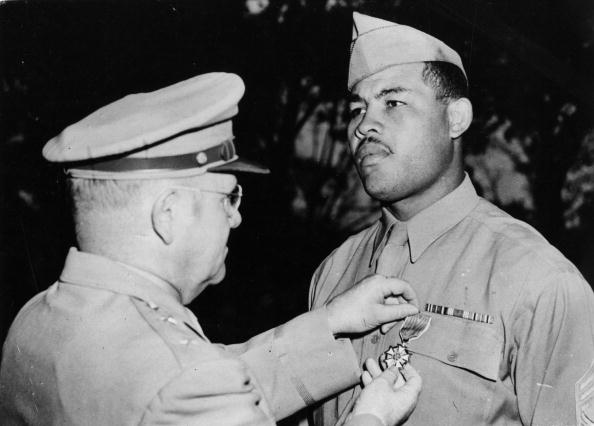
28th September 1945: US heavyweight boxer Joe Louis (1914 – 1981) (right) is presented with the Legion of Merit medal by Major-General Clarence H Kells during a ceremony at Port Hamilton. The award is in recognition of Louis’ ‘exceptionally meritorious conduct in the performance of outstanding services’ during his tour of army camps and hospitals. (Photo by Keystone/Getty Images)

Louis won a few fights but lost in 1951 to top contender Rocky Marciano who defeated him by a brutal eighth-round TKO. Louis retired 68-3 career record including 54 knockouts.

In 1952, Louis was invited to play as an amateur in the San Diego Open on a sponsor’s exemption. This made him the first African American to play a PGA Tour event. He helped found The First Tee charity that helps underprivileged children become acquainted with golf.

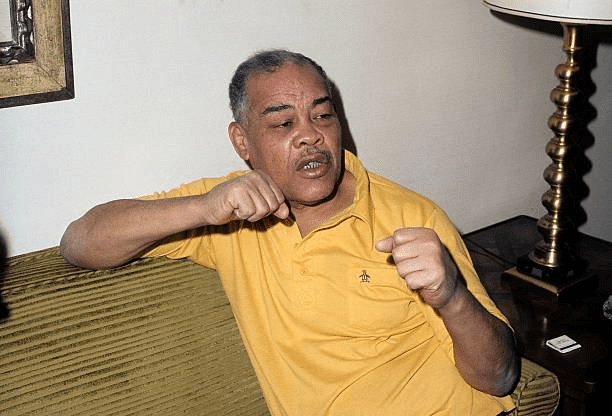
Louis later served as a referee for both wrestling and boxing matches and then worked as a greeter at the Caesars Palace casino in Las Vegas. He battled cocaine addiction and was committed to psychiatric care in 1970. After a heart surgery in 1977, he was confined to a wheelchair.

He suffered some condemnation from the black community since he endorsed and campaigned for Republican Wendell Willkie for president in 1940. Even Muhammad Ali once called him an “Uncle Tom.” He later named him as one of his biggest influences in boxing.

Louis was married four times, twice to Marva Trotter, with whom he had two children: Jacqueline and Joseph Louis Jr. His second wife was Rose Morgan and they divorced after less than three years. He adopted four more children: Joe Jr., John, Joyce and Janet with his third wife, Martha Jefferson.

He created a legacy before his death which was caused by a cardiac arrest on April 12, 1981. Louis was inducted into The Ring Magazine Boxing Hall of Fame in 1954 and the International Boxing Hall of Fame in 1990. In 2007, he was ranked #4 on ESPN.com’s 50 Greatest Boxers of all-time list. In 2002 The Ring ranked Louis #4 on their 80 best fighters of the last 80 years list. Louis was also ranked #1 on The Ring’s list of 100 Greatest Punchers of All Time.

He was posthumously awarded a Congressional Gold Medal in 1982, and in 1993 he was the first boxer to appear on a commemorative postage stamp. Several sports facilities have been named after him.

There is a memorial to Louis in Detroit, a 24-foot-long (7.3 m) arm with a fisted hand suspended by a 24-foot-high (7.3 m) pyramidal framework to represent the power of his punch. There is also a bronze statue of Louis in his Alabama hometown outside the Chambers County Courthouse.

Joe Louis has appeared in films including the 1938 movie Spirit of Youth, in which he played a boxer, and the 1953 Robert Gordon-directed movie about his life, The Joe Louis Story.

This article by Ismail Akwei was first published on face2faceafrica.com
8 shocking times African athletes have fled at events in the West

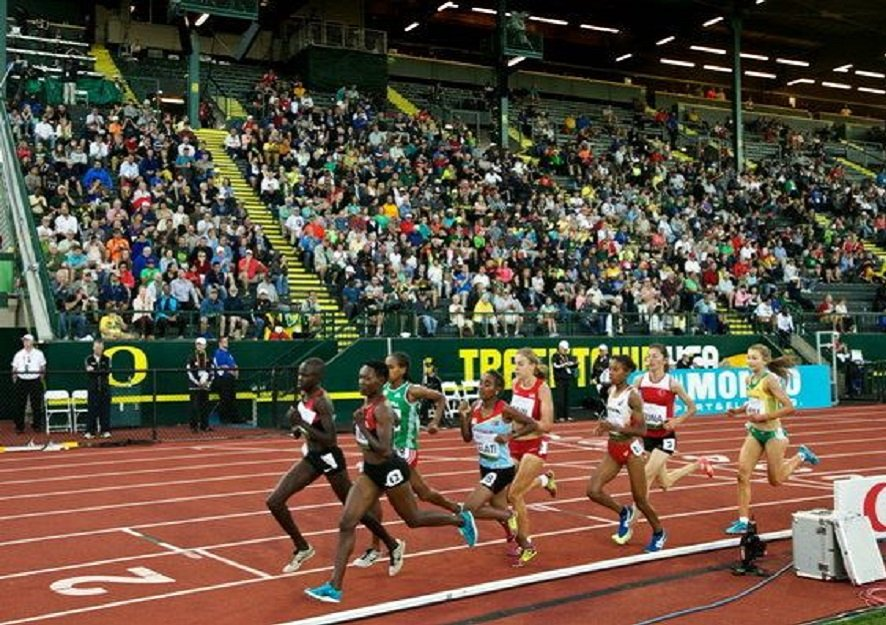
Runners from around the world compete at the 2014 IAAF World Junior Championships in Eugene (Thomas Boyd/The Oregonian)

There is a dark cloud of uncertainty around African athletes at international competitions outside the continent after several incidents of players running away from camps to start a living in the United States, Europe and other parts of the world.

This was again repeated at the 2018 Commonwealth Games in Australia where eight Cameroonian athletes bolted even before the end of the competition.

They are weightlifters Olivier Matam Matam, Arcangeline Fouodji Sonkbou and Petit Minkoumba, and boxers Christian Ndzie Tsoye, Simplice Fotsala, Arsene Fokou, Ulrich Yombo and Christelle Ndiang.

Some of them were yet to compete in their disciplines. They were last seen at different times on Monday and Tuesday at their accommodation and have since been reported to the Australian police as “deserters”.

Below are other similar incidents in the past when athletes went missing.

Missing in Germany

In October 2017, three Ugandan rugby national team players went missing in Germany at the end of a three-day 12-nation tournament in which the Rugby Cranes finished 10th.

The trio – Ramathan Govule, Brian Kikaawa, and Fred Odur – were not found at the team’s hotel when they were preparing to leave the country.

Missing in Scotland

This was the national rugby team’s second incident after the 2014 Commonwealth Games when two players went missing at the end of the event hosted in Glasgow, Scotland.

Missing in the U.S.

In July 2017, six teenagers from Burundi bolted after participating in an international robotics competition in the United States.

The two females and four males between the ages of 16 and 18 were considered safe after two were found crossing into Canada.

Missing in Russia

In April 2017, 15 Cameroonian local footballers were detained, fined and ordered to immediately leave Russian territory after attempting to stay in Crimea after a tournament.

Missing in Brazil

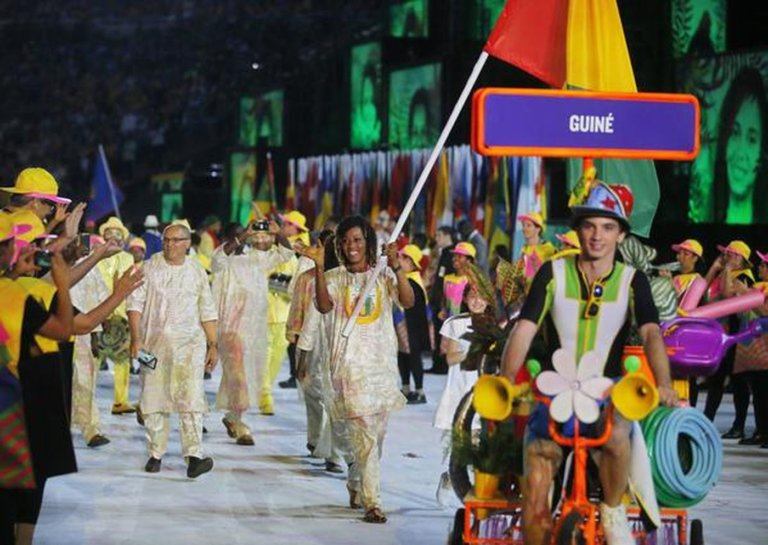
In 2016, two members of Guinea’s Olympic team disappeared from the Rio 2016 Athletes’ Village after the competition.

Missing in the U.S.

In 2014, four members of an Ethiopian track team competing at an international event in Oregon in the United States went missing in what officials believed was an attempt to seek asylum and stay in the United States.

Missing in the UK

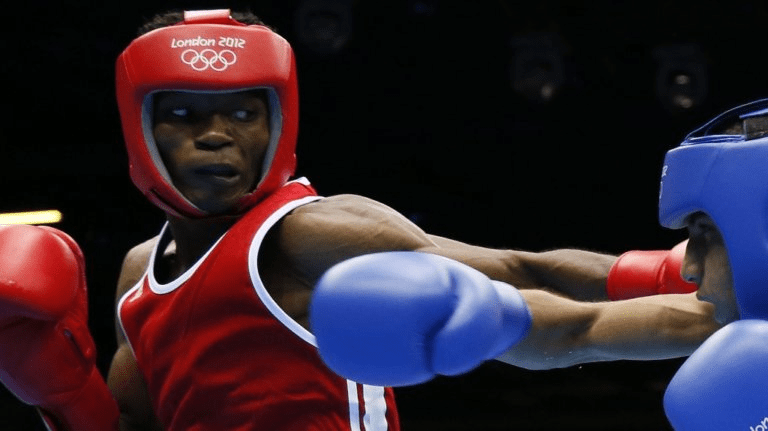
In 2012, seven Olympic athletes from Cameroon, including 5 boxers, a swimmer and a reserve women’s goalkeeper, were also missing during the London 2012 Olympics. They were followed by three Guineans and three Ivorians, while two members of the Sudanese team and one Ethiopian sought asylum in the UK.

This article by Ismail Akwei was first published on face2faceafrica.com