U.S. doctors perform first full penis and scrotum transplant on military vet

Johns Hopkins transplant team

Doctors of the Johns Hopkins University School of Medicine in Baltimore have performed the first-ever full penis and scrotum transplant on a military veteran who was injured in a bomb blast in Afghanistan.

The hospital announced on Monday that it took 14 hours to complete the surgery on March 26 and it was performed by a team of nine plastic surgeons and two urological surgeons.

The penis, scrotum and partial abdominal wall were from a deceased donor. The doctors did not transplant the donor’s testicles to prevent genetic material to be passed on from the donor which the hospital believes is unethical, reports Time.

“We are hopeful that this transplant will help restore near-normal urinary and sexual functions for this young man,” said Dr. W.P. Andrew Lee, professor and director of plastic and reconstructive surgery at the hospital.

The transplant recipient who wished to remain anonymous said in a statement released by the hospital that he felt normal after the procedure.

“It’s a real mind-boggling injury to suffer, it is not an easy one to accept. When I first woke up, I felt finally more normal… [with] a level of confidence as well. Confidence… like finally I’m okay now,” he said.

The transplant is estimated to cost $50,000 to $75,000 but Johns Hopkins is largely footing the bills since the procedures are still considered experimental and are not covered by insurance.

The doctors are reported to be in the process of applying for a research grant that would offer coverage for further procedures.

This is the second penis transplant in the United States and the fourth in the world. In May 2016, the first penis transplant in the U.S. was performed at the Massachusetts General Hospital on a 64-year-old man.

The world’s first penis transplant was performed in 2014 in South Africa by doctors of the Stellenbosch University (SU) and the Tygerberg Academic Hospital in Cape Town.

The same team performed the world’s third surgery in 2017 on a 40-year-old recipient who was reported to have lost his penis 17 years ago due to complications after traditional circumcision.

His new organ had a colour discrepancy because he was a black man and the donor was white.

This is how the first full penis and scrotum transplant was done:

This article by Ismail Akwei was first published on face2faceafrica.com

U.S. builds military base in the Sahara desert for armed drones

In this photo taken April 16, 2018, a U.S. and Niger flag are raised side by side at the base camp for air forces and other personnel supporting the construction of Niger Air Base 201 in Agadez, Niger. — Photo: VOA

The United States is building a drone base in Niger’s Sahara desert to help in the battle against extremists in the Sahel region.

The Niger Air Base 201 under construction a few miles outside Agadez already has three hangars and the first layers of a runway, reports VOA.

Built at the request of Niger’s government, the air and drone base will host fighter jets and MQ-9 drones which will be transferred from the capital Niamey.

The drones can survey and strike several West and North African countries with their wider range. The project cost $110 million and according to Air Force officials, it is the largest troop labour construction project in U.S. history, reports VOA.

The report added that it will cost $15 million annually to operate the base which is the second largest U.S. military presence in Africa behind the only U.S. base in Djibouti.

Niger hosts about 800 U.S. military personnel with 500 of them working at the new base against Djibouti’s 4,000 personnel.

Last year, four U.S. soldiers and five Nigeriens were ambushed and killed by extremists linked to the Islamic State group. This brought to light the unknown military presence in the country which is in the middle of an Islamist insurgency war.

The U.S. said the drones at the base will target the several affiliated al-Qaeda and Islamic State groups in the Sahel countries including the Lake Chad region which is battling with the spread of Nigeria’s Boko Haram insurgency.

Local Nigerian officials and civil society have expressed concern about the increased U.S. military presence in their country.

“We are afraid of falling back into the same situation as in Afghanistan, with many mistakes made by American soldiers who did not always know the difference between a wedding ceremony and a training of terrorist groups,” said Amadou Roufai, a Nigerien administration official.

For civic leader Nouhou Mahamadou who spoke to the VOA: “The presence of foreign bases in general and American in particular is a serious surrender of our sovereignty and a serious attack on the morale of the Nigerien military.”

Commander Brad Harbaugh, who is in charge of the new base assured that the drones will gather intelligence that can be used by Niger and other U.S. partners to prosecute extremists.

This article by Ismail Akwei was first published on face2faceafrica.com
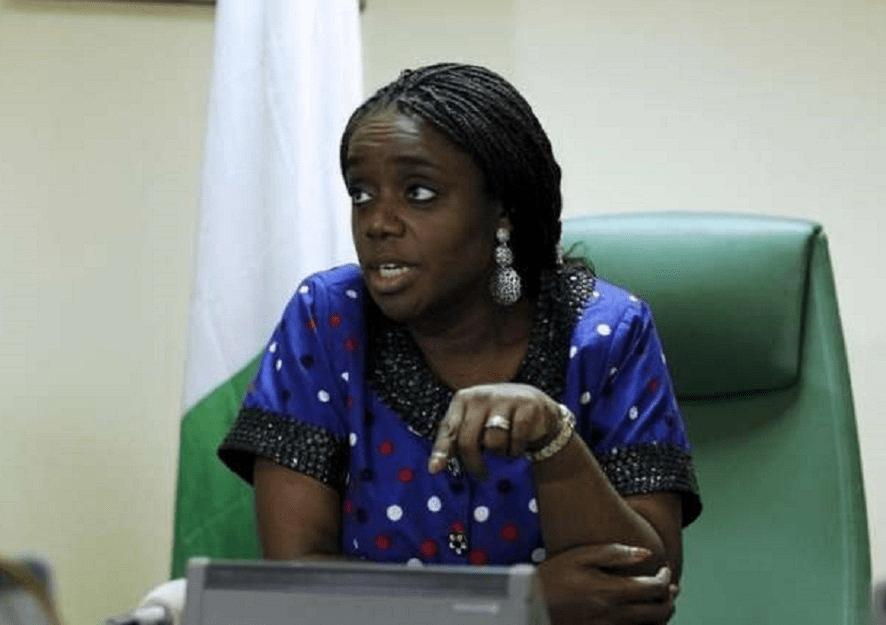
Nigeria to use recovered $322 million stolen by ex-president for social projects

Nigerian finance minister Kemi Adeosun

Nigeria has received a sum of $322 million stolen by former president Sani Abacha after signing a memorandum of understanding with Switzerland last month.

The money which has been deposited in a special account in the central bank has been earmarked for the government’s social programme National Social Safety Nets Project, announced the Minister of Finance Kemi Adeosun.

The minister was speaking at a joint press briefing with the central bank governor following a meeting with the International Monetary Fund (IMF) and the World Bank.

The National Social Safety Nets Project is designed to transfer wealth to poor and vulnerable households in the country through job creation, school feeding programme and other social intervention mechanisms launched by the government.

The project is supervised by the World Bank which has committed $500 million towards its implementation. The entire cost of the project is $1.8 billion.

The recovered money forms part of President Buhari’s campaign promise to reclaim all stolen funds and deposit them in the national treasury.

This article by Ismail Akwei was first published on face2faceafrica.com
South African convict studies law in prison and frees innocent wife jailed for murder

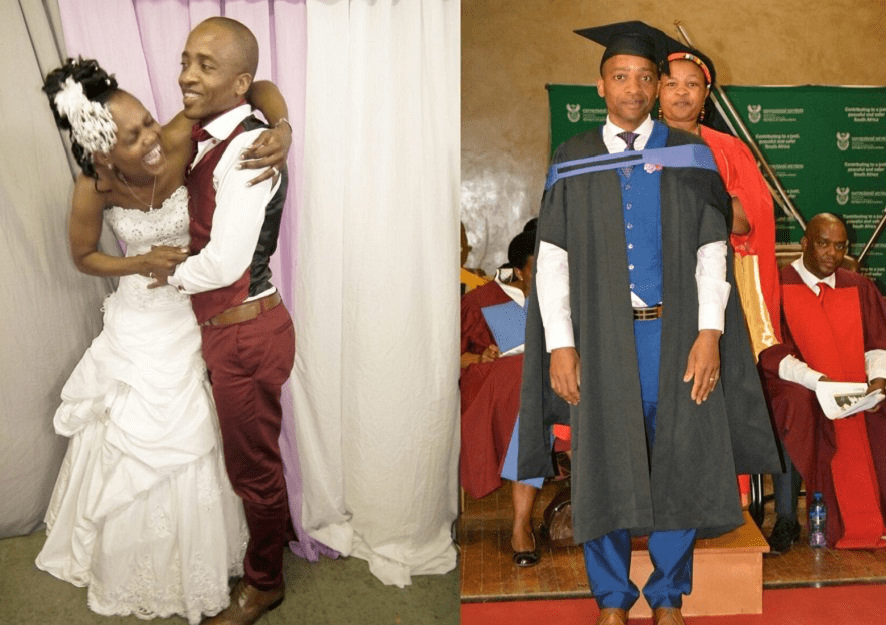
South African convict who studied law in prison and freed innocent wife jailed for murder — Photo: SABC news reporter Maageketla Mohlabe

Unlike a typical tale of love, a South African mother who was sentenced to life imprisonment for murdering her neighbour’s husband fell in love with a convict who studied law in the same prison and successfully fought for her freedom.

This is the story of Antoinette Chauke who was jailed in 2009 after a 4-year trial and lost her appeal in 2012 together with her neighbour who was arrested while visiting Chauke’s home, reports South African state broadcaster SABC.

“It was bad … It was a very painful thing to go through especially as a mother that is breastfeeding to see your child in the window and you can’t touch them,” she said.

Chauke, who was then a widow after her husband was killed only four months ago, was accused of aiding her neighbour to kill her husband who had died unknowingly to them at the time of the visit.

“They said that I told her to kill her husband because I was a widow … When this happened, it was the moment when I thought it was over with me. I had to tell my child that I am in bible school,” she told SABC’s Maageketla Mohlabe.

She spent seven years in the Johannesburg Maximum Security Prison before meeting Dennis Chauke, another prisoner serving 14 years for robbery. Antoinette and Denis Chauke got married in prison in 2014 while he was studying for a bachelor’s degree in Commercial Law to prove her innocence.

“I requested for transcripts and my intuition was confirmed that she was innocent … I proposed that we had to look for a lawyer,” he said.

Antoinette Chauke was acquitted in 2016 with her neighbour the same year her husband graduated while awaiting parole in 2018.

Chauke also obtained a Bachelor’s Degree in Theological Ethics while in prison and she’s currently running a rehabilitation programme for youth offenders with her husband who was released on parole earlier this year.

Their story is one of many innocent people behind bars who have no support to prove their case. Antoinette Chauke could be suing for wrongful conviction, says SABC.

Watch the SABC report below.

This article by Ismail Akwei was first published on face2faceafrica.com
PhD behind bars: Nigeria’s Kirikiri Prison gets its first candidates

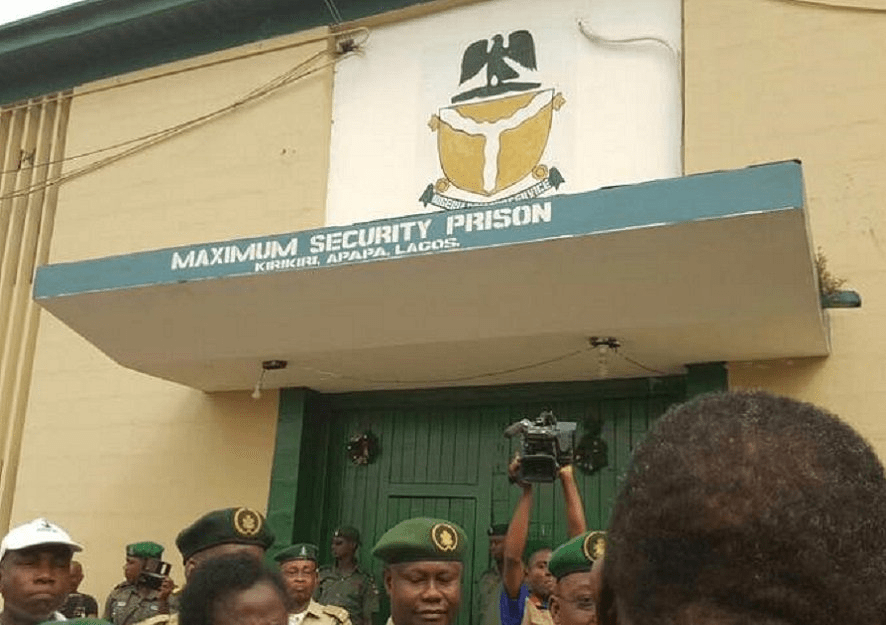
Kirikiri Maximum Security Prison — Photo: rccgnews.com

Two inmates of Nigeria’s Kirikiri Maximum Security Prison in Lagos have enrolled for doctorate degrees at the National Open University (NOUN), which is Nigeria’s foremost Open and Distance Learning institution.

Tunwashe Kabiru and Oladipupo Moshood successfully enrolled for Doctorate Degrees in Business Administration and Peace and Conflict Resolution reports the News Agency of Nigeria (NAN).

The two doctorate candidates were announced during a ceremony at the prison to present some inmates including the two with their master’s degrees.

The Comptroller General of the Nigeria Prisons Service (NPS), Ja’afaru Ahmed said at the ceremony that “420 inmates were currently studying in NOUN and 10 are in 400 level.”

He added that the program was created to help reform the prisoners while creating an enabling environment for them through education.

NOUN Vice-Chancellor, Professor Abdalla Adamu who presented the inmates with their degrees said the courses taken by prisoners are free from first degree to Ph.D. levels.

“We focus our attention on making prisoner scholars; all the courses taken by inmates are free, from first degree to Ph.D. level. Hope should never be lost even when you are a prisoner, it is when you are educated that you will get your absolute freedom,” he is quoted by NAN.

He appealed to the Nigeria Prisons Service to allow them to provide necessary equipment for inmates at its prisons study centers.

The prison got its first master’s degree awardee in 2015 and since then, many inmates have achieved that feat.

This article by Ismail Akwei was first published on face2faceafrica.com