U.S. gifts two military aircraft to Cameroon while the country tortures its citizens

Cameroon has received two military aircraft and armoured vehicles from the United States at a time when the West African country has been accused of torturing its citizens in the North West and South West who are fighting for independence.

The U.S. government delivered the second of the two C208 aircraft last Friday to assist in the fight against Boko Haram militants. Meanwhile, the government has labelled its separatist citizens as terrorists and is fighting them with full military force.

The aircraft are specialized in intelligence, surveillance and reconnaissance as each is fitted with inbuilt cameras that could capture images from the ground for up to 10 kilometres away, reports VOA.

The equipment also comes with America-trained Cameroonian pilots and it will be maintained in the next two years by the U.S., says Cameroon defence minister Joseph Beti Assomo who boarded the plane with U.S. Ambassador to Cameroon Peter Henry Barlerin.

However, the United States’s benefit in this deal is to have the presence of U.S. Marines in the country.

The donations go against the citizens of Cameroon and journalists who have been jailed and tortured for opposing the government and demanding for independence in the English-speaking North West region.

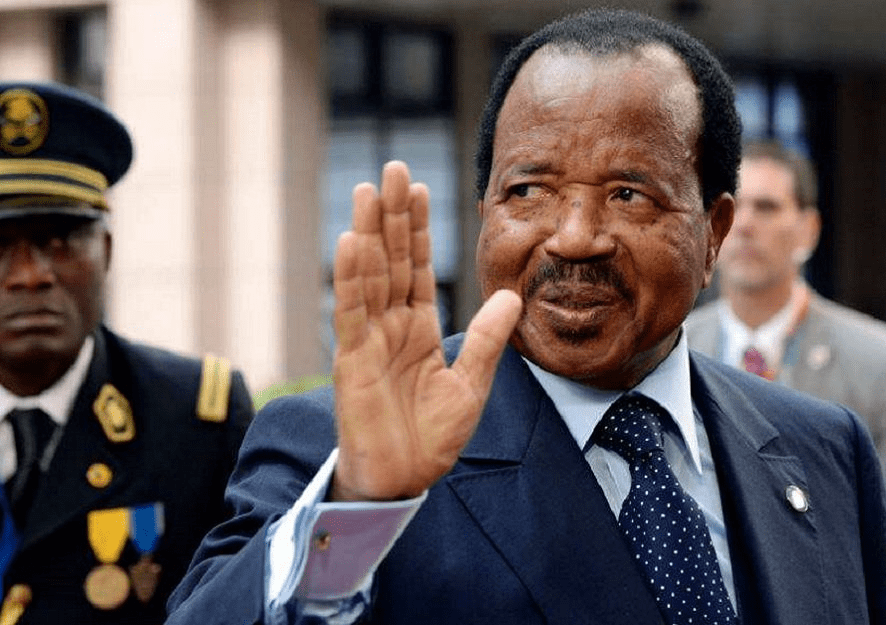
Cameroonian soldiers were ordered by the president, Paul Biya, to invade the anglophone regions and quell anti-government protests that were fuelled in 2016 by the level of marginalization in the Anglophone region and the use of excessive force by the military.

Appeals made by human rights bodies and the United Nations did not stop the torture and arson perpetrated by the Cameroon military, an act which has been denied by the government on several occasions despite video footages proving otherwise.

A recent video shows Cameroonian soldiers torturing a man believed to be a member of the separatist group in the North West region. He was held down on his belly under a chair while tied up and being struck with a machete under his feet as the soldiers mocked his alliance with the secessionist group.

There are several other videos showing soldiers torching houses among other crimes against humanity including the arrest of women, restriction of movement, and shutdown of internet connection to stifle dissent.

International bodies and agencies including the European Union have called on Cameroon to rather engage in dialogue with separatists to solve the root cause of the problem.

The UNHCR estimates that over 40,000 Cameroonians have fled as refugees to Nigeria to escape the government crackdown on the separatists.

This article by Ismail Akwei was first published on face2faceafrica.com
These 11 countries have failed to sign Africa’s iconic free trade agreement

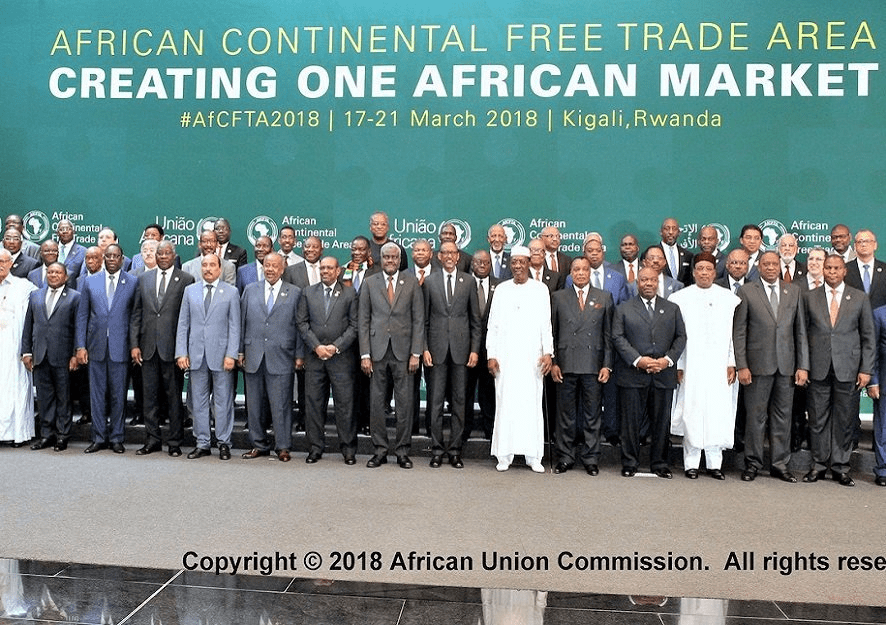
African leaders at the 10th Extraordinary Session of the Assembly on AfCFTA in Kigali, Rwanda in March, 2018

It was all pomp and pageantry in March 2018, when 44 African countries signed a vital continental free trade agreement in the Rwandan capital Kigali to enable the long-awaited economic integration and movement of goods and persons across member states.

This agreement was first introduced in January 2012 during the 18th Ordinary Session of the Assembly of Heads of State and Government of the African Union, held in Addis Ababa, Ethiopia. The member states adopted the decision to establish the Continental Free Trade Area by 2017.

It was finally signed by the 44 countries out of the 55 AU member states in 2018 after two years of negotiation.

The agreement is meant to create a single continental market for goods and services; enhance free movement of business persons and investments; enhance competitiveness at the industry and enterprise level through exploiting opportunities for full-scale production.

It will also bring together the 1.2 billion African population with a combined gross domestic product (GDP) of more than $2 trillion with the commitments of the countries to remove tariffs on 90 percent of goods, with 10 percent of “sensitive items” to be phased in later.

However, 11 countries failed to sign the agreement for diverse reasons. The countries are Nigeria, South Africa, Benin, Botswana, Burundi, Eritrea, Guinea-Bissau, Lesotho, Namibia, Sierra Leone and Zambia.

They are on the fence due to reasons including pressures from business leaders and labour unions who believe the agreement could affect their economies.

Meanwhile, Ghana and Kenya made history in May as the first countries out of the 44 states to ratify the Continental Free Trade Area agreement. They submitted their instruments of ratification ahead of the 180 days deadline for the landmark agreement to come into force – with or without the 11 countries.

This article by Ismail Akwei was first published on face2faceafrica.com
Ghana and Kenya lead the way in signing Africa’s landmark free trade agreement

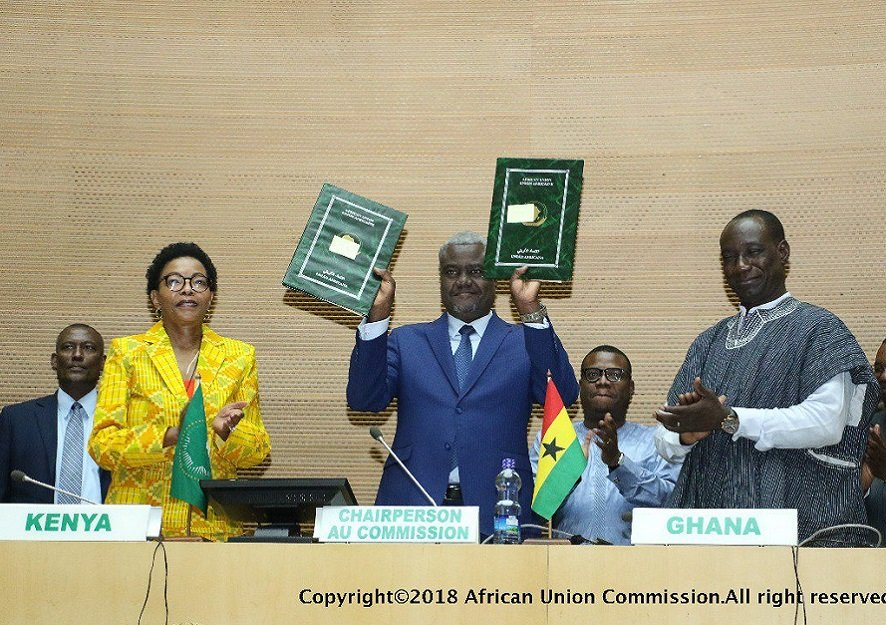
AU Chair Moussa Faki Mahamat receiving the instruments of ratification from Ghana and Kenya

Ghana and Kenya have made history as the first countries out of the 44 states to ratify the Continental Free Trade Area agreement which was signed in the Rwandan capital Kigali in March.

The two countries submitted their instruments of ratification to the African Union on Thursday ahead of the 180 days deadline for the landmark agreement to come into force.

“I hope this will galvanize other countries who have signed the CFTA to ratify it by 2019,” says the AU Chairperson Moussa Faki Mahamat who called on the other 42 countries who signed the agreement to ratify it.

11 countries including Nigeria and South Africa have not yet signed the agreement due to objections from business leaders and labour unions which they promised to settle before they sign on.

All 55 member states of the African Union are expected to sign the agreement which will bring together 1.2 billion people with a combined gross domestic product (GDP) of more than $2 trillion.

The draft agreement which was formulated after two years of negotiations commits countries to remove tariffs on 90 percent of goods, with 10 percent of “sensitive items” to be phased in later.

This article by Ismail Akwei was first published on face2faceafrica.com
Kenya to become fifth black African country with satellite in space

Kenya’s first satellite to be deployed into orbit on May 11, 2018.

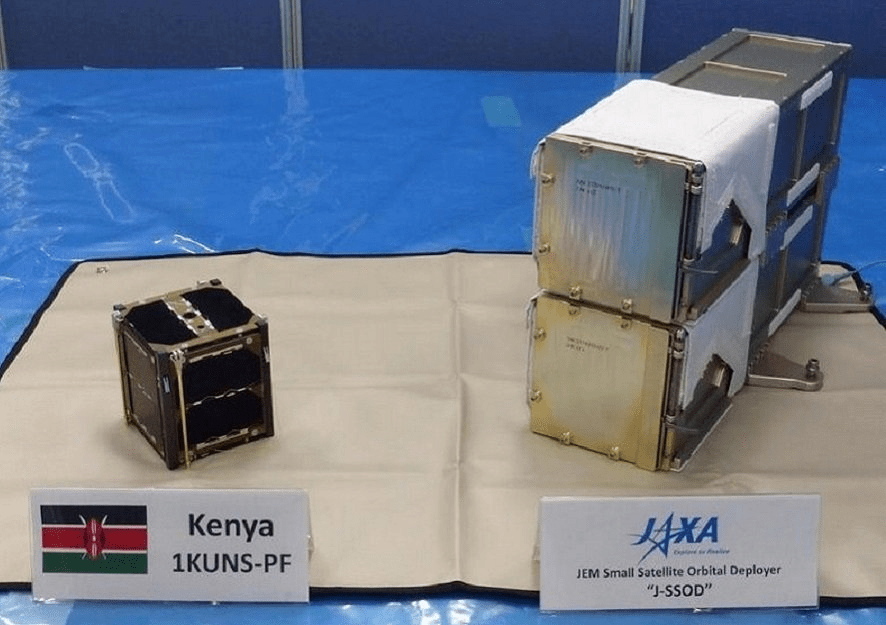
Kenya will launch its first locally produced satellite into orbit on May 11, 2018, making the East African country the fifth in sub-Saharan Africa to have a satellite in space.

The 10-centimetre CubeSat named the First Kenya University Nano-Satellite – Precursor Flight (1KUNS-PF) was developed by students and researchers of the University of Nairobi in partnership with Japanese Space Agency (JAXA) under the KiboCube programme run by the United Nations Office for Outer Space Affairs (UNOOSA).

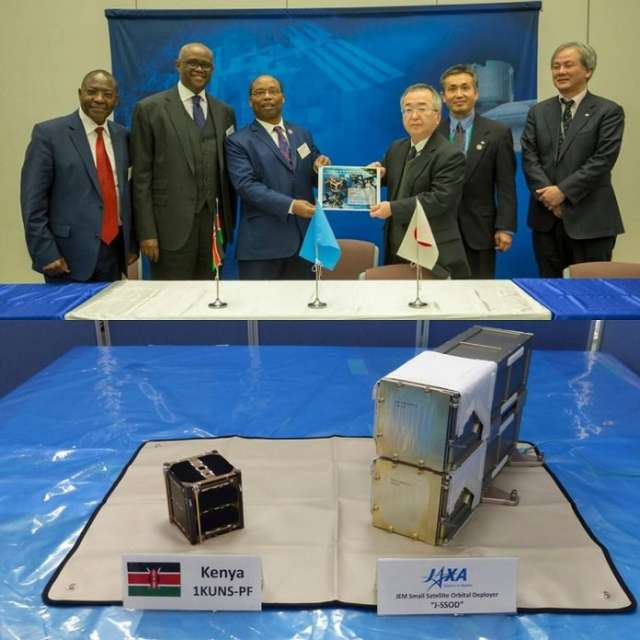
Kenyan and Japanese authorities during the handing over of the satellite for deployment.

The nano-satellite was handed over to the JAXA Tsukuba Space Center in January and it will be deployed on Friday from the Kibo Space Centre, Japan’s own International Space Station (ISS) which is in the experimental stage.

This is the first CubeSat to be deployed from the Kibo Space Centre and it will be done in the presence of a delegation of government officials and university researchers led by Education Cabinet Secretary Amina Mohamed, the University stated.

As of 2018, only nine countries and one inter-governmental organisation in the world have sent objects including satellites into orbit with their own launch vehicles. They include the European Space Agency, Russia, China and the United States.

No African country has launched satellites into space using its own launch vehicles. However, only four countries in Sub-Saharan Africa have satellites orbiting the earth. Three African satellites were launched into orbit in 2017 alone.

Here are the four other sub-Saharan African countries with satellites in space.

South Africa

South Africa has launched a number of satellites into space including its first biggest private satellite in 2017. The country launched its first satellite in 1999.

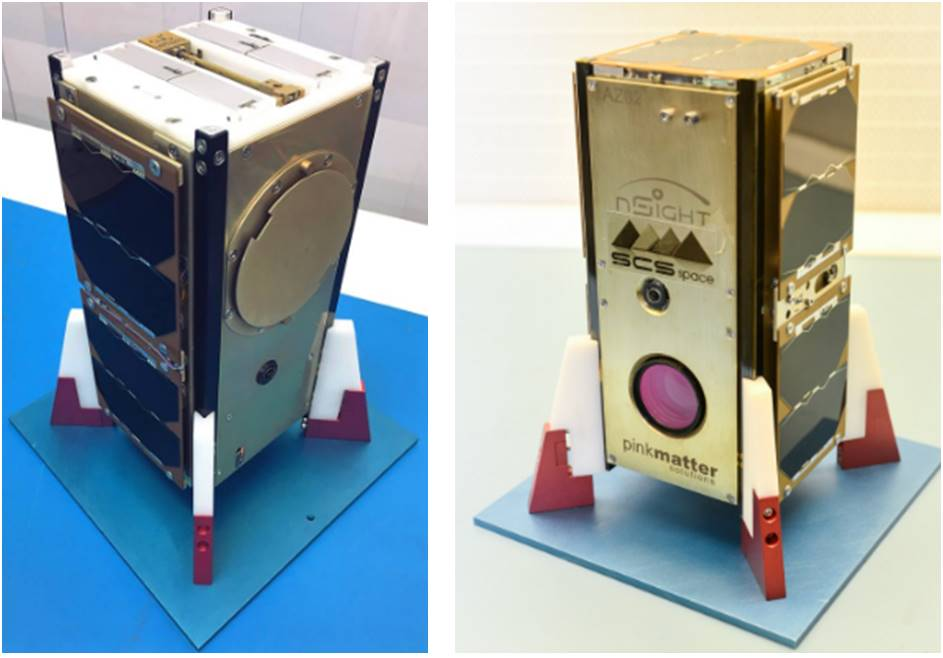
The most recent nanosatellite called the nSight1 was launched to capture images with its remote sensing camera. Locally built and designed in South Africa, nSight1 is expected to study the largely unexplored lower thermosphere and send information back to earth.

Ghana

Ghana launched its first satellite called GhanaSat1 into space last year. It was developed by university students who took two years to design, assemble and test as part of a Japanese space project.

It was launched from the international space station. It has high and low-resolution cameras to take pictures and provide data of the coastal regions of the country.

Its main mission is to investigate radiation effects on satellite systems in space which are degraded due to the harsh space environment.

Nigeria

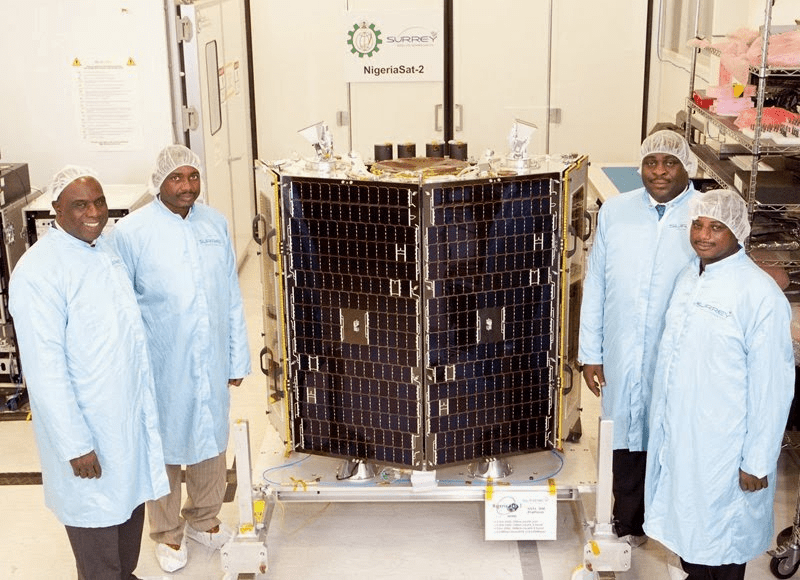
Nigeria launched two earth observation satellites into space in 2011 for the monitoring of its weather. The NigeriaSat-2 and NigeriaSat-X satellites were launched into orbit aboard a Russian Dnepr rocket from Yasny, southern Russia.

Angola

Late last year, Angola joined the three African countries to launch its first national satellite into space after suffering a brief loss of contact two days after take-off from the Baikonur launch facility in Kazakhstan.

The AngoSat-1 communications satellite cost $300 million and was built in partnership with Russia to aid in improving telecommunication services, telemedicine and other projects. The development of the satellite started since 2009 and it’s expected to have a working life of about 15 years.

This article by Ismail Akwei was first published on face2faceafrica.com
African homosexual couples come out strong online with trending hashtag

Homosexual couples flaunting their partners using the hashtag

It is still a taboo topic but homosexuality is gaining grounds in Africa where most countries are highly intolerant of homosexuality and have high-security risks for same-sex couples.

South Africa is the only country on the continent where same-sex marriage is allowed. Besides Guinea-Bissau, Equatorial Guinea, Lesotho, Mozambique and Rwanda where it is legal without guaranteed protections, homosexuality is illegal in the rest of Africa.

Despite the risks, some African homosexual couples are trending on Twitter using the hashtag #FineQueerCouples. Most of the LGBTI couples are from South Africa and are posting pictures of themselves with intimate captions expressing their love for their partners.

The hashtag has turned into a movement for some LGBTI rights activists who want homosexuality to be legalized in Africa.

However, those opposing the legalisation of homosexuality were quick to condemn and express their displeasure with the hashtag in the midst of the excitement.

It is evident that sexual attraction or relationship between members of the same sex or gender is evolving from being a hidden practice to a symbol of pride.

Here are some posts by same-sex couples on Twitter:

This article by Ismail Akwei was first published on face2faceafrica.com