Homosexuality continues to be a taboo subject in Africa and other black communities around the world. Sexual attraction or relationship between members of the same sex or gender has evolved from being a hidden practice to a symbol of pride.
Out of the 195 countries in the world, 72 of them are no-go areas for same-sex couples as they risk threats, criminal charges, prison sentences, and even the death penalty.
A world map released by Australian insurance company Travel Insurance Direct identified countries and territories according to how tolerant national attitudes were towards LBGTI couples.
The map is shaded from red to purple which respectively indicates countries with illegal or intolerant attitudes towards homosexuality and countries where same-sex marriage has been legalized.
Most countries in Africa are highly intolerant of homosexuality and have high-security risks for same-sex couples.
Homosexuality is illegal in these countries:
Algeria Libya Egypt Sudan Ethiopia Ghana Togo Nigeria Morocco Somalia Kenya Tanzania Mauritania Tunisia Guinea Sierra Leone The Gambia Liberia Cameroon Chad Eritrea South Sudan Uganda Malawi Zambia Angola Namibia Botswana Swaziland Zimbabwe
In these countries, there is no law against homosexuality but there is high intolerance:
Mali Niger Burkina Faso Côte d’Ivoire Benin Gabon Congo DR Congo The central African Republic Madagascar Djibouti
In these countries homosexuality is legal but there are no other protections:
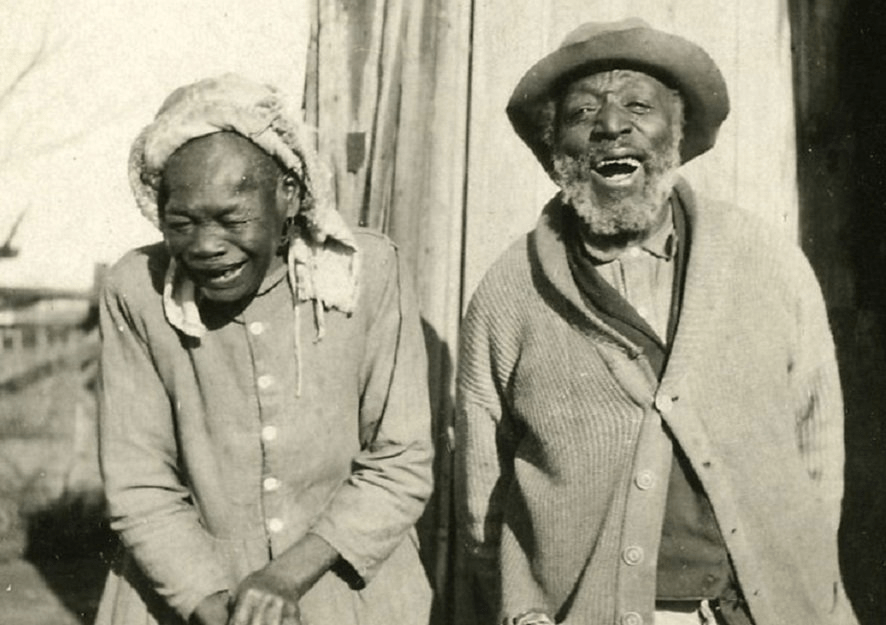
The Emancipation Proclamation of 1863 which changed the status of over 3.5 million enslaved African Americans in the South from slave to free, did not emancipate some hundreds who were slaves through to the 1960s.
This was revealed by historian and genealogist Antoinette Harrell who unearthed shocking stories of slaves in Southern states like Louisiana, Mississippi, Arkansas, and Florida over hundred years after the Emancipation Proclamation.
She told Justin Fornal that her 1994 journey of historical truth revealed the stories of many 20th century slaves who came forth in New Orleans when they heard that she was using genealogy to connect the dots of a lost history.
She said a woman introduced her to about 20 people who had worked on the Waterford Plantation in St. Charles Parish, Louisiana, as slaves until the 1960s.
“One way or another, they had become indebted to the plantation’s owner and were not allowed to leave the property … At the end of the harvest, when they tried to settle up with the owner, they were always told they didn’t make it into the black and to try again next year. Every passing year, the workers fell deeper and deeper in debt,” she said.
Many of them were afraid to share their stories as they believed they will be sent back to the plantation which isn’t even in operation. “People are afraid to share their stories, because in the South so many of the same white families who owned these plantations are still running local government and big businesses. They still hold the power.
“So the poor and disenfranchised really don’t have anywhere to share these injustices without fearing major repercussions. To most folks, it just isn’t worth the risk. So, sadly, most situations of this sort go unreported,” she told Justin Fornal and was published in art and culture magazine website Vice.
One of the 20th-century slaves was Mae Louise Walls Miller and she didn’t get her freedom until 1963. Her father, Cain Wall, lost his land by signing a contract he couldn’t read that enslaved his entire family.
They were not permitted to leave the land and the owners subjected them to beatings and rape. Mae and her mother were most times raped simultaneously alongside each other by white men when they go to the main house to work.
According to Harrell’s narration, Mae and her family did not know what was happening outside the land as they had no TV. Her father tried to flee the property, but was caught by other landowners who returned him to the farm where he was brutally beaten in front of his family.
When Harrell met Mae, her father was alive and he was 107 years old with a sharp memory. He beat Mae when she was 14 for attempting to flee the farm, an action whose consequence was beating of the entire family.
Mae, covered in blood, still run into the woods in the evening and hid in the bushes where a white family took her in and rescued the rest of her family later that night.
Harrell said the family suffered from PTSD as a result of their experiences. Mae died in 2014.
“I told you my story because I have no fear in my heart. What can any living person do to me? There is nothing that can be done to me that hasn’t already been done,” Mae told Harrell when they visited the property she and her family were held.
Antoinette Harrell believes “there are still African families who are tied to Southern farms in the most antebellum sense of speaking. If we don’t investigate and bring to light how slavery quietly continued, it could happen again.”
This article by Ismail Akwei was first published on face2faceafrica.com
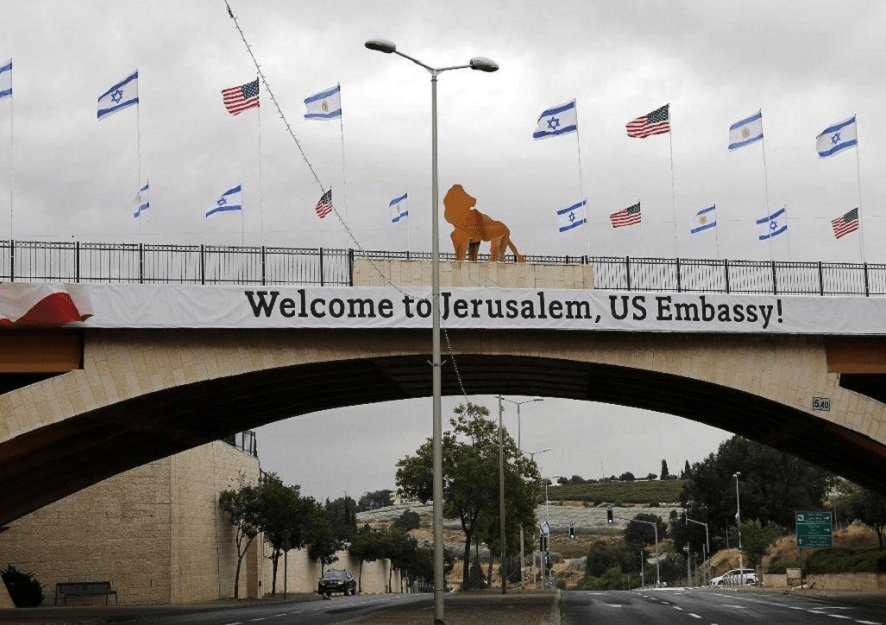
The world – except the United States and its allies – is mourning the death of at least 60 Palestinians killed by the Israeli military at the Gaza border on Monday as they demonstrated against the opening of the new United States Embassy in Jerusalem.
The opening of the embassy follows U.S. President Donald Trump’s December 2017 recognition of Jerusalem as Israel’s capital which contravened the age-long peace agreement between Israel and Palestine.
The Palestinian state, which is fighting for independence and sovereignty, recognizes East Jerusalem as its capital while Israel, until yesterday, had Tel Aviv as its capital.
The opening of the new U.S. embassy culminated into a celebration for the Israelis while Palestinian demonstrators were being killed on the other side of the border wall with thousands left injured.
The crackdown on protesters resulted in Turkey’s withdrawal of its ambassadors from Israel and the U.S., followed by South Africa which also withdrew its ambassador from Israel.
The African Union also released a statement condemning the use of force by the Israeli army on the Palestinian demonstrators and the relocation of the United States Embassy to Jerusalem.
“The relocation of the United States Embassy to Jerusalem can only further heighten tensions in the region and complicate the search for a lasting solution to the Israeli-Palestinian conflict, as illustrated by today’s incidents,” the African Union Commission Chairperson Moussa Faki Mahamat said.
He also reiterated the AU’s solidarity with the Palestinian people “in their legitimate quest for an independent and sovereign State with East Jerusalem as its capital” and “calls for renewed and genuine international efforts to find a just and lasting solution to the conflict”.
The @AfricanUnion mourns the deaths of 52 Palestinians murdered on the #Gaza Strip +many more wounded.We strongly condemn this disproportionate use of force against unarmed civilians. Read the Dec17 statement on US decision to move its embassy to Jerusalem https://t.co/h39rsKbpXl
— Moussa Faki Mahamat (@AUC_MoussaFaki) May 14, 2018
This sentiment was equally shared by countries including China, Russia, the UK, France, Germany, Japan, Turkey, Saudi Arabia, Egypt, Iran, Italy, Indonesia, Malaysia, Brazil, South Africa, The Vatican, and the Palestinian Authority. They boycotted the ceremony.
However, envoys of some 32 countries including 12 from Africa responded positively to the invitation of the United States to join in the opening of the embassy in Jerusalem.
Twenty-one countries attended the event including seven African countries despite the African Union’s solidarity with the Palestinian people and its authority. The Palestinian Authority has observer status at the AU, while Israel hasn’t been granted one since 2002.
The African countries that joined the U.S. in opening the embassy are Cameroon, Ethiopia, Kenya, Nigeria, Rwanda, Tanzania, and Zambia.
Envoys from these countries toasted to the recognition of Jerusalem as the capital of Israel when the conflict has not been resolved and people are being killed for demanding sovereignty.
Interestingly, none of these countries supported the U.S. during a vote in December last year to back the recognition of Jerusalem as the capital of Israel. Rwanda and Cameroon abstained from voting. Only Togo backed the U.S. during the UN vote but was not on the list of envoys at the opening of the embassy.
The presence of these seven African countries at the opening of the embassy could be a result of the threat issued by the United States to withhold aid to countries that didn’t back their quest.
Besides Eritrea, Seychelles, and Mauritius, all African countries received aid from the United States last year. Ethiopia is the highest recipient of U.S. aid followed by South Sudan and then Nigeria.
This is how much the seven countries received from the United States in 2017: Cameroon ($74 million), Ethiopia ($921 million), Kenya ($642 million), Nigeria ($669 million), Rwanda ($108 million), Tanzania ($414 million) and Zambia ($276 million).
These are the countries Trump reportedly called “shithole” in January. They are helping “Make America Great Again” as innocent people are being killed in Gaza.
This article by Ismail Akwei was first published on face2faceafrica.com
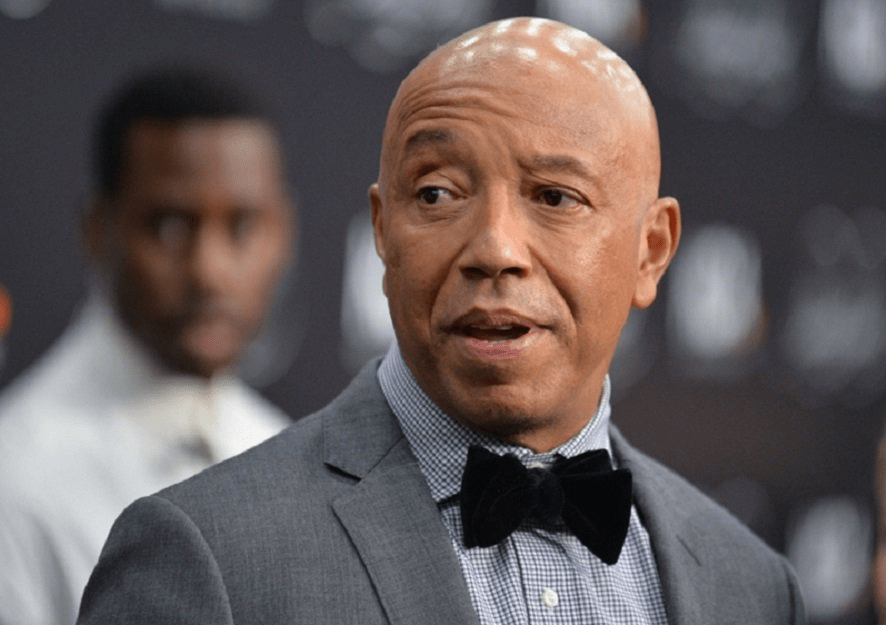
Hip-hop, fashion and entertainment mogul Russell Simmons
As the #MeToo and #TimesUp movements against abuse of women are at their peak and achieving results, acts of sexual misconduct are now not easily forgiven by both the law and the people who make up institutions.
The hardest hit celebrities in recent times are comedian and actor Bill Cosby and R&B singer R. Kelly who have both been in the spotlight for the wrong reasons.
Last month, a jury found 80-year-old Cosby guilty of three counts of sexual assault after he was accused of drugging and sexually assaulting former basketball player Andrea Constand in his home in 2004. He faces up to 10 years in prison for each count and he’s likely to serve the jail term concurrently.
R. Kelly, who was acquitted in 2008 on child pornography charges, is facing multiple allegations of sexual abuse, including from women who accused him of coercion and holding them in a sex “cult.” He has not yet been charged, however, his music is facing a downturn.
The hashtag #MuteRKelly, launched to hold him accountable, affected his finances. The worst occurred when his music was removed from Spotify, making him the first artist to be banned as part of a new policy against “hateful content and conduct.”
Besides these two celebrities who are facing the wrath of justice, many others have been accused of sexual misconduct but are having a field day with no real effect on their careers.
Here are some five celebrities who are luckier than R. Kelly and Bill Cosby.
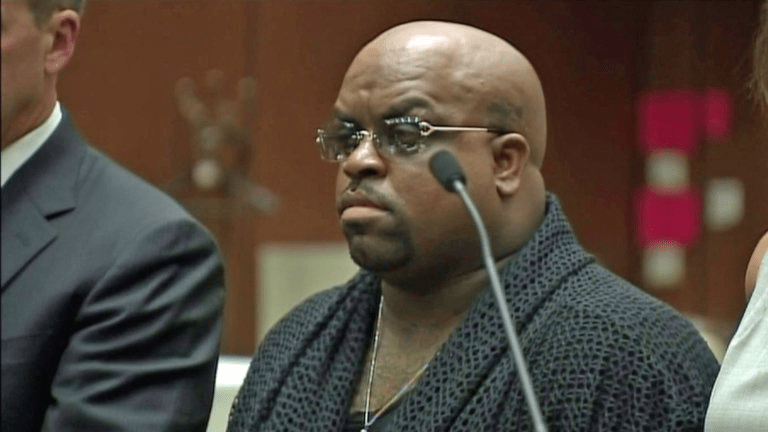
Ceelo Green
Atlanta-based singer CeeLo Green was accused in 2013 of sexually assaulting a woman by allegedly slipping Ecstasy in her drink.
Sexual assault charges levelled against him were dropped due to insufficient evidence but he was charged with the felony of ecstasy possession.
The woman involved had claimed that she and CeeLo went out for dinner and the next thing she knew was she was naked in his bed.
Seal
In early 2018, singer Seal was accused of kissing and groping actress Tracey Birdsall in the fall of 2016.
Seal adamantly denied the allegations made against him by his former neighbour who said the alleged incident happened when she went over to Seal’s home to retrieve a salad spinner she had lent him.
She filed a report at the Los Angeles County Sheriff’s Department but the allegation died down over the months.
Nelly
Rapper Nelly was arrested in 2017 under suspicion of second-degree rape. The alleged sexual assault took place on his tour bus in Auburn, Washington following his performance at the White River Amphitheatre.
He vehemently denied the allegation and described it as false and defamatory. The criminal case against the rapper collapsed when the accuser refused to cooperate and wanted to stop the investigation.
Two months after the incident, two more women came forward with anonymous accusations of sexual assault against the rapper. One of the women said after his show at the Cliffs Pavilion in Essex, she asked him to take a photo and he gripped her tightly with his arm and brought her and her friends to his dressing room.
Once in the dressing room, Nelly escorted her into a separate room and began to masturbate in front of her. According to her account, Nelly also tried to take her top off and force her to perform oral sex. As she ran away, she claims he called her a “cunt”. Investigations are ongoing.
Kobe Bryant
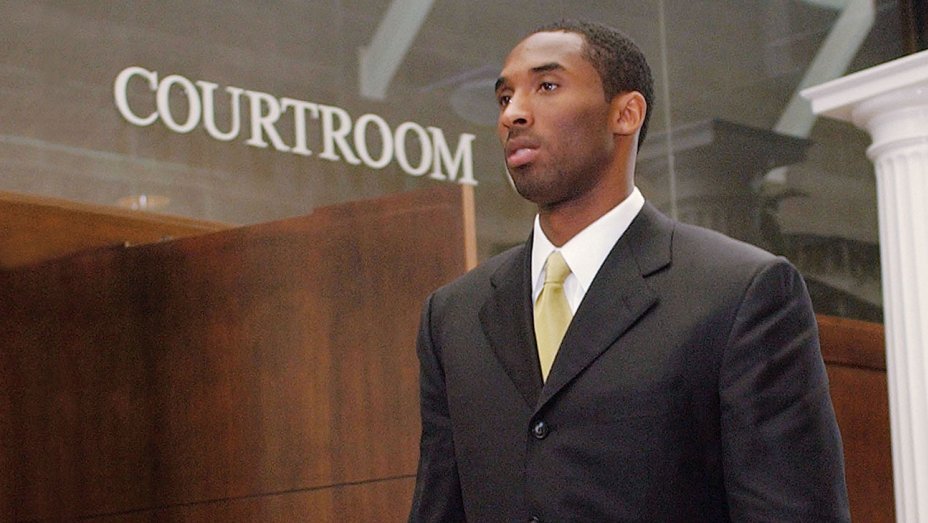
Basketball star Kobe Bryant was accused in 2003 of rape in a hotel room near Vail on the night of June 30, 2003. The 19-year-old accuser was a front-desk clerk at the hotel who went to his room. She said they kissed and flirted and that he then became violent and raped her.
Bryant said she flirted with him and it led to consensual sex. The case was dismissed in 2004 after prosecutors said the woman who had accused Bryant of sexual assault was unwilling to testify.
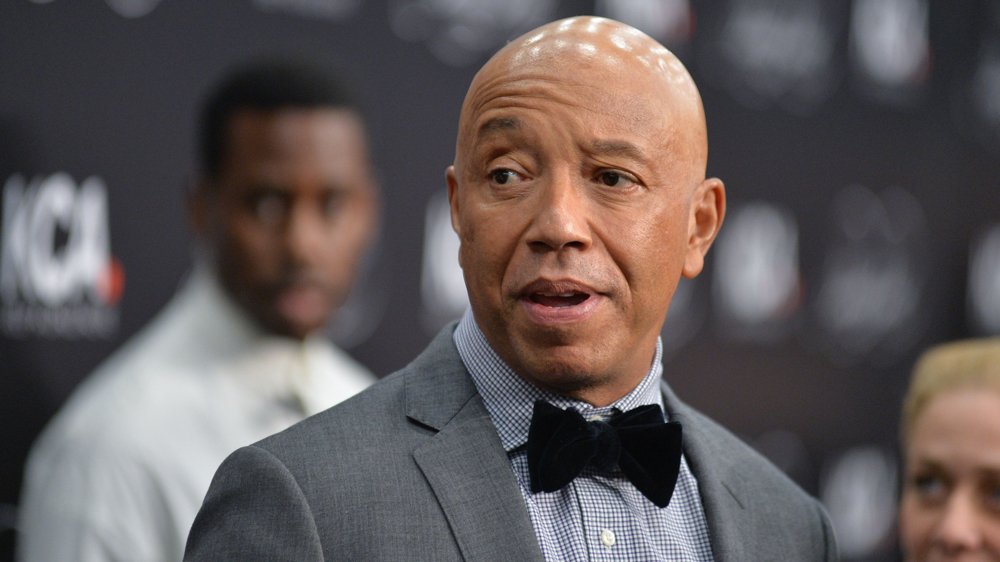
Hip-hop, fashion, and entertainment mogul Russell Simmons was accused by model Keri Claussen Khalighi of coercing her to perform a sex act and later penetrating her without her consent in his New York apartment in 1991. He disputed her account, saying the relationship was consensual.
From that time to 2018, over half a dozen women have accused him of sexual misconduct, and six of them accused him of rape. The latest is 37-year-old filmmaker Jennifer Jarosik who accused him in January 2018 of rape and sexual assault.
She filed a lawsuit in California’s Central District Court, seeking $5 million in damages. Jarosik alleged that Simmons raped her in August 2016 after she was invited to his house in Los Angeles.
When Jarosik arrived, Simmons allegedly asked her to have sex with him, to which she allegedly said “no.”
“Simmons got aggressive and pushed Plaintiff [Jarosik] on his bed. Plaintiff tried to force Defendant to stay away from her and in doing so, Defendant knocked Plaintiff off his bed, and Plaintiff hit her head and then Defendant pounced on her while she was still in shock and fear, and proceeded to rape her,” says the lawsuit.
Simmons stated that he has “never had a sexual encounter that was not consensual or lawful — ever.”
This article by Ismail Akwei was first published on face2faceafrica.com
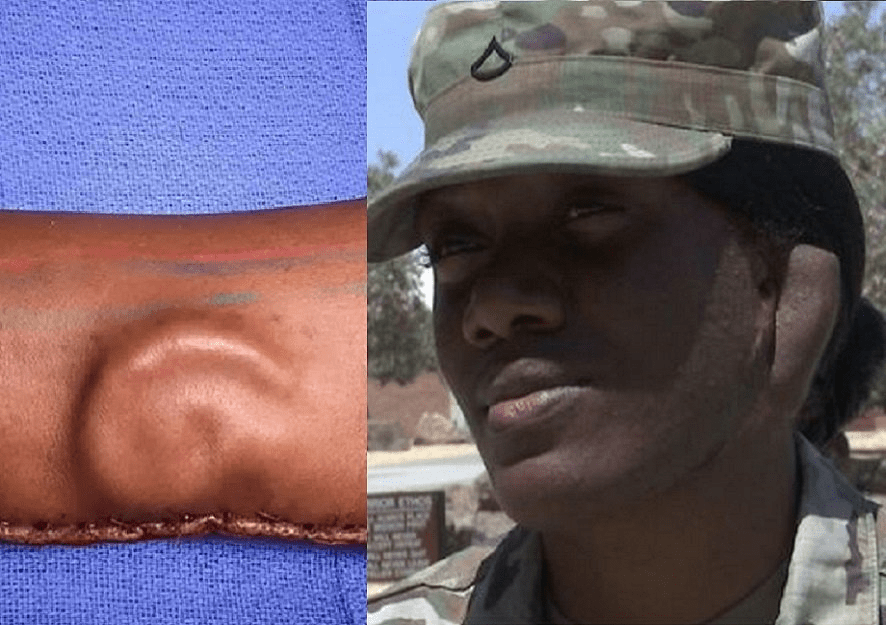
Private Shamika Burrage and her new ear that grew in her arm
A21-year-old soldier at the William Beaumont Army Medical Center in El Paso, Texas, has benefitted from a cutting-edge technique which restored her left ear that was totally lost after a single-vehicle accident in 2016.
Doctors at the hospital took cartilage from the Private Shamika Burrage’s ribs to craft a new ear and then inserted it under the skin of the private’s forearm so that it could grow and form new arteries, veins and even nerves, reports Newsweek.
“The whole goal is by the time she’s done with all this, it looks good, it’s sensate, and in five years if somebody doesn’t know her they won’t notice,” Lieutenant Colonel Owen Johnson III, chief of plastic and reconstructive surgery at WBAMC, said in a statement.
The doctors attached the new ear and opened up her damaged ear canal to enable her to regain hearing. This surgical procedure is the first of its kind in the military. Private Burrage has two more surgeries before the reconstruction is complete.
“I didn’t want to do [the reconstruction] but gave it some thought and came to the conclusion that it could be a good thing. I was going to go with the prosthetic, to avoid more scarring, but I wanted a real ear,” she said after the surgery.
Private Burrage was referred to the hospital during her rehabilitation following the accident that occurred after her tire blew out causing her vehicle to veer off the road and somersault multiple times.
“It’s been a long process for everything, but I’m back,” said Private Burrage from Mississippi who was filled with optimism.
This article by Ismail Akwei was first published on face2faceafrica.com




 Ismail Akwei