UN calls on all nations to support Africa-led solutions to African problems

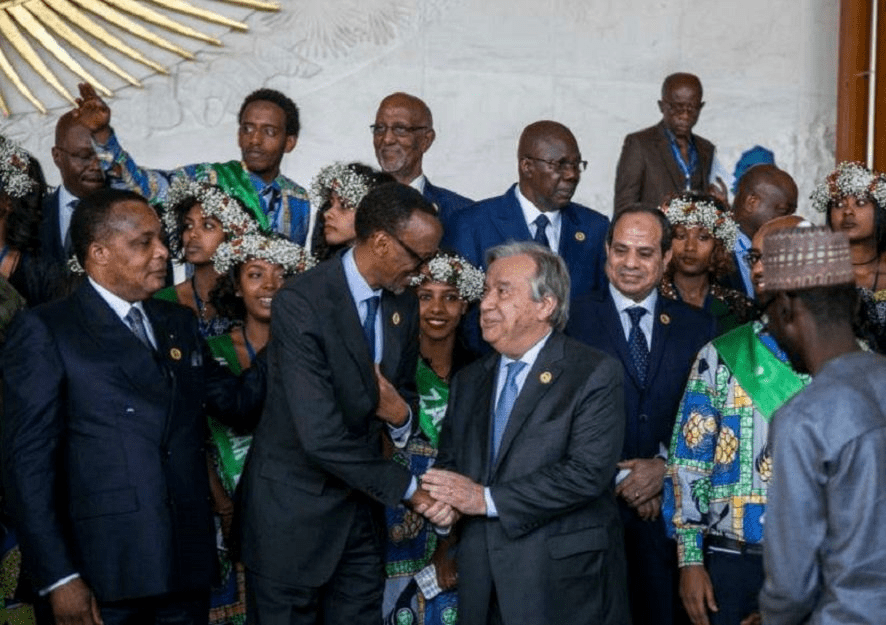
The United Nations has joined in the celebration of Africa Day on May 25, 2018, which marks the 55th anniversary of the founding of the African Union.

Secretary-General António Guterres called on all countries of the world to support Africa-led solutions to African problems for a peaceful and prosperous Africa.

“Africa is increasingly driving its own future. I believe in Africa-led solutions to African problems. The United Nations is fully committed to supporting Africa’s efforts for social and economic progress on the continent,” he tweeted on Friday.

Guterres also said in a statement that: “Africa is increasingly driving its own future … On this Africa Day, I urge all nations to support a peaceful, prosperous Africa. What is good for Africa is good for the world.”

He also acknowledged Africa’s progress in entrepreneurship, education and decline in child mortality. “More women are serving in parliaments, and economic growth in several countries is greater than in other parts of the world,” he said.

He called for the promotion of peace and sustainable development which are a part of the guiding vision for Africa’s development in the African Union’s Agenda 2063.

“To promote peace, the United Nations will continue to support prevention. We must collectively strengthen our ability to detect and defuse crises before they escalate and sharpen our tools for addressing their causes.

“The United Nations will also work to support the African Union’s commitment to “silence the guns” by 2020 and promote the indispensable role of women and youth in conflict prevention and peacebuilding,” the statement added.

Africa Day is being observed by many countries as a holiday while major events are being held at the AU headquarters in Addis Ababa, Ethiopia. President Paul Kagame of Rwanda, Prime Minister Abiy Ahmed of Ethiopia and AU Chairperson Moussa Faki Mahamat will deliver speeches in Addis Ababa.

A high-level debate on the AU theme of the year “Winning the Fight against Corruption: A Sustainable Path to Africa’s Transformation” will be held, followed by An African Bazaar to showcase African cultural diversity in various aspects.

The Organisation of African Unity – now AU – was created on May 25, 1963, to fight against colonialism and apartheid, as well as help Africa and its diaspora progress.

This article by Ismail Akwei was first published on face2faceafrica.com
How Rwanda is making major moves to be Africa’s top tourism destination

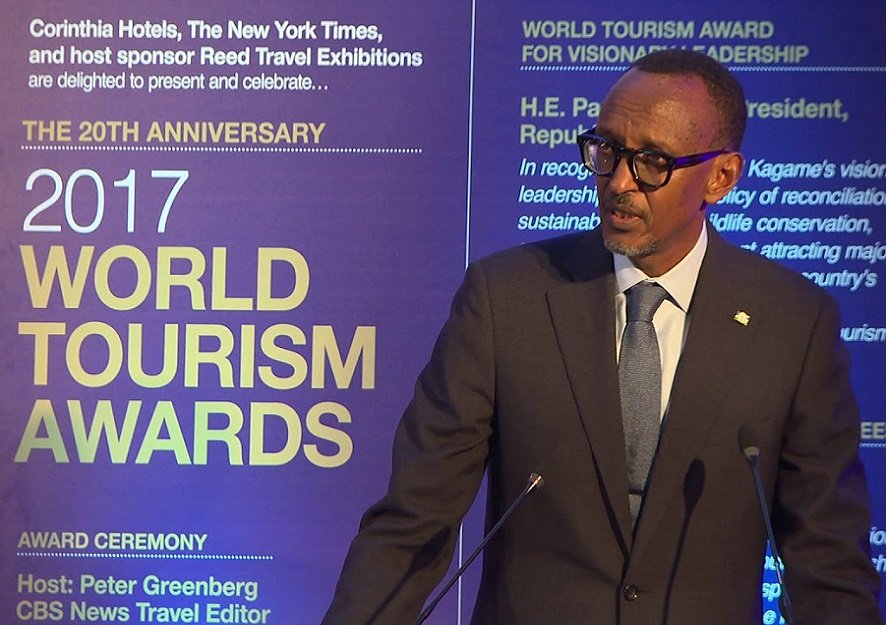
Rwanda’s Paul Kagame at the 2017 Tourism Awards

Rwanda is noted for being one of Africa’s most accessible places to do business, and now, it is climbing the ladder to be the continent’s top tourism destination in the next three years.

The East African country recorded 1.3 million visitors to its tourist sites in 2017 and it seeks to receive more as tourism is the largest foreign exchange earner.

To achieve this, the Rwanda Development Board has signed a three-year tourism partnership agreement with top-flight English Premier League football club Arsenal.

The deal means a new “Visit Rwanda” campaign logo will be featured on the left sleeve of all the Arsenal team players including the first team, under-23 and Arsenal Women during matches from the new season in August.

The players will also visit Rwanda while coaches will host coaching camps for Rwandan boys and girls to support the development of the game.

“We’re thrilled to be partnering with Arsenal and showcasing the vibrancy and beauty of our country. Rwanda is a country pulsing with energy, creativity and innovation,” said the CEO of Rwanda Development Board, Clare Akamanzi.

“Visit Rwanda” will also be screened on all Arsenal’s matchday LED boards, interview backdrops and the club’s stadium tour which attracts more than 250,000 visitors each year.

“The Arsenal shirt is seen 35 million times a day around the world and we are one of the most viewed teams around the world. We look forward to working with the Visit Rwanda team to further establish the country as a tourist destination,” said Arsenal’s Chief Commercial Officer, Vinal Venkatesham.

This partnership is expected to draw more people to Rwanda to see the National Parks which have growing numbers of wildlife including black rhino, lions, zebra, chimpanzees and the famous mountain gorillas.

It will also bring investment opportunities in the country which has been ranked as the third easiest place to do business in Africa by the World Bank.

Morocco is currently Africa’s top tourist destination with over 10 million visitors annually. It is followed by Egypt and South Africa.

This article by Ismail Akwei was first published on face2faceafrica.com

This Cameroonian nationalist is chopping off heads of colonial statues in his country

Andre Blaise Essama with the head of a colonial French general’s statue — Souce: Andre Blaise Essama
This article has been edited and was first published on December 08, 2017.

He is a hero to many, but a notorious criminal to the Cameroonian government for vandalizing colonial-era statues and monuments built by French colonialists in the economic capital Douala.

41-year-old Andre Blaise Essama describes himself as an activist who aims to replace all the colonial statues in the city with those of national heroes who fought for the bilingual country’s independence.

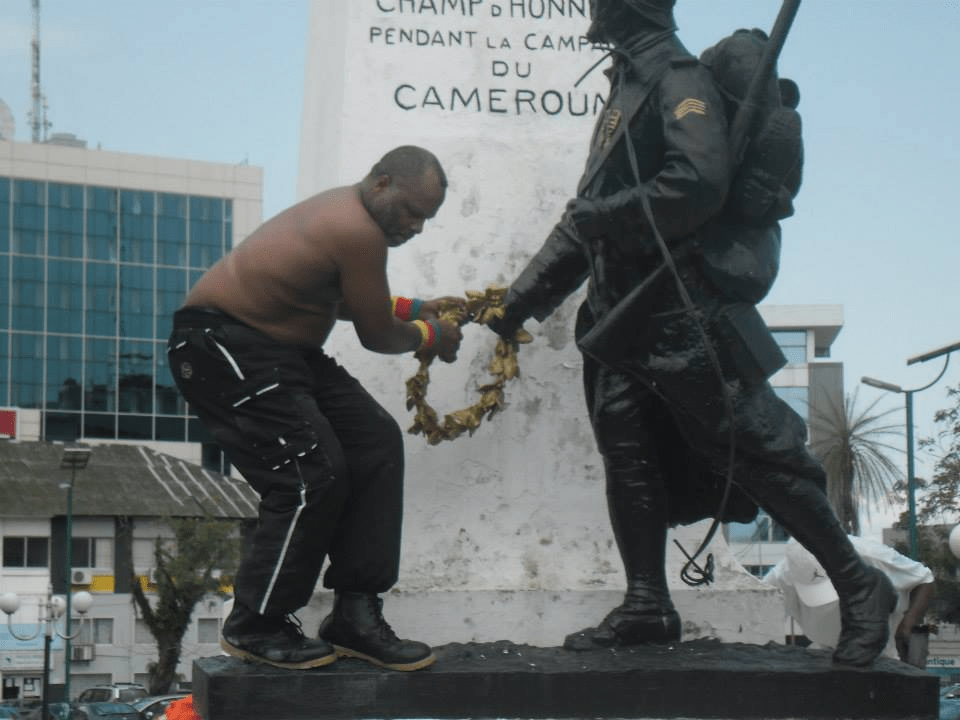
He gained national attention after he launched his campaign in 2015 when he beheaded the statue of French colonial hero General Philippe Leclerc de Hauteclocque erected in Douala since the colonial era.

He flaunted his conquest by sharing on his blog and on social media professional photographs of himself posing with the statue’s head.

Essama was arrested and sentenced by a Douala-Bonanjo court to three months in prison and fined for “destruction of public property” after he pulled down the French colonial “statue of the unknown soldier” in the city centre days after the first “conquest”.

He demanded a statue of Ruben Um Nyobé be erected in those spots in honour of the anti-colonialist Cameroonian leader who was slain by the French army.

In 2016, Andre Blaise Essama again beheaded the repaired statue of the French general which fetched him six months in jail after refusing an offer to pay for its repair instead of a prison term.

A few months after his release from prison in December 2016, the activist erected a statue of John Ngu Foncha – a pivotal figure in the unification of the British and French Cameroons – at a busy intersection in the city.

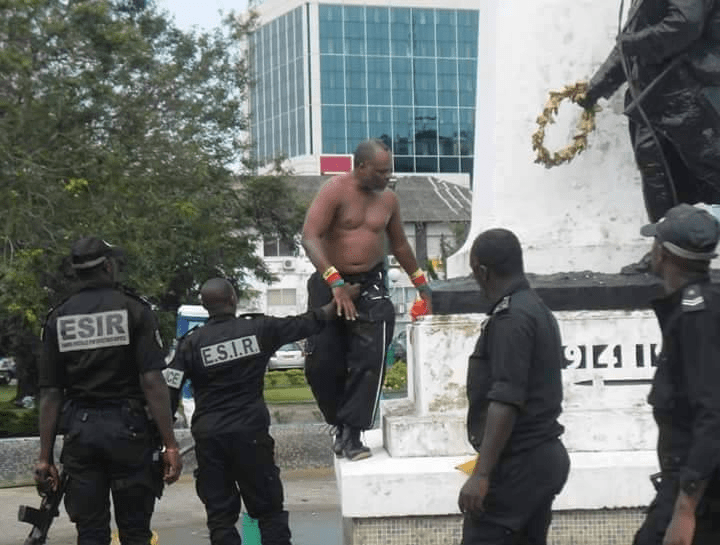
He was hailed by his growing supporters for erecting the statue which did not see the light of day. Unidentified angry-looking policemen pulled the statue down in a few hours and dragged it away.

A year on, the Cameroonian authorities erected an effigy of French videographer Sylvie Blocher at the same spot where Essama’s statue of the national hero was pulled down.

The new effigy erected on Wednesday was holding a sign with English and French inscriptions that read: “Even If I Do Not Have the Right, I Apologize”.

As the inhabitants were questioning the reason behind the erection of the effigy and its message, unhappy Andre Blaise Essama pulled down the monument on Thursday in the presence of supporters including motorists and pedestrians who were applauding his action.

This earned him another date in court which could attract yet another jail term. The popular activist has engaged in many one-man protests over other social issues and against the government.

Thousands of people have successfully protested in South Africa against colonial statutes. Mass protests have also been staged in Ghana and the United States yet one man is doing the same in Cameroon where the rights and freedom of citizens are abused by the government.

Many believe Andre Blaise Essama is mentally unstable including his mother who had said in an interview that her son’s first arrest in 2008 – after his return from France where he studied computer science – could have affected him mentally.

Essama was detained that year for entering the presidential palace without an invitation to present a proposal to First Lady Chantal Biya to help in the implementation of a project she had launched.

Mentally ill or not, is Andre Blaise Essama’s advocacy a good cause to fight for?

This article by Ismail Akwei was first published on face2faceafrica.com

How a pregnant Mary Turner was brutally lynched by a white mob in 1918

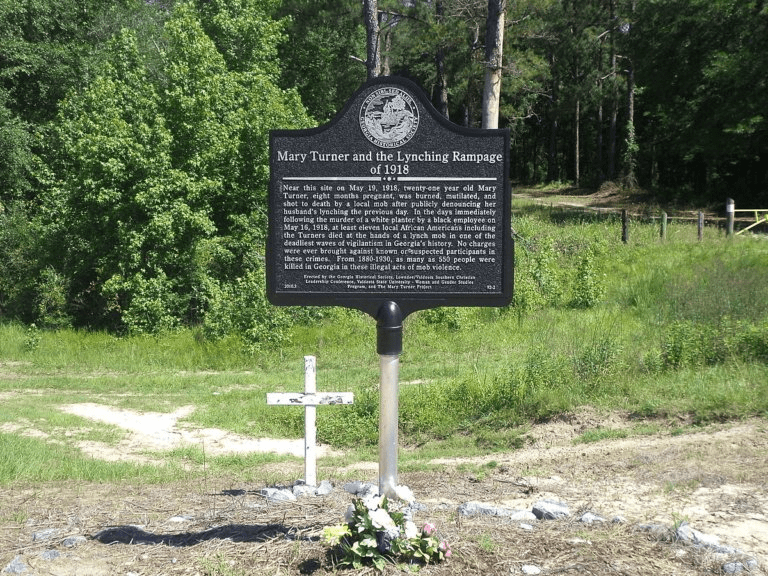
Mary Turner Historical Marker, Lowndes County, Georgia — Photo: Wikicommons

It is a hundred years since the brutal murder of 21-year-old Mary Turner, a young pregnant black mother of two who was lynched on May 19, 1918, by a white mob only a day after the lynching of her husband, Hazel Turner.

Turner was killed by a river between Lowndes and Brooks counties in Georgia for protesting against the lynching of her husband who was killed during a raid by the white mob following the murder of a white plantation owner in Brooks County by one of his black workers.

This began the peak of lynchings and racially motivated violence by whites against black people in the American South. Thousands of black people including women were lynched.

Mary Turner’s experience followed the killing of the abusive farm owner, 25-year-old Hampton Smith, who owned the Old Joyce Place, a large plantation near Morven, Georgia, in Brooks County.

Smith is known for beating his workers including Mary Turner whose husband was convicted by an all-white jury and sentenced to a chain gang for threatening his wife’s abuser.

One of Smith’s workers, Sidney Johnson, who was a convict offered by the state to Smith for a fee to work on his farm, shot him and his wife through a window in their house after enduring series of violent abuses.

Johnson killed Smith and wounded his wife before fleeing the scene. While he hid in Valdosta, Georgia, a large manhunt in Brooks County killed at least 13 black people in two weeks.

Among them was Mary Turner’s husband who was picked up for his previous encounter with Smith. Hazel Turner was locked up in a jail cell and later released to the mob during a transfer to another prison. He was lynched near the Okapiloo River in Brooks County and his body was left hanging from a tree over the weekend.

Eight months pregnant Mary Turner was upset and threatened to have the mob arrested. The mob then turned on Mary who had fled after hearing of her protest against her husband’s death.

Mary Turner was captured by the mob which was made up of hundreds of white people and they took her to a river bank in the Brooks County.

Mary Turner was tied and hung upside down by the ankles, her clothes soaked with gasoline, and burned from her body. Her belly was slit open with a knife like those used in splitting hogs. Her unborn babe fell to the ground and gave two feeble cries. Its head was crushed by a member of the mob with his heel, and the crowd shot hundreds of bullets into Turner’s body.– Recounts NAACP investigator Walter F. White.

Mary Turner was later cut down and buried with her child near the tree she was hung from. A whiskey bottle was used to mark her grave.

Those who were lynched in the area included Will Head, Will Thompson, Julius Jones, Eugene Rice and Chime Riley.

Sidney Johnson, the wanted black man who killed Smith, was killed in a shootout with police after reaching Valdosta in Georgia. A mob appeared at the scene upon hearing of his arrival and mutilated his body, dragged it behind a car in a procession. They hanged his body from a tree and burned it.

The lynchings gained national attention and were highlights of the NAACP’s campaigns for Congress to pass legislation against lynching.

Walter F. White, who was also the NAACP assistant secretary, got names of two instigators and 15 participants of the lynching from the Georgia governor Hugh Dorsey. No one was ever charged with the killing of Mary Turner.

In 2008, the Mary Turner Project was formed to educate students and communities about the May 1918 lynchings and racial injustice. In 2010, a Mary Turner and the Lynching Rampage memorial was placed near the lynching site in Lowndes County.

On May 19, 2018, a group of relatives and descendants of Turner joined dozens of people in Georgia to honor her life through songs and praises.

This article by Ismail Akwei was first published on face2faceafrica.com

Two black female pilots fly Alaska Airlines plane for the first time in 86 years

Tara Wright and Mallory Cave

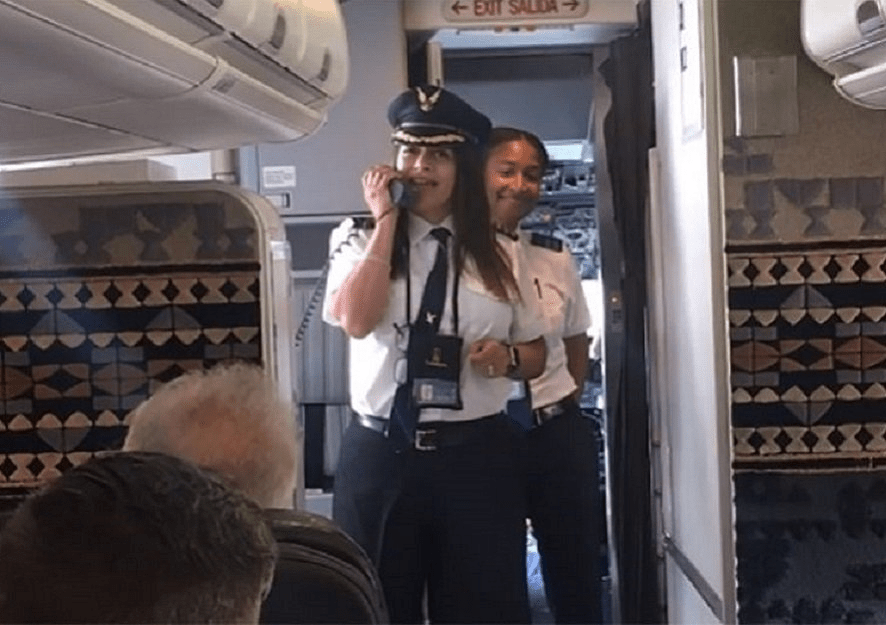
It was with style and honor that Tara Wright, the captain of Flight 361 from San Francisco to Portland introduced herself and first officer Mallory Cave to passengers as the first black women to fly a plane in Alaska Airlines’ history.

The Boeing 737 took off on Mother’s Day after applause from passengers following Captain Wright’s announcement which was captured on video and went viral for its historic connotation.

“Finally, you’re sharing a pretty interesting piece of Alaska Airlines history this morning. You’ll be piloted by two female African-American pilots for the first time in the airline’s history,” Wright said after mentioning that Sunday was Mother’s Day, as well as her father’s 80th birthday.

The video was initially posted on Facebook by Tara Wright and later shared by the airline with the caption: “History in the flying. Alaska Airlines Flight #361 from San Francisco to Portland, OR. Our first ever flight piloted by 2 African-American women. What Bessie Coleman started in 1921, we continue here.”

This is a special feat for the airline which was founded in 1932, especially when there is a massive gender and race disparity in the United States airline business.

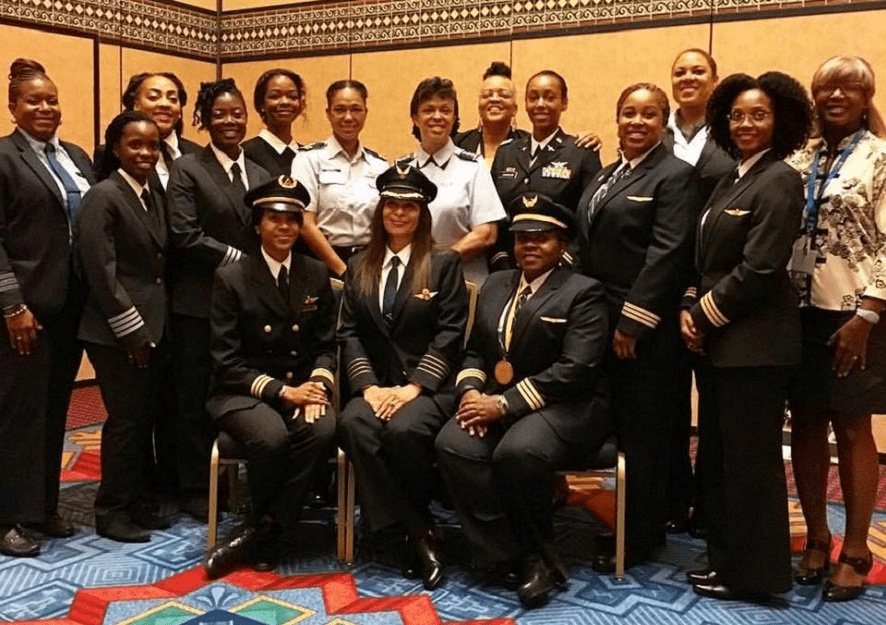
Black female pilots of the United States of America — Source: Tara Wright

2015 federal Bureau of Labor Statistics data showed that 91 percent of airline pilots and 73 percent of flight attendants were white; just 9 percent of pilots were female, versus nearly 75 percent of flight attendants.

This article by Ismail Akwei was first published on face2faceafrica.com