East African nations plan to export oil as citizens face sporadic fuel shortages

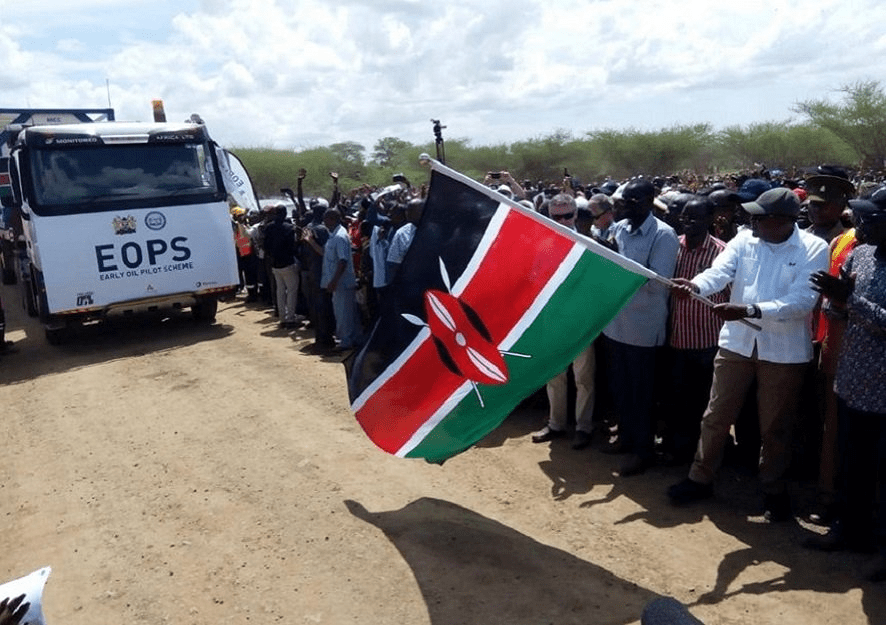
Kenya’s president flags off trucks carrying crude oil

The only two oil-producing countries in East Africa, Kenya, and Uganda are nurturing their ambitions of exporting crude oil to boost their economies which are hit by sporadic fuel shortages and power outages.

Kenya’s President Uhuru Kenyatta flagged off four trucks carrying the country’s first oil resource from the Ngamia 8 oil fields in Turkana East to the coastal town of Mombasa where it will be kept as they look for an international market.

The feat was attended by chiefs and leaders of Turkana who couldn’t hide their joy of a future share in the proceeds of the expected 2,000 barrels of oil a day to be drilled by British company Tullow Oil since the oil finds in 2012.

The Ngamia 8 field has at least eight oil fields located in various sections of Turkana East and Turkana South and is estimated to hold 750 million barrels in total. The community has been promised 5% of the sales while the government takes 75% and the county takes 20%.

“We are all proud as Kenyans that this is possible because of the partnership between the government, our partners, and the community here. The benefits from this oil will be shared and nobody will be left behind. Every member of this community will be on board,” said Vice President William Ruto after the president had cautioned against disagreements on oil proceeds.

In the clamor for the proceeds, little was said about the fuel shortages that were sporadically hitting the fuel importing country, with the most recent being three days ago in Turkana.

The Kainuk bridge, which links Kenya with South Sudan, Uganda, and Ethiopia, was swallowed by flood and fuel could not come into the county. It was rebuilt in a record two days before the ceremony to cart away the first oil drilled in the area.

This is just one of the mild shortages that hit the nation. Last month, it was the same situation in Mandera where the only two fuel stations hiked their prices due to shortages.

In March, landlocked Uganda also decided to ship out its early crude oil exports through the Mombasa port. It drilled 45,211 barrels of test crude and is looking forward to exporting the resource. Its oilfields discovered in 2006 are estimated to hold reserves of 6.5 billion barrels.

Oil prices keep rising in Uganda due to fuel unavailability as fuel is transported from Mombasa through a pipeline to Eldoret and Kisumu from where it is supplied by road to Nairobi and Uganda. Any problem on the Kenyan side affects Uganda.

Kenya’s government announced plans in March to reopen its oil refinery in Mombasa in May to receive crude oil from Turkana County while Uganda has signed a contract in April for the construction of a $4 billion oil refinery.

Until the oil produced in the country directly fuel the needs of the people and economy which utilizes fuel for transportation and power generation when there is no electricity, Kenya and Uganda will be like Nigeria and Angola who produce the most oil in Africa, yet import equal amounts of fuel to serve their people.

Nigeria’s state oil firm, Nigerian National Petroleum Corporation (NNPC), said it had spent $5.8 billion on fuel imports since late 2017 to combat fuel shortages. Angola’s Sonangol also imported refined oil for the first time in its history this year.

This article by Ismail Akwei was first published on face2faceafrica.com
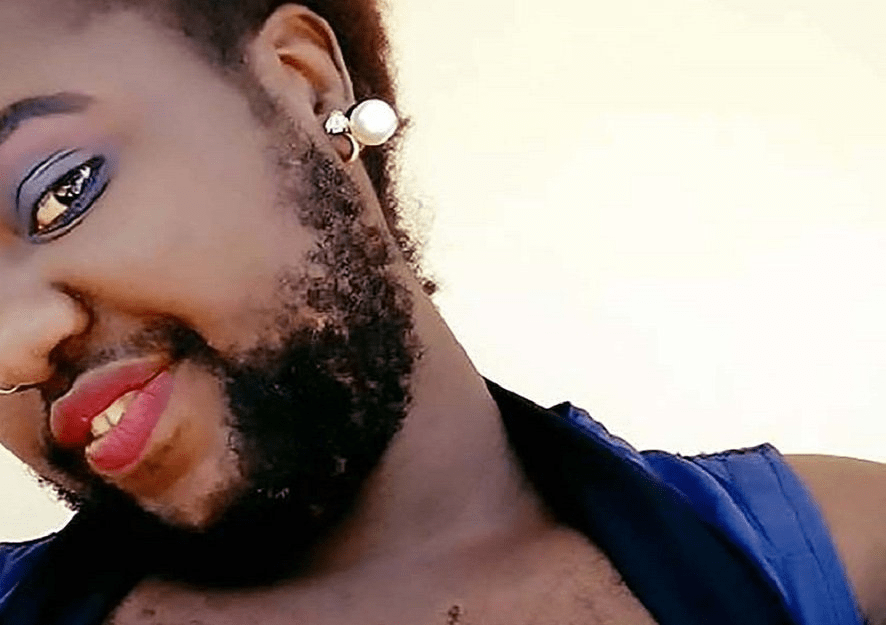
Bearded woman subjected to genital exam by police in Kenya after arrest

Nigerian actress Queen Okafor believed to be Nigeria’s hairiest woman.

A Kenyan woman has been subjected to a genital examination conducted by two female police officers who stripped her because she grew a beard.

31-year-old Teresiah Mumbi, a minibus conductor, has threatened to take legal action against the officers over the incident which occurred after her arrest for a traffic offence in Kariobangi on May 15 after allegedly refusing to offer a bribe.

“Those two female officers came and demanded that I undress and put my legs apart. After they were satisfied they let me back to the cell,” Mumbi was quoted by local media Tuko.

Teresiah suffers from an excessive hair growth condition known as hypertrichosis. She said she did not like shaving because it made her face itchy.

But, Teresiah told the media that she shaved her beard after the incident to remain feminine despite it growing back after a few days. She also quit her job for fear of facing a similar incident.

This article by Ismail Akwei was first published on face2faceafrica.com
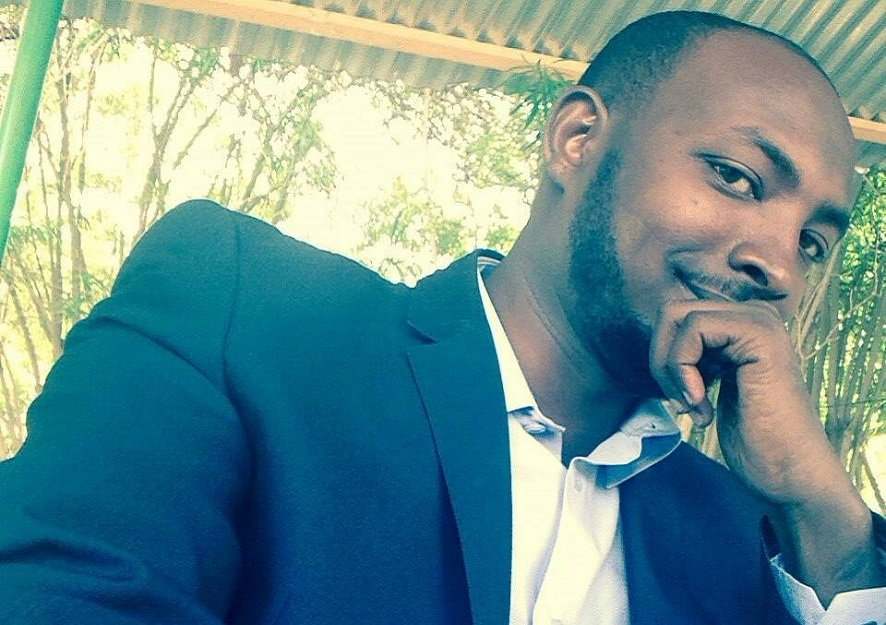
All you need to know about the newly appointed 36-year-old chief justice of Somalia

Bashe Yusuf Ahmed, Somalia’s new chief justice

Somali President Mohamed Abdullahi Farmajo announced the sack of the country’s chief justice Hassan Ibrahim Idle Suleiman on Sunday after a two-year service.

The president said his decision was part of a plan to improve the justice system that has been struggling for so many years amid several questionable judicial decisions and allegations of corruption.

The dismissal was immediately followed by the appointment of little-known Baashe Yusuf Ahmed as the new chief justice. He will assume the position of chairman of the Somali supreme court.

Yusuf Ahmed’s appointment was received with mixed reactions in Somalia as some questioned if the young lawyer is qualified to be a chief justice as the constitution requires a minimum of seven years of work experience as a lawyer or in a high judicial position.

Others have also questioned his ties with rival state Somaliland where he is an active politician and a member of the opposition Wadani party led by ‎Abdirahman Mohamed Abdullahi. Somaliland has declared itself independent of Somalia since 1991 and has remained so despite ongoing efforts by Somalia to merge.

Keep reading for details about the life of the new chief justice of Somalia Baashe Yusuf Ahmed.

Baashe Yusuf Ahmed is a 36-year-old lawyer born in Hargeisa, Somaliland in 1982. He obtained his law degree from the University of Hargeisa in 2008 and then a Master’s Degree in Commercial and Maritime Law in 2014 from the University of Hertfordshire under the UK government’s Chevening scholarship programme for students with leadership qualities.

Prior to that, he served as the programme officer for the United States NGO Mercy Corps in Hargeisa where they empowered people to recover from crisis, build better lives and transform their communities for good.

He served as the Director General of the Ministry of Labour and Social Affairs of Somaliland between 2010 and 2012 and upon his return from the UK, he returned to Mercy Corps as its Youth Employment Technical Advisor.

While lecturing at the University of Hargeisa from 2014, Yusuf Ahmed also served as a consultant for UNDP and the Ministry of Labour and Social Affairs where he used to work. He also worked as a legal advisor for the Somaliland parliament and other international agencies including the German development agency GIZ.

Baashe Yusuf Ahmed has been married since 2011 and lived briefly in Oslo, Norway.

Below are some social media reactions after his appointment.

This article by Ismail Akwei was first published on face2faceafrica.com
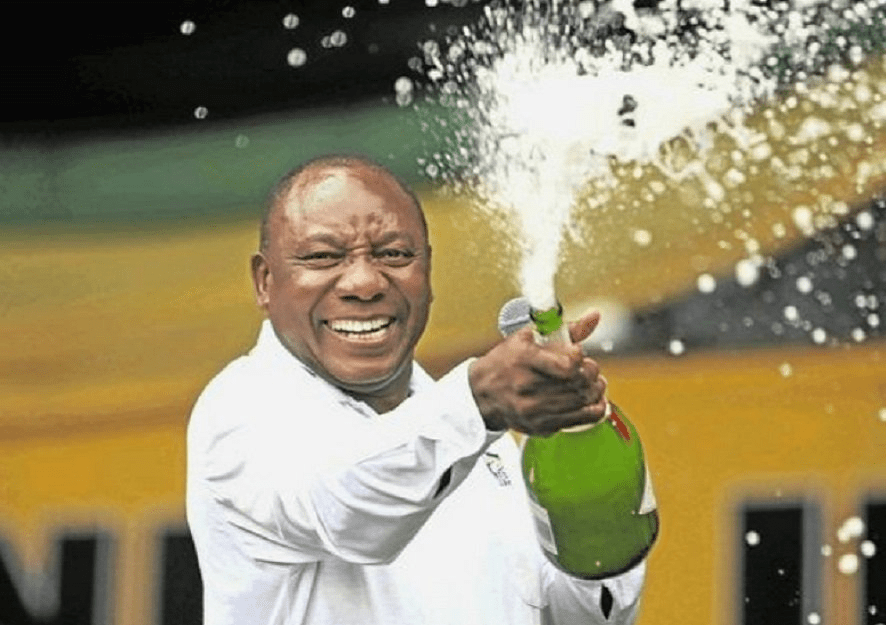
Two African presidents join five others to donate salaries to development funds

Two African presidents have donated portions of their salaries to development funds in their countries ahead of Africa Day which fell on May 25, 2018.

The first to announce his decision was the South African president Cyril Ramaphosa who announced last Wednesday that he will donate half of his presidential salary to a fund that will be managed by the Nelson Mandela Foundation.

The president said he is doing it in honor of Nelson Mandela as the country marks the 100th anniversary of Madiba’s birth. He also called on other citizens to contribute a small portion to what will now be called the Nelson Mandela Thuma Mina Fund.

This means Ramaphosa will part with half of his R3.6 million ($289,393) a year salary.

Meanwhile, Gambian president Adama Barrow also announced last Friday a 10% salary cut which will be channelled into the country’s National Development Plan (NDP).

The two leaders join five others who made similar donations in the past. Liberia’s president George Weah said after his inauguration that he will divert 25% of his salary and benefits to a development fund. Weah earns about $100,000 yearly, meaning he will relinquish about $25,000.

Nigerian president, Muhammadu Buhari, took a 50% pay cut when he assumed office in 2015. The presidential salary in Nigeria is about $70,000 monthly, including allowances.

Tanzanian President John Magufuli announced last year that he slashed his monthly salary to $4,000 a month in an effort to tackle state expenditure. He similarly cut the salaries of other public officials and civil servants.

Kenyan President Uhuru Kenyatta announced a 20% pay trim to his salary in 2014 in a public showdown to address the government’s ballooned public sector wage bill. He cut his minister’s salaries by 10% and urged all MPs to take a pay cut as well. The president receives a $14,000-a-month basic salary ($168,000 annually), now $11,000 effective the pay cut.

Egyptian President Abdel Fattah al-Sisi pledged to give up half his salary – and property – in 2014 when the country’s economy retracted after the upheaval of the Arab Spring. That is half his 42,000 Egyptian pounds salary ($5,200 a month, or $62,000 annually at current rates).

This article by Ismail Akwei was first published on face2faceafrica.com

5 historic times African countries attempted to merge but failed

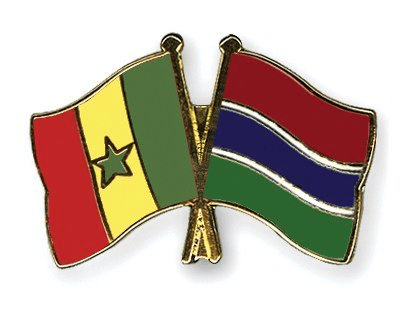
Presidents of Senegal and Gambia whose countries merged for 8 years in 1982

Africa is the only continent in the world that was divided among European colonialists in 1884 in what was termed the Scramble for Africa. So many tribes were divided by colonial borders while others were merged with other tribes.

Following the independence struggle in the continent, Tanzania became the only African country formed by a merger of two states, Tanganyika and Zanzibar.

However, there were several attempts by other states during the post-colonial era to merge politically and economically, yet failed to come to a consensus.

Another attempt is being made by the six-member East African Community (EAC) consisting of Burundi, Kenya, Rwanda, South Sudan, Tanzania and Uganda.

They attempted to merge politically after a proposal was made in 2004 to create the East African Federation. In 2016, they instead, favoured a confederation which is yet to be finalized.

Before the EAC, history has recorded five attempts made by African nations to merge but failed. Read about them below.

Senegambia Confederation (1982-1989)

In 1982, Senegal and Gambia agreed to form the Senegambia Confederation to establish cooperation between the two neighbours. Senegal was the most interested party as they feared national instability caused by uprisings in the Gambia.

An attempt to have a unified state in the 8 years of signing the agreement failed and Senegal dissolved the confederation in 1989 as the Gambia showed no interest. This 8-year union is one of the longest in Africa.

Federation of Arab Republics (1972-1977)

In 1972, Libyan leader Muammar Gaddafi attempted to build a Pan-Arab state and succeeded in merging his country with Egypt and Syria under the umbrella Federation of Arab Republics. He also invited Iraq and Sudan to join the Federation.

The federation was formed after the three states approved a referendum in each country. However, they disagreed on many terms of the merger which broke down relations among the countries.


Arab Islamic Republic (1974)

In 1974, Libyan leader Muammar Gaddafi proposed a merger with Tunisia to be called the Arab Islamic Republic. This was during the difficulties he faced in creating the Federation of Arab Republics with Egypt and Syria.

The two heads of state agreed to the merger but it was never implemented.

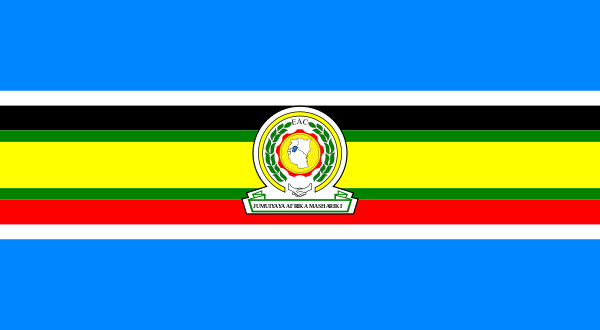
The 2004 proposed East African Federation flag

East African Federation (1960-1964)

In 1960, prior to the declaration of independence in Kenya, Tanganyika, Uganda, and Zanzibar, a union between the four British territories was proposed.

Tanganyika wanted to delay its imminent independence in 1960 so that the four territories could achieve independence together as one federation.

All the leaders agreed in 1963 to work towards a federation, but by 1964, the plan collapsed after disputes over the leadership of the federation among others. Tanganyika and Zanzibar eventually united in 1964 to form Tanzania.

United Arab Republic (1958-1961)

This was a short-lived Pan-Arab state born out of the union of Egypt and Syria. The republic was led by Egyptian President Gamal Abdel Nasser who carried out a crackdown against Syrian Communists and opponents of the union immediately after taking leadership.

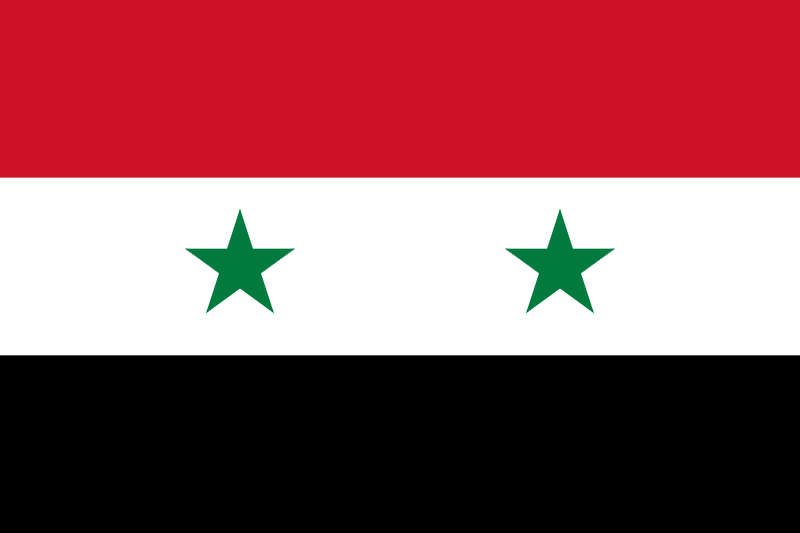
The UAR adopted a flag based on the Arab Liberation Flag of the Egyptian Revolution of 1952, but with two stars to represent the two parts of the UAR. This has been the official flag of Syria since 1980.

So many issues started marring the republic including displeasure that the UAR turned into a state completely dominated by Egyptians. Nasser demanded that all political parties in Syria be dismantled, thereby diminishing Syrian political life.

All the power fell in the hands of the Egyptians and there was growing tension in Syria. In 1961, the Syrian military staged a coup and declared Syria’s independence from the UAR.

This article by Ismail Akwei was first published on face2faceafrica.com