Why the world’s youngest country is the most embarrassing state in Africa

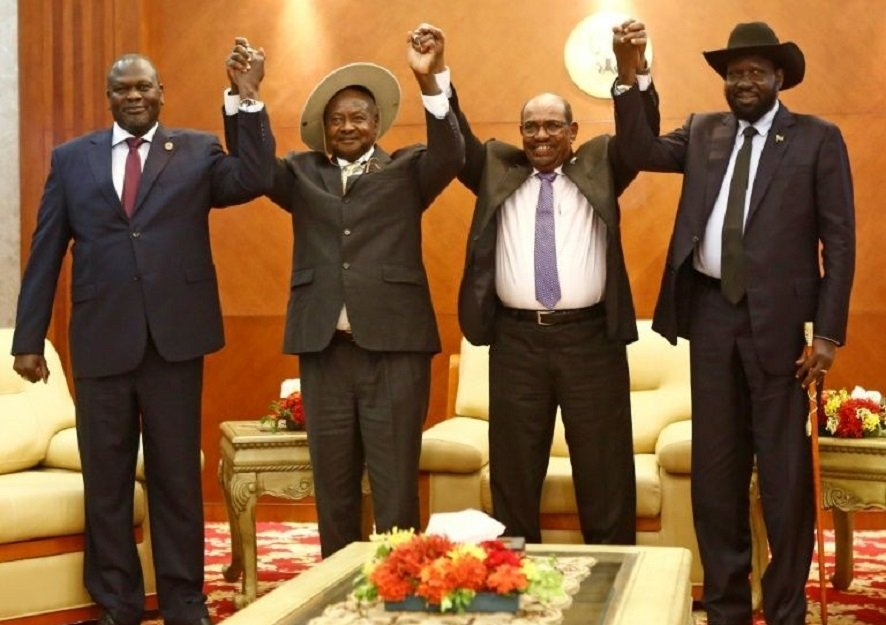
From left to right, South Sudan opposition leader Riek Machar, Ugandan President Yoweri Museveni, Sudanese President Omar al-Bashir and South Sudanese President Salva Kiir at peace talks in khartoum in July 2018.

South Sudan is the world’s youngest country since it gained its independence seven years ago from neighbouring Sudan on July 9, 2011, after a 2005 agreement to end the longest-running civil war that started since 1962.

The independence of the black South Sudanese indigenes indeed ended the civil war with the Arab Sudanese overlords, but started another inter-ethnic and inter-factional civil war based on greed and paranoia among the black Africans.

Oil-rich South Sudan is the only country where rebels are leading the state with the cowboy hat wearing president Salva Kiir leading the Sudan People’s Liberation Movement (SPLM) faction while his Vice President Riek Machar – whom he had fired twice – leads the Sudan People’s Liberation Movement – In Opposition (SPLM-IO) rival faction.

They fought primarily along ethnic lines between Kiir’s Dinka and Machar’s Nuer tribal groups. These two armed rebel groups have caused the displacement of over 4 million citizens since independence and caused the death of over a million as they fought each other since 2013 using kidnapped children to fight their battles.

The powerful rebel groups were not dissolved after they successfully fought for independence, they rather gained more authority with impunity as out-of-control soldiers boldly raped womenraided communities and recruited child soldiers to stay formidable.

The 2013 resumption of the civil war followed accusations by Salva Kiir that his Vice President Riek Machar was plotting to overthrow him. He dissolved the cabinet, sacked Machar and another deadly war erupted. The factions targeted oil-mining communities and killed civilians.

There were many unsuccessful ceasefire agreements brokered by Uganda and Ethiopia while the fighting continued until 2016 when the Vice President was reinstated briefly between April and July.

Machar went back into exile and the fighting intensified as over a million civilians entered into Uganda while foreign missions and companies exited the country. This caused a strain on the government as the economy collapsed and famine ravaged the country.

Some hope was restored in 2017 after the government declared a unilateral ceasefire and launched a national dialogue inclusive of the rival rebel factions in the country. Riek Machar, who was in self-exile in South Africa, refused to be a part of the dialogue after delegations were sent to him.

Fast-forward to July 2018, Kiir and Machar have agreed for a third time to a power-sharing deal that will ensure the reinstatement of Riek Machar as a Vice President and his return to the capital of Juba.

Even if peace is restored permanently, the country has a long way to go in terms of solving the major problem of child soldiers, lack of media freedom, unstable electricity, food shortages and economic instability.

South Sudan can be more peaceful as the rest of Africa and start developing the country to compete with the rest of the world. The civil wars need to end after years of diplomatic interventions and unnecessary killings. It is time for South Sudan to stop being an embarrassment to Africa.

This article written by Ismail Akwei was first published on face2faceafrica.com

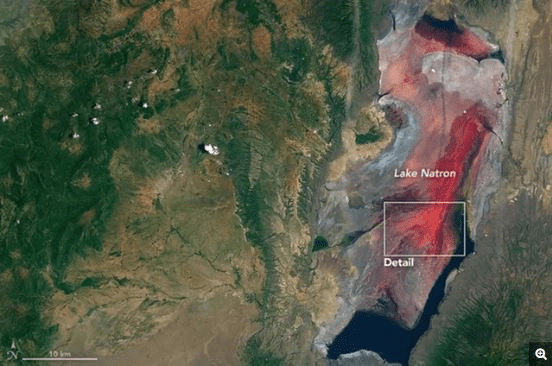
The weird red lake in Tanzania that turns animals into stone statues

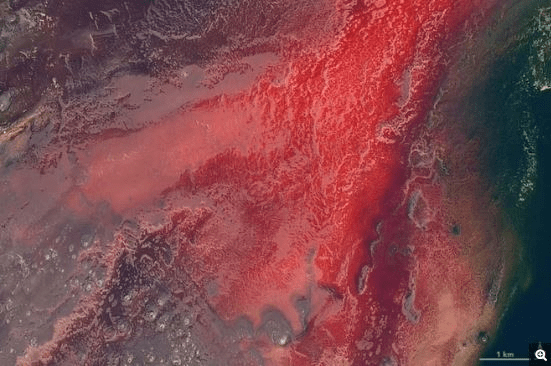
Lake Natron sighted from space — Photo: NASA Earth Observatory

Lake Natron in northern Tanzania is described as one of the world’s weirdest lakes for its red colour due to volcanic activities and its incredibly high level of alkaline with a pH as high as 10.5.

This basically means that there is a high level of mineral and salts in the water which should make it impossible for animals to survive. However, the lake – also called the Stone Animal Lake – is home to tilapia fish, flamingos and other birds that are calcified by the water when they die.

This is made possible by the sodium carbonate minerals – the chemical that ancient Egyptians used to preserve their dead – in the lake that are produced by carbonatite lava erupted from the nearby Ol Doinyo Lengai active volcano. It makes the fishes and birds as hard as stone.

CALCIFIED ANIMALS ON LAKE NATRON, 2012 — From Nick Brandt’s book Across The Ravaged

The Ol Doinyo Lengai active volcano is described as the only volcano that has erupted carbonatite lava in human history. The carbonatite lava contains carbonate minerals often seen in sedimentary rocks, unlike most volcanoes that spew glassy, silica-rich lava.

Its red colour is due to haloarchaea, microorganisms that thrive in the lake’s salty waters, according to NASA’s Earth Observatory.

The Ol Doinyo Lengai’s carbonatite lava erupts at temperatures of around 500 to 600 degrees Celsius while most silica-rich lava erupts at 1,160 degrees Celsius.

In 2017, NASA’s Landsat 8 satellite took beautiful photographic shots of Lake Natron from space showing the water’s vermillion beauty, reports Live Science. The photographs were taken at the end of the dry season when the lake level was particularly low and the concentrated salt ponds were especially colourful.

The crimson glow in Tanzania’s Lake Natron, shown here in an image captured from the Landsat 8 satellite on Marck 6, 2017, is caused by salt-loving microbes called haloarchaea.
Credit: NASA Earth Observatory
Lake Natron, located in the Rift Valley of Tanzania, spans an area of about 480 square miles (1,250 square kilometers), according to the World Wildlife Fund.
Credit: NASA Earth Observatory

This article written by Ismail Akwei was first published on face2faceafrica.com

Crazy obsession with witchcraft and magic leaves African children in harm’s way

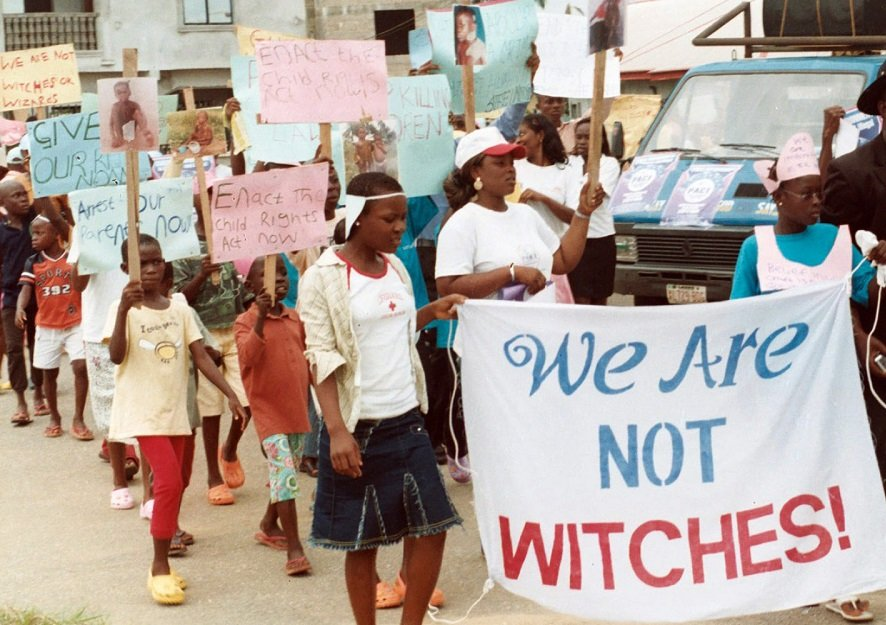
Children protest, saying they are innocent, on February 26, 2009 after being branded as witches in the southern Nigerian city of Eket, Akwa Ibom State. — Photo: AFP

Why will anyone be so poor and vulnerable but still called a witch or wizard because of the misfortunes that befall the person? This is the exact situation of some children and old women in northern Ghanaian, Nigeria and many communities around Africa where suspected witches are abused, sacked from their homes and sometimes lynched.

It was worse for three-year-old Comfort, 15-year-old Hope and their five-year-old brother Godbless who are living in an emergency shelter in Calabar, a southeastern city in Nigeria.

The three children whose names have been changed to protect their identities were beaten with a hot machete for hours by two men in other for them to confess that they were witches, BBC reported in a news feature about the menace.

The children, who are orphans, were living with Christiana, their grandmother who was HIV positive and was suffering from complications of not taking anti-retroviral drugs.

A so-called prophet in the community declared the children witches and alleged that they had killed their parents and caused Christiana’s illness among other frivolities. The prophecy attracted the criminal intervention of the two neighbours who inflicted injuries on the children and forced them to accept that they were witches.

“So he started beating us in turn with the hot machete, from morning until afternoon … We eventually said Yes. Then they asked us if we are the ones that killed our mother and father. We said Yes. They asked us if all these troubles in our family we are the ones who caused them – we said Yes,” Hope told the reporter Marc Ellison.

Their uncle, Sunday, saved them from the torture and reported the matter to the police before they were rescued. This is one of the few cases against children in the community which has for centuries accused old women of witchcraft.

Despite the laws that criminalize witch-branding and abuse of children, the act persists in many parts of the continent as people escape punishment for branding others as witches, even when they abuse the victims.

In northern Ghana, women and children accused of witchcraft have been camped in six locations where they feel safe from attacks and lynching. The so-called witch camps in Bonyasi, Gambaga, Gnani, Kpatinga, Kukuo and Naabuli house hundreds of mostly old women who live in huts and are protected by a local chieftain in return for working in his fields and paying him.

These women are considered lucky as many others have been killed by mobs like the case of Yenboka Kenna, a 67-year-old woman accused of being a witch. She was lynched by about 63 suspects who were picked up in a police raid at Pelungu and Tindongo in the Upper East region.

But what about the laws?

The laws are weak when it comes to spiritual matters and issues of witchcraft. Malawi, where albinos are also being killed for witchcraft purposes, has a Witchcraft Act which has failed to protect suspects from unfair prosecution by the public.

It prohibits trial by ordeal, in which suspects are subjected to painful and unpleasant experience to prove their innocence. It also outlaws the hiring of witchfinders and pretending to be a witch or practising witchcraft. The law is under review due to its inefficiency.

Zambian actress, movie director, and film writer Rungano Nyoni won a BAFTA Award for Outstanding Debut by a British Writer, Director or Producer for the movie I Am Not a Witch which showcases an 8-year-old Zambian girl named Shula who is accused of witchcraft, then sent to witch camp where she is tied to a spool with thread.

Shula is told that if she attempts to escape, she will be turned into a goat. This increases her curiosity and ignites her longing for freedom.

Unicef noted in a 2010 report that it is typically vulnerable children with physical disabilities or illnesses such as epilepsy who are targeted.

Despite the awareness created to protect the vulnerable women and children, the practice of abusing them persists. The root cause of witch-branding is the witchdoctors, pastors, prophets and spiritualists who claim to have a special gift of identifying witches.

These people are openly and shamelessly advertising their services freely and selling the belief that they can solve spiritual problems. The men of God and men with four eyes are all over African television channels and walls calling people to bring them their next victims.

All these actions are happening right under the noses of those who formulate, implement and execute the many laws against witch-branding and attacking people on the basis of spirituality.

To end this menace, the major actors – the source – must be nipped in the bud before more children are abused and subjected to cruel torture and hardships. The spiritual advertisements must be switched with advertisements against child abuse and human rights.

This article written by Ismail Akwei was first published on face2faceafrica.com
This African country drafted and enforced a modern-day constitution in 1931

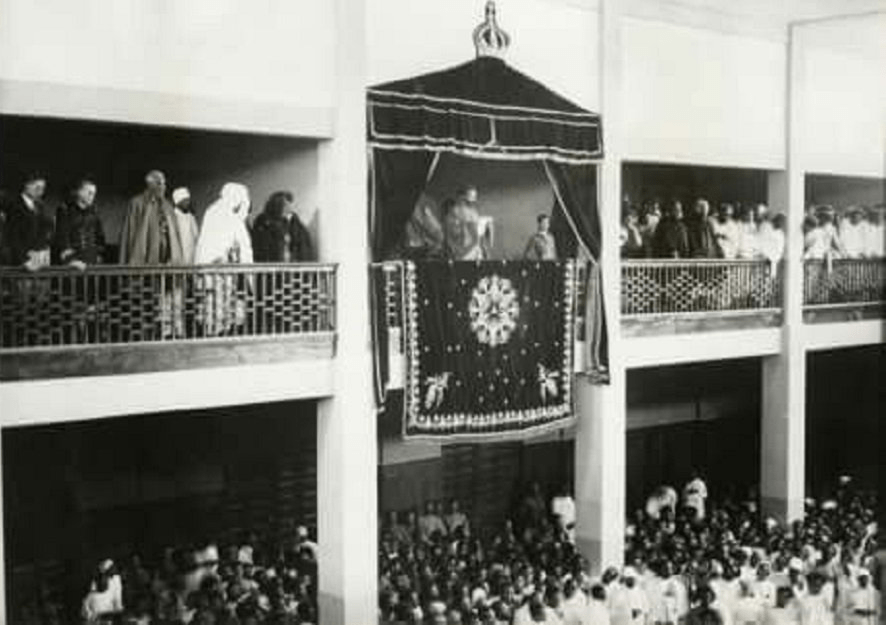
Parliament in 1935

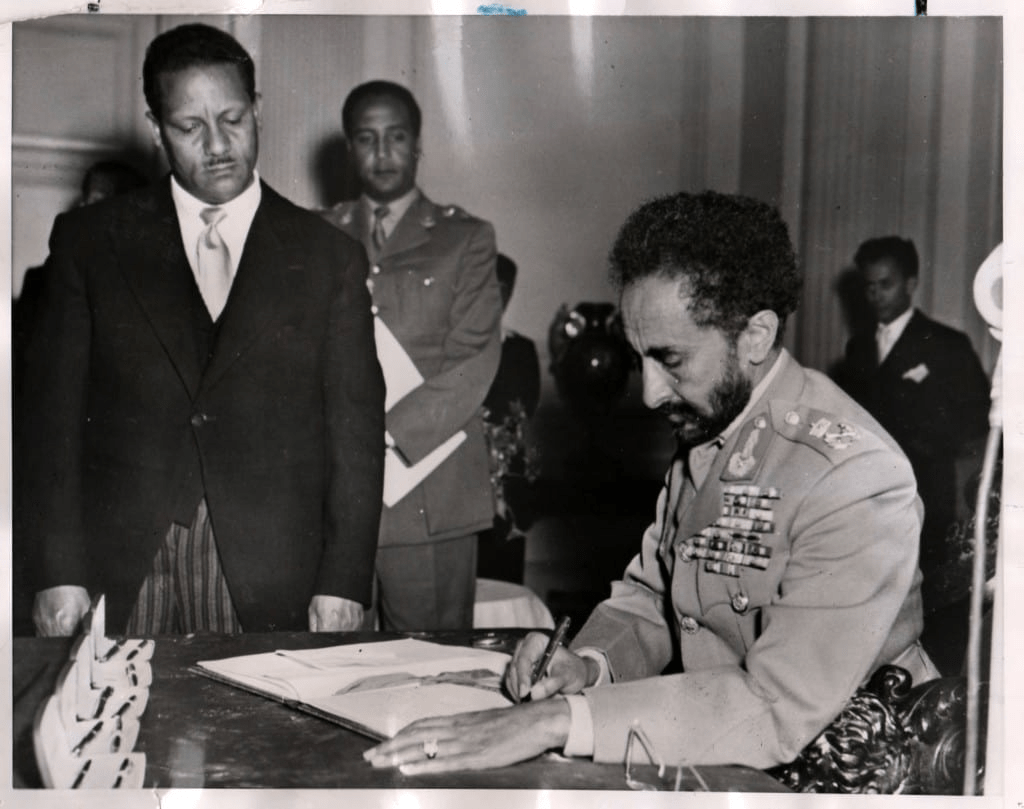
Early on in Hailie Selassie’s time as ruler of Ethiopia, he introduced the country’s first constitution, which allowed for a bicameral, or two-house, ruling body on July 16, 1931. The constitution kept noble houses in power, but established democratic rule in a nation that had yet to embrace such a philosophy.

The 1931 Constitution of Ethiopia served as the nation’s first modern document of its sort, which was crafted to replace the ancient Christian legal code known as the Fetha Negest. The former law had been in place since the Middle Ages, created by Coptic Egyptian writer Abul Fada’il Ibn al-‘Assal.

The new constitution was announced with an impressive ceremony, and it was also the first time an absolute ruler of a nation moved to share power with others over the land they governed.

This fact was noted in the 1936 translation of the Ethiopian constitution in a preface written by William Stern.

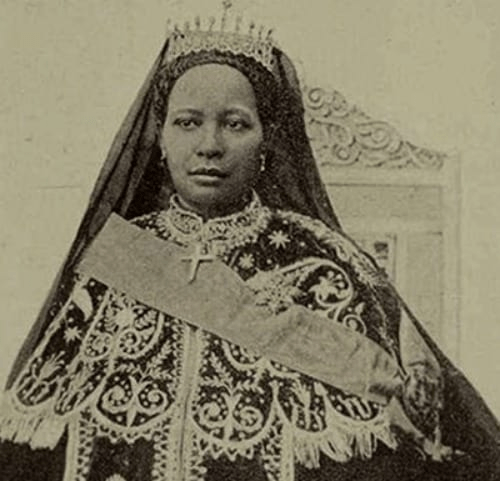
As written in Selassie’s biography, the Emperor initially wanted Empress Zawditu (pictured) to bring forth the constitution, but it was frowned upon by other noble families as an affront to her rule. When Selassie’s reign began, however, he assigned a group to draft the constitution. There were some European influences in drafting the document, but it was largely written with the help of Ethiopian scholars Tekle Hawariat Tekle Mariyam and Gedamu Woldegiorgis.

Ethiopia’s constitution was crafted similar to the Meiji Constitution of Japan, a country which held sway with some Ethiopians as a mix of Western and Eastern cultures. The document itself wasn’t necessarily complex, as it contained 55 articles over seven chapters. It also affirmed Selassie’s status as Emperor and only allowed ascension to the throne to be reserved to his family’s bloodline.

The document also gave all power to the monarchy, including the military and local government structures. According to historians, the constitution was basically a legal move to replace province rulers with representatives loyal to Selassie in name and deed and still gave the Emperor power to elect leaders. In essence, it wasn’t a true democratic process.

The Emperor hoped that the constitution would inspire a national solidarity, but it seemingly created tensions. Other dynastic families took umbrage with the law’s rule that only Selassie’s family line could rise to the throne. Even the Emperor’s cousin was reportedly taken aback by the rule.

The constitution lasted until 1955, during Selassie’s 25th year as Emperor, and a new constitution was introduced. Replete with American and Western influences, including assistance from three American scholars, the new constitution attempted to bring nationalism to the forefront but was largely lost on the populace, where literacy and understanding of the laws by the less educated was hindered.

Emperor Selassie was eventually ousted from power in September 1974 in a violent coup after years of tension in the country between the government and low-ranking members of the military.

This article written by Ismail Akwei was first published on face2faceafrica.com.

How South African boys are initiated into adulthood, an age-old subject of debate

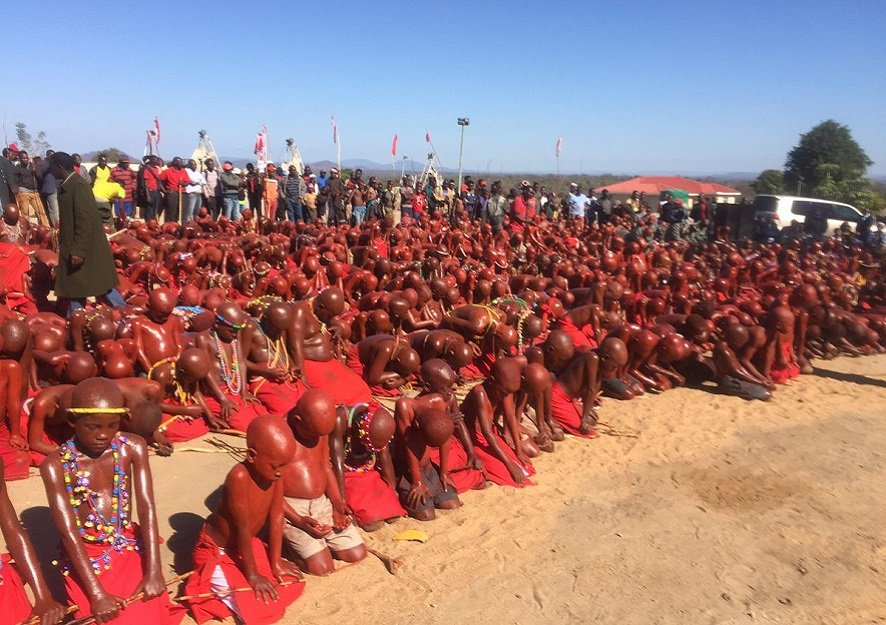
Many South African men of the amaXhosa tribe and some Nguni speaking people have gone through the sacred Ulwaluko initiation rite which ushers boys into manhood. The ancient ritual includes traditional circumcision and weeks of seclusion to teach boys about their history, culture and responsibilities as men.

The controversial ritual has resurfaced in many communities where boys of all ages and as young as seven years old are enrolled in initiation schools at various locations during the winter season in late June/early July or late November/ early December.

The controversy is aligned with the number of deaths and accidents recorded over the years as some boys die out of botched circumcisions while others get their penises severed by incompetent practitioners at illegal initiation schools.

In December last year, 16 boys died in Eastern Cape alone at initiation school where boys are also prevented from taking Western medication or risk being stigmatized by their peers.

The boys normally go through the rite in a group and are confined to a hut in the first 7 days and restricted from eating certain foods. The second phase takes between two to three weeks when the boys are looked after by the ikhankatha (a traditional attendant) who takes them through traditional lessons during which the ingcibi (traditional surgeon) surgically removes their foreskins.

Per tradition, no one is supposed to speak of what happens at the initiation schools else they risk being assaulted. The huts and initiates’ possessions are burnt at the end of the ritual and they are given new blankets after they wash down in rivers depending on their location. They are then called men and not boys.

Regardless of the age, if an amaXhosa man does not go through the Ulwaluko initiation rite, he is still considered a boy. However, Twitter user Mmakobo Thage’s young son will not be considered a boy since he had just returned from the initiation school.

He happily tweeted: “My son was there too…came home safe”. This was in response to a tweet about the return of scores of initiates after weeks in the bush in Mpepule Village, Bolobedu Limpopo.

My son was there too…came home safe pic.twitter.com/Y7GHhXitd3

— Mmakobo Thage (@Reginah_Thage) July 14, 2018

The tweet started a whole debate about the initiation rites and why it should be banned. Other Twitter users supported the rites and argued that the issue of deaths are mainly from some areas and they need to be checked.

The Eastern Cape is heavily affected by deaths of initiates every year and the government has cautioned against enrolling children in illegal initiation schools that are springing up in the country.

Early this year, another controversy emerged around the initiation ritual after the award-winning film ‘Inxeba’ was released to portray the experiences of homosexual men during Ulwaluko.

There were protests against the film and calls for it to be banned in the country as Xhosa traditional leaders said it undermined their culture and exposed their hidden traditions.

Despite the controversies, the initiation rights continue and the only problem expressed by many is the number of deaths from improperly done circumcisions by illegal traditional surgeons.

Here are diverse views of South African men on the initiation rites.

This article written by Ismail Akwei was first published on face2faceafrica.com