These Africans shamelessly played an active role in the transatlantic slave trade (2)

It has been established that the demand for slaves during the Transatlantic slave trade was fuelled by the availability of a supply chain which involved African rulers and tradesmen who made a fortune out of selling people.

Between 1525 and 1866, 12.5 million Africans were shipped to North America, the Caribbean and South America, according to the Trans-Atlantic Slave Trade Database. Only about 10.7 million survived the dreadful journey under bondage in slave ships.

The slave trade contributed to the expansion of the most powerful West African kingdoms such as Mali and Ghana, as the business became one of the main sources of foreign exchange for many years.

Britain banned the slave trade in 1807 and the United States later abolished it in 1865. Brazil was the last to ban it in the Caribbean in 1888 marking the end of the barbarism inflicted on men, women and children of colour and their descendants.

There were recorded protests by West African chiefs and traders after the abolition of slave trade due to the loss of revenue. In West Africa, the slave traders were known as caboceers and they lived on the coast. They were usually appointed by the African rulers to deal directly with the European slave merchants. 

In the second of the two-part article, here are some notorious chiefs and caboceers who were actively involved in the transatlantic slave trade.

Niara Bely (1790 – 1879)

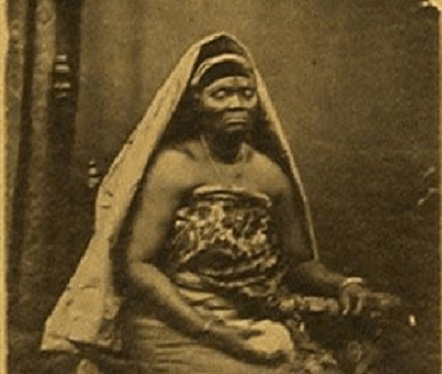
Also known as Elizabeth Bailey Gomez, she was a Luso-African queen who became a prominent businesswoman in nineteenth-century Guinea. She was active in the slave trade in Farenya, Guinea.

She studied in Liverpool where she adopted the name Elizabeth.

Okoro Idozuka

He was a 19th-century leader and warrior in the Arondizuogu area of what is now Nigeria. He was a senior advisor to the founder of Ndiakunwanta Uno Arondizuogu village and also a leader in his own right, expanding Arondizuogu’s boundaries. He was a wealthy slave trader like Izuogu Mgbokpo.

Okoroji Oti

He was a local chief in Ujari, one of the nineteen villages in Arochukwu, Abia State, Nigeria. He was reputable for being a slave merchant who built the Okoroji House Museum, a historic house museum. Oral history has it that four hundred people were sacrificed to Ibini Ukpabi after his death as the head of the oracle.
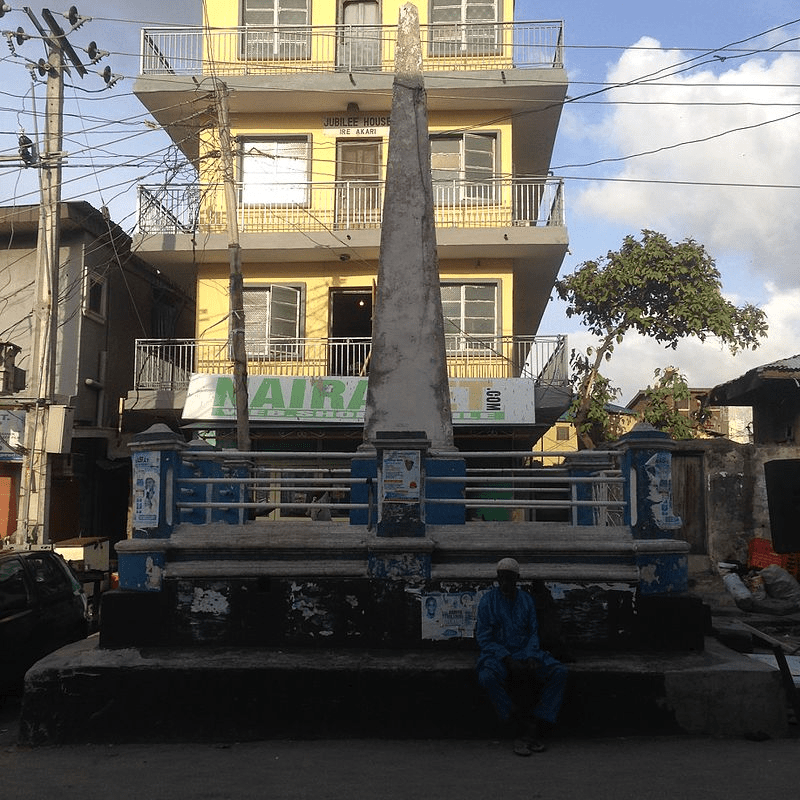
Oshodi Tapa monument in Lagos

Oshodi Tapa (1800 – 1868)

He was Oba Kosoko’s war captain and one of the most powerful chiefs in the Oba of Lagos’ court. He is reported to have been a slave from the Nupe Kingdom at Bida. Accounts note that when he was a little boy about to be loaded onto a Portuguese ship bound for the Americas, he escaped and sought refuge in Oba Osinlokun’s palace.

He and another slave (Dada Antonio) were sent by Oba Osilokun to Brazil to learn Portuguese, acquire the necessary commercial and cultural knowledge to conduct trade on behalf of the Oba and to collect duties from Portuguese slave traders. After serving Osilokun, Oshodi Tapa became a key adviser and military chief of Oba Kosoko.

He successfully transitioned from human trafficking to expanding into producing palm oil, cotton, and ivory using slave labour.

Antera Duke

He was an 18th-century African slave dealer and Efik chief from Calabar in eastern Nigeria (now in Cross River State). His diary, written in Nigerian Pidgin English, was discovered in Scotland and published. This diary records his interactions with British merchants to whom he sold slaves; he writes about wearing “white man trousers” and entertaining the merchants he traded with.

Emmanuel Gomez, senior

Emmanuel Gomez was a Luso-African from Bissau who founded a Luso-African dynasty in Bakia, Guinea in the eighteenth century. He was the father of Emmanuel Gomez, junior and Niara Bely.
Emmanuel Gomez, senior

Emmanuel Gomez was a Luso-African from Bissau who founded a Luso-African dynasty in Bakia, Guinea in the eighteenth century. He was the father of Emmanuel Gomez, junior and Niara Bely.

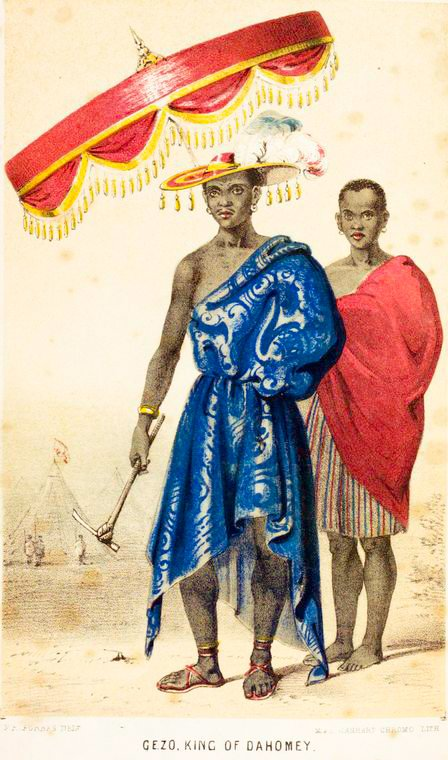
Gezo, the Dahomey King in an 1851 publication

He was King of Dahomey, in present-day Benin, from 1818 until 1858. Ghezo replaced his brother Adandozan (who ruled from 1797 to 1818) as king through a coup with the assistance of the Brazilian slave trader Francisco Félix de Sousa.

He suffered a British blockade of the ports of Dahomey in order to stop the Atlantic slave trade. He also dealt with significant domestic dissent and pressure from the British to end the slave trade.

Betsy Heard (1759 – 1812)

She was a Euro‐African slave trader and merchant whose father was an entrepreneur who had travelled from Liverpool, England, to the Los Islands, off the coast of what is now Guinea, in the mid-1700s. Her mother was African.

Heard’s father sent her to England to study and she later returned to West Africa and set up a trading post on the Bereira River. She inherited her father’s slave-trading factory and connections, and by 1794, established a monopoly on the slave trade in the area. She owned the main wharf in Bereira, several trading ships, and a warehouse until her retirement.
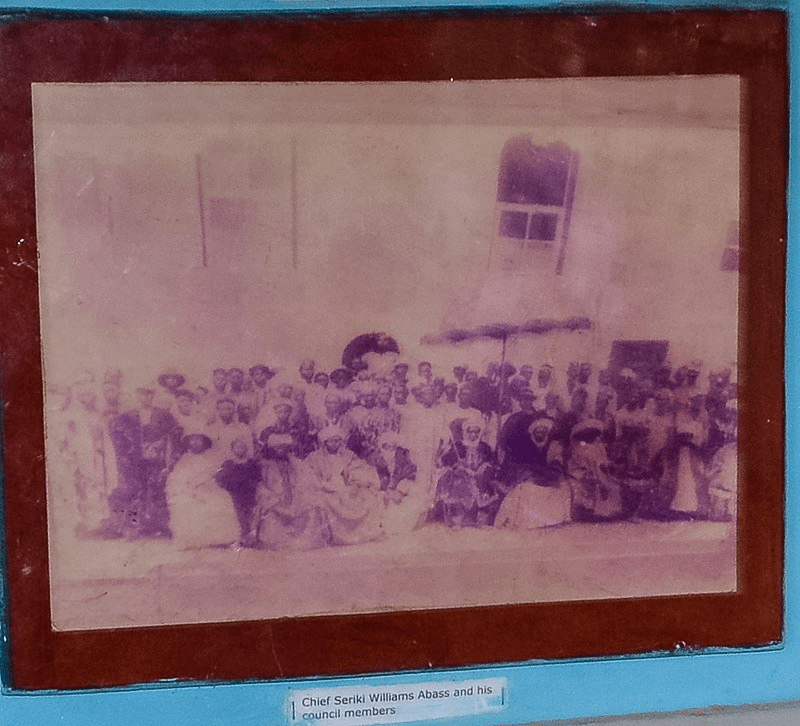
Group photo of Seriki Williams Abass and his council members

Seriki Williams Abass

He was a renowned slave merchant during the 19th century and a former paramount ruler of Badagry.

Born Ifaremilekun Fagbemi in Joga-Orile, a town in Ilaro, Ogun State, Abass was captured as a slave by a Dahomean slave merchant called Abassa during one of the Dahomey–Egba clashes. He was later sold to a certain Brazilian slave dealer called Williams who took Abass to Brazil as a domestic servant and taught him how to read and write in Dutch, English, Spanish and Portuguese languages.

He returned to Nigeria on the condition of working with Mr Williams as a slave trade business partner. He first settled at Ofin, Isale-Eko in the Colony of Lagos before he relocated to Badagry in the 1830s.

He succeeded in his slave-trade business while in Badagry and soon became the first person in the Egbado division of Badagry to own a lorry, the “Seriki Ford” he bought in 1919 to ply the Abeokuta–Aiyetoro Road. His wealth brought him respect and made him hold various top political and organizational positions.

This article was first published by Ismail Akwei on face2faceafrica.com

These Africans shamelessly played an active role in the transatlantic slave trade (1)

It has been established that the demand for slaves during the Transatlantic slave trade was fuelled by the availability of a supply chain which involved African rulers and tradesmen who made a fortune out of selling people.

Between 1525 and 1866, 12.5 million Africans were shipped to North America, the Caribbean and South America, according to the Trans-Atlantic Slave Trade Database. Only about 10.7 million survived the dreadful journey under bondage in slave ships.

The slave trade contributed to the expansion of the most powerful West African kingdoms such as Mali and Ghana, as the business became one of the main sources of foreign exchange for many years.

Britain banned the slave trade in 1807 and the United States later abolished it in 1865. Brazil was the last to ban it in the Caribbean in 1888 marking the end of the barbarism inflicted on men, women and children of colour and their descendants.

There were recorded protests by West African chiefs and traders after the abolition of slave trade due to the loss of revenue. In West Africa, the slave traders were known as caboceers and they lived on the coast. They were usually appointed by the African rulers to deal directly with the European slave merchants. 

In the first of the two-part article, here are some notorious chiefs and caboceers who were actively involved in selling their own.

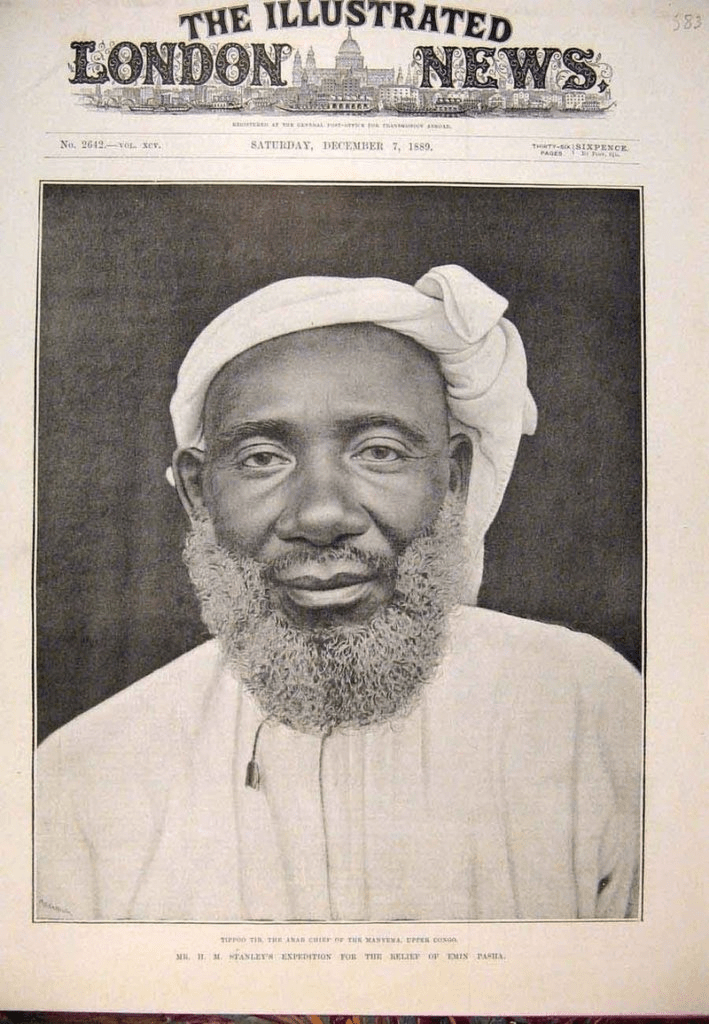
Tippu Tip on the front page of a British newspaper

Tippu Tip (1832-1905)

He was a Swahili-Zanzibari slave trader, businessman and governor who worked for many sultans of Zanzibar. Tippu Tip traded in slaves for Zanzibar’s clove plantations.

He led many trading expeditions into Central Africa by constructing profitable trading posts that reached deep into the region. By 1895, he had acquired “seven ‘shambas’ [plantations] and 10,000 slaves.

He met and helped several famous western explorers of the African continent, including David Livingstone and Henry Morton Stanley. He claimed the Eastern Congo for himself and for the Sultan of Zanzibar; and was later made governor of the Stanley Falls District in the Congo Free State.

Rabih’s head a battlefield trophy after the fighting on 22 April 1900

He was a Sudanese warlord and slave trader who established a powerful empire east of Lake Chad, in today’s Chad. He worked as the right-hand man of the Sudanese slaveholder Sebehr Rahma. He conquered empires and was killed by the French after he slaughtered their emissaries.

Al-Zubayr Rahma Mansur

He was a slave trader in the late 19th century and later became a Sudanese governor. He was at odds with the British Governor General Charles Gordon and was referred to as “the richest and worst”, a “Slaver King” “who [had] chained lions as part of his escort” by England.

General Gordon who was sent to Sudan to suppress the slave trade was opposed by Al-Zubayr.

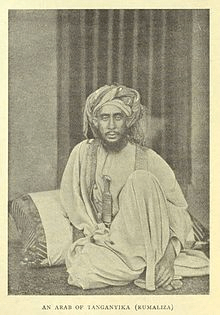
Muhammad bin Khalfan bin Khamis al-Barwani alias Rumaliza

Rumaliza

Named Muhammad bin Khalfan bin Khamis al-Barwani, Rumaliza was a Swahili[a] slave and ivory trader in East Africa in the last part of the nineteenth century. With the help of Tippu Tip he became Sultan of Ujiji. At one time he dominated the trade of Tanganyika.

Stories associated Rumaliza and his parties with the kidnapping of women, cutting off men’s genitals (to be captured and sold as eunuch slaves), cutting off legs, arms and hands, piercing of noses and ears, burning villages and killings. Belgian forces under Francis Dhanis launched a campaign against slave dealers in 1892, and Rumaliza was targeted until he fled.

William Ansah Sessarakoo

William Ansah Sessarakoo (1736–1770)

He was a prominent 18th-century Ghanaian, best known for his wrongful enslavement in the West Indies and diplomatic mission to England. He was both prominent among the Fante people and influential among Europeans concerned with the transatlantic slave trade.

His father was John Correntee, chief caboceer and head of the Annamaboe (present day Anomabo) government who was a slave trader and an important ally for any trader in the city. His father sent him to England to gain an education and be his eyes and ears in Europe.

The ship captain entrusted with Ansah’s transport sold him into slavery in Barbados before reaching England. He was discovered in Barbados years later by a free Fante trader who alerted John Corrente. Corrente petitioned the British to free his son. The Royal African Company, the English company operating the slave trade freed him and transported him to England.

He was received as a prince in England and gained the respect of London’s high society. It is noted that he watched a live performance of a play depicting a wrongly enslaved African prince. He fled the theatre in tears to the surprise of the audience. The play likely reminded Ansah of himself.

He returned to Annamaboe and took up work as a writer at Cape Coast Castle. He later worked as a slave trader.

Signares

Signare

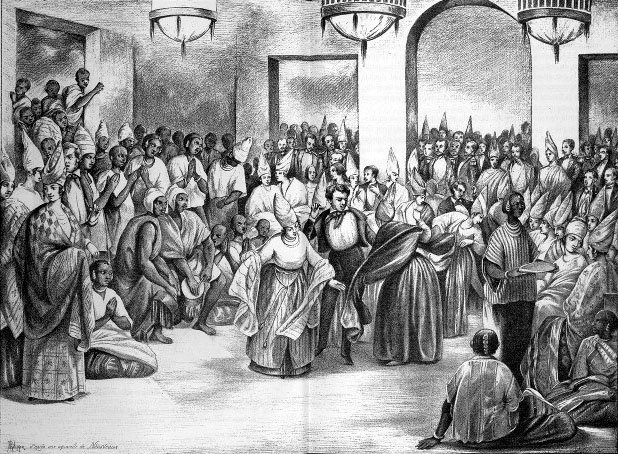
Signare was the name for the Mulatto French-African women of the island of Gorée in French Senegal during the 18th and 19th centuries. These women of colour managed to gain some individual assets, status, and power in the hierarchies of the Atlantic Slave Trade.

Notable signares included Victoria Albis, Hélène Aussenac, Anna Colas Pépin, Anne Pépin, Mary de Saint Jean and Crispina Peres.

Francisco Félix de Souza

Francisco Félix de Sousa (1754 – 1849)

Francisco Félix de Souza was a major slave trader and merchant who traded in palm oil, gold and slaves. The Afro-Brazilian migrated from Brazil to what is now the African republic of Benin. He has been called, “the greatest slave trader”.

De Sousa continued to market slaves after the trade was abolished in most jurisdictions. He was apparently so trusted by the locals in Dahomey that he was awarded the status of a chieftain.

His early years in Africa are well documented in a long article (in Portuguese) by Alberto Costa e Silva entitled “The Early Years of Francisco Féliz de Souza on the Slave Coast”.

Although a Catholic, he practiced the Vodun religion, which is consistent with his Afro-Brazilian background, and even had his own family shrine. He was buried in Dahomey.

Madam Efunroye Tinubu

Efunroye Tinubu (1810 – 1887)

She was a politically significant figure in Nigerian history because of her role as a powerful female aristocrat and slave trader in pre-colonial and colonial Nigeria. She was a major figure in Lagos during the reigns of Obas Adele, Oluwole, Akitoye and Dosunmu.

In December 1851 and under the pretext of abolishing slavery, the British bombarded Lagos, dislodged Kosoko from the throne, and installed a more amenable Akitoye as Oba of Lagos. Though Akitoye signed a treaty with Britain outlawing the slave trade, Tinubu subverted the 1852 treaty and secretly traded slaves for guns with Brazilians and Portuguese traders.

Bibiana Vaz (1630 – 1694)

Bibiana Vaz de França was a prominent seventeenth-century slave trader in Cacheu, Guinea-Bissau. She married the richest man in Guinea and in 1687, she was arrested and taken to São Tiago (today as Santiago), where she was held as a prisoner.

Portuguese authorities, unable to confiscate her property, granted her a pardon in exchange for an indemnity and a promise that she would construct a fort in Bolor on the Cacheu River. She never constructed the fort.

Dona Anna Joaquina dos Santos e Silva

Dona Ana Joaquina dos Santos e Silva was a very renowned personality in 19th century Luanda. She was an Angolan elite of African and Portuguese descent. She became rich from selling slaves in her region to slavers who wanted black people to ship to the Americas.

Until the early 2000s, Dona Ana Joaquina dos Santos e Silva’s home and warehouse for slaves were still standing in Luanda’s Cidade Baixa area. It was turned into a court of justice after it was demolished and rebuilt. There are still remnants of Angola’s slaving past dominated by Dona Anna in the capital Luanda.

This article written by Ismail Akwei was first published on face2faceafrica.com
Nigerian girls win gold at global tech competition with app that spots fake drugs

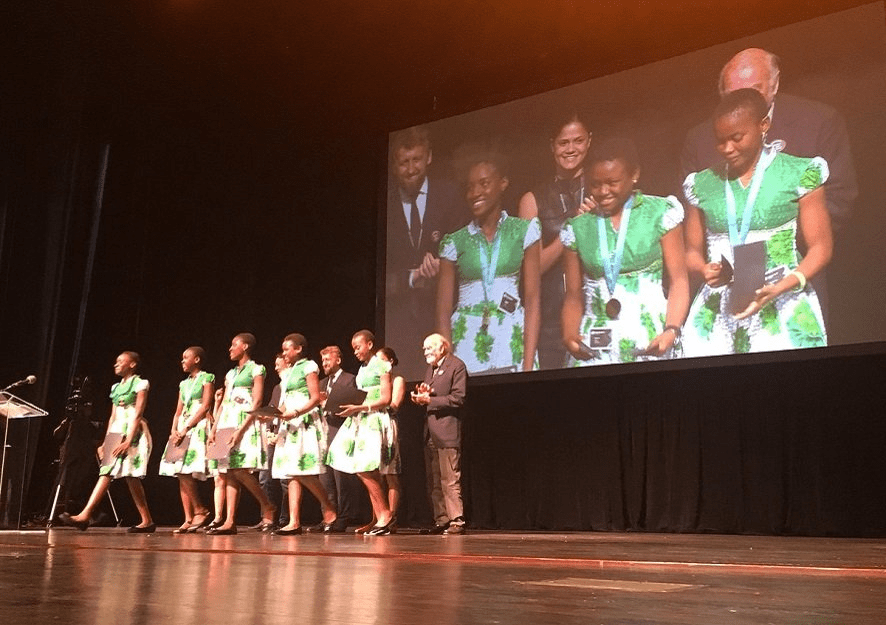
Ateam of five Nigerian junior secondary school girls, who go by the name Save A Soul, has won gold at the junior level of the Technovation World Pitch Summit held at Silicon Valley in California, U.S.A. on Thursday where they presented an app they built that identified fake pharmaceutical drugs in Nigeria.

The competition organized by American tech non-profit, Technovation, invites girls to identify a problem in their community and then solve it using in teams by building a mobile app and a business plan.

Promise Nnalue, Jessica Osita, Nwabuaku Ossai, Adaeze Onuigbo and Vivian Okoye from the Anambra State qualified for the finals with their app, FD-Detector (Fake Drug Detector) which leverages a drug’s barcode to verify its authenticity and expiration date.

They successfully implemented their business plan using the app by partnering with NAFDAC (National Agency for Food & Drug Administration and Control), an agency responsible for regulating drugs in Nigeria, to market the app and help save lives.

Save A Soul were the only African finalists in the junior category of 6 teams and won a scholarship of $12,000. The win will go a long way to promote the app which will help reduce the infiltration of the pharmaceutical market with fake drugs.

Nigeria’s Vice President Yemi Osinbajo congratulated the girls and their mentor Uchenna Onwuamaegbu-Ugwu, the founder of Edufun Technik STEM Center.

Technovation prides itself as “entrepreneurs, mentors, and educators looking to teach girls everywhere the skills they need to change the world with technology”.

This article written by Ismail Akwei was first published on face2faceafrica.com
Success story of the Nigerian genius leading Andela’s operations at the heart of Africa’s tech revolution

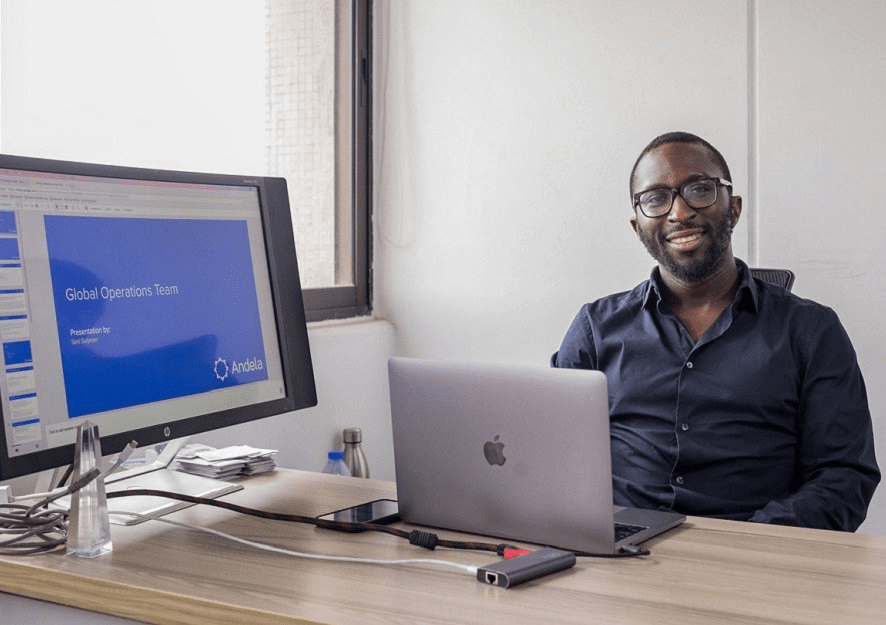
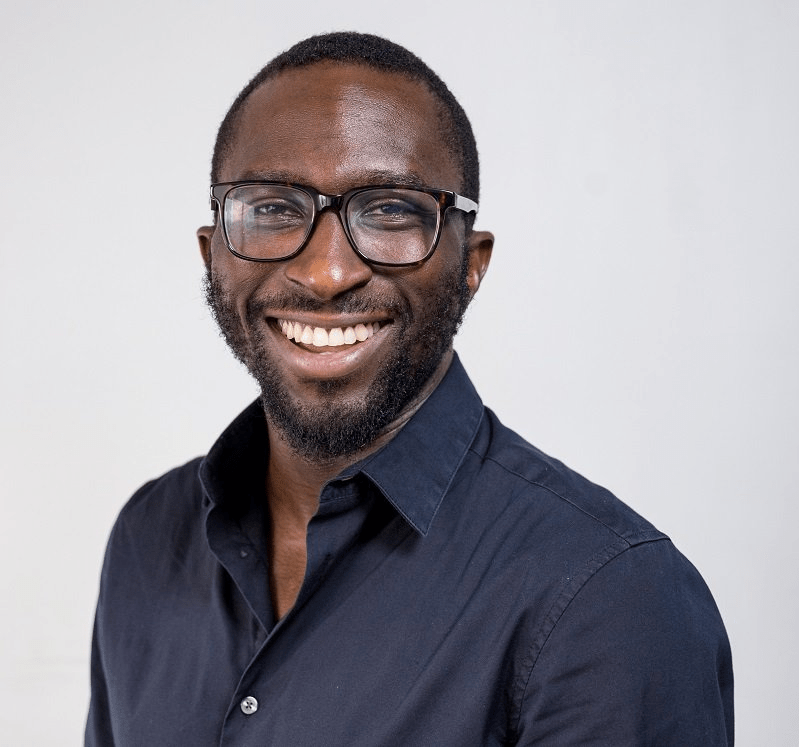
Seni Sulyman, VP Global Operations, Andela

The African market is booming with technologies from Asia, Europe and America which are flooding the continent. Meanwhile, the few indigenous brands are drowning in competition as there is a massive shortage of African talents to build world-class products.

The divide is what inspired the founding of the engineering company Andela, which is building a network of African technology leaders and software developers to help companies and the continent as a whole to build better products and overcome the tech talent shortage respectively.

Co-founded in 2014 by Nigerian entrepreneur Iyinoluwa Aboyeji, Christina Sass, Ian Carnevale, and Jeremy Johnson, Andela raised $81 million from the Chan Zuckerberg Initiative, Omidyar Network, Salesforce Ventures, and Google Ventures among others to lay the foundation of the now most sought-after tech company.

Andela has opened technology hubs in Lagos, Nairobi, Kampala and recently in Kigali which is their new Pan-African technology hub to be launched in December 2018. With over a thousand African developers working from the various hubs, Andela hopes to grow a million more home-grown software engineers in the next ten years.

The facilitator of this ambitious dream is 32-year-old Nigerian, Seni Sulyman, who is Andela’s Vice President of Global Operations. He is an engineer and Harvard-trained business executive who decided to return home to Nigeria after studying in the United States.

Face2Face Africa had a chat with him for an insight into his life and that of Andela. Seni tells us that his tech journey started at the university where he started buying and selling phones on eBay, not only for the money, but to “open them up and see what was in them before selling.”

“I really thought technology will change the world and I wanted to be part of that. So my very initial career dream was to go work at Motorola and build devices of the future. I used to actually design on paper, I used to design different phones and what they could do in ten, twenty years,” he recalls including how his parents got a cell phone in 1999 when he was leaving Nigeria for the first time to the U.S. when he was only 13 years old.

Technology also introduced the electrical engineering graduate of the Northwestern University to business as he wanted to develop a business sense coupled with his passion for technology to build a tech company in the future.

“Obviously, I wasn’t that good of an engineer so I went into business, into consulting to learn about organisations, about businesses and ultimately my dream was I wanted to learn about how companies work and if I can apply that with my passion for technology maybe I can go build a technology company one day,” he explains.

He was further influenced by his mentors to go to Harvard University for a Master of Business Administration (MBA) degree to perfect his managerial skills after working with some business consulting firms and technology company Hewlett Packard (HP) where he climbed up the ladder to a manager position.

Sulyman made a big move to Nigeria after his studies in 2014 despite juicy offers from Facebook, Google and other companies.

“After Harvard, I basically decided I’m going to come back to Africa. I felt like I contributed enough to the best of the time and the things that are making me passionate and the things that I am excited about I felt were in this part of the world … So I declined all the offers and I bought a one-way ticket and flew back to Lagos,” he says.

Sulyman, like every diaspora returnee, said he thought about moving back to the U.S. in the midst of Nigeria’s economic collapse and high cost of living, but he kept going to achieve his goals. His other secret was his fiancee, he happily chipped in.

“I really was thinking: does it make sense, is it worth it? But I just kept pushing myself … I just kept going and asking everyone I knew what opportunities were available. I had this hope that if I just tell the world what I want to do and I keep saying the same thing every single day, eventually it will find me. That’s what I did and that’s what kept me going, and eventually, that actually happened…

“I guess a little secret … The other part I didn’t tell you about is that I met someone amazing in the country and that’s what kept me around here a little longer than I would have stayed,” he says with heavy laughter.

Seni Sulyman got a job with a small airline company in Lagos where he discovered the serious African problem of lack of local technology and engineering talents. A career-development magazine and mentorship programme he set up to bridge the gap didn’t work. This is where he got connected to Andela.

“At that point in time, someone reached out to me and said ‘this company is looking to hire a head of operations and I think you are the best person for this role. Can you talk to us about this?’ So that’s how I began to get involved with Andela,” he says.

Seni Sulyman added that Andela is fortunate to be in business at this time because there is a lot of funded companies and capital out there that can’t find technology talent. And Andela is doing well in bridging that gap and will not face problems due to the market potential.

On Africa’s technology growth potential of catching up with the rest of the world, Sulyman says, “It will take us probably 10 years to get there … Africa has already experienced a digital transformation if you like it or not. The question is, will we be the ones driving the change or just recipients of change?

“We are trying to not wait and we don’t want to wait for the world to tell us how we are going to adopt technology. We want to have the people that are here that can actually push us forward. Because technology is going to move and the world is going to move, why don’t we have our own people responsible for creating that future that we are all going to have to live with anyway,” he adds and mentions Rwanda as one of the few countries that are heavily investing in technology.

Seni Sulyman hopes to create Africa’s greatest leaders who will come out of the continent, and to measure his success, he says it will be determined by how much value he’s created through the people he mentors.

“Ten to 20 years from now, go around the continent and ask young people to name the leaders they admire the most. And if they name several people I have had impact on, then I will know I’ve had an impact on the continent,” he concludes.

Sulyman had an advice for those who want to return to Africa and start a life like he did:

Some people just don’t want to go through the hustle and there is no easy way to do this. If you are willing and you want to just come back with the belief that everything is working perfectly well, there is no way it is going to work out. I have had some terrible days and nobody will even know where I have come from when they see me in this position and why am I here? But you just have to do it.

Listen to the full interview in the podcast below.

This article written by Ismail Akwei was first published on face2faceafrica.com

The few LeBron James of Africa who are giving back big time for the good of the continent

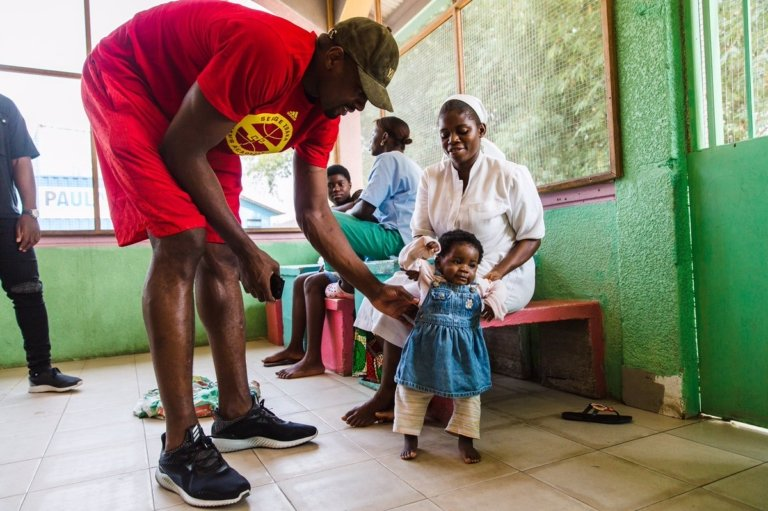
Bismack Biyombo is his home country the Democratic Republic of Congo where he has opened a new school

It is the moment of American basketball star LeBron James who recently opened a public school in his hometown Akron, Ohio, which will start with 240 at-risk children (third and fourth graders) with plans to expand to over 1,000 students.

Children who graduate from the I Promise School and meet specific standards will qualify for a full scholarship to the University of Akron, through the LeBron James Family Foundation.

While the world celebrates LeBron James, there are others like him who are also investing in children and education in the African continent which has a 35.7% illiteracy rate among all adults.

Take a look at these generous sportsmen who are saving thousands of people on a low-key.

Bismack Biyombo

Orlando Magic’s Bismack Biyombo Sumba has made a great impact in his home country, the Democratic Republic of Congo. Besides regularly donating large sums of money and spending time to help children, he has also opened a new school in Goma which looks incredible.

The Kivu International School is providing world-class education to the students in the central African country. The Orlando Magic center has also created scholarships for children to study in the United States. He has also built a lot of basketball courts.

“It means the world to me. When I started this program back home, I never thought it would grow massively to the point where I would get to the point to build a school for these kids. But also, at the end of the day, it’s just about transforming the next generation and making sure that these kids are well-educated,” he said at a press conference last year.

Masai Ujiri

Masai Ujiri is the president of the Toronto Raptors and the first African National Basketball Association (NBA) executive. He was born in northern Nigeria city of Zaria and grew up playing soccer until he grew an interest in basketball at the age of 13.

After some years of playing basketball in Nigeria inspired by the first African player in the NBA Hakeem Olajuwon, Ujiri emigrated to the U.S. where his breakthrough began.

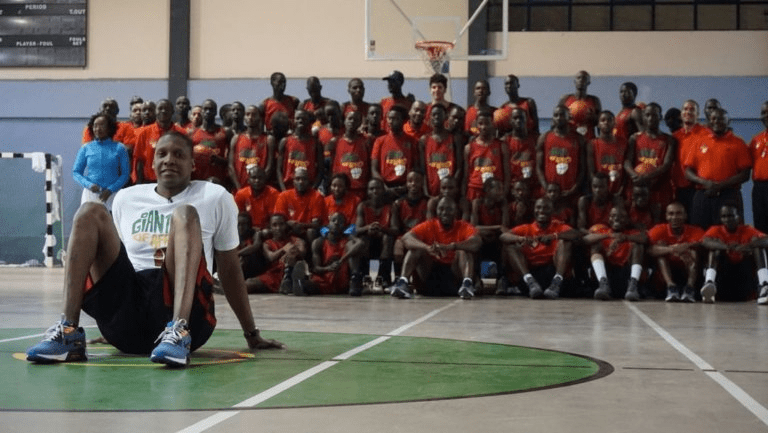
Masai Ujiri has maintained his ties with Africa as the director of the NBA’s Basketball Without Borders Africa program, which promotes the game in the continent. He also sponsors two basketball camps in Nigeria through his charity, Giants of Africa (GOA), which nurtures top players and coaches. The programme is in other countries including Ghana, Kenya, and Rwanda.

Serge Ibaka

The Republic of Congo-born and Toronto Raptors player goes home every year and gives back through his Serge Ibaka Foundation. The Foundation has helped improve the lives of children in health, education, and nutrition among other areas.

He has partnered with several organisations to realize his dream of helping children. The Foundation partnered with the Starkey Hearing Foundation to tackle the deafness epidemic in the Congo, allowing children to hear for the first time in their lives.

He also partnered with UNICEF to help provide mentorship and improve the education and living conditions of street children who don’t have any parents or family in the Congo.

His initiative won him a position on the National Basketball Players’ Association (NBPA) Board of Directors in 2017 to serve as a positive example for others in the league.

Samuel Eto’o

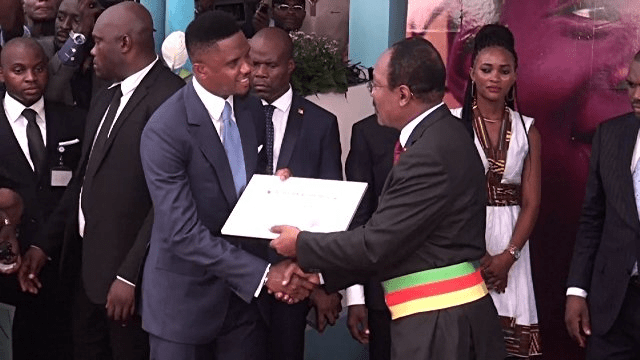
The Cameronian professional footballer, Samuel Eto’o, built a pediatric centre to reduce infant mortality rate in Douala, Cameroon last year.  He also announced plans to build a school in the country’s northern region with support from donors. His foundation has also provided 100 scholarships to an all-girls school in Sierra Leone.

Eto’o has also invested in football with the construction of a world-class complex in Libreville, Gabon which serves as an academy.

Didier Drogba

Former Ivorian football star, Didier Drogba through his foundation, has recently established a school in the Ivory Coast targeted at enabling children in the village of Onahio Pokou-Kouamekro to have access to quality education.

The school is partly funded by Nestlé and the International Cocoa Initiative. The facility includes classrooms, a kindergarten, a canteen, latrines, a football field and accommodation facilities for teachers. It replaces an existing school in Pokou-Kouamekro which was made of mud and lacked the necessary infrastructure.

Drogba has in the past announced plans to build a hospital in his hometown.

Didier Drogba plays for American Club Phoenix Rising. He is the all-time top scorer and former captain of the Ivorian national team.

This article written by Ismail Akwei was first published on face2faceafrica.com