Second scramble for what is left of Africa is happening right now

It is not for nothing that British Prime Minister Theresa May will choose to dance in Africa at a time when the British economy is struggling under Brexit and the United Kingdom needs a support base to stay afloat.

On the final day of her trip to Africa, Theresa May once again tried out her dance moves. pic.twitter.com/99Db9S5tYD

— The Telegraph (@Telegraph) August 30, 2018

Africa is the old cow that produces milk after a love pat. This is exactly what is happening as China and the United States battle for supremacy in the continent. On the side, the United Kingdom, Germany and India want a share of that milk.

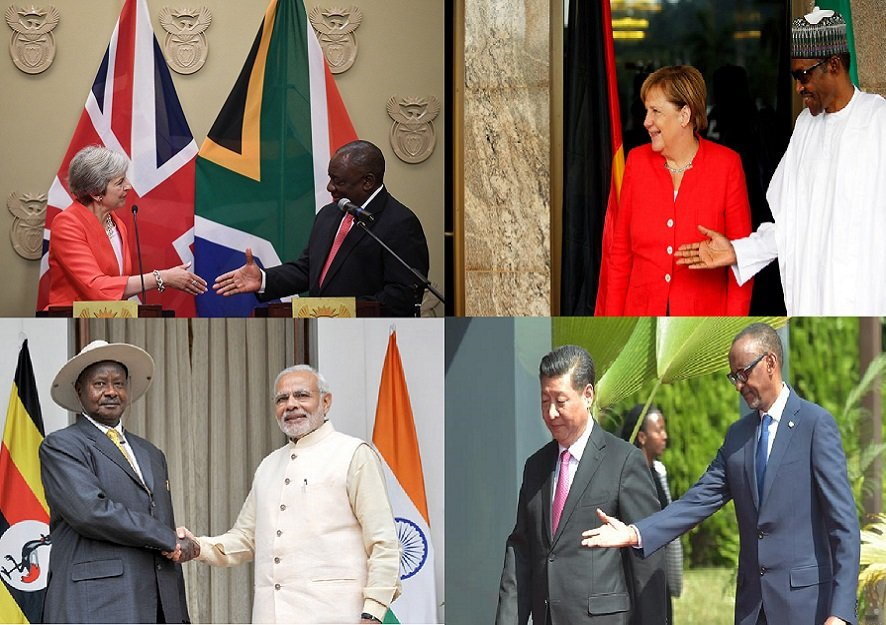
If you can’t convince them, then confuse them. Alas, May visited South Africa, Nigeria and Kenya on her three-day Africa tour aimed at boosting the former colonists’ trade and diplomatic presence in the countries.

She announced £4 billion ($5.1 billion) of extra British support for African economies in order for the UK to overtake the U.S. to become the biggest investor in Africa by 2022.

“Kenya will retain its duty-free quota access to the UK market as Britain prepares to leave the European Union. The UK is already the largest foreign investor in Kenya,” May states as she met with Uhuru Kenyatta in Kenya. She made the same promises to leaders of Nigeria and South Africa including other offers from security to healthcare.

Long before May could think of coming to Africa, China had already rooted its flag in the continent and they are the real competitors and not the United States which is losing painfully under an ignorant president.
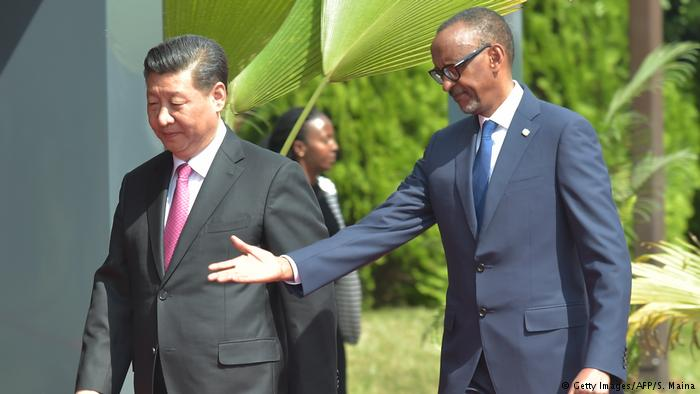
China’s president played his cards right by visiting the continent last month to deepen its stronghold. He visited Senegal, Rwanda, and South Africa cementing the “lasting friendship” which is making China the continent’s largest trading partner.

Who else will get the resources if not China which is building all the highways, national monuments, dams and cities for “free”?

By China’s side is India which is an emerging world power and would want a taste of the African milk. Prime Minister Narendra Modi also embarked on an Africa tour same time as China. He visited Rwanda, Uganda and South Africa. What does India want in East Africa and South Africa? Oh! The market which is largely run by Africans of Indian descent.

Germany! Their focus now is West Africa and German Chancellor Angela Merkel stepped foot on the continent as May was milking the cow. She toured Senegal, Ghana and Nigeria.

But why West Africa?

Germany has an immigration issue that has taken away its prime focus of economic development. We want your milk but can you first help us take away some of your people for us to talk? This could be running through the mind of Merkel who is battling with the fact that around 14,000 nationals from Ghana, Nigeria and Senegal living in Germany illegally and a political threat if the immigration situation is not solved.
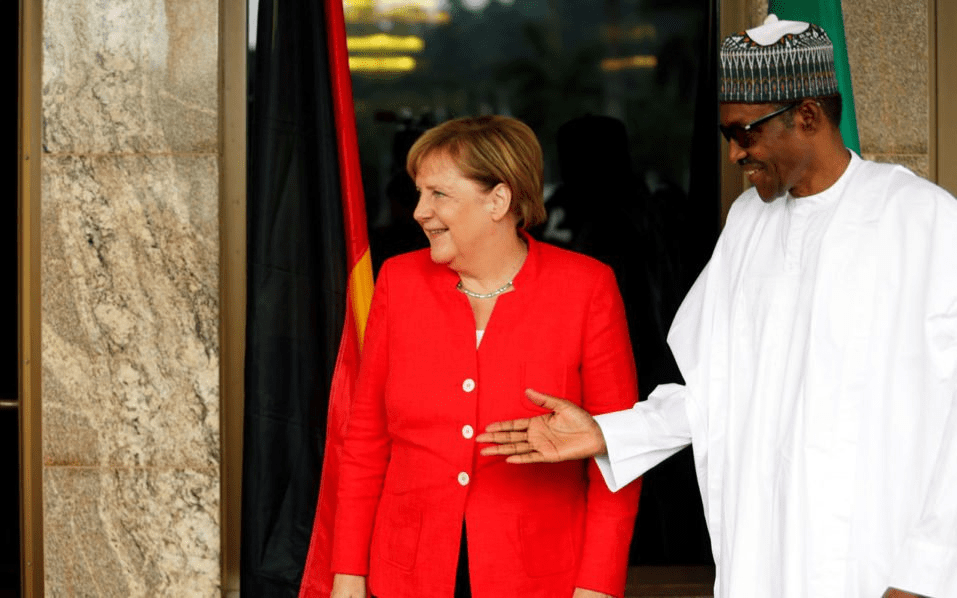
Merkel was quick to sign business deals in the West African countries including the quick signing of a Memorandum of Understanding for German carmaker Volkswagen to start car assembling in Ghana.

The rug is slowly being pulled under the feet of the United States which is currently the most generous in terms of aid to Africa. Donald Trump started crippling the relationship after calling African states “shithole countries” and firing former U.S. Secretary of State Rex Tillerson during a visit to Africa in an attempt to clear up his mess.

This was followed by a statement by the State Department disclosing that Ambassador Donald Y. Yamamoto, Assistant Secretary of State for African Affairs, will travel to Washington and Minnesota to meet with various members of the African diaspora.

President Trump’s African diaspora strategy deepens speculations that his administration does not care about Africa. He has never visited Africa and his wife recently shared plans to visit and “educate myself on the issues facing children throughout the continent, while also learning about its rich culture and history.”

It got muddy when Trump suspended Rwanda’s duty-free benefits to export clothes to the U.S. following the decision to increase tariffs on used clothes imports and a subsequent ban by 2019.

The Rwandan government responded to the suspension by saying that their garment companies are already being introduced to European buyers and they don’t need the United States to survive.

A typical action symbolizing Africa Beyond Aid. However, listen to the speeches of African leaders who are championing the non-dependency mantra; they beg for grass to provide milk.

This article written by Ismail Akwei was first published on face2faceafrica.com

How Michael Jackson struggled with vitiligo and turned white

As the world celebrates World Vitiligo Day on June 25, one person whose condition was a mystery to many comes to mind. This was the King of Pop Michael Jackson who coincidentally died on the same day in 2009 at the age of 50.

The celebrated American singer, songwriter, and dancer, who was one of the most popular entertainers in the world, was diagnosed with vitiligo in 1984. He came public with the condition in 1993 on the Oprah Winfrey Show.

He bleached his skin to cover up the white patches that come with the disease as a result of dead pigment-producing cells, according to biographer J. Randy Taraborrelli.

The top-earning deceased celebrity for the fifth consecutive year in 2017, according to Forbes, was also diagnosed with lupus and both diseases made his skin sensitive to sunlight while their treatments lightened his skin.

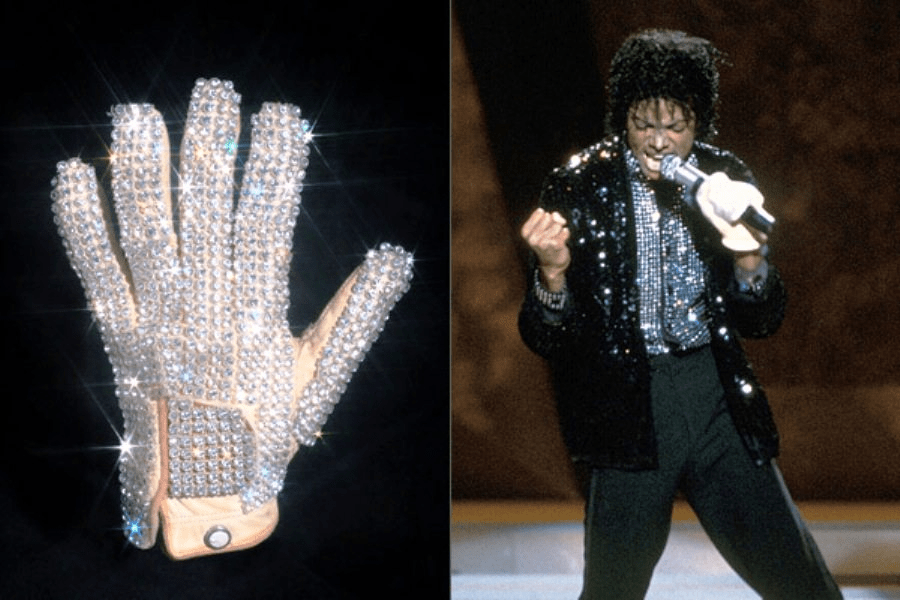
He first wore his iconic solitary white glove, which was later covered in silver sequins, in 1983 during a performance of “Billy Jean” at Motown’s 25th anniversary TV special. The glove which he wore on his left hand throughout his career was an early effort to mask the skin condition.

His friend, actress Cicely Tyson confirmed that the glove was to cover his vitiligo and she was there when he was creating it as the two shared a fashion designer in the 1980s.

“All of a sudden, he said, ‘I’m doing this glove for Michael,’ Michael was beginning to develop the vitiligo and it started on his hand. The glove was to cover the vitiligo; that’s how that glove came into being,” she told CNN’s Don Lemon in 2009.

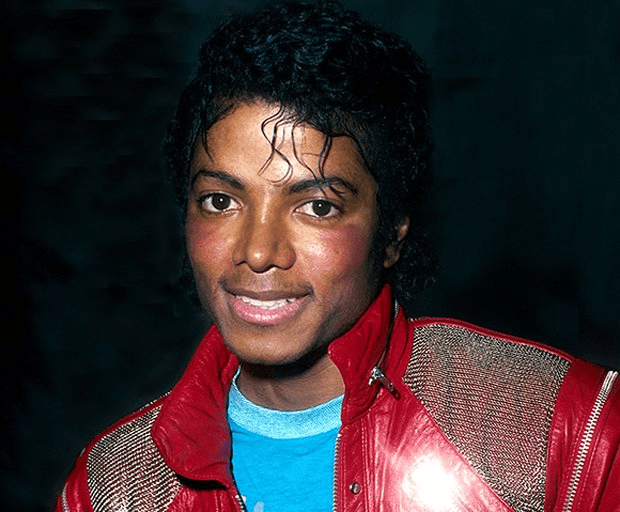
Michael Jackson was known to be medium-brown in colour since he started singing professionally in 1964 at the age of 6 with his elder brothers as a member of the Jackson 5.

1970 — Singer Michael Jackson — Image by © Steve Schapiro/CORBIS OUTLINE

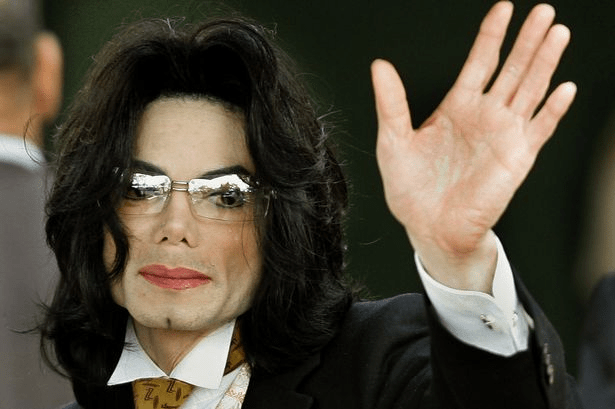
He started growing paler in the mid-1980s without going public with the skin condition that saw him applying makeup to hide his disease from the cameras. The media widely covered rumours that he didn’t like the colour of his skin and this hurt the music icon.

It is something I cannot help. When people make up stories that I don’t want to be who I am, it hurts me. It’s a problem for me. I can’t control it.– Michael Jackson said of his vitiligo in an interview.

In 1984, he was treated for scalp burns after his hair caught fire during a commercial shoot.

He subsequently had multiple cosmetic surgeries from nose jobs, a dimple on his chin, straight hair and also lost weight because of a change in diet and a desire for “a dancer’s body”. His health and his image were immensely affected.

Many reports in the 80s run by tabloids claimed that he slept in a hyperbaric oxygen chamber to slow the ageing process among other reports which were later cited to have been disseminated by Michael Jackson himself for publicity. This earned him the name “Wacko Jacko”.

Why not just tell people I’m an alien from Mars? Tell them I eat live chickens and do a voodoo dance at midnight. They’ll believe anything you say, because you’re a reporter. But if I, Michael Jackson, were to say, “I’m an alien from Mars and I eat live chickens and do a voodoo dance at midnight,” people would say, “Oh, man, that Michael Jackson is nuts. He’s cracked up. You can’t believe a single word that comes out of his mouth.– He told Taraborrelli.

During the 1990s, Michael Jackson had become dependent on prescription drugs including painkillers and strong sedatives. Despite rehabilitation in 1993, the artist was still suffering from drug problems.

Michael Jackson died of cardiac arrest on June 25, 2009, while preparing for a series of comeback concerts scheduled to begin in July 2009. The heart attack was induced by acute propofol and benzodiazepine intoxication, and his personal physician, Conrad Murray, was convicted of involuntary manslaughter.

This article written by Ismail Akwei was first published on face2faceafrica.com
Why the only two Rwandan women who tried to run for president against Kagame ended up in jail

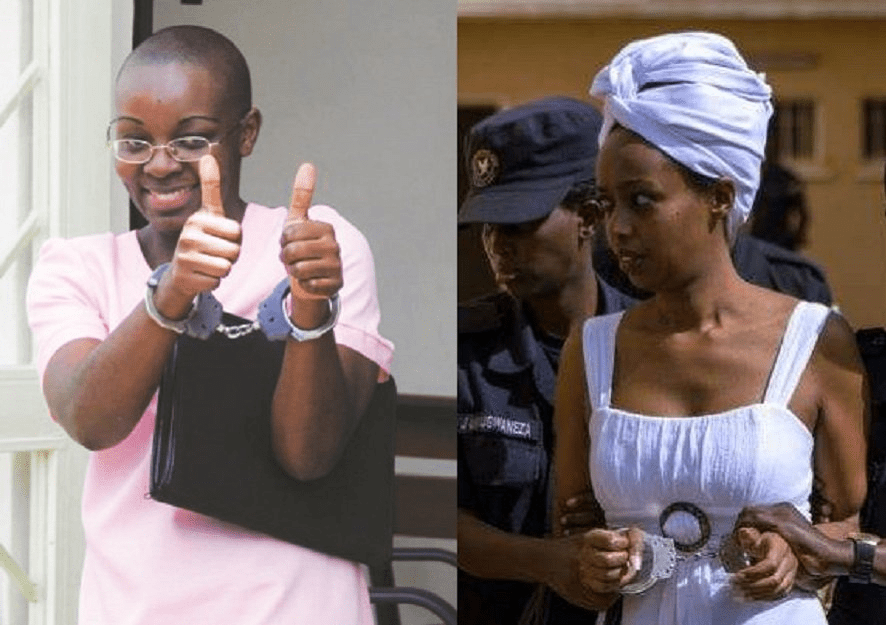
The only two women to challenge Rwanda’s Kagame

It isn’t all rosy in Rwanda, an East African country described as one of the fastest growing economies in the continent and an emerging African powerhouse led by a former military leader who is credited for ending the dreaded genocide of 1994.

Paul Kagame led a Tutsi-backed and heavily armed Rwandan Patriotic Front (RPF) to take control of the country after an estimated 500,000 to 1,000,000 Tutsis were mass slaughtered by members of the Hutu majority government.

Kagame was considered the defacto leader from 1994 to 2000 when he served as Vice President and Minister of Defence. He assumed the presidency in 2000 when President Bizimungu resigned and has since been the president without any fierce opposition.

Women have had slim chances of getting to the top in Rwanda’s political hierarchy as the only woman to ever rise to the topmost position was Agathe Uwilingiyimana who was Prime Minister of Rwanda in 1993. She was assassinated on April 7, 1994, by the presidential guard 14 hours after the assassination of President Habyarimana which commenced the genocide.

Two decades later, two Rwandan women have attempted to run against President Paul Kagame but ended up in jail for various reasons which they claim to be politically motivated.

Read more about them below.

Victoire Ingabire Umuhoza

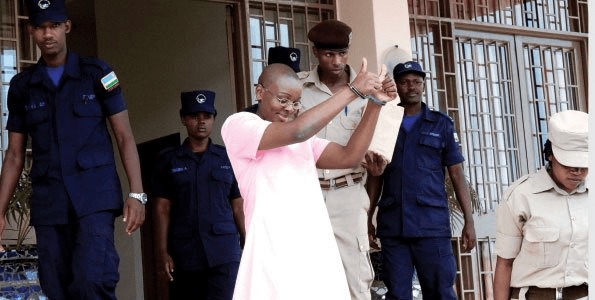
Born in October 1968, Victoire Ingabire Umuhoza is currently serving a 15-year prison sentence at the Kigali Central Prison on charges of terrorism and threatening national security.

She was arrested in 2010 after she returned to her country following 16 years in exile to contest as a candidate against Paul Kagame in Rwanda’s August 2010 presidential election.

Umuhoza was the leader of the coalition of exiled opposition political groups, Unified Democratic Forces (UDF), and she resigned her work as an official of an international accounting firm in the Netherlands, where she was in charge of its accounting departments in 25 branches in Europe, Asia and Africa, to help rebuild her country.

She has worked for her party since 1997 from her base in the Netherlands and was key in the creation of the coalition to rival the dominant Rwandan Patriotic Front (RPF) party of Paul Kagame which has no opposition in the country and was stifling dissent and persecuting opposition members.

Umuhoza was held under house arrest only three months after arriving in the country. She formed the Permanent Consultative Council of Opposition Parties with two other opposition leaders in Rwanda to strengthen the democratic process.

She became a threat to Kagame’s government since the first day of her arrival when she gave a speech at the Gisozi Genocide Memorial Centre to honour the victims of the genocide. Umuhoza called for the acknowledgement of Hutus who also died during the genocide and justice for all to bring about reconciliation.

This speech was used as evidence for the charge of genocide revisionism which was levelled against her in court after her arrest. She was placed under house arrest in April 2010 and then detained in October with four alleged co-conspirators accused of “forming an armed group with the aim of destabilising the country, complicity to acts of terrorism, conspiracy against the government by use of war and terrorism, inciting the masses to revolt against the government, genocide ideology and provoking divisionism.”

After a long court battle including intimidation of witnesses and allegations of bribery attempts by the Rwandan intelligence agencies to rebels to testify against Umuhoza, Victoire Ingabire Umuhoza boycotted the court proceedings.

In 2012 after four postponements of the verdict and the prosecution’s request for the maximum life sentence, Umuhoza was sentenced to eight years by the Kigali High Court for “conspiracy against the country through terrorism and war” and “genocide denial”.

A year later, the Supreme Court has upheld the conviction and increased her jail term to 15 years.
Victoire Ingabire Umuhoza is married and a mother of three. She was nominated with two other Rwandan political figures in prison for the European Parliament’s Sakharov Prize for Freedom of Thought in 2012.

Diane Shima Rwigara

Diane Shima Rwigara is a 36-year-old women’s rights activist and entrepreneur who is currently behind bars in Rwanda for alleged incitement to insurrection.

Her woes started after expressing interest in challenging Paul Kagame in the August 2017 presidential election as an independent candidate.

The daughter of businessman Assinapol Rwigara, who was pivotal in the ruling Rwandan Patriotic Front, distanced herself from the party after her father’s death in 2015 in a road accident which she claimed was an assassination.

Two days after announcing her candidacy, Rwigara was hit with a scandal as nude pictures believed to be hers speculated on social media. The pictures which she claimed were “manipulated” were shared widely by blogs and websites in Africa.

She gained a lot of support on social media after the scandal including condemnation of the act of online shaming. After a few days of silence, she bounced back to continue her campaign.

After picking up forms to file her candidacy, she was hit with another blow as the National Electoral Commission disqualified her with other opposition candidates for errors in application forms and inadequate signatures from the districts. Rwigara described the disqualification as a political influence.

She launched an activist group called the People Salvation Movement to challenge the Kagame regime to ensure human rights. This was immediately followed by a raid of her family’s house by the police who said they were investigating them for forgery and tax evasion.

Rwigara and her family faced series of arrests without specified charges. Separate charges including inciting insurrection, tax evasion, offences against state security, use of counterfeited documents among others were levelled against Diane, her sister Anne and mother Adeline.

She remains in prison as her trial is ongoing. Meanwhile, her family’s assets and stock of their tobacco company have been auctioned off by the country’s revenue authority which said it was recovering unpaid taxes.

The family has filed court cases against the confiscation of its assets and the sale of their stock at a much lower rate.

Civil society and rights organisations have described the arrests and intimidation as politically motivated. Amnesty International has called on the Rwandan judiciary to ensure that Diane Rwigara’s trial does not become another means to persecute government critics.

This article written by Ismail Akwei was first published on face2faceafrica.com
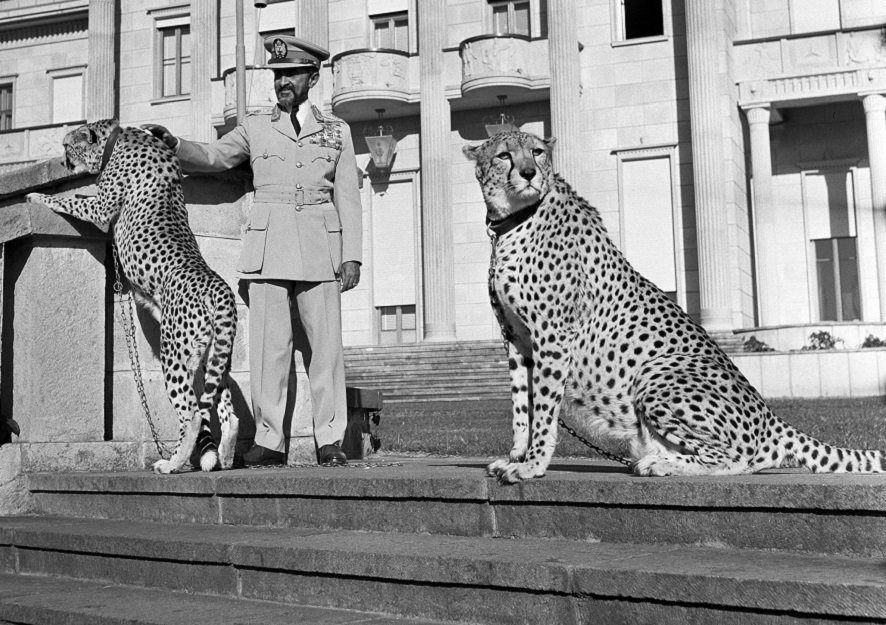
The real story of the last days of Emperor Haile Selassie of Ethiopia

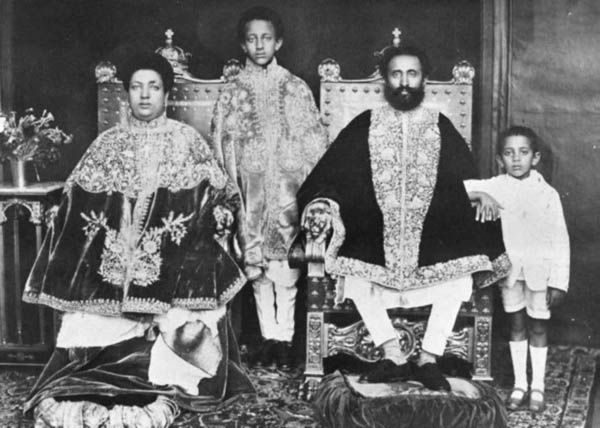
The Conquering Lion of the Tribe of Judah, His Imperial Majesty Haile Selassie I, King of Kings of Ethiopia, Elect of God was the last emperor of the Solomonic Dynasty that ruled Ethiopia until September 12, 1974, when he was deposed at the age of 82.

The reign of one of the most popular leaders of the 19th century was cut short by the Soviet-backed Derg military regime, formally known as the Provisional Military Government of Socialist Ethiopia, which ruled till 1991.

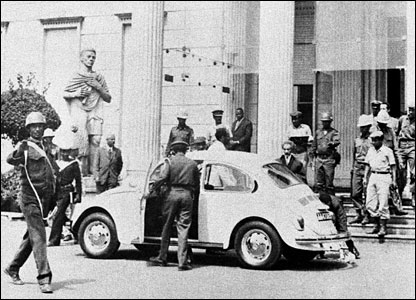
Haile Selassie, who was accustomed to Rolls-Royces, was hustled from his spacious palace to an army officer’s bungalow in the backseat of a blue Volkswagen. The final confrontation between the aged and frail Emperor and the young and robust army men was like a scene from a Verdi opera. Haile Selassie scolded and insulted the officers as insolent, and they, with mounting ire, decided on the spot to take him to a military camp rather than to another palace. And on the way, he was jeered by crowds yelling: “Thief! Thief!– The New York Times reported at the time.

Haile Selassie, born Ras Tafari Makonnen, was everything from monarch to the returned messiah as believed by the Rastafari movement which reveres him as God incarnate. He was also the Chairperson of the Organisation of African Unity (OAU) from 1963 to 1964 and 1966 to 1967.

His death in 1975 was shrouded in mystery. After his overthrow by the military following public discontent over economic inflation and low salaries, the emperor was placed under house arrest at the 4th Army Division in Addis Ababa and later imprisoned in a small apartment in his former palace, the Grand Palace.

His imprisonment fatally ended after 11 months on August 28, 1975, when the state media reported that Haile Selassie had died the previous day after suffering from “respiratory failure following complications from a prostate operation”. They said that he had been found dead in his bed by a servant.

This was denied outright by his doctor, Asrat Woldeyes, who rejected the government’s story of the 83-year-old’s death. It was widely believed that he was assassinated.

His successor, the Crown Prince Afsa Wossen Haile Selassie, who had been living in London since the overthrow, said his father had been in “excellent health” and demanded that independent doctors and the International Red Cross be allowed to carry out an autopsy to ascertain the cause of Haile Selassie’s death.

This wasn’t done and official sources said he was buried “in the strictest privacy according to Ethiopian custom” which demands that a monarch is buried within 24 hours after death.

The assassination rumours were rife until in 1992 when a coalition of rebel forces, the Ethiopian People’s Revolutionary Democratic Front (EPRDF), overthrew the Derg. After 17 years since his death, Haile Selassie’s remains were found under a concrete slab on the palace grounds. Some reports say his bones were found beneath a latrine.

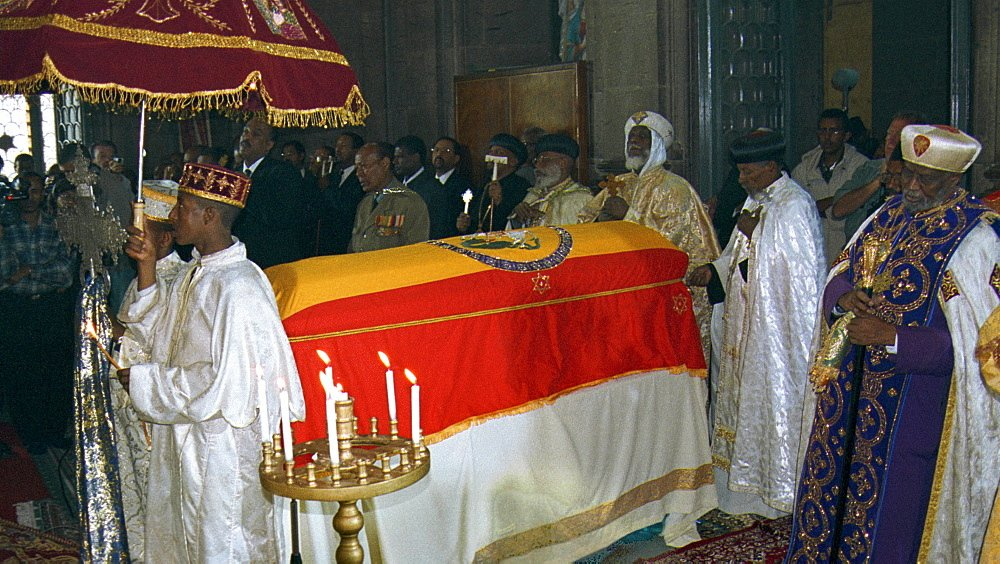
The remains of the emperor were buried in Bhata Church near the tomb of his great-uncle Menelik II after a befitting imperial funeral by the Ethiopian Orthodox church on November 5, 2000.

The burial of haile selassie, 25 years after his death. baata lemariam church, where his mortal remains has been kept. addis abeba, Ethiopia

Circumstances surrounding his death has been unknown after many court inquiries until recently when an unverified letter was made public by a Derg sergeant, Tadesse Tele Salvano, in his latest book.

The letter alleged that Haile Selassie was murdered by Lieutenant Colonel Daniel Asfaw, a key figure of the military regime, upon the direct command of the 17-member executive committee of the Derg which includes its chairman Mengistu Hailemariam, Teferi Banti, and 15 others.

This was explained by young Ethiopian law professor, Zelalem Kibret, who posted the letter on Twitter.

“Finally, once again, it’s that same Daniel Asfaw, Derg’s first security chief, who killed Haile Selassie. Daniel was the one who also leads the Aman Andom sage and later personally killed Teferi Banti. He himself was murdered on Jan 1977, few minutes after he killed Teferi Banti,” Kibret added.

Another revealing evidence was court testimonies that corroborate the fact that Haile Selassie was murdered despite denial by the former Derg officials. These pieces of evidence ascertain the rumours and justify the belief that Haile Selassie, the last emperor of the 3,000 years old Ethiopian monarchy who ruled for half a century, was indeed murdered on August 27, 1975.

This article written by Ismail Akwei was first published on face2faceafrica.com
From village icon to global acclaim, this promising young Ghanaian leader keeps soaring while saving lives

Shadrack Frimpong

It’s no mean feat to be recognized by the most powerful countries in the world and the most influential leaders especially when you are under 30 years old and the son of a peasant and charcoal seller in a remote village in western Ghana.

This is the success story of Shadrack Frimpong, the founder and CEO of Cocoa360, an organisation that develops farming communities and facilitates access to education and healthcare through cocoa plantations.

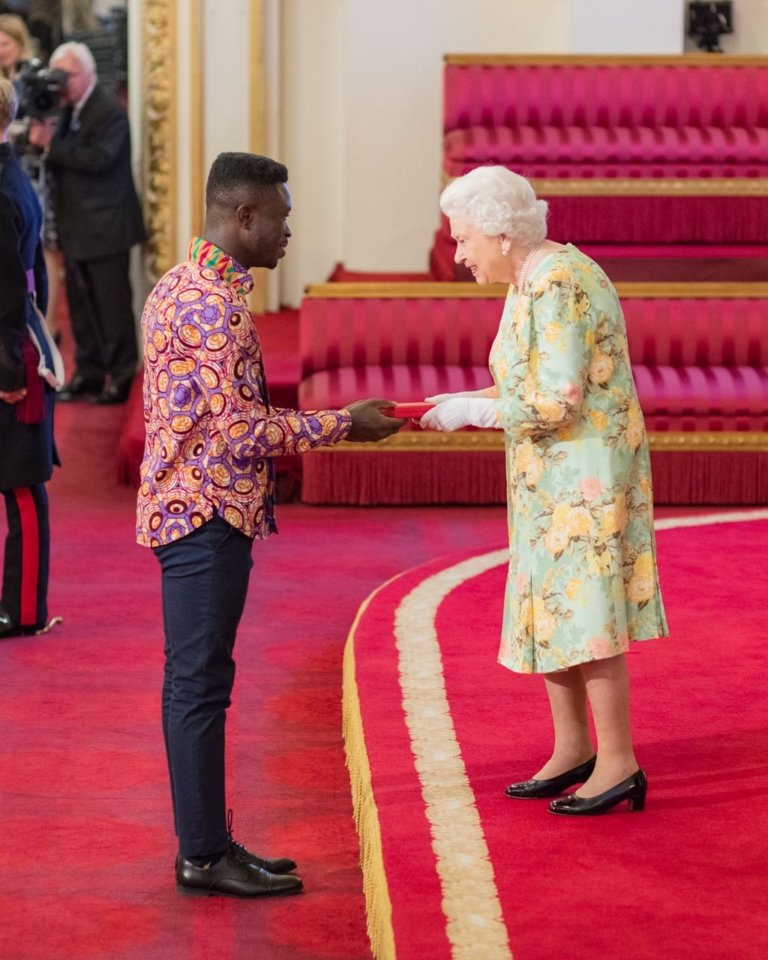
With several awards and recognition from Queen Elizabeth II of England (2018 Queen’s Young Leader Award), former UN Secretary-General Kofi Annan, former U.S. President Bill Clinton, the U.S. White House, Ghana’s Jubilee House, Ghana Legacy Honours (2017 Future Award) among many others, Frimpong is still achieving global excellence.

Shadrack Frimpong was recently chosen as the recipient of the prestigious Boyer Scholarship which will fund his Masters Degree in Non-Profit Leadership at the University of Pennsylvania and to make him an Honorary member of the First Troop Philadelphia City Cavalry, a unit of the Pennsylvania Army National Guard – the oldest and among the most decorated in the United States.

This honour makes Shadrack the second African recipient in the Fund’s 64-year history and the first from West Africa. “I am particularly excited about the scholarship and my goal is to use the skills of discipline and confidence that I will gain during training in the First Troop Philadelphia City Cavalry to equip and position me to become a global leader in healthcare.

“I returned to Penn to pursue a Master’s degree in Non-Profit Leadership (NPL) to hone my leadership skills particularly to fine-tune and guide Cocoa360’s strategy. My work with Cocoa360 over the past three years has taught me soft skills such as empathy as well as crucial first-hand lessons in leadership. As the organization continues to grow and expand, it became imperative that I re-position myself for more knowledge and experiences to guide our growth in the years ahead,” Frimpong told Face2Face Africa.

The University of Pennsylvania (Penn) in the United States is his alma mater and he enrolled on a full scholarship after his high school education at Opoku Ware School in Kumasi, Ghana, where he graduated with the help of a Ghana Cocoa Board scholarship.

As the first person from his village of Tarkwa Breman to attend and graduate from college, Shadrack Frimpong left Penn in 2015 with a degree in Biology and the prestigious $150,000 President’s Engagement Prize. He is the first black student and one of five in his graduating class to be awarded the prize.

Photo: University of Pennsylvania

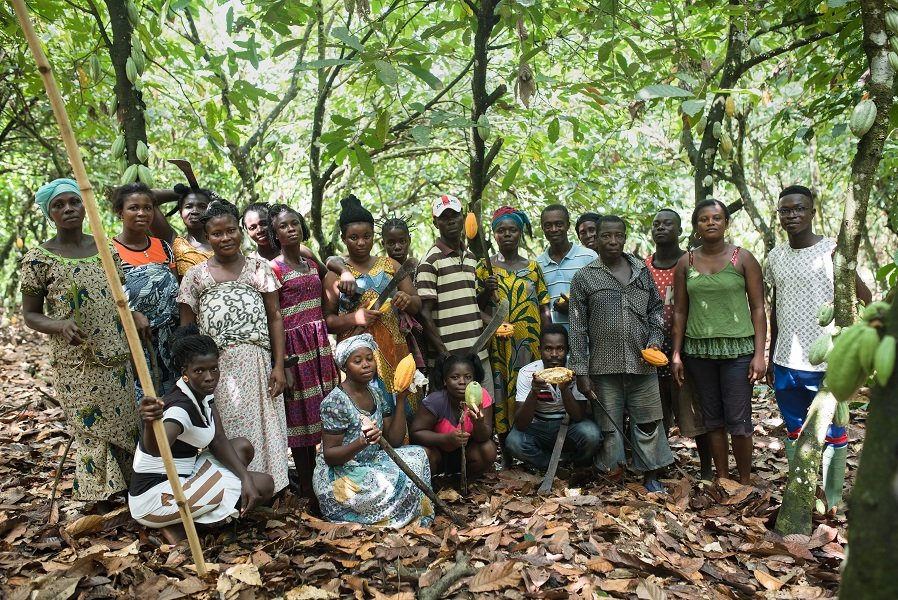
He went back to Tarkwa Breman and transformed his Tarkwa Breman Community Alliance nonprofit into Cocoa360 which has developed a model school for girls and a community hospital that is self-sustained by proceeds from a community cocoa farm plantation.

Photo: Araba Ankuma
Photo: Araba Ankuma

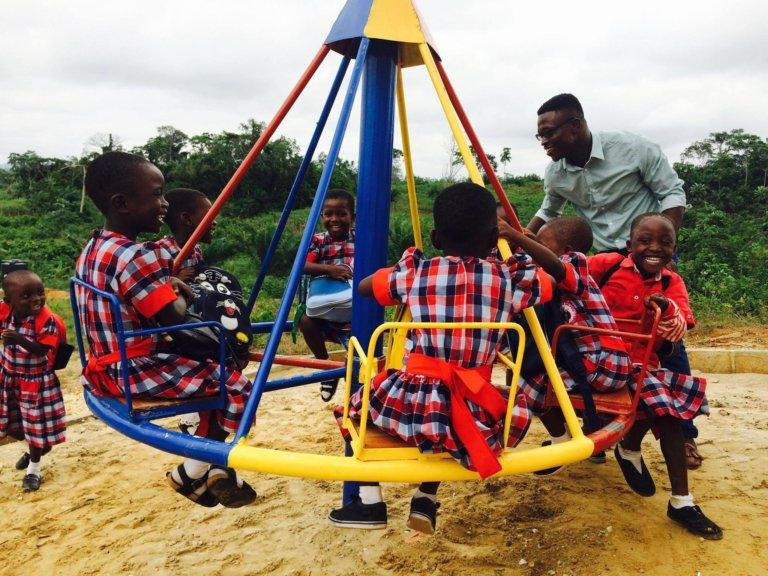
So far, we have enrolled 120 young girls in our tuition-free school. We have 33 staff members (about 95% of whom are local), and directly serve over 30,000 farmers and their families. We have drilled 2 boreholes on our campus, each providing over 4,000 litres of clean water daily.

In less than a year, we have attended to over 2500 patients at our health facility. Annually, we anticipate that about 242 children will be immunized, over 450 babies will be delivered and we will have over 930 malaria clients in care,” he explained.

Cocoa360 has over 30 staff members who are based in Ghana and Frimpong is guiding organizational strategy and leading the research and evaluation activities of the organization.

“It has taken us a lot of mistakes to finally get to where we are today. To be fair – I would say that a high turnover is inevitable for any organization in the startup phase. However, we have eventually been able to navigate this by setting an organizational culture as a team,” he says of his team.

He was quick to add the support they gained from the Tarkwa Breman community which is benefitting from the tuition-free education and subsidized medical care by providing labour on the community-run cocoa farm.

“So far, we have enjoyed the most support from the community – they donated 50 acres of land to help us begin work … Proceeds from the farm are then used to support the school and clinic’s operations,” he added.

Ghana’s leadership future is secured with people like Shadrack Frimpong who aims to stay in the United States to pursue further advanced degrees and gain work experiences in the field of healthcare and leadership so as to help develop his community and country.

As described by the late Ghanaian diplomat and former secretary-general of the United Nations Kofi Annan, Shadrack Frimpong is “an embodiment of youth leadership”.

This article written by Ismail Akwei was first published on face2faceafrica.com