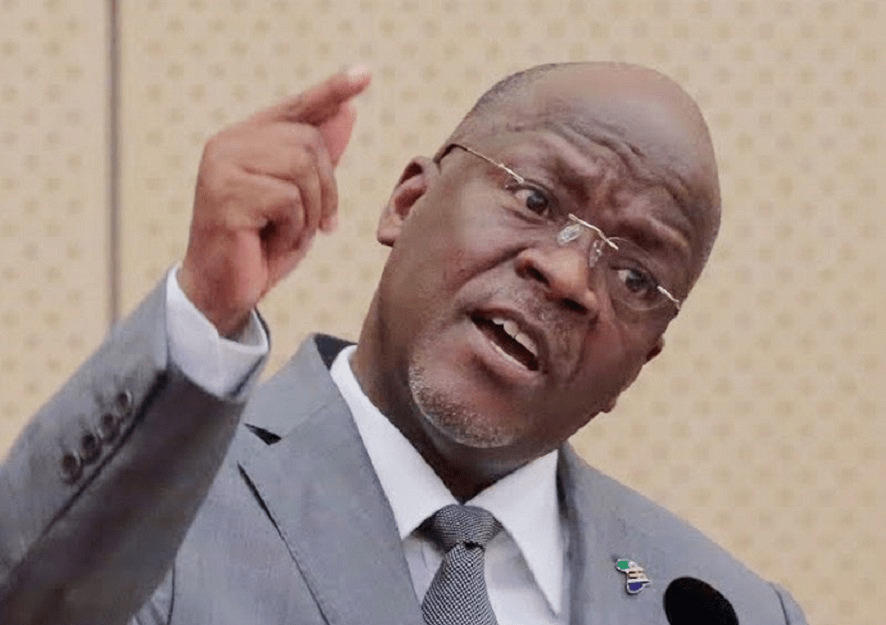
Tanzania is going nuts over women, bans female MPs with nail and eyelash extensions

Tanzanian president John Magufuli

Tanzania has stepped up its authoritarian game by further attacking the rights and freedoms of women. The speaker of parliament recently banned women MPs from wearing eyelash and nail extensions in the legislative house.

Job Ndugai said on Monday that he is also considering banning women MPs with “excessive makeup” from entering the House, reports local media The Citizen.

His decision was in reaction to a statement by the Deputy Minister for Health, Community Development, Gender, Elderly and Children, Dr Faustine Ndugulile, who told the House that eyelash and nail extensions are creating several health implications for women in the country.

“Every year, the Muhimbili National Hospital (MNH) receives at least 700 women with health complications that are directly linked to the use of false eyelashes, false fingernails and skin bleaching,” the male deputy minister is reported to have said after he was asked for statistics by female MP Fatuma Toufiq.

A day before this incident, Tanzania’s president John Magufuli told a crowd at a public rally at Meatu in the Simiyu Region to stop birth control and produce many children to work on their farms.

He described those using family planning as lazy and afraid to work hard to feed a larger family, reports The Citizen.

“You people of Meatu keep livestock. You are good farmers. You can then feed your children. Why would you opt for birth control? These are my views, but I do not see any need for birth control in Tanzania,” he said.

“I have travelled to Europe and elsewhere and I have seen the side effects of birth control. In some countries, they are now struggling with declining population growth. They have no labour force,” he added in the presence of the United Nations Population Fund (UNFPA) representative in Tanzania Jacqueline Mahon.

He called on them to keep producing children because the government is building hospitals that will improve maternal health.

This is the same president who upheld a controversial 2002 law in 2017 that bans pregnant schoolgirls from returning to school after giving birth. He also supported the order to arrest all pregnant schoolgirls to serve as a deterrent.

In January, the authorities arrested five pregnant schoolgirls and their parents. They explained that the arrest was to ensure that they testified against those responsible. The Mwanza Regional Commissioner John Mongella issued the order at an education stakeholders meeting in December last year.

The reason behind their arrest was to end the growing teenage pregnancies in the country, prevent other girls from engaging in sexual activities and get the girls to testify against the culprits who are on the run, district official Mohammed Azizi told local media.

The country continues to deny its citizens human rights as the media, opposition parties and musicians have all been victims of the regime which has formulated laws that stifle dissent and violate freedom of expression.

The country is also considering a law that will make it illegal for anyone to question government statistics, reports rights bodies.

Unfortunately, women are the most affected in Tanzania as the men propose the laws and they only have to obey even though it doesn’t favour them.

This article written by Ismail Akwei was first published on face2faceafrica.com

Africa’s kind gesture to the United States after 9/11 that will never be forgotten

It was a global cry on the morning of Tuesday, September 11, 2001, when two hijacked passenger airliners crashed into the North and South towers of the World Trade Center complex in Lower Manhattan.

In less than two hours, the 110-story towers collapsed with the people in them killing over 2,000 people while two other planes crashed into the Pentagon and a field in Pennsylvania respectively.

Orchestrated by the terrorist group Al Qaeda, the United States and the world at large was drenched in grief and has and will never forget that eventful day that occurred 17 years ago today.

Among the victims were nationals of almost every country in the world including Africans from Ghana, Nigeria, South Africa and many others.

There were quick expressions of shock and sympathy from nations worldwide and Face2Face Africa highlights the most prominent reactions from African countries that gained global attention.

Kenya

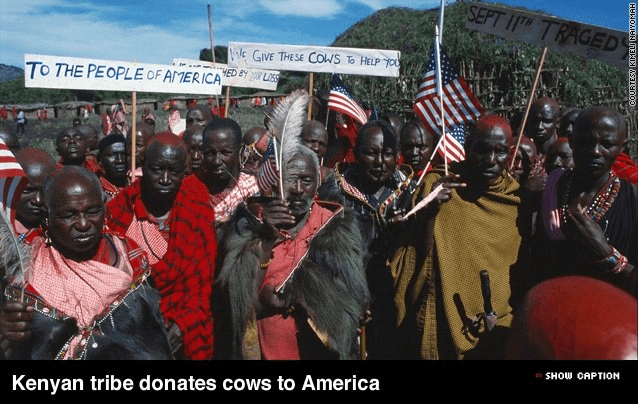
After hearing of the attacks from Kimeli Naiyomah, a student at Stanford University and a native who had returned home months after 9/11, the Maasai people in the Kenyan village of Enoosaen in the Narok County gave the United States 14 cows as a form of condolence.

The cows were handed over to William Brancick, the deputy chief of mission of the United States Embassy in Nairobi at the time. It took the embassy three years to decide on what to do with the cows, the New York Times reported.

The embassy kept the cows in the village and further gave a thank you gift on the 5th anniversary of 9/11. The gift includes scholarships for 14 boys and girls to go to local schools every year.

Ethiopia

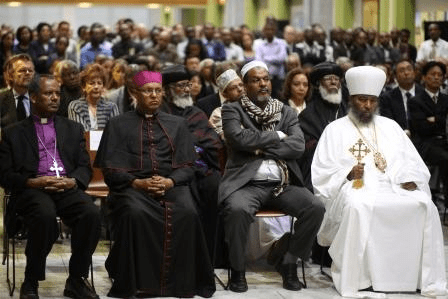
Ethiopians were reported to have offered national prayers in solidarity with the United States and for the lives of the victims of the deadly terror attack. The attack coincided with their New Year and they used the opportunity to pray for the victims.

South Africa

South African president Thabo Mbeki is reported to have halted all broadcasts after the attack in solidarity with the U.S. and offered an undisclosed financial support.

In Pretoria, children and parents were seen holding mini American flags in solidarity while firefighters flew red, white and blue flags.

Sierra Leone

Sierra Leoneans marched in the streets in a show of solidarity with the United States.

Egypt, Libya, Sudan

Leaders of these North African countries – Hosni Mubarak, Muammar Gaddafi and Omar al-Bashir – condemned the attacks while clerics described the attacks as “cowardly” and “un-Islamic”.

Gaddafi described the attacks as “horrifying” and urged Muslim aid groups to join international assistance efforts to the US, “regardless of political considerations or differences between America and the peoples of the world”.

“We shouldn’t jump to conclusions. My advice to the US is not to attack a country because of some small organisation. You have to find out who did it, but not punish innocent people,” advised Hosni Mubarak.

Morocco

King Mohammed VI of Morocco condemned the attacks and senior government officials attended an interdenominational ceremony at the cathedral of Rabat.

This article written by Ismail Akwei was first published on face2faceafrica.com
The U.S. has officially gone authoritarian after threatening ICC judges over war crimes probe

ICC Chief Prosecutor Fatou Bensouda (L), Donald Trump (R) and ICC Judges (Bottom)

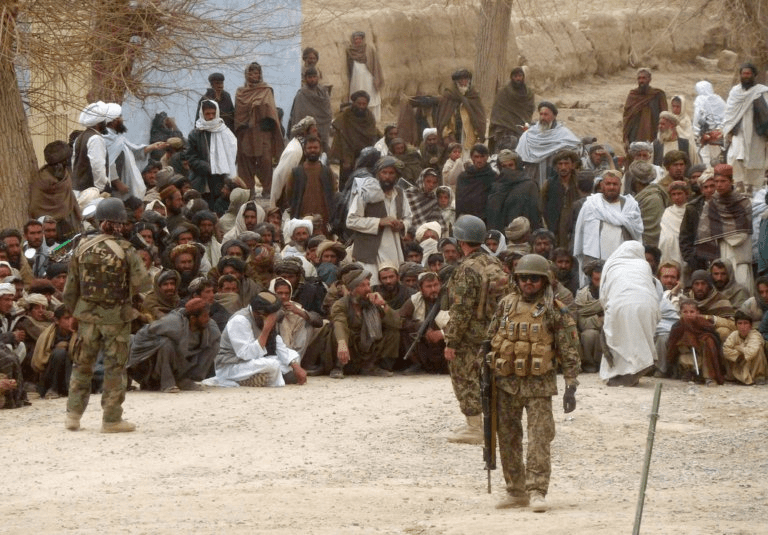
Democracy in the United States has bitten the dust as the authoritarian regime led by Donald Trump has launched dictatorial attacks on the judges of the International Criminal Court (ICC) for planning to open an investigation into the criminal activities of the U.S. in Afghanistan.

Led by Gambian prosecutor Fatou Bensouda, the ICC said in November that all legal criteria had been met to open a war crimes investigation into the U.S.-led invasion of Afghanistan in 2001.

This stoked the rage of the US National Security Adviser John Bolton who threatened the judges with sanctions on Monday in a speech delivered to the conservative Federalist Society in Washington.

“The United States will use any means necessary to protect our citizens and those of our allies from unjust prosecution by this illegitimate court. We will not cooperate with the ICC. We will provide no assistance to the ICC. We will not join the ICC. We will let the ICC die on its own. After all, for all intents and purposes, the ICC is already dead to us,” he said.

Bolton did not stop there, “We will ban its judges and prosecutors from entering the United States. We will sanction their funds in the US financial system, and we will prosecute them in the US criminal system. We will do the same for any company or state that assists an ICC investigation of Americans.”

This is a typical trait of dictators who threaten after they are “provoked” with investigations into their criminal activities. Bolton’s threats have been described as “straight out of an authoritarian playbook” by human rights group American Civil Liberties Union (ACLU), reports AFP.

The Human Rights Watch also stated that any attempts by the U.S. to interfere with the investigation “would demonstrate that the administration was more concerned with coddling serial rights abusers — and deflecting scrutiny of US conduct in Afghanistan — than supporting impartial justice.”

The Hague-based Court came into force on July 1, 2002. It was established by a Rome Statute adopted in 1998 to prosecute international crimes, including genocide, crimes against humanity, and war crimes committed within the territory of signatories and nationals of signatory countries.

It was ratified by 123 countries including a total of 34 African states out of the then 54 countries.

The United States previously signed the Rome Statute and a few months later, formally withdrew its signature and indicated that it did not intend to ratify the agreement.

Only one Arab state – Jordan – has ratified the Rome Statute. The United States, Egypt, Iran, Israel and Russia have not ratified the statutes. China, India, Pakistan, Indonesia and Turkey have not even signed it.

An African country – Senegal – was the first to ratify the Rome Statute on February 2, 1999, and an African country – Burundi – was the first in history to start a withdrawal process in 2016.

Seeming ICC bias against Africa

In the 15-year history of the ICC, almost all of its cases under investigation or prosecution involve Africans, as many of them were referred to the court by signatory countries.

The Central African Republic, the Democratic Republic of Congo, and Uganda were the first countries to make referrals to the ICC for investigation and prosecution of war crimes.

The ICC has opened investigations into situations in nine countries including the Democratic Republic of the Congo; Uganda; Central African Republic (2 situations); Darfur, Sudan; Kenya; Libya; Ivory Coast; Mali; and Georgia.

The court has among others publicly indicted 40 people, issued 32 arrest warrants and 8 summons, detained seven with 10 fugitives at large, 8 in trial, one appealing conviction, 17 proceedings completed, three convictions etc.

African states have complained about the court’s focus on Africans and not investigating war crimes in other countries outside the continent like the United States.

Chief Prosecutor Bensouda succeeded Argentinian Luis Moreno-Ocampo who was accused by the African Union of selective justice by only investigating atrocities in Africa during his nine-year term.

Bensouda had argued that the ICC is “working with Africa, and working for African victims, so I don’t think the African Union should be against that.”

Withdrawal threats

Burundi was the first country to begin the ICC withdrawal process last year after the court said it will initiate an investigation into violence and possible war crimes violations relating to the violence in 2015 when President Nkurunziza announced that he was seeking a third term.

The process of withdrawal from the ICC was also started by The Gambia under exiled former President Yahya Jammeh.

Jammeh’s reason for withdrawal was an alleged failure of the ICC to investigate and prosecute crimes committed by some Western countries and seeking only to prosecute Africans.

New Gambian President Adama Barrow revoked Jammeh’s withdrawal notice when he assumed office.

The African Union called for a mass withdrawal of member states in 2017 at an AU Summit arguing that the court unfairly singles out crimes in the continent for prosecution. The decision, which is not legally binding, was opposed by Nigeria and Senegal.

Kenya and Uganda have also threatened to quit the ICC with Zambia recently launching a nationwide consultative process on whether to leave or stay as a member of the court.

Ninety-three per cent of Zambians consulted affirmed that the country should remain in the ICC.

The gradual African disinterest in the court started since 2009 when it issued an arrest warrant for Sudanese President Omar Al Bashir, whose country is not a signatory to the Rome Statute.

The arrest warrant was issued after a referral by the United Nations Security Council (UNSC) on charges of genocide in Darfur.

This was followed by indictments of the former Libyan President, Muammar Gaddafi, Kenyan President, Uhuru Kenyatta, and his deputy, William Ruto in 2011 for post-election ethnic violence in 2007-08, based on UNSC referrals.

The ICC dropped the charges against Kenyatta in December 2014 and against Ruto in April 2016.

The African Union unsuccessfully called on the UNSC to defer the case against Bashir as it might derail peace and reconciliation efforts in the fragile nation. The arrest warrant for Bashir is still active.

This article written by Ismail Akwei was first published on face2faceafrica.com
Africa’s last ‘eternal’ president just bowed out, thank God

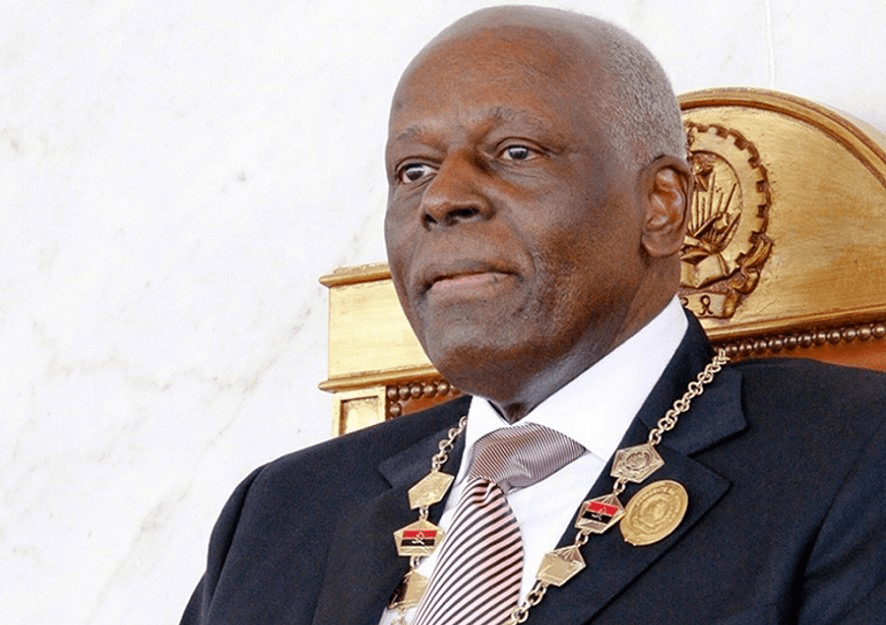
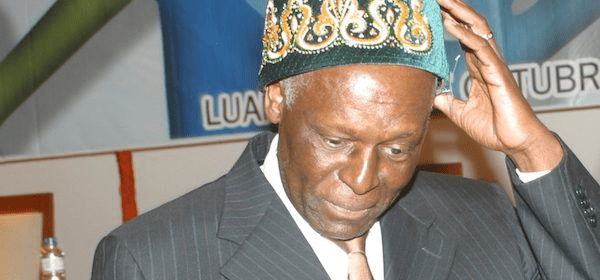
Despite relinquishing his presidential seat to his defense minister, Angola’s Jose Eduardo dos Santos never left office completely until Saturday (September 8) when he stepped down as the leader of the ruling Popular Movement for the Liberation of Angola (MPLA).

José Eduardo Dos Santos 4 decades of absolute power has ended. During his farewell speech he admitted for the first time that he made mistakes. But he did not say what were his mistakes. A new era for Angola and MPLA begins today. What do you expect to see from now on? pic.twitter.com/7cpXne45lt

As president of the MPLA, 76-year-old dos Santos had ample control of the government including choosing parliamentary candidates and appointing top posts in the army and police.

However, the new president, Joao Lourenco, who he handpicked from the party and was elected in August 2017, gave the oil engineer and veteran of the guerrilla war against Portuguese rule the shock of his life.

Lourenco sacked dos Santos’s children from top state firms. Africa’s richest woman Isabel dos Santos and half-brother Jose Filomeno dos Santos who were respectively heading the state oil firm Sonangol and Angola’s sovereign wealth fund were fired. Filomeno has been charged with misappropriating public funds and Isabel is under investigation for corruption.

Lourenco also restructured the security services by changing allies of the former president including the army and police chiefs as well as executives of state-owned companies.

These and many other moves dismantled the empire built by dos Santos and took away the power he wielded in the country. It also created some tension between him and the current president who he strong-willed and principled. He ensured the early retirement of dos Santos who had originally proposed stepping down from the party leadership by April 2019, reports AFP.

Until he stepped down as president in 2017, Jose Eduardo dos Santos who served for 38 years was Africa’s second-longest-serving leader trailing Equatorial Guinea’s Teodoro Obiang Nguema who has served since 1979.

Cameroon’s Paul Biya has served for 35 years followed by Congolese President Denis Sassou Nguesso who has spent 34 years in office. Uganda’s Yoweri Museveni has been in power for more than 32 years and King Mswati III of Swaziland is Africa’s last absolute monarch and has served for more than 31 years.

Sudan’s Omar al-Bashir has ruled for 29 years followed by Chad’s leader Idriss Deby with 28 years in power and then Eritrea’s President Isaias Afewerki has been in power for 25 years.

Africa is slowly recycling the old leaders for young and fresh hands who are introducing modern approaches to governance. However, there are some younger leaders who have inherited power and are continuing the legacies of their predecessors.

Some of them are Faure Gnassingbe of Togo, Omar Bongo of Gabon and Burundi’s Pierre Nkurunziza who was recently elevated to the rank of “supreme eternal leader” of the ruling party CNDD-FDD. It is unclear if the elevation means he will hold on to power forever.

This article written by Ismail Akwei was first published on face2faceafrica.com

Benin copies stupid move and becomes first West African country to tax internet usage

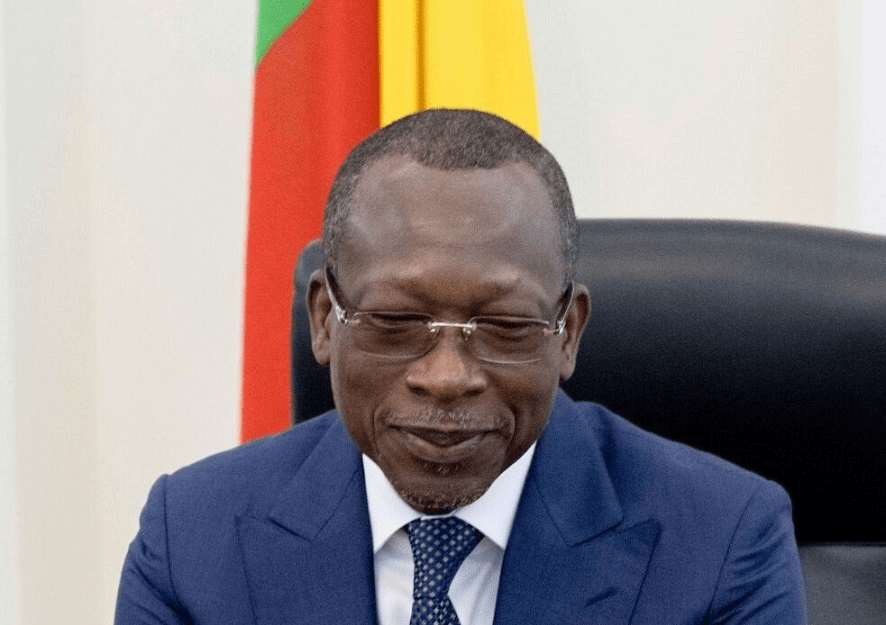
Benin president Patrice Talon

West African country Benin has joined the likes of Zambia and Uganda to impose taxes on internet usage despite a backlash against the move announced since July.

The government passed the law in late August and according to advocacy group Internet Sans Frontières (ISF), Benin citizens will be taxed 5 CFA francs ($0.008) per megabyte used through social media apps, and another 5% levy on texting and calls, reports Quartz.

The taxes have been described as senseless and a move to silence critics in the country with a population of a little above 10.5 million and a minimum wage of about 40,000 CFA francs ($70.56) per month.

Over 7,000 people have signed a petition calling for the suspension of the levy which will not favour the mass poor population which is slowly getting hooked on the internet.

Benin is the latest African country to go through with the internet tax plan after Zambia which has approved a tax on internet calls in a bid to protect telecommunication companies who are losing money.

The government collects the taxes through mobile phone companies and internet service providers at a daily rate of 30 ngwees (3 cents) per day, irrespective of how many internet calls are made, reports Quartz.

There were complaints of higher data charges and the introduction of the taxes could cripple the economy and further reduce the mobile internet users.

It all started in Uganda where the government ignored protests and imposed a mandatory 200 shilling daily levy (less than a dollar) for WhatsApp users while mobile money transactions also attracted a one per cent levy on the total value of each transaction.

In a bid to control what he called gossip and to rake in more revenue for the state, Ugandan president Yoweri Museveni announced the taxes in April and it was approved by the parliament in May.

It is expected to raise between $108,000,000 (Sh400 billion) and $270,000,000 (Sh1.4 trillion) from social media users annually, the government said.

Ugandans, have, however, expressed disgust at the development, saying it infringes on individual freedoms.

Others are also wondering how social media companies that do business in Uganda will be taxed since internet access is not based solely on the activation of data bundles through the purchase of airtime from telecoms.

For some lawmakers, instead of taxing social media, the president must pay attention to the fight against corruption in government.

This article written by Ismail Akwei was first published on face2faceafrica.com