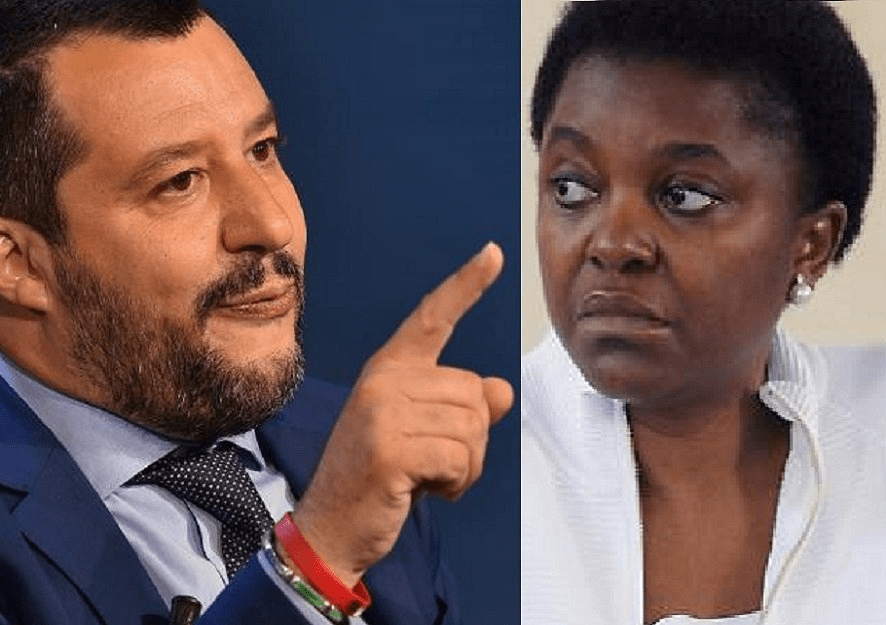
The Italian minister who described Africans as “slaves” sues the country’s first black minister

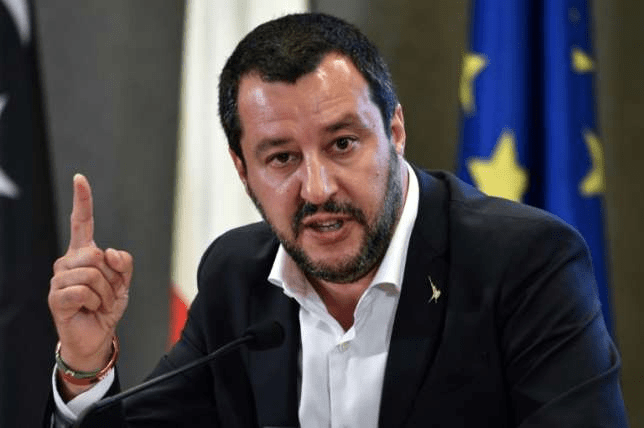
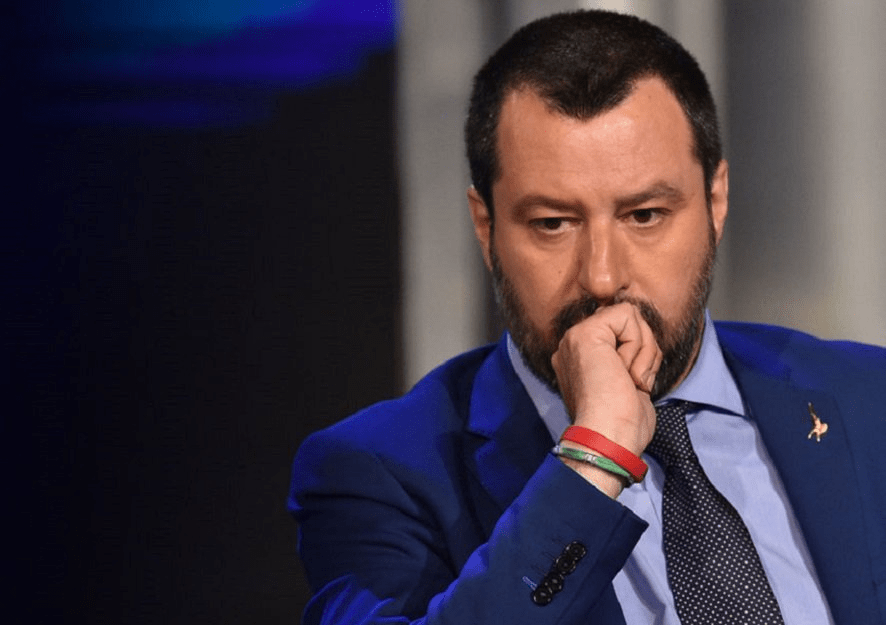
Deputy Prime Minister of Italy and Interior Minister, Matteo Salvini who recently described African migrant workers as “slaves” has filed a defamation suit against the country’s first black cabinet minister of Congolese descent for calling his far-right party “racist” in 2014.

Cécile Kyenge will face trial in the northern city of Piacenza over comments made in an interview during a social democratic event when she reacted to a photograph posted on social media by Roberto Calderoli, a former senator of the far-right League party depicting her as an orangutan.
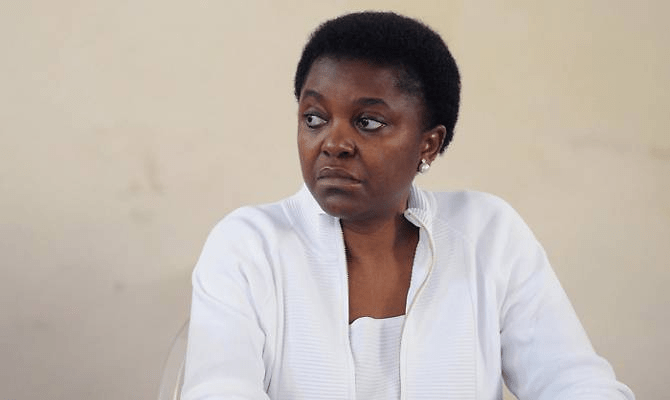
The ridiculous lawsuit follows her 2017 victory in a four-year legal battle against an Italian member of the European Parliament, Mario Borghezio who was found guilty of defamation and racial hatred during a radio interview in 2013.

Borghezio said in the interview that Kyenge was trying to “impose her tribal traditions from the Congo” on Italian society; “she took away a job from an Italian doctor”; and she is “a good housewife but not a government minister.”

Cécile Kyenge became Italy’s first Black cabinet minister under Prime Minister Enrico Letta’s short-lived government in 2013. She immediately became the target of sustained racist attacks as she received death threats on social media, had banana thrown at her in public and was compared to an orangutan.

Five years after leaving government, Matteo Salvini is continuing the attacks on Kyenge who posted her displeasure on social media together with examples of headlines generated by the party over the years, including one dating back to 2009 when Salvini called for racial segregation on Milan’s public transport system, cites the Guardian.

This is the second and successful suit filed by Salvini after the judge ruled that her comments not only stained the party but insulted all its members, the Guardian adds.

“Now that he is a minister he is more powerful,” Kyenge told the Guardian, adding that, “I said publicly several times that the League must distance itself from racism and condemn and penalise it.

“They not only never did this but people convicted of racist acts are still in positions of authority. If the League doesn’t distance itself it must mean that the party shares the [racist] views,” she said.

Born in the Democratic Republic of Congo, Kyenge moved to Italy in 1983, training as an ophthalmologist and later venturing into politics in order to advocate for the rights of migrants and minority groups.
Salvini has continued his attacks on African migrants as he described them as “slaves” during a closed-door session of a migration and security conference hosted by Austria.

“I’m paid by citizens to help our young people start having children again the way they did a few years ago, and not to uproot the best of the African youth to replace Europeans who are not having children anymore,” he said.

The Italian far-right leader added: “Maybe in Luxembourg there’s this need, in Italy there’s the need to help our kids have kids, not to have new slaves to replace the children we’re not having.”

Salvini, who heads the Italian League party that holds a tough stance against immigration, made the racist remark in response to a public statement implying that Italy needed immigrants because the population was ageing.
The only reaction from the conference was a condemnation by Luxembourg’s foreign and immigration minister Jean Asselborn who interrupted the Italian by saying in French, “In Luxembourg, we had tens of Italian immigrants. They came as migrants, who worked in Luxembourg so that you could in Italy have money to pay for your children.”

The African Union later issued a statement condemning Salvini and demanding a retraction from him.

An unrepentant Salvini replied at a press conference: “There is nothing to apologise for. I deny [making] any equation between immigrants and slaves. On the contrary, my statements in Vienna were to defend migrants, who some want to use as slaves. If some people want to think badly [that’s up to them]. Perhaps there was a mistake in the French translation.”

This article written by Ismail Akwei was first published on face2faceafrica.com
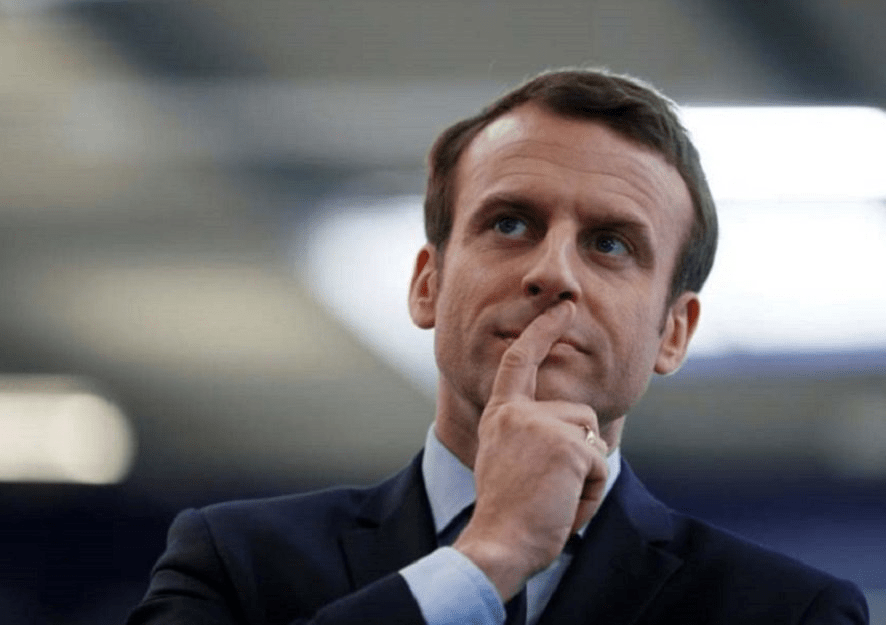
After over 50 years, France admits pre-independence torture of Algerians but fails to apologize

French president Emmanuel Macron

Ruled by France for 130 years, Algerians from 1954 to 1962 fought against their colonial masters for independence and as a result, the French took the lives of about 1.5 million indigenes.

The Algerian War of Independence started by members of the National Liberation Front (FLN) saw brutality and torture meted out to Algerians by the French. A war crime that has never been acknowledged by the French until Thursday.

French president Emmanuel Macron visited Josette Audin, the widow of communist pro-independence activist, Maurice Audin, who disappeared in 1957 after he was arrested at his home and accused of hiding independence fighters.

Maurice Audin, an Algerian communist party member, went missing after being arrested on June 11, 1957 [AFP]
“The only thing I am doing is to acknowledge the truth,” says Macron who told Audin’s widow that he “died under torture stemming from the system instigated while Algeria was part of France,” reports AFP.

Josette Audin said at her apartment in the east Paris suburb of Bagnolet that she “never thought this day would come” when the French will admit that her husband who was 25 when he disappeared was actually tortured repeatedly in a villa in the Algiers neighbourhood of El Biar.

She was told that he had escaped while being transferred between jails and she never knew the truth until in 2014 when former French president Francois Hollande acknowledged after admissions of torture by former generals that her husband had died in detention.

Macron is the only president who had declared that France committed a “crime against humanity” through its colonisation of Algeria. He made the statement during his election campaign which drew a lot of controversies.

It took a lot of demonstrations, mass killings, the collapse of the French government and a UN resolution recognizing the right to independence before the French agreed to a referendum for the independence of Algeria.

Emmanuel Macron has promised to open archives on the subject of disappeared French and Algerian civilians and soldiers during the war that gained Algeria its independence.

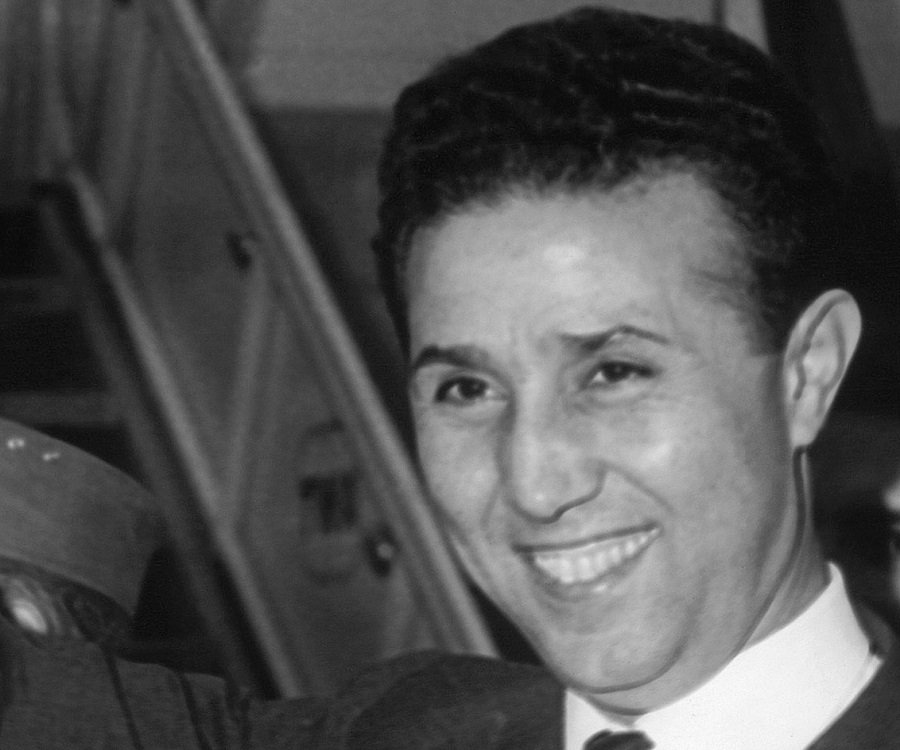
The first president Ahmed Ben Bella and nine members of the Revolutionary Committee of Unity and Action established the National Liberation Front (FLN) while in exile in Cairo to organise the armed insurgency against the French.

Ahmed Ben Bella

Attempts were made on Ben Bella’s life but he escaped twice unhurt. On 22 October 1956, however, the French diverted a plane Ben Bella was flying with other members of the FLN to France and he was incarcerated there for five and a half years.

As the battle for Algeria became protracted, the French and Algerian leaders settled on a cease-fire which led to the Evian Accords being signed. Ben Bella returned to his native country to become the premier in 1962 and subsequently the first president.

Last year, the Algerian government demanded the return of skulls of Algerian independence fighters that are on display at a museum in Paris.

After independence in 1962, French authorities took away an unknown number of skulls belonging to some of the Algerian martyrs, many of which were displayed at the French National Museum of National History in Paris.

Algeria has been demanding for an acknowledgement of the war crimes, an apology, recovery of archives, and compensation of victims of the deadly nuclear tests carried out by France after the struggle for independence.

More than five decades after 17 nuclear tests were carried out in the Algerian desert, leaving at least 42,000 people dead and thousands more with chronic illnesses, the French government has refused to admit to those crimes as well.

This article written by Ismail Akwei was first published on face2faceafrica.com

This Italian deputy prime minister just called African migrant workers ‘slaves’

Matteo Salvini, Italian Interior Minister and Deputy Prime Minister

Deputy Prime Minister of Italy and Interior Minister, Matteo Salvini has described African migrant workers as “slaves” during a closed-door session of a migration and security conference hosted by Austria.

“I’m paid by citizens to help our young people start having children again the way they did a few years ago, and not to uproot the best of the African youth to replace Europeans who are not having children anymore,” he was quoted by Reuters.

The Italian far-right leader added: “Maybe in Luxembourg there’s this need, in Italy there’s the need to help our kids have kids, not to have new slaves to replace the children we’re not having.”

Salvini, who heads the Italian League party that holds a tough stance against immigration, made the racist remark in response to a public statement implying that Italy needed immigrants because the population was ageing.

The only reaction from the conference was a condemnation by Luxembourg’s foreign and immigration minister Jean Asselborn who interrupted the Italian by saying in French, “In Luxembourg, we had tens of Italian immigrants. They came as migrants, who worked in Luxembourg so that you could in Italy have money to pay for your children.”

Reuters further reports that the conference included some European and African interior ministers as well as EU officials.

Matteo Salvini is a member of Italy’s coalition government that took office after the general election in March. Since the coalition’s assumption of office in June racist attacks especially against African migrant workers have gone up.

In an attack on June 11, two Malian refugees who were living in a migrant centre near Caserta, a city north of Naples, were shot from a vehicle by supporters of Matteo Salvini who had shouted slogans in support of him, they told local media.

In August, 32-year-old Senegalese street vendor Cisse Elhadji Diebel was shot three times in Naples by two strangers on a scooter by the central train station. According to Italian weekly L’Espresso, at least 33 attacks were perpetrated across the country in the past two months.

Italians are quick to dismiss racist attacks against African migrants and the police do not ensure justice despite protests regularly sparked by attacks.

Matteo Salvini is also behind the blocking of a humanitarian rescue boat carrying 60 migrants rescued off Libya in July. He stated clearly that they were not welcome. Italy is one of the biggest recipients of migrants arriving in Europe mainly from Africa.

This article written by Ismail Akwei was first published on face2faceafrica.com
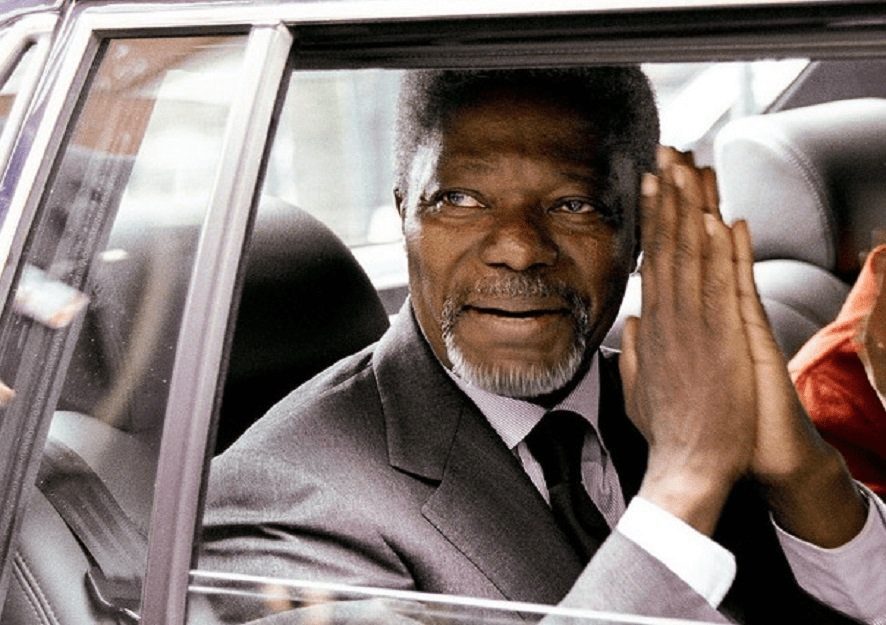
Exploring Kofi Annan’s indelible mark left on Africa as he joins his ancestors

The first and only black African United Nations Secretary-General is no more, but his legacies in the continent are burgeoning and will never be forgotten on the face of the earth.

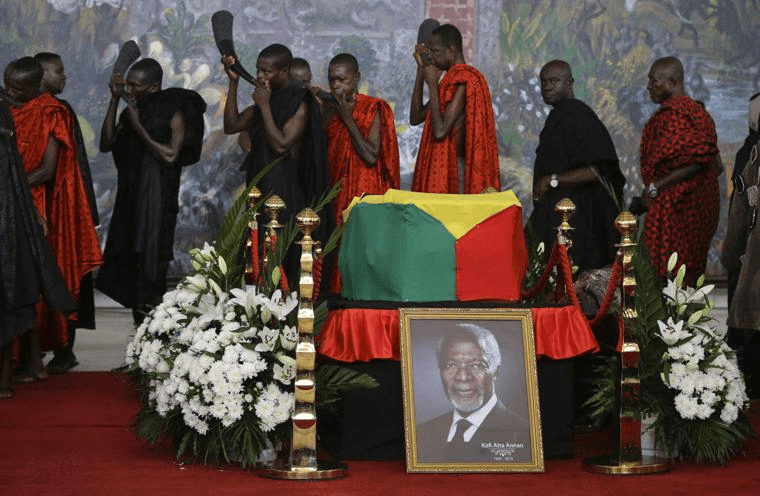
Kofi Atta Annan who was buried in Accra, Ghana, on September 13, 2018, after his death on August 18, 2018, in Switzerland following a short illness, is described as a perfect statesman.

He held on to his African roots and ensured that he lived for Africa even before, during and after his reigns as the chief mediator and peacemaker of the United Nations.

Kenyans can never forget the truce brokered by the Nobel Laureate following the bloody aftermath of the 2007 election which nearly dragged the country into a civil war following the death of over 600 people.

Annan stepped in and stayed in the country for nearly two months in 2008 to calm nerves and find solutions to the post-election tension between former President Mwai Kibaki and opposition leader Raila Odinga who disagreed with the outcome of the election.

Backed by all international bodies, Kofi Annan finally got the two rivals to shake hands by negotiating for a power-sharing coalition government, constitutional amendment and commissions of inquiry to investigate the electoral problems and post-election violence.

The two Kenyan leaders never forgot Annan’s immense help to the country.

Kofi Annan is also noted for his humanitarian contributions to Africa including the curtailing of the HIV menace which had become an epidemic with 23.9 million people living with HIV and 3.5 million new HIV infections every year. There was little to no access to life-saving treatments.

The master mediator got world leaders to set aside a global fund and ensure the UN Security Council adopted resolution 1308 in 2000 declaring AIDS a global crisis and a threat to global security.

His efforts also brought forth the first-ever UN General Assembly Special Session on HIV/AIDS in 2001 which later established the Global Fund to mobilise billions of dollars to combat AIDS and treat other infectious diseases that affected Africa especially.

“HIV/AIDS is not only an African problem. It is global and must be recognized as such. But within that international obligation, the fight against AIDS in Africa is an immediate priority, which must be part and parcel of our work for peace and security in that continent,” Annan said at the time.

Today, HIV/AIDS has been nipped in the bud as treatment is not as expensive as it was and over 20 million people are receiving treatment.

Kofi Annan was very influential after his term as the UN Secretary-General by continuing his diplomatic and developmental work as a member of the international non-governmental organisation of public figures formed by Nelson Mandela and known as The Elders.

He also worked with the Mo Ibrahim Foundation to ensure a stronger leadership and governance in Africa and he chaired the Africa Progress Panel made up of influential figures who affect positive change in Africa through both individual capacities and publications.

However, one role Kofi Annan played that kept haunting him was his handling of the Rwandan genocide in 1994 when he was the head of the UN department for peacekeeping.

He was criticized for not reinforcing troops to Rwanda to prevent the genocide that resulted in the killing of 800,000 people. The troops were ordered to withdraw under his command and his reason was that he got no response from world leaders to contribute troops.

“We would have liked to see a larger force in. I had had situations where I called 82 member states together, trying to get troops. I got zilch [nothing],” he told CNN in 2008.

He has apologized on countless occasions including during a visit to Rwanda in 1998 as UN Secretary-General where he said:

“We must and we do acknowledge that the world failed Rwanda at that time of evil. The international community and the United Nations could not muster the political will to confront it. The world must deeply repent this failure.”

Thousands of people from all walks of life filed past the body of the Nobel Laureate which was laid in state for two days in Ghana. The country organised a state funeral to send off its illustrious son who was buried at a Military Cemetary in the capital.

Over a dozen heads of state and government attended the funeral which was graced by the UN Secretary-General Antonio Guterres and the African Union Chairperson Moussa Faki Mahamat.

This article written by Ismail Akwei was first published on face2faceafrica.com
The life and journey of Mae Jemison, the first black woman to travel in space

She is an American engineer, physician and a former NASA astronaut who went into orbit aboard the space shuttle Endeavor on September 12, 1992.

Mae Carol Jemison was born in Decatur, Alabama, on October 17, 1956, and she loved to dance and science. She grew up in Chicago and began dancing at the age of 11. She did all kinds of dance including African dancing, ballet, jazz and Japanese dancing.

Jemison wanted to be a professional dancer and she had to choose between dance and medical school. Her mother inspired her by saying: “You can always dance if you’re a doctor, but you can’t doctor if you’re a dancer.”

She entered Stanford University at the age of 16 and graduated in 1977 with a B.S. in chemical engineering. She obtained her Doctor of Medicine degree in 1981 at Cornell Medical College and interned at Los Angeles County-USC Medical Center. Jemison traveled to Cuba, Kenya and Thailand, to provide primary medical care to people living there. She worked as a general practitioner in 1982.

Jemison joined the staff of the Peace Corps and served as a Peace Corps Medical Officer from 1983 to 1985 after completing her medical training. She was responsible for the health of Peace Corps Volunteers serving in Liberia and Sierra Leone. She also worked with the Center for Disease Control (CDC) helping with research for various vaccines.

She was inspired to join NASA by African-American actress Nichelle Nichols, who portrayed Lieutenant Uhura on Star Trek. She applied unsuccessfully in 1983 and made it to the programme in 1987 as one of fifteen candidates chosen out of roughly 2,000 applicants.

Jemison flew her only space mission from September 12 to 20, 1992, as a Mission Specialist on STS-47. This was the 50th shuttle mission and a cooperative mission between the United States and Japan. She served as a co-investigator of two bone cell research experiments, one of 43 investigations that were done on STS-47. Jemison also conducted experiments on weightlessness and motion sickness on herself and six other crew members. Jemison logged 190 hours, 30 minutes, 23 seconds in space.

She resigned from NASA in March 1993 to pursue her love for science and technology. She founded her own company, the Jemison Group, to research, market, and develop science and technology for daily life. She also founded the Dorothy Jemison Foundation for Excellence and named the foundation in honor of her mother.

One of the projects of Jemison’s foundation is The Earth We Share (TEWS), an international science camp where students, ages 12 to 16, work to solve current global problems. The four-week residential program was introduced internationally to high school students in day programs in South Africa and Tunisia.

Jemison is the current principal of the 100 Year Starship, a joint U.S. Defense Advanced Research Projects Agency (DARPA) and NASA grant project to a private entity to create a business plan that can last 100 years in order to help foster the research needed for interstellar travel. She made the winning bid for the $500,000 project in 2012 through the Dorothy Jemison Foundation for Excellence.

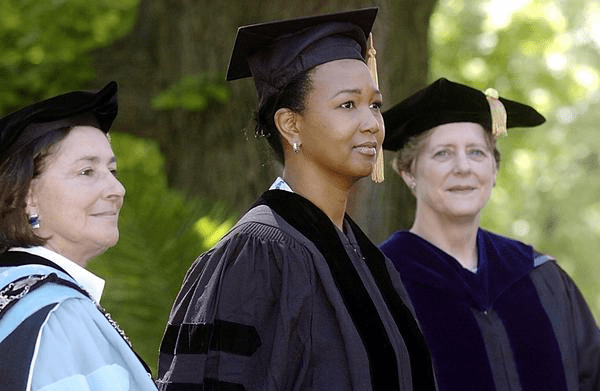
Jemison is a Professor-at-Large at Cornell University and was a professor of Environmental Studies at Dartmouth College from 1995 to 2002. She has written books and has appeared on television shows including an episode of the science fiction television series Star Trek: The Next Generation.

She has dozens of honors and awards including nine honorary doctorates in science, engineering, letters, and the humanities.

Jemison built a dance studio in her home and has choreographed and produced several shows of modern jazz and African dance.

This article was first published by Ismail Akwei on face2faceafrica.com