Racist Trump’s wife follows Obama’s steps in Ghana, visits castle that held slaves in dungeons

Melania Trump being educated at the Cape Coast Castle in Ghana Photo: Jennifer Jacobs/ White House reporter for Bloomberg News

It is quite ironic that the Slovenian-American wife of racist U.S. President Donald Trump has decided to visit the Cape Coast Castle in Ghana as part of her two-day tour of the country.

Her four-nation Africa tour in itself is a bit unsettling as her husband has viciously denigrated African countries and rejected migrants from the continent and beyond with strict laws and policies that resulted in the detention of women and children in cages and tents unfit for humans.

The Cape Coast Castle is one of the over two-dozen European-built castles in Ghana that held slaves before the torturous journey across the Atlantic to the Americas and Europe.

It serves as a reminder of a vicious history and gives African Americans a sense of hope as their ancestors left the castles as slaves and fought through different forms of oppression to these times of freedom that Trump wants to curtail.

The first black president of the United States, Barack Obama who served from 2009 to 2017 visited the Cape Coast Castle with his family on his first visit to Africa in 2009.

He toured the castle to learn about the oppression that African-Americans went through and to interact with his ancestral lineage, Obama said at the time as he reflected on the evils committed against humanity through the slave trade.

For Melania Trump, who is following the steps of the Obamas by choosing Ghana as the first country to visit in Africa, “this will be my first time travelling to Africa and I am excited to educate myself on the issues facing children throughout the continent, while also learning about its rich culture and history.”

She had to leave the United States of America where Africans are being discriminated against by her husband and racially profiled by the police to learn about Africa and it children. Are the children in America any better than those in Africa?

The United States is also battling with a high infant mortality rate, child marriage, mental health problems, substance abuse and HIV that affect children. Also, minority groups and immigrants in the U.S. have little access to affordable health care as Trump has made the country an increasingly hostile social and political environment.

She could have been of immense help by convincing her husband to reverse his draconian policies that are eating up the fabric of society.

Maybe, the visit to the Cape Coast Castle could awaken her spirits to get her husband to care for all the people and not only the white American people.

Melania Trump at the Door of No Return at the Cape Coast Castle, Ghana. “I will never forget the incredible experience and the stories that I heard,” she said when asked about the visit. pic.twitter.com/5Ne71s8Pu7

— Katie Rogers (@katierogers) October 3, 2018

What will Melania Trump learn at the Cape Coast Castle?

Cape Coast Castle was originally built by the Swedes in the 1650s and named Carolusborg after King Charles X of Sweden. It was built from the ground up by Hendrik Caerloff for the Swedish Africa Company to trade in timber and gold.

The Dutch took over the castle in the late 1650s for the Danes with the help of Caerloff who switched sides due to a dispute. The Dutch later took all the Danish possessions including the castle.

Carolusborg was later captured by the English in 1664 during the prelude to the Second Anglo-Dutch War and renamed it Cape Coast Castle. The English made Cape Coast their new capital on the Gold Coast.

Prior to the transatlantic slave trade, the castle had a dark history including the hanging of 52 men in 1772 who were crew of the pirate Bartholomew Roberts.

It was also damaged during the Seven Years’ War in 1757 when a French naval squadron attacked and nearly captured the castle.

The Cape Coast Castle was then demolished and rebuilt with an extensive spur ending in a tower built on the western side in 1762 and a high building along the north curtain erected in 1773.

A new tower that was built for defensive purposes was extended in the 1790s with two stories that were used as the governors’ apartments and a chapel. Below one of the bastions were newly built slave dungeons.

Cape Coast became a major point of export of slaves from West Africa and many Europeans flocked to the Castle for the most valuable commodity at the time in the Americas.

The dungeons were the last memory of Africa for slaves as they were held there in their thousands without any ventilation and toilets. They were starved, beaten, tortured and left to die when diseased while the European traders and governors lived comfortably above them and prayed in their chapel for God’s blessings.
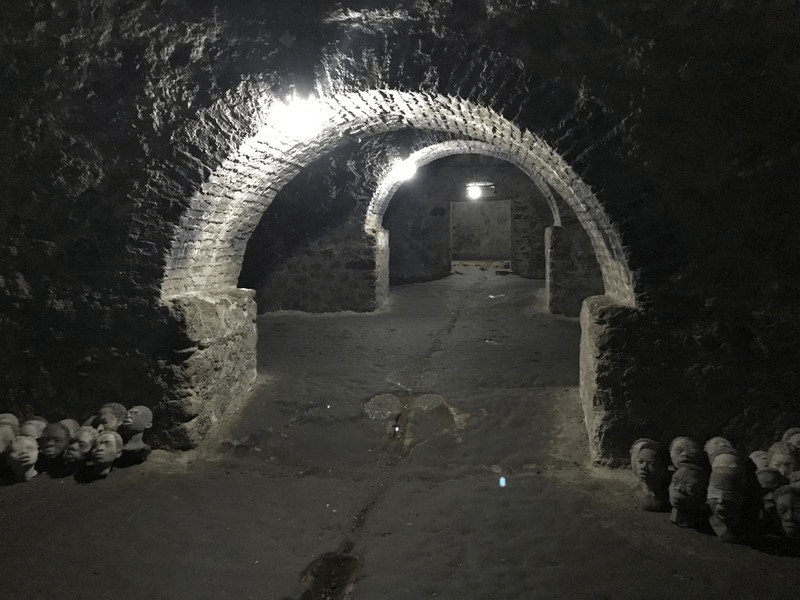
The dungeons in the basement also signified the beginning of black people’s journey across the Atlantic Ocean to the Americas as they were paraded through the “gate of no return” and loaded onto ships that were as worse as the dungeons.

After the abolition of the slave trade, the castle continued to be the seat of the British colonial government in the Gold Coast until it was transferred to the Christiansborg Castle in Osu, Accra.

Ghana gained independence in 1957 and the castle came under the care of the Ghana Museums and Monuments Board. All the castles and forts in Ghana including the Cape Coast Castle were included on the United Nations Educational, Scientific and Cultural Organization (UNESCO) World Heritage List.

This article written by Ismail Akwei was first published on face2faceafrica.com
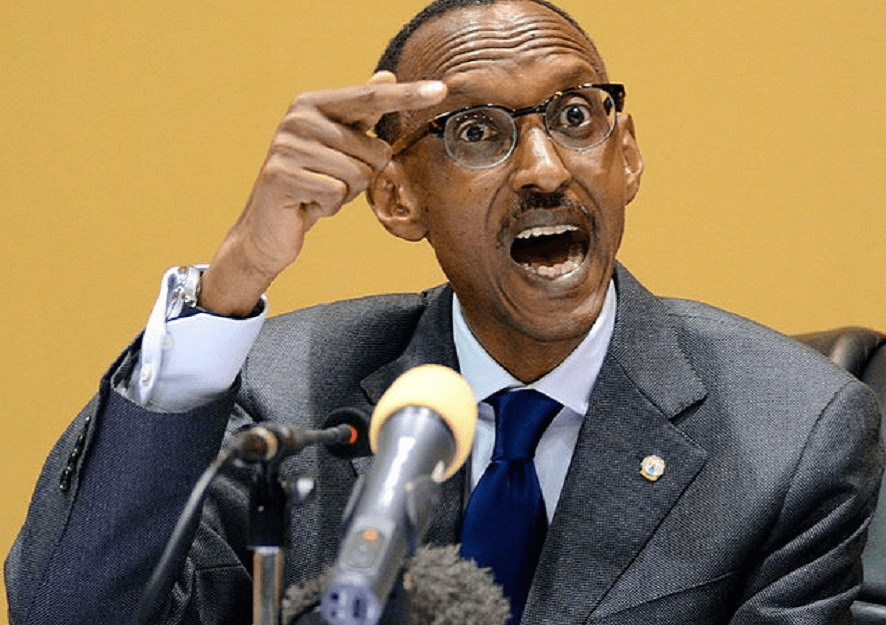
Kagame has taken it too far with new law that jails Rwandans for ‘humiliating’ officials

Rwanda has passed a law that criminalizes statements and publications deemed humiliating by government officials.

“Any person who, verbally, by gestures or threats, in writings or cartoons, humiliates a member of parliament when exercising his/her mandate, a member of the Cabinet, security officers or any other person in charge of a public service in the performance or in connection with the performance of his/her duties, commits an offence,” states the law which was passed last week.

The law stipulates an up to two years prison sentence and a fine of up to $1,145 with the penalty doubling if it’s about a member of parliament or top government official, reports local media.

Paul Kagame, who has been described as an authoritarian leader, already has a law that criminalizes defamation against him and attracts five to seven years in prison and an $8,140 fine, reports Associated Press.

Defamation is criminal is Rwanda and media organisations including the Rwanda Journalists Association have criticized the laws that stifle dissent and suppresses the media.

A justice ministry official who spoke to Associated Press on condition of anonymity questioned how the law will determine whether someone has been humiliated and who will decide.

The Rwandan government is facing a series of allegations of the disappearance of opposition figures as well as the imprisonment of those who oppose the president.

Kagame gave clemency to 2,140 convicts, including one of the two women who had tried to run against him in the 2010 polls, Victoire Ingabire Umuhoza.

Umuhoza was sentenced to 15 years at the Kigali Central Prison for terrorism and threatening national security.

She had in 2010 returned home from a 16-year exile to vie for the presidency against Kagame, only to be arrested three months after she landed in Rwanda. The arrest came after she was considered a threat to Kagame’s government following her speech honouring the victims of genocide.

She had also been accused of collaborating with the Democratic Forces for the Liberation of Rwanda (FDLR) in a bid to destabilise the government.

Another Kagame opposition is latest political prisoner Diane Rwigara, who is behind bars over allegations of an insurgency. She is the only other woman who tried to vie against President Kagame.

Just days after she announced her candidature, she was hit with a series of scandals including the release of nude photos believed to be hers; errors and inadequate signatures on her presidential form and raids on their house.

She has still not been charged.

This article written by Ismail Akwei was first published on face2faceafrica.com

Melania Trump is in Ghana and — no one cares

Photo: Jennifer Jacobs

American media may be expecting some headline-making welcome or worse, a protest of a sort for the United States First Lady Melania Trump who arrived in Ghana on the first leg of her four-nation Africa tour.

But, NO, no one cares especially after all the ill-treatment and disparaging remarks made against migrants, children of migrants and Africa by her husband Donald Trump who sang a very different tune about Africa ahead of Melania’s visit.

“We both love Africa. Africa is so beautiful, the most beautiful part of the world, in many ways,” he said days before his wife arrived, nine months after he said Nigerians were living in huts and African nations, Haiti and El Salvador were “shithole” countries. He even called immigrants animals.

Now, Melania Trump is in Ghana to “educate herself on the issues facing children on the African continent” while children of immigrants including Africans are being kept in cages by her husband without any remorse.

She also wants to focus on maternal and newborn care in hospitals and how the United States is supporting each country on its journey to self-reliance. Meanwhile, minority groups and immigrants in the U.S. have little access to affordable health care as Trump has made the country an increasingly hostile social and political environment.

She will be most appreciated if she had rather convinced her husband to release the detained children who were separated from their immigrant parents for the crime of wanting a better life in the United States.

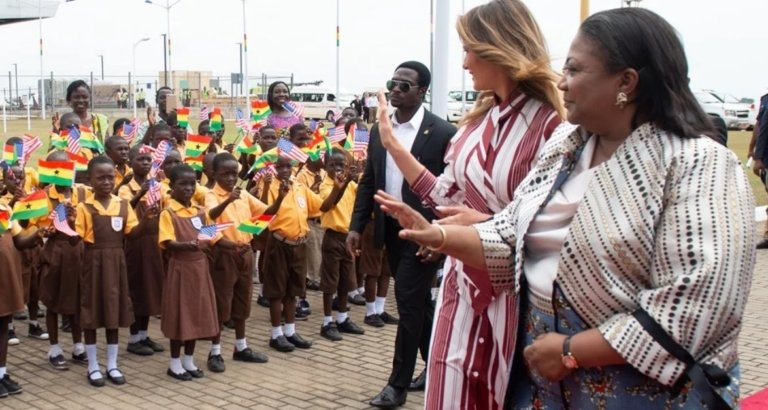
School children in Ghana were made to leave the classrooms and wave Ghana and U.S. flags at the Kotoka International Airport after her arrival with little enthusiasm.

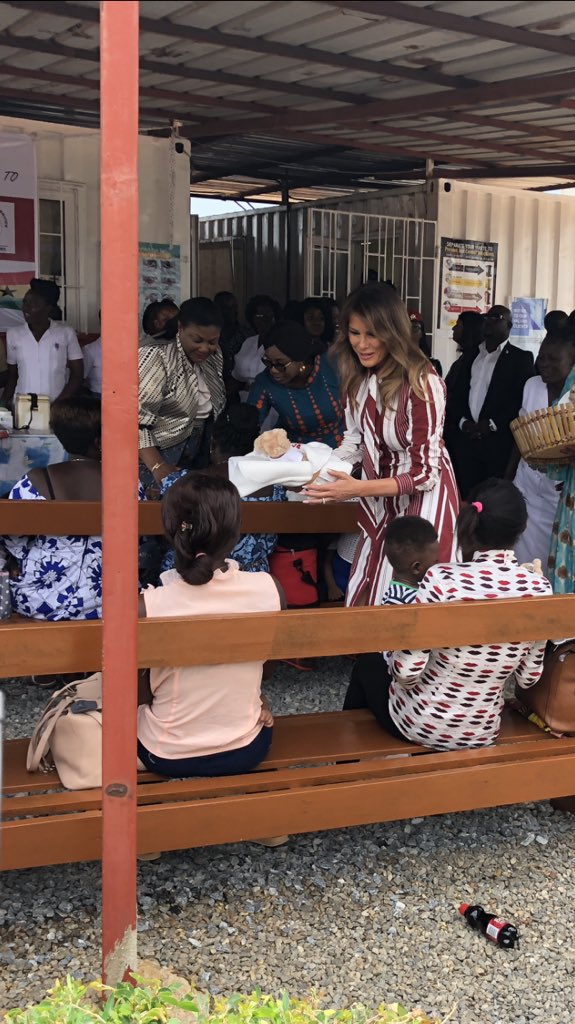
Streets were blocked for her convoy to pass to the clinics and hospitals in Accra with Ghana’s First Lady Rebecca Akufo-Addo to distribute toys and hold babies for photo moments.

Photo: Jennifer Jacobs

Commuters were caught on camera looking on without any interest in the First Lady as documented by Jennifer Jacobs, White House reporter for Bloomberg News.

It is a regular day in Accra and NO ONE CARES.

Read some reactions to her visit below as she plans to continue to Malawi, Kenya and Egypt.

THIS IS WHAT YOU SHOULD KNOW … 1. Cant be bothered 2. means nothing to us ? pic.twitter.com/hft4vYOEOo

— GhBouyKay1 (@GhBouyKay) October 2, 2018

Today is a working day in Ghana
So we should close our offices and come and stand at roadside to Wave Melania Trump ong ?

— Rhinkan Nhana Qwesi Scott (@Bretuobascott) October 2,

2018

This article written by Ismail Akwei was first published on face2faceafrica.com
These top 5 African companies embraced pan-Africanism ideals and became the best

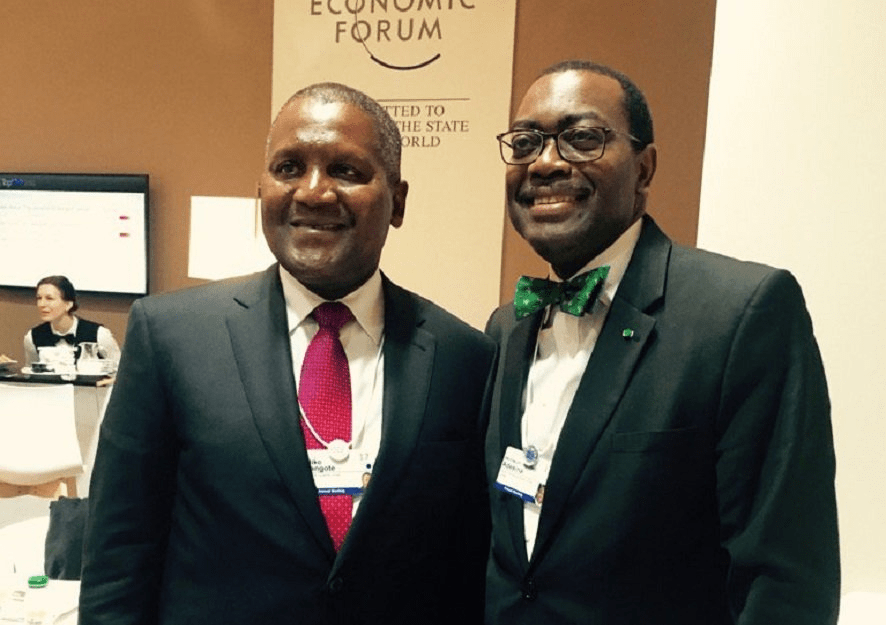
Business magnate Aliko Dangote and African Development Bank president Akinwumi Adesina

Africa is facing a downward trend in foreign direct investment, which reached a high of $74 billion in 2013 and gradually fell to $41 billion in 2017. This spells doom for the continent’s Agenda 2063 that foresees a well-developed integrated Africa.

In its quest to help reverse the trend, the African Development Bank launched the first Africa-to-Africa (A2A) Investment Report last week ahead of the maiden Africa Investment Forum to be held in Johannesburg in November 2018 to help facilitate project development and financing.

The report identified intra-regional investments as the way forward to boost economic growth and competitiveness as stipulated by the African Union’s Agenda 2063.

It also identified some African companies that have attained the status of investment champions in the continent based on the fact that they believed in the long-term growth potential of Africa and invested outside their home countries.

“African companies that invest in Africa have clear confidence in her long-term growth potential; they are at the cutting edge of their industries and, moreover, are capitalizing on their African context to generate higher returns.

“The highlights, lessons and checklist solutions in this report signpost what it will take for other companies and policymakers to promote an ‘invest with impact’ approach in Africa,” says Akinwumi A. Adesina, President of the African Development Bank Group.

According to the report, Africa has 700 companies with annual revenue of more than $500 million each and the total revenue of the 700 totals $1.4 trillion. 27% of the 700 companies are multinational corporations – the rest are large domestic companies.

400 African companies have revenue of more than $1 billion per year, and these companies are growing faster, and are more profitable than global peers, it added.

Here are the top 5 African companies that are leading the continent’s investment drive with a clear confidence in the region, cutting-edge track record and have capitalized on their African context.

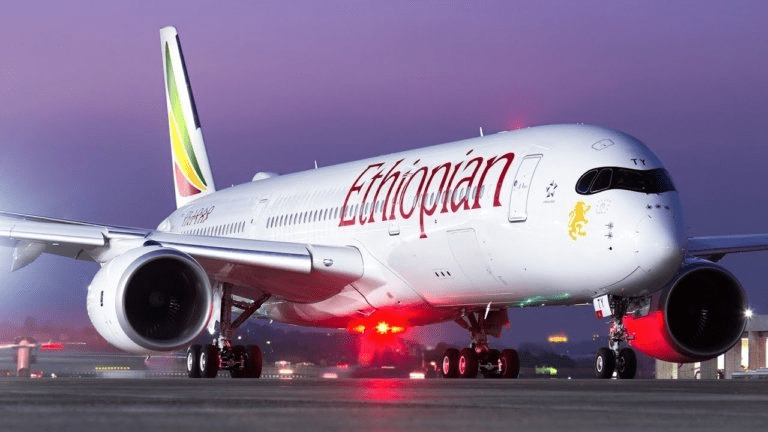
Ethiopian Airlines – Ethiopia

Founded in 1945, Ethiopian Airlines’ vision was to capitalize on the huge untapped air transport potential and underserved markets in Africa and use its home base and African roots to do this.

With strong partnerships with other African airlines, Ethiopian Airlines has been able to grow rapidly and expand its Africa network to 38 countries. Its African network expands to 55 cities and over 100 international passenger and cargo destinations.

Its operating revenue is Birr 54.4 billion ($2 billion) and the total current asset is Birr 88.8 billion ($3.2 billion). The airline’s total equity is Birr 25.4 billion ($916 million) with over 13,942 employees.

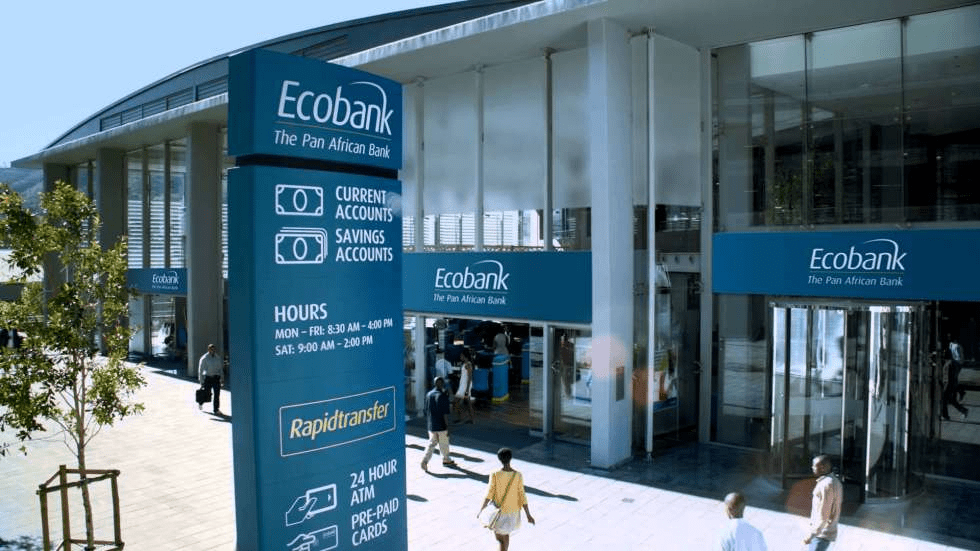
Ecobank – Togo

Ecobank currently has a larger African footprint than any other bank with operations in 36 countries across the continent.

Its vision was to create a pan-African force in banking and take advantage of regional integration opportunities, at the same time driving financial inclusion across the continent.

It was incorporated in 1985 with an authorized capital of $100 million. The initial paid-up capital of $32 million was raised from over 1,500 individuals and institutions from West African countries.

Ecobank currently has a net revenue of $2.0 billion, total assets of $20.5 billion and total equity of $1.8 billion. It has 10 million customers, 17,343 employees, 1,265 branches and 2,829 ATMs.

Standard Group – South Africa

Standard Bank’s vision was to promote a strong and stable brand over time to build its reputation with clients, focusing on supporting growth and development across Africa.

It has footprints in 20 countries since the bank started building a franchise outside southern Africa in the early 1990’s.

Founded in 1862, the bank has total assets of R 1,954,290 million ($27 billion), total equity of R 179,359 million ($2.4 billion), headline earnings of R 23,009 million ($316 million) and 54,767 employees.

Attijariwafa Bank – Morocco

It has the largest distribution network in Morocco and the densest network in Africa with 4, 236 branches in 14 countries. The bank continues to focus on mobilizing its overall resources to support the African continent.

Attijariwafa Bank’s vision to expand across Africa was tied to its goal to support the continent’s socio-economic development, bringing together partnerships and exchanges, as in its International Africa Development Forum.

Founded in 1904, the bank has a net banking income of MAD 21.6 billion ($2.3 billion), operating income of MAD 9.5 billion ($4.8 billion), net income of MAD 6.6 billion ($701 million), net income group share of MAD 5.4 billion ($573 million), 9.1 million clients and 19, 754 employees.

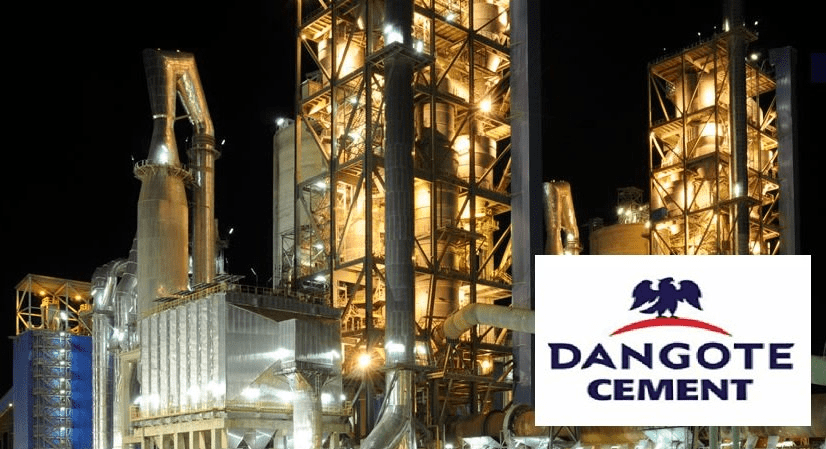
Dangote Cement – Nigeria

Dangote Cement’s vision was to support African countries to become self-sufficient by producing one of the world’s most basic commodities and establishing efficient production facilities in strategic locations close to key markets. The company prioritized trading within West Africa, taking advantage of regional markets to offer a product free of import duties.

Founded in 1992 and part of the Dangote Group, which includes the sectors of food and beverages; port operations; cement; haulage; services, and packaging, the company has footprints in 10 African countries.

It has created nearly 2,000 jobs and currently has 16,272 employees.

This article written by Ismail Akwei was first published on face2faceafrica.com
Nigerians are so good: another airport worker rewarded for returning missing valuables

MD FAAN-Engr. Saleh Dunoma and Mary Ishai

A month after a Nigerian security guard made headlines for returning a bag full of money and valuables, the Federal Aviation Authority of Nigeria (FAAN) has also rewarded a cleaner who returned some valuables she found in the airport toilet.

Working for a private cleaning contractor at the Abuja airport, Mary Ishai returned cash, passports, ATM cards and other valuables to the authorities, and in return, she was awarded a commendation letter and plaque for her sincerity.

“She found the following valuable items in the toilet: $2,000, $140 Canadian, eight pieces of coins, N21,850, two international passports, four ATM cards, four bus cards and baggage claim tags. The owner, an employee of Nigerian Deposit Insurance Corporation (NDIC), Imade Uhunwagho, has since collected his valuables,” the aviation authority said in a tweet.

A month ago, Achi Daniel, a junior security guard at the Murtala Muhammed International Airport in Lagos also returned a bag filled with cash, jewellery and other valuables. His honesty brought him honour and commendation from the president Muhammadu Buhari after he was called “stupid”.

“Inside the bag, I saw a mobile phone, jewellery and a huge amount of dollars, as well as several other documents. At that point, we went straight to the manager’s office, who then put a call through to somebody in Atlanta, Georgia, who happened to be the daughter of the owner of the bag,” he told the media.

“No amount of money would make me take what doesn’t belong to me. I believe my own time will come and at the right time … It never crossed my mind to steal the money and I wouldn’t have done that because it wasn’t my first time of finding such and returning to the owners,” he said at a ceremony to honour him and his supervisors.

The Managing Director of FAAN, Saleh Dunoma also said: “Some others may look at you and tag you stupid; I want to assure you that by virtue of this act, you have secured seats for yourselves in the comity of those with credibility and integrity. I hereby want to advise other staff to emulate this great virtue and become role models just like these two.”

Nigerians have been stereotyped as having dubious tendencies which these two honest workers have proved wrong.

This article written by Ismail Akwei was first published on face2faceafrica.com