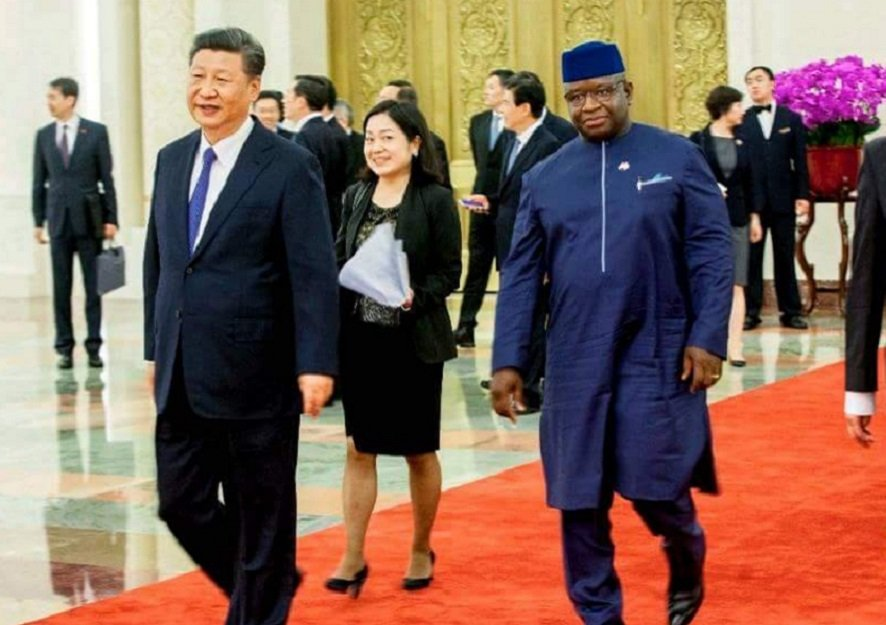
Sierra Leone President Julius Maada Bio with Chinese President Xi Jinping
The Sierra Leonean government has cancelled all contracts with a Chinese construction firm that was tasked to build a new $318 million airport facility in March expected to be completed in 2022.
The project, launched by the former president Ernest Bai Koroma, was to complement the planned construction of a new city and an exclusive economic zone, local media report.
The Sierra Leonean government has cancelled all contracts with a Chinese construction firm that was tasked to build a new $318 million airport facility in March expected to be completed in 2022.
The project, launched by the former president Ernest Bai Koroma, was to complement the planned construction of a new city and an exclusive economic zone, local media report.
#SierraLeone has terminated all contract services under the controversial Chinese project to build a new airport. A letter from the aviation ministry says it is “uneconomical to proceed with the construction of a new airport when the existing one is grossly underutilized”.
President Julius Maada Bio is reported to have lost interest in the planned Mamamah International Airport to be constructed by the China Railway Seventh Group as part of his new direction of clearing the country’s debt incurred by his predecessor.
After he was sworn into office, Maada Bio appealed to the IMF to resume implementation of the country’s Extended Credit Facility Programme aimed at restoring economic stability as Sierra Leone was drowning in an external debt of $2 billion and domestic debt is 4.9 trillion Leones ($587 million).
China has launched a global mission to infiltrate the economies of nations by offering loans and infrastructural development projects in exchange for local markets and raw materials.
Africa is one of the main targets of China which has assisted the continent with $60 billion in 2015, and in 2018, another $60 billion and a clean up of the debt maturing by this year of its LDCs, highly indebted, landlocked and Small Islands States.
These form part of the eight new initiatives announced at the Forum for Africa-China Cooperation, FOCAC, in Beijing in September. China also launched an initiative to promote non-resources-based China imports from Africa and a $5 billion special fund to accelerate such efforts.
It was recently reported that Zambia was on the verge of losing its electricity company ZESCO to China after defaulting on loan repayment. The report further indicated that the national broadcaster ZNBC was already being run by the Chinese. The government denied the allegations and vowed to take legal action.
While many Africans fear a complete take over of their economies by China, the United States, Europe and other Asian giants are also afraid of losing the rich African continent to the Chinese.
This article written by Ismail Akwei was first published on face2faceafrica.com
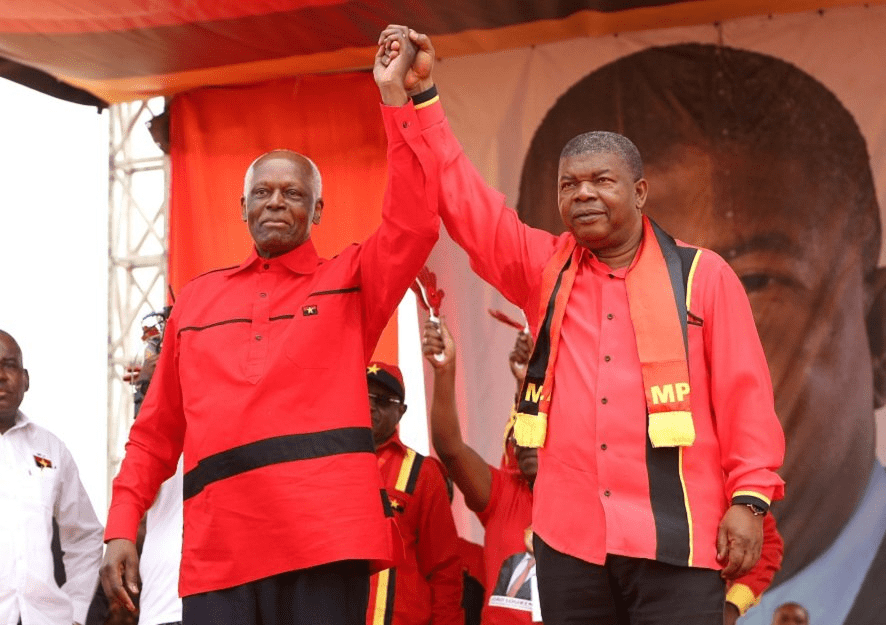
Former Angolan president José Eduardo dos Santos (L) presenting the new president João Lourenço (R) to the party. Dos Santos was involved in the fraud case that is under investigation.
Closer to the end of the term of former Angolan president Jose Eduardo dos Santos in August 2017, the oil-rich but poor nation’s finance ministry received a letter marked “confidential” for the president who was preparing to step down after the elections.
This was the beginning of what the Wall Street Journal (WSJ) described as a bank heist involving an “Ocean’s Eleven-style cast” of characters in a report they published last week about how it was foiled.
The letter that started the whole international plot to defraud the state bore a fake BNP Paribas SA logo and a fake signature of the French bank’s chairman with its content making a compelling proposal to help Angola, with the support of other European banks, “create a $35 billion fund, refinance debt and get hard currencies for imports.”
The Angolan authorities bought the idea of boosting their economy which was suffering from a double-digit inflation and a depreciating currency. According to the report, they suspiciously agreed to transfer half a million dollars from the country’s reserve to serve as an investment fund to be managed by a “qualified trust company” in London.
The outgoing president appointed his son and former central bank governor Jose Filomeno dos Santos as the fund’s chairman.
It took a suspicious finance minister Archer Mangueira, a change in government, Paradise Papers allegations, a suspicious HSBC bank teller in London, the UK’s National Crime Agency and an incorruptible new Angolan president to save the country from being defrauded.
According to the WSJ report, the then Governor of the National Bank of Angola (BNA) and an ally of the former president, Valter Filipe, immediately signed an agreement with the schemers in July last year and they quickly started transferring funds.
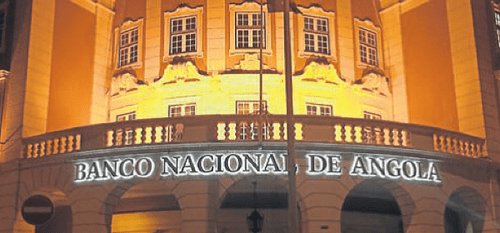
Angola Central Bank
“That same month, the central bank started transferring €24.85 million ($28.9 million) from its Commerzbank AG account in Frankfurt to an account of Mr. Pontes at Banco Comercial Português SA in Lisbon, for fees due under the agreement, U.K. court documents show,” says the WSJ report.
Jorge Gaudens Pontes Sebastião is Jose Filomeno dos Santos’s childhood friend and business partner and the two of them were also acting as the signatories of the non-registered London trust company – Mais Financial Services – without the knowledge of the Angolan signatories made up of the finance minister and the central bank governor, reports Angolan anti-corruption watch agency Maka Angola.
The transfers were done after a demand for a financial guarantee by the London company which won the approval of President Jose Eduardo dos Santos before leaving office.
“Mr. Onderwater received €5 million of that money, using some to buy property in Lisbon and rural Devon, England, investigators for the Angolan finance ministry found.
“Another €2.4 million went to a Tokyo company called Bar Trading, headed by another alleged participant in the plan, 51-year-old Brazilian Samuel Barbosa da Cunha. His role was to act as “trustee” of Angola’s $500 million seed money for the new fund, in charge of obtaining the “bank guarantees” and financial instruments that were supposed to transform the country’s money into $35 billion, according to Mr. Pontes’s testimony and other U.K. court filings,” cites WSJ.
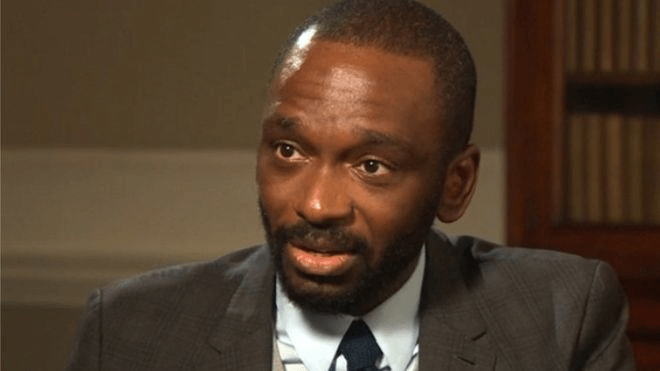
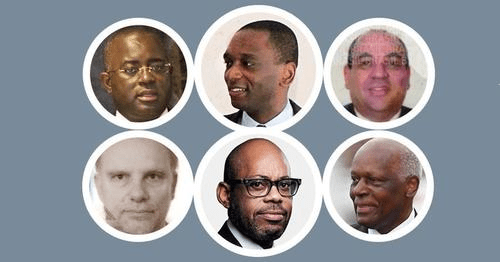
WSJ: Angola’s finance minister, Archer Mangueira (center bottom row), started an investigation. José Filomeno dos Santos, the son of Angola’s former president (center top row), faces criminal charges.
How was it foiled?
Finance Minister Archer Mangueira briefed the new president João Lourenço about the transaction and his lack of faith in the deal in which he was sidelined by the central bank governor with whom they represented the country.
Meanwhile, in September 2017, the London-based accountant who was part of the conspiracy walked into a London branch of the HSBC bank and ordered the transfer of $2 million from his account to Japan.
The teller saw the balance of $500 million in the account and alerted her superiors who realized that three weeks prior, officials at the central bank of Angola had transferred $500 million to a small accounting company in a rough London neighbourhood that is run out of a tiny office between a cafe and barber shop.
They refused to make the transfer and that’s where the UK’s National Crime Agency came in. They were alerted and they started their investigation. They also alerted Angola’s financial fraud unit which was under the finance ministry.
The funds were frozen in the UK, the president summoned the central bank governor and ordered him to cancel the agreement, return the money and then resign.
The president also fired Jorge Gaudens Pontes Sebastião from his position as Executive Secretary of the National Council for Quality Control and later sacked José Filomeno dos Santos of his duties as chairman of the Angolan Sovereign Wealth Fund in January 2018. In March, he was charged with fraud over the alleged transfer of $500m.
Jose Filomeno was arrested months later in September with his friend Jorge Gaudens Pontes Sebastião on suspicion of money-laundering, embezzlement of public funds and fraud.
The two are suspected of enriching themselves during the management of Angola’s $5 billion sovereign wealth fund which was also cited in the Paradise Papers that leaked offshore investments to German reporters.
The Angolan state prosecutor said: “The evidence gathered resulted in sufficient indications that the defendants have been involved in practices of [alleged] various crimes, including criminal associations, receipt of undue advantage, corruption, participation in unlawful business, money laundering, embezzlement, fraud among others.”
They both denied any wrongdoing and investigations are ongoing.
However, the HSBC has handed over the bulk of the half-billion dollars back to Angola. The country is also suing four others who are part of the alleged conspiracy for a remaining €25 million ($28.6m) the central bank paid to set up the multibillion-dollar fund.
They include a Brazilian based in Tokyo and a Dutch agricultural engineer as well as the London-based accountant who attempted to access the swindled funds, reports WSJ.
Angola’s new president Joao Lourenco has promised to crack down on corruption and has gained a reputation of taking punitive action against allies and family members of his predecessor including his daughter, Africa’s richest woman Isabel dos Santos who was sacked as head of the state oil company Sonangol.
Angola is Africa’s second-biggest oil producer yet the poverty gap is huge.
This article written by Ismail Akwei was first published on face2faceafrica.com
Dr Denis Mukwege at his hospital in the Democratic Republic of Congo
Renowned Congolese gynaecologist and surgeon Dr Denis Mukwege has been named the winner of the 2018 Nobel Peace Prize which he won with Nadia Murad for their efforts to end the use of sexual violence as a weapon of war and armed conflict.
Mukwege, popularly known as the ‘rape surgeon’, becomes the 23rd African and first Congolese to ever win the Nobel Peace Prize which was last awarded to Africans in 2011; Ellen Johnson Sirleaf and Leymah Gbowee of Liberia.
“Denis Mukwege’s basic principle is that ‘justice is everyone’s business’. The 2018 Peace Laureate is the foremost, most unifying symbol, both nationally and internationally, of the struggle to end sexual violence in war and armed conflicts,” says the Nobel Committee after the announcement on Friday, October 5, 2018.
Watch the moment the 2018 Nobel Peace Prize is announced.
63-year-old Mukwege has helped thousands of women and girls who have been victims of rape and sexual abuse at the hands of rebel forces in the Democratic Republic of Congo since the beginning of the civil war in the early 90s.
He founded the Panzi Hospital in the South Kivu province in 1999 to provide free and comprehensive care for female victims of rape and other forms of sexual violence during the conflict.
Denis Mukwege’s basic principle is that “justice is everyone’s business”. The 2018 Peace Laureate is the foremost, most unifying symbol, both nationally and internationally, of the struggle to end sexual violence in war and armed conflicts. @DenisMukwege#NobelPrizepic.twitter.com/KSzecKSkUc
Mukwege will receive a citation and an 18-carat gold medal that bears the face of the founder Alfred Nobel at an award ceremony in December. The prize for the joint winners includes SEK 9,000,000 ($1,110,000) which will be paid next year.
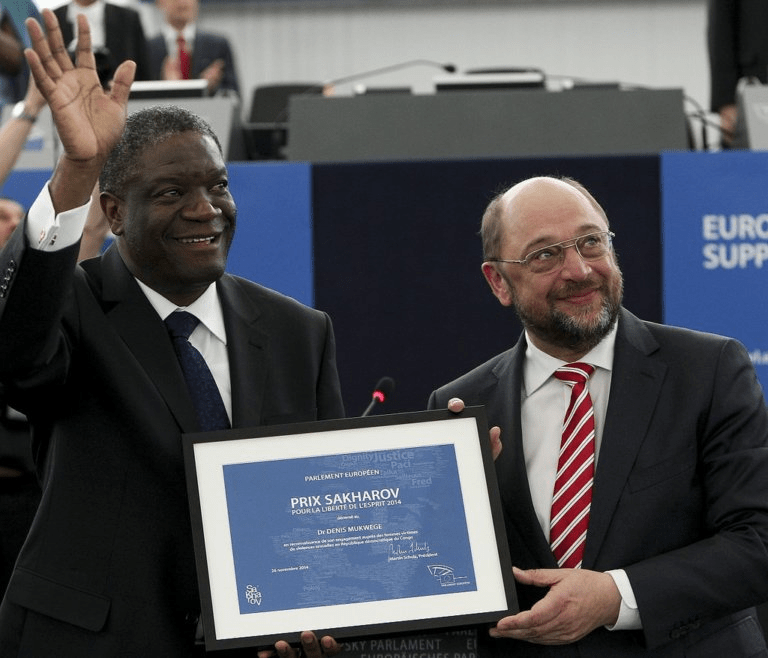
Mukwege has received scores of honours including Europe’s top human rights prize – Sakharov Prize – and three nominations for the Nobel Peace Prize for his service and fight against sexual violence. He was also named by TIME magazine as one of the world’s 100 most influential people in 2016.
His hospital treats over 46,000 girls and women with gynaecological injuries, about half of them, victims of sexual violence.
Mukwege has been very vocal in the DRC where he called for a change in the country’s governance system. This he re-emphasized during a speech at the United Nations in 2012 where he condemned the government’s passive response to the violence against women.
Despite the numerous support he gained from the public for his vociferous nature, he narrowly escaped an assassination attempt in 2012 that claimed the life of his guard who took the bullet in his place.
Mukwege went into exile in Europe but later returned to a rousing welcome the following year to help his struggling hospital to stay open.
The life of the “rape surgeon”, as he is popularly called, has been documented in the film, “The Man Who Mends Women”, and a book.
History of the Nobel Prizes
The Nobel Prizes have been awarded since 1901 and conferred on top achievers in six fields: Physics, Chemistry, Literature, Physiology or Medicine, Promotion of Peace and Economic Sciences.
Prize-winners are often individuals, teams of two or three and organisations called Nobel Laureates. The laureates are nominated by their peers, including former laureates, politicians, justices and academics among a few others, and then secretly chosen by Nobel Committees and prize-awarding institutions.
For the peace prize, the Norwegian Nobel Committee composed of five members is appointed by the Norwegian parliament.
The Committee chooses the laureates through a majority vote before the winner is announced in October.
The awards were created by Swedish scientist and philanthropist Alfred Nobel who bequeathed most of his fortune to the establishment of the prize upon his passing in 1896.
The first prizes were presented in 1901 and since then, over 900 people have been awarded.
Details of the selection process and nominees can only be revealed until after 50 years.
Despite the Nobel Foundation’s requirement that prizes be awarded only to living recipients, Canadian immunologist Ralph M. Steinman was awarded a 2011 Nobel for medicine posthumously. The committee did not know he had died three days prior.
The winners receive their prizes at a ceremony on December 10th – the anniversary of the death of Alfred Nobel.
All the prizes except the peace prize are presented in Stockholm by the King of Sweden. The peace prize is awarded in Oslo by the Norwegian Nobel Committee with the King of Norway.
The prize includes a sum of money, a citation and an 18-carat gold medal that bears the face of the founder Alfred Nobel. The money is received after a year.
This article written by Ismail Akwei was first published on face2faceafrica.com
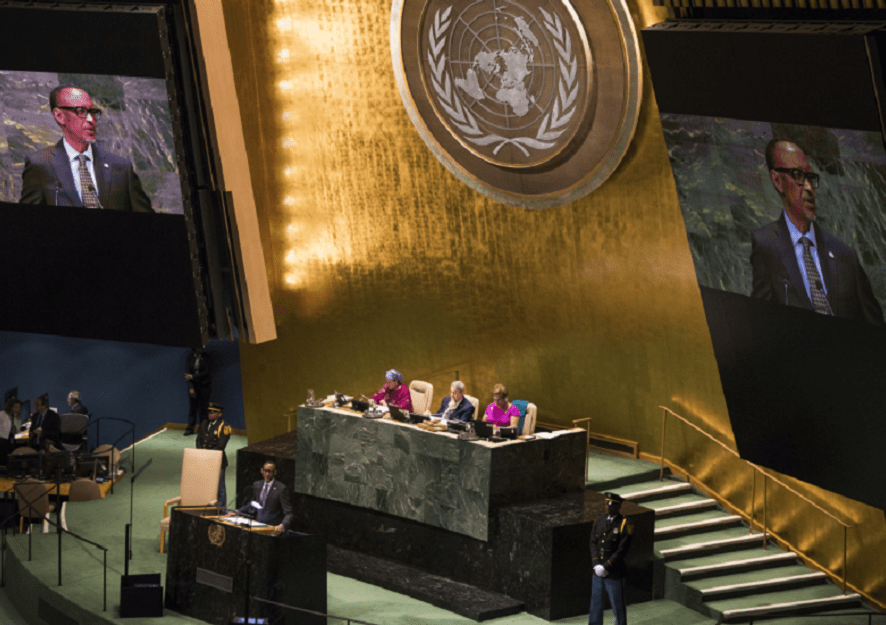
It was a show of power and status at the recently held United Nations General Assembly when over 90 heads of state and government met in New York to address global issues under the theme, “Making the United Nations relevant to all people: global leadership and shared responsibilities for peaceful, equitable and sustainable societies.”
Africa was largely represented by almost all of its male leaders including four of whom were there for the first time as presidents: George Weah of Liberia, Julius Maada Bio of Sierra Leone, Emmerson Mnangagwa of Zimbabwe and Cyril Ramaphosa of South Africa.
One prominent newcomer head of government who was missed at the summit was Ethiopian Prime Minister Abiy Ahmed who decided to stay behind to focus on security issues that were affecting his country.
The 42-year-old leader has since his election improved the country’s democratic space with the successful campaign for unity and reconciliation which has reduced the decades-old tensions within the country and with other neighbouring states while ensuring the release of political prisoners.
The 42-year-old leader has since his election improved the country’s democratic space with the successful campaign for unity and reconciliation which has reduced the decades-old tensions within the country and with other neighbouring states while ensuring the release of political prisoners.
He was represented in New York by Minister of Foreign Affairs, Dr. Workneh Gebeyehu.
Here are two other African leaders who skipped the Summit, not for security reasons, but to cut costs and save money for the struggling economies.
John Magufuli – Tanzania
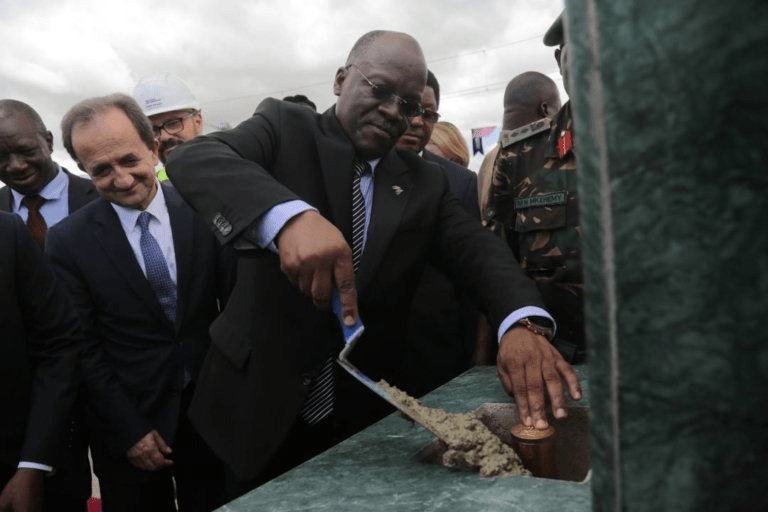
Tanzania’s president John Magufuli has explicitly stated that he will rather save money than to attend the UN General Assembly which will mean spending more on his entire delegation.
The president has never attended the UNGA and as always, he was represented by foreign minister, Dr. Augustine Mahiga, who he thanked for representing him again after his return to the country.
“He has just arrived from the UN summit where he represented me, saving the government money. This is because sending a minister and his assistant is less expensive than sending the president and his delegation,” Magufuli, nicknamed “the Bulldozer”, was reported to have said.
Since his election in 2015, Magufuli has stuck to his cost-cutting measures affecting every part of the economy including his salary which is one of the lowest in Africa. He earns 9 million Tanzanian shillings ($4,000).
The president has also skipped key international meetings including African Union Heads of State and Government Summits. He has only travelled to Uganda, Rwanda, Kenya and Ethiopia as president; all with a small delegation of at least 10 people.
Magufuli has also imposed strict restrictions on foreign travel for government officials.
Yoweri Museveni – Uganda
Ugandan president Yoweri Museveni has been in power since 1986 and has attended dozens of UN General Assemblies. However, he was absent at the 73rd edition to address other “more important” issues.
“The President told Cabinet it was pointless to travel to New York when he was going to address the assembly for only 15 minutes. It is also costly in a way that each time he travels, he is accompanied by a big delegation. Cabinet endorsed the decision and the records are there,” says State International Affairs Minister Okello-Oryem who told local media on the first day of the Summit.
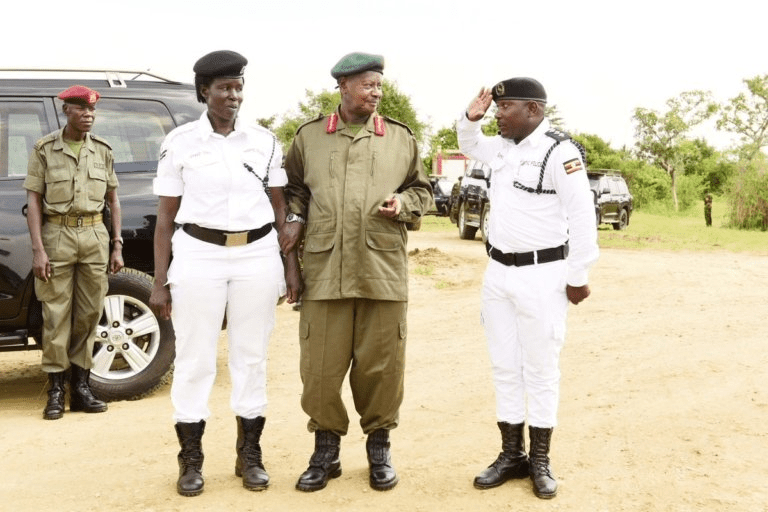
Museveni was represented by Prime Minister Ruhakana Rugunda who went to New York with a 15-member delegation. If the president had attended, he would have sent an average of 50 people.
The president spent the week attending meetings on malaria and wildlife conservation in the country.
This article written by Ismail Akwei was first published on face2faceafrica.com
The suspicions of a Chinese invasion of the African continent and a subsequent colonization is not far-fetched as there is an almost complete takeover of the economy of several African countries by the Asian giant through loans and infrastructural development.
It is obvious that Zambia is in the firm grips of the Chinese communist government than any other African country as they have been embroiled in a series of events that gave away their rights to their own country and their people.
Just last year, there was tension in the country after the police swore in new reserve officers who were Chinese and had rights to arrest. The eight officers were outdoored wearing the Zambian police uniforms. An outcry forced the police department to remove them from duty.
It was reported by Africa Confidential that the country was on the verge of losing its electricity company ZESCO to China after defaulting on loan repayment. The report further indicated that the national broadcaster ZNBC was already being run by the Chinese. The government denied the allegations and vowed to take legal action.
Govt has began a process to take legal action against the Africa Confidential for a smear campaign against the people of Zambia.
These suspicions sparked protests in the country against the seemingly Chinese invasion. It didn’t end there. Here are some subsequent events that convinced the public.
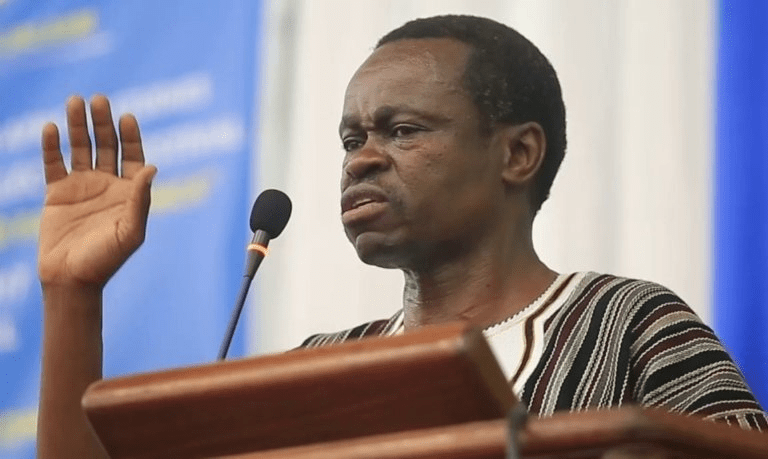
Kenyan law professor and Pan-Africanist, Patrick Loch Otieno (PLO) Lumumba denied entry into Zambia to lecture on China-Africa relations.
Popular Pan-Africanist speaker PLO Lumumba was denied entry into Zambia last weekend by immigration authorities who were acting on orders of Dora Siliya, the Minister of Information and Broadcasting Services and Chief Government Spokesperson.
She said in a tweet that PLO Lumumba was denied entry “due to security considerations”. He was sent back after he landed at Kenneth Kaunda International Airport in Lusaka where he was due to deliver a public lecturer at Eden University under the topic: “Africa in the age of China influence and global geo-dynamics.”
Govt thru immigration dept has denied entry into Zambia of Prof. Patrick Lumumba, a Kenyan national due to security considerations. Immigration is a security wing working with agencies within and beyond Zambia.
The government’s decision was clearly a move to end the protests that were ongoing at the time against the growing Chinese presence in the country and the fear that China will soon control the affairs of the country.
Chinese men caught offering military training to Zambians.
Two Chinese nationals were caught last week in Livingstone for taking nine Zambians wearing military fatigue through an illegal military training.
The 11 suspects were in possession of one pistol, seven shotguns and one big air gun with a box containing shotgun ammunition, reports local media Lusaka Times.
The nine Zambians were reported to be members of a private security firm and were wearing uniforms that looked similar to those of the National Parks and Wildlife Authority.
The Southern Province Police Commissioner, Bonnie Kapeso said in a statement that the Chinese trainers had imported the military fatigue from China.
The police said they didn’t have any authorization to conduct training without clearance from the police and the matter will be investigated.
Zambia’s state-owned newspaper publishes an article in Chinese language Mandarin.
State-owned Times of Zambia newspaper made matters worse when they published an article in the Chinese language Mandarin for its millions of readers who speak either English or the over half a dozen official languages of Zambia.
The Chinese article was titled ‘We’ve still got it’ and it was written by one Steven Zande. It is reported that the article was a translation of the English version of a story on the front page about President Edgar Lungu’s vow to uphold national interests in his dealings with foreign investors.
The article created the expected uproar and outrage especially when the public was dealing with the fear of a takeover.
The Information Minister and chief government spokesperson Dora Siliya quickly explained on Twitter that the Chinese story was a business strategy to increase revenue and tap into the Chinese advertising market.
“Times of Zambia aiming to increase revenue by targeting Chinese market. Today’s edition has a Chinese version of top story. They want to tap into Chinese advertising. Who moved my cheese? Times of Zambia responding,” she tweeted.
Times of Zambia aiming to increase revenue by targeting Chinese market. Today's edition has a Chinese version of top story. They want to tap into Chinese advertising. Who moved my cheese? Times of Zambia responding.
This is a bit unsettling as African independence leaders invited the Chinese to invest in the continent when the Asian giant was also struggling at the time. Their recent massive interest in Africa is showing how weak the continent is and the massive losses that will come from some of the partnerships.
If the media goes in that direction, then the Chinese will control information, education and entertainment as their government does in Beijing and all of China.
This article written by Ismail Akwei was first published on face2faceafrica.com





 Ismail Akwei