China has won over the heart of Africa after years of financial support in the form of loans that have turned out to be more harm than good. Many countries have defaulted in payment while a few others are slowly paying through debt servicing.
In 2015, China offered the continent $60 billion in loans; and in 2018, another $60 billion and a clean-up of the debt maturing by this year of its LDCs, highly indebted, landlocked and Small Islands States.
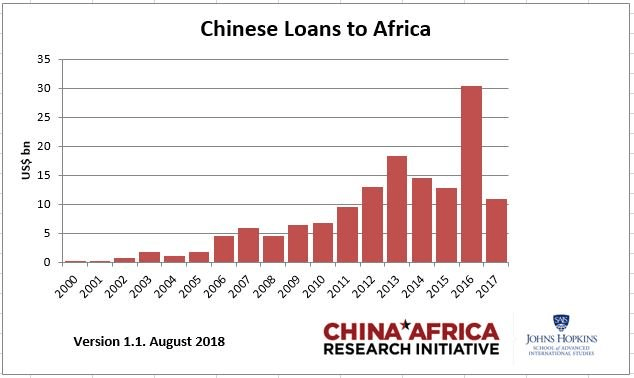
In the 2018 loan data published by the China-Africa Research Initiative (CARI) at the Johns Hopkins University’s School of Advanced International Studies (SAIS), from 2000 to 2017, the Chinese government and institutions extended $143 billion in loans to African governments and state-owned enterprises.
The top beneficiary was Angola which received $42.8 billion over 17 years; and according to the research findings, China is not Africa’s largest donor, but the United States.
“It is baseless to shift the blame onto China for these African countries debt problems. Their debt position has been built over time even before we came in … We have to look at the fluctuations in the international economic situation vis-a-vis the price of minerals, their key exports. This is where the problem is, and not Chinese loans,” China’ s special envoy to Africa, Xu Jinghu, said last month denying claims that Beijing was burdening Africa with debt.
For CARI director Deborah Brautigam, “It is always important to look at whether these projects will generate enough economic activity to repay these loans, as opposed to being seen as merely ribbon-cutting opportunities.”
Here are the top 10 African borrowers from China and how much was loaned to them since the year 2000.
Angola
$42.8 billion
Ethiopia
$13.7 billion
Kenya
$9.8 billion
Republic of Congo
$7.4 billion
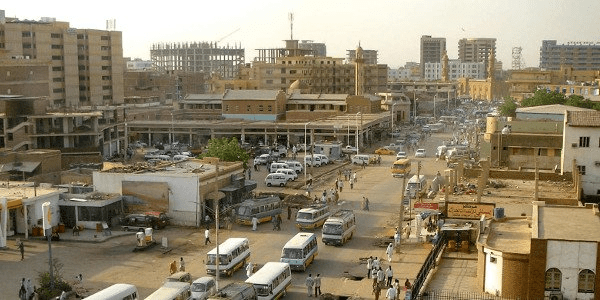
Sudan
$6.5 billion
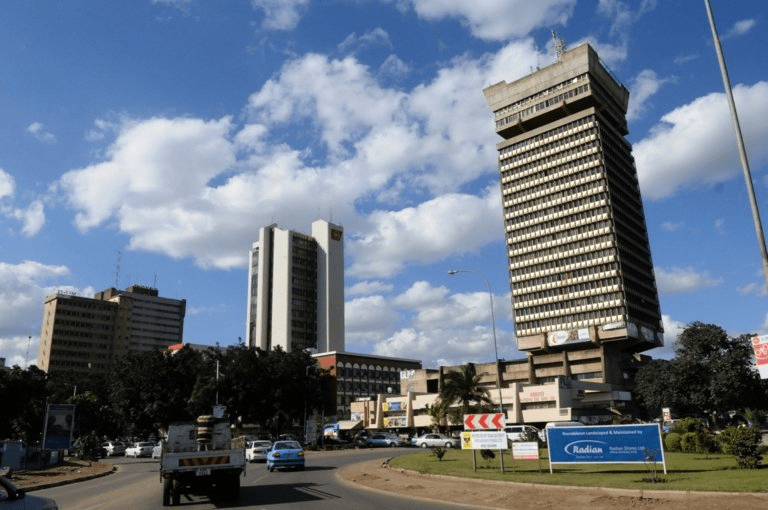
Zambia
$6.4 billion
Cameroon
$5.5 billion
Nigeria
$4.8 billion
South Africa
$3.8 billion
Ghana
$3.5 billion
This article written by Ismail Akwei was first published on face2faceafrica.com
Basketball is not a dominant sport in Africa but some Africans have defied the odds to make their way into the biggest professional basketball league in the world, the National Basketball Association (NBA) of North America.
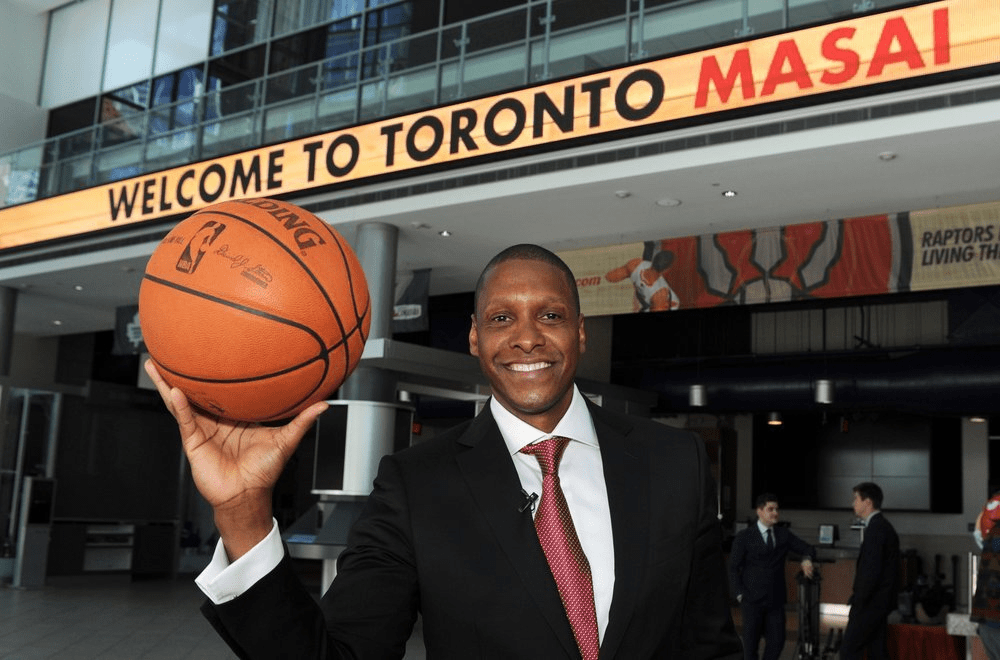
NBA players are the world’s best-paid athletes and the league has 30 teams – 29 from the United States and one from Canada. The only Canadian team in the NBA is called the Toronto Raptors and its president is Nigerian-born Masai Ujiri.
Born in the northern Nigerian town of Zaria to a Nigerian father who was a hospital administrator, and a Kenyan mother who was a doctor, the soft-spoken 48-year-old former basketball player and father of two is the first African NBA executive.
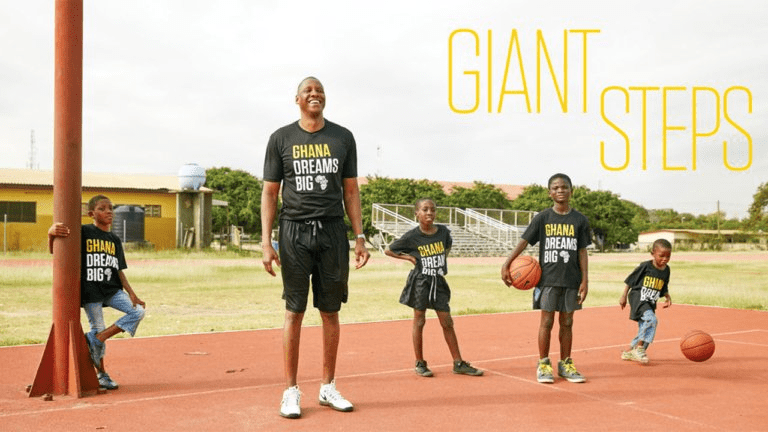
Masai Ujiri is a true African with a big dream for the continent’s youth which he manifests through NBA’s Basketball Without Borders Africa programme and his Giants of Africa programme that uses basketball as a means to educate and enrich the lives of underprivileged African youth through camps.
“It’s an obligation for me to do this. I see it more as an opportunity. It [the role] is heavy on my shoulder and I feel it because I grew up like these youth, but I think I have the opportunity and I may as well use the opportunity to help the youngsters in Africa,” Masai Ujiri told Face2Face Africa in an exclusive interview.
The humble NBA executive was quick to acknowledge the efforts of several other people who are also grooming young African talents through basketball with the same goal of developing the future of the African youth.
“I am not the only promoter of the game … There are many people that do it. I do have a platform that’s visible because of my position. There are lots and lots of people doing lots of great things on the continent with basketball, some may be as visible, some not as visible, some even more visible. It is a huge continent and it takes a lot to get things going.
The Hausa-speaking Ujiri recalled his childhood in Nigeria where he played football until he was 13 and then met legendary American coach Oliver Johnson in his home country who trained him and helped him develop the love for basketball.
“I had the opportunity to go to the States to further my education and I played professional basketball. I was very good but I discovered early that I could do other things in the game, like I started coaching the junior national team in Nigeria, I started scouting, and that’s how I got into the NBA,” he said.
Ujiri talked about his parents’ contribution to his childhood and their concern for his future after he discovered basketball which has turned him into a global icon and an inspiration to many young people in Africa.
“My parents were protective, you know Nigerian parents or African parents. It’s always education first but I did have encouragement from them too whether it was my mom travelling and buying me basketball shoes or a basketball, basketball gear or basketball magazines, so I did have good encouragement from my parents too,” he explained.
Masai Ujiri did not mince words when Face2Face Africa asked him if he regretted ending his professional playing career in 2002 after playing two years of basketball at Bismarck State College in the U.S. before playing professionally in Europe for six years.
“There is no regret at all because I wasn’t good enough as a player. [I miss] the competitive part of the game … I wasn’t good enough to be a high-level player and now I find myself to be in a high-level position so this is clearly better than what I could have done as a player,” he said confidently.
Masai Ujiri’s Giants of Africa recently built a basketball court in Alego, Kenya, as part of the Sauti Kuu Foundation Sports, Resource and Vocational Training Centre founded by Auma Obama, former U.S. President Barack Obama’s sister.
The project was launched in July by Barack Obama during his first visit to Kenya since leaving office. He was joined by Masai and Auma, Jama Mahlalela (Raptors 905, Head Coach), Patrick Engelbrecht (Toronto Raptors, Director of Global Scouting), Amadou Fall (NBA Africa, VP, and Managing Director) and Bismack Biyombo (Charlotte Hornets).
“I met Auma a year and a half back and she told me what she was doing in Alego. She wanted to build a basketball court … With Giants of Africa we’ve been building and trying to build courts in parts of Africa for the last two years and that’s how we came about this,” he said.
“She’s a friend and I am almost like a little brother to her too and she’s become a really good partner … it’s something we wanted to do and that’s how it came about. He [Barak Obama] loves basketball and he came to open the basketball court,” Ujiri added.
Basketball is slowly gaining grounds on the continent and Masai Ujiri believes there are numerous opportunities the game will offer Africa in terms of human and infrastructural development.
“There are many opportunities that this game can give us, the business side, the commercial side of it, the talent side of it, the youth development side of it. There are many ways like building leagues. The commissioner has already talked about a pan-African league here … There is so much growth and so much that could come out of basketball on the continent,” he said with reference to the NBA Commissioner Adam Silver’s announcement in August that the league is putting plans in place to launch a tournament across Africa.
This plan was again iterated in New York during the 73rd United Nations General Assembly when Rwandan President Paul Kagame was invited to a reception hosted by the NBA.
“In the NBA there have been many Africans but there are many more who can qualify to be there. It is not just playing basketball, it exposes them to many opportunities, including education and many others,” Kagame said in a speech on the NBA partnership plan with the African continent.
For Masai Ujiri, the dream is being realized as his Giants of Africa programme – which started in Zaria – keeps expanding to other African countries with camps in Ghana, Nigeria, Kenya and Rwanda. They also organize clinics across the continent.
The camps have groomed thousands of players with over 80 of them attending high school or university in the United States and nearly 20 former participants playing on junior teams in clubs throughout Europe. Dozens have also attended the NBA’s Basketball Without Borders program in Africa.
“We are opening the borders and giving more youth opportunities and that’s how we started by going to different countries. We first went to my mom’s country, my mom is Kenyan, and started opening up and visiting other countries, knowing their culture whether it’s their food, the way they dress, the way they sing and all those different things,” he said.
“As leaders, I think we have to give people in many places a chance to have success, not continue to put those people down … We have to inspire people and give them a sense of hope. We need to bring people along, not ridicule and tear them down. This cannot be the message that we accept from the leader of the free world,” he said in January.
The “son of Africa” who preaches and teaches basketball revealed to Face2Face Africa his role models who inspired him to keep achieving his goal and to work harder for more success. His parents were on top of the list of those who inspired him as a child, followed by his first coach, Oliver Johnson who he calls “Ollie J”.
Ujiri also mentioned Nelson Mandela, Barack Obama, Thomas Sankara and “those kinds of leaders who have made a good impact and had great voices” as his inspiration as a grown-up person to become even better.
He had a piece of advice for the African youth:
Dream big, keep giving. The more you give, the more you grow. We also have to start small. Sometimes we think in our minds that we have to start in a big place. Think of something nobody else is doing, start little sometimes. For me, working hard and putting passion and energy into everything is the giving and you don’t have to be told to do that. That’s not exceptional, that’s a priority and that’s something that you have to do. So I encourage these kids to dream big and continue to strive to do better.
Masai Ujiri has received several awards and honours including Face2Face Africa’s F.A.C.E. List Award, NBA Executive of the Year Award, the 2018 WISE Champion Award, the IABC/Toronto Communicator of the Year (COTY), Honorary Doctorate of Laws from Ryerson University’s Faculty of Community Services among others.
Masai Ujiri is married to Ramatu (Barry) Ujiri, a model originally from Freetown, Sierra Leone. They have a four-year-old daughter and a two-year-old son.
This article written by Ismail Akwei was first published on face2faceafrica.com
“Music is supposed to have an effect. If you’re playing music and people don’t feel something, you’re not doing s**t. That’s what African music is about. When you hear something, you must move. I want to move people to dance, but also to think. Music wants to dictate a better life, against a bad life. When you’re listening to something that depicts having a better life, and you’re not having a better life, it must have an effect on you.”
This is the embodiment of the life lived by Nigerian music legend and pioneer of the Afrobeat genre, Fela Anikulapo Kuti, who was born on October 15, 1938. He has since never died even after his transition from the world on August 2, 1997, at the age of 58.
Fela was a creative genius and a thorn in the flesh of politicians and oppressors who took advantage of their positions and power to dictate the way people should live and die. He lived and breathed for freedom and justice for the common people.
He left a legacy that has lived on and survived for decades with his songs maintaining their relevance today and his children pushing his signature activism through music as perfected by their father.
His eldest son, Femi Kuti, started playing with his father at the age of 15 and has never looked back as his voice is heard without fear or favour during social and political causes.
Femi’s younger brother, Seun Kuti, was only 9 years old when he began singing in his father’s band. He has also carried on his father’s legacy by leading his father’s Egypt 80 band.
Seun recently released a new album, Black Times, that addresses current political and social issues affecting Nigeria and Africa as a whole. This is his fourth as well as his first self-funded work recorded with the Egypt 80 band. The album has a similarity with the philosophy and style of Fela Kuti.
“Too many African rulers do not have the country’s best interests at heart. Too many people in Africa and the West have sunk or are sinking into complacency.
“These black leaders, they don’t represent black people’s interest. He [Buhari] fits that model. He doesn’t invest in the people, he only invests in businesses and the service industry. That’s one of the major reasons I don’t support most black leadership here,” Seun said in an interview early this year.
Fela Kuti has lived up to his adopted middle name “Anikulapo” which means “He who carries death in his pouch”, with the interpretation: “I will be the master of my own destiny and will decide when it is time for death to take me”. Like a prophecy, he has never been forgotten and his name is still mentioned each year with events to commemorate his life and legacy.
His music is on replay even in the 21st century with renditions, masters, Broadway shows, bands and many other entities inspired by Fela Kuti that signify his musical immortality.
Every year, Fela Kuti is celebrated during the week of his birthday at the annual Felabration music festival in Nigeria from October 15 to October 21, 2018. Thousands of fans attend the festival held at the New Afrika Shrine in Ikeja since its inception in 1998.
Created by Fela’s daughter Yeni Anikulapo-Kuti, Felabration 2018 will be celebrated under the theme ODOO ‘Overtake Don Overtake Overtake’ coined from his 1990 hit. The festival will include a symposium, debates, art exhibition, dance competition and a music concert that will feature top African and international artists.
Who is Fela Anikulapo Kuti?
Olufela Olusegun Oludotun Ransome-Kuti was born in 1938 to an educated middle-class family.
His father was an Anglican minister and teacher, and his mother was a feminist activist while his two brothers were medical doctors.
Fela was sent to London in 1958 to study medicine but diverted to music at the Trinity College of Music where he formed the band Koola Lobitos.
He later married in 1960 and moved to Nigeria in 1963 where he trained as a radio producer for the Nigerian Broadcasting Corporation.
The trumpeter re-formed his band in Nigeria which played a Jazz and Ghanaian Highlife fusion.
Fela moved to Ghana in 1967 where he named his musical fusion Afrobeat. The band played in the United States for months where Fela was attracted to the Black Power movement.
The band which was renamed The Afrika ’70 upon return to Nigeria recorded music about social issues from the regular love songs.
Fela formed the Kalakuta Republic community which had a recording studio and served as a home for band members and other musicians.
He further opened the Afro-Spot nightclub which was later renamed Afrika Shrine where he regularly performed and promoted the African traditional religion of the Yoruba ethnicity.
He changed his name to Fela Anikulapo Kuti, started singing in pidgin English and declared his Kalakuta Republic independent from Nigeria.
Fela became popular among the Nigerian public and unpopular with the government at the time which ordered raids on his community. He was beaten, arrested, home, records and instruments torched among others.
He married 27 women, most of them his dancers in 1978 to stand against the authorities who accused him of kidnapping women in his commune.
His popular song Zombie, which was released in 1977 created a lot of buzz and notoriety against ruling governments in West Africa.
Riots broke out in Accra during the performance of the song which led to the banning of Fela from entering the country.
He formed the Movement of the People (MOP) political party to preach Africanism. He vied for the Nigerian presidency in 1979. His candidature was rejected.
Fela Kuti fell out with the regime of then General Olusegun Obasanjo in 1979, Muhammadu Buhari in 1984 and later Sani Abacha for songs including Zombie and I.T.T. (International Thief-Thief).
He spent 20 months in prison under Buhari for charges of currency smuggling which was regarded as politically motivated. He was released from prison by General Ibrahim Babangida.
Fela changed his band’s name to Egypt ’80 to educate Africans about Egyptian civilization. The band embarked on international tours in the United States and Europe where he performed with stars including Bono and Carlos Santana.
The 1990s came with more challenges affecting the band’s release of albums. Fela and four members of his band were arrested for murder in 1993 and released on bond. He denied the charges.
Fela went off the radar as rumours spread that he was suffering from AIDS.
He died on August 2, 1997, at the age of 58. His older brother Dr Olikoye Ransome-Kuti announced at a press conference that the immediate cause was heart failure, but he had suffered from AIDS.
Fela Kuti left behind seven children who have taken after his musical talent. They include Femi Kuti, Seun Kuti, Yeni Kuti, Sola Kuti, Omosalewa Anikulapo Kuti, Kunle Anikulapo Kuti, Motunrayo Anikulapo Kuti.
His eldest son, Femi Kuti, has maintained and managed his father’s Afrika Shrine where concerts and musical activities are held almost daily.
Fela Anikulapo Kuti’s songs still live on with renditions and remastered versions.
This article written by Ismail Akwei was first published on face2faceafrica.com
Newspaper cutting showing the two accused being escorted to court
Described by American media as The Year of the Spy, 1985 saw one of the biggest arrests of foreign spies and agents of the Central Intelligence Agency (CIA) who became infamous for espionage against the United States.
One of the most profound cases of that year was the arrest of a 29-year-old CIA clerk, Sharon W. Scranage, who was accused of passing information about the agency’s operations while stationed in Ghana to her lover, 39-year-old Michael Agbotui Soussoudis, who was a relative of then-military ruler Jerry John Rawlings.
This case shook the diplomatic relations of both countries to the core as Ghana was suspected by the United States of spying for Communist nations during that crucial point of the Cold War.
Clerk-stenographer Sharon Scranage, who had joined the CIA in 1976, was transferred to Ghana where she worked from the U.S. Embassy in Accra as a covert agent. Her troubles began in 1983 when she met and fell in love with American-educated Ghanaian citizen, Michael Soussoudis, who grew up in West Germany, went to college in New York City and was a permanent U.S. resident.
The “handsome” Soussoudis was accused of being an intelligence officer with the Ghanaian Provisional National Defence Council military government that came to power after Jerry Rawlings overthrew the elected People’s National Party government in 1981.
Soussoudis was allegedly tasked to woo and extract information from Scranage who fell for him despite caution from her superiors after they got to know about the 18-month relationship.
“Scranage said that she had told the CIA station chief in Ghana–whom she did not identify–that she was seeing Soussoudis but was instructed only “to be careful.”
“In November 1983, she said, the station chief told her that Ghanaian officials had complained that someone who fit her description was holding “secret meetings” with Ghanaian citizens. She was advised to “gradually break off” with Soussoudis, she said,” reports the Los Angeles Times on November 26, 1985.
Scranage was transferred to the CIA Headquarters in Washington where she failed a routine polygraph test that resulted in an FBI investigation. In the two days of questioning by FBI agents, she admitted to giving Soussoudis names of Ghanaians working for the CIA and information about a planned coup d’etat by a Ghanaian group expecting shipment of weapons from Libya.
According to FBI affidavits and CIA information that was declassified and approved for release in 2011, Scranage was also asked by Ghanaian officials to search through CIA files and send intelligence to Soussoudis who transferred it to Ghanaian central intelligence chief Kojo Tsikata who then passed it to Cuba, Libya, and East Germany.
A few days after her questioning, she was fired by the CIA and arrested; then she quickly helped the FBI to arrest Michael Soussoudis at the Springfield Holiday Inn in Virginia where she lured him into their trap.
Meanwhile, in Ghana, the government had arrested eight of the named Ghanaian CIA informants. The Ghanaian government also foiled the planned coup believed to be backed by the CIA and masterminded by one Godfrey Osei who was expecting a boat carrying six tons of heavy weapons that did not touch the shores of Ghana.
The eight arrested CIA informants named by news media included Colonel Bray, a military officer whose brother was a Deputy Director of the Ghana Education Service; Abel Edusei, former CEO of the state-run Ghana National Procurement Agency (GNPA), Adu Gyamfi, former Managing Director of the one-time national conglomerate, the Ghana National Trading Corporation (GNTC) and head of the Achimota Brewery Company (ABC); Major John Kwaku Awuakye, Deputy Director (Organisation and Plans) at the Ministry of Defence and one-time Acting Commanding Officer of the Base Ordnance Depot.
Others are Felix Peasah, a U.S. Embassy security investigator at the time who has had a 22-year service with Ghana’s national security; Theodore Atiedu, a police inspector for Ghana’s Bureau of National Investigation; Stephen Balfour Ofosu-Addo, a former chief superintendent of police; and Robert Yaw Appiah, a technician with the Ghanaian Post and Telecommunications Corporation.
The U.S. government believed another CIA informant was killed as a result and feared there will be serious consequences. “There were some serious consequences … They had somebody caught and we believe it’s likely they died as a result of this,” The New York Times quoted an unnamed source in its July 13, 1985 issue.
The eight suspects were slapped with sentences ranging from 25 years of hard labour to life in prison. Other implicated officials were the head of the navy and the military government’s chief of staff working at the chairman’s office, Commodore D.J. Oppong, who is reported to have fled the country, and Sam Okudzeto, a prominent lawyer. The government had frozen the accounts of these two.
The Ghanaian government also condemned the U.S. for interfering in the internal affairs of the country but called for calm and appealed to the public not to use violence against Americans, reports Associated Press on July 11, 1985.
In the United States, Scranage pleaded guilty to one count of revealing classified information and two counts of disclosing names of persons working for the CIA. She was sentenced to five years in prison, with eligibility for parole in 18 months. Her sentence was later reduced to two years and she served eight months in all.
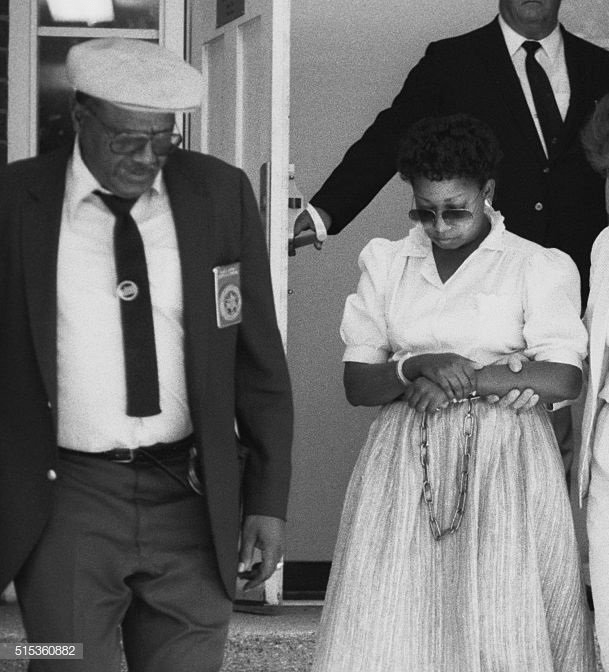
(Original Caption) Alexandria, Va.: Sharon Scranage, a CIA employee at the U.S. Embassy in Ghana, is escorted from a federal magistrate office 7/11 after she and her boyfriends, Michael Agbotui Soussoundis, were charged with espionage. according to the FBI, Scranage gave U.S. secrets to Soussoundis, a Ghanaian national.
Soussoudis was also charged with espionage and sentenced after four months in detention to 20 years in prison in November. His sentencing coincided with a breakthrough in diplomatic talks between the two countries.
The Ghana government agreed to a prisoner swap with the United States to deport the military leader’s cousin Michael Agbotui Soussoudis to Ghana for the eight imprisoned CIA informants described as “interests to the United States”.
The State Department issued a statement at the time saying relations with Ghana were good and ”we assume they will continue to be.” It also denounced reports that characterized Ghana as a Marxist state saying it was ”quite inaccurate”, reports the New York Times at the time.
Soussoudis’ sentence was reduced to time served and he was handed over to Ghanaian Ambassador Eric Otoo on condition that he quickly leaves the country. The eight CIA informants were stripped of their Ghanaian citizenship and handed over to the U.S. government officials who disclosed that they were flown along with their families to an unidentified African country.
Soussoudis returned to a rousing welcome in Accra in December and the eight Ghanaian informants and their families were later reported to have been relocated to Virginia in the United States.
Since then, nothing has been heard about Sharon W. Scranage. But for Michael Soussoudis, he co-founded the Eagle Party which was a club within his cousin’s National Democratic Congress (NDC) in 1992 ahead of the elections that brought forth the country’s fourth republic.
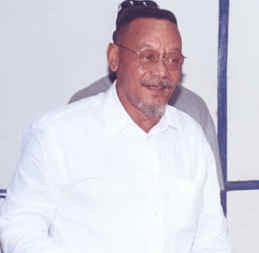
Michael Soussoudis
At the end of Rawlings’ two terms in office and a change in government, Soussoudis was arrested for possessing a weapons cache in his home after a joint police and military search following a tip-off in 2001. He stood trial on two counts of possessing explosive firearms and ammunition without authority.
However, a Fast Track High Court (FTC) in Accra acquitted and discharged him in 2005 saying the weapons — one P. Berreta pistol No. 442501, plus 50 pieces of Fiochi ammunition, one AK47 assault rifle No. 75HR5254 with 9 magazines, one SMG UZ1 rifle No. 41118 with four magazines, one Makaro Pistol No. A3586P loaded with eight rounds of ammunition, one Calibre 45 ACP Pistol No. 1482584, three fragmentation grenades marked 10B, 11B and 63, three smoke grenades 1330-B890 and one smoke grenade EHD 1-4 — were covered with valid police permit in addition to an authority note issued from the office of the President by the then Chief of Staff, to aid him “in the discharge of his duties”.
The prosecution had further questioned the duties that the accused person, who was then a businessman, was performing at the time to warrant holding such firearms. The 4-year case was the last time Michael Soussoudis was featured in the media.
This article written by Ismail Akwei was first published on face2faceafrica.com
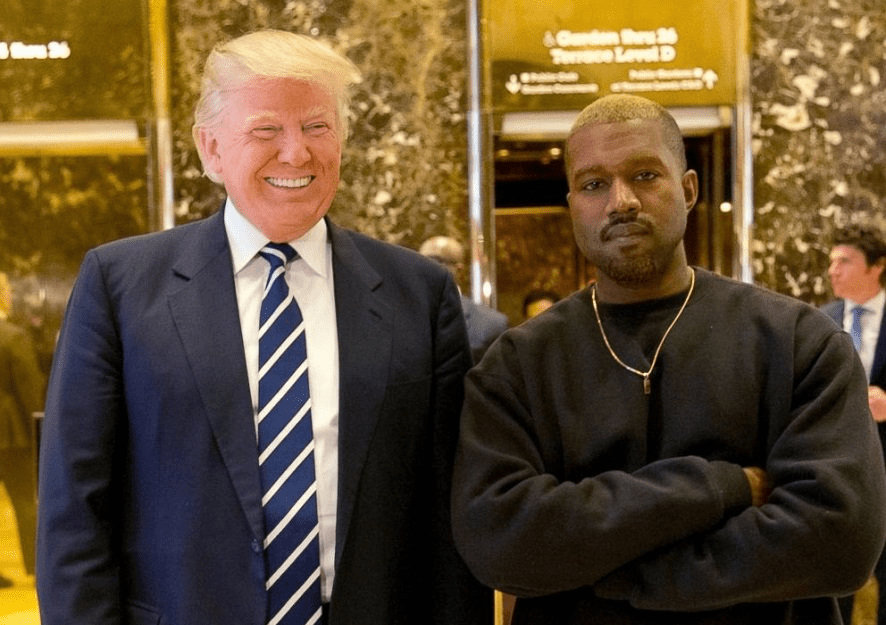
It was more than a roast on CNN last night when two black panel members insulted Kanye West for his meeting with U.S. President Donald Trump on Thursday and his unflinching support for Trump as a black man.
The “roast party” was hosted by Don Lemon who laughed while the only white guy, former Bush aide Scott Jennings, was visibly uncomfortable as Trump critics Tara Setmayer and former Congressman Bakari Sellers went hard at Kanye West.
“Kanye because he’s put on a MAGA hat, and he’s an attention whore like the president, he’s all of a sudden now the model spokesperson, he’s the token negro of the Trump administration,” says Trump critic Tara Setmeyer.
She further attacked his state of mind: “This is ridiculous and no one should be taking Kanye West seriously. He clearly has issues. He’s already been hospitalized … Not to trivialize mental health issues, [but] obviously Kanye has taken a turn in a very strange way.”
For former Congressman Bakari Sellers, “Kanye West is what happens when negroes don’t read … And we have this now and now Donald Trump is gonna use it and pervert it, and he’s gonna have somebody who can stand with him and take pictures.”
They received some backlash from Trump supporters who called them racists while other black people thought they had gone too far especially with the “Kanye West is what happens when negroes don’t read” statement that attacks the entire race.
How can any honest person not call this CNN segment racist?
– “Kanye is what happens when negroes don’t read” – Kanye is “token negro of the Trump administration” – "Black folks are about to trade Kanye West in the racial draft” – “Kanye’s an attention whore, like the president” pic.twitter.com/rT6bQZwKmc
The latter sentiment was shared by controversial African American actress and Republican Stacey Dash who has backed Trump and has expressed interest in running for Congress.
“Bakari Sellers calls Kanye a “Negro” who can’t read. CNN’s Don LEMON breaks out into hysterics. Why’s it funny Don? So are you saying people who support Trump can’t read or just black people who support him? Dems got a rope around your neck Don. Your about to hang yourself,” she tweeted.
Bakari Sellers calls Kanye a “Negro” who can’t read. CNN’s Don LEMON breaks out into hysterics. Why’s it funny Don? So are you saying people who support Trump can’t read or just black people who support him? Dems got a rope around your neck Don. Your about to hang yourself.
Many black people expressed disconcern about the statements and never forgot when Kanye said “slavery was a choice”.
How about he not manipulate folks and try to drive traffic for his new album and products? He is a token, a clown and a con artist just like Trump. He also said slavery was a choice.










 Ismail Akwei