Israel turns to Ghana to back its bid for a seat at the African Union

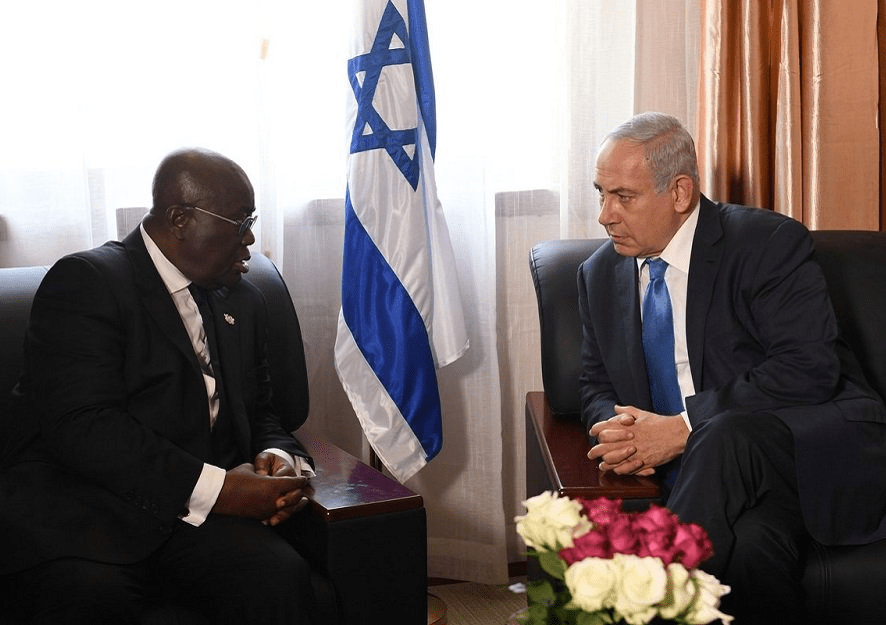
Ghana’s president Akufo Addo and Israeli PM Netanyahu

Israel has called on the Ghanaian government to back its bid for an observer status in the African Union (AU), which it lost in 2002 when the former Organisation of African Union (OAU) was dissolved and replaced by the AU.

The request was made to Ghana’s Minister for Foreign Affairs and Regional Integration, Shirley Ayorkor Botchwey, who is in Jerusalem on an official visit at the invitation of Prime Minister Benjamin Netanyahu.

According to Avraham Neguise, an Ethiopian Jew and Chairman of the Likud coalition party in the Israeli Knesset who met with the delegation, Africa and Israel have a relationship that dates back to thousands of years and it is time to come together, reports local Ghanaian media 3News.
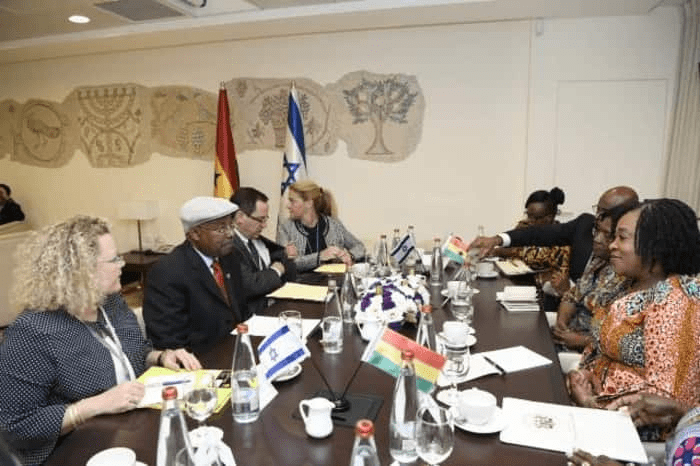
According to Avraham Neguise, an Ethiopian Jew and Chairman of the Likud coalition party in the Israeli Knesset who met with the delegation, Africa and Israel have a relationship that dates back to thousands of years and it is time to come together, reports local Ghanaian media 3News.

Shirley Ayorkor Botchwey and the Ghanaian delegation in talks with Mr. Avraham Neguise and his Israeli side — 3News

He also added that the re-admission of Israel to the AU as an observer will help attract Israeli investment to Africa. A similar call was made by Netanyahu during visits to Liberia to attend the ECOWAS Heads of State Summit in 2017 and then to Rwanda, Kenya and Uganda.

“Israel should once again be an observer state of the African Union … I fervently believe that it’s in your interest too, in the interest of Africa. And I hope all of you will support that goal,” Netanyahu told West African leaders in Monrovia last year.

Israel strongly believes its absence in the African Union has affected the country in terms of votes in international forums as a result of the country’s voice not being heard.
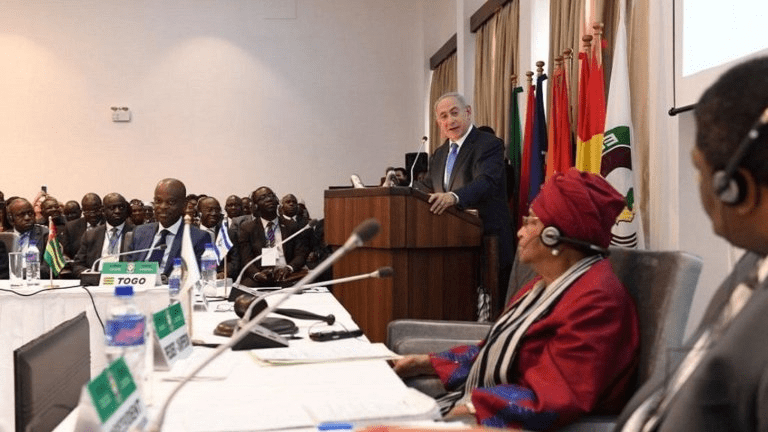
“I ask for your support in rejecting anti-Israel bias at the United Nations, and in bodies such as the General Assembly, UNESCO and the Human Rights Council,” he appealed while adding that, “Israel is a nation that loves and respects all … In Israel, Jews, Christians and Muslims live side by side as equal citizens. This is the real Israel.”.

Rival state, Palestine, was granted an observer status in the African Union in 2013 and its leader Mahmoud Abbas has addressed the Union on a number of occasions. A move Israel sees as a disadvantage since they will need the support of the giant bloc of 54 African countries to push through their expansion agenda into Palestinian territories.

The Ghanaian minister assured Israel of Ghana’s support and “pledged to work hard to ensure that Israel gets her voice heard on the African continent.”

Meanwhile, Israel is keen on kicking out African asylum seekers after unsuccessful threats of illegal deportation of the about 40,000 people, imprisonment and even suspension of a relocation deal by the U.N. refugee agency to send them to Western countries.
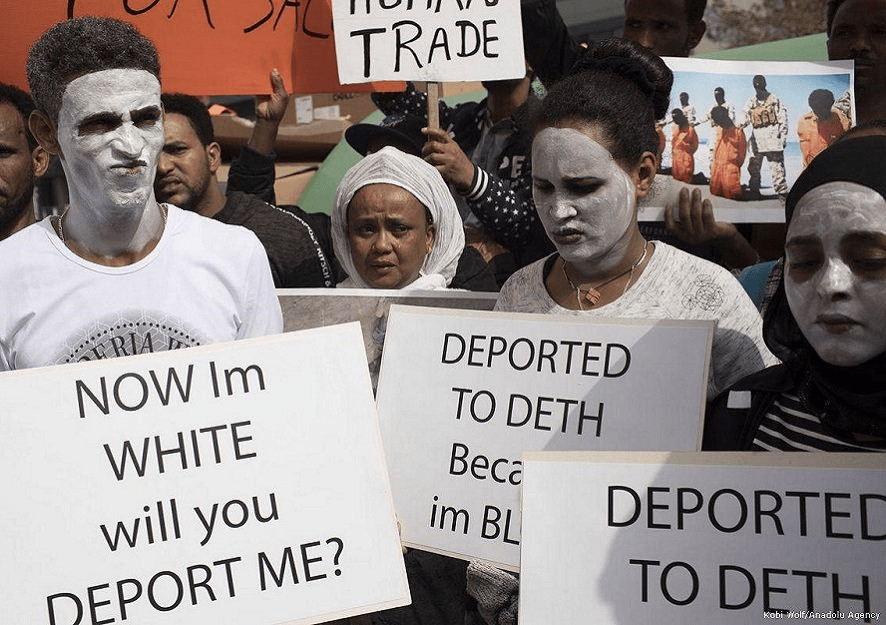
The country later introduced a new law in August 2018 which allows the withholding of 20 per cent of salaries of African asylum seekers which can only be reclaimed after they leave the country.

The so-called “deposit law” requires employers of migrants to give the state 20 per cent of their salaries and to store an additional 16 per cent toward a pension fund which will equally be inaccessible until the migrants decide to leave the country.

Worse, employers of migrants have also been directed to pay an additional tax to discourage them from employing the asylum seekers who are already grappling with finding jobs.

Since 2009, only eight Eritreans and two Sudanese have been recognized as refugees in Israel. Another 200 Sudanese from Darfur were recently granted humanitarian status.

Currently, 27,500 Eritreans and 7,800 Sudanese are seeking asylum status to start a living in Israel. The African Union is yet to take action on the fate of these Africans who are in distress.

A decision could be made on Israel’s bid for an observer status in the African Union during the 32nd Ordinary Session of the Assembly which will be held on February 10 and 11, 2019 in Addis Ababa, Ethiopia.

This article written by Ismail Akwei was first published on face2faceafrica.com

African leaders convinced of balanced trade as China moves to open its markets

Kenyan President Uhuru Kenyatta and Chinese President Xi Jinping

Fears of China’s neo-colonialism in Africa has been met with fierce rebuttal and counter-arguments despite the Asian economic giant’s infiltration of Africa’s media space, land and airspace as well as the economic and cultural fabric of the continent’s societies.

Trade is the underlying factor in the China-Africa relationship and the latter is drowning in unpaid loans as a result of unfavourable agreements that is placing African citizens in limbo and their future in harm’s way.

Many countries have defaulted in payment of loans that have been exchanged with natural resources and unadulterated access to local markets while a few others are slowly paying through debt servicing.

In the 2018 loan data published by the China-Africa Research Initiative (CARI) at the Johns Hopkins University’s School of Advanced International Studies (SAIS), from 2000 to 2017, the Chinese government and institutions extended $143 billion in loans to African governments and state-owned enterprises.

The top beneficiary was Angola which received $42.8 billion over 17 years; and according to the research findings, China is not Africa’s largest donor, but the United States.

African leaders have on several occasions expressed the need for China’s support which comes also in the form of infrastructural development. China has also expressed unreserved sentiments towards the blame heaped at the communist state of overburdening the continent with loans as a strategy for a take-over to become the most powerful in the world.

“It is baseless to shift the blame onto China for these African countries debt problems. Their debt position has been built over time even before we came in … We have to look at the fluctuations in the international economic situation vis-a-vis the price of minerals, their key exports. This is where the problem is, and not Chinese loans,” China’s special envoy to Africa, Xu Jinghu, said in September denying claims that Beijing was burdening Africa with debt.

However, Kenya’s president Uhuru Kenyatta nearly sparked a trade war with China after he instructed the ultimate protection of local fish traders from an influx of cheap imported Chinese fish. Kenyan officials immediately imposed an importation ban on Chinese Tilapia which sells at about Sh250 ($2.46) per kilogram in the local market against the local Tilapia which sells at Sh400 ($3.94) per kilogram.

“How can we be buying fish from China? Even if the Finance Bill has already been adopted you can think outside the box and say the fish is spoilt when it arrives at the port of entry … There’re many ways the government can work to ensure its people benefit if we really intent on serving our people,” Kenyatta said last month.

Kenya’s State Department for Fisheries, Aquaculture and The Blue Economy announced plans to ban Chinese fish imports from January 1, 2019. This received a quick threat from the Acting Chinese Ambassador Li Xuhang who said it was “unfair” and could result in a “trade war”.

He later denounced the threat and called for unfair trade policies saying: “We expect the participating Kenyan enterprises at the upcoming China International Import Expo in Shanghai, to take advantage of this opportunity to let Kenyan products be recognised by the Chinese market, thus opening a door to more Kenyan products.”

Li Xuhang’s call was followed by the participation of Uhuru Kenyatta at the maiden China International Import Expo (CIIE) fair in Shanghai which was opened by Chinese President Xi Jinping on Monday.

Kenyatta led a delegation of Kenyan traders to the fair where a deal on horticultural exports is expected to be signed to open up the Chinese market to over 40 per cent of the country’s fresh produce including avocados, cashew nuts, and mangoes, reports local media.

The agreement also includes the establishment of a working group on trade tariffs in a bid to promote fair and balanced trade between the two nations.

Chinese president Jinping said the fair is “a major policy for China to push for a new round of high-level opening-up and a major measure for China to take the initiative to open its market to the world.”

“All countries should be committed to opening up and oppose protectionism and unilateralism in a clear-cut stand,” he added during his keynote speech at the opening ceremony.

A total of 172 countries, regions and international organizations from five continents are at the fair to showcase their products to the Chinese market which President Jinping is promising to open for the benefit of other countries including those in Africa.

Kenya is one of the biggest beneficiaries of Chinese loans and its local market like those of other African countries are facing a large influx of cheap Chinese produce and exports which are killing local businesses.

Meanwhile, Rwandan President Paul Kagame has reiterated his backing of the Chinese support offered to Africa. He has stated categorically that the support should benefit his people who are his topmost priority.

Ahead of the fair, Paul Kagame launched Africa’s first Electronic World Trade Platform (eWTP) with the help of Chinese multinational technology conglomerate and the world’s largest e-commerce platform operator Alibaba Group to engage small businesses in electronic cross-border trade.

“Rwandan producers will be able to sell directly to a much larger set of customers than before, while bypassing costly intermediaries. This improves productivity and profitability. There really are no downsides to doing business on a global scale,” Kagame said recently at the launch in Kigali.

He added that Rwanda values its relationship with the Chinese private sector and focuses on mutual benefit to improve productivity and profitability for Rwandans.

“Let me reiterate that Rwanda greatly values our growing relationship with the Chinese private sector and Alibaba Group in particular. The product being launched today is a tangible example of that, and one that we intend to build on for mutual benefit.”

Co-founder and executive chairman of Alibaba Group, Jack Ma, attempted to demystify the popular notion that China is taking over Africa.

“In the future, it will be “Made in Internet”, not “Made in China”. We have to prepare. Complaining doesn’t solve anything, let’s build a system that supports developing countries and young people,” said the Chinese business magnate.

Alibaba will support Rwanda’s economic development by working with the Rwanda Development Board (RDB) to help Rwandan SMEs sell their products, including coffee and handcrafts, to the more than half a billion Chinese consumers through Alibaba’s online marketplaces while facilitating tourism to Rwanda and providing capacity building to empower the growth of Rwanda’s digital economy.

Not all African countries have demanded trade balance from China as Kenya and Rwanda have done. Sierra Leone recently cancelled all contracts with a Chinese construction firm that was tasked to build a new $318 million airport facility in March.

It said it was “uneconomical to proceed with the construction of a new airport when the existing one is grossly underutilized”. It is about time African leaders rethink the loan and trade agreements signed with China and other foreign states to ensure the beneficiaries are the citizens and not the other way around.

This article written by Ismail Akwei was first published on face2faceafrica.com

Rwanda opens door to Chinese firm Alibaba to build Africa’s first digital economy

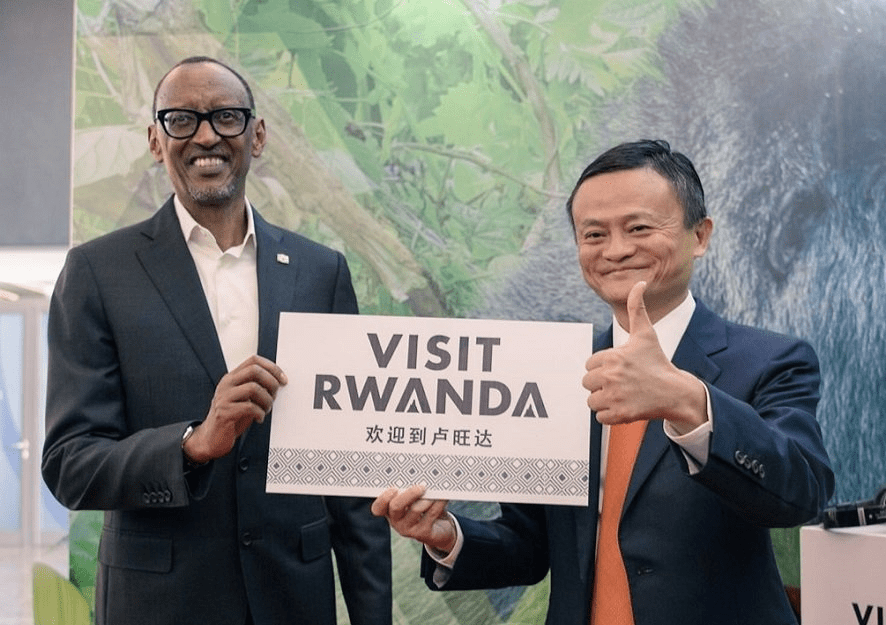
Rwandan President Paul Kagame and Alibaba Group co-founder Jack Ma during the launch of the Electronic World Trade Platform (eWTP) in Kigali

Rwandan President Paul Kagame has launched Africa’s first Electronic World Trade Platform (eWTP) with the help of Chinese multinational technology conglomerate and the world’s largest e-commerce platform operator Alibaba Group to engage small businesses in electronic cross-border trade.

Alibaba will support Rwanda’s economic development by working with the Rwanda Development Board (RDB) to help Rwandan SMEs sell their products, including coffee and handcrafts, to the more than half a billion Chinese consumers through Alibaba’s online marketplaces while facilitating tourism to Rwanda and providing capacity building to empower the growth of Rwanda’s digital economy.

“Rwandan producers will be able to sell directly to a much larger set of customers than before, while bypassing costly intermediaries. This improves productivity and profitability. There really are no downsides to doing business on a global scale,” Kagame said at the launch in Kigali on Wednesday.

He added that Rwanda values its relationship with the Chinese private sector and focuses on mutual benefit to improve productivity and profitability for Rwandans.

“Let me reiterate that Rwanda greatly values our growing relationship with the Chinese private sector and Alibaba Group in particular. The product being launched today is a tangible example of that, and one that we intend to build on for mutual benefit.”

Co-founder and executive chairman of Alibaba Group, Jack Ma, praised Rwanda and Kagame for creating an environment for technological development in the country.

“I’m amazed by President Paul Kagame’s leadership, courage and vision. Every time I speak to him, we talk about technology, jobs, environment, and I am always so impressed. He makes things happen.

“People ask, ‘Why Rwanda? There are so many countries in Africa.’ When I first came I was shocked by its ability to embrace change. If every country was like Rwanda think how powerful could Africa be. My answer is, ‘Why not Rwanda?’” he added.

Ma also tried to demystify the popular notion that China is taking over Africa as the country is heavily investing in infrastructure and economies on the continent.

“In the future, it will be “Made in Internet”, not “Made in China”. We have to prepare. Complaining doesn’t solve anything, let’s build a system that supports developing countries and young people,” the Chinese business magnate added.

As part of the agreement, Alibaba’s travel services platform called Fliggy will promote Rwanda as a tourist destination through a Rwanda Tourism Store for booking flights, hotels and travel experiences. The store also has a destination pavilion where Chinese consumers can learn about the country and its tourist sites.

Alibaba affiliate Ant Financial will also share expertise in inclusive financial tools, such as mobile payments, to support the Rwandan digital economy. The company will also provide capacity building to academics, policymakers and entrepreneurs on how to grow a digital economy.

The world’s largest e-commerce platform has more than half a billion Chinese consumers and already, several brands of Rwandan single origin coffee are already available for sale on Alibaba’s Tmall Global platform.

The Electronic World Trade Platform (eWTP) is expected to be spread across the continent to enable small businesses in Africa to take part in the cross-border electronic trade.

This article written by Ismail Akwei was first published on face2faceafrica.com
Jamaica turns back on Patois and plans to make Spanish an official language

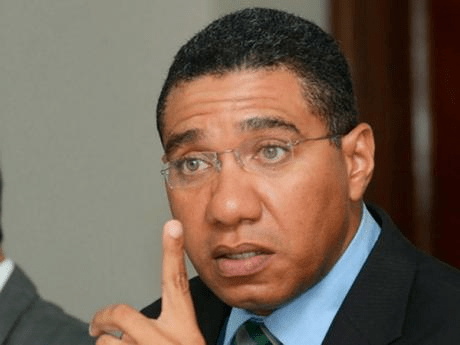
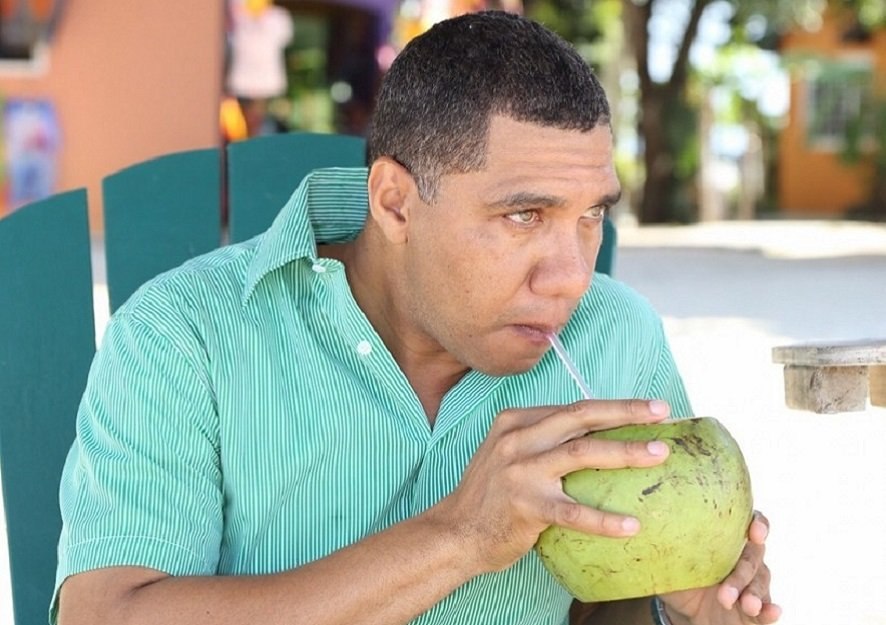
Jamaican PM Andrew Holness

Jamaican Prime Minister Andrew Holness has on several occasions disclosed plans by his government to make Spanish Jamaica’s second language as against the widely used Jamaican native language of Patois.

Holness has explained that his motive of making Spanish an official language is to make bilateral cooperation with Spain even stronger as the two countries “have enjoyed a successful, meaningful and mutually beneficial relationship for many years, dating back centuries,” he said with ignorance at the official opening of a Spanish hotel last week.

“We do take note of the Spanish investment of US$1.7 billion in Jamaica’s tourism industry. This is evident in the 14 hotels, wellness centres and construction projects undertaken by Spanish companies across the island … I think very soon we will have to emphasize and put in place programmes that make Spanish a second language,” he added.

If slavery was mutually beneficial for the slave masters and slaves, then Holness is right to say Jamaica enjoyed a mutually beneficial relationship with Spain for centuries.

It is sad but important to note that Spain was the first to import slaves from Africa to Jamaica in the 16th century to grow crops and livestock on the island that was inhabited by the indigenous Taino people and ironically “discovered” by Christopher Columbus during his journey sponsored by the Spanish king.

Columbus docked in the beautiful island of Jamaica in 1492 and they started the civilization project which was extended to Africa where people were captured and sent to the Caribbean to work and enrich Spain.

The first Spanish settlers came to Jamaica in 1509 and they were baptised Roman Catholics on a mission to introduce the Catholic faith to the Caribbean. Coupled with their quest for riches and wealth, they also introduced diseases like smallpox, measles, influenza and syphilis that wiped out the indigenous people.

This created the need for more African slaves who were immune to many diseases and could work for longer hours. Many were shot dead in an attempt to rebel while others started their unsuccessful revolts on slave ships they were cruelly bundled together like animals.

Where, then, is the mutually beneficial relationship between Spain and Jamaica? Life was worse for the new inhabitants from Africa in 1655 when the British defeated the Spaniards and captured Jamaica. They increased the importation of slaves and meted out more cruelty to the people.

Jamaican Patois or officially Jamaican Creole has been spoken for years and written by many, yet there is no plan at all to make it an official Jamaican language. Majority of Jamaicans in Jamaica and the Diaspora speak Patois as a native language since its development in the 17th century.

Patois Bible

Slaves at the time created the dialect with a mix of words from English and West African languages. However, it is not mutually intelligible with English.

To avoid writing in the language of the colonisers, Jamaican national hero, celebrated educator, folklorist, poet, and radio and television personality, Louise Bennett-Coverley, challenged the English language by writing and performing in Patois.

She is described by many as the “mother of Jamaican culture” due to the efforts she made in popularizing the Jamaican Patois and giving it a national recognition. She even influenced other Caribbean authors and poets such as Linton Kwesi Johnson, Mutabaruka and Paul Keens-Douglas to avoid writing in English.

Miss Lou, as she is affectionately called, could not live to see Patois become an official language in Jamaica. The progress of her struggle is being blocked by Prime Minister Andrew Holness’ decision to make another coloniser’s language an official language while Patois is still regarded as a vernacular.

In a 2016 article written by Emma Lewis, it says the argument that Patois should be recognized as Jamaica’s official language has not gained traction in officialdom yet “many argue that most Jamaicans cannot (and do not!) communicate in standard English”.

“In a nationwide survey conducted by the Jamaican Language Unit in 2006, 36 per cent of the sample surveyed demonstrated no ability to describe a simple everyday object using spoken English. By contrast, 83 per cent were able to do so using the Jamaican language, 47 per cent demonstrating the ability to use both languages,” it adds.

Columnist Louis Moyston wrote that the issue of Patois is self-denial like Reggae, ska and rocksteady in their early development stages “just because it ‘came from below’”.

“One of the major problems concerning crime and development is rooted in the failure of the educational system. The central feature of these problems is grounded in the problem of language — the teaching of our students under the assumption that they are English speakers. This practice, indeed, is a crime against humanity. The English language must be taught as a second language. Let us take care of home before we look abroad,” he added.

The argument many are making is that Spanish is a good language to learn, but the fact that the government is planning to make it a second language although it is not spoken by the majority, makes it a little worrying.

Broadcast journalist Dionne Jackson Miller declared aptly on her Facebook page: “I would be first in line to say we should all be fluent in Spanish. It’s on my bucket list! Once we are, or a certain percentage of the population, we can talk about official second languages. Right now, it’s a ridiculous suggestion.”

Holness will have to rethink the decision and consider Patois as an official language to project the Jamaican culture in the positive light. Money can’t buy you dignity.

This article written by Ismail Akwei was first published on face2faceafrica.com
Slavery exists in these African countries and they are doing almost nothing to end it

Photo: cfr.org

It is quite disturbing that in 2018, adults and children all over the world are still being bought and sold in public markets and women are forced to marry against their will to provide labour. Others are forced to work in factories, on boats and in homes as maids while their wages are withheld.

These are all forms of modern slavery and it is defined by the Global Slavery Index as situations of exploitation that a person cannot refuse or leave because of threats, violence, coercion, deception or abuse of power.

According to the recently released Global Slavery Index 2018, an estimated 40.3 million men, women and children were victims of modern slavery any given day in 2016. Of these, 24.9 million people were in forced labour and 15.9 million people were living in a forced marriage. Seventy-one per cent of them were women and girls.

The Central African Republic, DR Congo, Somalia, Sudan, South Sudan and Chad are among the top 10 most vulnerable countries in the world to modern slavery.

Nigeria and the Democratic Republic of Congo are among the top 10 countries with the largest estimated absolute number of peoples in modern slavery including China, India and other populous countries accounting for 60 per cent of people who live in modern slavery and over half of the world’s population.

Modern slavery is most prevalent in Africa followed by Asia and the Pacific region. The country with the highest prevalence rate of modern slavery is North Korea. Out of the 10 countries, five are from Africa and the others are Afghanistan (5), Pakistan (8), Cambodia (9), Iran (10).

These African countries took the 2nd, 3rd, 4th, 6th and 7th positions in the top 10 countries with the highest prevalence of modern slavery in the world and their governments are not doing enough to contain it.

Nigeria and the Democratic Republic of Congo are among the top 10 countries with the largest estimated absolute number of peoples in modern slavery including China, India and other populous countries accounting for 60 per cent of people who live in modern slavery and over half of the world’s population.

Modern slavery is most prevalent in Africa followed by Asia and the Pacific region. The country with the highest prevalence rate of modern slavery is North Korea. Out of the 10 countries, five are from Africa and the others are Afghanistan (5), Pakistan (8), Cambodia (9), Iran (10).

These African countries took the 2nd, 3rd, 4th, 6th and 7th positions in the top 10 countries with the highest prevalence of modern slavery in the world and their governments are not doing enough to contain it.

Eritrea – 2nd
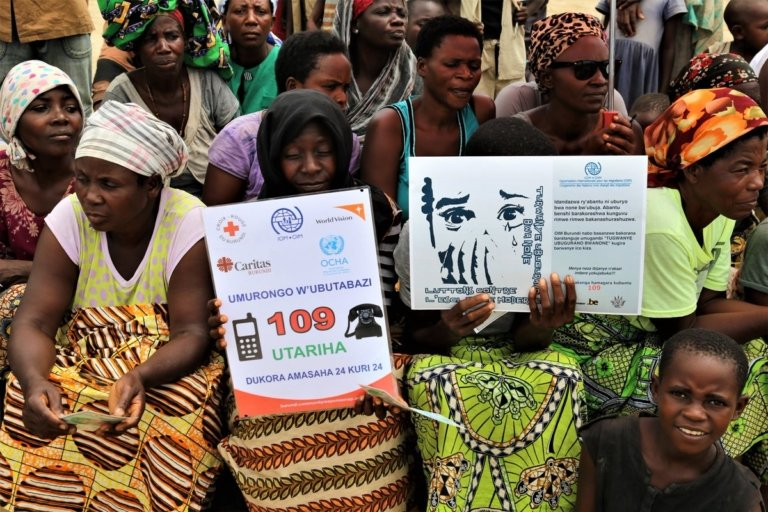
According to the report, low government responses to modern slavery affected Eritrea’s vulnerability level. Also, they are affected by State-imposed forced labour which forces citizens or prisoners to do communal work against their will.

Burundi – 3rd
High State-imposed forced labour affected Burundi’s vulnerability rate to modern slavery as a result of forcing citizens recruited by state authorities to participate in construction or agriculture work which does not benefit them. It also includes prisoners forced to work against their will.

Central African Republic – 4th
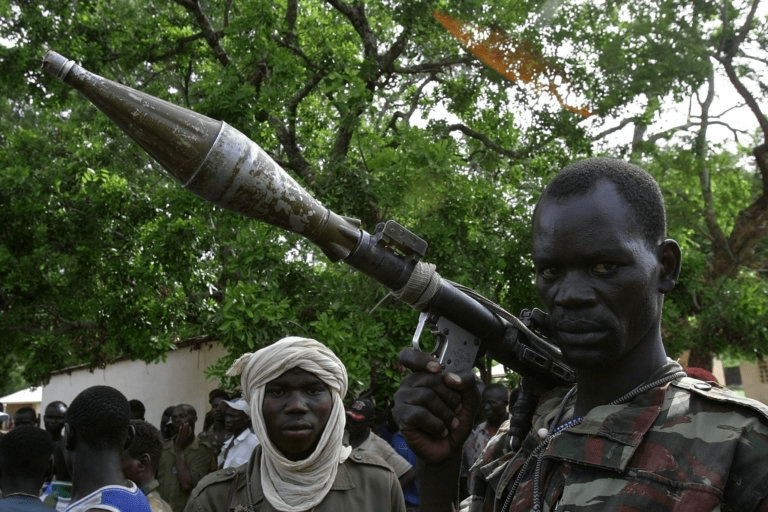
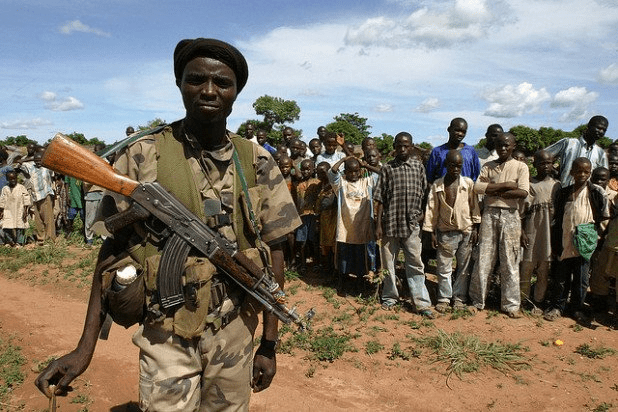
Low government responses to modern slavery affected their vulnerability level. The conflict situation in the country takes away the government’s focus from modern slavery which also involves the recruitment of children to fight for the militia.

Mauritania – 6th
It continues to hold a high proportion of people living in modern slavery and progress remains slow. The government has outlawed the practice but the laws are not enforced and victimisation is also prevalent.

South Sudan – 7th
Conflict plays a major role in compounding people’s vulnerability to slavery in South Sudan. The government itself is implicated in the recruitment of children to fight in the civil war and conflict.

This article written by Ismail Akwei was first published on face2faceafrica.com