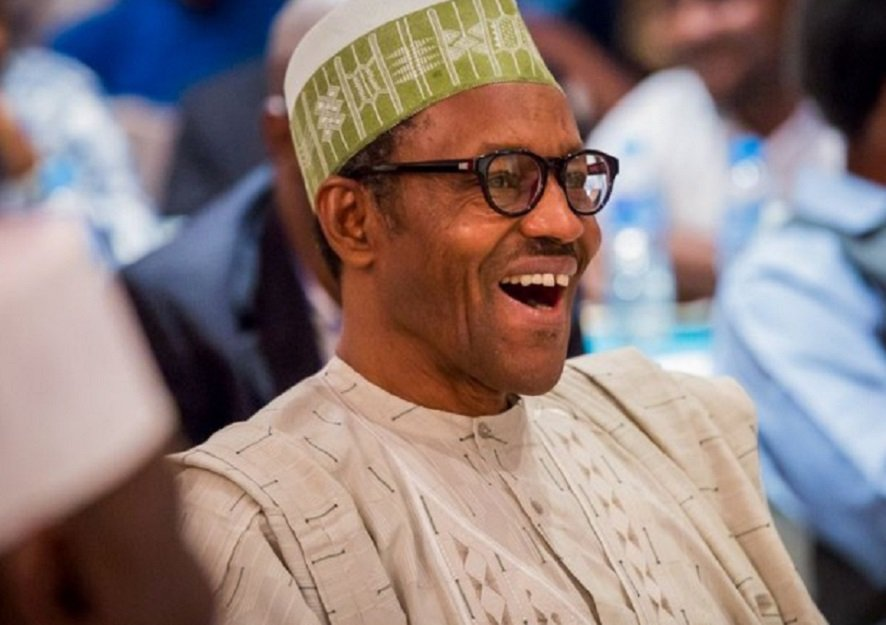
For months, rumours had spread on social media of the death of Nigerian president Muhammadu Buhari and his subsequent replacement by an imposter from Sudan named Jubril. Many Nigerians fell for the fake news which was widely peddled by opposition politicians as the country prepares for a general election in February next year in which Buhari is contesting.
It was reported to have been started by Nnamdi Kanu, the leader of the Biafran separatist organisation, the Indigenous People of Biafra (IPOB), who had said in a video that Buhari died in 2017 and replaced by Jubril who went through plastic surgery to be a Buhari lookalike. He alleged that Buhari was buried in Saudi Arabia.
Those who through sheer ignorance refuse to acknowledge the overwhelming body of evidence confirming that Jubril is not Buhari, only need a good eyesight to see the fraud in Aso Rock. Every human grows older with age not younger. pic.twitter.com/li959AYcv1
The Jubril theories kept making the rounds on social media platforms and on Youtube with videos and pictures making comparisons between the president and his speculated clone.
Buhari’s ears, hands, height and face were compared and contrasted by many Nigerians fuelling the theories and drawing others into the conversation without any evidence.
Buhari's left ear has a cut.
Then
Take a look at the two pictures between 2015 and 2018 where the same Senate president Bukola Saraki stand with Buhari and Jubril, compare the hight#BuhariForDNAtestpic.twitter.com/gPeYE9aYTW
Some of the Jubril theorists have demanded a DNA test to prove or disprove their claim which has been widely believed by many Nigerians.
The evidences are overwhelming, that made me to start thinking otherwise, that the man is an imposter (Jubril) and millions of people believe the same too, until #DNATest is conducted to prove us wrong. That’s how it should be done.@Reutershttps://t.co/wbsk9zqpJG
Mallam Jubril Aminu Al-Sudani From Sudan Became Much Sought Specimen On The Demise Of President Muhammadu Buhari Of Nigeria On 27Th January, 2017. Aso Rock Cabal At Abuja Led By Abba Kyari Contacted Habibu Alum, A Nigerian Diplomat In Khartoum To Bring Specimen To Clone Buhari pic.twitter.com/ywvzCAMzUK
The president addressed the speculations in a town hall session with Nigerians in Poland where he described the rumours as “ignorant and irreligious” when he was asked about Jubril.
“It’s real me, I assure you … I will soon celebrate my 76th birthday and I will still go strong … A lot of people hoped that I died during my ill health,” he said.
Buhari has spent about 5 months in Britain last year for treatment for an undisclosed illness which raised several suspicions and sparked demonstrations for him to give up power. He returned from the long medical leave to lead the government which was being managed by Vice President Yemi Osinbajo who was the acting president in Buhari’s absence.
This is the first time a rumour of an African president being cloned has surfaced.
This article by Ismail Akwei was first published on face2faceafrica.com
Salaga Slave Market in the Northern Region of Ghana
It has been established that the demand for slaves during the Transatlantic slave trade was fuelled by the availability of a supply chain which involved African rulers and tradesmen who made a fortune out of selling people.
Between 1525 and 1866, 12.5 million Africans were shipped to North America, the Caribbean and South America, according to the Trans-Atlantic Slave Trade Database. Only about 10.7 million survived the dreadful journey under bondage in slave ships.
The slave trade contributed to the expansion of the most powerful West African kingdoms such as Mali and Ghana, as the business became one of the main sources of foreign exchange for many years.
In a 2010 article published in the New York Times, Harvard professor Henry Louis Gates Jr. said: “Slaves were the main export of the kingdom of Kongo; the Asante Empire in Ghana exported slaves and used the profits to import gold. Queen Njinga, the brilliant 17th-century monarch of the Mbundu, waged wars of resistance against the Portuguese but also conquered polities as far as 500 miles inland and sold her captives to the Portuguese.”
Britain banned the slave trade in 1807 and the United States later abolished it in 1865. Brazil was the last to ban it in the Caribbean in 1888 marking the end of the barbarism inflicted on men, women and children of colour and their descendants.
There were recorded protests by West African chiefs and traders after the abolition of slave trade. According to Nigerian author Tunde Obadina: “When Britain abolished the slave trade in 1807, it not only had to contend with opposition from white slavers but also from African rulers who had become accustomed to wealth gained from selling slaves or from taxes collected on slaves passed through their domain.
“African slave-trading classes were greatly distressed by the news that legislators sitting in Parliament in London had decided to end their source of livelihood. But for as long as there was demand from the Americas for slaves, the lucrative business continued,” he added.
There were dozens of known African slave traders who had sold thousands of people to European slave merchants. In West Africa, the traders were known as caboceers and they lived on the coast. They were usually appointed by the African rulers to deal directly with the European slave merchants.
The website Portcities Bristol – created to document the role of the English city of Bristol in the transatlantic slave trade – reports: “Many, such as the caboceer from the Fante people, John Currantee, or the leader from the Efik people Ephraim Robin John (known to the European traders as King George) were well-known as canny and ruthless dealers.”
“They were able to communicate in a number of European and African languages. The African slave traders were skilled in using to their advantage the rivalries between the French, the English and the Dutch to get the best prices for their slaves. Often they demanded (and received) ‘gifts’ or ‘custom fees’, known in some quarters as ‘dashee’, from the Europeans,” it adds.
Most of these traders continued selling slaves despite the ban while others used the slaves to work on plantations in Africa.
We highlight some of the notorious African slave traders who played active roles in the transatlantic slave trade.
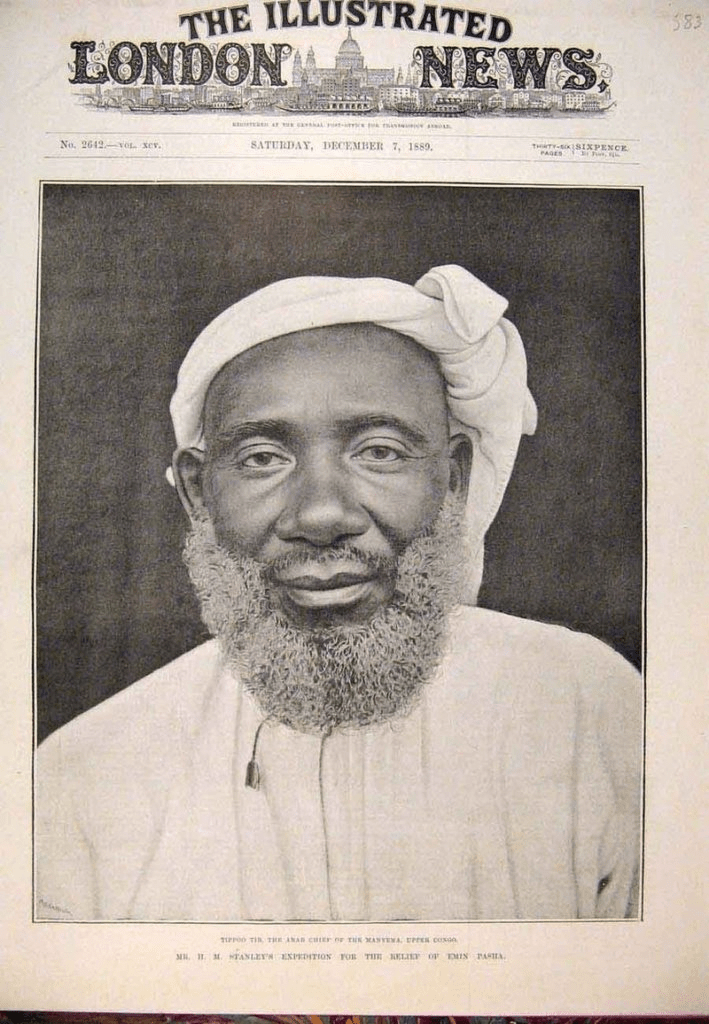
Tippu Tip on the front page of a British newspaper
Tippu Tip (1832-1905)
He was a Swahili-Zanzibari slave trader, businessman and governor who worked for many sultans of Zanzibar. Tippu Tip traded in slaves for Zanzibar’s clove plantations.
He led many trading expeditions into Central Africa by constructing profitable trading posts that reached deep into the region. By 1895, he had acquired “seven ‘shambas’ [plantations] and 10,000 slaves.
He met and helped several famous western explorers of the African continent, including David Livingstone and Henry Morton Stanley. He claimed the Eastern Congo for himself and for the Sultan of Zanzibar; and was later made governor of the Stanley Falls District in the Congo Free State.
Rabih’s head is a battlefield trophy after the fighting on 22 April 1900
Rabih az-Zubayr (1842-1900)
He was a Sudanese warlord and slave trader who established a powerful empire east of Lake Chad, in today’s Chad. He worked as the right-hand man of the Sudanese slaveholder Sebehr Rahma. He conquered empires and was killed by the French after he slaughtered their emissaries.
He was a Sudanese warlord and slave trader who established a powerful empire east of Lake Chad, in today’s Chad. He worked as the right-hand man of the Sudanese slaveholder Sebehr Rahma. He conquered empires and was killed by the French after he slaughtered their emissaries.
Al-Zubayr Rahma Mansur
Al-Zubayr Rahma Mansur
He was a slave trader in the late 19th century and later became a Sudanese governor. He was at odds with the British Governor General Charles Gordon and was referred to as “the richest and worst”, a “Slaver King” “who [had] chained lions as part of his escort” by England.
General Gordon who was sent to Sudan to suppress the slave trade was opposed by Al-Zubayr.
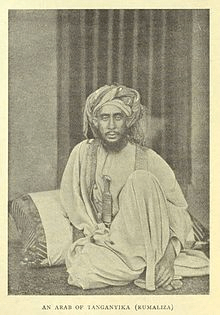
Muhammad bin Khalfan bin Khamis al-Barwani alias Rumaliza
Muhammad bin Khalfan bin Khamis al-Barwani alias Rumaliza
Named Muhammad bin Khalfan bin Khamis al-Barwani, Rumaliza was a Swahili[a] slave and ivory trader in East Africa in the last part of the nineteenth century. With the help of Tippu Tip he became Sultan of Ujiji. At one time he dominated the trade of Tanganyika.
Stories associated Rumaliza and his parties with the kidnapping of women, cutting off men’s genitals (to be captured and sold as eunuch slaves), cutting off legs, arms and hands, piercing of noses and ears, burning villages and killings. Belgian forces under Francis Dhanis launched a campaign against slave dealers in 1892, and Rumaliza was targeted until he fled.
William Ansah Sessarakoo
William Ansah Sessarakoo (1736–1770)
He was a prominent 18th-century Ghanaian, best known for his wrongful enslavement in the West Indies and diplomatic mission to England. He was both prominent among the Fante people and influential among Europeans concerned with the transatlantic slave trade.
His father was John Correntee, chief caboceer and head of the Annamaboe (present day Anomabo) government who was a slave trader and an important ally for any trader in the city. His father sent him to England to gain an education and be his eyes and ears in Europe.
The ship captain entrusted with Ansah’s transport sold him into slavery in Barbados before reaching England. He was discovered in Barbados years later by a free Fante trader who alerted John Corrente. Corrente petitioned the British to free his son. The Royal African Company, the English company operating the slave trade freed him and transported him to England.
He was received as a prince in England and gained the respect of London’s high society. It is noted that he watched a live performance of a play depicting a wrongly enslaved African prince. He fled the theatre in tears to the surprise of the audience. The play likely reminded Ansah of himself.
He returned to Annamaboe and took up work as a writer at Cape Coast Castle. He later worked as a slave trader.
Signares
Signare
Signare was the name for the Mulatto French-African women of the island of Gorée in French Senegal during the 18th and 19th centuries. These women of colour managed to gain some individual assets, status, and power in the hierarchies of the Atlantic Slave Trade.
Notable signares included Victoria Albis, Hélène Aussenac, Anna Colas Pépin, Anne Pépin, Mary de Saint Jean and Crispina Peres.
Francisco Félix de Souza
Francisco Félix de Sousa (1754 – 1849)
Francisco Félix de Souza was a major slave trader and merchant who traded in palm oil, gold and slaves. The Afro-Brazilian migrated from Brazil to what is now the African republic of Benin. He has been called, “the greatest slave trader”.
De Sousa continued to market slaves after the trade was abolished in most jurisdictions. He was apparently so trusted by the locals in Dahomey that he was awarded the status of a chieftain.
His early years in Africa are well documented in a long article (in Portuguese) by Alberto Costa e Silva entitled “The Early Years of Francisco Féliz de Souza on the Slave Coast”.
Although a Catholic, he practised the Vodun religion, which is consistent with his Afro-Brazilian background, and even had his own family shrine. He was buried in Dahomey.
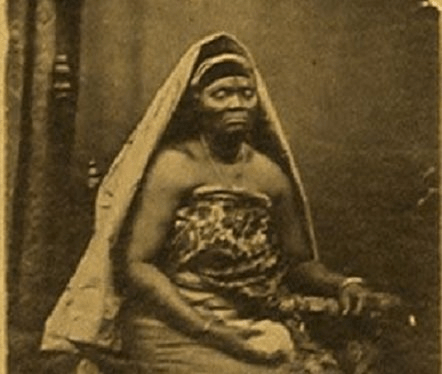
Madam Efunroye Tinubu
Efunroye Tinubu (1810 – 1887)
She was a politically significant figure in Nigerian history because of her role as a powerful female aristocrat and slave trader in pre-colonial and colonial Nigeria. She was a major figure in Lagos during the reigns of Obas Adele, Oluwole, Akitoye and Dosunmu.
In December 1851 and under the pretext of abolishing slavery, the British bombarded Lagos, dislodged Kosoko from the throne, and installed a more amenable Akitoye as Oba of Lagos. Though Akitoye signed a treaty with Britain outlawing the slave trade, Tinubu subverted the 1852 treaty and secretly traded slaves for guns with Brazilians and Portuguese traders.
Bibiana Vaz (1630 – 1694)
Bibiana Vaz de França was a prominent seventeenth-century slave-trader in Cacheu, Guinea-Bissau. She married the richest man in Guinea and in 1687, she was arrested and taken to São Tiago (today as Santiago), where she was held as a prisoner.
Portuguese authorities, unable to confiscate her property, granted her a pardon in exchange for an indemnity and a promise that she would construct a fort in Bolor on the Cacheu River. She never constructed the fort.
Niara Bely (1790 – 1879)
Also known as Elizabeth Bailey Gomez, she was a Luso-African queen who became a prominent businesswoman in nineteenth-century Guinea. She was active in the slave trade in Farenya, Guinea.
She studied in Liverpool where she adopted the name Elizabeth.
Okoro Idozuka
He was a 19th-century leader and warrior in the Arondizuogu area of what is now Nigeria. He was a senior advisor to the founder of Ndiakunwanta Uno Arondizuogu village and also a leader in his own right, expanding Arondizuogu’s boundaries. He was a wealthy slave trader like Izuogu Mgbokpo.
Okoroji Oti
He was a local chief in Ujari, one of the nineteen villages in Arochukwu, Abia State, Nigeria. He was reputable for being a slave merchant who built the Okoroji House Museum, a historic house museum. Oral history has it that four hundred people were sacrificed to Ibini Ukpabi after his death as the head of the oracle.
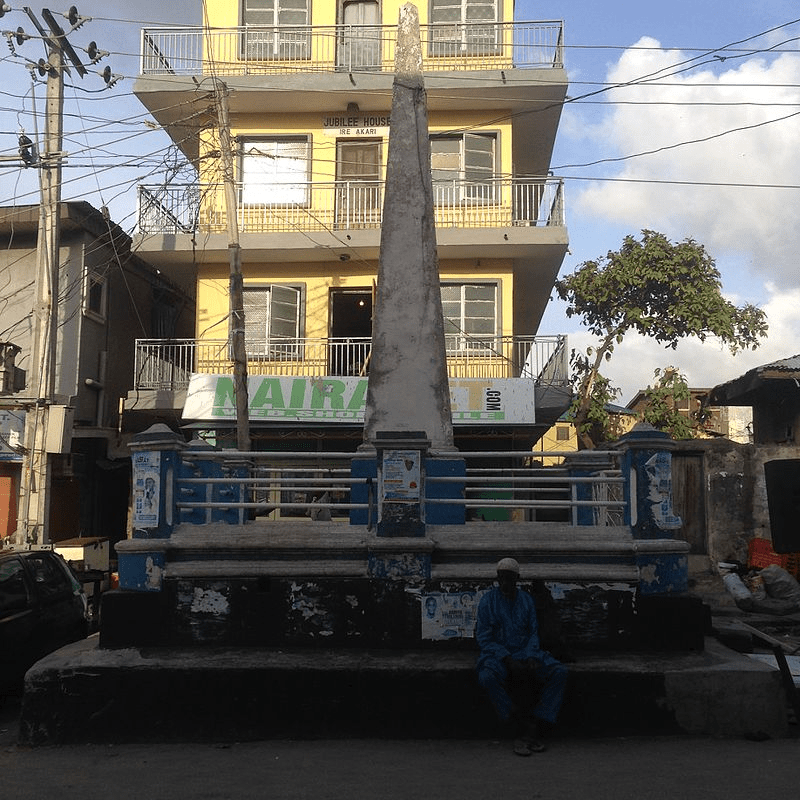
Oshodi Tapa monument in Lagos
Oshodi Tapa (1800 – 1868)
He was Oba Kosoko’s war captain and one of the most powerful chiefs in the Oba of Lagos’ court. He is reported to have been a slave from the Nupe Kingdom at Bida. Accounts note that when he was a little boy about to be loaded onto a Portuguese ship bound for the Americas, he escaped and sought refuge in Oba Osinlokun’s palace.
He and another slave (Dada Antonio) were sent by Oba Osilokun to Brazil to learn Portuguese, acquire the necessary commercial and cultural knowledge to conduct trade on behalf of the Oba and to collect duties from Portuguese slave traders. After serving Osilokun, Oshodi Tapa became a key adviser and military chief of Oba Kosoko.
He successfully transitioned from human trafficking to expanding into producing palm oil, cotton, and ivory using slave labour.
Antera Duke
He was an 18th-century African slave dealer and Efik chief from Calabar in eastern Nigeria (now in Cross River State). His diary, written in Nigerian Pidgin English, was discovered in Scotland and published. This diary records his interactions with British merchants to whom he sold slaves; he writes about wearing “white man trousers” and entertaining the merchants he traded with.
Emmanuel Gomez, senior
Emmanuel Gomez was a Luso-African from Bissau who founded a Luso-African dynasty in Bakia, Guinea in the eighteenth century. He was the father of Emmanuel Gomez, junior and Niara Bely.
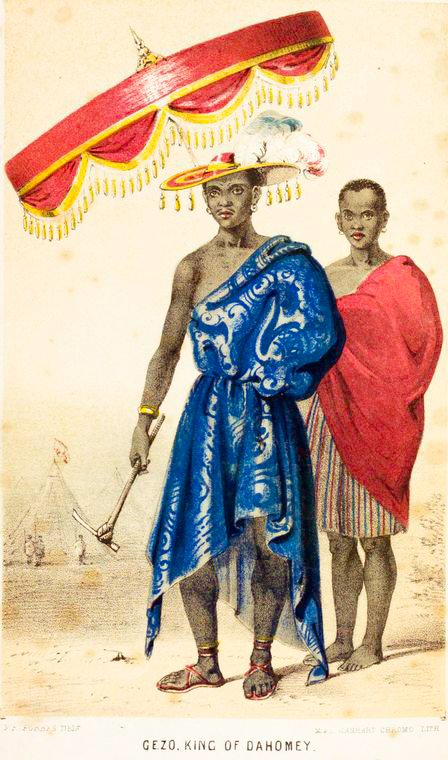
Ghezo
He was King of Dahomey, in present-day Benin, from 1818 until 1858. Ghezo replaced his brother Adandozan (who ruled from 1797 to 1818) as king through a coup with the assistance of the Brazilian slave trader Francisco Félix de Sousa.
He suffered a British blockade of the ports of Dahomey in order to stop the Atlantic slave trade. He also dealt with significant domestic dissent and pressure from the British to end the slave trade.
Betsy Heard (1759 – 1812)
She was a Euro‐African slave trader and merchant whose father was an entrepreneur who had travelled from Liverpool, England, to the Los Islands, off the coast of what is now Guinea, in the mid-1700s. Her mother was African.
Heard’s father sent her to England to study and she later returned to West Africa and set up a trading post on the Bereira River. She inherited her father’s slave-trading factory and connections, and by 1794, established a monopoly on the slave trade in the area. She owned the main wharf in Bereira, several trading ships, and a warehouse until her retirement.
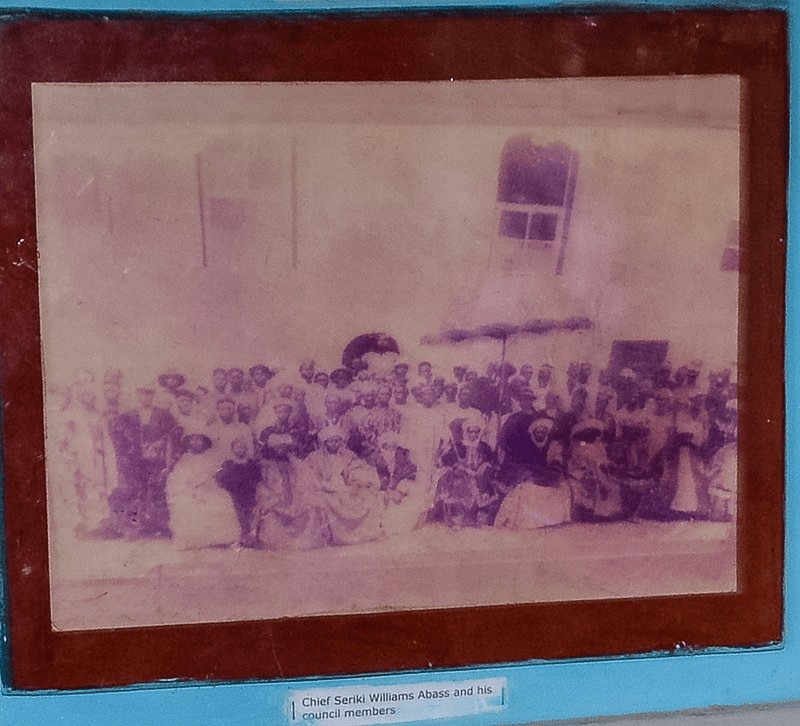
Group photo of Seriki Williams Abass and his council members
Seriki Williams Abass
He was a renowned slave merchant during the 19th century and a former paramount ruler of Badagry.
Born Ifaremilekun Fagbemi in Joga-Orile, a town in Ilaro, Ogun State, Abass was captured as a slave by a Dahomean slave merchant called Abassa during one of the Dahomey–Egba clashes. He was later sold to a certain Brazilian slave dealer called Williams who took Abass to Brazil as a domestic servant and taught him how to read and write in Dutch, English, Spanish and Portuguese languages.
He returned to Nigeria on the condition of working with Mr Williams as a slave trade business partner. He first settled at Ofin, Isale-Eko in the Colony of Lagos before he relocated to Badagry in the 1830s.
He succeeded in his slave-trade business while in Badagry and soon became the first person in the Egbado division of Badagry to own a lorry, the “Seriki Ford” he bought in 1919 to ply the Abeokuta–Aiyetoro Road. His wealth brought him respect and made him hold various top political and organizational positions.
This article was first published by Ismail Akwei on face2faceafrica.com
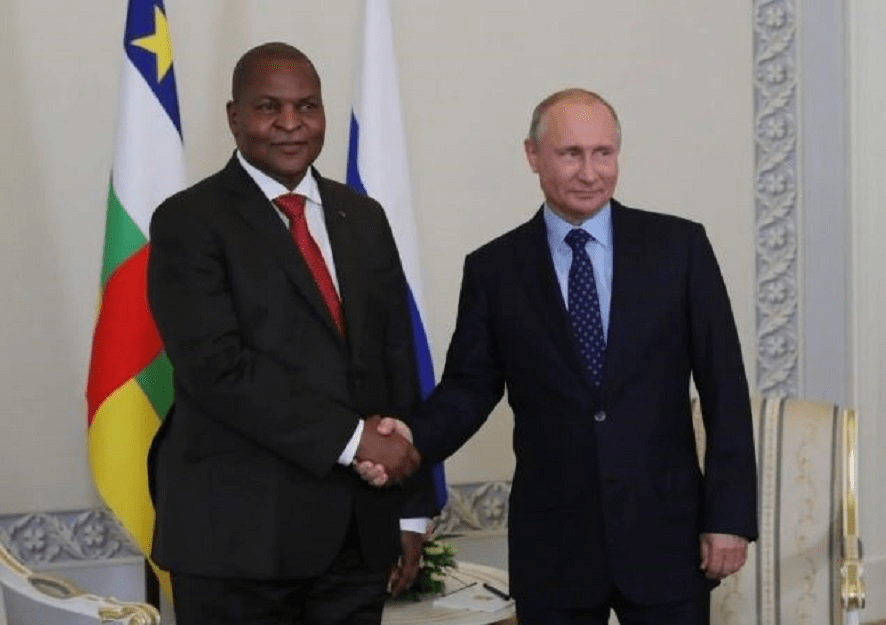
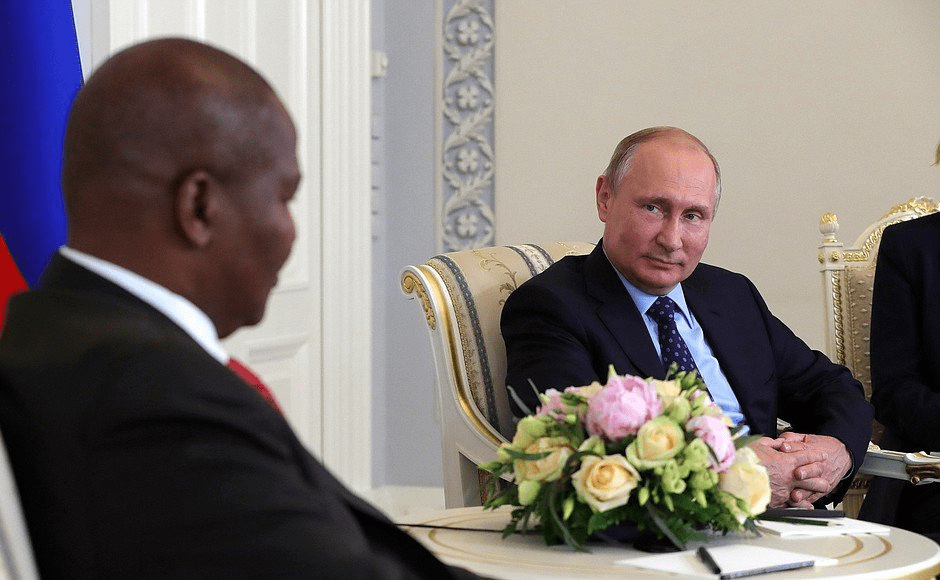
Russian President Vladimir Putin shakes hands with the president of the Central African Republic, Faustin-Archange Touadera, during their meeting in St. Petersburg, Russia, on May 23 (Michael Klimentyev/Sputnik/Pool/EPA-EFE)
The volatile Central African Republic is torn between its former colonial master, France, and new allies, Russia, as it goes through growing instability following years of armed insurgency by rebel and militia groups.
A renewed conflict heightened in 2013 after a coalition of Muslim rebel groups called Séléka seized several towns including the capital city and overthrew the Christian president at the time, Francois Bozize. This action evoked reprisals from Christian militias called Anti-balaka.
The diamond, gold and uranium-rich country has been the latest interest of Russia in Africa while France is concerned about losing influence on its former colony which has not seen peace in the past 20 years.
The United Nations Security Council had imposed an arms embargo on the country since the armed conflict erupted and Russia took advantage of an exemption clause to provide weapons to the security forces with approval by a sanctions committee.
Russia deployed military trainers and weapons to the Central African Republic earlier this year after signing a bilateral agreement with the new president elected in 2017, Faustin-Archange Touadera. Touadera’s visit to Moscow last year resulted in the signing of the agreement which, among other things, includes “mutually beneficial” mining exploration.
Moscow also went beyond UN negotiation efforts to help end the unrest in the country by inviting the armed groups to Khartoum in August for talks with Sudan and they signed a preliminary agreement to end the conflict. Russia also announced another shipment of arms and the deployment of 60 additional military trainers in late October.
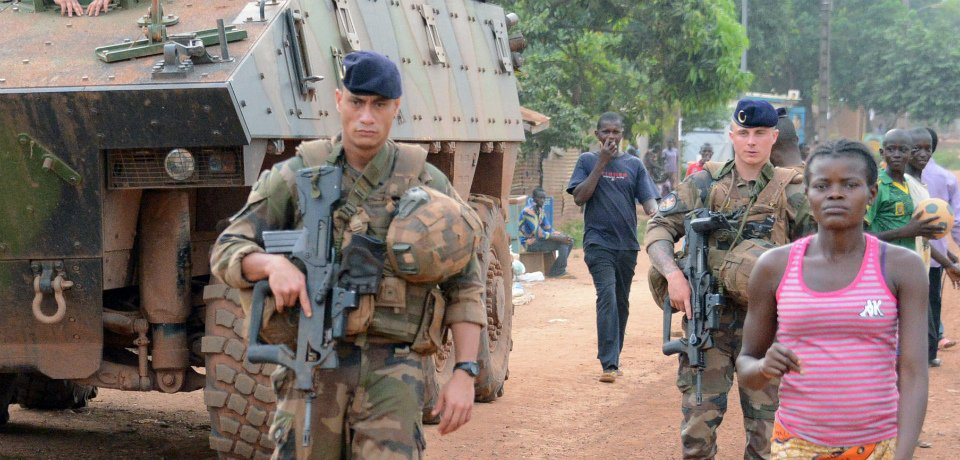
The move incensed France, which only has military presence in the country within the U.N. peacekeeping mission, MINUSCA.
French President Emmanuel Macron (R) welcomes President of the Central African Republic Faustin Archange Touadera (L) at the Elysee Palace on September 25, 2017 in Paris, France. Macron told to his Central African counterpart that France would continue its efforts to help ‘reconciliation’ in the Central African Republic.
“Russia has asserted its presence in the Central African Republic in recent months, it is true, but I am not sure that this presence and the actions deployed by Moscow, like the agreements negotiated in Khartoum at the end of August, help to stabilize the country,” French Defense Minister Florence Parly told weekly Jeune Afrique.
“Africa belongs to Africans and no one else, no more to the Russians than the French,” she added.
A month after this outburst, France announced in early November that it will deliver arms to the Central African Republic and offer 24 million euros ($27 million) in bilateral aid.
France also presented a draft resolution to the UN Security Council that would see UN peacekeepers offer support to newly-trained national forces as they deploy across the country.
“We are pro-actively helping the CAR, knowingly with the support of the people and we would like our efforts to be duly reflected in the French draft,” Russian Deputy Ambassador Dmitry Polyanski told the UN Security Council.
“In the CAR, there will be work for all to genuinely help the country get back on our feet … It is time to set aside historical complexes, egotism and parochial national interests,” he added referring to the French opposition to the Russian efforts to broker peace deals.
The United States is against the draft resolution due to the additional costs it will incur. The Security Council will hold a new vote before December 15 to decide if MINUSCA will back the newly-trained national forces and if Russia will have to abandon its peace efforts in the country.
More than 1.1 million people have fled their homes in the Central African Republic since 2012 when the conflict started and about 600,000 people are internally displaced.
Meanwhile, Russia has signed military cooperation deals with 19 countries in sub-Saharan Africa since 2015 and has expanded diplomatic and trading ties in the continent in a bid to re-establish its influence that waned after the Cold War.
This article by Ismail Akwei was first published on face2faceafrica.com
The Caribbean region is made up of at least 28 island nations and more than 7,000 individual islands in the southeast of the Gulf of Mexico and the North American mainland, east of Central America, and north of South America.
The inhabitants of most of the islands are victims of climate change as many people, houses and property are at risk of being washed away due to a rise in sea level, stronger hurricanes, tsunami and environmental disasters.
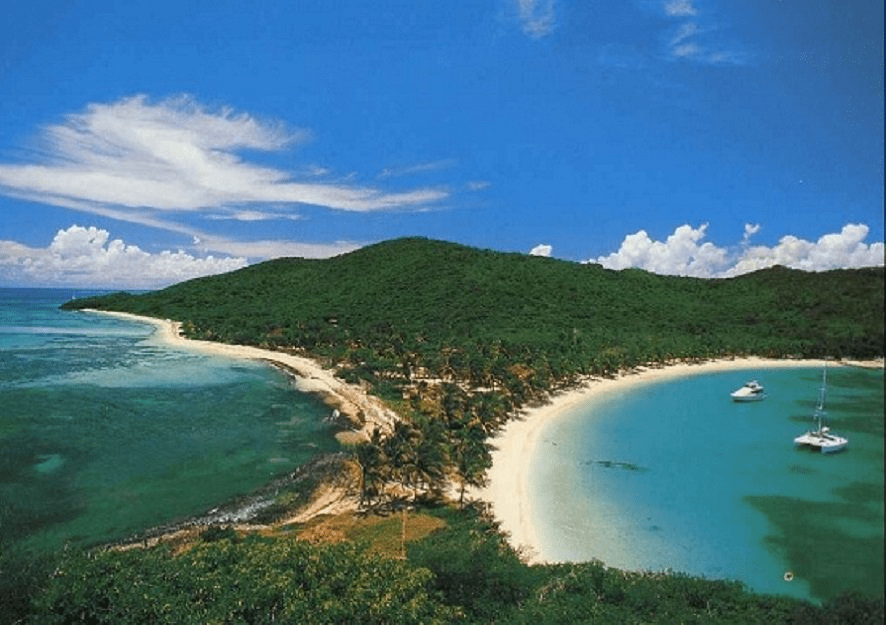
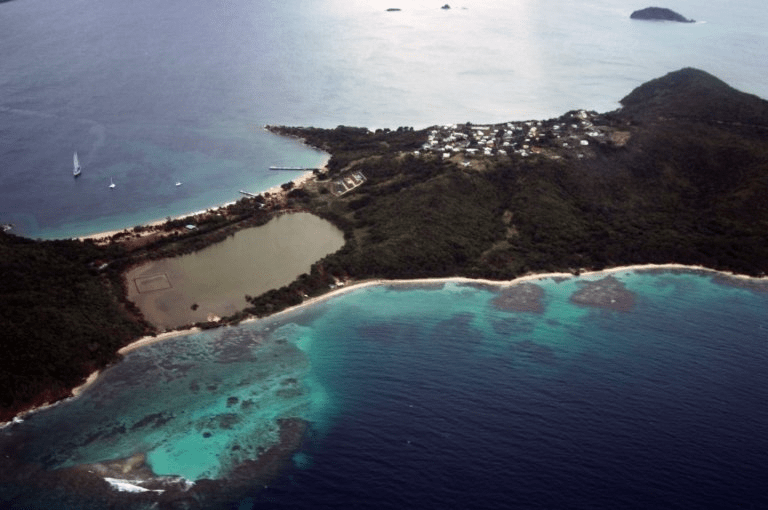
Closest to the danger is the Southern Grenadines island of Mayreau which is the smallest inhabited island of the archipelagic nation of St. Vincent and the Grenadines with a population of 271. The 1.5 square miles island which is only accessible by boat is splitting into two as the sea has eroded a vast portion of land in the middle.
Mayreau — Wikipedia
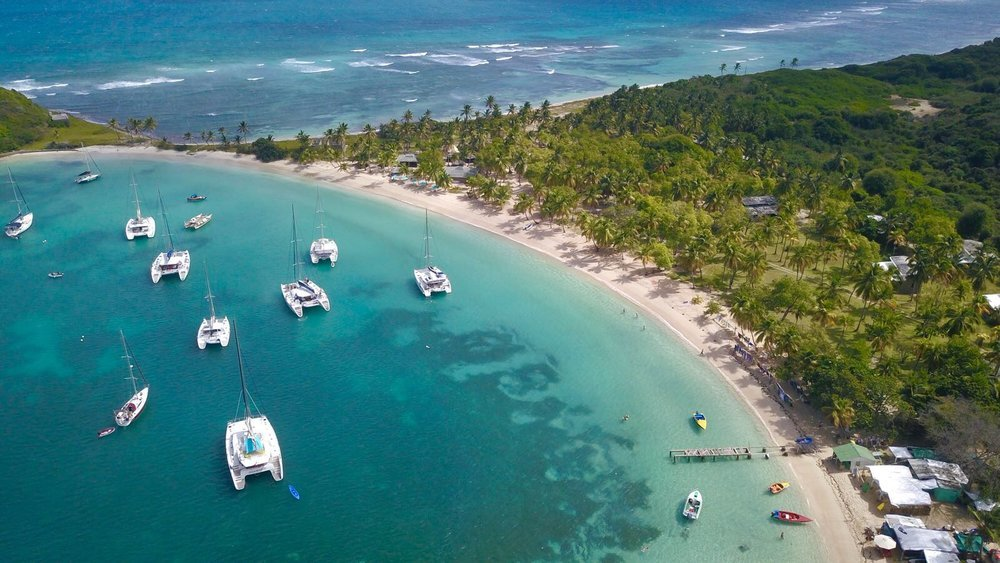
The 70-foot-wide span of land that separates the calm Caribbean Sea at the famous Salt Whistle Bay from the turbulent Atlantic Ocean on Windward Carenage Bay is now left with just 20 feet, stated a report published by the Inter Press Service (IPS).
“There is a rise in the sea level with climate change. You can see that happening, and not just in that area alone … On the ocean bed in that area, it doesn’t have any coral. It is just a mossy bottom. It doesn’t have anything there,” one of the inhabitants of the island Filius “Philman” Ollivierre told IPS.
“My fear is that if the windward side breaks through onto the other side, it can actually erode that whole area … All of that area is sand and it not so much sand separating both sides so we really have to be careful and take the necessary measures to prevent that from happening,” Ollivierre added.
The island’s population who live in an unnamed village on a hilltop in the south-west of the island may lose their livelihood if the Atlantic Ocean finally erodes the land that protects the Salt Whistle Bay, one of the most beautiful beaches in the world, which attracts thousands of tourists every year.
Mayreau beach — Photo: saltwhistlebay.com
The Member of Parliament for the Southern Grenadines, Terrance Ollivierre, expressed concern to the Prime Minister in the House calling for an immediate action to save the tourist site.
According to IPS, Prime Minister Ralph Gonsalves said the government is working on a temporary measure of placing boulders at the beach at Windward Carenage as a mitigation.
“But much more is required than that and it is going to be a larger project. So, the long and short of it, the fight which we are having on climate change, is a fight which relates to what is happening at Salt Whistle Bay. Rising sea levels, wave action, and then, of course, people moving away a lot of natural barriers, which have been there,” he is quoted as saying.
Some non-governmental agencies are restoring the vegetation around some islands in the St. Vincent and the Grenadines by planting mangrove trees. One of them is Sustainable Grenadines Inc. which has planted 500 mangrove trees in Union Island to create beaches in an abandoned marina.
“Wherever you have those types of mangroves, you would not have erosion as the roots help to filter silt and it also breaks the energy of the wave, like around 70 percent,” says the head of the group, Orisha Joseph.
She told IPS that the government needs to work with NGOs to educate people on the importance of plants and mangroves, and insisting that no construction takes place less than 40 metres away from the coastline.
“When you remove that which is causing the sand to stay in place, then you are creating a bigger problem. We have this problem where people just go cutting down mangroves because they just want beachfront land and not really understanding that this vegetation is there for a reason,” she said.
“Everything in the environment is there for a particular reason and we have to be careful,” she warned.
If the erosion is not curbed in time, the island nation of St. Vincent and the Grenadines would lose its famous Salt Whistle Bay and would get an increased number of island, islets and cays from 32 to 33.
Kingstown, capital of St. Vincent & Grenadines — Photo: Flickr
This article by Ismail Akwei was first published on face2faceafrica.com
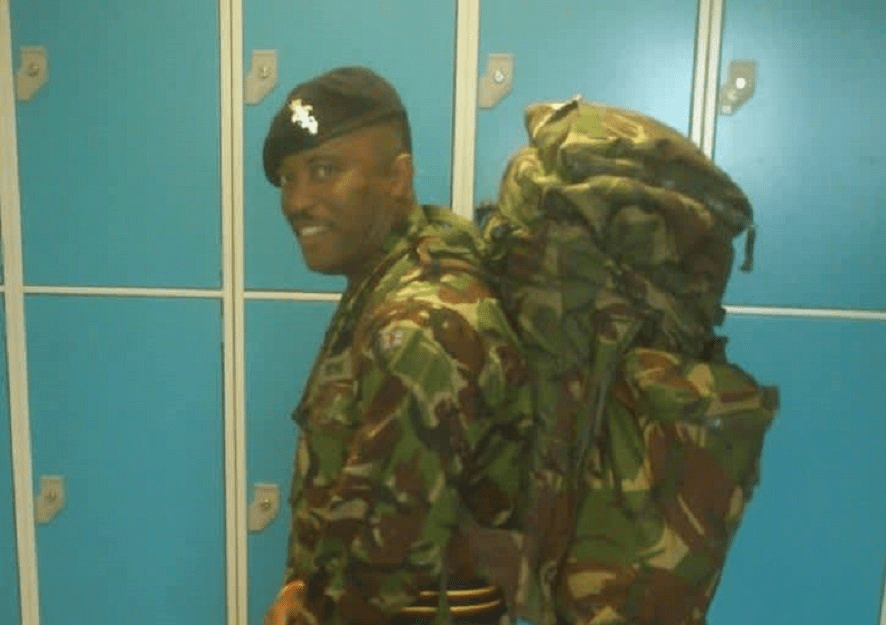
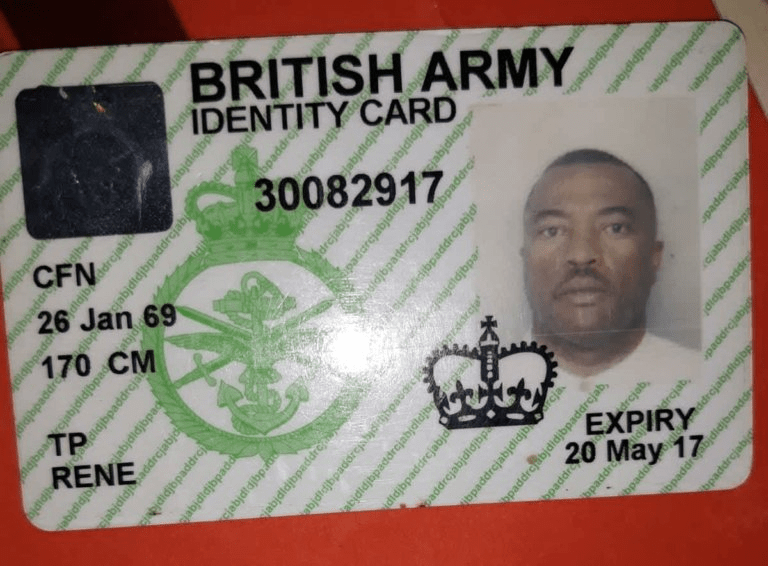
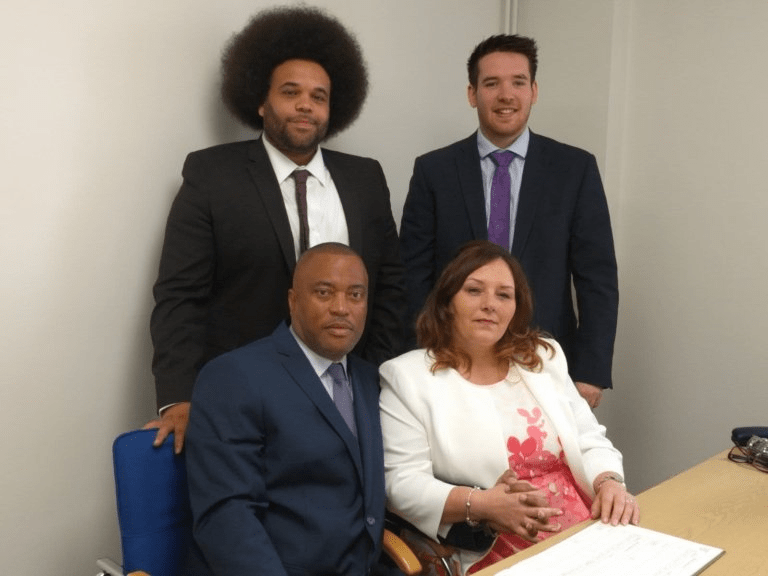
Trevor Rene, who is originally from Dominica, an island country in the West Indies, served in The Army Reserve for six years (Photo: Trevor Rene/ iNews)
49-year-old Trevor Rene visited the United Kingdom from the Caribbean island of Dominica in 2008 on a six-month tourist visa. His reason was to meet his family in the UK where his grandfather had settled in 1948 during the Windrush era.
His decision to join the British Army during his stay did not save him from facing deportation after serving for six years as a mechanical engineer in the Reserves and marrying Diane, a British clerk who works for the NHS.
“I could understand me being deemed an illegal if I had arrived in Britain on the back of a lorry but I didn’t. I was born a British citizen. I arrived in Gatwick and then the British Army gave me a job. They will use me for my service to this country but then toss me away. It’s a scandal,” Rene was quoted in a report by local media iNews.
The resident of Welwyn Garden City, Hertfordshire, recalls being born a British citizen with a blue British passport before Dominica gained independence from Great Britain in 1978.
While in the military, Rene decided to apply for a passport when his tourist visa had expired. This opened the can of worms with the immigration. He was refused and the Army’s attempt to help him through the process was unsuccessful.
Photo: Trevor Rene/ iNews
“My commanding officer sent the Home Office a letter to support my application. But they took the view I wasn’t properly in the British Army because I’m in the Reserve. It’s like saying someone who works in a Tesco Express doesn’t work for Tesco,” he told iNews.
Even after meeting his British wife and moving in together a year later, his immigration status was hanging and in 2014, the army let him go because of his status.
After seeking legal recourse, he was ordered to report to a police station every month in 2015, and in 2016, he was kept in a detention centre in Oxfordshire for 10 days.
“It was horrendous and terrifying. Worse than prison, because at least then you know when you will be released. I heard the guards coming in the night to take people to put them on a plane and I couldn’t sleep knowing I could be deported at any moment,” he said.
He was released but continued his battle for a legal status in the country. Trevor Rene could not get a job for four years and his marriage last year was not taken into consideration to approve his application for a spousal visa.
“They said she didn’t earn enough, but now she does earn over the £18,600 threshold for her to sponsor me … We have sent payslips and our marriage certificate but they have still rejected my visa,” he told iNews.
Rene’s frustration led him to create a GoFundMe page to help finance his legal fees since he can’t get a job and his wife is raising two children while supporting him.
“It’s been very tight relying on Diane’s wage alone. She has two sons, bills to pay, two cats to feed. I’m keen to work and give something to society. “I was born a British citizen. I’ve served for the Queen. My wife has a right to family life.
“You only have to look at the Windrush scandal. There are lots of people being treated the same way,” he said in frustration.
iNews spoke with a Home Office spokesperson who said Trevor Rene’s application rejection was due to a number of issues including failure to pay the fee and his status as an overstayer since his visa expired in November 2008.
“When someone has no leave to remain in the UK, we expect them to leave the country voluntarily. Where they do not, we will seek to enforce their departure,” the official said in reaction to Rene’s case which he said has been dismissed by an independent Immigration Judge and has exhausted his right to appeal.
The Windrush generation came to the UK to serve as a buffer for the loss of life during World War II. The British Nationality Act 1948 offered British citizenship to all individuals living in the UK and its colonies.
The 1971 Immigration Act gave citizens of the Windrush generation permission to stay in the UK indefinitely. Descendants were granted the right to emigrate to the UK as long as they acquired a work permit and could prove a parent or grandparent was born in the UK.
Many descendants of the Windrush generation are still fighting for their right to emigrate to the UK and stay with their grandparents and family members due to unfavourable laws that deny them legal residency.
British Prime Minister Theresa May recently apologized for a law she imposed in 2012 when she was the Home Secretary. The law prevented descendants of the Windrush generation from getting jobs and health insurance despite paying taxes.
“This has resulted in some people, through no fault of their own, now needing to be able to evidence their immigration status.
“Those who arrived from the Caribbean before 1973 and lived here permanently without significant periods of time away in the last 30 years have the right to remain in the UK,” May said in April 2018.
Despite this declaration, many descendants of the Windrush generation, including Trevor Rene whose grandfather is in the country, are being denied their right to stay. His case is much more unusual since he served in the British Army and has a British wife.
This article by Ismail Akwei was first published on face2faceafricafrica.com






 Ismail Akwei