Why an African ex-president is blaming Barack Obama for his election loss

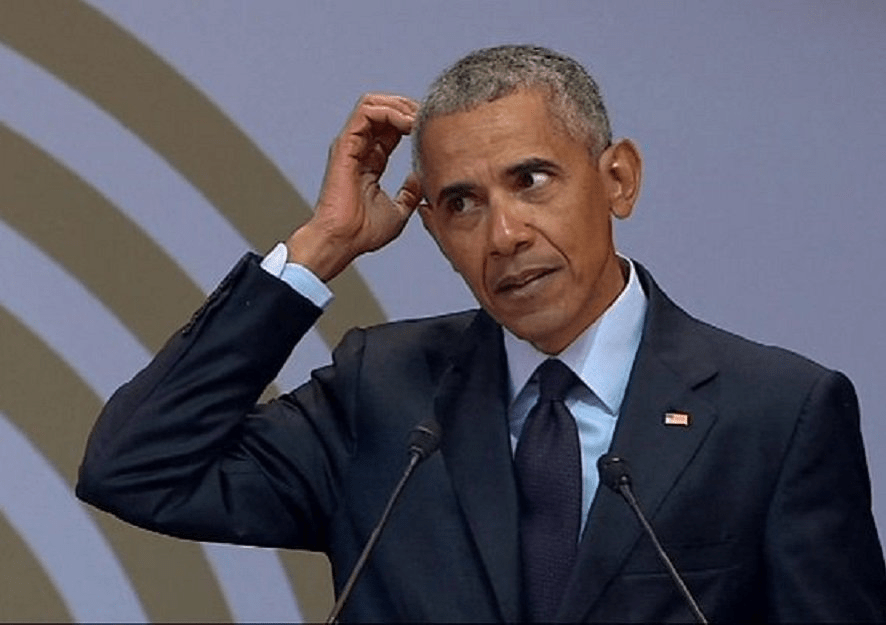
Barack Obama speaking at the 2018 Nelson Mandela lecture — Photo: BBC

African politics have evolved since independence from colonial rule in the 1960s, with democracy understood and implemented in different ways across the continent. Many African leaders look up to their counterparts in America and Europe to emulate the arguably “perfect” democratic practices upheld outside the continent.

Former United States President Barack Obama is one iconic leader who won the hearts of many Africans and African presidents with his personality. It would be mindboggling to hear that Obama meddled in an African election. Unfortunately, it is exactly what a former Nigerian president is alleging.

Goodluck Jonathan, the President of Nigeria from 2010 to 2015, who launched his book, My Transition Hours, in November, claimed interference and bias from the 44th U.S. president resulting in his defeat during the 2015 elections in Nigeria.

“On March 23, 2015, President Obama himself took the unusual step of releasing a video message directly to Nigerians all but telling them how to vote … In that video, Obama urged Nigerians to open the ‘next chapter’ by their votes.

“Those who understood subliminal language deciphered that he was prodding the electorate to vote for the opposition to form a new government … The message was so condescending, it was as if Nigerians did not know what to do and needed an Obama to direct them,” Jonathan alleged.

The former president was under a lot of pressure at the time due to the heightened attacks by Boko Haram coupled with the kidnap of the Chibok Girls which had birthed the Bring Back Our Girls movement endorsed by former U.S. First Lady Michelle Obama.

“Immediately the Chibok issue came up, we expected Nigerians to be concerned. How do we get these girls out? Within a couple of days, we saw people going to the U.S. with Bring Back Our Girls Placards… How? Why?… and of course, Mrs Obama received all of those placards,” he told the BBC in an interview.

Jonathan, who had served as the vice-president from 2007 to 2010 before succeeding Umaru Yar’Adua, who had died while in office, had always had this resentment against Obama and other world leaders which he first expressed last year.

He was cited in a book – “Against The Run of Play” – authored by the Chairman of ThisDay Editorial Board, Mr. Olusegun Adeniyi, blaming Obama, ex-British Prime Minister David Cameron and French President Francois Hollande for aiding President Muhammadu Buhari’s victory.

“There was this blanket accusation that my body language was supporting corruption, a line invented by the opposition but which the media and civil society bought into and helped to project to the world. That was the same thing I kept hearing from the Americans without specific allegations,” he was quoted in the book.

“I got on well with Prime Minister David Cameron but at some point, I noticed that the Americans were putting pressure on him and he had to join them against me. But I didn’t realise how far President Obama was prepared to go to remove me until France caved into the pressure from America,” he added.

Jonathan also accused the electoral commission (INEC) and its chairman at the time, Attahiru Jega, of being influenced by the United States to hold the election despite the government’s order to postpone it for “security reasons”.

“As at the first week in February 2015 when about 40 per cent of Nigerians had not collected their Permanent Voters Cards (PVCs), Jega said INEC was ready to go ahead with the election. How could INEC have been ready to conduct an election in which millions of people will be disenfranchised?

“Of course, the Americans were encouraging him to go ahead yet they would never do such thing in their own country,” he said.

He added that the reasons for the postponement were genuine and the military fought back Boko Haram for the election to be held in peace. He said he conceded defeat to avoid bloodshed like that of the 2011 election.

Jonathan lost to Buhari in the postponed election and he has since assumed international roles including leadership roles during election observation missions in Sierra Leone and Zambia.

President Barack Obama and the U.S. State Department have not reacted to Jonathan’s allegations.

This article by Ismail Akwei was first published on face2faceafrica.com
Eight things you can do to stand and fight against corruption

Say No To Corruption — Photo Credit: Corruption Watch

The United Nations estimates that every year $1 trillion is paid in bribes while an estimated $2.6 trillion are stolen annually through corruption – a sum equivalent to more than 5 per cent of the global GDP. Corruption is the acquisition of personal benefit through dishonest or unethical conduct by a person in a position of authority. Examples include bribery and embezzlement.

December 9 is observed as International Anti-Corruption Day. The UN has listed eight things you can do to stand and fight against corruption.

Ratify and enact the UN Convention against Corruption: Countries that successfully attack corruption are far more legitimate in the eyes of their citizens, creating stability and trust.

Know what Convention requires of your government and its officials: Rooting out corruption allows social and economic development.

Educate the public about the government’s responsibility to be corruption-free: Equal and fair justice for all is a crucial element for a country’s stability and growth. It also helps to effectively fight crime.

Raise awareness with the public, media and government about the costs of corruption for key services such as health and education: All of society benefits from functioning basic services.

Engage the youth of your country about what ethical behaviour is, what corruption is and how to fight it, and to demand their right to education: Ensuring that future generations of citizens are brought up to expect corruption-free countries is one of the best tools to ensure a brighter future.

Report incidents of corruption: Create an environment where the rule of law prevails.

Refuse to participate in any activities that are not legal and transparent: Increases both domestic and foreign investment. Everyone is more willing to invest in countries when they see that funds are not being siphoned off into the pockets of corrupt officials.

Foster economic stability by enforcing zero-tolerance practices towards corruption: A transparent and open business community is a cornerstone of any strong democracy.

This article by Ismail Akwei was first published on face2faceafrica.com
Rwanda champions ‘speedy’ integration of the African continent in Kigali

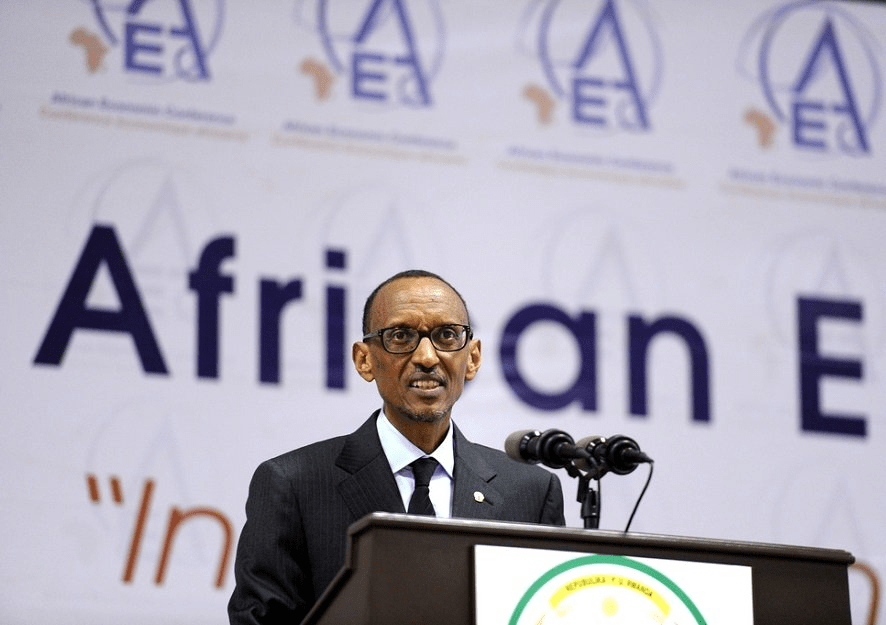
Rwandan president Paul Kagame at the African Economic Conference in 2012 — Photo: Flickr

Rwanda hosted over 700 experts from Africa and the world at the annual African Economic Conference (AEC) held in Kigali to discuss ways to fast-track African infrastructure integration and the removal of barriers for free movement of people, goods and services across borders.

Focused on the theme, “Regional and Continental Integration for Africa’s Development”, the Conference held from December 3 to 5 shed light on the African Continental Free Trade (AfCFTA) agreement signed by 44 African countries but which only 12 out of the required 22 countries have ratified ahead of the March 2019 deadline.

While many policymakers say there is enough time to move the integration process for the continent, Rwanda believes it should be speedily achieved to place the continent at the level it ought to be as stipulated in the agenda 2063.

“Africa’s integration is no longer a choice. It’s a must for the continent and its people. To become a global player that it deserves to be, Africa should integrate speedily,” said the Rwandan Minister of State in Charge of Finance and Economic Planning, Claudine Uwera.

According to local Rwandan media The New Times, Uwera told participants that the need for integration goes beyond the economic view and it touches all sectors of life.

“I believe we are at the right time where the expressed political will and leadership exist. We should take advantage of this to implement faster and in the adequate way, our continent’s integration,” she added.

For the UNDP Assistant Administrator and Regional Director for Africa, Ahunna Eziakonwa, integration comes with a potential cost and it shouldn’t be overlooked.

“Africa must not shy away from addressing the potential costs of integration. Regional and continental integration is not without costs. One of them is trade diversion, which displaces low-cost products from non-members by higher cost products from the integrating countries,” she explained.

She added that if integration is inclusive, equitable and sustained, “it will not only lift people from poverty, it will also keep people out of poverty.”

Other participants rooted for the ratification of the AfCFTA which will boost intra-African trade as import duties and double trade will be eliminated and Africa will be the largest free-trade area in the world.

If implemented, the AfCFTA will bring together the 1.2 billion African population which will have a combined gross domestic product (GDP) of more than $2 trillion and the commitments of the countries to remove tariffs on 90 per cent of goods with 10 per cent of “sensitive items” to be phased in later.

Intra-Africa trade which currently stands at 15% will increase to 52.3% compared to 54% in the North America Free Trade Area, 70% within the European Union and 60% in Asia.

The Africa Visa Openness Index 2018 published by the African Development Bank and the Africa Union Commission was also discussed with Benin making the most progress in opening up its borders to African travellers in 2018.

Benin is the second country on the continent after Seychelles to offer visa-free access to all African countries and the first Francophone country to do so.

Visa-free travel for Africans in Africa is scheduled to start by the end of 2018 but only 22 per cent of African countries have taken that step to open up their borders to other Africans.

Ghana, Rwanda, Namibia, Mauritius, Benin and Kenya have all loosened travel restrictions for other African nationals. Following an announcement by South Africa last month that it was relaxing its travel rules to revive its economy, Ethiopia followed suit, rolling out a visa-on-arrival regime for all Africans entering the country.

The latest country to announce the visa-on-arrival policy for Africans is Botswana which started offering tourists visas on arrival from November 24, 2018, to boost its tourism and other sectors of the economy.

Efforts at integrating the continent started over 50 years ago since the formation of the Organization of African Unity and subsequently the African Union reflecting a compromise between the Monrovia and the Casablanca groups espousing different ways to Africa’s unity in the 1960s.

The African Economic Conference is jointly organized by the African Development Bank, the United Nations Economic Commission for Africa (ECA) and the United Nations Development Programme (UNDP).

This article by Ismail Akwei was first published on face2faceafrica.com
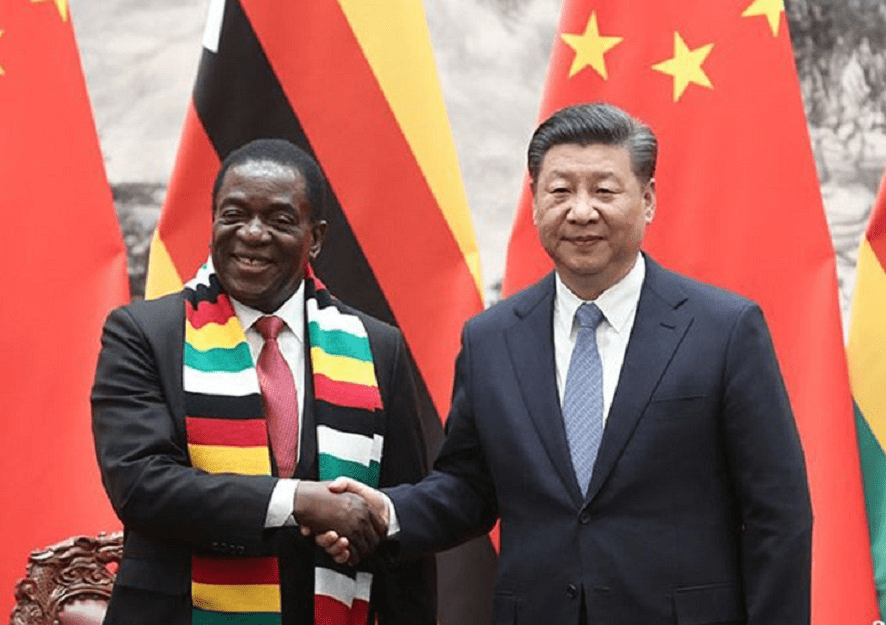
China is building these three African parliaments ‘at no cost’

Zimbabwean president Emmerson Mnangagwa and Chinese premier Xi Jinping

China describes itself as the friend of Africa as it strategically offers a helping hand in the infrastructural development of the continent while it positions itself as a global superpower.

The Asian country has won the hearts of many African leaders and continental bodies with its several generous projects that have raised eyebrows among the international community and cynics who claim China’s interest in the continent is to overburden countries with debts to enable neo-colonisation.

China has emphasized on a win-win cooperation as it recently opened up its market to Africa and the world during the maiden China International Import Expo (CIIE) fair in Shanghai which was opened by Chinese President Xi Jinping.

Jinping said the fair is “a major policy for China to push for a new round of high-level opening-up and a major measure for China to take the initiative to open its market to the world.”

“All countries should be committed to opening up and oppose protectionism and unilateralism in a clear-cut stand,” he added during his keynote speech at the opening ceremony attended by a total of 172 countries, regions and international organizations from five continents.

Ahead of the fair, Rwandan president Paul Kagame launched Africa’s first Electronic World Trade Platform (eWTP) with the help of Chinese multinational technology conglomerate and the world’s largest e-commerce platform operator Alibaba Group to engage small businesses in electronic cross-border trade.

“Rwandan producers will be able to sell directly to a much larger set of customers than before while bypassing costly intermediaries. This improves productivity and profitability. There really are no downsides to doing business on a global scale,” Kagame said recently at the launch in Kigali.

He added that Rwanda values its relationship with the Chinese private sector and focuses on mutual benefit to improve productivity and profitability for Rwandans.

Among others, China built the $200 million African Union headquarters in Addis Ababa, Ethiopia in 2012 at no cost to the continental body. The Asian country also signed an agreement to build the headquarters of the West African regional bloc ECOWAS with a grant of $31.6 million.

China recently offered $6 million to Ethiopia to launch its first satellite into space in September 2019. It will also provide training before the launch of the satellite which will be done from China.

Senegal will open the world’s largest museum of black civilization on December 6 in the capital, Dakar, after 52 years of waiting due to lack of funding. China donated $34.6 million for the dream of the country’s first president, Leopold Sedar Senghor, to come to fruition.

China is also building the parliaments of these three African countries as a gift to them in the form of grants.

Zimbabwe’s new parliament building

Zimbabwe

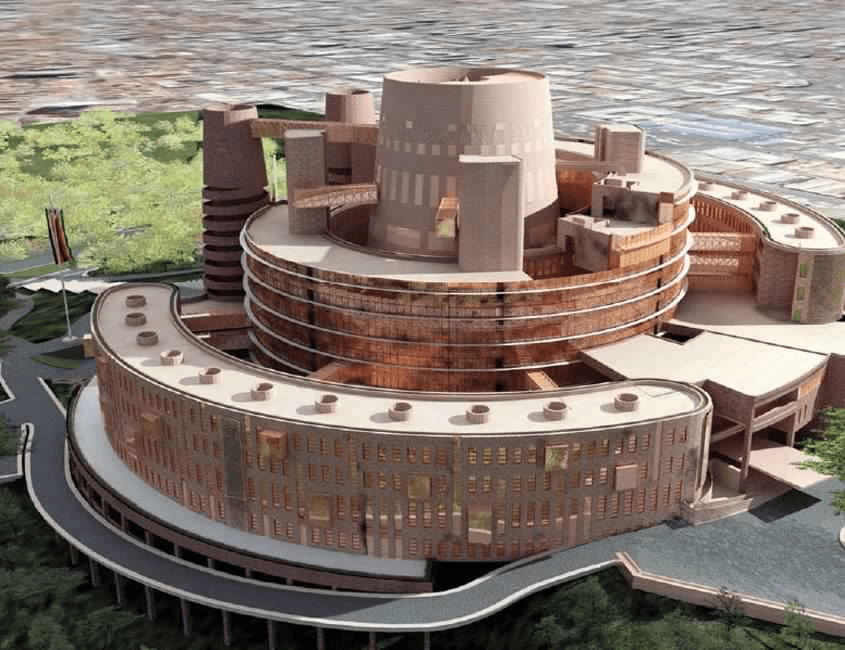
Zimbabwe has started the construction of a new parliament building outside the capital Harare which will be fully funded by the Chinese government.

Zimbabwe

https://67fdf835005d2b0c5abe088b9a6f1ee6.safeframe.googlesyndication.com/safeframe/1-0-38/html/container.html

Zimbabwe has started the construction of a new parliament building outside the capital Harare which will be fully funded by the Chinese government.

President Emmerson Mnangagwa confirmed at a ceremony last week that China had provided a “grant, not a loan, to build a new parliament”, without giving a figure.
According to the Zimbabwe Broadcasting Corporation, the new circular complex will be built over 32 months by the Shanghai Construction group at Mount Hampden, 18 kilometres northwest of Harare.

Other facilities including banks, hotels and a smart city will be built around the parliament building after completion, hints the president.

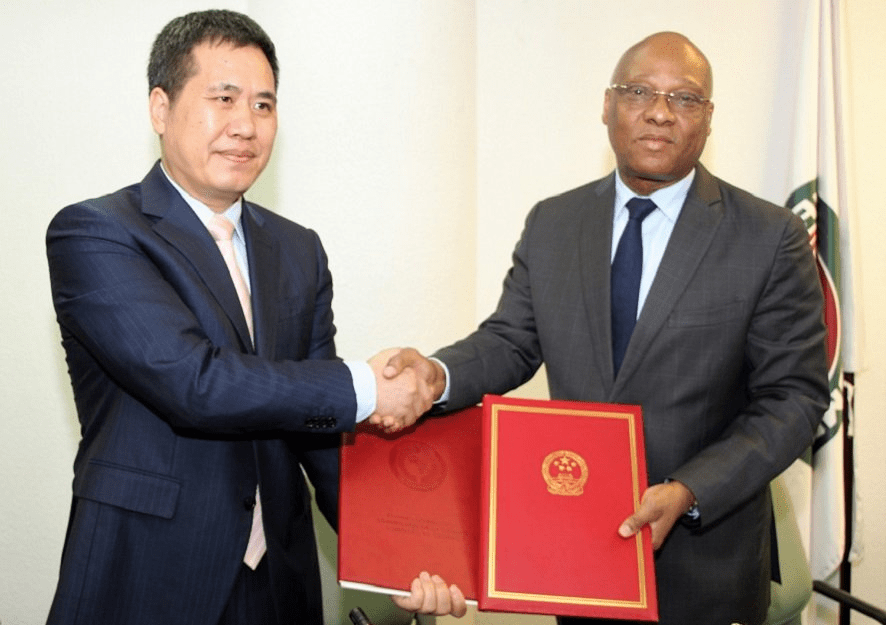
Republic of Congo president and Chinese officials after signing the agreement

Republic of Congo

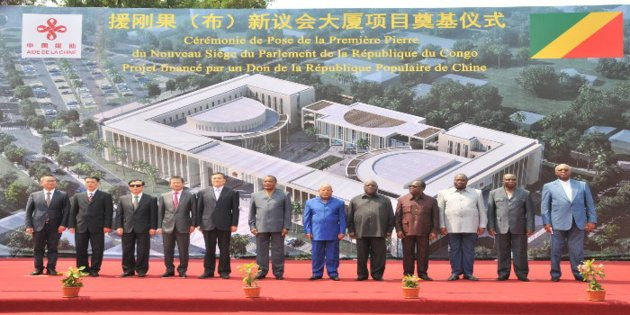
The Republic of Congo is benefitting from a Chinese grant of about $60 million to build the country’s new parliament located in the capital Brazzaville.

Work started on the new edifice in May 2017 and it’s being constructed by the Chinese Jiangsu Provincial Construction Ltd. for a scheduled period of 40 months.

Opposition groups have kicked against the move saying China’s interest is in the country’s oil and timber the country has.

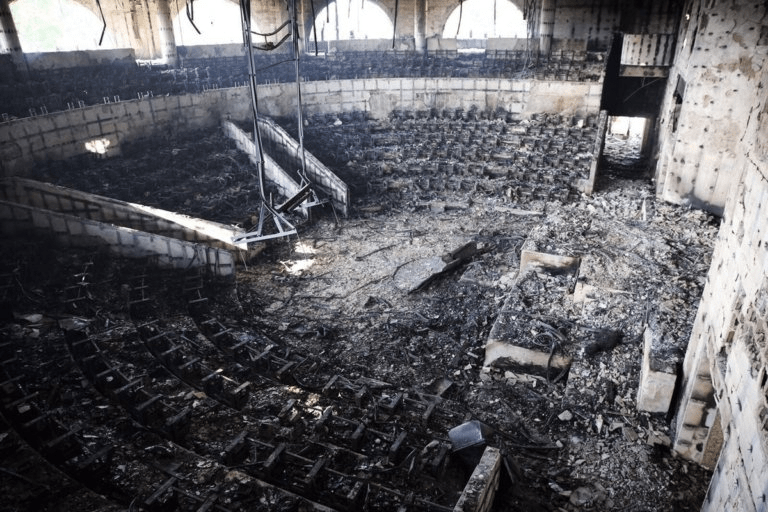
Burned down parliament of Gabon

China offered to rebuild the parliament of Gabon in 2017 after it was razed down during the 2016 election violence.

According to a local report, the Chinese authorities agreed to rebuild the edifice during a meeting held between President Ali Bongo Ondimba and vice-president of the standing committee of the National People’s Congress of China, Ji Bingxuan, during a two-day official visit to Gabon last year.

The cost of the renovation and the duration of work was not disclosed.

This article by Ismail Akwei was first published on face2faceafrica.com

As Africa loses fight against skin bleaching, Rwanda deploys police to enforce laws

Kagame touring Rwanda Police headquarters — Photo: Rwandan Government

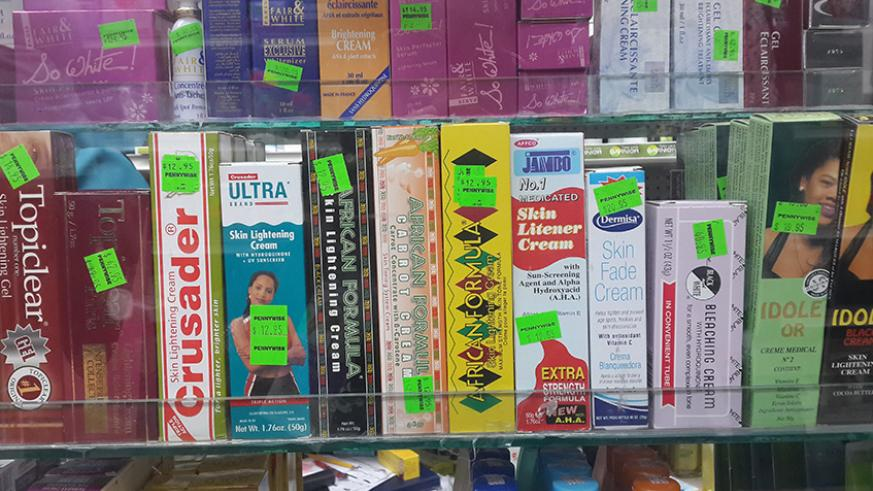
Many African countries have banned skin bleaching products but the laws are not enforced as many skin whitening creams and soaps flood the markets in countries such as Ghana, Togo, South Africa, Mali and Cote d’Ivoire.

The products containing harmful chemicals such as mercury, cortisone and hydroquinone have been linked to skin cancer, high blood pressure, thinning of the skin, other forms of cancer, kidney and liver failure.

To curb the harmful effects of the products and to enforce the laws, Rwanda has deployed the Rwanda National Police (RNP) together with Ministry of Health, Rwanda Food and Drug Authority, Rwanda Investigation Bureau (RIB), and Rwanda Standards Board (RSB) among other agencies to crackdown on 1,342 brands prohibited in Rwanda since 2013.

“So far, we have seized 5,606 assorted pieces of banned bleaching products, including lotions, oils, toilet soaps and sprays. The illegal products were seized from beauty shops in Kigali, and Eastern, Northern and Western provinces where the operations have been conducted so far,” police spokesperson John Bosco Kabera was quoted by local media New Times.

The products they seized include Maxi-White, Skin White, Fair Light, Secret White, Diamond White, Carotene, Diproson, Caro Light, Clear Men, and Epiderm Crème.

The police said it will continue the operation to get the products off the shelves and to prevent importers from trafficking the products into the country.

“Right now the focus is getting them off the shelves and educating the people both on the law and dangers they pose to users, but at the same time strengthening operations on traffickers of these toxic skin whitening substances,” added the police spokesperson.

The operation was launched after President Paul Kagame joined in the debate on Twitter against the harmful skin bleaching products and ordered the police and health ministry to take action.

Despite all the campaigns against skin bleaching, Nigeria hosted American model, entrepreneur, socialite and former stripper, Blac Chyna, who launched a new skin bleaching cream in Lagos on November 25.

Blac Chyna, real name, Angela Renée White, launched the “Whitenicious X Blac Chyna Diamond Illuminating & Lightening Cream” produced in partnership with Whitenicious by Dencia, a luxury skin care line owned by a controversial Cameroonian singer, Dencia.

Her representatives told local American media that “she has been using Whitenicious dark spot corrector for a few years to deal with her hyperpigmentation” and the new product is for people of colour who suffer from skin issues. According to TMZ, a fancy jar goes for $250.

Cameroonian entrepreneur and singer Reprudencia Sonkey, popularly known as Dencia, has come under attack for her skin bleaching cream, Whitenicious, since its launch in 2014. Her luxury skin care products have been described as an “abomination” that teaches young girls to be ashamed of their skin.

The U.S.-based artist has insisted on several platforms that the cream is only for covering blemishes and hyperpigmentation, but not to shame dark-skinned women.

“Some people they don’t feel confident, they don’t feel pure, they don’t feel clean with dark spots. I said seven-day, fast-acting dark spot remover. It’s called reading comprehension. If people missed that class, then it’s not my fault. If they think that their whole body is a dark spot then fine, because that’s not how I feel,” she said in a television interview.

Dencia herself has gone through several phases of skin lightening and she looks light-skinned as compared to her previous dark skin.

Skin bleaching is a major problem in Africa and diaspora communities across the world. Many women and men go through the risk of lightening their skins to be regarded as “desirable and beautiful”.

The risks associated with skin bleaching inspired Minnesota public health advocate, Amira Adawe, who has made it her personal mission to seek out shops selling skin-bleaching creams and report their activities.

The Somali anti-skin bleaching crusader is a manager for the Children’s Cabinet of Minnesota Gov. Mark Dayton and host of a weekly radio show dubbed “Beauty-Wellness Talk.” She discusses the issues that prompt women to alter their skin including colourism, self-esteem, social media and self-hate.

There is still a high demand for skin bleaching products in Africa which have now been re-branded as “toning,” “dark spot correction” and “lightening” creams.

This article by Ismail Akwei was first published on face2faceafrica.com