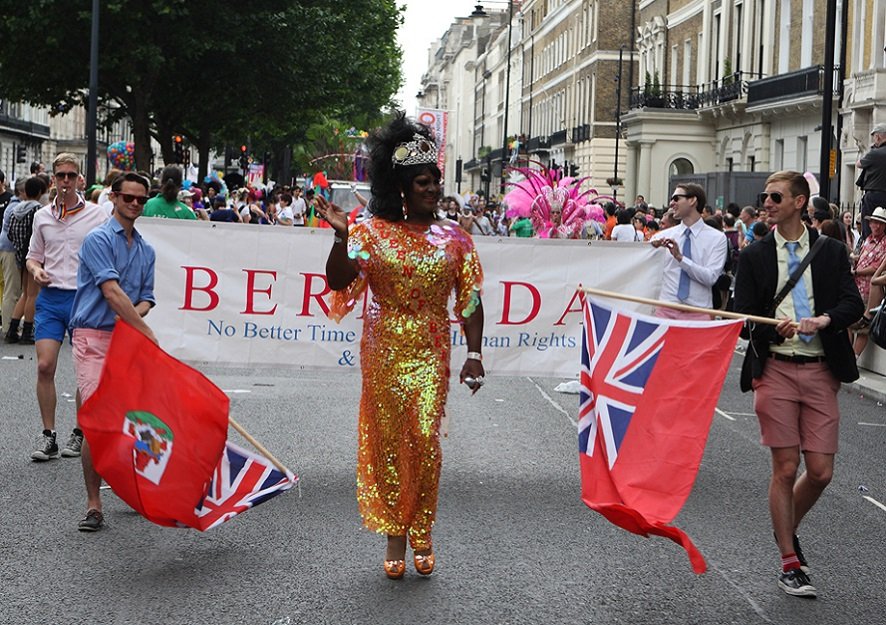
Bermuda gay pride parade — Photo Credit: bernews.com
The island of Bermuda, Britain’s oldest remaining colony, has backtracked on a Supreme Court ruling that legalized same-sex marriage in May, the first state in the world to do so.
A new bill introduced in November by the newly elected government led by Governor John Rankin replaced same-sex marriage with domestic partnership. This bill was passed by parliament and approved by the Senate on December 13 awaiting the Governor’s royal assent.
The decision has angered LGBT rights groups in Bermuda and the United Kingdom who are putting pressure on British Foreign Secretary Boris Johnson to veto the ban which reduces the rights of same-sex couples under domestic partnership.
Tomorrow’s Mail on Sunday reveals how the FCO is considering invoking a rarely used power to veto Bermuda’s new same-sex marriage ban pic.twitter.com/CqpV0HclRK
The legalization of gay marriage on May 5 after the Supreme Court ruling allowed gay couples to enjoy rights that heterosexual couples enjoyed including the publication of marriage banns by the Registrar General’s office.
“This bill effectively states that you are a second-class citizen because of who you love, and creates increased division within an already very divided country and within a minority all at once,” Winston Godwin, a gay Bermudian said in a statement cited by UK’s Daily Mail.
Godwin and his then Canadian fiancé, Greg DeRoche, won the May 5 case that legalized gay marriage. Judge Charles-Etta Simmons had ruled that they were discriminated against on the basis of their sexual orientation upon refusal to process their notice of intended marriage.
The UK supports same-sex marriages and Godwin argues that the ban violates the UK Human Rights Act, as Bermuda is a British Overseas Territory.
The turning point for supporters of the legalization of gay marriage in Bermuda came in 2016 when the Attorney General announced the creation of a bill to introduce civil unions, but ruled out the legalization of same-sex marriage.
A referendum was held in June 2016 based on two proposals: “Are you in favor of same-sex marriage in Bermuda?” and “Are you in favor of same-sex civil unions in Bermuda?”
Less than 50% of Bermudians voted in the referendum rendered invalid due to the low turnout. However, 60–70% of the voters rejected both proposals.
Since the ruling which legalized same-sex marriages, six gay couples married on the island and several same-sex marriages were scheduled for January 2018 on cruise ships, reports local media Caribbean 360.
Gay couples who married on the island after the ruling will keep their status, the report added.
This article by Ismail Akwei was first published on face2faceafrica.com
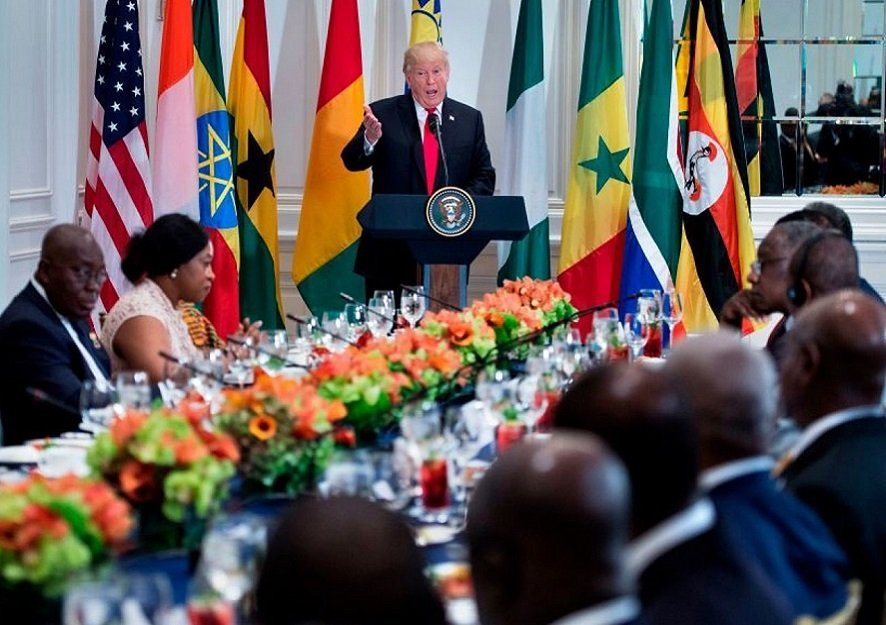
President Donald Trump addressing African leaders in Washington in 2018. Photo Credit: Brendan Smialowski
The United States is losing its stronghold in the African continent as China has filled the vacuum created by the position of the Donald Trump administration’s “America First” policy which is doing more harm than good.
By the end of Barack Obama’s eight-year term as president, the United States was still a dominant force in Africa and the first black president deepened the relations with eight monumental visits to the continent to solidify trade and encourage good governance.
China had already won the heart of Africa since 2006 when it held the first China-Africa summit in Beijing to establish a mutual friendship, cooperation and a win-win development partnership.
Since 2009, China consecutively became Africa’s largest trading partner with investments totalling 100 billion dollars and covering almost every country on the continent.
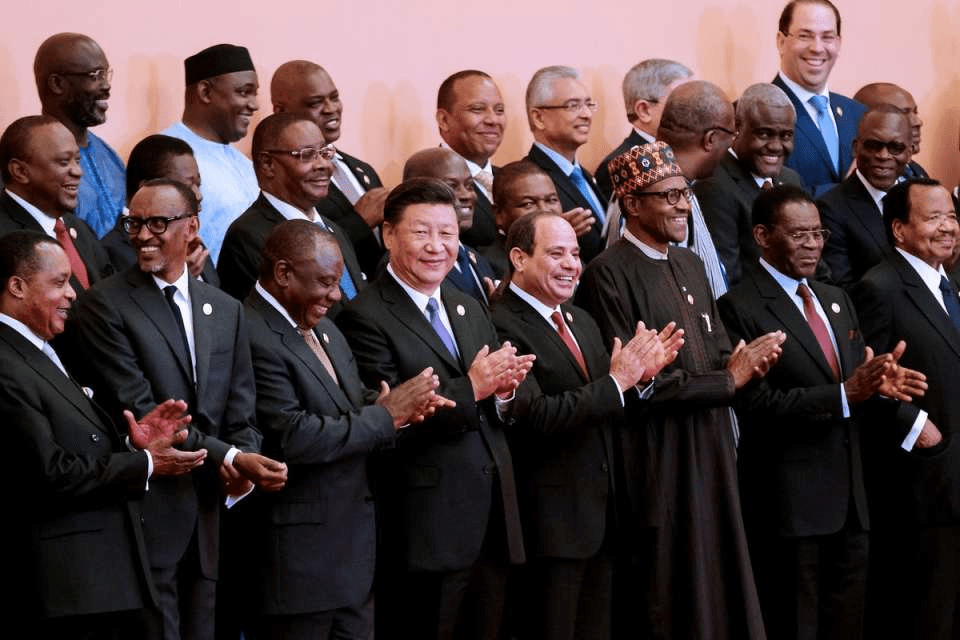
Chinese leader Xi Jinping and African leaders at the China-Africa forum
The American vacuum in Africa has grown to be a disturbing development for the global superpower which is now openly declaring war on China’s influence in Africa and latecomers, Russia.
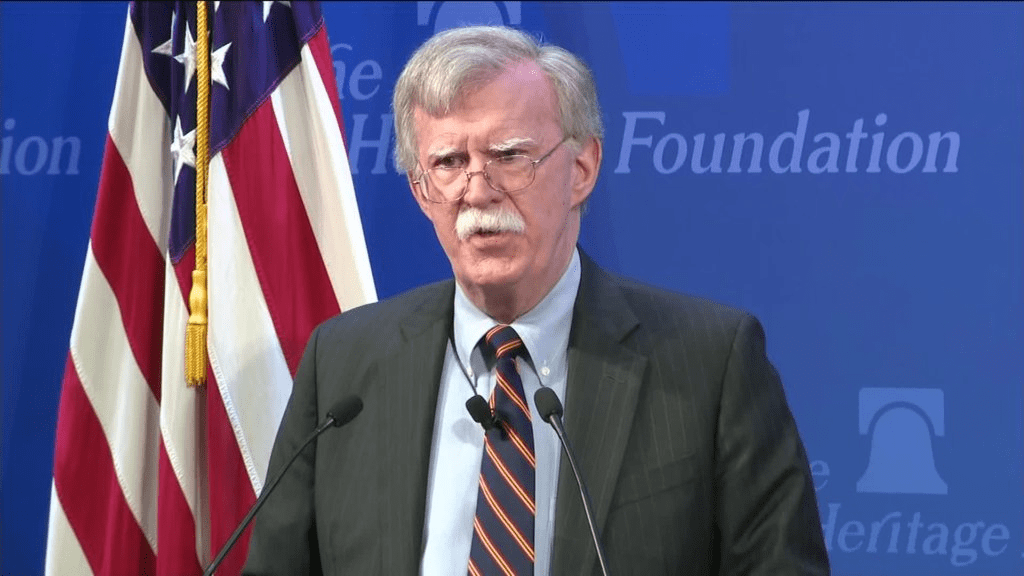
The recently released “Prosper Africa” strategy of the United States which was explained by national security adviser, John Bolton, went beyond the three core interests of advancing U.S. trade and commercial ties with African nations; countering the threat from Radical Islamic Terrorism; and ensuring that U.S. taxpayer dollars for aid are used efficiently and effectively.
In enhancing U.S. economic ties with Africa, Bolton categorically mentioned China and Russia as “deliberately and aggressively targeting their investments in the region to gain a competitive advantage over the United States” which the U.S. strategy will target to “safeguard the economic independence of African states and protecting U.S. national security interests”.
This clearly exposes the United States’ disinterest in global partnership and attempt to end the competition in the region to gain its former glory. The plan is to counter China and Russia’s economic and political influence in Africa.
“China uses bribes, opaque agreements, and the strategic use of debt to hold states in Africa captive to Beijing’s wishes and demands. Its investment ventures are riddled with corruption, and do not meet the same environmental or ethical standards as U.S. developmental programs.
“Such predatory actions are sub-components of broader Chinese strategic initiatives, including “One Belt, One Road”—a plan to develop a series of trade routes leading to and from China with the ultimate goal of advancing Chinese global dominance,” explains John Bolton.
He went further to cite news reports that claimed China was taking over Zambia’s national power and utility company, Zesco, due to a debt of $6 to $10 billion dollars.
Zambia denied Bolton’s claims saying the utility was never provided as collateral and its debt to Beijing was only $3.1 billion.
“It is regrettable that such information can come from such a high-ranking official. In fact, Zesco is not within the scheme of Zambia’s debt to China,” said Zambia’s presidential spokesman Amos Chanda.
Bolton also cited China’s establishment of a military base in Djibouti closer to an American base and accused China of using military-grade lasers to target and distract U.S. pilots. He also allayed fears of Djibouti handing over control of its strategic port to China.
“Should this occur, the balance of power in the Horn of Africa … would shift in favor of China. And, our U.S. military personnel at Camp Lemonnier, could face even further challenges in their efforts to protect the American people,” Bolton added.
He also charged at Russia with accusations of seeking to increase its influence in the region through “corrupt economic dealings” and advancing its political and economic relationships with “little regard for the rule of law or accountable and transparent governance”.
Bolton accused Russia of selling arms and energy in exchange for votes at the United Nations that “run counter to the best interests of the African people.
The United States has lately not received backing from African countries at the UN during key votes on draft resolutions it table on several issues. Bolton believes Russia’s activities in Africa is the reason why the U.S. fails to get support.
Meanwhile, none of the 54 African countries has a permanent seat at the United Nations Security Council (UNSC) which has 15 members including five permanent members that wield the power to veto all resolutions.
The five permanent members comprise China, France, Russia, United Kingdom and the United States while African countries are elected by the General Assembly for two-year terms as non-permanent members.
Russia’s foreign affairs minister, Sergey Lavrov, made the assurance after a meeting with the African Union chairperson Moussa Faki Mahamat at the AU Headquarters in the Ethiopian capital Addis Ababa.
John Bolton also said China and Russia were using “predatory practices” to stunt economic growth in Africa; threaten the financial independence of African nations; inhibit opportunities for U.S. investment; interfere with U.S. military operations; and pose a significant threat to U.S. national security interests.
On the contrary, Russia has expressed interest in Africa with new bilateral agreements signed to help create trade links and development partnership. The Soviet country has signed agreements with Ethiopia and Sudan to set up nuclear technology to help power their countries.
It took advantage of an exemption clause to provide weapons to the security forces in the CAR despite the United Nations Security Council arms embargo imposed since the renewed conflict in 2013.
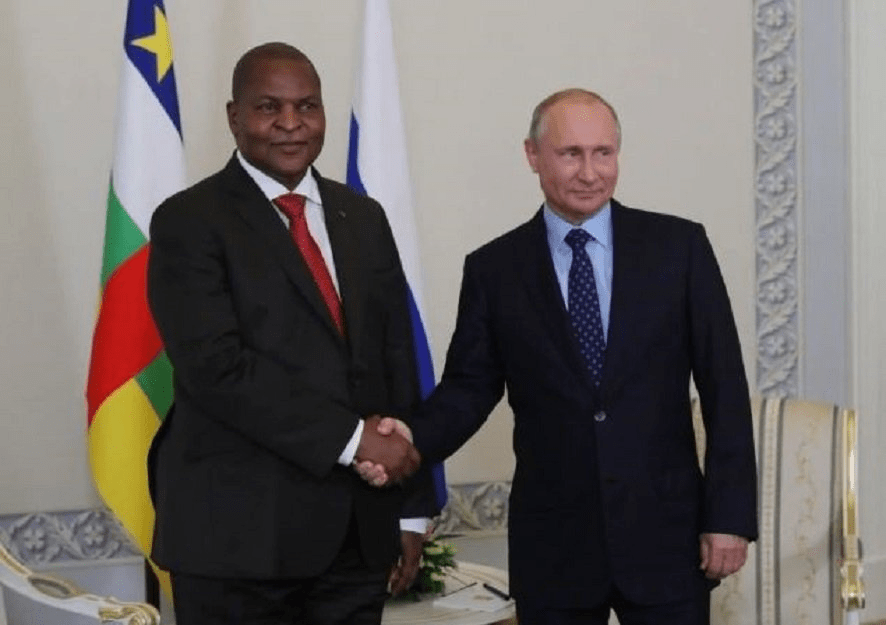
Russia deployed military trainers and weapons to the Central African Republic earlier this year after signing a bilateral agreement with the new president elected in 2017, Faustin-Archange Touadera. Touadera’s visit to Moscow last year resulted in the signing of the agreement which, among other things, includes “mutually beneficial” mining exploration.
Moscow also went beyond UN negotiation efforts to help end the unrest in the country by inviting the armed groups to Khartoum in August for talks with Sudan and they signed a preliminary agreement to end the conflict. Russia also announced another shipment of arms and the deployment of 60 additional military trainers in late October.
The solution adopted by the United States to regain its influence in Africa is to use the aid it provides as bait to get African countries to dance to its music.
“Under our new Africa strategy, we will target U.S. funding toward key countries and particular strategic objectives. All U.S. aid on the continent will advance U.S. interests, and help African nations move toward self-reliance,” said John Bolton.
He stated also that countries that “repeatedly” vote against the United States in international forums or “take action counter to U.S. interests” are not entitled to U.S. aid.
Bolton said the U.S. is revisiting a cold-war era Marshall Plan that “furthered American interests, bypassed the United Nations, and targeted key sectors of foreign economies rather than dissipating aid across hundreds of programs.”
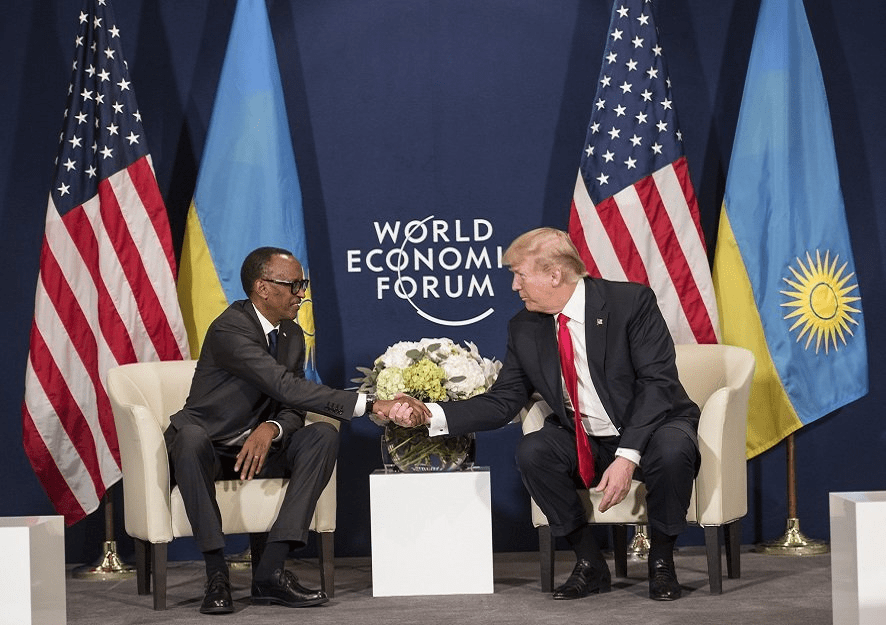
These measures could rather harm U.S. trade interests in Africa which China and Russia are already beneficiaries. An example is a decision by Donald Trump to suspend Rwanda’s duty-free benefits to export clothes to the U.S. under African Growth and Opportunity Act (AGOA).
The suspension follows the East African country’s refusal to reduce tariffs on used clothes imports and to cancel plans to ban used clothes imports by 2019.
The Rwandan government’s response to the suspension was simply to help affected local garments companies to “transition to new markets” as they are already being introduced to European buyers.
The United States has released its new “Prosper Africa” strategy on Thursday aimed at advancing American and African prosperity through the improvement of trade and commercial ties.
President Donald Trump said the new strategy hopes to “extend our economic partnerships with countries who are committed to self-reliance and to fostering opportunities for job creation in both Africa and the United States.”
However, details of the new strategy laid out by national security adviser, John Bolton, in remarks at the Heritage Foundation did not look progressive and beneficial to Africa like previous U.S. government strategies toward Africa.
“Under our new approach, every decision we make, every policy we pursue, and every dollar of aid we spend will further U.S. priorities in the region,” he said while naming three core U.S. interests on the continent including; advancing U.S. trade and commercial ties with African nations; countering the threat from Radical Islamic Terrorism and ensuring that U.S. taxpayer dollars for aid are used efficiently and effectively.
Here are three things that the new “Prosper Africa” strategy highlighted by Bolton will cut back from Africa.
Reevaluation of U.S. support for UN peacekeeping missions
The United States national security adviser John Bolton categorically stated that it will not support U.N. peacekeeping missions in Africa which he described as “unproductive, unsuccessful, and unaccountable”.
The United States will no longer provide indiscriminate assistance across the entire continent, without focus or prioritization … And, we will no longer support unproductive, unsuccessful, and unaccountable U.N. peacekeeping missions.
“We want something more to show for Americans’ hard-earned taxpayer dollars,” he added.
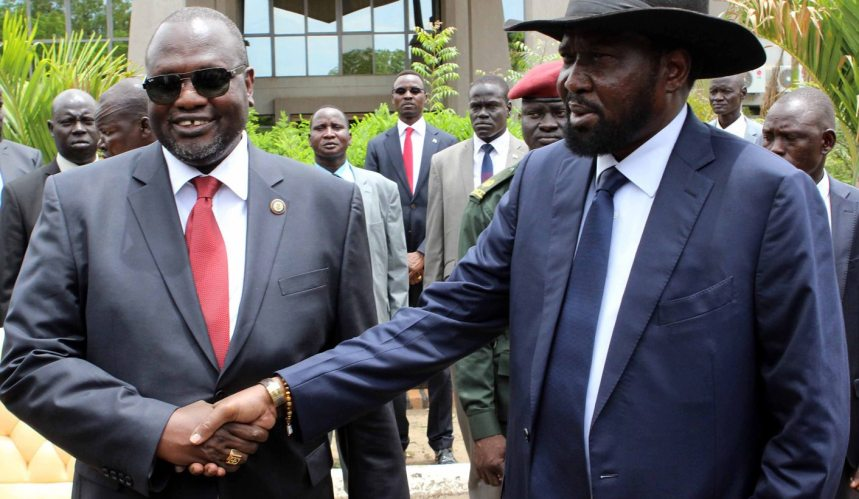
South Sudanese president Salva Kiir (R) and rebel leader Riek Machar (L)
Reevaluation of aid offered to some African countries
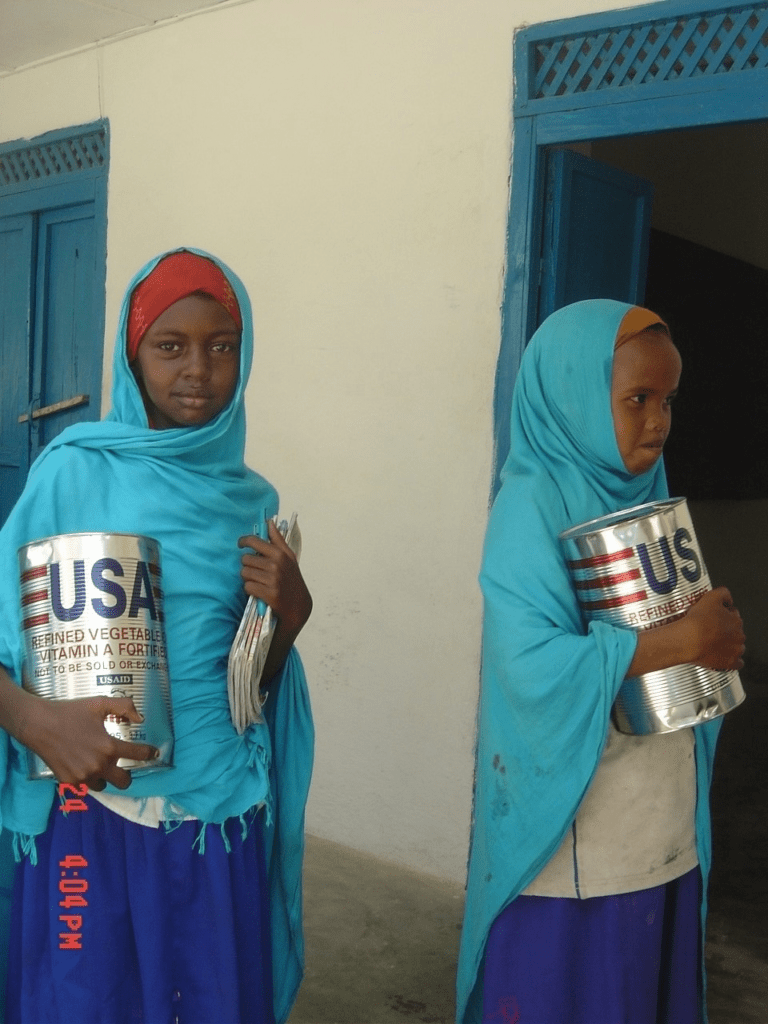
The United States is cutting aid to some African countries including Sudan whose government it finds troublesome.
“Under our new Africa strategy, we will target U.S. funding toward key countries and particular strategic objectives. All U.S. aid on the continent will advance U.S. interests, and help African nations move toward self-reliance,” says the national security adviser John Bolton.
He added that the United States is reviewing its assistance to South Sudan and will not provide loans or resources to a South Sudanese government “led by the same morally bankrupt leaders, who perpetuate the horrific violence and immense human suffering in South Sudan.”
He also stated that countries that “repeatedly” vote against the United States in international forums or “take action counter to U.S. interests” are not entitled to U.S. aid.
This decision will affect the independence of African countries at international level where they have to take strategic position on issues.
Photo: Wiki CC
Stricter rules and requirements for countries seeking aid
The United States says it is revisiting a Cold War Marshall Plan to bypass the United Nations and target key sectors of foreign economies to provide aid that will advance U.S. interests and “move recipient states toward self-reliance, and prevent long-term dependency.”
National security adviser John Bolton stated that countries that are less needy recipients should graduate from foreign assistance while adding that countries and organizations making poor policy choices will be denied assistance.
This article by Ismail Akwei was first published on face2faceafrica.com
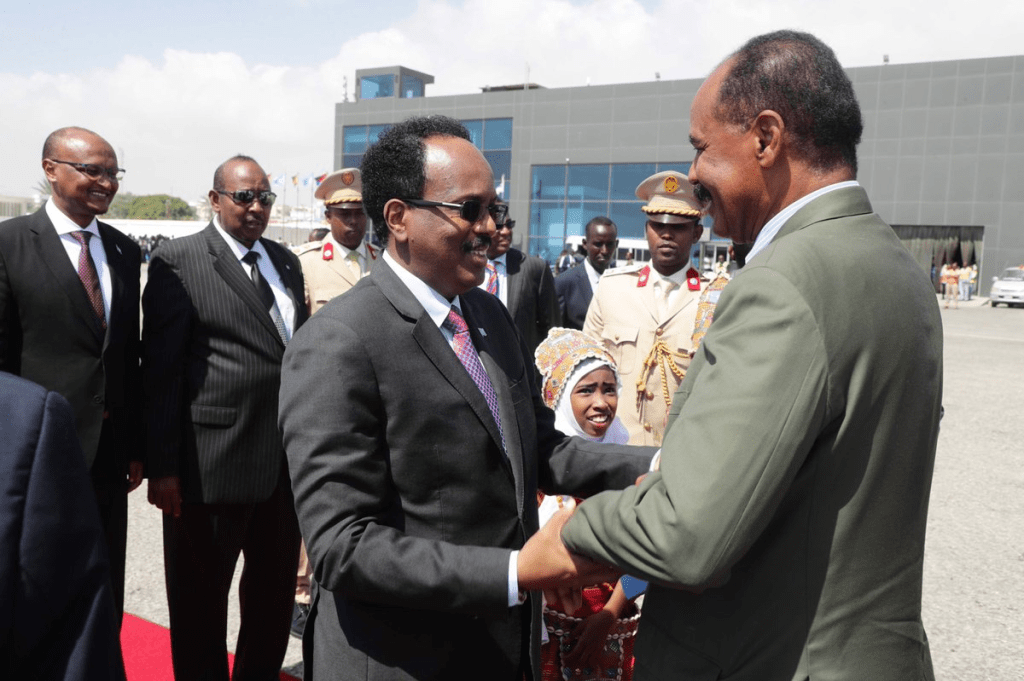
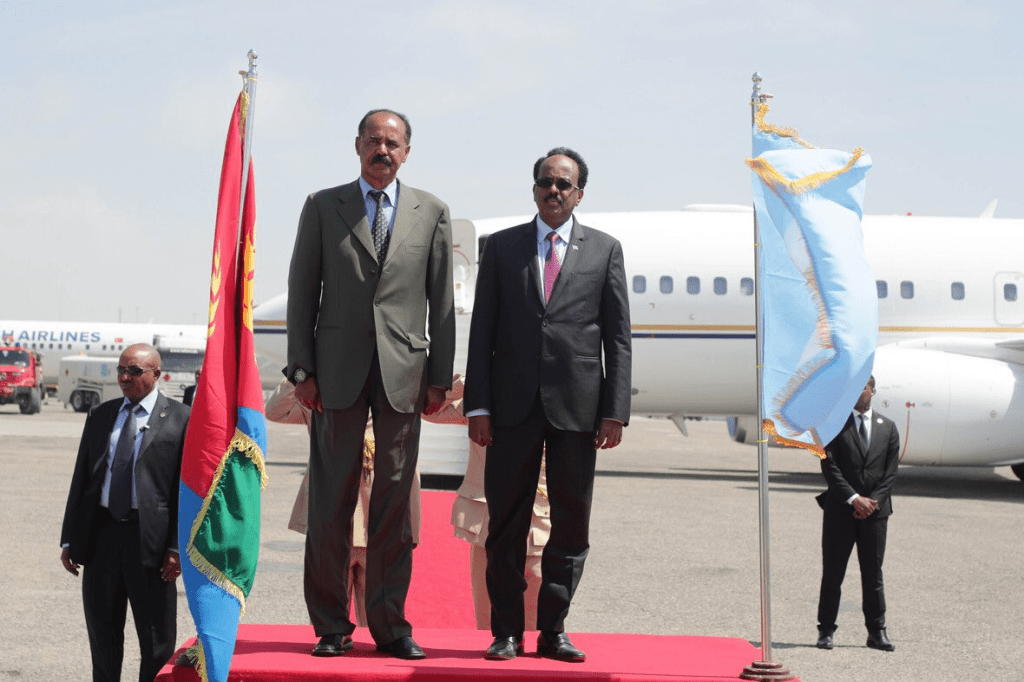
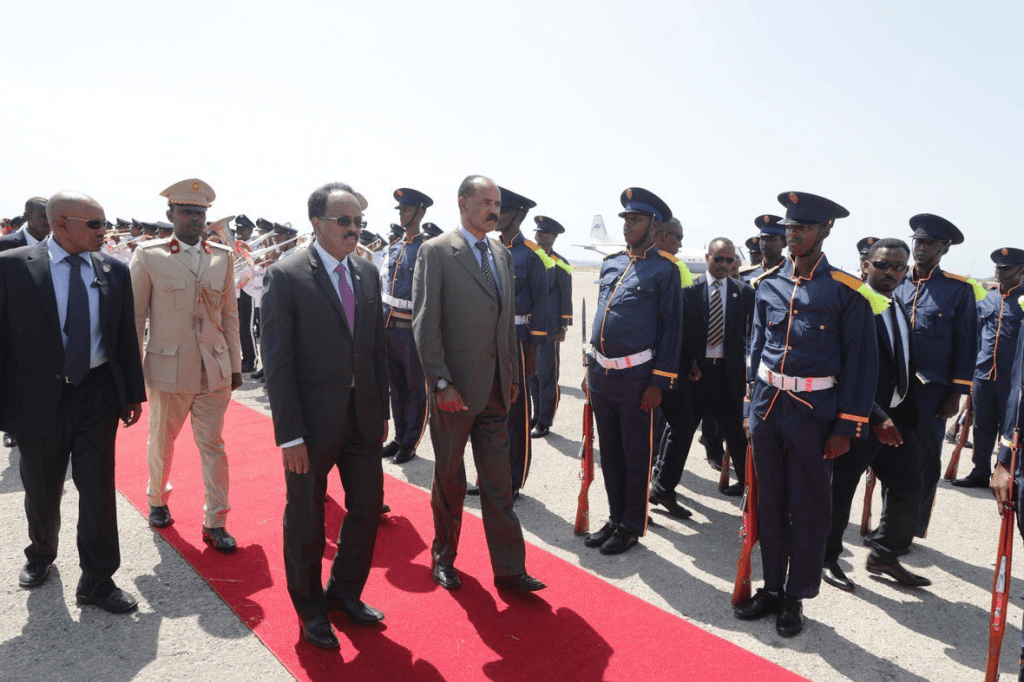
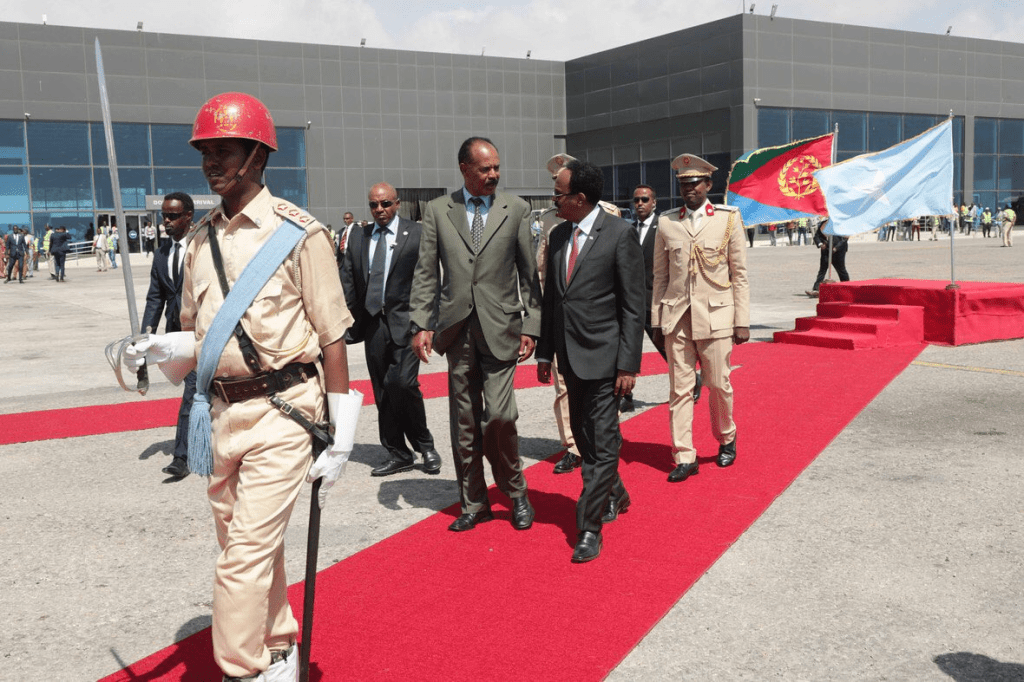
Months after Horn of Africa neighbours Eritrea and Ethiopia opened their borders to each other and mended diplomatic ties, Eritrea has again opened up to Somalia through the first visit of President Isaias Afwerki since he assumed office in 1993.
Afwerki landed in Mogadishu on Thursday to boost diplomatic relations and explore areas to cooperate in security and investment, says a statement from Somalia President Mohamed Abdullahi’s office, cited by Reuters.
It is a great honour to welcome President Isaias Afwerki to #Mogadishu today on this historic visit. #Somalia and #Eritrea have a historic bond of friendship which we will transform into modern opportunities for our two brotherly peoples. Soo Dhawoow Mudane Madaxweyne! pic.twitter.com/kOllwaC4vM
According to a tweet by the Eritrean Information Minister Yemane Meskel, “President Isaias’s historic visit is part and parcel of the consultative Tripartite Summits of the Heads of State and Government of Eritrea, Ethiopia and Somalia.”
Leaders of the two countries had pledged to mend ties in July following the improved diplomatic relations between Eritrea and Ethiopia. Somalia and Eritrea have for over a decade traded accusations of either party supporting anti-government insurgents.
In 2007, Eritrea walked out of the East African bloc IGAD in protest as Ethiopian forces entered Somalia to fight militants, reports Reuters.
Ethiopian Prime Minister Abiy Ahmed charted the Horn of Africa diplomatic restoration path after the historic visit to Eritrea in July where he met President Isaias Afwerki and they mended ties which were broken since 1998 when a border war at Badme broke out.
Afwerki also paid his first visit to Ethiopia a week after Abiy’s gesture and the borders were opened, phone lines were opened, flights between the two countries resumed, seaports were opened and embassies were re-opened in their respective capitals.
Here are photos of the Eritrean president’s first visit to Somalia.
This article by Ismail Akwei was first published on face2faceafrica.com
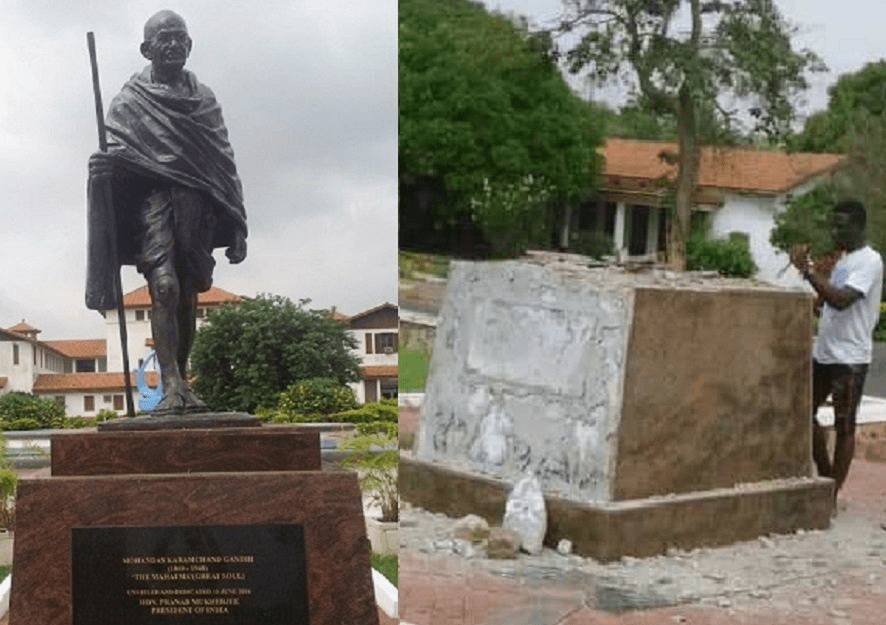
Gandhi statue pulled down from the University of Ghana — Photo: Radio Univers
Acontroversial Mahatma Ghandi statue in the University of Ghana has been pulled down two years after protests by a group of academics and supporters who wanted the statue removed.
The protests started three months after the Indian independence icon’s statue, donated by the Indian government, was unveiled in the main quadrangle of the university’s campus in Accra.
With the hashtag #GandhiMustFall, the protests turned into a movement spearheaded by a former director of the university’s Institute of African Studies (IAS), Professor Akosua Adomako Ampofo, who described the Indian activist as a racist whose statue had no place in the Ghanaian university.
“At world class universities, even former bastions of slavery, apartheid and white supremacy, statues and other symbols associated with controversial persons have been pulled down or removed,” read the petition signed by thousands of people including professors of the university.
It detailed several writings of Gandhi and speeches that were racist and also his “campaign for the maintenance of the caste system right up to his death”.
“We are of the view that if there should be statues on our campus, then, first and foremost, they should be of African heroes and heroines, who can serve as examples of who we are and what we have achieved as a people,” it added.
Ghana’s government later agreed to relocate the statue from the university campus “to ensure its safety and to avoid the controversy”. The country’s foreign affairs ministry did not state the details of its relocation.
“Acknowledging that human as he was, Mahatma Gandhi may have had his flaws, we must remember that people evolve,” the ministry added at the time.
Detail of the removal of the statue from the university after two years is still unknown and local media report that the university security who pulled down the statue only said they had “received an order from above”.
In October, a court in Malawi halted the erection of another Gandhi statue in the commercial capital after local Gandhi Must Fall protesters filed a lawsuit the statue which is part of a $10 million construction deal with the Indian government.
The protesters gave 18 grounds against the statue which was part of a deal to build a convention centre in Blantyre.
Why Mahatma Gandhi is being called racist?
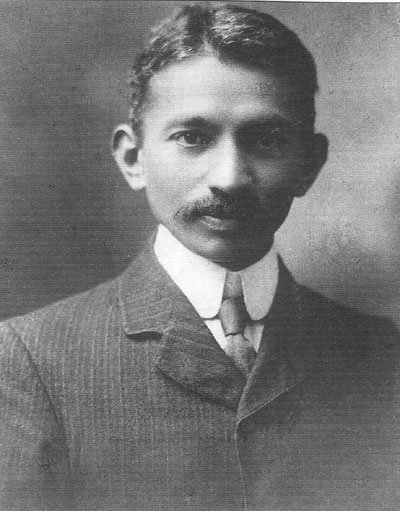
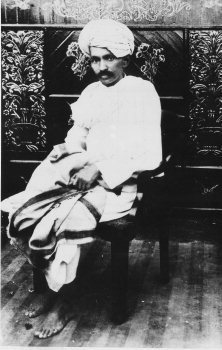
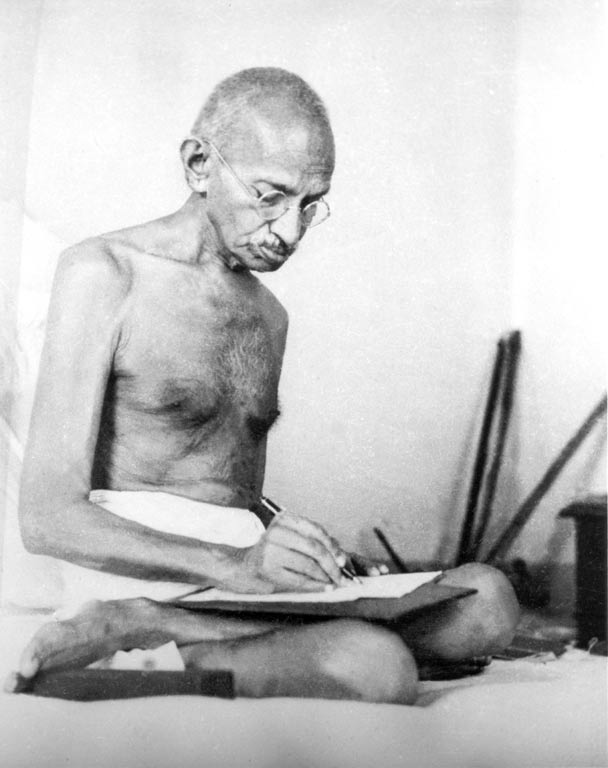
Widely remembered as an influential revolutionary who played a very important role during India’s struggle for independence from Britain, Mahatma Gandhi expressed resentments towards black people and made racist comments in his writing.
After graduating as a lawyer from the prestigious Inner Temple in London, Gandhi moved to South Africa and served as an expatriate lawyer, representing resident Indian communities in their struggle for civil rights.
He spent 21 years in South Africa and just like other people of colour, he suffered his fair share of discrimination. That, however, did not change his views about black people being inferior.
Here are some of his discriminatory citations including calling black South Africans the racist and derogatory “K” word.
“Ageneral belief seems to prevail in the Colony that the Indians are little better, if at all, than savages or the Natives of Africa. Even the children are taught to believe in that manner, with the result that the Indian is being dragged down to the position of a raw Kaffir [derogatory term used to describe black people in South Africa].”
“In the face, too, of financial operations, the success of which many of their detractors would envy, one fails to understand the agitation which would place the operators in the same category as the half-heathen Native and confine him to Locations, and subject him to the harsher laws by which the Transvaal Kaffir [derogatory term used to describe black people in South Africa] is governed.”
“So far as the feeling has been expressed, it is to degrade the Indian to the position of the Kaffir [derogatory term used to describe black people in South Africa] .”
“Ours is one continual struggle against a degradation sought to be inflicted upon us by the Europeans, who desire to degrade us to the level of the raw Kaffir [derogatory term used to describe black people in South Africa] whose occupation is hunting, and whose sole ambition is to collect a certain number of cattle to buy a wife with and, then, pass his life in indolence and nakedness.”
“Your Petitioner has seen the Location intended to be used by the Indians. It would place them, who are undoubtedly infinitely superior to the Kaffirs [derogatory term used to describe black people in South Africa], in close proximity to the latter.”
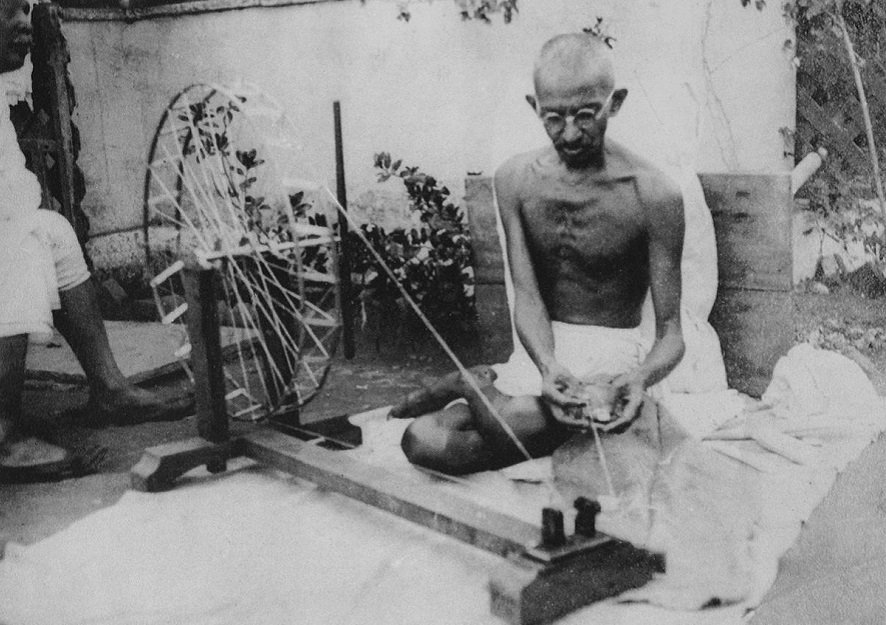
Mahatma Gandhi
“The Boer Government insulted the Indians by classing them with the Kaffirs [derogatory term used to describe black people in South Africa].”
This article by Ismail Akwei was first published on face2faceafrica.com






 Ismail Akwei