The two Jamal Khashoggis of Africa who were killed in 2018 for doing their job

African journalists killed in 2018

2018 has been a year of grief for many journalists and the news fraternity who faced attacks, imprisonment and murder for doing their work as journalists and media workers.

According to the annual report of the Committee to Protect Journalists (CPJ), 53 journalists have been killed in 2018 and this number represents those killed with a confirmed motive. 23 others were killed due to an unconfirmed motive.

For Reporters Without Borders, at least 63 journalists were killed doing their jobs in 2018, a 15 percent increase over last year. The United States was mentioned as the latest addition to the world’s five deadliest countries for journalists where there is no war or conflict.

The most intriguing murder in 2018 was the killing of Saudi journalist Jamal Khashoggi who was a critic of Saudi Crown Prince Mohammed bin Salman. He was killed in October inside the Saudi consulate in Istanbul, Turkey, a year after he moved to the United States and began writing for The Washington Post.

His death further exposed the rot in the Saudi Kingdom he’s been writing about which the main suspect of his killing, Mohammed bin Salman, is accused of being the mastermind.

Meanwhile, other journalists in Africa were killed for the same reasons as Khashoggi – for doing their jobs and exposing the ills of their communities as well as those behind them.

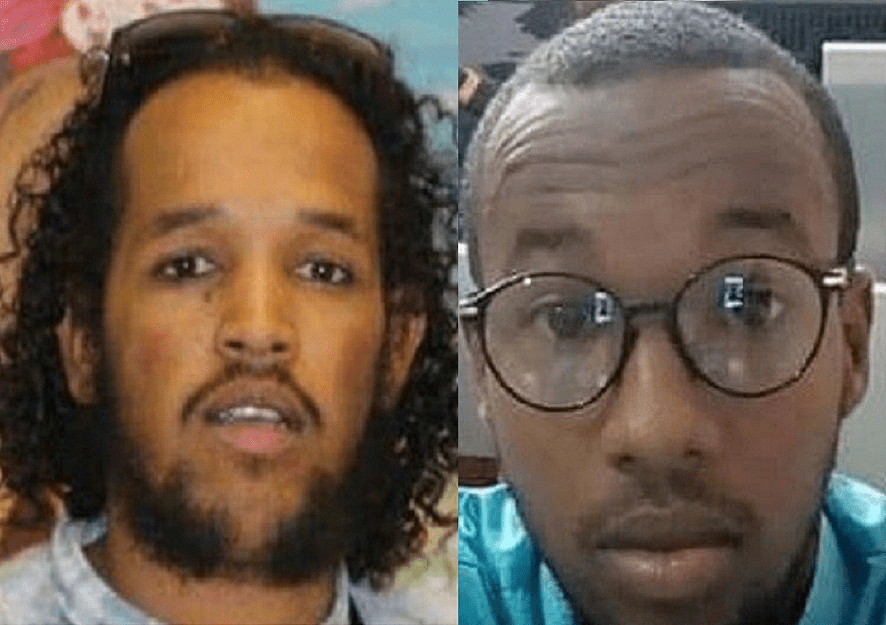
As compiled by the CPJ, here are the two African journalists who were killed in 2018 for doing their job.
His death further exposed the rot in the Saudi Kingdom he’s been writing about which the main suspect of his killing, Mohammed bin Salman, is accused of being the mastermind.

Meanwhile, other journalists in Africa were killed for the same reasons as Khashoggi – for doing their jobs and exposing the ills of their communities as well as those behind them.

As compiled by the CPJ, here are the two African journalists who were killed in 2018 for doing their job.

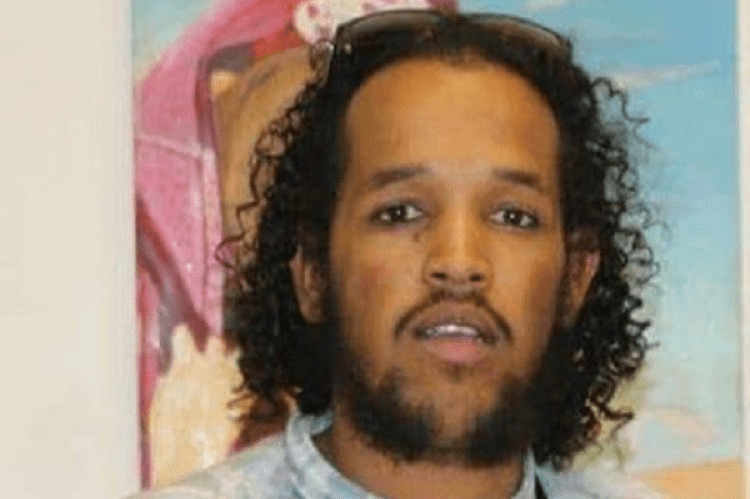
Musa Abdul Kareem – Libya

24-year-old Musa Abdul Kareem was an editor and photojournalist for the local newspaper, Fasanea. He was abducted and killed on July 31, 2018.

According to the Libyan Center for Freedom of the Press, armed, masked men in two civilian vehicles captured Abdul Kareem after he left his home.

An unidentified passerby found the journalist’s body hours later, blindfolded and hands bound, near the Sabha Health Institute and notified local security forces.

His body had 13 bullet wounds and bore signs of torture, according to the privately owned TV station Al-Nabaa, which quoted Osama al-Wafi, a spokesperson for the Sabha Medical Center.

The last story he wrote was an article he co-authored for Fasanea three weeks before his death that detailed kidnappings and robberies in the city.

No one has been arrested in connection with his killing and the case is still under investigation.

Abdullah Mire Hashi – Somalia

Abdullahi Mire Hashi was gunned down by at least two men on October 27, 2018, in the town of Elisha Bihaya, about 17 km from the Somali capital Mogadishu, according to reports.

The radio journalist was a producer and show host on the privately owned religious station Darul Sunnah.

According to reports, he was shot after attending afternoon prayers at a mosque near his radio station. Abdullahi was “shot twice on the head by unidentified men with pistols,” said a report by HRJ.

The gunmen fled the scene immediately after the attack and Abdullahi died on the way to the hospital after sustaining injuries to his head and his chest.

Local journalists have said Abdullahi had received anonymous phone calls questioning why his station was not broadcasting the militant group Al-Shabaab’s operations in the region.

No one has been arrested as of December 2018 in connection to Abdullahi’s murder.

This article by Ismail Akwei was first published on face2faceafrica.com

Africans join fight to take back Swahili phrase ‘Hakuna Matata’ from Disney

Scene from The Lion King released in 1994/ Disney

Over 37,000 people have signed a petition to get Walt Disney to reverse the trademark of the Swahili phrase “Hakuna Matata” which means “No Worries” or “No Problem”.

Hakuna Matata was registered since 2003 in the United States after the release of the 1994 film, The Lion King, which made the phrase popular. 

Disney’s recent announcement of a live-action remake of The Lion King, which will be released in July 2019, revealed the registration of Hakuna Matata as a trademark and this incensed some Africans who accused the entertainment company of cultural appropriation.

The protesters include Zimbabwean-Canadian activist, Shelton Mpala, who launched an online petition on change.org to reverse Disney’s action.

“I liken this to colonialism and robbery, the appropriation of something you have no right over. Imagine, if we were to go that route, then we owe the British royalties for everyone who speaks English, or France for when we speak French,” he wrote on the petition.

Even in the 1980s, way before the release of The Lion King in 1994, Hakuna Matata was the title of the classic song recorded by Kenyan band Them Mushrooms.

Mpala wants to stop Disney, any corporation and individuals who want to trademark languages, terms or phrases they didn’t invent.

“For hundreds of years, Africa has been exploited in some shape, fashion or form whether its been our arts where we have billions of dollars of African artefacts in museums all over the world, through our natural resources. And this to me looks like one of those things that I will have to fight,” he told the BBC.

For Ngũgĩ wa Thiong’o, Kenyan writer and professor of comparative literature at the School of Humanities at the University of California, Irvine, Disney cannot own a phrase that is used commonly used every day. 

“It would be like trademarking ‘good morning’ or ‘it is raining cats and dogs’ in the case of English … It’s a common phrase we use every other day. No company can own it,” he told NPR in a recent interview saying he was “horrified” by Disney’s claim.

Until Disney decides to cancel the trademark, anyone in the United States – including Africans – would have to pay royalties to print the phrase Hakuna Matata on a T-shirt.

This article by Ismail Akwei was first published on face2faceafrica.com

Do not infantilize Africa, we choose our partners – African Union tells Europe

Photo: Moussa Faki Mahamat

The Chairperson of the African Union Commission (AUC), Moussa Faki Mahamat, has condemned the latest struggle for influence in Africa by Europe, America and Asia describing it as an “infantilization” of an entire continent by the so-called global superpowers.

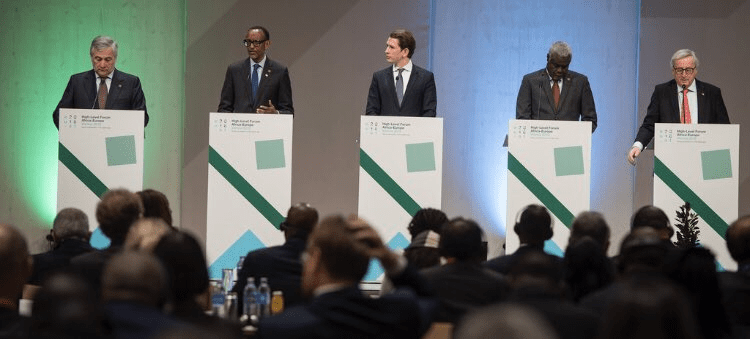
He made the remark in Vienna, Austria, on Tuesday at the High-Level Africa-Europe Forum under the theme: “Taking Cooperation to the Digital Age”.

“Stop this stereotypical idea of Africa as a hapless terrain where Europe, China or others have free rein to battle for influence!

“We choose our partnerships, and create conditions based on mutual interest and benefit. Do not infantilize an entire continent,” he said at the forum in the presence of the President of the European Council Jean- Claude Juncker.

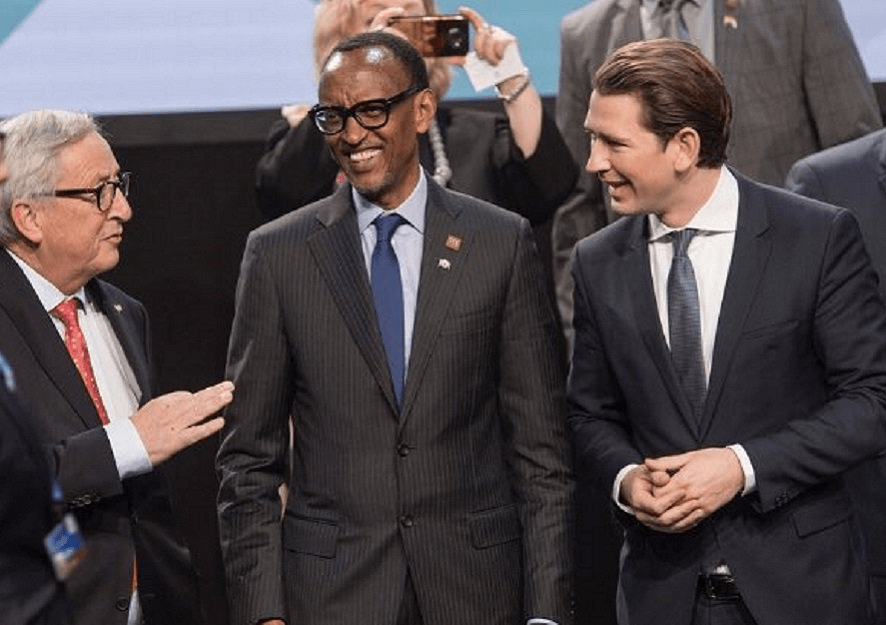
The forum was co-chaired by the African Union Chairman, President Paul Kagame of Rwanda alongside Austria’s Federal Chancellor Sebastian Kurz who is also the president of the Council of the European Union.

Kagame also called for mutual partnership with Europe that will create a win-win situation for everyone and end the old order of giving assistance as a form of generous contribution.

The United States recently released its new Africa Strategy which attacked China and Russia’s influence in the continent describing it as “predatory” and “corrupt”.

“China uses bribes, opaque agreements, and the strategic use of debt to hold states in Africa captive to Beijing’s wishes and demands. Its investment ventures are riddled with corruption, and do not meet the same environmental or ethical standards as U.S. developmental programs.

“Such predatory actions are sub-components of broader Chinese strategic initiatives, including “One Belt, One Road”—a plan to develop a series of trade routes leading to and from China with the ultimate goal of advancing Chinese global dominance,” explains the U.S. national security adviser John Bolton.

He also accused Russia of selling arms and energy in exchange for votes at the United Nations that “run counter to the best interests of the African people” while positing the United States as the saviour who will “safeguard the economic independence of African states” and “protect U.S. national security interests”.

The strategy, however, came with restrictions for African states using aid to get them to dance to their music.

Bolton stated that countries that “repeatedly” vote against the United States in international forums or “take action counter to U.S. interests” are not entitled to U.S. aid.

Bolton said the U.S. is revisiting a cold-war era Marshall Plan that “furthered American interests, bypassed the United Nations, and targeted key sectors of foreign economies rather than dissipating aid across hundreds of programs.”

These measures could rather harm U.S. trade interests in Africa which China and Russia are already beneficiaries after signing bilateral agreements and win-win partnerships with many African nations.

This article by Ismail Akwei was first published on face2faceafrica.com
Mutually beneficial partnership or no deal – Rwanda’s Kagame speaks for Africa

Photo: Rwandan Presidency

Rwandan president Paul Kagame has called for a redefinition of the relationship between Europe and Africa aimed at mutually beneficial partnership rather than the old order of “generosity” to the continent.

“Africa has resources that can be brought into partnerships with Europe which bring a win-win situation for everyone. In my view we should have a conversation about what Africa brings to the partnership and how what Europe has been offering can be offered differently, so that we get the results we want.

“Europeans should view Africans as partners and not beneficiaries of their generosity. People of Africa have to be able to look after themselves and look at what is required to meet global demands and the expectations of our people,” he said at the High-Level Africa-Europe Forum in Vienna, Austria on Tuesday.

Kagame co-chaired the forum in his capacity as the African Union Chairman, alongside Austria’s Federal Chancellor Sebastian Kurz who is also the president of the Council of the European Union.

Held under the theme, Taking Cooperation to the Digital Age, Kagame explained further that a mutually beneficial partnership will also address critical global concerns such as migration by boosting innovation and private-sector exchange that will among other things create jobs for young citizens.

“We are not going to measure success solely in terms of migration statistics. A much better yardstick is how creating high-quality, digital jobs in Africa will also boost job growth in Europe. After all youth employment is an urgent priority for both our continents,” he said.

Kagame said Africa is preparing to grow its economy through initiatives including the Continental Free Trade Area Agreement which will liberalize trade on the continent and link Africa’s digital infrastructure.

He also said at a Political Leaders meeting that all nations need to look past any differences that may exist among them and to build on positive elements.

“We want to address and transcend the past by looking forward, and also transcend any differences that exist within or across nations for various reasons, while building on the positive elements of our shared historical inheritance,” he was quoted by local Rwandan media New Times.

He stressed on the importance of a solid partnership that will deal with critical global issues such as security, migration, climate change and economic progress without being affected by political rivalries.

The forum was attended by Heads of State and Government, CEOs, the African Union Commission Chairperson Moussa Faki Mahamat and the President of the European Council Jean- Claude Juncker.

This article by Ismail Akwei was first published on face2faceafrica.com
Zambian police terminate recruitment of 8 Chinese nationals after public outcry

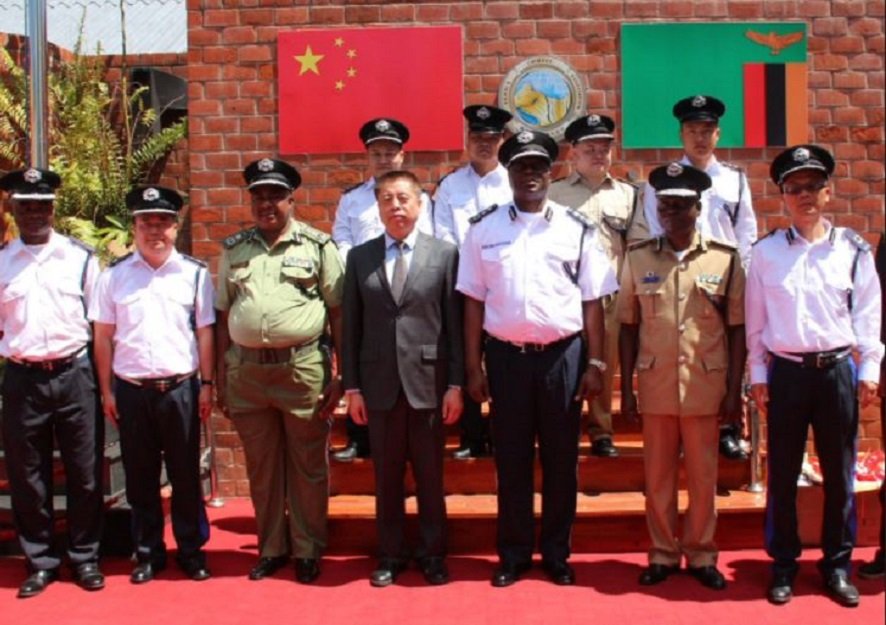
Zambian IGP (middle) with recently recruited Chinese nationals — Photo Credit: Jean Mandela

There was a public outcry on Monday after the recruitment of eight Chinese nationals from the Zambia-based Chinese community into the Zambian Police Service reserve unit.

The Inspector-General of Police Kakomba Kangana rescinded the decision a day after commissioning the newly uniformed reserve officers at a ceremony in the capital Lusaka where the Chinese community presented two cars to the police service.

Some of the recently recruited Chinese nationals — Photo Credit: Jean Mandela

The decision raised the arguments of legality especially when the Chinese reserves will have the power to arrest and detain suspects.

Renowned Zambian lawyer Dickson Jere argued on Monday that the recruitment of the Chinese nationals is a violation of the constitution which forbids dual citizens from taking part in national security assignments, he is quoted by local news portal Lusaka Times.

“So you stop your own citizens from joining the police because they have dual citizenship and yet you allow Chinese who have no links whatsoever to this soil to be part of the same police service,” he cites Article 194 (a) of the constitution.

He also questioned the police standing orders that prevent officers from marrying foreigners while Chinese nationals are being enlisted into the service.

Police spokesperson Esther Katongo denied the claims that their decision was in contravention of the constitution.
“These are police reserves. The Police Reserves are backed by cap 117 of the Laws of Zambia known as the Zambia Police Reserve Act. The reserves are there to assist the Zambia Police in maintaining Law and order. They are also vital in Community Policing. The Law does not segregate on race. Police reserves put on police uniforms,” she was quoted by Lusaka Times.

She added that they will not work alone but under the supervision of regular police officers.
The explanations did not sit well with Zambians on social media whose outrage got the police to backtrack on the decision.

Below are some comments and reactions sampled from Twitter.

Zambia employs Chinese police officers.

Coming to a Kenya near you? #Resist https://t.co/aIlw40GXx5

— Lagaless, HSC. ?? (@lagaless) December 19, 2017

This article written by Ismail Akwei was first published on face2faceafrica.com