At 6 years old, South African DJ Arch Jnr has already attained global fame and to top it all off, he flew to the United States where he competed in the champions edition of America’s Got Talent show and impressed the judges.
DJ Arch Jnr, real name Oratile Hlongwane, got the thousands of people in the Pasadena Civic Auditorium in California and the millions watching the show on television to get on their feet and dance to his turntable magic.
He opened his performance with Rob Base & DJ EZ Rock’s 1988 hit song It Takes Two and slid in the 1995 classic This Is How We Do It by Montell Jordan to the cheer of the audience and judges. He went on and on electrifying the audience who didn’t want him to stop.
The cheer is not new to DJ Arch Jnr who is the winner of South Africa’s Got Talent in 2015 when he was only 3 years old. What’s new is the great feedback he received from the judges who were captivated by his performance.
“You are by far the coolest 6-year-old I have ever met in my life. You really are and I have four kids and i know what I am talking about. I thought you were incredible and I wish you good luck today,” said judge Heidi Klum.
For no-nonsense Simon Cowell: “You and I need to be talking after the show because I have got some plans for you, trust me. I think you are total total little star, I absolutely love you.”
DJ Arch Jnr was officially named as the world’s youngest DJ in September 2017 by the Guinness World Records after he played on professional DJ decks at the Platinum Lounge Bar in Cosmo City, Johannesburg, South Africa, to an audience of 100 people.
He took the title from six-year-old Itsuki Morita from Japan, who was announced as the record holder in March 2017.
DJ Arch Jnr started DJing when he was just eight months old, after his father bought him an iPad Mini. He played on DJ apps and got better and better.
This article by Ismail Akwei was first published on face2faceafrica.com
Italian deputy prime minister who is also labour and economy minister, Luigi di Maio, has accused France of fuelling migration by continuously colonizing dozens of African countries leaving them impoverished.
He made the remark during a visit to central Italy at the weekend after France criticised Italy for not allowing rescue boats carrying migrants in the Mediterranean to dock following the United Nation’s claim that about 170 migrants were feared drowned in two separate Mediterranean shipwrecks.
“The EU should impose sanctions on France and all countries like France that impoverish Africa and make these people leave, because Africans should be in Africa, not at the bottom of the Mediterranean,” he was quoted by the BBC.
“If people are leaving today it’s because European countries, France above all, have never stopped colonising dozens of African countries,” added the leader of the Five Star Movement (M5S) which is a member of the right-wing ruling coalition that has been described as racist for its strong stance against migrants.
Di Maio’s statement angered France which summoned the Italian ambassador to France, Teresa Castaldo, to the foreign ministry in Paris on Monday.
Di Maio reiterated his statement on Monday following the summoning by saying France would be a failed economy if not for Africa’s help. He also supported the yellow vest protesters in France urging them not to give up, reports BBC.
“France is one of those countries that by printing money for 14 African states prevents their economic development and contributes to the fact that the refugees leave and then die in the sea or arrive on our coasts … If Europe wants to be brave, it must have the courage to confront the issue of decolonisation in Africa,” he said.
Salvini, who heads the Italian League party that holds a tough stance against immigration, made the racist remark in September 2018, in response to a public statement implying that Italy needed immigrants because the population was ageing.
Cécile Kyenge will face trial in the northern city of Piacenza over comments made in an interview during a social democratic event when she reacted to a photograph posted on social media by Roberto Calderoli, a former senator of the far-right League party depicting her as an orangutan.
The ridiculous lawsuit follows her 2017 victory in a four-year legal battle against an Italian member of the European Parliament, Mario Borghezio who was found guilty of defamation and racial hatred during a radio interview in 2013.
Since the far-right coalition party’s assumption of office in June 2018, racist attacks, especially against African migrant workers, have gone up.
In an attack on June 11, 2018, two Malian refugees who were living in a migrant centre near Caserta, a city north of Naples, were shot from a vehicle by supporters of Matteo Salvini who had shouted slogans in support of him, they told local media.
In August 2018, 32-year-old Senegalese street vendor Cisse Elhadji Diebel was shot three times in Naples by two strangers on a scooter by the central train station. According to Italian weekly L’Espresso, at least 33 attacks were perpetrated across the country in the past two months.
Italians are quick to dismiss racist attacks against African migrants and the police do not ensure justice despite protests regularly sparked by attacks.
Matteo Salvini is behind the blocking of a humanitarian rescue boat carrying 60 migrants rescued off Libya in July 2018. He stated clearly that they were not welcome.
Italy is one of the biggest recipients of migrants arriving in Europe mainly from Africa.
This article by Ismail Akwei was first published on face2faceafrica.com
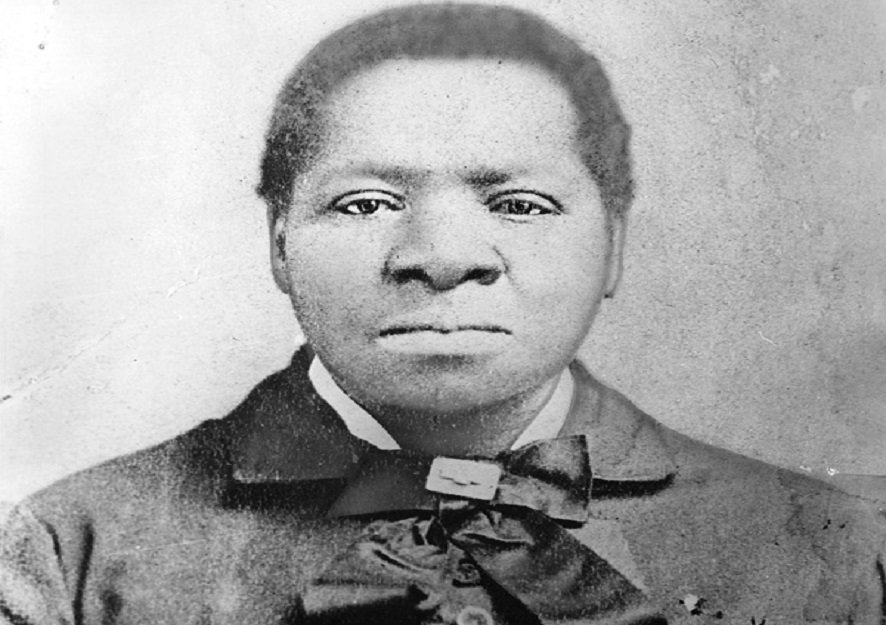
Bridget “Biddy” Mason, the slave who won a freedom suit in 1856
Mississippi-born slave Bridget “Biddy” Mason filed a suit in a Los Angeles court on January 19, 1856, against her master to secure her freedom and that of her extended family.
Her last owner, Robert Smith, was a Mississippi Mormon convert who followed the call of church leaders to settle in the West. He moved with Mason and other slaves on a religious pilgrimage to establish a new Mormon community in what would become Salt Lake City, Utah which was at the time part of Mexico.
Their 300-wagon caravan arrived at Holladay-Cottonwood area of the Salt Lake Valley after 1,700 miles in 1848. Among the duties of Biddy who was walking behind the caravan throughout the journey was to serve as a midwife, cook, cattle herder among others.
They stayed there until 1851 when the Mormon slave master moved them again in a 150-wagon caravan to San Bernardino, California where slavery was illegal. He moved there to establish another Mormon community.
Biddy was counselled on her way to the free state by freed slaves Charles H. and Elizabeth Flake Rowan, who urged her to legally contest her slave status. She was also encouraged by her new friends in California Robert and Minnie Owens who were free.
On sensing danger, Robert Smith decided to move his caravan and slaves to Texas in 1855 where slavery was legal. They were stopped in Cajon Pass, California by the Owens family and other friends and cowboys who had told the Los Angeles County Sheriff that slaves were being illegally held.
The Owens were more interested in the freedom of Bridget “Biddy” Mason’s family because their son was romantically involved with Biddy’s 17-year-old daughter.
Their apprehension was followed by the suit filed in 1856 at the Los Angeles District court by Biddy seeking her freedom and that of her extended family comprising 13 women and children.
After three days, Judge Benjamin Hayes handed down his ruling in favor of Briddy and her extended family backed by California’s 1850 constitution which prohibited slavery.
They then moved to Los Angeles where her daughter married the son of Robert and Minnie Owens. Bridget “Biddy” Mason continued to work as a midwife and nurse. She saved her money and bought a land in what is now downtown Los Angeles.
Biddy also set up the first A.M.E. Church which is the oldest African American church in the city. Her children were educated and she supported the entire Los Angeles community with her wealth as a philanthropist. Bridget “Biddy” Mason died in Los Angeles in 1891.
This article by Ismail Akwei was first published on face2faceafrica.com
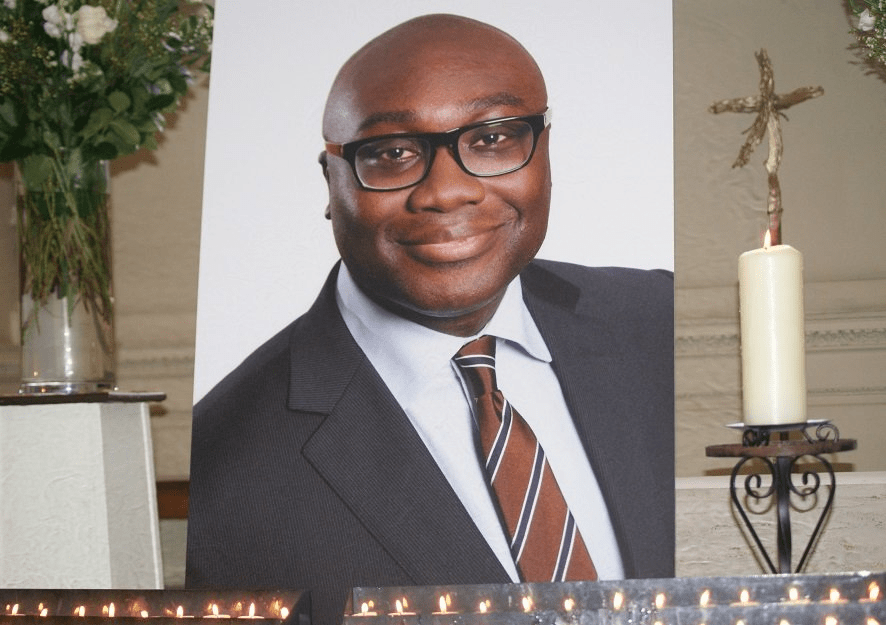
It’s been five years since the world lost Africa’s finest journalist, Komla Afeke Dumor, who died on January 18, 2014, at the age of 41.
The revered Ghanaian broadcaster suffered a cardiac arrest in London where he was working as the pioneer presenter of the British Broadcasting Corporation (BBC) World News programme, Focus on Africa, which launched in 2012.
He was likeable and carried along his Africanness wherever he went and in whatever he did, even at the BBC. It will be an understatement to describe Komla Dumor as a rising star because he was already etched in the galaxy of the world’s big names. He was also a role model and an inspiration to many young African journalists.
The BBC could not afford to let him go out of its heart hence the creation of the Komla Dumor Award which is presented to outstanding journalists living and working in Africa, with strong journalism skills, on-air flair, and an exceptional talent in telling African stories.
The requirements for the award where exactly who Komla Dumor was, as evidenced by his beginnings in the world of broadcasting. Komla was born in Accra on October 3, 1972, to academician parents.
His father, Ernest Dumor, was a professor of sociology and his mother, Cecilia Dumor, was an educationist, editor and writer of children’s books who influenced Komla to take up journalism.
He attended St Thomas Secondary School in Kano State, Nigeria, and then qualified to study medicine in the late 1980s at the University of Jos in Plateau State. However, Komla returned to Ghana where he enrolled at the University of Ghana for a degree course in sociology and psychology. He continued his education at Harvard University where he earned a master’s degree in public policy.
While at the University of Ghana, Komla started his career as a traffic reporter with Joy FM where he nursed his goal of challenging corruption in the public sector.
He started by riding a motor scooter through the streets of Ghana’s capital, Accra, to inform Joy FM listeners of how to beat traffic jams and then racing off to attend lectures at the University of Ghana.
He had already become a household name before the station offered him the role of host of its morning show in 2000. It was a memorable period for many Ghanaians and journalists especially because of the democratic transfer of power as the country elected an opposition leader to succeed former military leader Jerry John Rawlings.
Komla Dumor’s outstanding work as a journalist during those years won him the Ghana Journalists Association’s Journalist of the Year award in 2003.
To make a global impact, Komla accepted an offer from BBC in 2006 and moved to London to work for the African service. In three years, he became the pioneer presenter of the monthly Africa Business Report which took him around the continent.
As a strategy to gain more ground in Africa, the BBC launched Focus on Africa in 2012 with Komla Dumor as it first host. A seat he filled until his death.
Komla’s moments with the BBC were timeless and Africans loved their stories being told in the best light with a balance, which is exactly what Komla Dumor stood for. He was listed among the top 100 most influential personalities in Africa in 2013 by the New African magazine.
“There’s so much more to tell about Africa than the usual stories about war, famine and disease.”
“Hire the best talent to tell the story, or the view is great from my hotel.”
“There is only one standard – a global standard. Be consistent, operate at 100% every single time you’re given an opportunity.”
“You can always have big dreams but you also have to have the patience to achieve them. You can make it wherever you are.”
These were some quotes from Komla Dumor and they reflect his fine personality that Africans can’t get enough of. The continent is indeed missing him and his powerful voice and cheerful smile.
Komla Dumor left behind three children: Elinam Makafui, Emefa Araba and Elorm Efadzinam. He married Kwansema Quansah, a lawyer, in 2001.
Komla Dumor’s family
This article by Ismail Akwei was first published on face2faceafrica.com
Since January 17, 1961, no one has been held accountable for the brutal murder of Congo’s independence leader and first prime minister Patrice Lumumba who was shot dead with two of his ministers, Joseph Okito and Maurice Mpolo.
However, all fingers point to multinational perpetrators who sanctioned the elimination of one of Africa’s bravest politicians and independence heroes who stood his ground against colonizers.
He led the Democratic Republic of Congo to independence on June 30, 1960, after the country was passed on from King Leopold II, who took control of it as his private property in the 1880s, to Belgium in 1908 as a colony.
Lumumba was inspired by the independence movement of Africa after attending the All-African Peoples’ Conference in Ghana in 1958. This spurred him on to organise nationalist rallies in his country resulting in deadly protests that got him arrested and later released to negotiate Congo’s independence.
Independence came with lots of problems including a political divide and an unapologetic Belgium led by King Baudouin who minced no words during the independence declaration while praising his predecessor, the brutish King Leopold II.
“Don’t compromise the future with hasty reforms, and don’t replace the structures that Belgium hands over to you until you are sure you can do better. Don’t be afraid to come to us. We will remain by your side and give you advice,” he said.
An outraged Lumumba rather gave a damning speech highlighting “humiliating slavery, which was imposed upon us by force.” This heightened Belgium’s disinterest in Lumumba whose government was already being opposed by his political rival and president Joseph Kasavubu.
Only three months into the new and independent Congo, soldiers mutinied against Belgian commanders who refused to leave and some regions, including the mineral-rich Katanga and South Kasai, rebelled against the central government and seceded with the backing of Belgian troops who were sent to protect their interests.
The Congolese government called for the United Nation’s help and a resolution was passed by the Security Council calling on Belgium to withdraw its troops. UN peacekeepers were sent into the Congo to restore order and “use force in the last resort” to secure the country’s territories.
However, Belgium did not leave and the UN Secretary-General Dag Hammarskjöld failed to provide the Congolese government with military assistance as demanded by Lumumba and sanctioned by the Security Council. He also ignored the prime minister’s appeal to send troops to Katanga but rather chose to negotiate with secession leader Moise Tshombe.
Hammarskjöld died in a plane crash on his way to meet Tshombe in September 1961, winning him a posthumously Nobel peace prize. Meanwhile, the country was in turmoil and Lumumba got no help from the West and the United Nations. He called on Russia and the Soviet Union sent weapons and “technical advisors” which incensed the United States.
The U.S. was a strong ally of Belgium and had a stake in Congo’s uranium. It is suspected to have planned an assassination as disclosed by a source in the book, Death in the Congo, written by Emmanuel Gerard and published in 2015.
U.S. President Dwight Eisenhower was reported to have given the order without any discussion. Lawrence Devlin, CIA station chief in Congo at the time, told the BBC in 2000 that a CIA plan to lace Lumumba’s toothpaste with poison was never carried out.
By September, the Congolese President Kasavubu dismissed Lumumba as Prime Minister after receiving a telegram from Belgian Prime Minister Gaston Eyskens. Lumumba also declared Kasavubu deposed. This ushered in the takeover by army chief Colonel Mobutu Sese Seko who placed Lumumba under house arrest and guarded by his troops and the United Nations troops.
Lumumba escaped in late November with his wife and baby son hidden in the back of a car leaving his residence. They headed towards the east where he had loyal followers in Kisangani (then Stanleyville). He engaged villagers on his way and on the evening of December 2 as they waited for a ferry to cross the Sankuru River, Mobutu’s forces appeared.
Mobutu ordered his detention at a military prison at Thysville, a hundred miles from Léopoldville. For six weeks, Lumumba was kept in cells and that’s where he wrote letters to the United Nations for help and to his wife to calm her nerves.
While Lumumba’s speeches from prison were creating confusion, Belgian Minister of African Affairs Harold d’Aspremont Lynden was putting pressure on the government to move him from Thysville where he could be freed by his supporters.
Lynden later insisted on Lumumba being transferred to Katanga despite a discussion by the Belgian parliament against the decision that will result in his death, cites Belgian sociologist and historian, Ludo De Witte, who made public the gory details of Lumumba’s death in a book published in Dutch in 1999.
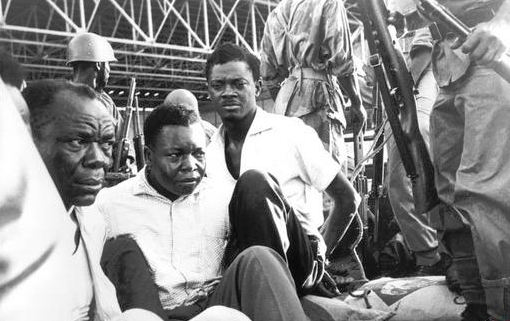
Lumumba and his two former ministers were flown to Katanga on January 17 while being beaten so badly that the pilot warned the violence was threatening the flight, says De Witte.
They arrived at the Elizabethville (now Lubumbashi) airport and taken into custody by Katangese police and military under the supervision of Belgian forces. They were driven to a colonial villa owned by a wealthy Belgian, Villa Brouwe, and the beatings continued by both the Congolese and Belgian forces.
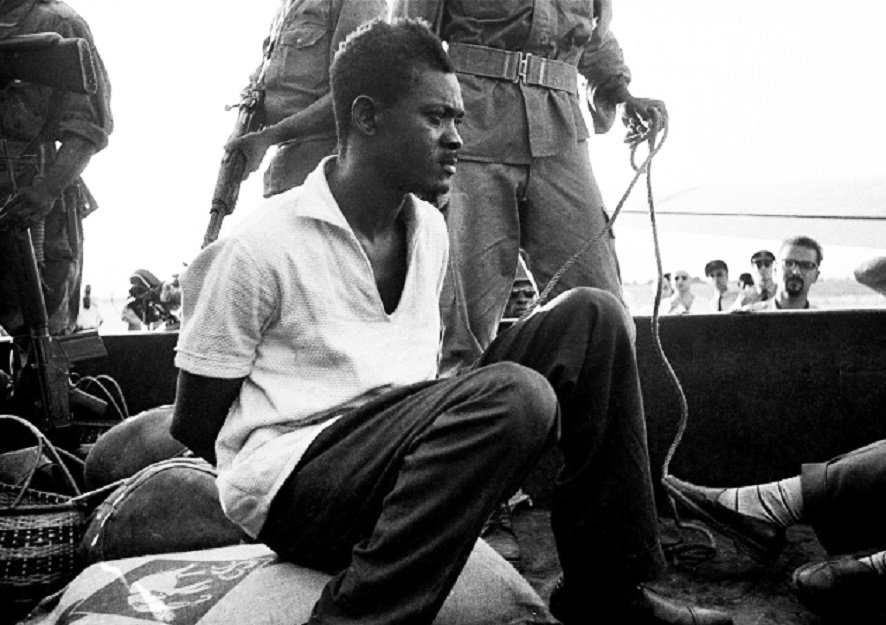
LUMUMBA…FILE TO GO WITH STORY SLUGGED BELGIUM CONGO LUMUMBA– Hands tied behind his back, deposed Congo ex-premier Patrice Lumumba (center) leaves a plane at Leopoldville airport, Dec. 2, 1960, under guard of Congolese soldiers loyal to Col. Joseph Mobutu. European Parliament opened an investigation Tuesday May 2, 2000 into possible government involvement in the 1961 killing of Lumumba, whose death shocked the world during the months following Congolese independence from Belgium. (AP-Photo/File)
By that evening, they were semi-conscious and had been visited by Katangese cabinet ministers and President Tshombe himself. Later around 10, a decision was taken on their fate and they were dragged from Villa Brouwe into a nearby bush where a firing squad awaited them.
The execution was commanded by Belgian Captain Julien Gat and Belgian Police Commissioner Frans Verschurre, who had overall command, discloses De Witte in his book based on documents he discovered in the Belgian archives. They were shot separately by a big tree as President Tshombe and two of his cabinet ministers looked on. The bodies were quickly thrown into shallow graves.
To conceal their crimes the next morning of January 18, the Interior Minister Godfried Munongo called a senior Belgian policeman, Gerard Soete, to his office and ordered that the bodies disappeared.
“You destroy them, you make them disappear. How you do it, it doesn’t interest me. All I want is that it happens that they disappear. Once it is done nobody will talk about it. Finished,” Soete recalled Munongo’s orders.
Soete said he and another helper exhumed the corpses and “hacked them in pieces and put them into the acid. As far as our acid because we had two bottles like that of acid, big bottles, but we hadn’t got enough so we burned what we could in those bottles. For the rest I know that my helper made a fire and put them in and we destroyed everything.
“We were there two days. We did things an animal wouldn’t do. And that’s why we were drunk, stone drunk. We couldn’t do things like that. Cut your own, your own – no, no, no. Nobody could say now, today, it’s there, it happened. That’s impossible, you couldn’t,” Soete was quoted in a BBC documentary, Who Killed Lumumba?, which aired in 2000 based on accounts from De Witte’s book published in English in June 2001.
Just as planned, Lumumba’s death was announced a month later on February 13, 1961. Interior Minister Munongo announced that the three prisoners killed their guards and escaped in a getaway car before they were recognized by villagers, who beat them to death.
The truth was hidden despite international protests at Belgian embassies nationwide until 1999 when Ludo De Witte’s book titled, The Assassination of Lumumba, presented new evidence taken from documents long hidden in official archives and interviews of surviving witnesses.
The Belgian Parliament established a commission of enquiry three months after the book was published to determine the circumstances of the assassination of Patrice Lumumba and if the Belgian government was involved.
The report was presented after 18 months of investigation in 2002 and then published as a book in 2004 for the public. It concluded that Belgium had a moral responsibility in the assassination of Lumumba and that it “acted under pressure from the Belgian public, which had heard for days about violence against Belgian citizens in Congo.”
It said there were plans to kill Lumumba and the Belgian government showed little respect for the sovereign status of the Congolese government. The commission confirmed that secret funds (about $8 million today) were used to finance the policy against the Lumumba government by the Ministry of African Affairs, reports the Brussels Times.
It, however, stated that execution was carried out by Kantangese authorities in the presence of the Belgian officials and there was no evidence to prove that Belgium was part of the decision-making to kill Lumumba.
The Belgian government admitted to having had “undeniable responsibility in the events that led to Lumumba’s death” but did not take full responsibility and issued a public pardon of the Belgians involved in the assassination of Lumumba.
The foreign minister at the time, Louis Michel, said “The government feels it should extend to the family of Patrice Lumumba … and to the Congolese people, its profound and sincere regrets and its apologies for the pain inflicted upon them.”
This was accepted by Lumumba’s son, Francois Lumumba, who later filed court cases against Belgium for hiding its role in the assassination of his father.
In January 2016, it was reported that a tooth of Lumumba was confiscated in the former home of police officer Gerard Soete who died in June 2000 during the parliamentary enquiry.
In his 1978 novel, the Belgian who helped dissolve Lumumba’s body in acid described the taking of two teeth, two fingers and bullets from the body, reports Brussels Times. He later declared that he had thrown them into the sea.
This article by Ismail Akwei was first published on face2faceafrica.com




 Ismail Akwei