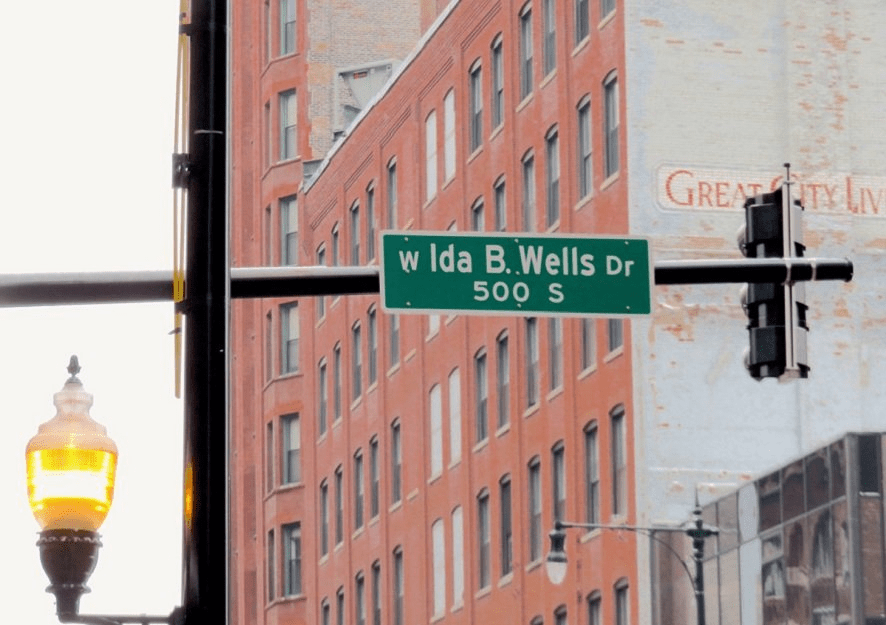
1800s anti-lynching journalist honoured with a street named after her in Chicago

Ida B. Wells Street in Chicago

Chicago has honoured the unsung hero and 1800s investigative journalist, Ida B. Wells, who campaigned against racist lynching of black men and pushed for women’s right to vote.

Major downtown Chicago thoroughfare, Congress Parkway, was renamed Ida B. Wells Drive on Monday making it the first major street in the city named after a black woman.

Dozens of dignitaries including award-winning journalists, activists and residents celebrated the already installed bright green street sign bearing her name, months after the City Council approved it.

The city leaders gathered at the Harold Washington Library for the ceremony said it was an opportunity to honour her in a more dignified and glorified way and shed light on her extraordinary life.
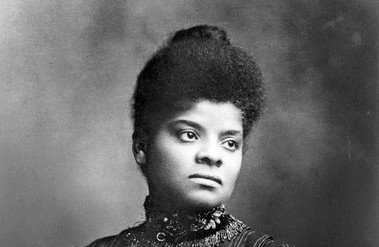
Ida B. Wells

“This woman … was not just an inspiration to me, as a black woman in politics, but one who endured so much so that we could all stand here today in service to our communities,” said Lt. Gov. Juliana Stratton who was quoted by the Chicago Tribune.

“She had such a strong sense of morality. She was going to tell the truth even if it came to her own detriment. Can you imagine a black woman at that time, going into territory where a black man or woman had literally been strung up and lynched and asking questions about why this was and what happened?” said New York Times journalist Nikole Hannah-Jones.

“She was the most famous black woman in the world. And yet it takes until 2019 to get a street named in her honor in the city where she is buried. I think that speaks to the way we have always erased the contributions of black women in this country. It is Ida’s time,” he added.

The New York Times published her obituary last year as one of the iconic people it failed to acknowledge after their death.

The overlooked Ida B. Wells, who changed her name to Ida B. Wells-Barnett after her marriage to Ferdinand L. Barnett in 1895, is receiving a lot of national attention now and her contributions to the improvement of the economic and social status of African-Americans are being highlighted.

Her great-grandaughter, Michelle Duster, said the moment was overwhelming, especially after the family’s quest of raising $300,000 toward a monument in her honour.

“When I was walking over here and I saw the sign, I just had to take a moment and just stare. We actually did this. … We actually managed to stick with the idea of having an African-American woman honored in such a prominent way, in such a large city. It’s just a really, really big achievement,” she said.

Ida B. Wells helped in the creation of the National Association for the Advancement of Colored People (NAACP) and the National Association for Colored Women. She mentored W.E.B. DuBois and was close friends with abolitionist and freedom fighter Frederick Douglass.

Wells, according to history, was the most famous black woman in the United States during her lifetime. She was living in Memphis and working as an editor of a local newspaper when she started the campaign against lynching through her articles.

In 1892, three black men were attacked and arrested after they fought back. A white mob later dragged them out of jail and lynched them. This infuriated Wells, and through that, she began investigating and reporting lynchings in America.

She travelled for months alone in the south, researching and conducting interviews on approximately 700 lynchings from previous years. Her aim was to question the narrative at the time that said that black men were lynched because they raped white women.

Her findings revealed that rape was never the case, instead, there had been a consensual interracial relationship. Wells realized that lynching was used as an excuse to do away with black people who were acquiring property and wealth and to sow fear into them.

She published these findings in several editorials in the newspaper she co-owned and edited, The Memphis Free Speech and Headlight.

Her stories were widely accepted by the public.
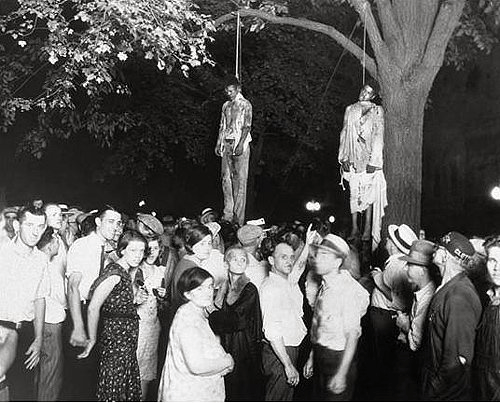
Black people lynched

Wells was born into slavery in 1862 in Holly Springs, Mississippi, during the civil war. Her parents, as well as, her younger brother died from a yellow fever epidemic in 1878 when she was 16.

Wells found work as a teacher to support the rest of her siblings while completing her education at night and on weekends. She later moved to Memphis, where she became a journalist and civil rights activist.

When she was 21, she had a heated confrontation with a white train conductor who forced her off a train car reserved for white women. She sued the railroad but lost on appeal. She subsequently urged African-Americans to avoid the train.

At age 25, Wells was the co-owner and editor of the Free Speech and Headlight, the local black newspaper she used for her campaigns. Her printing press in Memphis was, however, destroyed when she left town. This was followed by threats to kill her if she returned.

Wells had to stay away from the south but still toured the US and UK while speaking on public platforms to increase awareness about her campaigns.
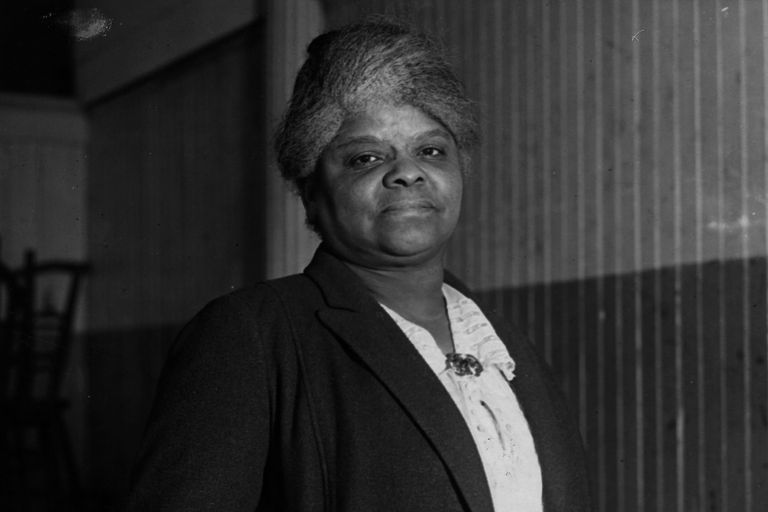
Ida B.Wells

In 1895, she married Ferdinand L.Barnett, a lawyer and civil rights activist from Chicago. She published a pamphlet, the Red Record, the first statistical record of the history of American lynchings.

Wells later contested the Illinois State Senate but did not win. She worked for several years as a probation officer, before she passed away of kidney disease on March 25, 1931, at 68.

This article by Ismail Akwei was first published on face2faceafrica.com

How Ethiopia won a battle that quashed a Dutch patent on its native grain

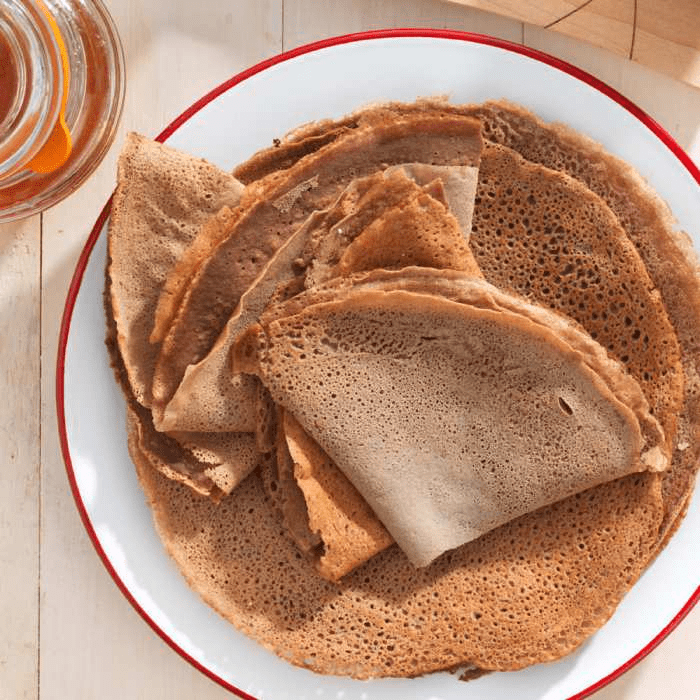
Injera flatbread and the Teff grain

It didn’t happen in 1909 or 1943, but in 2003 when a Dutchman, Jans Roosjen, secured a patent on the processing of Ethiopia and Eritrea’s indigenous teff grain which is a staple found in most of their foods including the injera flatbread.This is how Ethiopia won a battle that quashed a Dutch patent on its native grain.

Teff is an ancient grain from the two African countries which is processed into flour and has a lot of health benefits. The growing population of Ethiopians and Eritreans in Europe made the grain and its flour very high in demand globally.

However, the Dutchman’s patent meant Ethiopia could not export the flour to the Netherlands and other companies could not process the grain because of Roosjen’s legal rights to its processing. He is legally listed as “the inventor” of the processed grain.

Ethiopia has been battling with intermittent famine over the years and teff was one of the staples that were banned from export. The country lifted its export ban on teff in 2015, a year after a Dutch baking ingredients company, Bakels Senior NV, filed a patent dispute at a Hague court against Jans Roosjen to be able to process the grain, legal documents state.

In November 2018, the long battle came to an end silently with the Hague court ruling that “the claim to processing teff by patent holder is null and void in the Netherlands,” announced the Ethiopian Embassy in the Netherlands in February 2019 after an Ethiopian diplomat tweeted about the victory.

“Thank you all. I just learned that The Court of The Hague ruled against the #Teff patent holder. This is great news. I hope we can learn from this that our national assets must be protected by Ethiopians & friends of Ethiopia,” tweeted Fitsum Arega who is the current Ethiopian Ambassador to the United States.

Despite being a victory for the other Dutch company that filed the case in 2014, it is also a victory for Ethiopia as it can now have access to the Netherlands market.

Meanwhile, the original patent holder of the Ethiopian staple is still the Dutchman, Jans Roosjen, and it will take another legal battle for Ethiopia to lay claims to the production and processing of its indigenous grain.

Fitsum Arega had said that the legal battle was “an issue of our inability to own our national assets in the international legal system. We need to defend it.”

Ethiopia is one of many other countries that are losing rights to their indigenous products and artefacts. The Maasai tribe of East Africa won rights to its Shuka cloth which has been exploited for years by luxury fashion brands globally.

Recently, many Africans joined a campaign to reverse the Disney trademark of the Swahili phrase “Hakuna Matata” which means “No Worries” or “No Problem”.

Hakuna Matata was registered since 2003 in the United States after the release of the 1994 film, The Lion King, which made the phrase popular. This means the phrase cannot be used for commercial purposes in the country.

This article Ismail Akwei was first published on face2faceafrica.com
White men wearing black faces: don’t be fooled by hyper-realistic masks

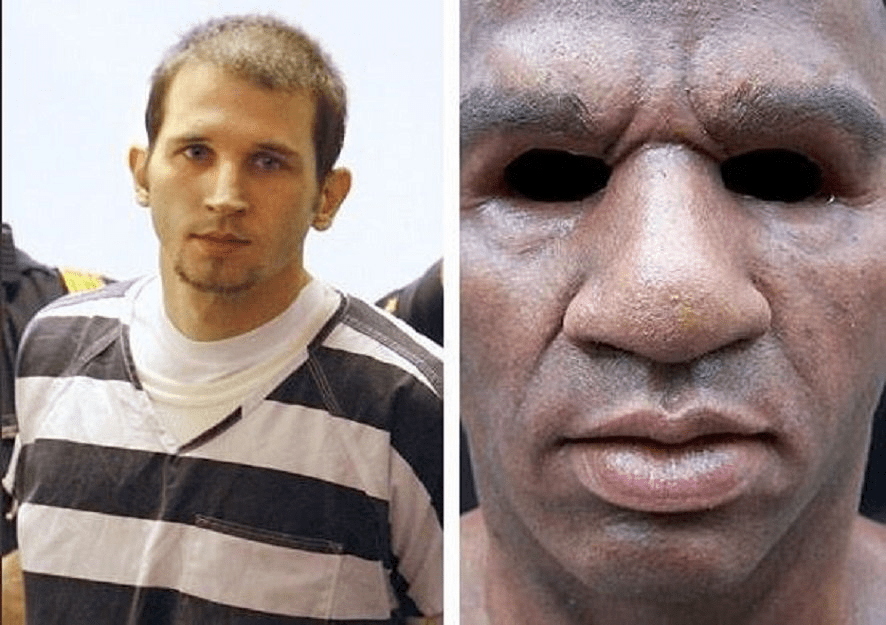
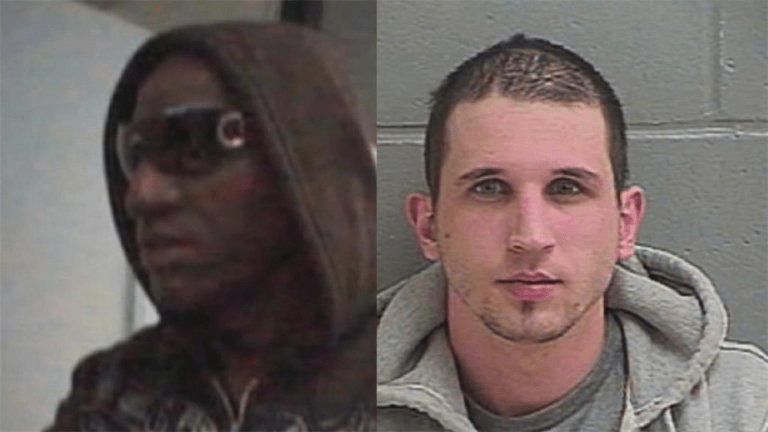
Conrad Zdzierak (left) jailed for robbing banks with hyper-realistic mask of black man (right)

It is offensive to most black people when white folks paint their faces black to represent the black race. This traces back to the early nineteenth-century Blackface performers who entertained white people by painting their faces with burnt cork, greasepaint or shoe polish and exaggerate their lips to represent uneducated slaves on the plantations.

The history of slavery in America is an unforgettable episode in the history of the United States and it is inappropriate to retrace this dark past through mockery of the race that helped build this great nation.

However, the Blackface phenomenon is worse today with the advent of the controversial hyper-realistic silicone masks that look and feel like a real black skin. These masks created for Hollywood films have gained an increase in demand so much so that they are sold in stores for as little as $660.

Why will anyone buy a hyper-realistic blackface mask to look black?

Some few years ago, a white man robbed several Ohio banks wearing a hyper-realistic mask of a black man he ordered from Hollywood mask-making company SPFXMasks. He also ordered a matching set of black hands which he used to rob the banks.

An innocent black man was arrested for Conrad Zdzierak’s crimes and was identified falsely in a lineup by six of seven eyewitnesses including his mother after watching the surveillance footage of the crime.

He was jailed, until after some months when the actual bank robber’s girlfriend called the police after finding the mask and a huge sum of money.

There are other instances of crimes committed using hyper-realistic masks which falsely position innocent black people at crime scenes where they have never been.

For Rusty Slusser, the owner of SPFXMasks: “We’re proud of the fact that our masks look real, but I’m not proud of the way they were used,” he told the LA Times after another Chinese man used it to sneak onto a plane disguised as an elderly man.

Scientists have found that the masks are so convincing that they fooled 99 percent of the people they used in a research. Dr Rob Jenkins, from the Department of Psychology at York University, said the sampled people were very bad at spotting people wearing one of the hyper-realistic masks in photographs and in real life.

He added that the easy ways of spotting people wearing the masks include the use of thermal detectors to gauge the temperature of someone’s face which will be different with a mask on. The mask can make it difficult for the wearer to form certain words, he added.

With this “unnecessary evil”, it is not wise to jump to conclusions when crimes are committed. The criminals could be a bunch of white people unapologetically breaking laws in the guise of innocent black men.

White men are buying “realistic” masks and committing crimes… watch your backs my brothers pic.twitter.com/klXCriAxap

— Doug Dimmadome (@Dj_Dskretion) December 28, 2017

This article by Ismail Akwei was first published on face2faceafrica.com

Babies: Unwanted seeds sown in African women by fleeting Chinese workers

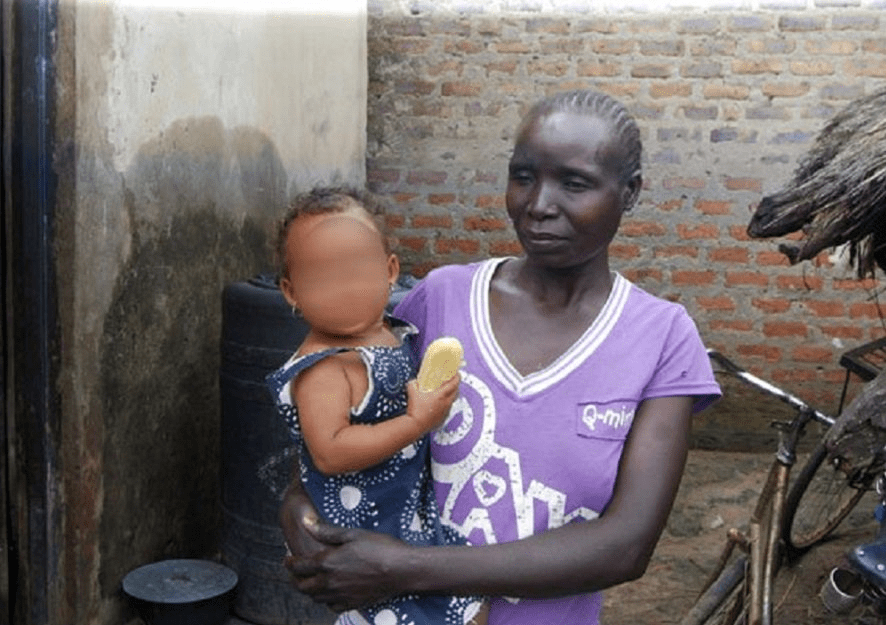
A woman holds her granddaughter who was fathered by a Chinese national working at Karuma hydropower dam. PHOTO | TOBBIAS JOLLY OWINY | DAILY MONITOR

China has found a home in Africa and many Chinese workers troop into countries in all the four sub-Saharan regions to engage in construction and mining work.

Their migration is part of agreements with African governments to allow the Chinese to build infrastructure and develop the continent while deepening bilateral relations.

However, the relations have gone beyond governments as the Chinese workers, who are temporary migrants, sow their seeds in African soil by fathering unwanted children with young African women and girls who have no means to fend for them.

Mining towns in Ghana, communities around the Karuma dam construction site in Uganda and the Thika Road construction site in Kenya among many other communities around the continent have hundreds of Chinese-looking babies of African women and girls without fathers.

BBC Pidgin documentary in April revealed that many young women were struggling to take care of their mixed-race children left behind by Chinese illegal miners in Dunkwa in the Central Region.

About 4,500 Chinese miners were in this area until the government crackdown in 2013 against illegal mining activities that were destroying river bodies and vegetation. However, the children were most affected as they faced stigmatization while their mothers were ridiculed in their poor communities.

“When my daughter gave birth, we discovered that the child was Chinese-looking. We attempted to find the father of the boy but the Chinese had left,” said Wofa K, the grandfather of a 4-year-old Afro-Chinese boy called Evans Kofi China.

His mother said she faces difficulties raising the boy because she can’t afford school fees, hair and body lotion which are expensive.

For Afua whose 7-year-old daughter Ama is Afro-Chinese, the girl was raised with her Chinese father for two years before he returned to China. She believes he will return for them and the stigma of being mocked will end.

Meanwhile, in Kenya where the Chinese are building a highway linking the capital Nairobi to the industrial town of Thika, a 20-year-old student called Patricia is reported to be looking for the father of her 2-month-old baby whom she only knows as Shu.

She said she was impregnated last year by the Chinese worker after he gave her a lift while returning from secondary school. She has since not seen him and has dropped out of school as a result.

It is not a different story in Uganda where Chinese employees of Sinohydro Construction Company are constructing the Karuma dam in the Oyam District. The sub-county alone has about 20 children Afro-Chinese children without fathers, said the Kamdini sub-county chairperson Sam Ogwang Alunyu who told local media Daily Monitor.

20-year-old Jacqueline Adero, a resident of Arukolong, Zambia Parish, has a one-and-a-half-year-old daughter with a Chinese worker identified only as Yahang.

She said they met and started a relationship in 2015 during her search for a job at the company. He promised to marry her and take her to China, only for him to leave without her while she was 5 months pregnant.

Adero was left without a job and a baby she couldn’t take care of. “She only feeds on biscuits and soft drinks and when we serve her local dishes, she develops rashes all over her body. I am just a peasant and unable to raise this child,” said Adero’s father Alfred Kolo who wants the company to help find the baby’s father.

“It is very expensive to meet her medical needs and feed her considering the diet she requires … Her real father has to come in and support,” he added.

The construction company did not respond to questions from the newspaper but referred them to the Uganda Electricity Generation Company Limited (UEGCL) whose corporate affairs manager Simon Kasyate said: “Sex at Karuma is being traded on the basis of willing buyer and willing seller. These girls knew that these Chinese nationals have a lot of money that they would milk.”

The Kamdini sub-county chairperson Sam Ogwang Alunyu said efforts to get the Ministry of Gender, Labour and Social Development to intervene has proved futile.

The problem of fatherless Afro-Chinese children will remain as long as the Chinese continue to form temporary communities in African towns and villages for government-sanctioned construction works.

Governments have to intervene as the “unwanted legacy” left behind by the Chinese workers is grim considering the fact that fatherless children will have to suffer for the benefit of continent enjoying the Sino infrastructural legacy.

This article by Ismail Akwei was first published at face2faceafrica.com

How Congo became the private property of Leopold II of Belgium who exploited and butchered millions

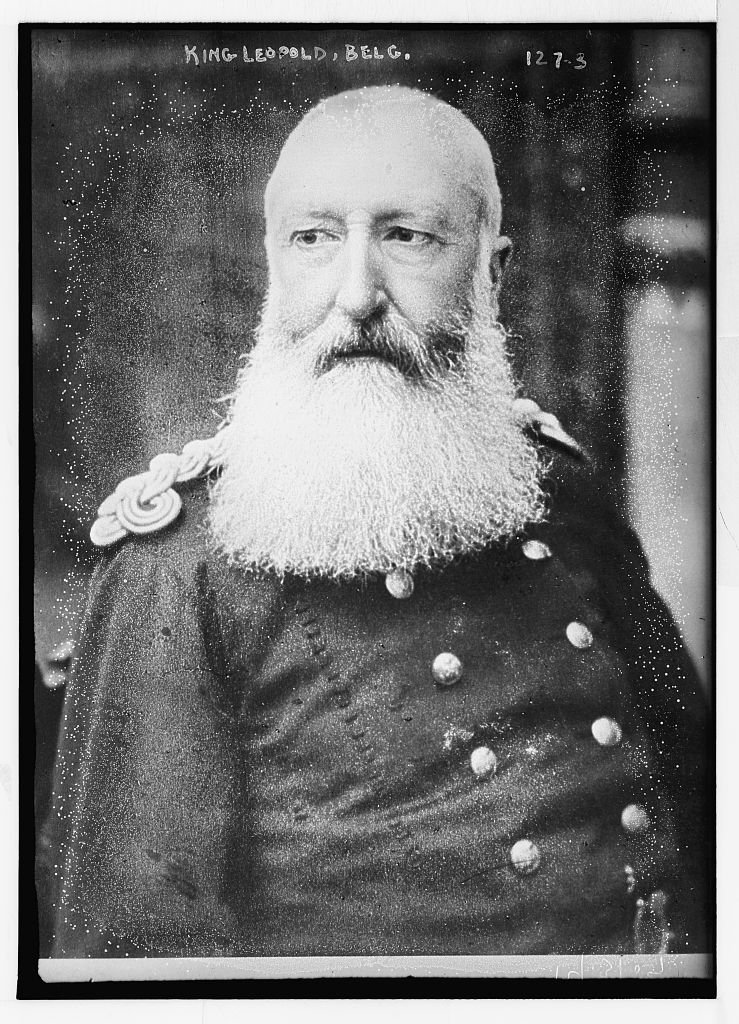
King Leopold II of Belgium

The King of the Belgians, Leopold II, who ruled from 1865 to 1909 has been described as worse than Adolf Hitler for his genocide against the people of the Congo Free State (now Democratic Republic of Congo) who he considered as his personal property including their lands and minerals.

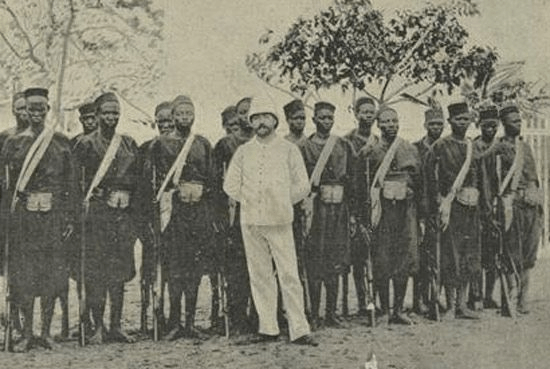
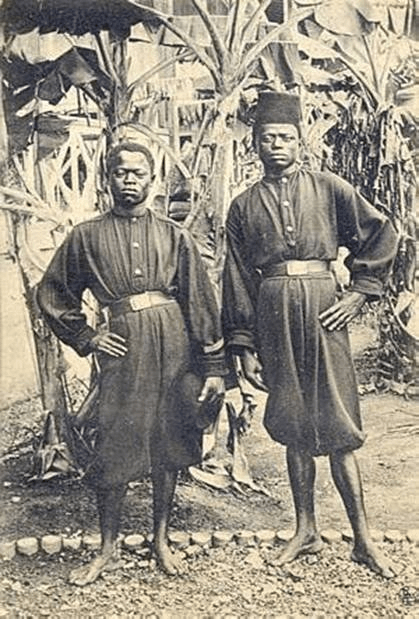
An undetermined number of Congolese, ranging in the millions, were killed in the hands of Leopold’s private colonial militia of 90,000 men called Force Publique, which he used to run the region that is the size of Western Europe and 76 times larger than Belgium.

Local recruits of the Force Publique with a Belgian officer

The area was handed over to him by 14 European nations and the United States at the Berlin Conference of 1884-1885 where Africa was shared among European colonists.

Leopold II’s claim to the Congo as his personal property was recognized after expressing his initial goal of using his so-called private charitable organisation, the International African Association, to offer humanitarian assistance and civilisation to the natives.

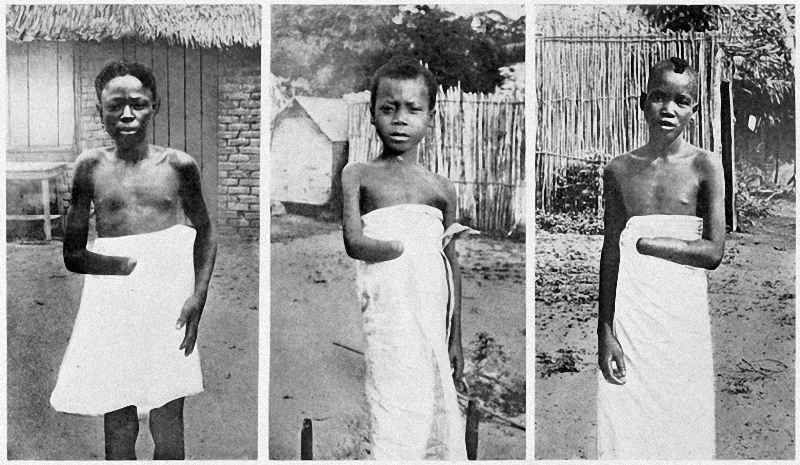
It was rather a horror for the people who were tortured, raped and killed by the Force Publique in order for them to diligently collect natural rubber for export. Hands of those who couldn’t meet their rubber quotas were severed including those of children, reports a German newspaper in 1896 which stated that 1,308 hands were gathered in one day.

Victims of Leopold’s atrocities

Before acquiring the Congo, Leopold failed in purchasing other areas in Asia and Africa including the Phillippines from Spain after he was lent money by the Belgian government for his expansion project.

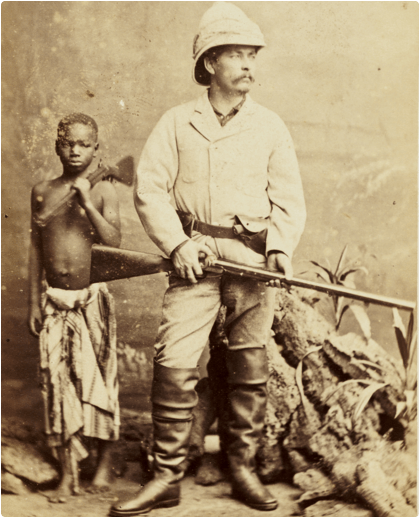
He strategically established the front organisation, International African Association, to “civilise the savage people” in 1876. The greedy King hired Welsh journalist and explorer, Henry Morton Stanley, to explore and establish a colony in the Congo region. They used alcohol, trade and deception to create a relationship with the leaders of the natives and persuaded them to sign treaties ceding their lands to King Leopold.

Stanley, Henry Morton (born John Rowlands), 28.1.1841 – 10.5.1904, British Africa explorer, in tropical uniform, photo, circa 1880

The kindness turned into savagery as violent force and intimidation was used to enrich the King who exploited the people for about 20 years. He collected and sold ivory before using forced labour to harvest and process rubber in the 1890s when prices soared. Thousands were also sold into slavery, confirmed eyewitness testimonies during an inspection by an international Commission of Inquiry in 1904 led by consul Roger Casement who was appointed by the British Crown.

The blood money Congolese was used to build huge private and public construction projects in Belgium. He also built a palace in Belgium which is now called the Royal Museum of Central Africa to display his spoils. The building currently makes no mention of the atrocities committed in the Congo Free State despite the large collection of colonial objects.

Royal Museum for Central Africa

The Congolese natives did not go down without a fight as some communities like the Batetela, who had supported them in the Congo-Arab War of 1892-1894, revolted.

In 1893, the Belgians killed the leader of the Batetela called Gongo Lutete for allegedly committing treason. Lutete was the chief who fought for Zanzibar against the Belgians in 1892. However, due to a fall out between him and the Zanzibar slave trader Tippu Tip over lack of payment, Lutete switched sides and supported the Belgians.

He fought for the Congo Free State until he was accused of betraying the country and was charged in front of a kangaroo court and executed without any presentation of evidence.

It was this act by the Belgians that brought the rebellion to their doorstep in 1895.  The Batetela officials in the Force Publique (now the Congolese National Army), who had been brought on board by Lutete, staged a mutiny at Luluabourg (modern-day Kananga).  The soldiers were also fighting against mistreatment and flogging by white officers, as well as the withholding of their wages.

They killed a number of Belgian officers and attacked a number of stations. The skills they learnt from the white officials made them quite dangerous but not enough to defeat the Belgians who attacked them at Gandu. They were killed in hundreds and injured, and those who survived fled.

Two years later, the Batetela carried out another rebellion during an expedition to Upper Nile under Francis Dhanis, a Belgian official. They were heading to annex the Fashoda, a region in the present-day South Sudan.

This group of army officers were armed and quite experienced. Tired of mistreatment by the white people, the Batelela turned against their white officers and killed many of them. Some of the complaints the mutineers had included reduced rations and excessive marching.

The mutiny collapsed the expedition, meaning that Congo lost out on the imperial territorial fight for the region against the British and the Germans.

In 1900, the Batetela staged their last mutiny.  They took over the Shinkakasa Fort, also known as the Boma Fort, on the Congo river. The fort was built to block the entry of Portuguese from Angola. It is still not known why the army mutinied, but it has been said that they opened fire on a moored ship from Antwerp as a way to improve their social standing rather than fight the colonial administration.

All these three rebellions are said to have failed because of its lack of vision and a leader. Even so, the last rebellion was able to hold off the Belgians until 1908 despite being defeated constantly.

There was international pressure against King Leopold’s atrocities in the Congo and he was forced by the Belgian government to relinquish control of the colony to the civil administration in 1908. He didn’t leave without trying to conceal his crimes. King Leopold burned the entire archive of the Congo Free State and ordered his aides not to disclose what had happened in the region. The Congo Free State was later placed under parliamentary control and renamed the Belgian Congo.

King Leopold II

Leopold II died on December 17, 1909, but before that, he donated the private buildings and wealth he obtained from Congo to the Belgian state. The transfer of ownership of the Congo did not bring peace to the region which suffered civil wars before and after independence on June 30, 1960.

Belgium, however, forgot the atrocities of its King and till date, refers to him as the “Builder King” who executed extensive projects including the Congolese genocide.

This article by Ismail Akwei was published on face2faceafrica.com